Researchers comparing psychedelic experiences with near-death experiences that were not drug related found notable similarities in people’s attitudes toward death. In a survey-based study published in the journal PLOS ONE, participants in both groups reported having less fear of death and dying after the experience. They also reported that the experience had a lasting positive effect, providing personal meaning, spiritual significance and psychological insight.
The results are in line with a number of previous trials showing that a single treatment with the psychedelic psilocybin produced sustained decreases in anxiety and depression among patients with a life-threatening cancer diagnosis. The largest of these trials was conducted at Johns Hopkins Medicine by the researchers, and involved 51 patients with cancer with anxiety or depressive symptoms. It demonstrated that psilocybin with supportive psychotherapy resulted in significant increases in ratings of death acceptance, as well as decreases in anxiety about death.
For the present study, the researchers analysed data gathered from 3192 people who answered an online survey between December 2015 and April 2018. Of these, 933 individuals had non-drug near-death experiences, and the rest of the participants had psychedelic experiences due to either lysergic acid diethylamide (LSD) (904), psilocybin (766), ayahuasca (282) or N,N-dimethyltryptamine (DMT) (307). Compared with the non-drug group, there were more men in the psychedelic group (78% versus 32%), and they tended to be younger (32 versus 55 years of age) at the time of the experience.
Similarities between the groups include:
About 90% of participants in both groups reported a decrease in fear of death when considering changes in their views from before to after the experience.
Most participants in both groups (non-drug group, 85%; psychedelics group, 75%) rated the experience to be among the top five most personally meaningful and spiritually significant of their life.
Participants in both groups reported moderate to strong persisting positive changes in personal well-being and life purpose and meaning.
Differences between the groups include:
The non-drug group was more likely to report that their life was in danger (47% versus the psychedelics group, 3%), being medically unconscious (36% versus the psychedelics group, 10%), or being clinically dead (21% versus the psychedelics group, less than 1%).
The non-drug group was more likely to report that their experience was very brief, lasting five minutes or less (40% versus the psychedelics group, 7%).
The researchers say that future studies are needed to better understand the potential clinical use of psychedelics in alleviating suffering related to fear of death.
Many people can agree that an altered passage of time, known as “temporal disintegration” in psychiatric literature, was a common experience during the COVID pandemic, ranging from difficulty in keeping track of days of the week to feeling that the hours themselves rushed by or slowed down. Prior work linked these distortions to persistent negative mental outcomes such as depression and anxiety following trauma.
A new study, published in Psychological Trauma: Theory, Research, Practice, and Policy, documents how pervasive the experience was in the first six months of the pandemic. Pandemic-related secondary stresses such as daily COVID-related media exposure, school closures, lockdowns and financial difficulties were also found to be predictors of distortions in perceived time.
“Continuity between past experiences, present life and future hopes is critical to one’s well-being, and disruption of that synergy presents mental health challenges,” said corresponding author E. Alison Holman, UCI professor of nursing. “We were able to measure this in a nationally representative sample of Americans as they were experiencing a protracted collective trauma, which has never been done before. This study is the first to document the prevalence and early predictors of these time distortions. There are relatively new therapies that can be used to help people regain a more balanced sense of time, but if we don’t know who is in need of those services, we can’t provide that support.”
Researchers assessed results of responses regarding distorted time perceptions and other pandemic related experiences from a national sample of 5661 participants. Surveys were conducted during March 18-April 18, 2020 and Sept. 26-Oct. 26, 2020 with respondents who had completed a mental and physical health survey prior to the COVID outbreak.
“Given that distortions in time perception are a risk factor for mental health problems, our findings have potential implications for public health. We are now looking at temporal disintegration, loneliness, and mental health outcomes over 18 months into the pandemic,” Prof Holman said. “This will help us gain insight into how these common experiences during the pandemic work together, so we can better understand how to help people struggling with these challenges.”
Caregivers who consume digital media for relaxation are more likely to engage in negative parenting practices, according to a new multinational study. The study, published in Computers and Human Behaviour, aimed to investigate the relationship between caregivers’ use of digital media, mental health, and parenting practices at the start of the COVID pandemic.
On average, caregivers spend three to four hours a day consuming digital media.
“All members of the family matter when we try to understand families in a society saturated with technology,” said study lead author Jasmine Zhang, a master’s candidate in clinical psychology at Waterloo. “It’s not just children who are often on devices. Parents use digital media for many reasons, and these behaviours can impact their children.”
To conduct the study, the researchers surveyed 549 participants who are parents of at least two children between the ages of five and 18. Caregivers provided information about their digital use, their own mental health and their children’s, family functioning, and parenting practices.
The researchers found that caregivers with higher levels of distress engage in more screen-based activities and were more likely to turn to devices for relaxation. This consumption was correlated with negative parenting practices such as nagging and yelling. They also found that negative parenting behaviours were more likely when technology interrupted family interactions. The experiment didn’t focus on specific apps or websites that caregivers use but rather found that caregivers who spend time on screens were retreating from being present with their family, which is correlated with negative parenting practices.
Not all media consumption had negative outcomes: keeping in touch digitally was related to lower levels of anxiety and depression and higher levels of positive parenting practices such as listening to their children’s ideas and speaking of the good their children do.
“When we study how parents use digital media, we need to consider caregivers’ motivations for using devices in addition to how much time they spend on them,” Zhang said.
Study co-authore Dillon Browne, Canada Research Chair in Child and Family Clinical Psychology and professor of psychology at Waterloo, expects that these patterns will continue after the pandemic.
“The family media landscape continues to grow and become more prominent,” said Prof Browne. “Going forward, it’s important to consider the nuances of digital media as some behaviours are related to well-being, and others are related to distress.”
The researchers plan further research and hope that their work will yield guidelines for caregivers to manage their screen-based behaviours.
The commonly used anaesthetic ketamine, which is also increasingly prescribed for the relief of depression symptoms, has created concern over whether it poses an addiction risk.
University of Geneva (UNIGE) researchers found that ketamine triggers an increase in dopamine in mice’s brains, and that it also inhibits a specific receptor that precludes the progression to addiction. These results can be found in the journal Nature.
For the past ten years or so, ketamine has also been prescribed to treat the depressive symptoms of people who are resistant to conventional treatments. Its action has the advantage of a swift onset, acting within hours of the first dose, whereas traditional antidepressants take several weeks to act. Although its prescription is increasing for this type of treatment, this substance is still widely debated within the scientific community.
”Some people believe that ketamine presents a strong addictive risk if taken for a long time, others do not. The whole point of our research was to try to provide some answers,” explained Professor Christian Lüscher.
Brief reward system stimulation The UNIGE researchers allowed mice to self-administer doses of ketamine. ”The drugs intensely stimulate the reward system in the brain, which leads to an increase in dopamine levels. The first step was to observe whether this mechanism was also at work when taking ketamine,” explained Yue Li, a Postdoctoral Scholar in the Department of Basic Neuroscience at the UNIGE Faculty of Medicine.
The scientists found that dopamine levels increased with each dose and induced a positive reinforcement in the mice, which motivated them to repeat the self-administration. ”However, unlike cocaine, for example, we found that the dopamine level fell very quickly after taking the drug,” said Dr Li.
A drug that leaves no ‘mark’ Probing the mechanism behind this phenomenon, the researchers discovered that ketamine triggered an increase in dopamine by inhibiting a molecule called NMDA receptor in the reward centre of the rodent brain. Dopamine then binds to another receptor (called the D2 receptor), which acts as a rapid brake on the increase in dopamine. The researchers also confirmed that the action of the NMDA receptor is necessary to modify the communication between the nerve cells that underlie the behavioural change leading to addiction. Ketamine’s inhibition of the NMDA receptor makes this modification impossible.
”The consequence of this dual action of ketamine is that it does not induce the synaptic plasticity that addictive drugs do and that persists in the brain after the substance has worn off. It is this memorization of the product in the reward system – absent in the case of ketamine – that drives the repetition of consumption,” explained Prof Lüscher. “Therefore, the addictive risk of ketamine appears to be zero in rodents. Is this also the case in humans? Could this risk vary according to the individual? Our study provides a solid framework for debating access to its therapeutic use,” concludes Christian Lüscher.
A New Zealand trial of a smartphone combining virtual reality (VR) with cognitive behavioural therapy (CBT) showed a 75% reduction in phobia symptoms after six weeks of the treatment programme. The results, published in the Australian and New Zealand Journal of Psychiatry, suggests an easily available treatment for the nearly one in 12 people who suffer common phobias such as that of heights or spiders.
The trial, led by Associate Professor Cameron Lacey, from the Department of Psychological Medicine, involved phobia patients using a smartphone app treatment programme called ‘oVRcome‘, which combines VR 360-degree video exposure therapy using headset alongside more traditional CBT. The company provides a simple headset into which users insert their own smartphone, turning it into a display.
“The improvements they reported suggests there’s great potential for the use of VR and mobile phone apps as a means of self-guided treatment for people struggling with often-crippling phobias,” Associate Professor Lacey says.
“Participants demonstrated a strong acceptability of the app, highlighting its potential for delivering easily accessible, cost-effective treatment at scale, of particular use for those unable to access in-person exposure therapy to treat their phobias.”
A total of 129 people took part in the six-week randomised, controlled trial, over May–December 2021, with a 12-week follow-up. Participants needed to be aged between 18–64 years, have a fear of either flying, heights, needles, spiders and dogs. Weekly questionnaires were emailed to record their progress, with access made available to a psychologist for any adverse effects.
For all phobias, participants showed comparable improvements in the Severity Measures for Specific Phobia scale. The average severity score decreased from 28/40 (moderate to severe symptoms) to 7/40 (minimal symptoms) after six weeks. There were no participant withdrawals due to intervention-related adverse events.
“The oVRcome app involves what’s called ‘exposure therapy’, a form of CBT exposing participants to their specific phobias in short bursts, to build up their tolerance to the phobia in a clinically-approved and controlled way,” Assoc Professor Lacey explained.
“Some participants reported significant progress in overcoming their phobias after the trial period, with one feeling confident enough to now book an overseas family holiday, another lining up for a COVID vaccine and another reporting they now felt confident not only knowing there was a spider in the house but that they could possibly remove it themselves.”
The programme used standard CBT components including psychoeducation, relaxation, mindfulness, cognitive techniques, exposure through VR, and a relapse prevention model. Participants were able to select their own exposure levels to their particular phobia from a large library of VR videos.
“This means the levels of exposure therapy could be tailored to an individual’s needs which is a particular strength. The more traditional in-person exposure treatment for specific phobias have a notoriously high dropout rate due to discomfort, inconvenience and a lack of motivation in people seeking out fears to expose themselves to. With this VR app treatment, triallists had increased control in exposure to their fears, as well as control over when and where exposure occurs,” said Assoc Professor Lacey.
The cost-effective availability of the app and headsets and the fact that multiple phobias were tested at once made this a novel trial, the researchers said. Most comparative VR studies to date have investigated high-end VR devices which are only available in research and limited clinical settings. One Dutch study examined a low-cost VR Dutch-language program using animated imagery that demonstrated improvement in fear-of-height symptoms, however this study only examined a single type of specific phobia.
Associate Professor Lacey says public demand to take part in the trial was unprecedented, demonstrating the increasing need and desire for phobia treatment in the community.
Decades of research has provided no clear evidence that serotonin levels or serotonin activity are responsible for depression, according to a major review of existing literature.
Published in Molecular Psychiatry, this new umbrella review is an overview of existing meta-analyses and systematic reviews. It suggests that depression is not likely to be caused by a chemical imbalance. It also calls into question what antidepressants do: most antidepressants are selective serotonin reuptake inhibitors (SSRIs), whose mechanism of action was supposedly to correct abnormally low serotonin levels. But there is no other accepted pharmacological mechanism by which antidepressants affect the symptoms of depression.
Lead author Professor Joanna Moncrieff, at University College London said: “It is always difficult to prove a negative, but I think we can safely say that after a vast amount of research conducted over several decades, there is no convincing evidence that depression is caused by serotonin abnormalities, particularly by lower levels or reduced activity of serotonin.
“The popularity of the ‘chemical imbalance’ theory of depression has coincided with a huge increase in the use of antidepressants. Prescriptions for antidepressants have risen dramatically since the 1990s, with one in six adults in England and 2% of teenagers now being prescribed an antidepressant in a given year.
“Many people take antidepressants because they have been led to believe their depression has a biochemical cause, but this new research suggests this belief is not grounded in evidence.”
The umbrella review aimed to capture all relevant studies, encompassing tens of thousands of participants, that have been published in the most important fields of research on serotonin and depression.
Research that compared levels of serotonin and its breakdown products in the blood or brain fluids found no difference between participants diagnosed with depression and healthy controls.
Research on serotonin receptors and the serotonin transporter, the protein targeted by most antidepressants, found weak and inconsistent evidence suggestive of higher levels of serotonin activity in people with depression. However, the researchers say the findings are likely explained by the use of antidepressants among people diagnosed with depression, since such effects were not reliably ruled out.
Some studies artificially lowered serotonin levels were by depriving participant’s diets of the necessary amino acid. These studies have been cited as demonstrating that a serotonin deficiency is linked to depression. A meta-analysis conducted in 2007 and a sample of recent studies found that lowering serotonin in this way did not produce depression in hundreds of healthy volunteers, however. There was very weak evidence in a small subgroup of people with a family history of depression, but this only involved 75 participants, and more recent evidence was inconclusive.
Very large studies involving tens of thousands of patients looked at gene variation, including the gene for the serotonin transporter, and found no difference between people with depression and healthy controls. These studies also examined stressful life events, and found these to strongly increase people’s risk of becoming depressed. A famous early study found a relationship between stressful events, the type of serotonin transporter gene a person had and the chance of depression. But larger, more comprehensive studies suggest this was a false finding.
These findings together led the authors to conclude that there is “no support for the hypothesis that depression is caused by lowered serotonin activity or concentrations.”
The researchers say their findings are important as studies show that as many as 85–90% of the public believes that depression is caused by low serotonin or a chemical imbalance. A growing number of scientists and professional bodies are recognising the chemical imbalance framing as an over-simplification. Evidence also suggests that believing that low mood is caused by a chemical imbalance leads to pessimism about recovery, and the possibility of managing moods without medical help. This is important because most people will at some point in their lives meet criteria for anxiety or depression.
A large meta-analysis provided evidence that people who used antidepressants actually had lower levels of serotonin in their blood. The researchers concluded that some evidence was consistent with the possibility that long-term antidepressant use reduces serotonin concentrations. The researchers say this may imply that the increase in serotonin that some antidepressants produce in the short term could lead to compensatory changes in the brain that produce the opposite effect in the long term.
Though antidepressants’ efficacies was not examined, the authors encourage looking into treatments such psychotherapy, alongside other practices such as exercise or mindfulness, or addressing underlying contributors such as poverty, stress and loneliness.
Professor Moncrieff said: “Our view is that patients should not be told that depression is caused by low serotonin or by a chemical imbalance, and they should not be led to believe that antidepressants work by targeting these unproven abnormalities. We do not understand what antidepressants are doing to the brain exactly, and giving people this sort of misinformation prevents them from making an informed decision about whether to take antidepressants or not.”
Co-author Dr Mark Horowitz said: “I had been taught that depression was caused by low serotonin in my psychiatry training and had even taught this to students in my own lectures. Being involved in this research was eye-opening and feels like everything I thought I knew has been flipped upside down.
“One interesting aspect in the studies we examined was how strong an effect adverse life events played in depression, suggesting low mood is a response to people’s lives and cannot be boiled down to a simple chemical equation.”
Professor Moncrieff added: “Thousands of people suffer from side effects of antidepressants, including the severe withdrawal effects that can occur when people try to stop them, yet prescription rates continue to rise. We believe this situation has been driven partly by the false belief that depression is due to a chemical imbalance. It is high time to inform the public that this belief is not grounded in science.”
University of Reading scientists have shown that taking high doses of Vitamin B6 reduces feelings of anxiety and depression to a small degree. Study participants reported feeling less anxious and depressed after taking the supplements every day for a month.
The study, published in Human Psychopharmacology: Clinical and Experimental, demonstrates that certain supplements thought to modify levels of activity in the brain could be useful for preventing or treating mood disorders.
The study’s lead author, Dr David Field, explained: “The functioning of the brain relies on a delicate balance between the excitatory neurons that carry information around and inhibitory ones, which prevent runaway activity. Recent theories have connected mood disorders and some other neuropsychiatric conditions with a disturbance of this balance, often in the direction of raised levels of brain activity. Vitamin B6 helps the body produce a specific chemical messenger that inhibits impulses in the brain, and our study links this calming effect with reduced anxiety among the participants.”
While previous studies have produced evidence that multivitamins or Marmite can reduce stress levels, few studies have been carried out into which particular vitamins contained within them drive this effect. The new study focused on the potential role of Vitamins B6, which is known to increase the body’s production of GABA (Gamma-Aminobutyric Acid), the primary inhibitory neurotransmitter.
In the current trial, more than 300 participants were randomised to either Vitamin B6 or B12 supplements far above the recommended daily intake (about 50 times higher) or placebo, and took one a day with food for a month. Vitamin B12 had little effect compared to placebo, but Vitamin B6 was found to have a significant effect. Raised levels of GABA among participants who had taken Vitamin B6 supplements were confirmed by visual tests carried out at the end of the trial, supporting the hypothesis that B6 was responsible for the reduction in anxiety. Subtle but harmless changes in visual performance were detected, consistent with controlled levels of brain activity.
Dr Field notes that, while many foods contain Vitamin B6, “the high doses used in this trial suggest that supplements would be necessary to have a positive effect on mood. It is important to acknowledge that this research is at an early stage and the effect of Vitamin B6 on anxiety in our study was quite small compared to what you would expect from medication. However, nutrition-based interventions produce far fewer unpleasant side effects than drugs, and so in the future people might prefer them as an intervention.
“To make this a realistic choice, further research is needed to identify other nutrition-based interventions that benefit mental wellbeing, allowing different dietary interventions to be combined in future to provide greater results. One potential option would be to combine Vitamin B6 supplements with talking therapies such as Cognitive Behavioural Therapy to boost their effect.”
It is not clear why women experience higher rates of depression than men, complicating treatments that are already prone to failure. Research exploring the reasons behind this found a difference in a part of the brain associated with motivation, social interactions and reward. The researchers’ findings were published in the journal Biological Psychiatry.
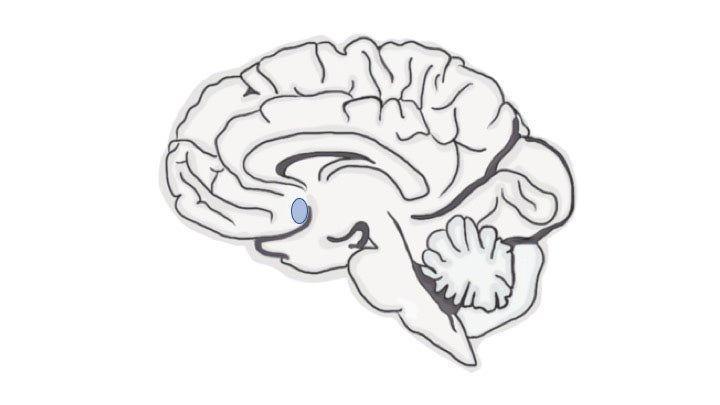
The study set out to understand how a specific part of the brain, the nucleus accumbens, is affected during depression. The nucleus accumbens is important for motivation, response to rewarding experiences and social interactions – all of which are affected by depression.
The nucleus accumbens (represented in blue) is a part of the brain that controls motivation. Researchers from UC Davis compared samples of the nucleus accumbens in mice and humans to find clues to how this part of the brain is affected by stress and depression in males and females.
Previous analyses within the nucleus accumbens showed that different genes were turned on or off in women, but not in men diagnosed with depression. These changes could have caused symptoms of depression, or alternatively, the experience of being depressed could have changed the brain. To differentiate between these possibilities, the researchers studied mice that had experienced negative social interactions, which induce stronger depression-related behavior in females than males.
“These high-throughput analyses are very informative for understanding long-lasting effects of stress on the brain. In our rodent model, negative social interactions changed gene expression patterns in female mice that mirrored patterns observed in women with depression,” said study leader Alexia Williams, a doctoral researcher. “This is exciting because women are understudied in this field, and this finding allowed me to focus my attention on the relevance of these data for women’s health.”
After identifying similar molecular changes in the brains of mice and humans, researchers chose one gene, regulator of g protein signaling-2, or Rgs2, to manipulate. This gene controls the expression of a protein that regulates neurotransmitter receptors that are targeted by antidepressant medications such as Prozac and Zoloft. “In humans, less stable versions of the Rgs2 protein are associated with increased risk of depression, so we were curious to see whether increasing Rgs2 in the nucleus accumbens could reduce depression-related behaviorus,” said Professor Brian Trainor, senior author on the study.
When the researchers experimentally increased Rgs2 protein in the nucleus accumbens of the mice, they effectively reversed the effects of stress on these female mice, noting that social approach and preferences for preferred foods increased to levels observed in females that did not experience any stress.
“These results highlight a molecular mechanism contributing to the lack of motivation often observed in depressed patients. Reduced function of proteins like Rgs2 may contribute to symptoms that are difficult to treat in those struggling with mental illnesses,” Williams said.
Findings from basic science studies such as this one may guide the development of pharmacotherapies to effectively treat individuals suffering from depression, the researchers said.
“Our hope is that by doing studies such as these, which focus on elucidating mechanisms of specific symptoms of complex mental illnesses, we will bring science one step closer to developing new treatments for those in need,” said Williams.
The commonly prescribed triptans, a class of migraine drugs, may be useful in treating obesity, a new study published in Journal of Experimental Medicine suggests. In studies on obese mice, a daily dose of a triptan caused them to eat less food and lose weight over the course of a month.
“We’ve shown that there is real potential to repurpose these drugs, which are already known to be safe, for appetite suppression and weight loss,” said study leader Chen Liu, PhD.
Serotonin has long been known to play a key role in appetite. However, there are 15 different serotonin receptors. Researchers have struggled to understand the role of each serotonin receptor in appetite, and previous drugs, including fen-phen and lorcaserin, that targeted certain individual receptors have been withdrawn from the market due to side effects.
Triptans, which are used to treat acute migraines and cluster headaches, work by targeting a different receptor — the serotonin 1B receptor (Htr1b) — that had not previously been well studied in the context of appetite and weight loss, said Dr Liu.
For the new study, the researchers tested six prescription triptans in obese mice that were fed a high-fat diet for seven weeks. Mice fed two of these drugs ate about the same amount, but mice fed the other four ate less. After 24 days, mice given a daily dose of the drug frovatriptan lost, on average, 3.6% of their body weight, while mice not given a triptan gained an average of 5.1% of their body weight. The researchers saw similar results when they implanted devices into the animals that gave them a steady dose of frovatriptan for 24 days.
“We found that these drugs, and one in particular, can lower body weight and improve glucose metabolism in less than a month, which is pretty impressive,” said Dr Liu.
Since triptans are generally prescribed for short-term use during migraines, Dr Liu suspects that patients would not have noticed the longer-term impacts on appetite and weight in the past.
To determine exactly how frovatriptan impacts food intake and weight, the researchers engineered mice to lack either Htr1b or Htr2c, the serotonin receptor targeted by fen-phen and lorcaserin. In mice without Htr1b, frovatriptan no longer could decrease appetite or cause weight loss, while cutting out Htr2c had no effect. This confirmed that the drug worked by targeting the serotonin 1B receptor.
“This finding could be important for drug development,” said Dr Liu. “We not only shed light on the potential to repurpose existing triptans but also brought attention to Htr1b as a candidate to treat obesity and regulate food intake.”
Forced retirement is a major factor when it comes to physician suicides, according to a study by Dr Kristin Kim and colleagues. Physicians also neglect to discuss physical health concerns as work stressors, the authors noted, but these are still detrimental to wellbeing – especially when it renders physicians unable to work.
“Medicine must dispel the myth of never-ill physicians who place the needs of their patients before their own to the detriment of their own health.”
Kim et al., 2022
While physicians are known to be more likely than non-physicians to experience work-related stressors prior to suicide, the specific nature of these stressors was not known. The present study therefore aimed to better characterise job-related problems prior to physician suicide.
Using a mixed methods approach, researchers combined thematic analysis and natural language processing to develop themes representing death investigation narratives of 200 physician suicides with implicated job problems in the National Violent Death Reporting System database between 2003 and 2018.
The thematic analysis identified six overarching themes: incapacity to work due to deterioration of physical health, substance use jeopardising employment, interaction between mental health and work-related issues, relationship conflict affecting work, legal problems leading to work-related stress, and increased financial stress. Natural language processing analysis confirmed five of these themes and elucidated important subthemes.
Clinicians often neglect physical health when identifying work stressors, but poor physical health affects work performance and increases work stress, the authors said, noting that legal and psychological supports, particularly during malpractice investigations and “fit for duty” evaluations, are sorely needed.
“Medicine must dispel the myth of never-ill physicians who place the needs of their patients before their own to the detriment of their own health,” the researchers wrote.
First author Kristen Kim, MD, told Medpage Today that she hopes that this research will help physicians “give ourselves permission to attend to those needs … to prevent the dire consequences that we may see.”
The findings highlight the importance of bolstering systemic support for physicians experiencing job problems associated with their physical and mental health, substance use, relationships, legal matters, and finances in suicide prevention efforts.