Category: Medical Research & Technology

New CRISPR Discovery Targets Infected Cells

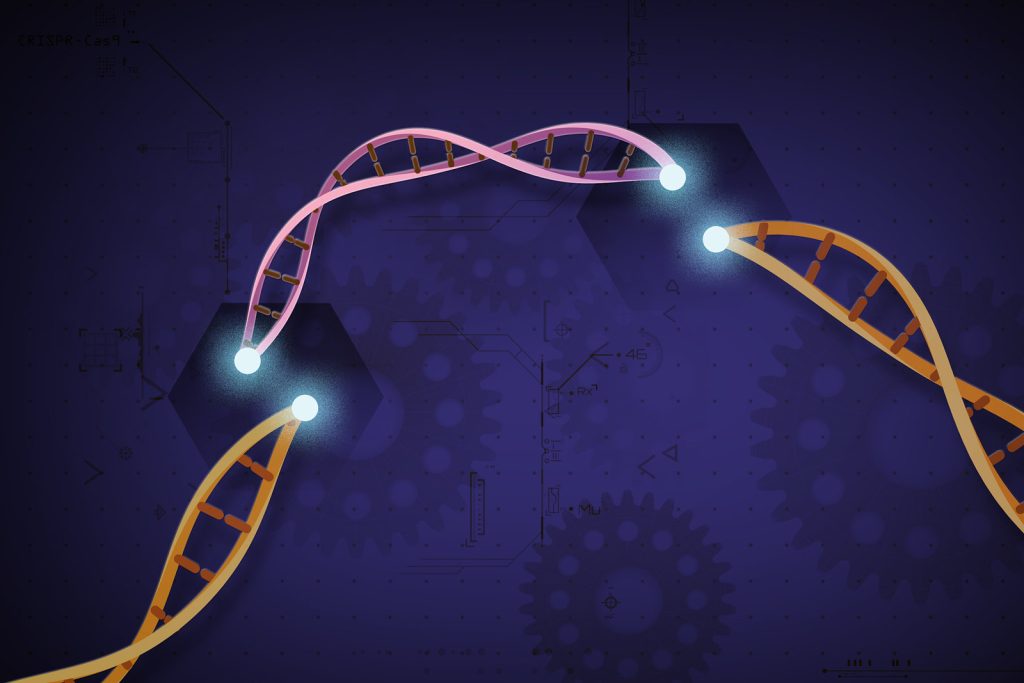
CRISPR-Cas9 is a customisable tool that lets scientists cut and insert small pieces of DNA at precise areas along a DNA strand. This lets scientists study our genes in a specific, targeted way. Credit: Ernesto del Aguila III, National Human Genome Research Institute, NIH

German and US scientists have discovered a CRISPR system in cells that shuts them down entirely to protect against viral replication, instead of merely chopping out foreign DNA that it comes across. It does this by shredding any DNA or RNA it comes across, causing the cell to become senescent and not become a virus factory. The newly identified CRISPR system is described in two papers published in Nature.

“With this new system, known as Cas12a2, we’re seeing a structure and function unlike anything that’s been observed in CRISPR systems to date,” says Jackson, assistant professor in Utah State’s Department of Chemistry and Biochemistry.

CRISPR, (Clustered Regularly Interspaced Short Palindromic Repeats) has taken science by storm with its gene-editing potential. Study of CRISPR DNA sequences and CRISPR-associated (Cas) proteins, which are actually bacterial immune systems, is still a young field.

Identified as a distinct immune system within the last five years, the Class 2, type V Cas12a2 is somewhat similar to the better-known ‘molecular scissors’ of CRISPR-Cas9, which binds to target DNA and cuts it, effectively shutting off a targeted gene. But CRISPR-Cas12a2 binds a different target than Cas9, and that binding has a very different effect.

Using cryo-electron microscopy, the team captured the CRISPR-Cas12a2 in a naturally occurring defensive strategy called abortive infection, a natural resistance strategy used by bacteria and archaea to limit the spread of viruses and other pathogens by preventing replication in the cell.

The team observed Cas12a2 in the act of cutting double-stranded DNA, bending it 90° to expose the backbone of the helix to cut it, a phenomenon that a phenomenon that elicits audible gasps from fellow scientists,” Jackson says.

Since the difference between a healthy cell and a malignant cell or infected cell is genetic, if Cas12a2 could be harnessed, “the potential therapeutic applications are significant.”

“If Cas12a2 could be harnessed to identify, target and destroy cells at the genetic level, the potential therapeutic applications are significant,” he says.

Source: Utah State University

This Open-source Autoinjector Could Be Made for a Tenth of the Price of Commercial Ones

Research team led by Joshua Pearce has developed a new 3-D printed, completely open-source autoinjector for a tenth of the cost of a commercially purchased product. (Photo by Anjutha Selvaraj)

A new study published in PLOS One describes the development of a spring-driven autoinjector for the delivery of insulin and other medications. This device, made from a combination of 3D-printed and commercially available parts, could cost less than $7 to make while a store-bought version is closer to $70.

Sir Frederick Banting was an inspiration for a new open source self-administering drug delivery device. Long before open source was an option or even a concept, the now-celebrated former University of Western Ontario lecturer refused to patent insulin because he wanted it to be inexpensive and widely available for the betterment of all.

A century after Banting won the Nobel Prize for his discovery, Western researchers led by engineering and Ivey Business School professor Joshua Pearce has developed a new 3D printed, completely open-source autoinjector – a device designed to deliver a single dose of medicine – for a tenth of the cost of a commercially purchased product.

“I think of this device, like so much of what we’re doing here at Western, very much as following the golden rule: do unto others as you would have them do unto you,” said Pearce. “It makes the world slightly better to have an open-source version of an autoinjector, especially for people who don’t have access or the financial means to purchase a proprietary one.”

Autoinjectors are used all over the world by health care practitioners, patients and parents (for children under 12) to inject insulin into people with diabetes. Other chronic conditions such as psoriasis, multiple sclerosis and rheumatoid arthritis can also be treated using an autoinjector. The device is also essential during emergency conditions for migraine, anaphylaxis and status epilepticus patients, as well.

Pearce, along with research assistant Anjutha Selvaraj and post-doctoral associate Apoorv Kulkarni, have created the new open-source autoinjector to make the device – considered more reliable and easier to operate than a simple syringe for self-administering medications into the body – an equitable alternative to the more expensive options.

Studies show self-administration of medications by patients improves compliance and comfort and empowers patients as they are actively involved in their personal care. It also allows patients to avoid time-consuming and costly visits to the hospital, which is a bonus for overburdened health care systems.

And, as with all open-source hardware, there is money to be made as the digitally replicable device enables low-cost distributed manufacturing. All materials, designs and assembly instructions are also detailed in the new study, and the effectiveness of the autoinjector is tested against the current standard (ISO 11608-1:2022) for needle-based injection systems. It is released with an open source hardware license. Companies wishing to commercialise the device will still need to meet their own local regulatory requirements.

“Does this design make it possible for other people to commercialise it anywhere in the world? Yes, it does,” said Pearce. “But more importantly, it means we can really target isolated communities, whether they’re in northern Canada, Africa or anywhere in else in the world, and improve health care access for everyone.”

Source: University of Western Ontario

Gravity-powered Biomedical Devices Pull Droplets Through a Maze

Source: Unsplash CC0

Biomedical engineers at Duke University have developed an entirely new approach to building point-of-care diagnostic devices that only use gravity to transport, mix and otherwise manipulate the liquid droplets involved. The demonstration, in the journal Device, requires only commercially available materials and very little power to read results, making it a potentially attractive option for applications in low-resource settings.

“The elegance in this approach is all in its simplicity – you can use whatever tools you happen to have to make it work,” said Hamed Vahabi, a former postdoctoral researcher at Duke. “You could theoretically even just use a handsaw and cut the channels needed for the test into a piece of wood.”

The study was conducted in the laboratory of Ashutosh Chilkoti, the Alan L. Kaganov Distinguished Professor of Biomedical Engineering at Duke.

There is no shortage of need for simple, easy-to-use, point-of-care devices. Many demonstrations and commercial devices seek to make diagnoses or measure important biomarkers using only a few drops of liquid with as little power and expertise required as possible. Their goal is to improve health care for the billions of people living in low-resource settings far from traditional hospitals and trained clinicians.

All of these tests have the same basic requirements; they must move, mix and measure small droplets containing biological samples and the active ingredients that make measuring specific biomarkers possible. More expensive examples use tiny electrical pumps to drive these reactions. Others use the physics of liquids within microchannels (microfluidics) that create a sort of suction effect.

This is the first demonstration that only uses gravity. Each approach offers uniquely useful abilities as well as drawbacks.

“Most microfluidic devices need more than just capillary forces to operate,” Chilkoti said. “This approach is much simpler and also allows very complex fluid paths to be deigned and operated, which is not easy or cheap to do with microfluidics.”

The new gravity-driven approach relies on a set of nine commercially available surface coatings that can tweak the wettability and slipperiness at any given point on the device. That is, they can adjust how much droplets flatten down into pancakes or remain spherical while making it easier or harder for them to slide down an incline.

Used together in clever combinations, these surface coatings can create all the microfluidic elements needed in a point-of-care test. For example, if a given location is extremely slippery and a droplet is placed at an intersection where one side pulls liquid flat and the other pushes it into a ball, it will act like a pump and accelerate the droplet toward the former.

“We came up with many different elements to control the motion, interaction, timing and sequence of multiple droplets in the device,” Vahabi said. “All of these phenomena are well-known in the field, but nobody thought of using them to control the motion of droplets in a systematic way before.”

By combining these elements, the researchers created a prototype test to measure the levels of lactate dehydrogenase (LDH) in a sample of human serum. They carved channels within the test platform to create specific pathways for droplets to travel, each coated with a substance that stops the droplets from sticking along their journey. They also primed specific locations with dried reagents needed for the test, which are soaked up by droplets of simple buffer solution as they travel through.

The whole maze-like test is then capped with a lid containing a couple of holes where the sample and buffer solution are dripped in. Once loaded, the test is placed inside a box-like device with a handle that turns the test 90° to allow gravity to do its work. This device is also equipped with a simple LED and light detector that can quickly and easily detect the amount of blue, red, or green in the test results. This means that the researchers can tag three different biomarkers with different colours for various tests to measure.

In the case of this prototype LDH test, the biomarker is tagged with a blue molecule. A simple microcontroller measures how deep of a blue hue the test results become and how quickly it changes colour, which indicates the amount and concentration of LDH in the sample, to generate results.

“We could eventually also use a smart phone down the line to measure results, but that’s not something we explored in this specific paper,” said Jason Liu, a PhD candidate in the Chilkoti lab.

The demonstration provides a new approach for consideration when engineering inexpensive, low-power, point-of-care diagnostic devices. While the group plans to continue developing their idea, they also hope others will take notice and work on similar tests.

“While a well-designed microfluidic system can be fully automated and easy-to-use by passive means, the timing of discrete steps is usually programmed into the design of the device itself, making modifications to protocol more difficult,” added David Kinnamon, a PhD candidate in the Chilkoti group. “In this work, the user retains more control of the timing of steps while only modestly sacrificing ease-of-operation. Again, this is an advantage for more complex protocols.”

Source: Duke University

A Natural Repair Process for Damaged Auditory Hair Cells

Photo by Dylann Hendricks on Unsplash

Auditory researchers have discovered how hair cells can repair themselves after being damaged, an important insight could benefit efforts to develop new and better ways to treat and prevent hearing loss. Their findings are published in the free online journal eLife.

Found in the inner ear, hair cells derive their name from the hair-like structures that cover them and serve as mechanical antennas for sound detection. The prevailing belief is that when auditory hair cells are killed, they are gone for good. But this new research from University of Virginia School of Medicine shows that these delicate cells have the ability to repair themselves from damage caused by loud noises or other forms of stress.

“For many years, auditory research has placed considerable emphasis on the regeneration of sensory hair cells. Although these efforts continue, it is equally important to enhance our comprehension of the intrinsic mechanisms that govern the repair and maintenance of these cells. By gaining a deeper understanding of these inherent repair processes, we can uncover strategies to fortify them effectively. One such approach in the future might involve the utilisation of drugs that stimulate repair programs,” said researcher Jung-Bum Shin, PhD, of UVA’s Department of Neuroscience. “In essence, when replacement of hair cells proves challenging, the focus shifts towards repairing them instead. This dual strategy of regeneration and repair holds strong potential in advancing treatments for hearing loss and associated conditions.”

Repairing the damaged cells

In order to sense sound, hair cells are naturally fragile, but they also must withstand the continuous mechanical stress inherent in their jobs.

Prolonged exposure to loud noise harms hair cells in a variety of ways, and one of those is by damaging the cores of the “hairs” themselves. These hair-like structures are known as stereocilia, and Shin’s new research shows a process they use to repair themselves.

The hair cells do this by deploying a protein called XIRP2, which has the ability to sense damage to the cores, which are made of a substance called actin. Shin and his team found that XIRP2 first senses damage, then migrates to the damage site and repairs the cores by filling in new actin.

“We are especially excited to have identified a novel mechanism by which XIRP2 can sense damage-associated distortions of the actin backbone,” Shin said. “This is of relevance not only for hair cell research, but the broader cell biology discipline.”

The pioneering work has netted a grant to fund additional research into how the cores are repaired. By understanding this, scientists will be better positioned to develop new ways to battle hearing loss – even the kind that comes from aging, the researchers say.

“Age-related hearing loss affects at least a third of all older adults,” Shin said. “Understanding and harnessing internal mechanisms by which hair cells counteract wear and tear will be crucial in identifying ways to prevent age-related hearing loss. Furthermore, this knowledge holds potential implications for associated conditions such as Alzheimer’s disease and other dementia conditions.”

Source: University of Virginia Health System

Would it be Ethical to Entrust Human Patients to Robotic Nurses?

Photo by Alex Knight on Unsplash

Advancements in AI have resulted in typically human characteristics like creativity, communication, critical thinking, and learning being replicated by machines for complex tasks like driving vehicles and creating art. With further development, these human-like attributes may develop enough to one day make it possible for robots and AI to be entrusted with nursing, a very ‘human’ practice. But… would it be ethical to entrust the care of humans to machines?

In a step toward answering this question, Japanese researchers recently explored the ethics of such a situation in the journal Nursing Ethics.

The study was conducted by Associate Professor Tomohide Ibuki from Tokyo University of Science, in collaboration with medical ethics researcher Dr Eisuke Nakazawa from The University of Tokyo and nursing researcher Dr Ai Ibuki from Kyoritsu Women’s University.

“This study in applied ethics examines whether robotics, human engineering, and human intelligence technologies can and should replace humans in nursing tasks,” says Dr Ibuki.

Nurses show empathy and establish meaningful connections with their patients, a human touch which is essential in fostering a sense of understanding, trust, and emotional support. The researchers examined whether the current advancements in robotics and AI can implement these human qualities by replicating the ethical concepts attributed to human nurses, including advocacy, accountability, cooperation, and caring.

Advocacy in nursing involves speaking on behalf of patients to ensure that they receive the best possible medical care. This encompasses safeguarding patients from medical errors, providing treatment information, acknowledging the preferences of a patient, and acting as mediators between the hospital and the patient. In this regard, the researchers noted that while AI can inform patients about medical errors and present treatment options, they questioned its ability to truly understand and empathise with patients’ values and to effectively navigate human relationships as mediators.

The researchers also expressed concerns about holding robots accountable for their actions. They suggested the development of explainable AI, which would provide insights into the decision-making process of AI systems, improving accountability.

The study further highlights that nurses are required to collaborate effectively with their colleagues and other healthcare professionals to ensure the best possible care for patients. As humans rely on visual cues to build trust and establish relationships, unfamiliarity with robots might lead to suboptimal interactions. Recognising this issue, the researchers emphasised the importance of conducting further investigations to determine the appropriate appearance of robots for facilitating efficient cooperation with human medical staff.

Lastly, while robots and AI have the potential to understand a patient’s emotions and provide appropriate care, the patient must also be willing to accept robots as care providers.

Having considered the above four ethical concepts in nursing, the researchers acknowledge that while robots may not fully replace human nurses anytime soon, they do not dismiss the possibility. While robots and AI can potentially reduce the shortage of nurses and improve treatment outcomes for patients, their deployment requires careful weighing of the ethical implications and impact on nursing practice.

“While the present analysis does not preclude the possibility of implementing the ethical concepts of nursing in robots and AI in the future, it points out that there are several ethical questions. Further research could not only help solve them but also lead to new discoveries in ethics,” concludes Dr Ibuki.

Source: Tokyo University of Science

Dr Robot Will See You Now: Medical Chatbots Need to be Regulated

Photo by Alex Knight on Unsplash

The Large Language Models (LLM) used in chatbots may appear to offer reliable, persuasive advice in a format which mimics conversation but in they can offer potentially harmful information when prompted with medical questions. Therefore, any LLM-chatbot in a medical setting would require approval as a medical device, argue experts in a paper published in Nature Medicine.

The mistake often made with LLM-chatbots is that they are a true “artificial intelligence” when in fact they are more closely related to the predictive text in a smartphone. They mostly use conversations and text scraped from the internet, and use algorithms to associate words and sentences in a manner that appears meaningful.

“Large Language Models are neural network language models with remarkable conversational skills. They generate human-like responses and engage in interactive conversations. However, they often generate highly convincing statements that are verifiably wrong or provide inappropriate responses. Today there is no way to be certain about the quality, evidence level, or consistency of clinical information or supporting evidence for any response. These chatbots are unsafe tools when it comes to medical advice and it is necessary to develop new frameworks that ensure patient safety,” said Prof Stephen Gilbert at TU Dresden.

Challenges in the regulatory approval of LLMs

Most people research their symptoms online before seeking medical advice. Search engines play a role in decision-making process. The forthcoming integration of LLM-chatbots into search engines may increase users’ confidence in the answers given by a chatbot that mimics conversation. It has been demonstrated that LLMs can provide profoundly dangerous information when prompted with medical questions.

The basis of LLMs do not have any medical “ground truth,” which is inherently dangerous. Chat-interfaced LLMs have already provided harmful medical responses and have already been used unethically in ‘experiments’ on patients without consent. Almost every medical LLM use case requires regulatory control in the EU and US. In the US their lack of explainability disqualifies them from being ‘non devices’. LLMs with explainability, low bias, predictability, correctness, and verifiable outputs do not currently exist and they are not exempted from current (or future) governance approaches.

The authors describe in their paper the limited scenarios in which LLMs could find application under current frameworks. They also describe how developers can seek to create LLM-based tools that could be approved as medical devices, and they explore the development of new frameworks that preserve patient safety. “Current LLM-chatbots do not meet key principles for AI in healthcare, like bias control, explainability, systems of oversight, validation and transparency. To earn their place in medical armamentarium, chatbots must be designed for better accuracy, with safety and clinical efficacy demonstrated and approved by regulators,” concludes Prof Gilbert.

Source: Technische Universität Dresden

Face to Face: “Fail your way to success”, Says Prof Behind Pioneering Drug Discovery Group at UCT

Technical work on the discovery of new medicines is not commonly done in Africa, but Kelly Chibale, a professor in organic chemistry and founder of H3D at the University of Cape Town is changing this. PHOTO: Nasief Manie/Spotlight

By Biénne Huisman for Spotlight

Inside Professor Kelly Chibale’s office the bookshelves are packed with awards. On the walls, framed photographs include his class photo at Cambridge University in the United Kingdom, dated 1989.

Chibale is a professor of organic chemistry and founder of the pioneering Holistic Drug Discovery and Development Centre – H3D – at the University of Cape Town. While many important clinical trials have been conducted by Africans in Africa, the kind of drug discovery work that Chibale is doing is rare on the continent.

Chibale relays how he sees molecules everywhere – in hair, in clothes, in all of life around us. His animated voice fills the space as he speaks. “With organic chemistry, we are very visual. We look at chemical structures. If you give me a chemical structure, oh my goodness, my head starts racing about what I can do with it, or how I can change it to create new properties or new materials.”

H3D has 76 staff members investigating novel chemical compounds that could become new lifesaving medicines, with a focus on malaria, tuberculosis, and antibiotic-resistant microbial diseases.

Effectively a small biotech company embedded within the university, to date, H3D’s most notable discovery was a compound in 2012 which they named MMV390048, which had the potential to become a single-dose cure for malaria. Phase I clinical trials saw MMV390048 tested on human volunteers in South Africa and in Australia.

“In Australia, the testing model used is a volunteer infection study where human beings volunteer to be injected with the malaria parasite, which they know can be treated using available medicines,” says Chibale. “And then a section of those are given the experimental drug. And it worked beautifully there.”

‘Fail your way to success’

He adds, “People don’t realise this – there’s no medicine that will be given to people if it wasn’t tested on people first. Even me as an African. Oh man, I suffered from malaria as a child in Zambia many times. Thanks to our government then I’d be taken to a health facility and get malaria tablets, which I took and got well again. Otherwise, I would have died. Malaria kills very quickly. Now this is something I didn’t know then, something I took for granted. Only much later in life did I realise, goodness the medicine I took – someone somewhere invested in its research and development. And someone, somewhere, another human being, volunteered for that drug to be tested on them for my benefit.”

In 2017, the compound made it to Phase II clinical trials in patients with the disease, but further development was halted in 2020 when extensive further tests showed toxicity signals in rats – not rabbits though, Chibale says, adding that they had to err on the side of caution.

“In drug discovery, you have to kiss many frogs before you meet the prince,” he says. “Many drugs fail to progress. People focus on one product that makes it onto the market, right? But there are many failures that don’t even see the light of day. In this industry, you fail your way to success.”

H3D’s most notable discovery was a compound in 2012 which they named MMV390048, which had the potential to become a single-dose cure for malaria. PHOTO: Nasief Manie/Spotlight

Their work continues. In April last year at a function at Cape Town’s Vineyard Hotel, multinational pharmaceutical company Johnson & Johnson announced H3D as one of its three satellite centres for global health discovery. The other centres are in London and Singapore. At the time, Johnson & Johnson stated, “Driven by some of the leading researchers in Africa and discovery science, the satellite center [H3D] is focused on outpacing the rising threat of antimicrobial resistance by accelerating innovation against multidrug-resistance gram-negative bacteria.”

Seated at a boardroom table in his office, Chibale laughs deep from his belly. “We associate Johnson & Johnson with baby powder, but there’s much more…”

His left arm is in a sling following shoulder surgery – an injury stemming from lockdown when he slipped and fell while hiking on Table Mountain. “It happened just here, above the university,” he gestures, with his other arm.

Chibale and his wife Bertha live on the university’s campus, where he has served as warden of student residence Upper Campus Residence, formerly Smuts Hall, since 2015. Here he weathered the #rhodesmustfall and #feesmustfall protests, which saw students torch vehicles and police deploy stun grenades a stone’s throw away from his home.

Referring to his injured arm, he says at least his writing arm wasn’t hurt and that he can still type with one hand.

From a village in Zambia

Mentions of gratitude underpin the story of his journey, which starts in a village without electricity or running water in Zambia’s Mpika district. His father died when he was two months old. Laughing, he relays how hearing in his one ear is still impaired after being ambushed as a kid while stealing mangoes.

“This was a township,” he says. “So I’m climbing up a tree to steal mangoes and I was coming down. This gang, or well guys who were playful, had surrounded us. There were only about four of us, of who three managed to escape. And I was the only one left. Oh my goodness. And they took a big rock and smashed it to my ear. And then, when they saw me bleeding, they actually ran away. They were so scared of the damage they had done. Oh, that day! Anyway, so I went home and lied to my mother and said, no I went to school and tripped over a hole.”

During high school classes, thanks to an excellent teacher, he became fascinated with chemistry experiments. He went on to study organic chemistry at the University of Zambia, where he fell in love with the logical nature of organic molecules. “These things cannot be planned. I simply fell in love with organic chemistry, in the same way I fell in love with my wife Bertha,” he says.

From early on he realised education was a way out of poverty. “To get out of poverty, you either play sport or you follow education,” he says. “So I started applying for scholarships, writing letters to universities around the world. And I got rejected. I kept applying and kept on being rejected. But I didn’t give up. I kept applying.”

His first job was at Kafironda Explosives in the mining town Mufulira, on Zambia’s Copperbelt, where he made detonators, dynamite, and other explosives for use in Zambian mines. Laughing, he says this would come to haunt him later while applying for a visa to enter the United States. “There was a section on the form where you had to declare whether you’ve worked with explosives,” he says. “Of course, I said ‘yes’, and fortunately nothing happened.”

During two years at Kafironda, he continued applying for scholarships. “And I remember this,” he says. “It was January of 1989. I got a letter saying you have been shortlisted for a Cambridge Livingstone Trust Scholarship. Please present yourself for an interview on the 26th of January at the Anglo-American Corporation offices in Harare, Zimbabwe… So that was my first time out of Zambia. The first time to fly on an aeroplane.”

‘This was my turn’

Competition for the scholarship was tight, with shortlisted candidates from several African countries. “So in that year, there were six of us from Zambia, from different disciplines. I was the only scientist. And of course, I’d been failing all this time, getting rejected. But this was my turn. It was God’s appointed time for me. Actually, I was the only successful candidate.”

At Cambridge, without having completed an honours or master’s degree, Chibale enrolled for a PhD under the late organic chemist Professor Stuart Warren. “So Stuart, this amazing, incredible man, just gave me a chance. I mean there was such a gap between me and my colleagues who had all done their undergraduates at Cambridge. But in life, you can moan and complain about a disadvantage, or you can turn it into a challenge. I mean, the first three to six months were rough. Stuart would recommend to me that I sneak into first-year undergraduate classes to catch up. Stuart, he saw something in me that I didn’t even see in myself, and really gave me a chance.”

Chibale’s work at Warren’s lab, developing new synthetic methods for optically active molecules, helped secure his first post-doctoral position at the University of Liverpool, in the United Kingdom, after which he joined the Scripps Research Institute in La Jolla, California, funded through a Wellcome Trust International Prize Travelling Research Fellowship.

“That was another miracle,” he says. “I was eligible for this fellowship only because I had lived in England for three years, which was a minimum requirement. And the scholarship was so good, it even gave me an allowance for my family. I haven’t forgotten. It was 1 000 pounds per month. In those days, the pound was much stronger than the US dollar. So I went from rags to riches. In Liverpool, I was walking most of the time while in California, I actually had a car!”

Over the years, he was gaining insight into the pharmaceutical sector – the science but also the entrepreneurial side that pushes innovation, all the while longing to bring this knowledge to Africa. Peers suggested he consider South Africa, and particularly the University of Cape Town [UCT]. Around 1994, then UCT Department of Chemistry head, Professor James Bull actually made Chibale an offer to pursue postdoctoral research – which he declined. “Because I thought there was going to be a civil war in South Africa! I remember watching the release of Nelson Mandela on TV in England, quiet, just watching.”

Towards the end of 1995, inside a copy of the British scientific journal Nature, Chibale found an advertisement for a position as a lecturer in organic chemistry at UCT and applied. “It was a calling,” he says. The family moved to Cape Town.

Then in 2010 at UCT, with five post-doctoral staff, Chibale founded H3D. At the time his mentors included Dr Anthony Wood, former Pfizer senior vice-president, now head of GlaxoSmithKline’s Research and Development, who arranged for Chibale to have a four-month sabbatical with Pfizer in the United Kingdom to learn about the practicalities of innovative pharma. Thirteen years later, H3D has blossomed.

Chibale says he is a Christian as well as a soccer and boxing fan. His wife Bertha runs a Cape Town catering business called Hearts and Tarts. They have three sons.

As the interview draws to a close, he looks up at his 1989 Cambridge class photo. “You won’t believe it,” he says. “Last year I visited my college at Cambridge with my wife and second son and they pulled out a copy of my handwritten scholarship application letter, written to them from Zambia all those years back.”

This precious relic of Chibale’s journey is not in his office. He keeps it on his desk at home.

Republished from Spotlight under a Creative Commons 4.0 Licence.

Source: Spotlight

In the ICU, Artificial Intelligence Beats Humans

Image created using an AI art program, Craiyon, with the prompt “An AI monitoring a patient in an ICU ward”.

In the future, artificial intelligence will play an important role in medicine. In diagnostics, successful tests have already been performed with AI, such as accurately categorising images according to whether they show pathological changes or not. But training an AI run in real time to examine the time-varying conditions of patients in an ICU and to calculate treatment suggestions has remained a challenge. Now, University of Vienna Researchers report in the Journal of Clinical Medicine that they have accomplished such a feat.

With the help of extensive data from ICUs of various hospitals, an AI was developed that provides suggestions for the treatment of people who require intensive care due to sepsis. Analyses show that AI already surpasses the quality of human decisions making it important to also discuss the legal aspects of such methods.

Making optimal use of existing data

“In an intensive care unit, a lot of different data is collected around the clock. The patients are constantly monitored medically. We wanted to investigate whether these data could be used even better than before,” says Prof Clemens Heitzinger from the Institute for Analysis and Scientific Computing at TU Wien (Vienna).

Medical staff make their decisions on the basis of well-founded rules. Most of the time, they know very well which parameters they have to take into account in order to provide the best care. But now, a computer can easily take many more parameters than a human into account – sometimes leading to even better decisions.

The computer as planning agent

“In our project, we used a form of machine learning called reinforcement learning,” says Clemens Heitzinger. “This is not just about simple categorisation – for example, separating a large number of images into those that show a tumour and those that do not – but about a temporally changing progression, about the development that a certain patient is likely to go through. Mathematically, this is something quite different. There has been little research in this regard in the medical field.”

The computer becomes an agent that makes its own decisions: if the patient is well, the computer is “rewarded”. If the condition deteriorates or death occurs, the computer is “punished”. The computer programme has the task of maximising its virtual “reward” by taking actions. In this way, extensive medical data can be used to automatically determine a strategy which achieves a particularly high probability of success.

Already better than a human

“Sepsis is one of the most common causes of death in intensive care medicine and poses an enormous challenge for doctors and hospitals, as early detection and treatment is crucial for patient survival,” says Prof Oliver Kimberger from the Medical University of Vienna. “So far, there have been few medical breakthroughs in this field, which makes the search for new treatments and approaches all the more urgent. For this reason, it is particularly interesting to investigate the extent to which artificial intelligence can contribute to improve medical care here. Using machine learning models and other AI technologies are an opportunity to improve the diagnosis and treatment of sepsis, ultimately increasing the chances of patient survival.”

Analysis shows that AI capabilities are already outperforming humans: “Cure rates are now higher with an AI strategy than with purely human decisions. In one of our studies, the cure rate in terms of 90-day mortality was increased by about 3% to about 88%,” says Clemens Heitzinger.

Of course, this does not mean that one should leave medical decisions in an ICU to the computer alone. But the artificial intelligence may run along as an additional device at the bedside – and the medical staff can consult it and compare their own assessment with the AI’s suggestions. Such AIs can also be highly useful in education.

Discussion about legal issues is necessary

“However, this raises important questions, especially legal ones,” says Clemens Heitzinger. “One probably thinks of the question who will be held liable for any mistakes made by the artificial intelligence first. But there is also the converse problem: what if the artificial intelligence had made the right decision, but the human chose a different treatment option and the patient suffered harm as a result?” Does the doctor then face the accusation that it would have been better to trust the artificial intelligence because it comes with a huge wealth of experience? Or should it be the human’s right to ignore the computer’s advice at all times?

“The research project shows: artificial intelligence can already be used successfully in clinical practice with today’s technology – but a discussion about the social framework and clear legal rules are still urgently needed,” Clemens Heitzinger is convinced.

Source: EurekAlert!

Study Reveals How Androgen Receptor Functions are Affected by Mutations

Testosterone molecule
Model of a testosterone molecule. Source: Wikimedia CC0

The androgen receptor is a key transcriptional factor for proper sex development, especially in males and the physiological balance of all the tissues that express this receptor. The androgen receptor is involved in several pathologies and syndromes, such as spinal and bulbar muscular atrophy or androgen insensitivity syndrome, for which there is no specific treatment. Regarded as the main initial and progression factor in prostate cancer, this receptor has been the main therapeutic target for the treatment against this disease for decades.

Now, a study published in Science Advances describes the structural and functional effects of mutations on the androgen receptor, as well as how these changes lead to the development of prostate cancer.

Point mutations in the androgen receptor

The human androgen receptor is a key protein in the development and functioning of the prostate in response to male hormones, such as testosterone. Point mutations in the androgen receptor – specifically, one amino acid swapped for another – are one of the main mechanisms than can lead to structural and functional alterations in the receptor, which result in the development of diseases.

The results of the University of Barcelona-led study show that the analysed mutations affect several functional regions of the union domain of the androgen receptor to testosterone. In particular, these are mutations that alter a region of the receptor which is the target for posttranscriptional modifications (that is, modifications in the protein once this is produced).

This type of chemical alterations affect specific amino acids of the androgen receptor and are executed by regulating proteins which are critical for the proper functioning of the receptor. If this receptor’s regulation pathway is altered, such as the case of the presence of mutations described by the team, its function is deregulated and it can be dysfunctional and cause pathologies.

“In our study, we experimentally checked that these mutations deregulate a specific mutation, known as arginine methylation, which is one of the posttranscriptional modifications, due to the structural changes these alterations produce in a functional area of the receptor. Also, we could observe that the deregulation of the androgen receptor methylation involves relevant changes in its function within the cell,” the team concludes.

Source: University of Barcelona

Medical Students Retain Knowledge Better from Virtual Reality Lessons

A trial published in the International Journal of Gynecology & Obstetrics lends support to the idea that 3D virtual reality lessons can improve medical students’ retention of knowledge and understanding of complex topics in obstetrics and gynaecology.

For the study, 21 students took part in a 15-minute virtual reality learning environment (VRLE) experience on the stages of foetal development, while 20 students received a PowerPoint tutorial on the same topic, serving as a control.

While the students’ level of knowledge increased after both learning experiences, it was only retained in the VRLE group at one-week follow up. Questionnaires completed by participants reflected a high degree of satisfaction with the VRLE tool compared with the traditional tutorial.

“Virtual reality learning tools hold potential to enhance student learning and are very well received by students,” said corresponding author Fionnuala McAuliffe, MD, of University College Dublin National Maternity Hospital, in Ireland.

Source: Wiley