Category: Medical Research & Technology

A New Model of the Liver Will Help Improve Drug Safety for Women

Improved modelling of male and female livers can help lead to safer drugs

Photo by Danilo Alvesd on Unsplash

Researchers report in PLOS Computational Biology that they developed a powerful new tool to understand how medications affect men and women differently, and that will help lead to safer, more effective drugs in the future.

Women are known to suffer a disproportionate number of liver problems from medications but also usually underrepresented in drug testing. To address this, University of Virginia scientists have developed sophisticated computer simulations of male and female livers and used them to reveal sex-specific differences in how the tissues are affected by drugs.

The new model has already provided unprecedented insights into the biological processes that take place in the liver, the organ responsible for detoxifying the body, in both men and women. But the model also represents a powerful new tool for drug development, helping ensure that new medications will not cause harmful side effects.

“There are incredibly complex networks of genes and proteins that control how cells respond to drugs,” said UVA researcher Jason Papin, PhD, one of the model’s creators. “We knew that a computer model would be required to try to answer these important clinical questions, and we’re hopeful these models will continue to provide insights that can improve healthcare.”

Harmful side effects

Papin, of UVA’s Department of Biomedical Engineering, developed the model in collaboration with Connor Moore, a PhD student, and Christopher Holstege, MD, a UVA emergency medicine physician and director of UVA Health’s Blue Ridge Poison Center. “It is exceedingly important that both men and women receive the appropriate dose of recommended medications,” Holstege noted. “Drug therapy is complex and toxicity can occur with subtle changes in dose for specific individuals.”

Before developing their model, the researchers first looked at the federal Food and Drug Administration’s Adverse Event Reporting System to evaluate the frequency of reported liver problems in men and women. The scientists found that women consistently reported liver-related adverse events more often than did men.

The researchers then sought to explain why this might be the case. To do that, they developed computer models of the male and female livers that integrated vast amounts of data on gene activity and metabolic processes within cells. These cutting-edge liver simulations provided important insights into how drugs (xenobiotics) affect the tissue differently in men and women and allowed the researchers to understand why.

They found that xenobiotic metabolism was more active in untreated males, while pentose and glucoronate interconversions were female-biased, suggesting a difference in pretreatment gene expression, which may result in different initial responses of phase I and phase II metabolism to hepatotoxic drugs. They also observed sex-bias in bile acid biosynthesis, which in combination with xenobiotic metabolism, this result may suggest differences in bacterial deconjugation driven by sex differences in the gut microbiome. Differences were also found in several essential metabolic pathways, such as glycolysis/gluconeogenesis, nucleotide metabolism, and lipid metabolism with supporting evidence in human or rat hepatocytes.

“We were surprised how many differences we found, especially in very diverse biochemical pathways,” said Moore, a biomedical engineering student in Papin’s lab. “We hope our results emphasise how important it is for future scientists to consider how both men and women are affected by their research.”

The work has already identified a key series of cellular processes that explain sex differences in liver damage, and the scientists are calling for more investigation of it to better understand “hepatotoxicity” — liver toxicity. Ultimately, they hope their model will prove widely useful in developing safer drugs.

“We’re hopeful these approaches will be help address many other questions where men and women have differences in drug responses or disease processes,” Papin said. “Our ability to build predictive computer models of complex systems in biology, like those in this study, is truly opening all kinds of new avenues for tackling some of the most challenging biomedical problems.”

Source: University of Virginia Health System

Mastering a Third Robotic Arm is Surprisingly Quick

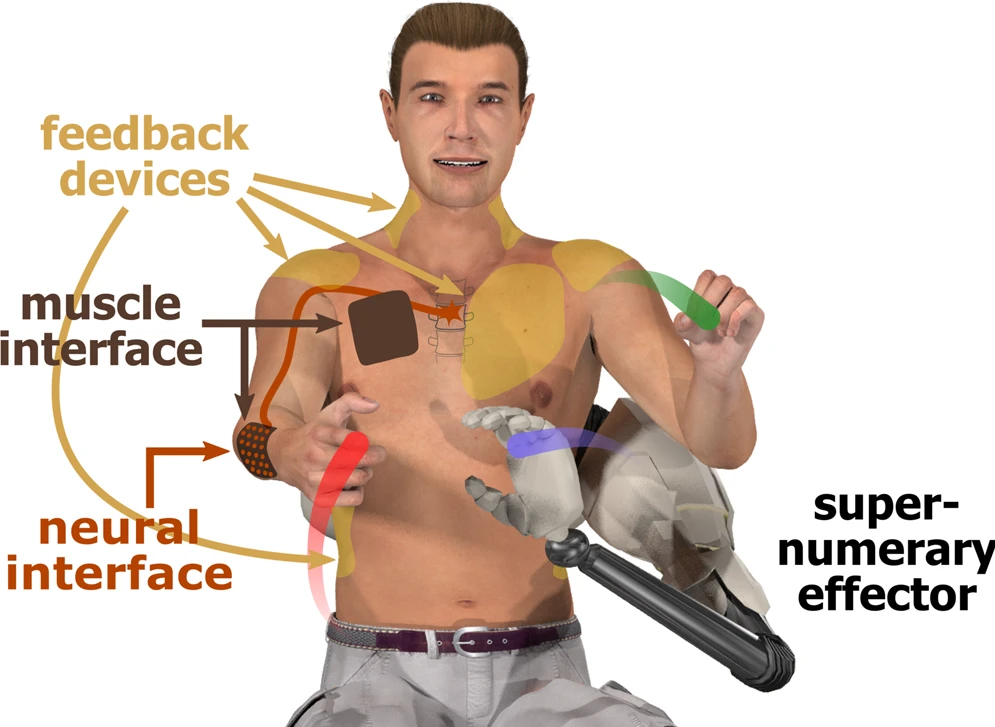
Interfaces for DoF augmentation (figure by Tobias Pistohl). From Eden at al., Nature Communications. 2022

Busy doctors and nurses may have often found themselves wishing they had an extra arm to help with a patient or help with a difficult suture. Researchers around the world are developing supernumerary robotic arms to help workers achieve certain tasks unaided, or with less strain – but how long would it take to master learning an additional limb? The answer is: not long at all. One hour’s worth of training is enough for people to carry out a task with their ‘third arm’ as effectively as with a partner, according to the results of a new study published in IEEE Open Journal of Engineering in Medicine and Biology.

A new study by researchers at Queen Mary University of London, Imperial College London and The University of Melbourne has found that people can learn to use supernumerary robotic arms as effectively as working with a partner in just one hour of training.

The study investigated the potential of supernumerary robotic arms to help people perform tasks that require more than two hands. The idea of human augmentation with additional artificial limbs has long been a staple of science fiction.

Demonstrating performing a suture with an assistant robotic arm.

“Many tasks in daily life, such as opening a door while carrying a big package, require more than two hands,” said Dr Ekaterina Ivanova, lead author of the study from Queen Mary University of London. “Supernumerary robotic arms have been proposed as a way to allow people to do these tasks more easily, but until now, it was not clear how easy they would be to use.”

The study involved 24 participants who were asked to perform a variety of tasks with a supernumerary robotic arm. The participants were either given one hour of training in how to use the arm, or they were asked to work with a partner.

The results showed that the participants who had received training on the supernumerary arm performed the tasks just as well as the participants who were working with a partner. This suggests that supernumerary robotic arms can be a viable alternative to working with a partner, and that they can be learned to use effectively in a relatively short amount of time.

“Our findings are promising for the development of supernumerary robotic arms,” said Dr Ivanova. “They suggest that these arms could be used to help people with a variety of tasks, such as surgery, industrial work, or rehabilitation.”

Source: Queen Mary University of London

The Vagus Nerve also Plays a ‘Fight or Flight’ Role for the Heart

Photo by Stephen Andrews

Researchers have reported in Circulation that the vagus nerve, known for its parasympathetic role in ‘resting and digesting’, also has an important role in exercise, helping the heart pump blood.

Exercise science currently holds that the ‘fight or flight’ (sympathetic) nervous system is active during exercise, helping the heart beat harder, and the ‘rest and digest’ (parasympathetic) nervous system is lowered or inactive. However, University of Auckland physiology Associate Professor Rohit Ramchandra says that this current understanding is based on indirect estimates and a number of assumptions which this new study has proven to be wrong.

“Our study finds the activity in these ‘rest and digest’ vagal nerves actually increases during exercise,” Dr Ramchandra says. “Our group has used ‘tour de force’ electrical recording techniques to directly monitor vagal nerve activity in exercising sheep and has found the activity in these vagal nerves going to the heart increases during exercise.

”For the heart to sustain a high level of pumping, it needs a greater blood flow during exercise to fuel the increased work it is doing: our data indicate that the increase in vagal activity does just this.”

During exercise, there is a four to five-fold increase in the amount of blood pumped out by the heart per minute, requiring increased cardiac output. This is modulated by autonomic nerves that travel from the brain, including the sympathetic and parasympathetic vagal nerves.

The vagal nerve connects the brain to the heart, and other internal organs including the gut, regulating the ‘rest and digest’ parasympathetic nervous system responses. The new research finds the parasympathetic and sympathetic nervous systems work together in exercise to help increase cardiac output. The researchers also investigated the role of mediators released by the cardiac vagal nerve.

“The cardiac vagus nerve releases multiple mediators, and previous research has focused on a neurotransmitter, acetylcholine, which has no impact on our ability to exercise,” says Dr Ramchandra. “Our study focused on a different mediator, vasoactive intestinal peptide (VIP) and it shows that the vagus nerve releases this peptide during exercise, which helps the coronary vessels dilate allowing more blood to pump through the heart.”

The first and co-corresponding author Dr Julia Shanks says, “Vasoactive intestinal peptide was first found in the gut and it does help in digestion, but what we now know is that it is also important in exercise.”

The trial was conducted in sheep, because of their similarity to humans in many important respects including cardiac anatomy and physiology. They are also well-established as an animal model to assist with finding ways to combat heart disease that translate to humans.

These fundamental findings could have applications in diseases, including heart failure, where people cannot tolerate exercise.

“This inability to carry out simple tasks involving exertion means that quality of life is severely compromised in these patients,” Dr Ramchandra says. “One potential reason why exercise tolerance is reduced is that the diseased heart simply does not receive enough blood. Our follow-up study will try to see whether we can use this important role of cardiac vagal nerves to improve exercise tolerance in heart failure.”

There is a lot of interest in trying to ‘hack’ or improve vagal tone as a means to reduce anxiety. Investigating this was outside the scope of the current study.

Dr Ramchandra says we do know that the vagus mediates the slowing down of heart rate and if we have high vagal activity, then our hearts should beat slower.

“Whether this is the same as relaxation, I am not sure, but we can say that regular exercise can improve vagal activity and has beneficial effects.”

Source: University of Auckland

‘Long COVID’ Risks are Inflated by Flawed Research, Reviewers Find

Photo by Usman Yousaf on Unsplash

‘Long COVID’ is a mysterious constellation of symptoms associated with having recovered from COVID infection – but how many cases represent a true condition, and how many fall under a poorly-defined umbrella of currently known ones? Overly broad definitions, a lack of appropriate, or any, comparison groups, among other things, in studies looking at the epidemiology of the condition have distorted the risks, say the authors of a review published in BMJ Evidence-based Medicine.

This is further compounded by inclusion of poorly conducted studies into systematic reviews and pooled data analyses that end up overstating the risk yet again, they add. 

Likely consequences include increased public anxiety and healthcare spend; misdiagnoses; and diversion of funds from those who really do have other long term conditions secondary to COVID infection, suggest the researchers.

Many after-effects of COVID infection include post-ICU syndrome, which is a constellation of health issues that are present when the patient is in intensive care and which persist after discharge home, and shortness of breath following pneumonia. The trouble is that these are common to many upper respiratory viruses, the researchers point out.

None of the working definitions of ‘long COVID’ used by influential health bodies, such as the US Centers for Disease Control and Prevention, the World Health Organization, the UK National Institute for Health and Care Excellence (NICE), Scottish Intercollegiate Guidelines Network (SIGN), and the Royal College of General Practitioners requires a causal link between SARS-CoV2 and a range of symptoms. 

Not only should comparator (control) groups be included in ‘long COVID’ studies, when they often aren’t, but they should also be properly matched to cases, ideally by age, sex, geography, socioeconomic status and, if possible, underlying health and health behaviours, which they rarely are, say the researchers.

During the early stages of the pandemic, when SARS-CoV-2 testing wasn’t widely available, studies were more likely to include a non-representative sample of SARS-CoV-2-positive patients by including fewer patients with mild or no symptoms.

This is known as sampling bias, which occurs when certain members of a population have a higher probability of being included in a study sample than others, potentially limiting the generalisability of a study’s findings, explain the researchers.

“Our analysis indicates that, in addition to including appropriately matched controls, there is a need for better case definitions and more stringent [‘long COVID’] criteria, which should include continuous symptoms after confirmed SARS-CoV-2 infection and take into consideration baseline characteristics, including physical and mental health, which may contribute to an individual’s post COVID experience, “ they write, adding that the umbrella term ‘long COVID’ should be jettisoned in favour of different terms for specific after effects.

While the results of high quality population studies on ‘long COVID’ in adults and children have been reassuring, they point out,  the body of research “is replete with studies with critical biases” they add, setting out common pitfalls.

“Ultimately, biomedicine must seek to aid all people who are suffering. In order to do so, the best scientific methods and analysis must be applied. Inappropriate definitions and flawed methods do not serve those whom medicine seeks to help,” they insist.

“Improving standards of evidence generation is the ideal method to take long COVID seriously, improve outcomes, and avoid the risks of misdiagnosis and inappropriate treatment,” they include.

Source: EurekAlert!

Study Reveals Global Differences in Sleep Patterns

Photo by Cottonbro on Pexels

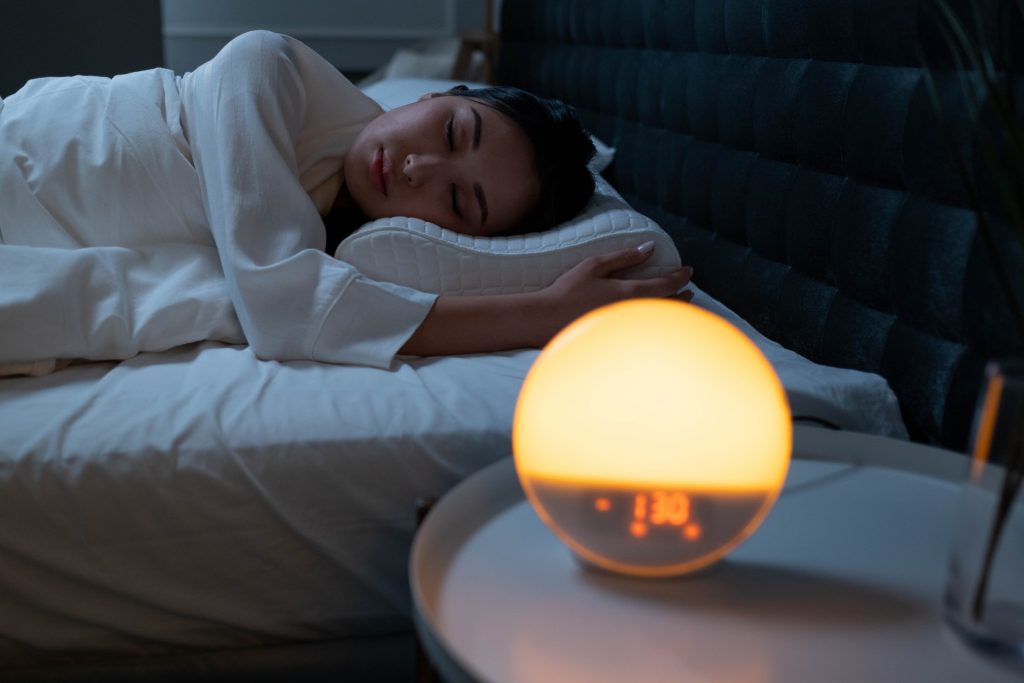
Using data from a consumer sleep tracker, a new study has shown that not only do people in Asia go to sleep later and have shorter sleep, they also have lower sleep quality than those in other parts of the world. The study, published in Sleep Medicine, also showed that South Africans, Australians and New Zealanders went to bed and rose earlier than the other parts of the world included in the research, but also got the most sleep.

This finding surfaced after a team of researchers from the Centre for Sleep and Cognition at the Yong Loo Lin School of Medicine, National University of Singapore (NUS Medicine) in partnership with Oura Health Oy (Finland), analysed 50 million nights of anonymised sleep data, contributed by over 220 000 users of the “Oura Ring”, a consumer sleep tracker, from across 35 countries. Most of the users were working adults, aged between 30 and 55 years. To provide a comprehensive analysis of sleep measures for each user, the team gathered sleep data from multiple nights across a whole year – on average, each user contributed 242 nights of data. Weekday and weekend sleep were analysed separately to assess the impact of the working week on sleep patterns.

The results showed that people in Asia have shorter sleep, and display higher variability in both sleep timing and duration on weekdays. They also fall asleep later than those living in Europe, Oceania and North America. Previous studies have shown that shorter sleep duration is usually associated with higher sleep efficiency as people try to make the most of their sleep opportunity; however, in this study, despite sleeping less, people in Asia also had lower sleep efficiency. This may be because factors that result in short sleep (eg, work-related anxiety) also lead to lower quality sleep.

People often sleep for longer at the weekends than during the week, a phenomenon known as weekend sleep extension. While there was a clear association between shorter weekday sleep and longer weekend sleep extension, suggesting that people caught up on sleep at the weekend, even after accounting for this, people in Asia had the shortest weekend sleep extension.

While there are many socio-cultural factors that affect sleep patterns, the team hypothesises that because it plays such a fundamental role in our lives, work (and the broader work culture) is one of the most influential factors affecting how we sleep. Previous evidence from time use studies have demonstrated a strong association between long work hours and short sleep. Additionally, there is evidence that preoccupation with work demands and the inability to stop thinking about work contribute to sleep disturbances.

Dr Adrian Willoughby, Senior Research Fellow at NUS Medicine’s Centre for Sleep and Cognition, said, “In Europe, weekends are generally considered time for relaxation, and engaging in social activities with friends and family. In Asia, however, people may use the weekends to catch up on work, do the things they didn’t have time for during the week or attend to more family responsibilities. We think that longer working hours and the difference in work culture in Asia means that people don’t catch up on sleep as much at the weekends, but try to catch up whenever they have the opportunity over the course of the week.”

Prof Michael Chee, Director of the Centre for Sleep and Cognition at NUS Medicine said, “Sleep is a significant issue to address, especially for people living in Asia, who seem to sleep less than other global regions. Access to such a large dataset has allowed us to have unique insights into global sleep patterns. This research enables us to work towards our goal of giving customised sleep advice that considers individual sleep needs, environment factors and larger socio-cultural pressures that affect sleep. We want people to practise sleep routines that fit different contexts, but also promote health, well-being and performance.”

Source: National University of Singapore, Yong Loo Lin School of Medicine

A Smart Contact Lens Battery Powered by Tears

Photo by Arteum.ro on Unsplash

Singapore scientists have developed a flexible battery as thin as a human cornea, which can store electricity when immersed in a saline solution such as tears. The scientists described their research in Nano Energy, and believe that this technology could one day power smart contact lenses.

Smart contact lenses are high-tech contact lenses capable of displaying visible information on the cornea and can be used to access augmented reality as well as monitoring health and their normal function of correcting vision. But they need power, and existing rechargeable batteries rely on wires or induction coils that contain metal and are unsuitable for use in the human eye, as they are uncomfortable and present risks to the user.

The battery, developed by Nanyang Technological University, is made of biocompatible materials and does not contain wires or toxic heavy metals, such as those in lithium-ion batteries or wireless charging systems. It has a glucose-based coating that reacts with the sodium and chloride ions in the saline solution surrounding it, while the water the battery contains serves as the ‘wire’ or ‘circuitry’ for electricity to be generated.

The battery could also be powered by human tears as they contain sodium and potassium ions, at a lower concentration. Testing the current battery with a simulated tear solution, the researchers showed that the battery’s life would be extended an additional hour for every twelve-hour wearing cycle it is used. The battery can also be charged conventionally by an external power supply.

Associate Professor Lee Seok Woo, from NTU’s School of Electrical and Electronic Engineering (EEE), who led the study, said: “This research began with a simple question: could contact lens batteries be recharged with our tears? There were similar examples for self-charging batteries, such as those for wearable technology that are powered by human perspiration.

“However, previous techniques for lens batteries were not perfect as one side of the battery electrode was charged and the other was not. Our approach can charge both electrodes of a battery through a unique combination of enzymatic reaction and self-reduction reaction. Besides the charging mechanism, it relies on just glucose and water to generate electricity, both of which are safe to humans and would be less harmful to the environment when disposed, compared to conventional batteries.”

The research team has filed for a patent through NTUitive, NTU’s innovation and enterprise company. They are also working towards commercialising their invention.

Cry me a current

The team demonstrated their invention using a simulated human eye. The battery, which is about 0.5 millimetres-thin generates electrical power by reacting with the basal tears – the constant tears that create a thin film over our eyeballs – for the devices embedded within the lenses to function.

The flexible and flat battery discharges electricity through a process called reduction when its glucose oxidase coating reacts with the sodium and chloride ions in the tears, generating power and current within the contact lenses.

The team demonstrated that the battery could produce a current of 45 microamperes and a maximum power of 201 microwatts, which would be sufficient to power a smart contact lens.

Laboratory tests showed that the battery could be charged and discharged up to 200 times. Typical lithium-ion batteries have a lifespan of 300 to 500 charging cycles.

The team recommends that the battery should be placed for at least eight hours in a suitable solution that contains a high quantity of glucose, sodium and potassium ions, to be charged while the user is asleep.

Source: Nanyang Technology University

‘We Will Rock You’: The Special Cells that Secrete Insulin to Music

Freddie Mercury performing with Queen in 1977. Source: Wikimedia Commons

Music has often been touted as a soothing treatment to aid healing. Now, researchers at ETH Zurich in Basel have come up with another medical approach. They have developed a novel method to get music to make specially designed cells secrete insulin. They found that this works especially well with the bass rhythm “We Will Rock You,” a global hit by British rock band, Queen.

Diabetics depend on an external supply of insulin via injection or pump. Researchers led by Martin Fussenegger from the Department of Biosystems Science and Engineering at ETH Zurich in Basel want to make the lives of these people easier and are looking for solutions to produce and administer insulin directly in the body. Any alternatives must be able to release insulin in controlled quantities on command.

One such solution the scientists are pursuing is enclosing insulin-producing designer cells in capsules that can be implanted in the body. To be able to control from the outside when and how much insulin the cells release into the blood, researchers have studied and applied different triggers in recent years: light, temperature and electric fields.

Equipping cells to receive sound waves

To make the insulin-producing cells receptive to sound waves, the researchers used a protein from the bacterium E. coli. Such proteins respond to mechanical stimuli and are common in animals and bacteria. The protein is located in the membrane of the bacterium and regulates the influx of calcium ions into the cell interior. The researchers incorporated the blueprint of this bacterial ion channel into human insulin-producing cells, letting these cells create the ion channel themselves and embed it in their membrane.

As the scientists have been able to show, the channel in these cells opens in response to sound, allowing positively charged calcium ions to flow into the cell. This leads to a charge reversal in the cell membrane, which in turn causes the tiny insulin-filled vesicles inside the cell to fuse with the cell membrane and release the insulin to the outside.

Turn up the bass

In cell cultures, the researchers first determined which frequencies and volume levels activated the ion channels most strongly. They found that volume levels around 60 decibels (dB) and bass frequencies of 50 hertz were the most effective in triggering the ion channels. To trigger maximum insulin release, the sound or the music had to continue for a minimum of three seconds and pause for a maximum of five seconds. If the intervals were too far apart, substantially less insulin was released.

Finally, the researchers looked into which music genres caused the strongest insulin response at a volume of 85dB. Rock music with booming bass like the song “We Will Rock You,” from Queen, came out on top, followed by the soundtrack to the action movie The Avengers. The insulin response to classical music and guitar music was rather weak by comparison.

“We Will Rock You” triggered roughly 70% of the insulin response within five minutes, and all of it within 15 minutes. This is comparable to the natural glucose-induced insulin response of healthy individuals, Fussenegger says.

Sound source must be directly above the implant

To test the system as a whole, the researchers implanted the insulin-producing cells into mice and placed the animals so that their bellies were directly on the loudspeaker. This was the only way the researchers could observe an insulin response. If, however, the animals were able to move freely in a “mouse disco,” the music failed to trigger insulin release.

“Our designer cells release insulin only when the sound source with the right sound is played directly on the skin above the implant,” Fussenegger explains. The release of the hormone was not triggered by ambient noise such as aircraft noise, lawnmowers, fire brigade sirens or conversations.

Ambient noise won’t do

As far as he can tell from tests on cell cultures and mice, Fussenegger sees little risk that the implanted cells in humans would release insulin constantly and at the slightest noise.

Another safety buffer is that insulin depots need four hours to fully replenish after they have been depleted. So even if the cells were exposed to sound at hourly intervals, they would not be able to release a full load of insulin each time and thereby cause life-threatening hypoglycaemia. “It could, however, cover the typical needs of a diabetes patient who eats three meals a day,” Fussenegger says. He explains that insulin remains in the vesicles for a long time, even if a person doesn’t eat for more than four hours. “There’s no depletion or unintentional discharge taking place.”

As a proof of concept only, clinical application is a long way off, but it shows that genetic networks can be controlled by mechanical stimuli such as sound waves. Whether this principle will ever be put to practical use depends on whether a pharmaceutical company is interested in doing so. It could, after all, be applied broadly: the system works not only with insulin, but with any protein that lends itself to therapeutic use.

Source: ETH Zurich

Clinical Researchers Beware – ChatGPT is not a Reliable Aid

Photo by National Cancer Institute on Unsplash

Clinicians are all too familiar with the ‘Google patient’ who finds every scary, worst-case or outright false diagnosis online on whatever is ailing them. During COVID, misinformation spread like wildfire, eroding the public’s trust in vaccines and the healthcare profession. But now, AI models like ChatGPT can be whispering misleading information to the clinical researchers trying to produce real research.

Researchers from CHU Sainte-Justine and the Montreal Children’s Hospital recently posed 20 medical questions to ChatGPT. The chatbot provided answers of limited quality, including factual errors and fabricated references, show the results of the study published in Mayo Clinic Proceedings: Digital Health.

“These results are alarming, given that trust is a pillar of scientific communication. ChatGPT users should pay particular attention to the references provided before integrating them into medical manuscripts,” says Dr Jocelyn Gravel, lead author of the study and emergency physician at CHU Sainte-Justine.

Questionable quality, fabricated references

The researchers drew their questions from existing studies and asked ChatGPT to support its answers with references. They then asked the authors of the articles from which the questions were taken to rate the software’s answers on a scale from 0 to 100%.

Out of 20 authors, 17 agreed to review the answers of ChatGPT. They judged them to be of questionable quality (median score of 60%). They also found major (five) and minor (seven) factual errors. For example, the software suggested administering an anti-inflammatory drug by injection, when it should be swallowed. ChatGPT also overestimated the global burden of mortality associated with Shigella infections by a factor of ten.

Of the references provided, 69% were fabricated, yet looked real. Most of the false citations (95%) used the names of authors who had already published articles on a related subject, or came from recognised organisations such as the Food and Drug Administration. The references all bore a title related to the subject of the question and used the names of known journals or websites. Even some of the real references contained errors (eight out of 18).

ChatGPT explains

When asked about the accuracy of the references provided, ChatGPT gave varying answers. In one case, it claimed, “References are available in Pubmed,” and provided a web link. This link referred to other publications unrelated to the question. At another point, the software replied, “I strive to provide the most accurate and up-to-date information available to me, but errors or inaccuracies can occur.”

Despite even the most ‘truthful’ of these responses, ChatGPT poses hidden risks to academic, the researcher say.

“The importance of proper referencing in science is undeniable. The quality and breadth of the references provided in authentic studies demonstrate that the researchers have performed a complete literature review and are knowledgeable about the topic. This process enables the integration of findings in the context of previous work, a fundamental aspect of medical research advancement. Failing to provide references is one thing but creating fake references would be considered fraudulent for researchers,” says Dr Esli Osmanlliu, emergency physician at the Montreal Children’s Hospital and scientist with the Child Health and Human Development Program at the Research Institute of the McGill University Health Centre.

“Researchers using ChatGPT may be misled by false information because clear, seemingly coherent and stylistically appealing references can conceal poor content quality,” adds Dr Osmanlliu.

This is the first study to assess the quality and accuracy of references provided by ChatGPT, the researchers point out.

Source: McGill University Health Centre

Measuring Heart Rate from Facial Colour Changes

Photo by Cottonbro on Pexels

Scientists have for a long time tried to develop contactless heart rate monitoring, such as using cameras to measure subtle colour changes in the face from blood flow, but have been hampered by noise artefacts. Now, Japanese researchers have developed a way to pick up a clean signal by taking advantage of the pulse’s characteristic rhythm.

In the past decade or so, researchers tried to develop contactless heart rate (HR) measuring which avoids the discomfort and dermatitis risk of physical contact. An example is cameras that focus on the blood volume pulse (BVP), that causes slight temporal changes in facial skin colour captured in videos and which can be used for HR estimation. However, due to the small magnitude of these colour changes, the accuracy of HR estimation is adversely affected by facial movements, ambient lighting variations, and noise.

To address these challenges, a team of researchers from Japan have now developed a novel method that leverages the temporal characteristics of the blood pulse. Importantly, it builds on the ability of the pulse to exhibit quasi-periodic behaviour, which distinguishes it from noise artefacts. The study was led by Dr Yoshihiro Maeda, Junior Associate Professor, from the Department of Electrical Engineering at the Tokyo University of Science and is published in the journal IEEE Access.

The proposed method uses dynamic mode decomposition (DMD), a technique that analyses spatio-temporal structures in multi-dimensional time-series signals. It also employs adaptive selection of the optimal spatio-temporal structure based on medical knowledge of HR frequencies. “Our method, unlike previous applications of DMD, effectively models and extracts the BVP signal by incorporating physics-informed DMD in a time-delay coordinate system, taking into account the nonlinearity and quasi-periodicity of the BVP dynamics,” explains PhD student Kosuke Kurihara.

The proposed method relies solely on tracking time-series data from videos of a person’s face, eliminating the need for any attached detectors on the person’s body. In this method, the video time-series of the face, monitoring continuous changes, are converted into RGB time-series signals, which helps in extracting information of blood volume changes occurring beneath the skin. After effectively dealing with noise or misinformation that might creep into the data, the observed RGB signals are then converted to pulse wave information data.

Using the DMD method in a time-delayed coordinate system with conservative dynamics modeling, pulse waves containing major and accurate information can be extracted to estimate HR.

To demonstrate the efficacy of this method, the researchers used 67 facial videos from three publicly available datasets. The results of this method were then compared with other non-contact HR estimation methods. Interestingly, the proposed method adaptively selects the dynamic mode that contains the most pulse wave components, based on the knowledge of the typical range of pulse wave components. As a result, the method showed a 36.5% improvement in estimation accuracy compared to conventional methods, especially in scenes with ambient light fluctuations.

“This achievement is expected to play a significant role as a fundamental technology for vital monitoring systems in the medical and fitness fields. The breakthrough contactless method holds great potential for non-contact heart rate estimation in various applications, such as remote health monitoring and physiological assessments,” concludes Dr Maeda. Further research will be needed to explore techniques that incorporate multispectral information, which can contribute to reducing noise and improving the accuracy of the method.

Source: Tokyo University of Science

US Officials Discover Illegal Biological Laboratory inside Warehouse

Photo by Louis Reed on Unsplash

Authorities in the US have shut down what seems to be an illegal biological lab in California. Hidden inside a warehouse, the lab held nearly 1000 lab mice, around 800 unidentified chemicals, refrigerators and freezers, thousands of vials of biohazardous materials such as blood, incubators, and at least 20 infectious agents, including SARS-CoV-2, HIV, and a herpes virus. The lab’s owners claim they were developing COVID testing kits.

NBC News affiliate KSEE of Fresno reported that the authorities first cottoned on to the lab when a local official noticed an illegal hosepipe connection, prompting a warrant to search the building, which was only supposed to be used for storage.

Officials first inspected the warehouse in Reedley City, Fresno County on March 3, court documents reveal. It was only on March 16 when local health officials conducted their own inspection – and they were shocked to discover the true nature of the warehouse’s contents and operations.

Reedley City Manager Nicole Zieba told KSEE, “This is an unusual situation. I’ve been in government for 25 years. I’ve never seen anything like this.”

“Certain rooms of the warehouse were found to contain several vessels of liquid and various apparatus,” court documents read. “Fresno County Public Health staff also observed blood, tissue and other bodily fluid samples and serums; and thousands of vials of unlabeled fluids and suspected biological material.”

Chemicals and equipment were also haphazardly stored with furniture. They also discovered nearly a thousand mice; more than 175 were already dead and 773 were euthanised.

The tenant was found Prestige BioTech, which was not licensed for business in California. The company president was identified as Xiuquin Yao, whom officials questioned via email. Prestige BioTech had moved assets from a now-defunct medical technology company which had owed it money.

Prestige Biotech is accused of not having the proper permits and disposal plans for the equipment and substances, and would not explain the laboratory activity at the warehouse.

“I’ve never seen this in my 26-year career with the County of Fresno,” said Assistant Director of the Fresno County Department of Public Health Joe Prado.

“Through their statements that they were doing some testing on laboratory mice that would help them support, developing the COVID test kits that they had on-site,” Prado said.

Zieba also commented that this was only part of the investigation. “Some of our federal partners still have active investigations going. I can only speak to the building side of it,” Zieba said.

Further attempts to contact Yao for comment have been unsuccessful.