Reaching the age of 90, 95 or 100, known as exceptional longevity, was more likely for women who maintained their body weight after age 60, according to a multi-institutional study led by University of California San Diego. Older women who sustained a stable weight were 1.2 to 2 times more likely to achieve longevity compared to those who lost 5% of their weight or more.
In this study published in the Journal of Gerontology: Medical Sciences, researchers investigated the link between weight changes later in life with exceptional longevity among 54 437 women who enrolled in the Women’s Health Initiative, a prospective study investigating causes of chronic diseases among postmenopausal women. Throughout the follow up period, 30 647 (56%) of the participants survived to the age of 90 or beyond.
Women who lost at least 5% weight were less likely to achieve longevity compared to those who achieved stable weight. For example, women who unintentionally lost weight were 51% less likely to survive to the age of 90. However, gaining 5% or more weight, compared to stable weight, was not associated with exceptional longevity.
“It is very common for older women in the United States to experience overweight or obesity with a body mass index range of 25 to 35. Our findings support stable weight as a goal for longevity in older women,” said first author Aladdin H. Shadyab, PhD, MPH, associate professor at UC San Diego.
“If aging women find themselves losing weight when they are not trying to lose weight, this could be a warning sign of ill health and a predictor of decreased longevity.”
The findings suggest that general recommendations for weight loss in older women may not help them live longer. Nevertheless, the authors caution that women should heed medical advice if moderate weight loss is recommended to improve their health or quality of life.
The data adds to research connecting weight change and mortality and is notably the first large study to examine weight change later in life and its relation to exceptional longevity.
Thanks to a study recently published in The Lancet Digital Health, clinicians are one step closer to helping people catch a sudden cardiac arrest before it happens. The study, found that 50% of individuals who experienced a sudden cardiac arrest also experienced a telling symptom 24 hours before their loss of heart function.
The investigators from the Smidt Heart Institute at Mount Sinai also learned that this warning symptom was different for women than it was for men. For women, the most prominent symptom of an impending sudden cardiac arrest was shortness of breath, whereas men experienced chest pain. Smaller subgroups of both genders experienced abnormal sweating and seizure-like activity.
Out-of-hospital sudden cardiac arrest is fatal 90% of the time, so there is an urgent need to better predict and prevent the condition.
“Harnessing warning symptoms to perform effective triage for those who need to make a 911 call could lead to early intervention and prevention of imminent death,” said sudden cardiac arrest expert Sumeet Chugh, MD, senior author of the study. “Our findings could lead to a new paradigm for prevention of sudden cardiac death.”
For this study, investigators used two established and ongoing community-based studies, each developed by Chugh: the ongoing Prediction of Sudden Death in Multi-Ethnic Communities (PRESTO) Study in Ventura County, California, and the Oregon Sudden Unexpected Death Study (SUDS), based in Portland, Oregon.
Both studies provide Cedars-Sinai investigators with unique, community-based data to establish how to best predict sudden cardiac arrest.
“It takes a village to do this work,” said Chugh. “We initiated the SUDS study 22 years ago and the PRESTO study eight years ago. These cohorts have provided invaluable lessons along the way. Importantly, none of this work would have been possible without the partnership and support of first responders, medical examiners and the hospital systems that deliver care within these communities.”
In both the Ventura and Oregon studies, Smidt Heart Institute investigators evaluated the prevalence of individual symptoms and sets of symptoms prior to sudden cardiac arrest, then compared these findings to control groups that also sought emergency medical care.
The Ventura-based study showed that 50% of the 823 people who had a sudden cardiac arrest witnessed by a bystander or emergency medicine professional, such as an emergency medicine service (EMS) responder, experienced at least one telltale symptom before their deadly event. The Oregon-based study showed similar results.
“This is the first community-based study to evaluate the association of warning symptoms – or sets of symptoms – with imminent sudden cardiac arrest using a comparison group with EMS-documented symptoms recorded as part of routine emergency care,” said Eduardo Marbán, MD, PhD, executive director of the Smidt Heart Institute.
Such a study, Marbán says, paves the way for additional prospective studies that will combine all symptoms with other features to enhance prediction of imminent sudden cardiac arrest.
“Next we will supplement these key sex-specific warning symptoms with additional features – such as clinical profiles and biometric measures– for improved prediction of sudden cardiac arrest,” said Chugh.
Long overlooked by genetics, the Y chromosome is surprisingly quite challenging to sequence, and so its contributions to health and disease remain largely unknown. For the first time, the complete sequences of 43 human Y chromosomes from lineages from around the globe provides an essential step forward in understanding the roles of the Y chromosome in human evolution and biology. The researchers behind the effort published their findings in two papers in Nature.
Even as the field of human genomics forged ahead at an astonishing pace, the Y chromosome has long remained overlooked. It has been postulated that the human sex chromosomes once originated from a pair of structurally similar chromosomes, but subsequently one of the sex chromosomes, the ancestral Y chromosome, underwent significant degradation, losing 97%of its former complement of genes over many millions of years. This peculiar evolutionary trajectory has given rise to speculation that the human Y chromosomes might eventually disappear completely, albeit millions of years from now, and we already observe that some biological males do lose them in dividing cells as they age, with unclear health consequences.
In practical terms, the Y chromosome contains a large proportion of repetitive and heterochromatic (highly condensed, gene-poor and not transcribed to messenger RNA) sequences, making it exceptionally difficult to fully sequence. Using sequencing methods that can cover long, continuous sequences, the Telomere-to-Telomere (T2T) consortium has now published the first complete Y chromosome assembly from a single individual of European descent in Nature. At the same time, a team led by Jackson Laboratory (JAX) Professor and The Robert Alvine Family Endowed Chair Charles Lee, PhD, FACMG, has published, also in Nature, the assembled Y chromosomes from 43 unrelated males, with nearly half coming from African lineages. These two papers provide intriguing insights into human Y chromosomes, reveal the highly variable nature of Y chromosomes across individuals, and provide an important foundation for future studies on how they may be contributing to certain disorders and diseases.
The need for long reads
Standard short-read genomic sequencing technologies require breaking genomic DNA into short (~250-base-long) fragments. These fragments are then reassembled into the full genome of more than 3 billion base pairs across 46 chromosomes in humans. The method is very accurate and works well for most, but not all, of the genome. Almost all “complete” human genome sequences, including the current reference genome sequence (known as GRCh38), are actually only about 90% complete, because it is difficult to assemble the highly repetitive and other complex sections accurately. GRCh38 falls particularly short for the Y chromosome, as it barely assembles half of that chromosome.
As a result, while the much larger and gene-rich X chromosome has been extensively studied, the Y chromosome has been often overlooked outside of male-based fertility studies. In a significant step forward for the genomics field, scientists from JAX, including first author and JAX Associate Research Scientist, Pille Hallast, PhD, with collaborators from Clemson University, Heinrich Heine University (Germany) and more, have now revealed a full picture of the Y chromosome’s key characteristics and differences between individuals for the first time. Of note is the striking variation in size and structure across the 43 Y chromosomes sequenced that covered 180 000 years of human evolution and range from 45.2 million to 84.9 million base pairs in length.
The inclusion of 43 different individuals representing diverse Y lineages allowed the researchers to redefine inter-chromosomal region boundaries and identify large-scale variations at an unprecedented resolution and clarity. The study also revealed an unexpected degree of structural variation across the Y chromosomes. For example, half of the euchromatin (gene-rich region) of the sequenced chromosomes carries large recurrent inversions (segments that contain the same nucleotide sequences but oriented in the opposite direction) at a rate much higher than anywhere else in the genome. The study further identified regions of the Y chromosome that demonstrate little single nucleotide variation but show high gene copy number variation for specific gene families. Other gene families tended to maintain their copy numbers, however, consistent with their roles in fertility and normal development.
Role in overall health
“Having fully resolved Y chromosome sequences from multiple individuals is essential in order for us to begin to understand how this variation can affect function” says Hallast. “The degree of structural variation between individuals came as a big surprise to me, even though the nucleotide sequences within the Y chromosome genes are comparatively conserved. The variable gene copy numbers in certain gene families and extremely high inversion rates are almost certain to hold significant biological and evolutionary roles.”
The Y chromosome’s contributions to male health are poorly understood. Some unexpected indications of its importance to human health have recently come into focus in two new research studies that collectively implicate the Y chromosome in aggressive features of colorectal and bladder cancers in men. Indeed, one of the studies showed that tumors that had lost the Y chromosomes can more effectively evade T cell immunity, are infiltrated with higher numbers of dysfunctional CD8+ T cells, and are more responsive to anti-PD1 treatments compared to similar tumors retaining the Y chromosome.
“Research is emerging that shows proper Y chromosome gene function is incredibly important for the overall health of men,” says Lee, senior author on the paper. “Our study enables the inclusion of the full Y chromosome in all future studies when sequencing male genomes to understand health and disease.”
Researchers have added several genes, which appear to affect obesity risk in certain sexes and ages, to the list of genes which influence weight gain. The study, published in the journalCell Genomics, may shed light on new biological pathways that underlie obesity and highlight how sex and age contribute to health and disease.
“There are a million and one reasons why we should be thinking about sex, age, and other specific mechanisms rather than just lumping everyone together and assuming that disease mechanism works the same way for everyone,” says senior author John Perry, a geneticist and professor at the University of Cambridge. “We’re not expecting people to have completely different biology, but you can imagine things like hormones and physiology can contribute to specific risks.”
To untangle sex’s role in obesity risk, the research team sequenced the exome (the protein-coding part of the genome) of 414 032 adults from the UK Biobank study. They looked at variants, or mutations, within genes associated with body mass index (BMI) in men and women, respectively. Five genes influencing BMI in women and two in men were identified.
Among them, faulty variants of three genes – DIDO1, PTPRG, and SLC12A5 – are linked to higher BMI in women, up to nearly 8 kg/m² more, while having no effect on men. Over 80% of the women with DIDO1 and SLC12A5 variants had BMI-indicated obesity. Those carrying DIDO1 variants had stronger associations with higher testosterone levels and increased waist-to-hip ratio, both risk indicators for obesity-related complications like diabetes and heart disease. Others with SLC12A5 variants had higher odds of having type 2 diabetes compared with non-carriers. These findings highlight previously unexplored genes that are implicated in the development of obesity in women but not men.
Perry and his colleague then repeated their method to look for age-specific factors by searching for gene variants associated with childhood body size based on participants’ recollections. They identified two genes, OBSCN and MADD, that were not previously linked to childhood body size and fat. While carriers of OBSCN variants had higher odds of having higher weight as a child, MADD variant carriers were associated with smaller body sizes. In addition, the genetic variants acting on MADD had no association with adult obesity risk, highlighting age-specific effects on body size.
“What’s quite surprising is that if you look at the function of some of these genes that we identified, several are clearly involved in DNA damage response and cell death,” says Perry. Obesity is a brain-related disorder, whereas biological and environmental factors act to influence appetite. “There’s currently no well-understood biological paradigm for how DNA damage response would influence body size. These findings have given us a signpost to suggest variation in this important biological process may play a role in the aetiology of obesity.”
Next, the research team hopes to replicate the study in a larger and more diverse population. They also plan to study the genes in animals to peer into their function and relationship with obesity.
“We’re at the very earliest stages of identifying interesting biology,” says Perry. “We hope the study can reveal new biological pathways that may one day pave the way to new drug discovery for obesity.”
Circumcision rates in South Africa have increased dramatically over the last decade with 62.5% of males aged 15 to 49 who were circumcised as of 2022. PHOTO: Rodger Bosch
There is compelling scientific evidence that Voluntary Male Medical Circumcision (VMMC) is both safe and significantly reduces a man’s risk of becoming infected with HIV. While there can also be some protection from traditional circumcision, the protective effect of medical circumcision is thought to be much greater. The World Health Organization (WHO) has recommended medical circumcision for HIV prevention since 2007.
Circumcision rates in South Africa have increased dramatically over the last decade. According to estimates from Thembisa, the leading mathematical model of HIV in South Africa, 62.5% of males aged 15 to 49 were circumcised as of 2022. In 2012, this number stood at 38.8%. Experts ascribe some of the reduction in the country’s rate of new HIV infections to the massive circumcision drive over the last decade.
But the choice between medical, traditional, or no circumcision is often about much more than HIV risk. For one thing, traditional circumcision has great cultural meaning for some groups.
‘From boyhood to manhood’
Spotlight visited Lwazi Mfeka* at his ibhoma (traditional hut) during his last week at an initiate school in the Eastern Cape this winter. The first-year Walter Sisulu University student asked to remain anonymous for fear of victimisation, as talking openly about initiation is taboo in many rural communities.
He said leaving his ibhoma on the last day of his tenure as an initiate is a moment that will forever be etched in his mind. Not only did this signal the end of a “challenging” three-week period at the school, but it was also a symbolic moment where he says he has graduated from boyhood to manhood.
Mfeka said he was supposed to have undergone the ritual in December last year, but due to a bereavement in his family, he couldn’t. “At varsity, I was often mocked and isolated because I was still a ‘boy’. This bothered me a lot and I couldn’t wait to come here (to the mountain) and finally become a man,” he said.
He admits he was gripped by fear in the months leading up to his initiation.
“For starters, many young boys die while undergoing the custom and I didn’t want to add to the numbers. But, fortunately, my dad chose an ingcibi (traditional surgeon) with a good track record. I first had to go and get tested by a doctor for chronic illnesses such as HIV and TB as I had to present a medical certificate to the ingcibi before being circumcised. At the initiation school, everything was done according to the rules. After each cut, the spear gets sanitised to avoid any spread of infections,” Mfeka said.
Botched circumcisions
Mfeka’s fears are not without merit. In recent years, traditional male circumcision has often made headlines for all the wrong reasons, with the lives of young men lost due to botched or unhygienic circumcisions.
According to Mamnkeli Ngam, spokesperson for the Eastern Cape Department of Cooperative Governance and Traditional Affairs, in the 2022 winter initiation season, 11 of 10 794 boys who underwent traditional circumcision in the province died, while in the summer initiation season, 23 of 51 601 died. Ngam says around 20 000 boys went into the mountains to undergo traditional circumcision this winter (2023).
He told Spotlight that some fly-by-night ingcibis, desperate to make a quick buck, are the ones giving the custom a bad name. He says that assisted by the local chiefs and the police, they have been clamping down on illegal initiation schools and arresting bogus traditional surgeons.
“During the period between 1 June to 20 July, nine bogus traditional surgeons have been arrested in the Eastern Cape,” Ngam said.” We have been conducting safety campaigns ahead of the winter circumcision season to educate communities. Circumcising boys without parental consent [and] not having undergone medical examination to perform the procedure is against the law.”
Nkosi Mpumalanga Gwadiso, the Eastern Cape House of Traditional and Khoisan Leaders’ chair, told Spotlight that parents need to be involved throughout the process. “Often, parents leave everything to the amakhankatha (traditional nurses). That’s where things go wrong. As chiefs, we always emphasise the importance of parental involvement from day one until the initiates come back home safely. Some traditional nurses are the reason things go wrong because they neglect the initiates and go drinking. It is therefore the responsibility of the fathers to ensure that they visit the initiation schools regularly and monitor everything,” Gwadiso said.
While numbers vary widely and we haven’t been able to get a full picture, we understand that initiation schools can admit around 100 initiates during each of the winter and summer circumcision seasons. Our informal survey of several initiation camps in the former Transkei suggests the cost is typically around R300.
The medical alternative
While medical male circumcision is a generally available alternative to traditional circumcision, its provision in the Eastern Cape is influenced by cultural factors. For example, according to Eastern Cape Provincial Health Department spokesperson, Yonela Dekeda, the department does not conduct open marketing or demand creation in the communities/public “due to cultural dynamics within the province”.
“Medical Male Circumcision services are actually confined within the health facility level. Therefore, intake depends on the walk-ins, not on demand creation or promoting of the MMC services,” Dekeda said. “MMC is the choice of individual families. However, as the department, we are ensuring that all the designated MMC sites are well equipped with necessary MMC equipment, including training of clinicians such as medical doctors, clinical associates, and professional nurses to provide quality voluntary medical male circumcision services.”
Despite the lack of promotion, some young men, such as Bandile Macetywa*, have opted to go the medical route. He asked that we not use his real name for fear of victimisation from people who disapprove of his decision not to be circumcised in the traditional manner.
Speaking to Spotlight, the 20-year-old from Cofimvaba in the Eastern Cape said he pleaded with his parents, who are staunch traditionalists, to do the custom the medical way. “I know I disappointed my parents, especially my father, but at the end of the day, it was about my safety. I was happy when they respected my decision,” he said.
However, Mecatywa says he is all too aware of the discrimination that awaits him in society. “There are already naysayers. But I’m just glad the whole process went well. For Pete’s sake, we are in 2023. People are free to choose where they get circumcised. Some people had the guts to tell me to my face that I deserved to be abducted and circumcised again the traditional way?” he said.
Mecetywa believes many lives will be saved if rural communities can be educated to accept medical male circumcision. “It is much safer with [fewer] risks of getting infected while undergoing it. I am not saying traditional male circumcision is wrong. But why do initiates continue to die or have botched operations if things are done the right way,” he asked.
While the department does not actively promote medical circumcision, and while Mecetywa is clearly very aware of being in a minority, there are in fact significant numbers of medical circumcisions being conducted in the Eastern Cape. According to Dekeda, 14 637 were performed in the province in 2022, while 14 300 have been performed so far this year.
Medical male circumcision is an elective procedure that is widely available in the public sector, often provided via NGOs. The process typically involves counselling, a pre-assessment to check for anything that may hamper a client’s ability to be circumcised, post-operative care, and follow-up visits. Clients will typically also be offered an HIV test.
VMMC in the Western Cape
Meanwhile, in the Western Cape, the Department of Health and Wellness in collaboration with the City of Cape Town and the Department of Cultural Affairs and Sport has implemented an initiation consent form as a mechanism to uphold ethics. It includes medical screening that helps minimise and mitigate potential risks.
Western Cape Department of Health spokesman Mark Van der Heever told Spotlight, “The initiation consent form is further reviewed to enable alignment to developments as these emerge. Training and capacitation of traditional surgeons is a key element to strengthening partnership following a whole of government and whole of society approach.”
Van der Heever says since 2020, 274 circumcisions were performed by a Medical Officer invited by the traditional healers to perform the circumcisions. A total of 131 977 medical male circumcisions, according to Van der Heever, were performed at the Western Cape health facilities since 2013, with 13 105 performed just last year.
The rest of the stats are as follows:
2013 – 12 581
2014 – 15 990
2015 – 14 131
2016 – 11 982
2017 – 15 127
2018 – 14 557
2019 – 18 000
2020 – 5 750 (COVID)
2021 – 10 754 (COVID)
2022 – 13 105
Van der Heever adds that between April and March 2023, Medical Male Circumcision was reported at 130 public health sites and a total of 12 259 circumcisions were performed across the province.
“The province also has two Men’s Health Clinics (in Karl Bremer and Elsies River). With the intention of increasing access to services, we are in discussions to upskill clinicians to enable service provision at health facilities. Current service provision is based on roving teams in both the metro and rural districts, which limit access to availability of the team.”
June is Men’s Health Month and while the focus is mostly on men’s attitudes about their health, it is also worth reflecting on the health sector’s attitudes toward men.
We hear many stereotypes about men and health, but how many of those are actually true?
A few years ago representatives of The Mpilo Project spoke to more than 2 000 men in KwaZulu-Natal and Mpumalanga to understand why many find it hard to engage with HIV testing and treatment. We uncovered several myths and misperceptions in the process.
One common myth is that men are stubborn and apathetic about HIV – that they aren’t listening and don’t care. While many men may indeed wear a mask of indifference, HIV leaves many of them feeling paralysed by fear and anxiety. This is why we need a health service delivery approach rooted in encouragement and reassurance, not scolding and pressure.
Another common misconception is that men are mainly just workers who need practical solutions like convenient clinic hours and quick service. The reality is that men are complex human beings who face social and emotional barriers as well as practical ones. We need solutions that address both practical and psychosocial barriers.
There is also a view that sources of support are available and that men just fail to access them, perhaps because “they don’t really want support”. In fact, many men are hungry for support but see no sources that feel safe or relatable. They experience counselling as scripted, one-directional, overly technical, and often judgmental. The key is to give men the right sources of support and to speak empathetically to their individual issues and concerns.
Finally, there is a view that healthcare providers are helping men by taking proactive approaches like provider-initiated testing and tracking-tracing. But these often leave men feeling hunted and ambushed by the health system. We need proactive approaches that leave men feeling like they still have control over their own lives and decisions and help them develop their own internal motivation to start and stay on treatment.
These and other misconceptions can lead healthcare providers to conclude that men are simply difficult if not impossible to reach. But once we understand their barriers, that picture changes dramatically.
The 11th SA AIDS Conference concluded last week and in one of the plenary sessions we had the opportunity to respond to the question: “Strategies for reaching men—are we seeing a return on investment?”
The short answer is yes!
Since 2017, the percentage of men with HIV in South Africa who know their status has increased from 78% to 94%, nearly on par with women. We can attribute that in part to approaches like HIV self-testing that have made it quick, easy, and private for men to learn their status.
We’ve also seen good progress on viral suppression, which has increased from 82% to 93%, again comparable to the rate among women – proof that men on treatment are fully capable of being adherent.
Yet only 70% of men who know they have HIV are currently on treatment – hardly any increase at all from 68% in 2017.
Given the progress we’ve seen in men testing for HIV and achieving viral suppression, the persistent gap in men on treatment suggests that something is wrong – not with men but with the HIV treatment services and support we are offering them.
The good news
The good news is that we know much more than we did a few years ago about what works. Here are three examples.
The MINA campaign aims to reach men with “the new HIV story” by featuring stories from real men living a healthy, happy life with HIV on social media, television, radio, billboards, etc. The campaign also helps men feel more welcome in the clinic, using signage and materials to send the signal to men that “this is your space too”. MINA-supported districts and facilities have seen strong growth in testing and linkage, as well as modest improvement in retention in care.
The Coach Mpilo model employs men who are thriving with HIV as coaches of men at risk of non-initiation or disengagement. Coaches provide a safe, relatable source of support and serve as living proof that HIV is not the end of the road. Piloted in 2020 and currently implemented in 18 districts, the model is achieving 97% linkage to care and 94% retention.
The B-OK bead bottles are a simple visual tool for helping people to understand the benefits of HIV treatment and viral suppression and, more importantly, to build the motivation to start and stay on treatment. Red beads are HIV; black beads are healthy cells. A mixed bottle represents most people upon diagnosis. A red bottle represents the virus multiplying uncontrolled in the absence of treatment. A black bottle with one red bead represents viral suppression achieved through treatment adherence. In an evaluation of the tool, understanding of how HIV treatment works increased from 12.5% to 92.5%.
Men are not indifferent about their health and they are not inherently poor health-seekers. If many of them are avoiding healthcare services, let’s consider that it may be because they are not getting what they need from these services.
We have seen that men do engage when we in the public health sector meet them where they are rather than where we want them to be; when we speak to their needs and priorities rather than ours; when we give them the right sources of support rather than one-size-fits-all, and when we help them build understanding and motivation rather than simply instructing.
When we invest, we see returns. Let’s keep investing in scaling what works.
*Malone is the Project Director of The Mpilo Project, PSI.
The risk of dying after a heart attack is more than twice as high for women than it is for men, according to research presented at Heart Failure 2023, held by the European Society of Cardiology (ESC).
“Women of all ages who experience a myocardial infarction are at particularly high risk of a poor prognosis,” said study author Dr Mariana Martinho of Hospital Garcia de Orta. “These women need regular monitoring after their heart event, with strict control of blood pressure, cholesterol levels and diabetes, and referral to cardiac rehabilitation. Smoking levels are rising in young women and this should be tackled, along with promoting physical activity and healthy living.”
Previous studies have found that women with ST-elevation myocardial infarction (STEMI) have a worse prognosis during their hospital stay compared to men, and that this may be due to their older age, increased numbers of other conditions, and less use of stents (percutaneous coronary intervention; PCI) to open blocked arteries. This study compared short- and long-term outcomes after STEMI in women and men, and examined whether any sex differences were apparent in both premenopausal (55 years and under) and postmenopausal (over 55) women.
This was a retrospective observational study which enrolled consecutive patients admitted with STEMI and treated with PCI within 48 hours of symptom onset between 2010 and 2015. Adverse outcomes were defined as 30-day all-cause mortality, five-year all-cause mortality and five-year major adverse cardiovascular events (MACE; a composite of all-cause death, reinfarction, hospitalisation for heart failure and ischaemic stroke).
The study included 884 patients. The average age was 62 years and 27% were women. Women were older than men (average age 67 vs 60 years) and had higher rates of high blood pressure, diabetes and prior stroke. Men were more likely to be smokers and have coronary artery disease. The interval between symptoms and treatment with PCI did not differ between women and men overall, but women aged 55 and below had a significantly longer treatment delay after arriving at the hospital than their male peers (95 vs 80 minutes).
The researchers compared the risk of adverse outcomes between women and men after adjusting for factors that could influence the relationship including diabetes, high cholesterol, hypertension, coronary artery disease, heart failure, chronic kidney disease, peripheral artery disease, stroke and family history of coronary artery disease. At 30 days, 11.8% of women had died compared to 4.6% of men, for a hazard ratio (HR) of 2.76. At five years, nearly one-third of women (32.1%) had died versus 16.9% of men (HR 2.33). More than one-third of women (34.2%) experienced MACE within five years compared with 19.8% of men (HR 2.10).
Dr Martinho said: “Women had a two to three times higher likelihood of adverse outcomes than men in the short- and long-term even after adjusting for other conditions and despite receiving PCI within the same timeframe as men.”
The researchers conducted a further analysis in which they matched men and women according to risk factors for cardiovascular disease including hypertension, diabetes, high cholesterol and smoking. Adverse outcomes were then compared between matched men and women aged 55 years and under, and between matched men and women over 55 years old.
There were 435 patients in the matched analysis. In matched patients over 55 years of age, all adverse outcomes measured were more common in women than men. Some 11.3% of women died within 30 days compared with 3.0% of men, for an HR of 3.85. At five years, one-third of women (32.9%) had died compared with 15.8% of men (HR 2.35) and more than one-third of women (34.1%) had experienced MACE compared with 17.6% of men (HR 2.15). In matched patients aged 55 years and below, one in five women (20.0%) experienced MACE within five years compared to 5.8% of men (HR 3.91), while there were no differences between women and men in all-cause mortality at 30 days or five years.
Dr Martinho said: “Postmenopausal women had worse short- and long-term outcomes after myocardial infarction than men of similar age. Premenopausal women had similar short-term mortality but a poorer prognosis in the long-term compared with their male counterparts. While our study did not examine the reasons for these differences, atypical symptoms of myocardial infarction in women and genetic predisposition may play a role. We did not find any differences in the use of medications to lower blood pressure or lipid levels between women and men.”
She concluded: “The findings are another reminder of the need for greater awareness of the risks of heart disease in women. More research is required to understand why there is gender disparity in prognosis after myocardial infarction so that steps can be taken to close the gap in outcomes.”
Postmenopausal women with atherosclerosis are at higher risk of heart attacks than men of similar age, according to research presented at EACVI 2023, a scientific congress of the European Society of Cardiology (ESC), and published in European Heart Journal – Cardiovascular Imaging. Researchers used imaging techniques to examine the arteries of nearly 25 000 patients and followed them for heart attacks and death.
“The study suggests that a given burden of atherosclerosis is riskier in postmenopausal women than it is in men of that age,” said study author Dr Sophie van Rosendael of Leiden University Medical Centre. “Since atherosclerotic plaque burden is emerging as a target to decide the intensity of therapy to prevent heart attacks, the findings may impact treatment. Our results indicate that after menopause, women may need a higher dose of statins or the addition of another lipid-lowering drug. More studies are needed to confirm these findings.”
While young women do have heart attacks, in general, women develop atherosclerosis (narrowing of arteries due to plaque buildup) later in life than men and have heart attacks at an older age than men, in part because of the protective effect of oestrogen. This study examined whether the prognostic importance of atherosclerotic plaques are the same for women and men at different ages as this could be important for selecting treatments to prevent heart attacks.
The study included 24 950 patients referred for coronary computed tomography angiography (CCTA) and enrolled in the CONFIRM registry, which was conducted in six countries in North America, Europe, and Asia. CCTA is used to obtain 3D images of the arteries in the heart.
Total atherosclerotic burden was rated using the Leiden CCTA score, which incorporates the following items for each coronary segment: plaque presence (yes/no), composition (calcified, noncalcified or mixed), location, and severity of narrowing, for a final value of 0 to 42. Patients were divided into three categories previously found to predict the risk myocardial infarction: low atherosclerotic burden (0 to 5), medium (6 to 20) and high (over 20). In addition, obstructive coronary artery disease was defined as 50% narrowing or more.
The primary outcome was the difference in Leiden CCTA score between women and men of similar age. The investigators also analysed sex differences in the rates of major adverse cardiovascular events (MACE), which included all-cause death and myocardial infarction, after adjusting for age and cardiovascular risk factors (hypertension, high cholesterol, diabetes, current smoking and family history of coronary artery disease).
A total of 11 678 women (average age 58.5 years) and 13 272 men (average age 55.6 years) were followed for 3.7 years. Regarding the primary outcome, the study showed an approximately 12 year delay in the onset of coronary atherosclerosis in women: the median Leiden CCTA risk score was above zero at age 64 to 68 years in women versus 52 to 56 years in men (p<0.001). In addition, the overall plaque burden as quantified by the Leiden CCTA score was significantly lower in women, who had more non-obstructive disease.
Dr. van Rosendael said: “The results confirm the previously reported delay in the start of atherosclerosis in women. We also found that women are more likely to have non-obstructive disease. It was formerly thought that only obstructive atherosclerosis caused myocardial infarction but we now know that non-obstructive disease is also risky.”
The burden of atherosclerosis was equally predictive of MACE in premenopausal women (aged under 55 years) and men of the same age group. However, in postmenopausal women (age 55 years and older), the risk of MACE was higher than men for a given score. In postmenopausal women, compared to those with a low burden, those with a medium and high burden had 2.21-fold and 6.11-fold higher risks of MACE. While in men aged 55 years and older, compared to those with a low burden, those with a medium and high burden had 1.57-fold and 2.25-fold greater risks of MACE.
Dr van Rosendael said: “In this study, the elevated risk for women versus men was especially observed in postmenopausal women with the highest Leiden CCTA score. This could be partly because the inner diameter of coronary arteries is smaller in women, meaning that the same amount of plaque could have a larger impact on blood flow. Our findings link the known acceleration of atherosclerosis development after menopause with a significant increase in relative risk for women compared to men, despite a similar burden of atherosclerotic disease. This may have implications for the intensity of medical treatment.”
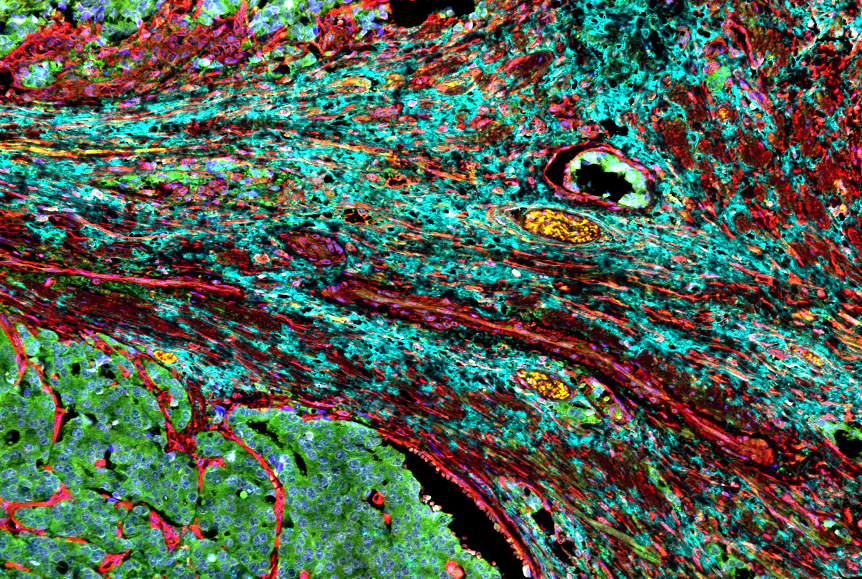
Ccancer-associated fibroplasts surrounding a prostate tumour. Credit: Moscat and Diaz Meco lab.
Transgender women keep their prostates after gender-affirming surgery, and as a result are still at risk for prostate cancer, though to what extent remained unclear. A first-of-its-kind study estimates the risk at about 14 cases per 10 000, a little less than half the risk for cisgender males.
The UC San Francisco-led study drew on 22 years of data from the Veterans Affairs Health System. Despite the small sample size due to the size of the transgender population, it is still the largest of its kind.
“What we know about prostate cancer to date is almost exclusively based on cisgender men,” said the study’s lead author, Farnoosh Nik-Ahd, MD, a urology resident at UCSF. “This is an important first step in reshaping how clinicians think about prostate cancer in transgender women.”
Transgender people often face discrimination and disparities, and there has been a growing acknowledgment of the complexities involved in their health care.
The study found 155 confirmed transgender women with prostate cancer and stratified them according to whether they had used oestrogen: 116 had never used oestrogen, 17 had once used oestrogen but stopped before they were diagnosed with prostate cancer and 22 were actively on oestrogen.
The median age of diagnosis was 61 years, and 88% of the patients were white. Just 8% were Black, suggesting possible disparities affecting this group. Black cisgender men are at higher risk of being diagnosed with and dying from prostate cancer.
Though reduced compared to cisgender males, risk remains
The authors found that prostate cancer occurs in transgender women more frequently than published accounts suggest, with about 14 prostate cancer cases annually per 10 000 transgender women. Still, that rate was lower than what could be expected based on cisgender males, with 33 cases annually per 10 000.
While the numbers were small in the new study, the data suggests that transgender women who take estrogen may have delayed diagnoses. The authors also said that lower rates of prostate cancer may have been due to less PSA screening, misinterpretation of PSA levels in patients on gender-affirming hormone therapies, stigma, lack of awareness of prostate cancer risk and the effects of estrogen.
“We still have a lot of work to do to determine optimal prostate cancer screening for transgender women on oestrogen and related treatments,” said co-senior author Matthew R. Cooperberg, MD, MPH, of the UCSF Department of Urology. “This study should be a reminder to clinicians and patients alike that, regardless of gender, people with prostates are at risk for prostate cancer.”
Women are about twice as likely as men to be diagnosed with Alzheimer’s disease. Some of that is age: women outlive men in most countries, and advanced age is the strongest risk factor for Alzheimer’s. But not all of it explains the excess risk.
One such factor may be stress may be one such reason. A study published in Brain shows that the effect stress has on the brain differs by sex, at least in mice. In stressful situations, levels of the Alzheimer’s protein amyloid beta rises sharply in the brains of females but not males. In addition, the researchers identified a molecular pathway that is active in brain cells from female mice but not male mice, and showed that it accounts for the divergent responses to stress.
The findings, from researchers at Washington University School of Medicine in St. Louis, add to a growing collection of evidence that sex matters in health and disease. From cancer to heart disease to arthritis, scientists have found differences between males and females that could potentially affect how men and women respond to efforts to prevent or treat chronic diseases.
“How women respond to stress versus how men respond to stress is an important area of research that has implications for not just Alzheimer’s disease but other conditions, too,” said co-corresponding author Carla M. Yuede, PhD, an associate professor of psychiatry. “In recent years, the National Institutes of Health (NIH) has prioritized understanding sex differences in medicine. Stress is one area in which you can clearly see a difference between males and females. This study shows that reducing stress may be more beneficial for women than men, in terms of lowering the risk of Alzheimer’s disease.”
Stress falls into the category of socioeconomic risk factors, along with factors such as depression and social isolation, that together account for an estimated 8% of the risk of developing Alzheimer’s. That risk calculation, however, doesn’t take sex into account. Women consistently report higher levels of stress than men, and it affects them differently.
Corresponding author John Cirrito, PhD, an associate professor of neurology; Yuede; and first author Hannah Edwards, a graduate student in Cirrito’s lab, reasoned that stress also may affect women’s brains differently than men’s, and these differences may help explain the sex imbalance in Alzheimer’s disease.
To find out, they measured levels of amyloid beta in the brains of mice every hour for 22 hours, beginning eight hours before the mice experienced stress. The experience was equally stressful for male and female mice, as measured by the levels of stress hormones in their blood. But the responses in their brains were not the same.
In female mice, amyloid beta levels rose significantly within the first two hours and stayed elevated through the end of the monitoring period. In male mice, brain amyloid levels did not change overall, although about 20% of them did show a delayed and weak rise in amyloid levels.
Further experiments revealed that the difference comes down to a cellular stress response pathway in brain cells. Stress causes the release of a hormone known as corticotropin releasing factor. Neurons from female rodents take up the stress hormone, triggering a cascade of events that results in increasing levels of amyloid beta in the brain. In contrast, neurons from male rodents lack the ability to take up the stress hormone. It is not known whether there are similar sex differences in how human neurons take up stress hormones.
“There’s a fundamental biological difference between males and females in how they respond to stress at the cellular level, in both mice and people,” Cirrito said. “We don’t think that stress is the sole factor driving the sex difference in Alzheimer’s disease. There are many other differences between men and women – in hormones, lifestyle, other diseases they have – that undoubtedly contribute in some way. But that stress is driving one aspect of this sex difference I think is very likely.”