Category: Ethics and Law

Untangling the Argument Around Prenatal Paracetamol and Autism

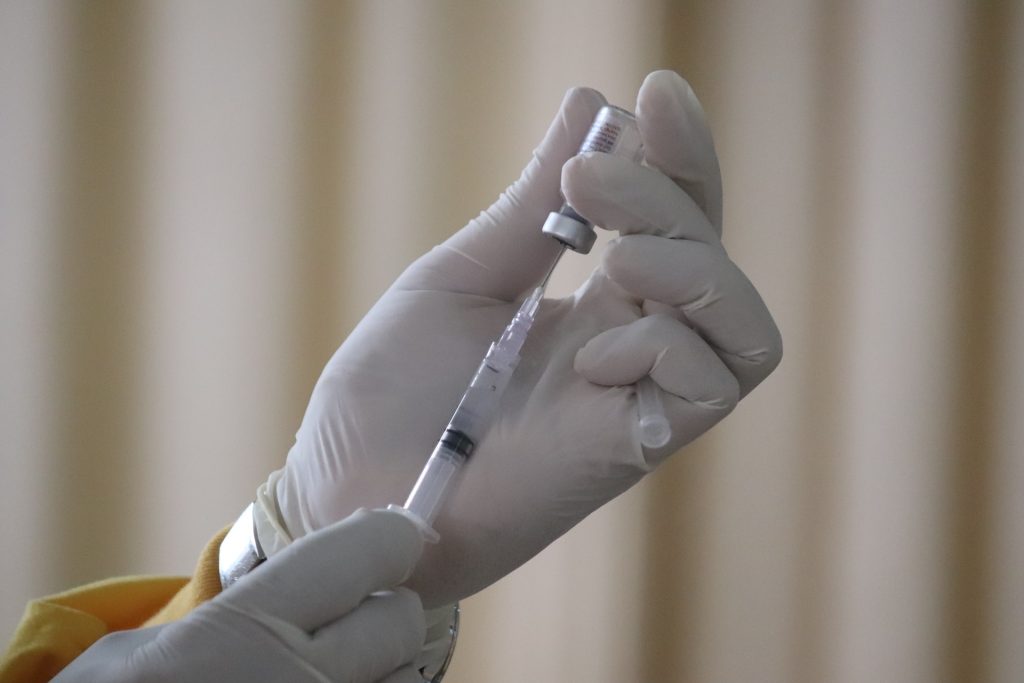
Photo by SHVETS production

On Monday 22 September, US President Donald Trump made a widely-publicised announcement that paracetamol (acetaminophen/Tylenol) during pregnancy was confirmed as causing autism spectrum disorder (ASD). The claim – backed by a single, rather dodgy study – brings to a head long-standing concerns about the apparent, well-documented increase in ASD rates. QuickNews dives into the controversy to find out if there is any validity to the claims.

President Trump said, “With Tylenol, don’t take it. Don’t take it. And if you can’t live, if your fever is so bad, you have to take one because there’s no alternative to that, sadly,” adding that other medicines such as aspirin were also “proven bad”.

The announcement had been expected for some time and doctors, scientists and medical organisations were quick to respond. The president of the American College of Obstetricians and Gynecologists stated that the paracetamol–ASD claim “is not backed by the full body of scientific evidence and dangerously simplifies the many and complex causes of neurologic challenges in children”.

At the very least, such an announcement will causing pregnant women to second-guess their taking one of the few over-the-counter pain medications widely regarded as safe during pregnancy. In 2017, the X account for Tylenol stated “We actually don’t recommend using any of our products while pregnant.” But a major pharmaceutical manufacturer would want to protect itself from liability as broadly as possible. The politically-charged nature of the announcement has also seen pregnant women making TikTok videos of themselves apparently taking paracetamol (often with no reason to).

It is generally accepted that ASD is caused by a combination of genetics and environmental factors. About 1000 genes are believed to be related to ASD. And there is a very long list of possible risk factors, with an uncertain risk contribution: “Non-genetic factors mediating ASD risk could include parental age, maternal nutritional and metabolic status, infection during pregnancy, prenatal stress, and exposure to certain toxins, heavy metals, or drugs.”

Study validity questioned

To date, paracetamol during pregnancy had generally been linked by a number of poorly powered studies to a wide variety of outcomes: in addition to ASD, asthma, lower performance intelligence quotient (IQ), shorter male infant anogenital distance (predicting poor male reproductive potential), neurodevelopmental problems (gross motor development, communication), attention-deficit/hyperactivity disorder, poorer attention and executive function, and behavioural problems in childhood. A study of nearly 2.5 million children, the largest and most comprehensive do date, found a slight link for paracetamol exposure and autism – which vanished when controlled for sibling exposure (representing shared environment).

Before President Trump’s announcement, news releases on a review making the link were published some weeks before – QuickNews even covered it. The review, published in Environmental Health, selected certain related studies using the ‘Navigation Guide’ methodology – a non-quantitative methodology for the narrow use of inferring health impacts from environmental toxins, but was nevertheless used for pharmaco-epidemiology and teratology. According to Nathan A. Schacthman, legal counsel for scientific matters, the study has serious conflicts of interest: for example, last author Andrea A. Baccarelli is an environmental epidemiologist who has been involved with a lawsuit against manufacturers and sellers of paracetamol. In that lawsuit, his claims were thrown out on the basis of not having sufficient validity, including cherry-picked data and over-generalisation to distinct disorders (such as grouping attention-deficit hyperactivity disorder [ADHD] and other neurodevelopmental disorders). In addition, the study also made misleading claimed about being funded by the National Institutes for Health (NIH). Finally, although this is not mentioned by Schacthman, Robert F. Kennedy Jr. is also an environmental lawyer.

What’s this about a ‘cure’ for autism?

The bombshell announcement by President Trump came with an another bombshell announcement that there was ‘cure’ for autism. The cure is allegedly leucovorin – which sounds very impressive to the non-medical public. But leucovorin is merely folinic acid, which is a vitamer of plain old folic acid – aka vitamin B9. Folinic acid is on the World Health Organization’s essential medicines list. On the same Monday, the US Food and Drug Administration approved it for the treatment of ASD in children – bypassing the normal review process.

Can a simple medication – or rather, supplement – really ‘cure’ ASD, an extremely complex neurological disorder? The NIH funds about $300 million in ASD research annually, nearly double the amount in 2011. If anything, this has echoes of President Trump’s touting of hydroxychloroquine as a now-discredited cure for COVID in the height of the pandemic. It might indeed be beneficial if a patient had a bout of malaria and COVID at the same time, but was rapidly discredited.

The largest controlled study for the use of folinic acid supplementation plus usual care found only a modest ~1 point increase in the Childhood Autism Rating Scale (CARS) compared to usual care plus placebo.

There are also concerns about potential conflicts of interest. One of the manufacturers of folinic acid, iHerb, had the celebrity heart doctor Mehmet Oz as an investor, and is now the administrator for the Centers for Medicare & Medicaid Services (CMS), served until recently. CMS has however denied that Dr Oz will receive any financial reward from this.

But why are autism rates on the rise?

There are a few good explanations about why the rate of autism diagnoses is increasing, which do not depend on the addition of some new environmental variable. The first and most obvious is that there is increased awareness of this, and more referrals for assessment. A second reason is that the guidelines for diagnosis have become a lot less stringent. The definition of autism diagnoses, unlike schizophrenia, has drifted over time, with more “normal” people being likely to be diagnosed. The DSM-III of 1980 had more stringent criteria, for example, an individual needed to exhibit “a pervasive lack of responsiveness to other people” [emphasis added].

Introduced from 1994, the DSM-IV had broader criteria, and folded Asperger disorder into ASD. With the introduction of the DSM-V, new diagnoses were curbed – for a time. This is because about 20% of the children diagnosed with ASD under DSM-IV-TR would not have received one under the DSM-V. The DSM-V relaxed the criteria for language delay, co-occurrence, and IQ, making it easier for borderline cases to qualify for a diagnosis.

Another underappreciated element is that of social contagion. If parents know a family with a child with ASD, they may be more likely to seek a diagnosis. One study from California showed that ASD diagnoses were more likely the more other ASD diagnoses under one kilometre away.

Back to square one

Considering the weakness of the cited studies, the difficulty of explaining ASD, the underlying social phenomenon of shifting diagnostic thresholds and increased awareness, it seems as though these announcements are mostly without substance. In amidst the headline-grabbing news, the NIH quietly announced the launch of a $50 million initiative into the causes of ASD.

According to the news release, the NIH will fund 13 projects “that draw on genomic, epigenomic, metabolomic, proteomic, clinical, behavioral and autism services data. These projects will integrate, aggregate and analyze existing data resources, generate targeted new data and validate findings through independent replication hubs.”

With this in mind, it really doesn’t look like paracetamol is the singular, mysterious controllable risk factor for ASD rates that President Trump and Robert F. Kennedy Jr have made it out to be. Maybe paracetamol use simply reflects infection, or some other related factor.


EDITORIAL | The Rot Runs Deep: Gauteng Health’s Dance of Impunity Betrays the People It Is Meant to Serve

Photo by Tingey Injury Law Firm on Unsplash

Spotlight Editors

The courts have spoken. The health ombud has issued devastating reports. The Auditor-General has again put damning evidence on the table. Civil society has protested. Yet, the devastating crisis in Gauteng’s health system shows no sign of improvement.

The rot in Gauteng appears to be deepening. Nowhere is this more evident than in the province’s health department, which remains trapped in a cycle of institutional decay and administrative failure.

The consequences are catastrophic, with real and devastating impacts on lives and the delivery of essential health services.

A case in point is the department’s failure to provide life-saving treatment to cancer patients. In a stunning rebuke, a high court found this failure unlawful and unconstitutional. Rather than comply with its constitutional obligations, Health MEC Nomantu Nkomo-Ralehoko and the health department chose to appeal the judgment to the Supreme Court of Appeal.

Making matters worse, a second high court ruling ordered the department to implement the original judgment. And yet again the department is appealing.

Jack Bloom, a DA MP in Gauteng, suggests that the MEC and the department is fighting so hard because they may eventually be held accountable in a case he says evokes the horrors of the Life Esidimeni tragedy. Bloom may have a point.

The background is dismaying.

Prior to the recent court rulings on cancer care, sustained pressure from activists had helped the department secure a R784 million budget for outsourcing radiation oncology services. But the department returned the first tranche of R250 million to Treasury unspent.

At last count in 2022, more than 3 000 patients were on a waiting list for treatment. Many of them would by now have lost their lives. Others may still be alive, but the optimal time for them to get radiation therapy may have passed and their chances of survival are thus substantially diminished.

That R250 million meant to help these desperate people and families simply went unspent boggles the mind.

It is no doubt too late for many, but there are at least some limited signs of progress. While the department has not been answering Spotlight’s questions, Nkomo-Ralehoko has indicated in the Gauteng legislature that a significant number of cancer patients are being treated with the help of private sector facilities. That the MEC and the department is nevertheless challenging the high court ruling, much of which is a demand for greater transparency, suggests that they know they have at best taken several more steps back than they have taken forward.

Unfortunately, none of this feels new.

For well over a decade, Spotlight and other media have reported on a persistent pattern of institutional breakdown and failed leadership in Gauteng’s public healthcare system. Among the most shocking examples are the Life Esidimeni tragedy, the assassination of whistleblower Babita Deokaran, and the state’s sluggish response to the corruption she exposed. Questions continue to swirl around an impasse over a critical agreement with Wits to bolster healthcare servicessenior appointments in the department and the selection of hospital CEOs. The fire at Charlotte Maxeke Johannesburg Academic Hospital and the lack of urgency in restoring services there further underscores the dysfunction. So does the persecution of whistleblowers like Dr Tim de Maayer, and the damning Health Ombud report into conditions at Rahima Moosa Mother and Child Hospital.

And that’s just the tip of the iceberg. Years of chaos in hospital security contracts, questionable food procurement practices, and the department’s failure to supply adequate colostomy bags to patients — the list goes on and on.

Add it all up and it is clear the rot runs very deep.

The reason for this is no mystery. The Gauteng health department has an annual budget of around R67 billion. This is more than 20% of the South African government’s entire spending on health. For the corrupt, the Gauteng health department is an obvious target.

And that it has been systematically targeted is not in doubt. Human rights activist Mark Heywood and Wits University Professor Alex van den Heever reckon that close to R20 billion has been stolen from the Gauteng health department over the past decade. “The scale of this theft makes former President Jacob Zuma look like a clumsy shoplifter,” Heywood writes in the Daily Maverick.

Perhaps the clearest dissection of how deep the rot goes is to be found in investigative journalist Jeff Wicks’ excellent  book The Shadow State: Why Babita Deokaran Had to Die. In it, he unpacks the industrial-scale corruption at Tembisa Hospital where R830 million was siphoned off in just four months by a network of ruthless, well-connected looters. Allegedly, one of the key beneficiaries was Vusimusi “Cat” Matlala, a businessman with a criminal record and close ties not only to ANC bigwigs but also to senior police officials.

Meanwhile, the department is also failing to pay its creditors on time. Recently, City Press reported that Gauteng’s health department was the only provincial department flagged for noncompliance across all audit areas — despite having received a clean audit opinion. Accruals now exceed R8 billion, consuming 12% of the department’s R67 billion budget. “The problems are huge,” admitted Lebogang Maile, Gauteng’s MEC for Treasury and Economic Development.

Whichever way you slice it, the harsh truth is that even in 2025, the devastating crisis in Gauteng’s health system shows no sign of improvement. Corruption still plagues the department just as severely as it did a decade ago, if not more so. In the end, it is the province’s many committed healthcare workers and the people who depend on the public healthcare system who pay the price – whether a cancer patient or someone with a stoma and in need of a reliable supply of colostomy bags.

Where to from here?

Ultimately, the person responsible for fixing all this is Gauteng Premier Panyaza Lesufi. As Premier, he appoints both the province’s MEC for health and the head of its health department. It is because of Lesufi that Nkomo-Ralehoko and head of department Lesiba Malotana are still in place, despite the havoc around them.

From one perspective, it is hard to fathom why an ambitious politician like Lesufi would stand for such gross incompetence. His party, the ANC, has after all already been severely punished at the polls – in 2024 they got just under 35% of the votes in the province. Letting the province’s already eroded health services decay further can only lead to further electoral decline.

It is of course also possible that Lesufi and those around him are being misled, or intentionally not paying much attention, to just how bad things really are. Zuma too insisted that “we have a good story to tell” even as the state capture looters were in full stride. Maybe reality will similarly catch up with Lesufi if he continues faffing about while Rome burns.

After all, the courts have spoken. The health ombud has issued devastating reports. The Auditor-General has again put damning evidence on the table. Civil society has protested time and time again and spoken out in the media. Doctors and nurses have tried to raise issues through the correct channels and have been ignored. Expert help has been offered and declined. Most damningly, whistleblowers have paid with their lives.

Disclosure: SECTION27 is involved in the cancer court case proceedings as well as ongoing efforts seeking justice for the Life Esidimeni tragedy. Spotlight is published by SECTION27, but is editorially independent – an independence that the editors guard jealously. Spotlight is a member of the South African Press Council.

Republished from Spotlight under a Creative Commons licence.

Read the original article.

On Which Legal Arguments Are the NHI Court Cases Set to Turn? Part 1: Affordability

By Jesse Copelyn

Since President Cyril Ramaphosa signed the NHI Act into law last year in May, eight different groups have challenged it in court. One common argument is that it is irrational and unreasonable to restructure the health system when there’s no money to do so. In this feature, Spotlight dissects how the argument is being applied, and whether it has any chance of success.

Earlier this month, the Western Cape Government filed papers with the Constitutional Court challenging the validity of the National Health Insurance (NHI) Act. In doing so, it became the eighth group to litigate against the Act, which aims to provide the same state-funded medical cover for all South Africans.

Not only are there now numerous litigants, each with their own distinct set of arguments, but some have also launched multiple applications, challenging different steps that led to it becoming law.

In this context, figuring out on which legal questions the future of the NHI Act will ultimately turn is difficult. Thus, Spotlight combed through some of the founding affidavits and spoke with legal experts to get a sense of the arguments litigants are betting on. A first key argument relates to the affordability of the scheme – in part two of this series we will turn to whether the NHI leads to an unreasonable regression in health services for certain groups.

Rationality and reasonability

Section 1(c) of the Constitution of the country holds that South Africa is a state governed by the rule of law. One of the implications of this is that governments can’t simply introduce laws arbitrarily without any justification. Instead, when an Act is passed, there has to be some aim behind that legislation, and some logical reason as to why passing it would advance that aim.

In other words, laws have to be rational.

Not only this, but Section 27 of the Constitution states that when it comes to the advancement of certain social rights like healthcare, government must act “reasonably”. This is a more demanding requirement than “rationality”. It doesn’t just require that an Act be logically related to its purpose but that it is practically feasible, and that it meets a range of other criteria (for instance, costs and benefits have to be fairly weighed).

A central argument of several litigants is that the NHI simply doesn’t meet basic standards of rationality or reasonability. One of the reasons for this, they argue, is that the government is unable to finance the NHI, and thus the Act has no hope of achieving its goals.

There are at least two ways in which this argument is being advanced. The first is as part of a series of applications seeking to invalidate the NHI Act itself. The second is as part of a procedural challenge to President Cyril Ramaphosa’s decision to sign the NHI Act into law. Here, the focus is on the rationality of the President’s decision, rather than the Act.

Challenging the act itself

The first party to take legal action against the NHI was the conservative trade union, Solidarity, which launched its application in the North Gauteng High Court in Pretoria on 24 May 2024.

In its founding affidavit, Solidarity argued that for the NHI to achieve its stated aim of universal access to quality healthcare services, the “requisite level of funding” must be available to establish the NHI Fund and its various mechanisms. But according to Solidarity’s application, it has already been shown that the government is incapable of raising enough tax revenue to support the scheme.

For instance, Solidarity references the position of the Davis Tax Committee, which was a group of experts chaired by Judge Dennis Davis that used to advise the government on how it could raise money to advance various policy goals. In 2017, the committee released a 48-page report on the NHI, which found that the state couldn’t cover the full cost of the NHI unless there was “sustained economic growth”.

Solidarity stated that this, in combination with its own research, showed that the NHI simply can’t be rolled out comprehensively. Thus, there was a “complete absence of a rational relation between the means selected and the objective sought to be achieved”.

Similarly, in February, a separate challenge was brought by the Hospital Association of South Africa (HASA), which argued that the NHI should be set aside because it is “fundamentally unreasonable and therefore unconstitutional”.

HASA’s submission argued that the burden of proof lay with the government to show that the NHI was financially feasible before passing the Act. This is particularly important given that the scheme involves a radical restructuring of healthcare with potentially detrimental knock-on effects for the private sector. The government thus had a duty to show that the scheme could lead to material benefits that justified these harms.

However, HASA argues that “no recent comprehensive and accurate financial feasibility and affordability assessment was conducted” by the government before pushing through the NHI, rendering “the passing of the legislation unreasonable and irrational”.

For its part, the National Department of Health has argued in court papers that trying to work out the full cost of the NHI would be a futile exercise. For instance, the health department’s NHI lead, Nicholas Crisp, filed an affidavit in response to Solidarity which stated that “attempts to conduct a once-off accounting exercise” were “not useful”.

He said: “The outcome of such an exercise is inevitably inaccurate, misleading and does not support informed decision making for reform.” Crisp argued that this was already evident from the “extremely wide range of figures that various parties have claimed to reflect the cost of the NHI in the public domain”.

Instead, Crisp stated that the World Health Organization (WHO) had advised the department to conduct an “ongoing costing approach for specific steps of the NHI implementation process”, which is something they were already doing, he said.

Nonetheless, many of the litigants have pushed back against this, arguing that this approach still leaves us without any evidence that the NHI can be funded in the medium to long term. In its affidavit, HASA argues: “In the context of constrained public finances and very challenging economic conditions… it is wholly irrational to commence the wholesale restructuring of the healthcare sector without long-term costing, and only with short-term piece-meal analysis”.

Challenging the President’s decision

While the above applications have sought to review and set aside the NHI Act itself, a separate set of challenges has instead focused on the decision of Ramaphosa to sign the Bill into law.

Section 79(1) of the Constitution states that if the President “has reservations about the constitutionality of the Bill”, then he should refer it back to Parliament for reconsideration.

If it can be proved that Ramaphosa had good evidence that the NHI may have been unconstitutional, but signed it anyway, then his decision can potentially be overturned by a court. In this case, the NHI wouldn’t be completely invalidated and set aside, but the President’s decision to sign it into law would be. Therefore, the NHI would go back to being a Bill, and would likely need to be reworked by Parliament.

President Cyril Ramaphosa holds a copy of the NHI Act after publicly signing into law in May 2024. (Photo: GCIS)

The Board of Health Funders (BHF), which represents medical insurance companies, is one of the litigants taking this approach. In addition, the South African Private Practitioners Forum (SAPPF) has a two-part application challenging both the Act itself and Ramaphosa’s decision to sign it.

Once again, the affordability argument has been central in these cases. In particular, the BHF and SAPPF have both highlighted a number of documents that were sent to Ramaphosa before he signed the NHI Act, which they argue should have caused the President to reconsider whether the Act was affordable.

For instance, the parties note that in 2018, the Office of the Presidency received a letter from the acting director-general of Treasury which expressed several concerns about what was then the NHI Bill. One of them was that the “financial implications are not costed”. As a result of issues such as this, the acting director-general felt “unable to support the bill in the current form submitted to cabinet”.

The BHF affidavit points out that the version of the Bill that Treasury had commented on was “not materially altered” later on. It further states that the letter from Treasury “was before the president when he assented to the NHI Bill and it is unclear at this stage the basis on which the president disagreed with the views of Treasury”.

In order to properly evaluate the rationality of Ramaphosa’s decision, the applications by BHF and SAPPF have been seeking to have the full record of his decision made public. The record refers to any information he would have had before him when signing the bill into law, as well as any minutes of correspondences he had which related to the Act.

The BHF and SAPPF have already made some progress with their case. In May, the North Gauteng High Court in Pretoria ruled that it was able to review Ramaphosa’s decision to sign the NHI Bill into law, and gave the President 10 days to provide the full record of his decision to do so.

Neil Kirby, who heads the healthcare and life science practice area at Werksman’s Attorneys, which represents BHF, told Spotlight that after the ruling, “both the [health] minister and the president made application for leave to appeal that judgment which is a process that’s supposed to happen before the original judge. They also then proposed that they appeal directly to the constitutional court.”

He adds: “At this point in time the high court has taken a step back on the basis that the high court wants to wait for the constitutional court via the chief justice to see what to do about those direct applications.”

Thus, until the Chief Justice provides direction, Kirby says “everything is in limbo”.

In the meantime, the BHF has also launched a separate application at the Constitutional Court, which challenges the public participation process prior to Ramaphosa signing the NHI Act. The focus here is on the rationality and reasonability of Parliament’s consideration of the NHI Bill, which they argue failed to consider input from various parties. As with the other application, the affordability argument plays a role.

Kirby explains: “If you’re sitting in the National Assembly and you’re being asked to vote on a Bill that proposes a significant financial burden on the state in due course and you don’t have the figures in front of you to understand what that burden actually is, then you’re not in a position to say that such a thing is a good idea… It’s grounds for review based on the reasonableness and the rationality of [that] decision”.

How powerful is the affordability argument?

According to Kirby, the argument about affordability is by no means the only strong line of attack that the BHF possesses against the NHI, but it is easily one of the most powerful.

According to Dr Larisse Prinsen, a medico-legal expert at the University of the Free State, who is not involved in the litigation, the affordability argument is more likely to be successful as a line of attack against the President’s assent to the legislation (as with the BHF’s case). Though it would be unlikely to suffice on its own, she says.

Prinsen explains that if the “record shows that the President ignored massive red flags, such as the warnings by the [Davis Tax Committee] and Treasury regarding concerns about the sustainability of the NHI, unresolved costing, provincial power concerns etc., this could support the claim of irrationality in the decision-making process”.

However, she says when it comes to the legal challenges to the Act itself, the argument about affordability is less likely to be successful.

“Courts often defer where a law creates a framework with a phased roll-out and which leaves fiscal choices to later money bills,” she says. “The government might use annual appropriations or future revenue decisions or phased progressive implementation to argue the NHI scheme is in fact capable of reasonable realisation over time. This means that outright invalidation on ‘infeasibility’ alone is a harder battle to fight.”

Similarly, another attorney who is also independent of the litigation, told Spotlight that rationality reviews are typically aimed at procedural steps in the formation of an Act. Thus, the challenge to the President’s decision to sign the law, would likely carry more weight, he said.

Note: In part two of this series, we will turn to whether the implementation of NHI, as set out in the NHI Act, will lead to an unreasonable regression in health services for certain groups.

Republished from Spotlight under a Creative Commons licence.

Read the original article.

A New HIV Prevention Jab Could End AIDS – Unless Secrecy and Greed Get in the Way

Photo by Mufid Majnun on Unsplash

By Fatima Hassan, Leena Menghaney, and Bellinda Nkoana

A new HIV prevention jab has the potential to bring an end to the AIDS epidemic. But a lack of ambition and unjustifiable secrecy over pricing is holding it back, argue three leading health activists.

Imagine a new HIV prevention tool existed that could – if it reached the right people – flick the switch to prevent almost all new HIV cases across the world. You would expect every health system and government to be doing all they can to roll it out to everyone as quickly as possible, regardless of the challenges, right?

The good news is that this scenario is not merely in our imagination because we actually have that tool today. The bad news? The rollout of this breakthrough HIV prevention jab is moving at a glacial pace.

Lenacapavir, a twice-yearly antiretroviral-containing injection, is one of the most promising tools yet in the fight to end AIDS. Data from two major trials released last year showed it offers near-complete protection against HIV infection for some of the most vulnerable groups: young women, men who have sex with men, sex workers, and transgender and gender-diverse people. Trials that test the effectiveness of the jab as prevention in people who inject drugs are also underway. For communities still bearing the brunt of new infections, it could be a game-changer.

Take South Africa as a case in point. Modelling studies suggest the impact could be transformative. If two to four million HIV-negative people here used lenacapavir annually over the next eight years, new infections could dramatically fall, with rates low enough that experts would consider it significant enough to end AIDS.

And yet, the current rollout targets look worryingly timid, particularly for vulnerable communities.

According to the National Department of Health, South Africa’s projected initial target for the first two years of the roll out (April 2026 – March 2028 and subject to registration or interim approval by the South African Health Products Regulatory Authority) of just under 500 000 people, includes the general population and certain vulnerable or key risk population groups – for the latter, the targets are woefully low: 69 799 sex workers, 37 857 transgender people, and 155 946 gay, bisexual, and other men who have sex with men.

This barely scratches the surface of the actual need in vulnerable populations. At this rate, access will be severely rationed, and the epidemic will continue to outpace us.

One reason the roll out cannot be on  a mass scale, is not just due to an absent political will, but also because the company that holds the patent, Gilead Sciences, is rationing access. And until a sufficient number of generics come on to the market, voluntarily or through compulsory measures, Gilead will call the shots.

The Trump administration’s funding cuts earlier this year left ambitious plans to roll out lenacapavir in several countries in the Global South in the dust. In response, South Africa, in consultation with the Global Fund for AIDS, Tuberculosis, and Malaria (Global Fund) and indirectly with Gilead, announced plans to repurpose R520-million from an existing Global Fund grant to buy lenacapavir for HIV prevention.

But despite South Africa being asked by the Global Fund to budget $30 per dose ($60, roughly R1 050, per person per year) as its contribution, no one knows the total price the Global Fund is paying Gilead.

Such pricing secrecy is unacceptable, especially when health ministries in low- and middle-income countries are already squeezed by the massive US government funding cuts and debt crises.

Countries excluded from the Global Fund’s supply agreement and Gilead’s inadequate mechanisms for allowing generic competition (they exclude several countries and only a few companies were licensed) will be left to negotiate directly with Gilead, facing the prospect of unaffordable “tiered” prices designed to maximise profit – eerily similar to the COVID vaccine inequitable access debacle. Millions who need HIV prevention could face rationing, with health providers forced to leave the most vulnerable populations behind.

The Global Fund’s willing decision to shield Gilead’s pricing from public disclosure undermines accountability and risks reversing years of hard-won progress towards transparency in medicine pricing in the Global South and elsewhere. This is a dangerous precedent for the global HIV movement as pharmaceutical multinational companies are finding new ways to normalise price secrecy – and the Global Fund has just approved that tactic. While civil society in Global South countries such as South Africa are defending the right to know how public funds are spent, global institutions like the Global Fund in Geneva, are enabling practices that give pharmaceutical corporations a free pass.

The push to normalise secrecy, particularly when public or donor money is involved, should ring alarm bells. If international actors are serious about equitable access, then price transparency must be non-negotiable. Anything less erodes public trust and hands undue power to pharmaceutical companies at the expense of public health. Transparency is also necessary to ensure that the price we pay is fair and justified, because public money should not subsidise Gilead’s profiteering.

All this comes at a time when global health financing is under severe strain. Deep cuts in HIV/AIDS funding have already cost tens of thousands of lives across multiple countries. But rationing prevention is a false economy because the cost of new infections, in lives and long-term treatment, will far outweigh the investment required to scale up prevention now.

As delegates convene this week at the SA AIDS Conference, they must publicly call out the demand for price secrecy from Gilead and the Global Fund for what it is: bullying. It must also raise the funds, domestically and internationally, to pay for lenacapavir for all who need it. Two million people at minimum should be the national target – four times the glacial rollout pace the Global Fund is proposing at present.

The lesson from history is clear: When lifesaving HIV treatment was delayed, millions died needlessly. We cannot afford the same mistake with HIV prevention.

*Hassan, Menghaney, and Nkoana are all part of the global LEN-LA for All Coalition, a grouping that includes the organisations Health GAP, Health Justice Initiative, Sankalp Rehabilitation Trust, Just Tx, and ABIA.

Note: Spotlight aims to deepen public understanding of important health issues by publishing a variety of views on its opinion pages. The views expressed in this article are not necessarily shared by the Spotlight editors.

Republished from Spotlight under a Creative Commons licence.

Read the original article.

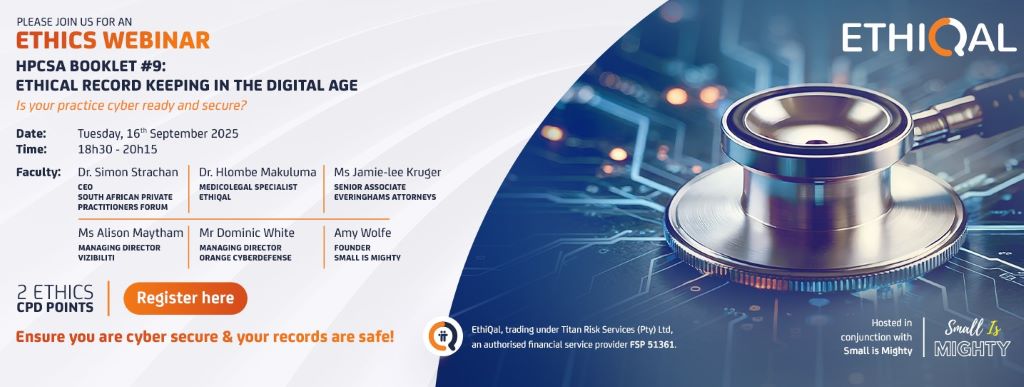
Join EthiQal for an Ethics Webinar: HPCSA Booklet #9: Ethical Record Keeping in the Digital Age

Ethical patient record keeping is essential to modern healthcare, ensuring safe, effective, and trustworthy care. Accurate documentation supports continuity, clinical decision-making, and legal accountability, while also carrying ethical importance by safeguarding sensitive information with honesty, confidentiality, and respect. Poor record keeping can decrease patient outcomes, create confusion, impact multidisciplinary collaboration, and create legal risk.

Managing records ethically protects patient privacy and autonomy while allowing patients access and control over their health data. With the growth of digital health technologies, new challenges such as data security, electronic informed consent, and cybersecurity have emerged. Breaches or cyberattacks can erode trust, discourage information sharing, and disrupt care delivery, highlighting the need to balance accessibility with strong safeguards.

 Join our expert speaker panel to explore how you can effectively manage your patient records to ensure integrity and continue to build trust vital to patient-centred healthcare. 

During this webinar, attendees will review the HPCSA Booklet 9: Guidelines on the keeping of patient health records where the pertinent South Africa laws and basic principles around ethical practices for maintaining patient health records are laid out. The webinar will offer insights into both paper and electronic record-based practices.

The audience will have an opportunity to engage with faculty who offer insights from a clinical, legal, medical malpractice insurance, cybersecurity, and medical practice setup and management perspective through short lectures, interactive case studies, a series of multiple choices questions and Q&A sessions.

This webinar will focus on specialist practices. Administrative staff working in these practices are welcome to join the discussion.

Seats are limited.

Click here to sign up for the webinar.

What Next for Cancer Patients as Court Again Rules Against Gauteng Health Department?

Photo by Bill Oxford on Unsplash

By Ufrieda Ho

In the latest chapter of a long-running legal battle over the Gauteng Department of Health’s obligation to provide people in the province with radiation oncology services, the department has suffered another loss in the courts. Spotlight assesses the legal situation and asks what it means for people still waiting for the life-saving treatment.

With another court loss suffered this August, the Gauteng Department of Health has once again been ordered to urgently provide treatment for cancer patients who have been left in the lurch.

This ruling, handed down on August 5 by Judge Evette Dippenaar, follows urgent legal action brought by the Cancer Alliance. It was in response to the Gauteng health department’s appeal against a ruling handed down on March 27 by acting Judge Stephen van Nieuwenhuizen. That order compelled the department to clear its years-long backlogs in getting cancer treatment to patients.

In its March ruling, the South Gauteng High Court in Johannesburg found the department’s failure to deliver this critical treatment to be unconstitutional and unlawful. The decision follows the department’s failure to spend a R784 million allocation granted by the provincial Treasury in 2023 to reduce the treatment backlog by outsourcing services to the private sector over a three-year period. Due to severe delays, the department was forced to return the first R250 million tranche.

Van Nieuwenhuizen strongly criticised the department, stating: “The provincial health respondents have done nothing meaningful since the money was allocated in March 2023 to actually provide radiation oncology treatment to the cancer patients. Meanwhile, the health and general well-being of the patients has significantly deteriorated. There is clear, ongoing, and irreparable harm being suffered by those still waiting for treatment.”

He also condemned the department for its lack of accountability and poor management of public resources, finding that it had failed to uphold ethical standards, act transparently, or respond to patients’ needs fairly and effectively.

The court instructed the department to:

  • Take immediate action, including diversion to private facilities, to provide radiation oncology services to all patients on the backlog list,
  • Update the backlog list within 45 days,
  • Submit a detailed progress report on efforts to deliver treatment, and
  • Present a long-term plan for ongoing cancer treatment services within three months.

But Gauteng health MEC Nomantu Nkomo-Ralehoko and the health department challenged the judgment in May, just as their 45 days to act ran out. They chose instead to take the entire matter on appeal to the Supreme Court of Appeal (SCA).

In response, the Cancer Alliance, represented by SECTION27 (*see disclosure), went back to court for an interim order to make the March 27 ruling immediately enforceable, and not suspended until a ruling is made by the SCA. It is in response to this application that Judge Dippenaar ruled on August 5 that the March ruling is indeed immediately enforceable.

Two courts have now sent a clear message to the Gauteng health department, says attorney Khanyisa Mapipa, who heads health rights at SECTION27. She adds: “The Gauteng Department of Health’s action should be in the interest of the person who is seeking treatment. It should not be to deny, deny, deny and then to fight in the courts and not take any accountability.”

The waiting list

The estimated number of people on a waiting list for cancer treatment in 2022 was around 3 000 people. New data on this has not been made publicly available.

There are some signs of progress, although details are hard to pin down. In a statement released on August 24, which reiterates a July 20 statement, the Gauteng health department said it had introduced a strategic partnership with private service providers. “As the beginning of August 2025, 563 patients were receiving radiation oncology care through private partnerships, while 1 076 patients had completed treatment by end of July 2025,” it stated.

Both statements also noted that work was underway to complete new radiotherapy centres at Chris Hani Baragwanath and Dr George Mukhari Academic Hospitals.

But Mapipa says they still don’t have full details that comply with the court order. “What we’re asking for essentially is what the department should be doing anyway and that is for them to go through their patient files to establish who is still on the backlog list; who has passed away, who has received treatment, when patients were last assessed and what treatment they qualify for; and if it was a public facility or were they diverted to a private facility,” she says.

“As the judge pointed out in March, the department has to do this as a constitutional obligation, whether they fight this to the Constitutional Court or not, their obligation is to provide treatment for people who meet the criteria. Those on the backlog list meets the criteria,” she says.

Part of the March order also compelled the department to file progress reports with the court within three months on the measures taken to provide treatment and its long-term plans to resolve the ongoing cancer treatment crisis in Gauteng. Spotlight’s understanding is that these progress reports have not been submitted.

This is an important measure, Mapipa says, given the department’s poor track record. “The court rulings in both judgments found that because they have failed to be transparent throughout this process, the department is compelled to provide these reports to the courts,” she adds.

It is as yet unclear how the Gauteng health department plans to proceed. The department, in its three-paragraph statement following the August judgment, stated that it would review “the contents and implications” to determine and communicate its next steps. Their deadline to appeal the August 5 ruling was 26 August 2025. The department did not respond to questions from Spotlight.

Calls for accountability

Jack Bloom, Democratic Alliance shadow health MEC in Gauteng, says that without a proper audit and update of the backlog list of patients needing care, the “cancer treatment scandal has probably cost more lives than the 144 mental patients who died in the Life Esidimeni tragedy when they were sent to illegal NGOs”.

Bloom is calling for heads to roll, with Nkomo-Ralehoko and head of department Arnold Lesiba Malotana in his crosshairs.

“The DA condemns the department’s legal stalling tactics that harms patients who urgently require lifesaving treatment…Premier [Panyaza] Lesufi should not allow this cancer disaster to continue,” he says.

Salomé Meyer, spokesperson for Cancer Alliance, says that the legal proceedings are a distraction of the realities on the hospital floor. Charlotte Maxeke Johannesburg Academic Hospital for instance, she says, remains in “crisis”. She maintains there is a scarcity of sufficient and operational radiation oncology machinery, as well as extreme shortages in radiation oncology staff to operate the machines.

Meyer says the situation at Charlotte Maxeke Hospital dates back to 2017 when CEO Gladys Bagoshi was made aware of mounting challenges from a shortage of equipment and staffing.

“In 2021, Bagoshi turned down an equipment allocation, which Charlotte Maxeke Hospital desperately needed, so this allocation went to George Mukhari Hospital and Chris Hani Baragwanath Hospital instead. But the cobalt bunkers required to house the machines at these hospitals had not been built and are only expected to be completed in 2026 – so the machines remain in storage. In 2022, an order was finally placed for additional linacs [used for high energy beam radiation treatments] for the existing cobalt bunkers at Charlotte Maxeke Hospital, but that tender is still not finalised,” says Meyer.

She adds: “This is a failure of planning, governance, and accountability and we have to ask who is being held accountable when the same CEO has remained in place all these years.”

Neither Bagoshi nor the health department responded to questions on these assertions.

Disclosure: SECTION27 was involved in the court proceedings described in this article. Spotlight is published by SECTION27, but is editorially independent – an independence that the editors guard jealously. The Spotlight editors gave special attention to maintaining this editorial firewall in the production of this story.

Republished from Spotlight under a Creative Commons licence.

Read the original article.

#InsideTheBox with Dr Andy Gray | Should Pharmaceutical Advertising in SA Be Better Regulated, and Why?

#InsideTheBox is a column by Dr Andy Gray, a pharmaceutical sciences expert at the University of KwaZulu-Natal and Co-Director of the WHO Collaborating Centre on Pharmaceutical Policy and Evidence Based Practice. (Photo: Supplied)

By Andy Gray

For over 20 years, the law has required that the Minister of Health issues regulations to govern the advertising of medicines in South Africa, but as yet no such regulations are in place. In his latest #InsideTheBox column, Dr Andy Gray considers what this means for the marketing of medicines in the country.

Anyone who has travelled to the United States will have been struck by the extent to which medicines, both those requiring a prescription and those that can be bought by consumers without a prescription, are advertised on television.

The situation in South Africa is quite different. While there are many advertisements for medicines shown on local television stations, only some are specific about the proprietary (brand) name of the medicine and its indications. Other advertisements focus instead on the indication (the reason for using the medicine), but do not identify it by name. Instead, viewers are urged to approach their pharmacies or medical practitioners. At a different time, an advertisement may be flighted which identifies a medicine, its strength, pack size and perhaps price, but provides no information about what the indication for the medicine is.

To what extent does this represent meaningful and justified regulatory control over pharmaceutical marketing?

Only two countries with effective medicines regulatory systems allow prescription-only medicines to be advertised directly to the consumer, these being the United States and New Zealand. Other countries, including South Africa, restrict the advertising of prescription-only medicines to the health professionals who can prescribe or dispense them. One of the key justifications for this restriction on the ability of the pharmaceutical industry to market their products is that direct-to-consumer advertising may result in more inappropriate prescribing, when prescribers are under pressure from patients demanding medicines they have seen advertised. Short television advertisements are unlikely to be able to convey a balanced account of the potential benefits and harms of medicines, especially those that are new to the market.

South African law contains an interesting variant to regulation in this area. General Regulation 42 issued in terms of the Medicines and Related Substances Act, 1965, allows medicines containing substances in Schedules 0 and 1 to be advertised to the public, but requires that those containing substances in Schedules 2 to 6 to be advertised “only for the information of pharmacists, medical practitioners, dentists, veterinarians, practitioners, and other authorised prescribers” or “in a publication which is normally or only made available” to such persons. While Schedule 0 medicines can be bought in any retail outlet, Schedule 1 and 2 medicines can only be obtained from a pharmacy, but not self-selected from a shelf. The justification for that particular cut-off is difficult to trace in any policy document. An amendment to the regulation was published for comment in February 2023, but the final regulation has yet to be issued by the Minister of Health.

‘Failure to follow through’

The fundamental problem, however, lies in a failure to follow through on the legislation previously passed by Parliament. Section 18C of the current version of the Medicines and Related Substances Act, 1965, contains a prescriptive instruction to the Minister. “The Minister shall, after consultation with the relevant industries and other stakeholders, make regulations relating to the marketing of medicines, medical devices or IVDs and such regulations shall also provide for Codes of Practice for relevant industries,” it states. From 2003 to 2017, the section read: “The Minister shall, after consultation with the pharmaceutical industry and other stakeholders, make regulations relating to the marketing of medicines, and such regulations shall also provide for an enforceable Code of Practice.” The expansion of the remit, to include medical devices and in vitro diagnostics (IVDs) was added by Parliament in 2008, but only took effect in 2017.

Photo by Derek Finch

The wording is peremptory – the Minister “shall” – which leaves no room for delay. While the word “enforceable” has been removed, the very intent of a regulation is that it should be enforced. That no regulations have been forthcoming in more than 20 years is an extraordinary failure of governance.

That failure is compounded by another act of omission. Section 18A of the Act states: “No person shall supply any medicine, medical device or IVD according to a bonus system, rebate system or any other incentive scheme.” The law also enables the Minister to “prescribe acceptable and prohibited acts” in this regard, in consultation with the Pricing Committee. No final regulations have been issued since 2017. The Pricing Committee is established to advise the Minister on matters relating to the pricing of medicines, such as the annual maximum increase and the dispensing fees charged by pharmacists and licensed dispensing practitioners.

It is already an offence, in terms of section 29 of the Act, for any person to make “any false or misleading statement in connection with any medicine, Scheduled substance, medical device or IVD”. Regulation 42 also states: “No advertisement for a medicine may contain a statement which deviates from, with or goes beyond the evidence submitted in the application for registration of such medicine with regard to its safety, quality or efficacy where such evidence has been accepted by the Authority in respect of such medicine and incorporated into the approved information of such medicine”.

While these two provisions may prevent false or misleading advertising, they are limited in their scope. In particular, since no complementary medicines are yet registered by the South African Health Products Regulatory Authority (SAHPRA), none have an approved professional information (previously known as a package insert) or a patient information leaflet.

Industry self-regulation

The pharmaceutical and medical devices industries have not been idle during this period of government inaction. A non-profit, self-regulatory body, the Marketing Code Authority (MCA), has developed a Code of Marketing Practice, drawing on international guidelines. This code provides for sanctions when rules are broken, following adjudication of a complaint. Fines of up to a maximum of R500 000 can be levied for severe or serious offences, which would, for example, pose “safety implications for patients”.

However, as a self-regulatory body, the MCA cannot require membership by any licensed manufacturer. It means that those manufacturers which are not members of the MCA are not bound by the Code and cannot be sanctioned. The MCA therefore advocates that compliance with a Code should be a condition to get a license to operate as a manufacturer. The MCA has also responded to draft regulations on perverse incentives.

At a time when deliberate disinformation is being disseminated from many quarters, including from government authorities previously considered to be reliable, a weakened regulatory system cannot simply be allowed to stagger along, in defiance of the express instructions of the legislature. Public safety demands an effective regulatory mechanism to proactively examine pharmaceutical marketing, across all media, the ability to take meaningful action where transgressions are identified, and an even playing field for all actors.

*Dr Gray is a Senior Lecturer at the University of KwaZulu-Natal and Co-Director of the WHO Collaborating Centre on Pharmaceutical Policy and Evidence Based Practice. This is part of a new series of #InsideTheBox columns he is writing for Spotlight.

Disclosure: Gray is a member of South Africa’s National Essential Medicines List Committee and co-chairs its Expert Review Committee.

Note: Spotlight aims to deepen public understanding of important health issues by publishing a variety of views on its opinion pages. The views expressed in this article are not necessarily shared by the Spotlight editors.

Republished from Spotlight under a Creative Commons license.

Read the original article.

Carte Blanche “Gagging” Order Overturned

Photo by Bill Oxford on Unsplash

A “gagging order” preventing Carte Blanche from broadcasting a programme about a Durban-based cardiologist accused of malpractice has been set aside.

Pietermaritzburg High Court Judge Siphokazi Jikela has ruled that the finalisation of the interdict, granted in early June by another judge, would “amount to an unjustified prior restraint and would undermine the essential role of the media in a democratic society”.

The matter came before Judge Jikela for determination on whether or not the interim order should be made final.

She has now dismissed the application and ordered cardiologist Dr Ntando Peaceman Duze to pay the costs.

Duze was accused by some of his patients of inserting stents unnecessarily, which resulted in them lodging complaints with the Health Professions Council of South Africa (HPCSA).

Carte Blanche interviewed them and got independent experts to corroborate their claims.

While Carte Blanche gave him multiple opportunities over two weeks to respond to questions, Duze turned to the courts, claiming “defamation” and preventing the airing of the segment. He wanted the interdict to be made final until the HPCSA had ruled on the complaints against him.

The matter was argued before Judge Jikela the following week. She handed down her ruling on Monday.

Read the judgment

Read GroundUp editorial: Judges should respect press freedom

Duze, in his initial application, also cited two other cardiologists as respondents but did not persist with his claims against them.

However, he said the complaints against him were instigated by them because of “professional jealousy”, a “conspiracy” and a “smear campaign”, because of the success of his practice at Westville Life Hospital.

He said he had elected not to respond to Carte Blanche because the questions were “defamatory” and sub judice as the issues were under consideration by the HPCSA.

Carte Blanche opposed the application.

Advocate Warren Shapiro argued that both the Constitutional Court and the Supreme Court of appeal had determined that a “prior restraint” was a drastic interference with freedom of expression, which was only granted in narrow circumstances.

Judge Jikela said that while Duze claimed the broadcast would infringe on his right to dignity and may cause reputational harm, she was mindful that “any restriction on media reporting warrants careful and cautious consideration”.

“Several defences may be raised in response to an allegation of defamation. In this matter, [Carte Blanche] sets out the defences that directly address the core grounds on which [Duze] has based his case.

“Notably they contend that the broadcast in question centres on the personal accounts of his former patients, which are supported by medical records and independent expert opinion. Duze himself states that he consults, on average, 50 patients a day and he treats nearly every heart patient at Westville Life Hospital.

“In these circumstances, there is a compelling public interest in the dissemination of information concerning the conduct of a medical professional whose actions may pose a risk to the health and safety of current and future patients,” Judge Jikela said.

Carte Blanche had also said the intended broadcast included comments made honestly and in good faith which fell within the ambit of protected fair comment.

“It is trite that media publications on matters of public interest enjoy protection, provided they are made reasonably, without malice, and after taking reasonable steps to verify the information prior to publication,” the judge said.

Judge Jikela said Duze’s right to protect his reputation and professional standing was not absolute and it did not trump Carte Blanche’s constitutionally protected right to freedom of expression which includes the freedom of the press.

“Importantly, the public also has a legitimate interest in being informed about matters that concern public health and potential risks to patient safety.”

She said Duze had only made “vague references” to pending hearings and investigations. Duze had to show a real and demonstrable risk of substantial prejudice “as opposed to a remote possibility”.

“The HPCSA is not a court of law. The sub judice rule does not apply automatically to its processes.

“I do not believe that the broadcast will improperly influence the panel of medical professionals tasked with adjudicating the complaints against him, particularly where those complaints are supported by scientific and clinical evidence.”

Turning to the issue of the balance of competing rights, Judge Jikela said Carte Blanche had sought external objective opinions and had given Duze the right to reply.

“Media reports are vital in ensuring transparency, accountability and the protection of the public, particularly in sectors as essential as health care,” she said.

Medical practitioners had a duty to act in the best interests of patients. Where there were breaches of these obligations, the public had a constitutionally protected right to be informed.

“While the right to dignity and reputation must be respected, it cannot be invoked to shield conduct that may endanger lives or compromise patient care,” Judge Jikela said.

She said prior restraint had a “chilling effect” on the right to freedom of expression.

If the broadcast was indeed unlawful or defamatory, Duze could claim damages from Carte Blanche.

“The inconvenience of pursuing a damages claim does not outweigh the importance of safeguarding freedom of expression, particularly where the applicant [Duze] has not demonstrated irreparable harm or the falsity of the statements,” she said.

Republished from GroundUp under a Creative Commons Attribution-NoDerivatives 4.0 International License.

Read the original article.

Cardiologist “Gags” Carte Blanche

By Tania Broughton

Photo by Bill Oxford on Unsplash

A Durban-based cardiologist has secured a “gagging order” against Carte Blanche, stopping it from broadcasting a programme in which patients accuse him of medical malpractice for inserting stents unnecessarily.

Dr Ntando Peaceman Duze was given multiple opportunities for more than a week to respond to the allegations raised by his patients, which were corroborated by independent experts. But instead of responding, he launched an urgent application in the Kwazulu-Natal High Court in Pietermaritzburg on Friday.

He gave Carte Blanche only one day’s notice of the application.

Carte Blanche opposed it, arguing that Duze wanted to “bury these allegations for as long as possible if not indefinitely”, and that he was seeking an “unlawful prior restraint on freedom of speech and media”.

But Acting Judge Mpumelelo Sibisi granted an interim interdict, stopping the broadcast scheduled for Sunday 8 June.

Judge Sibisi said Duze needed to be given an opportunity to file a replying affidavit and that Carte Blanche had put a “gun to his head” to answer the questions posed to him. The judge said it would be appropriate to interdict the broadcast until the matter could be properly ventilated.

He set the return date for 13 June. But unless the matter is given a special allocation, it may not be argued and finalised on that day.

Cardiologists accused of defamation

Duze, who runs his practice from Life Westville Hospital, initially cited two other cardiologists in his application, seeking orders that they must desist from making “slanderous, insulting and defamatory remarks” about him.

He put this down to professional jealousy because their patients had moved over to his practice.

He alleged that the two cardiologists had instigated complaints laid by about seven of his patients against him with the Health Professionals Council of South Africa (HPCSA). He claimed that such was the professional jealousy, that he had been a victim of “witchcraft”, with chicken bones and red [Hindu] strings being left in the operating theatre.

He said the cardiologists had told his patients that “I had opened up their blood vessels” [an apparent reference to stent surgery], when it was unnecessary to do so.

Duze said the complaints to the HPCSA were “baseless”.

The cardiologists opposed the application.

Then on Friday, Duze’s legal team withdrew the claim against the cardiologists, and tendered to pay their legal costs. The lawyers gave no explanation for this. But it came in the wake of Carte Blanche, in its affidavit, saying they had not interviewed the cardiologists. Instead they had interviewed Duze’s aggrieved patients on camera and done follow-up investigations, including obtaining independent medical corroboration based on the patients’ medical records.

Gag order

Duze, in his application, said at any given time he had an average of 50 patients at the hospital, all with heart conditions. He had never before been reported to the HPCSA and, if the allegations against him continued and were made public on Carte Blanche, it would severely harm his reputation, “and may even lead to my financial demise”.

“Carte Blanche launched their own investigation and wants to broadcast a programme about this on Sunday 8 June, which I want to prevent, because it will be filled with untruths and defamation,” he said.

He said Carte Blanche had approached him for comment, and asked 14 specific questions, which he was not prepared to answer because the issue was “sub judice”.

“Once the [HPCSA] has completed its investigation, I will no doubt be willing to be interviewed and explain everything, because I will no doubt be cleared of these false allegations,” he said.

In her opposing affidavit, Carte Blanche producer Mart-Marie Faure said the application was an “abuse of process”.

“It is unsustainable on the facts and law and constitutes an impermissible attempt to obtain a pre-publication interdict in circumstances where no case has been made out for one and such an extreme order is not justified,” she said.

“The complaints, which form the subject matter of the inset entitled ‘Dr Stent’, were initiated by his patients, who had all, they allege, been subjected to unnecessary surgical procedures.

“Independent medical professionals who have been interviewed or consulted all confirm that the applicant [Duze] undertook unnecessary surgery that has had adverse consequences for his patients.

“This has nothing to do with jealous colleagues. The complaints are driven by his patients who allege serious medical malpractice with the most grave medical consequences.”

Faure said she had engaged with Duze and his attorneys for nine days in an attempt to secure answers to her questions “to no avail”.

“Carte Blanche was contacted by patients who claimed they were operated on unnecessarily. They consulted with other medical professionals who have said the insertion of stents was unnecessary. And in fact had caused heart disease when none was previously present.

“They will be required to take blood thinning and other medication for the rest of their lives.

“The HPCSA confirmed it received five complaints against the applicant.

“Life Healthcare has confirmed that it received information regarding allegations against the applicant from the HPCSA and has initiated an investigation.”

Faure said the complaints were not sub judice and that the explanation the doctor would advance to justify his conduct in that investigation would no doubt be the same he would give on camera or in a written response.

“If media houses were required to await the finalisation of proceedings before any professional or regulatory body, the public would be deprived of timely, relevant information on matters of pressing concern,” she said.

“This is antithetical to the very purpose of a free press.

“The patients’ accounts are based on their personal experiences and have been corroborated by independent experts. In every such story the person in respect of whom the investigation is conducted is unhappy. The remedy is to tell their side of the story, which the applicant has been repeatedly offered – not to gag the media.”

Republished from GroundUp under a Creative Commons Attribution-NoDerivatives 4.0 International License.

Read the original article.

Webinar: Navigating the New HPCSA Booklet 19: The Ethics of Billing | 2 CPD Points

The healthcare sector is most effective when all stakeholders behave professionally and uphold ethical principles. Unethical practices are evident when stakeholders violate moral principles, ethical practices and organisational standards resulting in reduced productivity, decreased patient outcomes, increased patient risk and cost, fraud, and wastage.

Ethical practice is however linked to cultural values, context and workplace norms. As such, what may be viewed as unethical in one situation could be viewed as ethical practice in another. Unethical behaviour may therefore be unintentional and hence the importance of having clear guidelines on how to act in specific situations.

During this recorded webinar, healthcare providers will review the newly released HPCSA Booklet 19: Guidelines for Health Practitioners on Matters Relating to Ethical Billing Practices where the pertinent South African laws and basic principles around ethical billing practices are laid out. The live audience had an opportunity to engage with faculty who offered a clinical (Dr Simon Strachan, paediatrician in private practice and CEO of South African Private Practitioners Forum), legal (Deniro Pillay, Norton Rose Fulbright Admitted Attorney in the medical law and malpractice litigation sector), HPCSA (Mr Mpho Mbodi, HPCSA Head of Professional Practice division), medical malpractice insurance (Dr Hlombe Makuluma, EthiQal Medicolegal Advisor) perspective through short lectures, interactive case studies, a series of multiple choices questions (MCQs) and Q&A sessions.  

Healthcare professionals who watch this full webinar are entitled to claim 2 ethics CPD points. Instructions on how to claim points are covered in the webinar recording.

Watch the webinar at this link:  https://ethiqal.co.za/webinars/