BMJ Group has retracted research suggesting that small daily quantities of apple cider vinegar might help people who are overweight or obese to lose weight.
The small clinical trial was published in the open access journal BMJ Nutrition, Prevention & Health in March 2024 and its findings press released. The study findings generated widespread international attention at the time, and continue to be frequently referred to in media coverage.
The retraction was prompted by concerns raised about the quality of the work, including the approach to statistical analysis of the data; implausible statistical values; the reliability of the raw data; inadequate reporting of methods; and lack of prospective trial registration, which breaches BMJ Group’s editorial policy.
Initially, concerns were raised in critiques of the study, some of which were published as lettersin the journal. But after review by BMJ Group’s content integrity team, the study was referred to statistical experts to evaluate its reliability. This included attempts to replicate the results and examine the authenticity of the underlying data supplied by the authors.
It wasn’t possible for the statisticians to replicate the results and multiple analytical errors were identified. There were also irregularities in the data set, and their report, which is appended to the retraction notice, concluded that the data collected from each participant would require further independent scrutiny.
The authors said that the identified errors were honest mistakes, but they agree with the decision to retract the study.
Dr Helen Macdonald, Publication Ethics and Content Integrity Editor at BMJ Group, said: “Tempting though it is to alert readers to an ostensibly simple and apparently helpful weight loss aid, at present the results of the study are unreliable, and journalists and others should no longer reference or use the results of this study in any future reporting.”
She added: “This retraction reflects our strategic and proactive approach to investigating concerns raised about the content we publish. We act where necessary in the interests of openness and the importance of correcting the scientific record.
“While we deal with allegations as swiftly as possible, it’s very important that due process is followed. Investigations are often complex. This one involved detailed scrutiny of data and correspondence with researchers, institutions, and other experts, for example. Reaching a sound and fair and final decision can therefore take several months.”
Commenting on the decision to publish the study despite the lack of trial registration, Professor Martin Kohlmeier, editor in chief of BMJ Nutrition Prevention & Health, explained: “In hindsight, this was the wrong decision to make. But the authors come from a scientific environment that is underrepresented in nutritional research and the journal aims to prioritise high quality evidence, which usually comes from clinical trials.
“These are relatively unusual in nutritional research as they can be challenging to undertake because of the numbers of participants and time needed to obtain meaningful results.”
With drug use projected to rise 40% in Africa by 2030, a global conference will amplify pioneering policy responses and proven health interventions from across Africa and beyond.
14–17 October 2025 | Century City Conference Centre, Cape Town
By 2030, the number of people who use drugs in Africa is projected to rise by 40%, according to the United Nations Office on Drugs and Crime (UNODC). Without stronger drug policy and harm reduction responses, the region faces escalating rates of overdose, HIV, hepatitis C, and other harms.
The warning signs are already here: around 11% of the estimated 1.26 million people who inject drugs across sub-Saharan Africa are living with HIV and an estimated 15% currently have hepatitis C, a liver condition that can cause liver cancer and death.
New research also shows that more than 40% of people who inject drugs in sub-Saharan Africa have experienced a recent non-fatal overdose – more than double the global average of 18.5%.
“While the scale of the challenge is undeniable, pioneering efforts by a few African governments show what harm reduction leadership can look like,” says Angela McBride, Executive Director of the South African Network of People Who Use Drugs (SANPUD), INHSU board member, and co-convener of INHSU 2025. “Harm reduction means putting health and human rights before punishment – shifting away from criminalisation and towards evidence-based, rights-affirming policies.”
These evidence-based policies include decriminalising drug use, expanding needle and syringe programs (NSP) to provide sterile equipment to prevent the spread of blood-borne viruses, increasing access to opioid agonist therapy (OAT) – medication to treat opioid dependence and reduce cravings and withdrawal from opioids like heroin – and ensuring access to HIV and hepatitis B and C testing and treatment.
Africa responds to the crisis
Across the continent, examples of this leadership are starting to emerge – from new legislation in Kenya to large-scale service delivery in Mauritius.
In South Africa, the Central Drug Authority is implementing the National Drug Master Plan, acknowledging that the country’s drug crisis is worsening and calling for stronger cross-sector responses. The plan recognises harm reduction and OAT must be expanded if HIV and hepatitis C are to be contained. Ms Nandi Mayathula-Khoza, Chairperson of the Central Drug Authority, will be presenting on the new plan during the conference.
In Kenya, parliament is currently debating a Harm Reduction Bill. If passed, it would be a landmark move, embedding access to NSP, HIV-related healthcare services, and other evidence-based services into national law for the first time.
Finally, in Mauritius, government-backed harm reduction has already achieved coverage levels rarely seen in the region. More than half of people who inject drugs are receiving OAT, supported by a pioneering “social contracting” model that channels government funds directly to NGOs to deliver NSP and other services on the ground.
Learning both ways
These policy shifts will be a focus of INHSU 2025’s Policy Day, which will bring together decisionmakers from across Africa to debate and share reform strategies. The wider conference will then welcome more than 600 global experts – including researchers, clinicians, policymakers, and people with lived experience of drug use – to showcase African-led harm reduction successes alongside international innovations such as long-acting depot buprenorphine (LADB), a monthly treatment for opioid dependence, and community-led hepatitis C testing and treatment programs that are transforming outcomes worldwide.
“The evidence consistently shows that harm reduction works – what we need now is political will,” says Dr Andrew Scheibe, medical doctor and technical advisor with TB HIV Care in Cape Town, INHSU board member, and fellow co-convener of INHSU 2025. “Harm reduction reduces infections, prevents overdose, and connects people to healthcare, yet access across Africa remains the exception rather than the rule. INHSU 2025 will showcase how we can bridge that gap and deliver the services people urgently need.”
Funding, prisons, and women’s health
Beyond drug policy reform and harm reduction, the conference will focus on other areas with profound impacts on the lives of people who use drugs, including incarceration, gender specific health disparities, and shifts in funding.
Prisons and detention settings will feature prominently, with Professor Louisa Degenhardt (National Drug & Alcohol Research Centre, Australia) presenting a multistage systematic review on the global epidemiology of injecting drug use, HIV, viral hepatitis, and tuberculosis among people who are incarcerated.
Women face extreme stigmatisation and complex barriers to healthcare, especially during pregnancy. Women who use drugs will also be a core focus, with multiple presentations from speakers across Africa and globally. Neliswa Gogela (Groote Schuur Hospital/University of Cape Town, South Africa) will present on HIV and HCV Care for Women Who Use Drugs with other presentations from Tanzania and Kenya.Finally, Kennedy Kipkoech (University of Cape Town and University of Bristol, UK) will present new modelling on the potential impact of the suspension of US PEPFAR funding for OAT on HIV and hepatitis C transmission among people who inject drugs. PEPFAR has saved an estimated 26 million lives, prevented 7.8 million babies from being born with HIV, and supported millions of orphans and vulnerable children across sub-Saharan Africa (Lancet EClinicalMedicine, 2025).
“These issues go to the heart of what drives health inequities for people who use drugs,” says Emma Day, Executive Director of INHSU. “Incarceration increases risk of acquiring HCV, HIV and other infectious diseases. Women who use drugs are among the most stigmatised populations and gender responsive models are needed to appropriately support them. And without sustainable funding, harm reduction progress across Africa is at risk. INHSU 2025 is about confronting these systemic challenges head-on and building a stronger, more equitable response.”
Pharmacists can initiate people with HIV on antiretroviral treatment, the Supreme Court of Appeal has ruled. Photo: GroundUp Staff
The Supreme Court of Appeal (SCA) has dismissed, with costs, an appeal by a doctor’s organisation, the IPA Foundation, aimed at stopping specially trained pharmacists from treating people with HIV and TB.
The IPA first took its dispute with the South African Pharmacy Council (SAPC) to the Gauteng High Court in Pretoria. In 2023, Judge Elmarie van der Schyff ruled in favour of the pharmacists, giving a judicial go-ahead for the council to introduce its Pharmacy-Initiated Management of Antiretroviral Treatment (PIMART) initiative.
However the IPA Foundation, intent on having the initiative set aside, took this ruling on appeal to the SCA. In that court, five judges this week ruled against it. The ruling came nearly 11 months after the case was heard, far more than the three months that judicial norms provide for when a judgment is reserved.
Justice Tati Makgoka, writing for the court, said the initiative was created in response to a persistent rise in new HIV infection rates.
The SAPC, at the department’s request, deemed PIMART suitable for addressing this issue.
“As the high court correctly found, the SAPC evaluated the risks associated with pharmacists initiating first-line ART [antiretroviral treatment] and TPT [tuberculosis preventive therapy] as well as providing medicines for PrEP [Pre-Exposure Prophylaxis of HIV] and PEP [Post Exposure Prophylaxis of HIV], considering the risks when deciding to approve the PIMART training.
“The uncontested evidence presented by the SAPC demonstrates that the approved accreditation process for PIMART was rigorous and thorough,” Makgoka said.
In her previous judgment, Van Der Schyff had noted that a pilot project had emphasised the value of the initiative, which was in line with the World Health Organisation’s vision to promote widely accessible primary health care.
“The untapped value of pharmacists in fighting HIV was also emphasised by the efficient role pharmacies played in meeting health care needs and providing health care services during the Covid-19 pandemic,” she said.
“The need to widen access to first line ART and TPT therapy on a community level is not a figment of SAPC’s imagination but a dire need that is also evinced in other countries.”
The IPA Foundation had approached the Pretoria court, under the Promotion of Administrative Justice Act (PAJA), seeking to review and set aside the SAPC’s decision to implement PIMART.
IPA claimed that the SAPC had failed to give interested parties an adequate opportunity to comment before the initiative was implemented. It further contended that PIMART unjustifiably encroached on the domain of medical practitioners and was in conflict with legislation.
On appeal, the IPA persisted with these arguments.
Dealing with the background, Justice Makgoka said the SAPC had published a notice in the government gazette in March 2021 regarding the proposed adoption of PIMART, giving interested parties 60 days to comment. This resulted in government approval later that year.
It was only after this that the IPA submitted its comments and objections.
Following engagements, the IPA lodged the review application in the high court.
On the issue that the IPA and its members claimed they were not given sufficient notice of PIMART, because it was advertised in the government gazette during the Covid-19 pandemic – Makgoka said there was no suggestion that the pandemic had “paralysed the administrative functions” of the IPA.
Remarkably, the judge said, the IPA had not suggested that the notice did not come to its attention, finding that adequate notice had been given. Makgoka said that several other organisations had submitted comments during the prescribed period.
He said the IPA had also not challenged the validity of the Pharmacy Act, which specified publication in the gazette and in the absence of that, it was not open for it to say the publication was inadequate.
Makgoka said the IPA had introduced the issue of “rationality” only in its notice of appeal. However, the court had dealt with this because there was no prejudice to the SAPC.
In ruling on this issue, he said PIMART was a crucial intervention in the public interest, which had been devised by a group of medical experts.
“Through PIMART, the SAPC aimed to improve access to healthcare. Contrary to the IPA’s contentions, PIMART is an essential intervention in the fight against HIV/AIDS. Its introduction constitutes a rational legislative and practical measure with the competence of the SAPC as an organ of the state in enhancing access to healthcare for HIV treatment, in fulfilment of the state’s obligation under the Constitution,” Makgoka said.
“These are legitimate and compelling public interests.”
He said the IPA was wrong in believing that PIMART was a blanket licence for pharmacists to treat HIV patients.
“Its scope is limited and applies only to accredited pharmacists. It will not alter the scope of practice for medical practitioners. The fact is that medical practitioners do not have the exclusive rights to care for people living with HIV/AIDS. This is a collaborative effort involving various health professionals.”
The IPA had also submitted that pharmacists were not authorised to prescribe schedule 3, 4 and 5 medicines without a prescription.
However, the judge said, the Medicines Act carved out an exception to this with authorisation of the Director-General. It was through this that PIMART-accredited pharmacists could apply for permits to prescribe schedule 3 – 5 substances.
The appeal was dismissed with costs.
Certainly not all doctors oppose the idea of pharmacists initiating patients with HIV on treatment: the South African HIV Clinicians Society stated: “We look forward to supporting the rollout of PIMART which will further contribute to South Africa’s HIV response and progress towards the 2030 target of eliminating HIV as a public health concern.”
A recent analysis reveals that older adults with prior incarceration report worse physical and mental health than their peers, even if they were incarcerated in the distant past. The findings are published in theJournal of the American Geriatrics Society.
Among the 1318 US adults aged 50 years and older who responded to the Family History of Incarceration Survey, 21% had been incarcerated. Formerly incarcerated older adults were more likely to be men, non-Hispanic Black or “other” race/ethnicity, meet criteria for disability, be unmarried, and have lower income and education compared with those never incarcerated.
After adjusting for potentially confounding factors like demographics and socioeconomics, prior incarceration was associated with an approximately 90% higher odds of reporting “fair” or “poor” physical health. Length of time since incarceration did not moderate the association, meaning that even those incarcerated more than 10 years ago had equally poor self-reported health. The association with mental health was explained in part by income and employment.
The findings suggest that clinicians could consider screening for incarceration history and connecting formerly incarcerated patients to services and organisations that serve this community.
“Mass incarceration began in 1973, so older adults have spent most of their adult lives in this era and millions have been incarcerated in the past. It is critical to understand how incarceration – even in the distant past – may affect the health of older adults and what we can do to improve their health,” said corresponding author Louisa W. Holaday, MD, MHS, of the Icahn School of Medicine at Mount Sinai.
Webber Wentzel’s Pro Bono team represented Mr and Mrs van Wyk in a landmark case that has resulted in the Constitutional Court confirming that South Africa’s statutory four months of parental leave may be shared between both parents. The ruling marks a significant step toward gender equality in the workplace and family law.
The case challenged the unequal parental leave provisions under section 25 of the Basic Conditions of Employment Act (BCEA), which granted birthing mothers up to four months of maternity leave while limiting fathers to only 10 days.
Webber Wentzel argued that section 25 of the BCEA unfairly discriminated against fathers and placed an undue burden on birthing mothers by not allowing families to decide who should be the primary caregiver. The court agreed and criticised the 10-day leave for fathers by rejecting the cultural norms that reinforce gendered parenting roles as inconsistent with constitutional values.
The application was supported by the Commission for Gender Equality (CGE) and Sonke Gender Justice (Sonke). CGE advocated for equal parental leave for adoptive and surrogacy-commissioning parents, which the court partially granted. Sonke’s request for an equal 16-week leave for both parents was not granted.
The Constitutional Court, in a unanimous judgment delivered by the Honourable Justice Tshiqi, confirmed that sections 25, 25A, 25B and 25C of the BCEA, along with corresponding provisions of the Unemployment Insurance Fund Act (UIF Act), are unconstitutional. The Court held that these provisions violate the rights to equality and human dignity under sections 9 and 10 of the Constitution.
The Minister of Employment and Labour accepted that differentiation exists between birthing mothers and other categories of parents is automatically unfair as it is based on grounds specified in section 9(3) of the Constitution. Further, the Minister acknowledges that there is a need for reform in the current legislation pertaining to the parental leave regime contained in the BCEA.
As a result of the ruling in the Constitutional Court, the 4 months of maternal and the 10 days of parental leave will be combined into a total of 4 months and 10 days, which parents may now share as they choose. If no agreement is reached, the leave will be split equally. Where only one parent is employed, that parent will be entitled to the 4 consecutive months of parental leave.
The Constitutional Court also confirmed that the same parental leave provisions apply to adoptive parents and commissioning parents in a surrogacy arrangement.
The Constitutional Court has suspended the declaration of invalidity of the relevant BCEA and UIF Act provisions for a period of 36 months, to allow the legislature to remedy the necessary constitutional defects. In the interim, the following principles will apply:
A single parent or a parent who is the only employed parent is entitled to four months’ consecutive parental leave.
Parents who are both employed may share the allocated parental leave of four months and 10 days between them, concurrently or consecutively.
An adoptive parent of a child younger than two years is entitled to four months’ consecutive parental leave.
If an adoption order is granted in respect of two parents, they may share the allocated parental leave of four months and 10 days between them, concurrently or consecutively.
A commissioning parent is entitled to four months’ consecutive parental leave.
Where there are two commissioning parents, they may share the allocated parental leave of four months and 10 days between them, concurrently or consecutively.
Employers are encouraged to review and, where necessary, update their leave policies and employment contracts to reflect the new parental leave framework.
“This judgment is a powerful affirmation of the constitutional rights to equality and dignity,” said Nkosinathi Thema, senior associate, Webber Wentzel. “It recognises that caregiving is not the exclusive responsibility of mothers and that both parents should have the freedom to decide how best to care for their child.”
The Webber Wentzel team comprised Ayanda Khumalo, Nkosinathi Thema and Lize-Mari Doubell. Counsel Nasreen Rajab-Budlender SC, Liam Minné and Sanan Mirzoyev appeared on a pro bono basis.
Founded in 1868, Webber Wentzel is a leading full-service law firm providing clients with innovative solutions to their most complex legal and tax issues across Sub-Saharan Africa. With over 450 lawyers, their multi-disciplinary expertise is consistently ranked top tier in leading directories and awards, both in South Africa and on the African continent. Their collaborative alliance with Linklaters and their deep relationships with outstanding law firms across Africa provide clients with market-leading support wherever they do business.
On Monday 22 September, US President Donald Trump made a widely-publicised announcement that paracetamol (acetaminophen/Tylenol) during pregnancy was confirmed as causing autism spectrum disorder (ASD). The claim – backed by a single, rather dodgy study – brings to a head long-standing concerns about the apparent, well-documented increase in ASD rates. QuickNews dives into the controversy to find out if there is any validity to the claims.
President Trump said, “With Tylenol, don’t take it. Don’t take it. And if you can’t live, if your fever is so bad, you have to take one because there’s no alternative to that, sadly,” adding that other medicines such as aspirin were also “proven bad”.
The announcement had been expected for some time and doctors, scientists and medical organisations were quick to respond. The president of the American College of Obstetricians and Gynecologists stated that the paracetamol–ASD claim “is not backed by the full body of scientific evidence and dangerously simplifies the many and complex causes of neurologic challenges in children”.
At the very least, such an announcement will causing pregnant women to second-guess their taking one of the few over-the-counter pain medications widely regarded as safe during pregnancy. In 2017, the X account for Tylenol stated “We actually don’t recommend using any of our products while pregnant.” But a major pharmaceutical manufacturer would want to protect itself from liability as broadly as possible. The politically-charged nature of the announcement has also seen pregnant women making TikTok videos of themselves apparently taking paracetamol (often with no reason to).
It is generally accepted that ASD is caused by a combination of genetics and environmental factors. About 1000 genes are believed to be related to ASD. And there is a very long list of possible risk factors, with an uncertain risk contribution: “Non-genetic factors mediating ASD risk could include parental age, maternal nutritional and metabolic status, infection during pregnancy, prenatal stress, and exposure to certain toxins, heavy metals, or drugs.”
Study validity questioned
To date, paracetamol during pregnancy had generally been linked by a number of poorly powered studies to a wide variety of outcomes: in addition to ASD, asthma, lower performance intelligence quotient (IQ), shorter male infant anogenital distance (predicting poor male reproductive potential), neurodevelopmental problems (gross motor development, communication), attention-deficit/hyperactivity disorder, poorer attention and executive function, and behavioural problems in childhood. A study of nearly 2.5 million children, the largest and most comprehensive do date, found a slight link for paracetamol exposure and autism – which vanished when controlled for sibling exposure (representing shared environment).
Before President Trump’s announcement, news releases on a review making the link were published some weeks before – QuickNews even covered it. The review, published in Environmental Health, selected certain related studies using the ‘Navigation Guide’ methodology – a non-quantitative methodology for the narrow use of inferring health impacts from environmental toxins, but was nevertheless used for pharmaco-epidemiology and teratology. According to Nathan A. Schacthman, legal counsel for scientific matters, the study has serious conflicts of interest: for example, last author Andrea A. Baccarelli is an environmental epidemiologist who has been involved with a lawsuit against manufacturers and sellers of paracetamol. In that lawsuit, his claims were thrown out on the basis of not having sufficient validity, including cherry-picked data and over-generalisation to distinct disorders (such as grouping attention-deficit hyperactivity disorder [ADHD] and other neurodevelopmental disorders). In addition, the study also made misleading claimed about being funded by the National Institutes for Health (NIH). Finally, although this is not mentioned by Schacthman, Robert F. Kennedy Jr. is also an environmental lawyer.
What’s this about a ‘cure’ for autism?
The bombshell announcement by President Trump came with an another bombshell announcement that there was ‘cure’ for autism. The cure is allegedly leucovorin – which sounds very impressive to the non-medical public. But leucovorin is merely folinic acid, which is a vitamer of plain old folic acid – aka vitamin B9. Folinic acid is on the World Health Organization’s essential medicines list. On the same Monday, the US Food and Drug Administration approved it for the treatment of ASD in children – bypassing the normal review process.
Can a simple medication – or rather, supplement – really ‘cure’ ASD, an extremely complex neurological disorder? The NIH funds about $300 million in ASD research annually, nearly double the amount in 2011. If anything, this has echoes of President Trump’s touting of hydroxychloroquine as a now-discredited cure for COVID in the height of the pandemic. It might indeed be beneficial if a patient had a bout of malaria and COVID at the same time, but was rapidly discredited.
The largest controlled study for the use of folinic acid supplementation plus usual care found only a modest ~1 point increase in the Childhood Autism Rating Scale (CARS) compared to usual care plus placebo.
There are also concerns about potential conflicts of interest. One of the manufacturers of folinic acid, iHerb, had the celebrity heart doctor Mehmet Oz as an investor, and is now the administrator for the Centers for Medicare & Medicaid Services (CMS), served until recently. CMS has however denied that Dr Oz will receive any financial reward from this.
But why are autism rates on the rise?
There are a few good explanations about why the rate of autism diagnoses is increasing, which do not depend on the addition of some new environmental variable. The first and most obvious is that there is increased awareness of this, and more referrals for assessment. A second reason is that the guidelines for diagnosis have become a lot less stringent. The definition of autism diagnoses, unlike schizophrenia, has drifted over time, with more “normal” people being likely to be diagnosed. The DSM-III of 1980 had more stringent criteria, for example, an individual needed to exhibit “a pervasive lack of responsiveness to other people” [emphasis added].
Introduced from 1994, the DSM-IV had broader criteria, and folded Asperger disorder into ASD. With the introduction of the DSM-V, new diagnoses were curbed – for a time. This is because about 20% of the children diagnosed with ASD under DSM-IV-TR would not have received one under the DSM-V. The DSM-V relaxed the criteria for language delay, co-occurrence, and IQ, making it easier for borderline cases to qualify for a diagnosis.
Another underappreciated element is that of social contagion. If parents know a family with a child with ASD, they may be more likely to seek a diagnosis. One study from California showed that ASD diagnoses were more likely the more other ASD diagnoses under one kilometre away.
Back to square one
Considering the weakness of the cited studies, the difficulty of explaining ASD, the underlying social phenomenon of shifting diagnostic thresholds and increased awareness, it seems as though these announcements are mostly without substance. In amidst the headline-grabbing news, the NIH quietly announced the launch of a $50 million initiative into the causes of ASD.
According to the news release, the NIH will fund 13 projects “that draw on genomic, epigenomic, metabolomic, proteomic, clinical, behavioral and autism services data. These projects will integrate, aggregate and analyze existing data resources, generate targeted new data and validate findings through independent replication hubs.”
With this in mind, it really doesn’t look like paracetamol is the singular, mysterious controllable risk factor for ASD rates that President Trump and Robert F. Kennedy Jr have made it out to be. Maybe paracetamol use simply reflects infection, or some other related factor.
The courts have spoken. The health ombud has issued devastating reports. The Auditor-General has again put damning evidence on the table. Civil society has protested. Yet, the devastating crisis in Gauteng’s health system shows no sign of improvement.
The rot in Gauteng appears to be deepening. Nowhere is this more evident than in the province’s health department, which remains trapped in a cycle of institutional decay and administrative failure.
The consequences are catastrophic, with real and devastating impacts on lives and the delivery of essential health services.
A case in point is the department’s failure to provide life-saving treatment to cancer patients. In a stunning rebuke, a high court found this failure unlawful and unconstitutional. Rather than comply with its constitutional obligations, Health MEC Nomantu Nkomo-Ralehoko and the health department chose to appeal the judgment to the Supreme Court of Appeal.
Making matters worse, a second high court ruling ordered the department to implement the original judgment. And yet again the department is appealing.
Jack Bloom, a DA MP in Gauteng, suggests that the MEC and the department is fighting so hard because they may eventually be held accountable in a case he says evokes the horrors of the Life Esidimeni tragedy. Bloom may have a point.
The background is dismaying.
Prior to the recent court rulings on cancer care, sustained pressure from activists had helped the department secure a R784 million budget for outsourcing radiation oncology services. But the department returned the first tranche of R250 million to Treasury unspent.
At last count in 2022, more than 3 000 patients were on a waiting list for treatment. Many of them would by now have lost their lives. Others may still be alive, but the optimal time for them to get radiation therapy may have passed and their chances of survival are thus substantially diminished.
That R250 million meant to help these desperate people and families simply went unspent boggles the mind.
It is no doubt too late for many, but there are at least some limited signs of progress. While the department has not been answering Spotlight’s questions, Nkomo-Ralehoko has indicated in the Gauteng legislature that a significant number of cancer patients are being treated with the help of private sector facilities. That the MEC and the department is nevertheless challenging the high court ruling, much of which is a demand for greater transparency, suggests that they know they have at best taken several more steps back than they have taken forward.
Add it all up and it is clear the rot runs very deep.
The reason for this is no mystery. The Gauteng health department has an annual budget of around R67 billion. This is more than 20% of the South African government’s entire spending on health. For the corrupt, the Gauteng health department is an obvious target.
And that it has been systematically targeted is not in doubt. Human rights activist Mark Heywood and Wits University Professor Alex van den Heever reckon that close to R20 billion has been stolen from the Gauteng health department over the past decade. “The scale of this theft makes former President Jacob Zuma look like a clumsy shoplifter,” Heywood writes in the Daily Maverick.
Perhaps the clearest dissection of how deep the rot goes is to be found in investigative journalist Jeff Wicks’ excellent book The Shadow State: Why Babita Deokaran Had to Die. In it, he unpacks the industrial-scale corruption at Tembisa Hospital where R830 million was siphoned off in just four months by a network of ruthless, well-connected looters. Allegedly, one of the key beneficiaries was Vusimusi “Cat” Matlala, a businessman with a criminal record and close ties not only to ANC bigwigs but also to senior police officials.
Meanwhile, the department is also failing to pay its creditors on time. Recently, City Press reported that Gauteng’s health department was the only provincial department flagged for noncompliance across all audit areas — despite having received a clean audit opinion. Accruals now exceed R8 billion, consuming 12% of the department’s R67 billion budget. “The problems are huge,” admitted Lebogang Maile, Gauteng’s MEC for Treasury and Economic Development.
Whichever way you slice it, the harsh truth is that even in 2025, the devastating crisis in Gauteng’s health system shows no sign of improvement. Corruption still plagues the department just as severely as it did a decade ago, if not more so. In the end, it is the province’s many committed healthcare workers and the people who depend on the public healthcare system who pay the price – whether a cancer patient or someone with a stoma and in need of a reliable supply of colostomy bags.
Where to from here?
Ultimately, the person responsible for fixing all this is Gauteng Premier Panyaza Lesufi. As Premier, he appoints both the province’s MEC for health and the head of its health department. It is because of Lesufi that Nkomo-Ralehoko and head of department Lesiba Malotana are still in place, despite the havoc around them.
From one perspective, it is hard to fathom why an ambitious politician like Lesufi would stand for such gross incompetence. His party, the ANC, has after all already been severely punished at the polls – in 2024 they got just under 35% of the votes in the province. Letting the province’s already eroded health services decay further can only lead to further electoral decline.
It is of course also possible that Lesufi and those around him are being misled, or intentionally not paying much attention, to just how bad things really are. Zuma too insisted that “we have a good story to tell” even as the state capture looters were in full stride. Maybe reality will similarly catch up with Lesufi if he continues faffing about while Rome burns.
After all, the courts have spoken. The health ombud has issued devastating reports. The Auditor-General has again put damning evidence on the table. Civil society has protested time and time again and spoken out in the media. Doctors and nurses have tried to raise issues through the correct channels and have been ignored. Expert help has been offered and declined. Most damningly, whistleblowers have paid with their lives.
Disclosure: SECTION27 is involved in the cancer court case proceedings as well as ongoing efforts seeking justice for the Life Esidimeni tragedy. Spotlight is published by SECTION27, but is editorially independent – an independence that the editors guard jealously. Spotlight is a member of the South African Press Council.
Since President Cyril Ramaphosa signed the NHI Act into law last year in May, eight different groups have challenged it in court. One common argument is that it is irrational and unreasonable to restructure the health system when there’s no money to do so. In this feature, Spotlight dissects how the argument is being applied, and whether it has any chance of success.
Earlier this month, the Western Cape Government filed papers with the Constitutional Court challenging the validity of the National Health Insurance (NHI) Act. In doing so, it became the eighth group to litigate against the Act, which aims to provide the same state-funded medical cover for all South Africans.
Not only are there now numerous litigants, each with their own distinct set of arguments, but some have also launched multiple applications, challenging different steps that led to it becoming law.
In this context, figuring out on which legal questions the future of the NHI Act will ultimately turn is difficult. Thus, Spotlight combed through some of the founding affidavits and spoke with legal experts to get a sense of the arguments litigants are betting on. A first key argument relates to the affordability of the scheme – in part two of this series we will turn to whether the NHI leads to an unreasonable regression in health services for certain groups.
Rationality and reasonability
Section 1(c) of the Constitution of the country holds that South Africa is a state governed by the rule of law. One of the implications of this is that governments can’t simply introduce laws arbitrarily without any justification. Instead, when an Act is passed, there has to be some aim behind that legislation, and some logical reason as to why passing it would advance that aim.
In other words, laws have to be rational.
Not only this, but Section 27 of the Constitution states that when it comes to the advancement of certain social rights like healthcare, government must act “reasonably”. This is a more demanding requirement than “rationality”. It doesn’t just require that an Act be logically related to its purpose but that it is practically feasible, and that it meets a range of other criteria (for instance, costs and benefits have to be fairly weighed).
A central argument of several litigants is that the NHI simply doesn’t meet basic standards of rationality or reasonability. One of the reasons for this, they argue, is that the government is unable to finance the NHI, and thus the Act has no hope of achieving its goals.
There are at least two ways in which this argument is being advanced. The first is as part of a series of applications seeking to invalidate the NHI Act itself. The second is as part of a procedural challenge to President Cyril Ramaphosa’s decision to sign the NHI Act into law. Here, the focus is on the rationality of the President’s decision, rather than the Act.
Challenging the act itself
The first party to take legal action against the NHI was the conservative trade union, Solidarity, which launched its application in the North Gauteng High Court in Pretoria on 24 May 2024.
In its founding affidavit, Solidarity argued that for the NHI to achieve its stated aim of universal access to quality healthcare services, the “requisite level of funding” must be available to establish the NHI Fund and its various mechanisms. But according to Solidarity’s application, it has already been shown that the government is incapable of raising enough tax revenue to support the scheme.
For instance, Solidarity references the position of the Davis Tax Committee, which was a group of experts chaired by Judge Dennis Davis that used to advise the government on how it could raise money to advance various policy goals. In 2017, the committee released a 48-page report on the NHI, which found that the state couldn’t cover the full cost of the NHI unless there was “sustained economic growth”.
Solidarity stated that this, in combination with its own research, showed that the NHI simply can’t be rolled out comprehensively. Thus, there was a “complete absence of a rational relation between the means selected and the objective sought to be achieved”.
Similarly, in February, a separate challenge was brought by the Hospital Association of South Africa (HASA), which argued that the NHI should be set aside because it is “fundamentally unreasonable and therefore unconstitutional”.
HASA’s submission argued that the burden of proof lay with the government to show that the NHI was financially feasible before passing the Act. This is particularly important given that the scheme involves a radical restructuring of healthcare with potentially detrimental knock-on effects for the private sector. The government thus had a duty to show that the scheme could lead to material benefits that justified these harms.
However, HASA argues that “no recent comprehensive and accurate financial feasibility and affordability assessment was conducted” by the government before pushing through the NHI, rendering “the passing of the legislation unreasonable and irrational”.
For its part, the National Department of Health has argued in court papers that trying to work out the full cost of the NHI would be a futile exercise. For instance, the health department’s NHI lead, Nicholas Crisp, filed an affidavit in response to Solidarity which stated that “attempts to conduct a once-off accounting exercise” were “not useful”.
He said: “The outcome of such an exercise is inevitably inaccurate, misleading and does not support informed decision making for reform.” Crisp argued that this was already evident from the “extremely wide range of figures that various parties have claimed to reflect the cost of the NHI in the public domain”.
Instead, Crisp stated that the World Health Organization (WHO) had advised the department to conduct an “ongoing costing approach for specific steps of the NHI implementation process”, which is something they were already doing, he said.
Nonetheless, many of the litigants have pushed back against this, arguing that this approach still leaves us without any evidence that the NHI can be funded in the medium to long term. In its affidavit, HASA argues: “In the context of constrained public finances and very challenging economic conditions… it is wholly irrational to commence the wholesale restructuring of the healthcare sector without long-term costing, and only with short-term piece-meal analysis”.
Challenging the President’s decision
While the above applications have sought to review and set aside the NHI Act itself, a separate set of challenges has instead focused on the decision of Ramaphosa to sign the Bill into law.
Section 79(1) of the Constitution states that if the President “has reservations about the constitutionality of the Bill”, then he should refer it back to Parliament for reconsideration.
If it can be proved that Ramaphosa had good evidence that the NHI may have been unconstitutional, but signed it anyway, then his decision can potentially be overturned by a court. In this case, the NHI wouldn’t be completely invalidated and set aside, but the President’s decision to sign it into law would be. Therefore, the NHI would go back to being a Bill, and would likely need to be reworked by Parliament.
President Cyril Ramaphosa holds a copy of the NHI Act after publicly signing into law in May 2024. (Photo: GCIS)
The Board of Health Funders (BHF), which represents medical insurance companies, is one of the litigants taking this approach. In addition, the South African Private Practitioners Forum (SAPPF) has a two-part application challenging both the Act itself and Ramaphosa’s decision to sign it.
Once again, the affordability argument has been central in these cases. In particular, the BHF and SAPPF have both highlighted a number of documents that were sent to Ramaphosa before he signed the NHI Act, which they argue should have caused the President to reconsider whether the Act was affordable.
For instance, the parties note that in 2018, the Office of the Presidency received a letter from the acting director-general of Treasury which expressed several concerns about what was then the NHI Bill. One of them was that the “financial implications are not costed”. As a result of issues such as this, the acting director-general felt “unable to support the bill in the current form submitted to cabinet”.
The BHF affidavit points out that the version of the Bill that Treasury had commented on was “not materially altered” later on. It further states that the letter from Treasury “was before the president when he assented to the NHI Bill and it is unclear at this stage the basis on which the president disagreed with the views of Treasury”.
In order to properly evaluate the rationality of Ramaphosa’s decision, the applications by BHF and SAPPF have been seeking to have the full record of his decision made public. The record refers to any information he would have had before him when signing the bill into law, as well as any minutes of correspondences he had which related to the Act.
The BHF and SAPPF have already made some progress with their case. In May, the North Gauteng High Court in Pretoria ruled that it was able to review Ramaphosa’s decision to sign the NHI Bill into law, and gave the President 10 days to provide the full record of his decision to do so.
Neil Kirby, who heads the healthcare and life science practice area at Werksman’s Attorneys, which represents BHF, told Spotlight that after the ruling, “both the [health] minister and the president made application for leave to appeal that judgment which is a process that’s supposed to happen before the original judge. They also then proposed that they appeal directly to the constitutional court.”
He adds: “At this point in time the high court has taken a step back on the basis that the high court wants to wait for the constitutional court via the chief justice to see what to do about those direct applications.”
Thus, until the Chief Justice provides direction, Kirby says “everything is in limbo”.
In the meantime, the BHF has also launched a separate application at the Constitutional Court, which challenges the public participation process prior to Ramaphosa signing the NHI Act. The focus here is on the rationality and reasonability of Parliament’s consideration of the NHI Bill, which they argue failed to consider input from various parties. As with the other application, the affordability argument plays a role.
Kirby explains: “If you’re sitting in the National Assembly and you’re being asked to vote on a Bill that proposes a significant financial burden on the state in due course and you don’t have the figures in front of you to understand what that burden actually is, then you’re not in a position to say that such a thing is a good idea… It’s grounds for review based on the reasonableness and the rationality of [that] decision”.
How powerful is the affordability argument?
According to Kirby, the argument about affordability is by no means the only strong line of attack that the BHF possesses against the NHI, but it is easily one of the most powerful.
According to Dr Larisse Prinsen, a medico-legal expert at the University of the Free State, who is not involved in the litigation, the affordability argument is more likely to be successful as a line of attack against the President’s assent to the legislation (as with the BHF’s case). Though it would be unlikely to suffice on its own, she says.
Prinsen explains that if the “record shows that the President ignored massive red flags, such as the warnings by the [Davis Tax Committee] and Treasury regarding concerns about the sustainability of the NHI, unresolved costing, provincial power concerns etc., this could support the claim of irrationality in the decision-making process”.
However, she says when it comes to the legal challenges to the Act itself, the argument about affordability is less likely to be successful.
“Courts often defer where a law creates a framework with a phased roll-out and which leaves fiscal choices to later money bills,” she says. “The government might use annual appropriations or future revenue decisions or phased progressive implementation to argue the NHI scheme is in fact capable of reasonable realisation over time. This means that outright invalidation on ‘infeasibility’ alone is a harder battle to fight.”
Similarly, another attorney who is also independent of the litigation, told Spotlight that rationality reviews are typically aimed at procedural steps in the formation of an Act. Thus, the challenge to the President’s decision to sign the law, would likely carry more weight, he said.
Note: In part two of this series, we will turn to whether the implementation of NHI, as set out in the NHI Act, will lead to an unreasonable regression in health services for certain groups.
By Fatima Hassan, Leena Menghaney, and Bellinda Nkoana
A new HIV prevention jab has the potential to bring an end to the AIDS epidemic. But a lack of ambition and unjustifiable secrecy over pricing is holding it back, argue three leading health activists.
Imagine a new HIV prevention tool existed that could – if it reached the right people – flick the switch to prevent almost all new HIV cases across the world. You would expect every health system and government to be doing all they can to roll it out to everyone as quickly as possible, regardless of the challenges, right?
The good news is that this scenario is not merely in our imagination because we actually have that tool today. The bad news? The rollout of this breakthrough HIV prevention jab is moving at a glacial pace.
Lenacapavir, a twice-yearly antiretroviral-containing injection, is one of the most promising tools yet in the fight to end AIDS. Data from two major trials released last year showed it offers near-complete protection against HIV infection for some of the most vulnerable groups: young women, men who have sex with men, sex workers, and transgender and gender-diverse people. Trials that test the effectiveness of the jab as prevention in people who inject drugs are also underway. For communities still bearing the brunt of new infections, it could be a game-changer.
Take South Africa as a case in point. Modelling studies suggest the impact could be transformative. If two to four million HIV-negative people here used lenacapavir annually over the next eight years, new infections could dramatically fall, with rates low enough that experts would consider it significant enough to end AIDS.
And yet, the current rollout targets look worryingly timid, particularly for vulnerable communities.
According to the National Department of Health, South Africa’s projected initial target for the first two years of the roll out (April 2026 – March 2028 and subject to registration or interim approval by the South African Health Products Regulatory Authority) of just under 500 000 people, includes the general population and certain vulnerable or key risk population groups – for the latter, the targets are woefully low: 69 799 sex workers, 37 857 transgender people, and 155 946 gay, bisexual, and other men who have sex with men.
This barely scratches the surface of the actual need in vulnerable populations. At this rate, access will be severely rationed, and the epidemic will continue to outpace us.
One reason the roll out cannot be on a mass scale, is not just due to an absent political will, but also because the company that holds the patent, Gilead Sciences, is rationing access. And until a sufficient number of generics come on to the market, voluntarily or through compulsory measures, Gilead will call the shots.
The Trump administration’s funding cuts earlier this year left ambitious plans to roll out lenacapavir in several countries in the Global South in the dust. In response, South Africa, in consultation with the Global Fund for AIDS, Tuberculosis, and Malaria (Global Fund) and indirectly with Gilead, announced plans to repurpose R520-million from an existing Global Fund grant to buy lenacapavir for HIV prevention.
But despite South Africa being asked by the Global Fund to budget $30 per dose ($60, roughly R1 050, per person per year) as its contribution, no one knows the total price the Global Fund is paying Gilead.
Such pricing secrecy is unacceptable, especially when health ministries in low- and middle-income countries are already squeezed by the massive US government funding cuts and debt crises.
Countries excluded from the Global Fund’s supply agreement and Gilead’s inadequate mechanisms for allowing generic competition (they exclude several countries and only a few companies were licensed) will be left to negotiate directly with Gilead, facing the prospect of unaffordable “tiered” prices designed to maximise profit – eerily similar to the COVID vaccine inequitable access debacle. Millions who need HIV prevention could face rationing, with health providers forced to leave the most vulnerable populations behind.
The Global Fund’s willing decision to shield Gilead’s pricing from public disclosure undermines accountability and risks reversing years of hard-won progress towards transparency in medicine pricing in the Global South and elsewhere. This is a dangerous precedent for the global HIV movement as pharmaceutical multinational companies are finding new ways to normalise price secrecy – and the Global Fund has just approved that tactic. While civil society in Global South countries such as South Africa are defending the right to know how public funds are spent, global institutions like the Global Fund in Geneva, are enabling practices that give pharmaceutical corporations a free pass.
The push to normalise secrecy, particularly when public or donor money is involved, should ring alarm bells. If international actors are serious about equitable access, then price transparency must be non-negotiable. Anything less erodes public trust and hands undue power to pharmaceutical companies at the expense of public health. Transparency is also necessary to ensure that the price we pay is fair and justified, because public money should not subsidise Gilead’s profiteering.
All this comes at a time when global health financing is under severe strain. Deep cuts in HIV/AIDS funding have already cost tens of thousands of lives across multiple countries. But rationing prevention is a false economy because the cost of new infections, in lives and long-term treatment, will far outweigh the investment required to scale up prevention now.
As delegates convene this week at the SA AIDS Conference, they must publicly call out the demand for price secrecy from Gilead and the Global Fund for what it is: bullying. It must also raise the funds, domestically and internationally, to pay for lenacapavir for all who need it. Two million people at minimum should be the national target – four times the glacial rollout pace the Global Fund is proposing at present.
The lesson from history is clear: When lifesaving HIV treatment was delayed, millions died needlessly. We cannot afford the same mistake with HIV prevention.
*Hassan, Menghaney, and Nkoana are all part of the global LEN-LA for All Coalition, a grouping that includes the organisations Health GAP, Health Justice Initiative, Sankalp Rehabilitation Trust, Just Tx, and ABIA.
Note: Spotlight aims to deepen public understanding of important health issues by publishing a variety of views on its opinion pages. The views expressed in this article are not necessarily shared by the Spotlight editors.
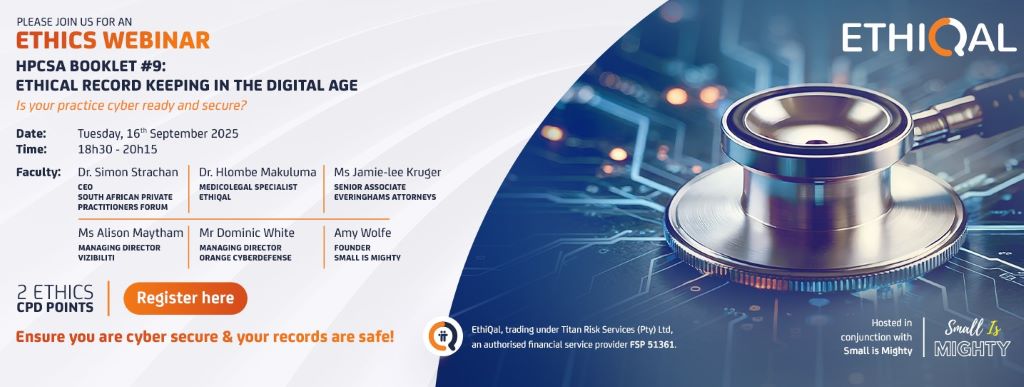
Ethical patient record keeping is essential to modern healthcare, ensuring safe, effective, and trustworthy care. Accurate documentation supports continuity, clinical decision-making, and legal accountability, while also carrying ethical importance by safeguarding sensitive information with honesty, confidentiality, and respect. Poor record keeping can decrease patient outcomes, create confusion, impact multidisciplinary collaboration, and create legal risk.
Managing records ethically protects patient privacy and autonomy while allowing patients access and control over their health data. With the growth of digital health technologies, new challenges such as data security, electronic informed consent, and cybersecurity have emerged. Breaches or cyberattacks can erode trust, discourage information sharing, and disrupt care delivery, highlighting the need to balance accessibility with strong safeguards.
Join our expert speaker panel to explore how you can effectively manage your patient records to ensure integrity and continue to build trust vital to patient-centred healthcare.
During this webinar, attendees will review the HPCSA Booklet 9:Guidelines on the keeping of patient health records where the pertinent South Africa laws and basic principles around ethical practices for maintaining patient health records are laid out. The webinar will offer insights into both paper and electronic record-based practices.
The audience will have an opportunity to engage with faculty who offer insights from a clinical, legal, medical malpractice insurance, cybersecurity, and medical practice setup and management perspective through short lectures, interactive case studies, a series of multiple choices questions and Q&A sessions.
This webinar will focus on specialist practices. Administrative staff working in these practices are welcome to join the discussion.