Category: COVID

Specific Nasal Cells Protect against COVID in Children

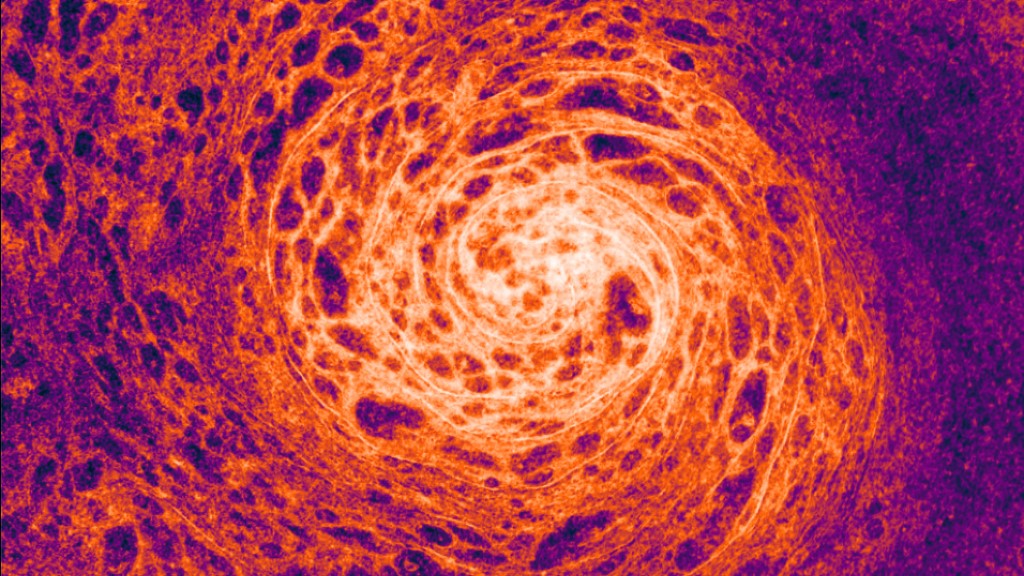
Legend of spirals: This image highlights the appearance of nasal cultures from older adults, revealing distinct spiral-like patterns that were absent in cultures grown from children. Credit: University College London

Important differences in how the nasal cells of young and elderly people respond to the SARS-CoV-2 virus, could explain why children typically experience milder COVID symptoms, finds a new study led by researchers at UCL and the Wellcome Sanger Institute.

The study, published in Nature Microbiology, focused on the early effects of SARS-CoV-2 infection on the cells first targeted by the viruses, the human nasal epithelial cells (NECs).

These cells were donated from healthy participants, including children (0–11 years), adults (30–50 years) and, for the first time, the elderly (over 70 years).

The cells were then cultured to regrow into the different types of nasal cells. Using single-cell RNA sequencing techniques that enable scientists to identify the unique genetic networks and functions of thousands of individual cells, the team identified 24 distinct epithelial cell types. Cultures from each age group were then either mock-infected or infected with SARS-CoV-2.

After three days, the NECs of children responded quickly to SARS-CoV-2 by increasing interferon (the first line of anti-viral defence), restricting viral replication. However, this early anti-viral effect became less pronounced with age.

The researchers also found that NECs from elderly individuals not only produced more infectious virus particles, but also experienced increased cell shedding and damage.

The strong antiviral response in the NECs of children could explain why younger people typically experience milder symptoms. In contrast, the increased damage and higher viral replication found in NECs from elderly individuals could be linked to the greater severity of disease observed in older adults.

Project lead, Dr Claire Smith (Associate Professor at UCL Great Ormond Street Institute of Child Health), said: “Our research reveals how the type of cells we have in our nose changes with age, and how this affects our ability to combat SARS-CoV-2 infection. This could be crucial in developing effective anti-viral treatments tailored to different age groups, especially for the elderly who are at higher risk of severe COVID-19.”

Co-Senior author, Dr Kerstin Meyer (Wellcome Sanger Institute), said: “By carrying out SARS-CoV-2 infections of epithelial cells in vitro and studying the responses with single cell sequencing, we get a much more detailed understanding of the viral infection kinetics and see big differences in the innate immune response between cell types.”

Children infected with SARS-CoV-2 rarely progress to respiratory failure, but the risk of mortality in infected people over the age of 85 remains high, despite vaccination and improving treatment options.

The research underscores the importance of considering age as a critical factor in both research and treatment of infectious diseases.

Co-senior author, Dr Marko Nikolic (UCL Division of Medicine), said: “It is fascinating that when we take away immune cells from nasal samples, and are only left with nasal epithelial cells grown in a dish, we are still able to identify age-specific differences in our body’s response to the SARS-CoV-2 between the young and elderly to explain why children are generally protected from severe COVID-19.”

Dr Smith added: “Understanding the cellular differences at the initiation of infection is just the beginning. We now hope to investigate the long-term implications of these cellular changes and test therapeutic interventions using our unique cell culture model. This ‘gold-standard’ system is only possible with the support of our funders and the willingness of participants to provide their samples.”

The team suggest that future research should consider how ageing impacts the body’s response to other viral infections.

Source: University College London

“Anti-vax” Doctor’s Disciplinary Inquiry gets Underway

Shankara Chetty is accused of failing to act in the best interests of patients

Photo by Tingey Injury Law Firm on Unsplash

By Tania Broughton for GroundUp

The disciplinary hearing against “anti-vax” doctor Shankara Chetty got underway in Durban this week, after changes to the charge sheet were made.

This comes after Chetty asked that the charges be dismissed or revised – or he would approach the high court for relief.

The charges are based on allegations by Francois Venter, a medical professor at Wits University who was at the forefront of Covid research in South Africa. He said Chetty was practicing “pseudo-science” at the height of the pandemic, with Chetty claiming that vaccines made no sense.

Chetty’s argument, in the main, focusses on his right to freedom of expression and claims that expressing a view is not a violation of the ethical guidelines of the Health Professions Council of South Africa (HPCSA).

His lawyers argued that the charges should have been dropped. Instead, the disciplinary committee ordered that they be amended.

The revised charge sheet contains four charges of unprofessional conduct.

They include that he contravened norms and standards by using unproven and unrecommended health technologies, namely Chetty’s “8th day” protocol, and that he failed to act in the best interests of patients by prescribing ivermectin, corticosteroids, and hydroxychloroquine for Covid, which were not approved by the South African Health Products Regulatory Council for this purpose.

He is also charged with casting aspersions on expert health care professionals who were authorised to provide advice and develop protocols, by stating that they engineered protocols in hospitals to “cause death and damage” to Covid patients.

The final, and fourth charge, is based on allegations that he “mischaracterised the cause and identification of the Covid illness, spike proteins and the toxicity of the virus”, which was not in line with the tenets of science.

In his complaint to the HPCSA, Venter said Chetty had made unprecedented claims in a video regarding the toxicity of Covid vaccines and that they were a “deliberate mass poisoning and planned to kill billions”.

He said Chetty, on his own website, had also made “outlandish physiological claims” which undermined the most basic tenets of accepted science about the vaccines, and advocated outpatient remedies of his own.

He said the video and the website “were more than enough evidence of gross misrepresentation of the vaccine programme: anybody watching would be justified in being severely alarmed at the prospect of mass poisoning”.

Chetty’s narrative, Venter said, went against the Department of Health, local experts, and international guidelines.

“This level of pseudo-science within the profession needs to be firmly and quickly clamped down on. The HPCSA must do its duty in protecting the public and discipline Chetty.”

In his written response, Chetty said the video was taken at a three-day Caribbean Summit held by the Word Council for Health, which brought together experts in various fields to share opinions and insights on the pandemic. (Wikipedia describes the World Council for Health as a pseudo-medical organisation dedicated to spreading misinformation to discourage COVID-19 vaccination and promoting fake COVID-19 treatments.)

The summit was not open to the general public and was a behind-closed-doors robust discussion.

Chetty said he did not consent to any recording being shared with the public.

He said he was not an “anti-vaxxer” but he was of the view that the vaccine technology had been rushed to market, with poor safety surveillance by clinical trials, and with a disregard for informed consent and individual choice.

In a written response, Venter said Chetty’s right to freedom of speech did not absolve him of his ethical duties.

This included not posting opinions on the professional reputations of their colleagues on social media “lest the public lose faith in the healthcare profession”.

Chetty is expected to plead not guilty to all the charges. According to the minutes of a pre-inquiry conference, both the HPCSA and Chetty intend to call expert witnesses.

Republished from GroundUp under a Creative Commons Attribution-NoDerivatives 4.0 International License.

Source: GroundUp

Key Gene may Protect Against Severe COVID Infections in Men Under 75

Photo: CC0

A certain variant of a key anti-inflammatory gene protects men under age 75 from severe illness and death when hospitalised from COVID, a genetic analysis of their blood shows. According to the authors of a major study published in The Journal of Infectious Diseases, the protective gene in question, an interleukin-1 receptor antagonist (IL1RN) variant, appears to tamp down inflammation, which can get out of control in severe cases SARS-CoV-2 infection.

The study showed that 124 men between the ages of 19 and 74 who possessed the IL1RN variant, called rs419598, were less likely to become severely ill after hospitalisation for COVID, and 80% less likely to die from the disease.

IL1RN is expressed naturally in the body. Different types of interleukin genes are known to dial inflammation up or down in the context of arthritis, and researchers say the results of the current study suggest that a similar dynamic influences the interleukin-1-related inflammation seen in COVID patients.

The findings, from researchers at NYU Grossman School of Medicine, stand out because historically more men than women are known to die from COVID, and the IL1RN rs419598 variant appears to selectively protect only men up to age 74, but not beyond that as age-related chronic illnesses unfold.

The research team used sequencing technologies for the study to determine the presence of specific genes or variations in the letter code that makes up genes in blood samples from 2589 men and women hospitalised for COVID at NYU Langone’s Tisch Hospital in Manhattan from March 2020 to March 2021.

More than half of the men and women in the study were older than age 60 and obese, factors that are known to increase the risk of death from the viral infection. Overall, more men than women (240 men, at 60.5%; and 157 women, at 39.5%) died from their disease, with women 20% less likely to die than men.

“Our study results show that among hospitalised patients, while women are still overall less likely than men to die from COVID-19, those men age 74 and younger who possess the IL1RN gene variant rs419598 are much less likely to suffer the severe inflammation tied to SARS-CoV-2 infection and less likely to die from the disease,” said study colead investigator and molecular biologist Mukundan Attur, PhD. Attur is an associate professor in the Department of Medicine at NYU Langone Health.

Among the study’s other findings was that average blood levels of the anti-inflammatory protein IL-1Ra, coded by IL1RN, were 14 times higher in 181 hospitalised men than in healthy male study controls from the general population, and 10 times as high in 178 hospitalised women than in healthy females. The increased levels of IL-1Ra in women did not result in any statistically significant mortality reductions.

“Our analysis offers substantial evidence of the biological link between the severe inflammation seen in SARS-CoV-2 and that which occurs in rheumatoid arthritis,” said study senior investigator Steven Abramson, MD, the Frederick H. King Professor of Internal Medicine at NYU Langone.

Abramson, a rheumatologist who also serves as chair of the Department of Medicine and chief academic officer at NYU Langone, says previous research has shown that such rheumatoid inflammation is lower in people who possessed one of the three IL1RN variants analysed in the study.

More importantly, Abramson says, the new research suggests that restraining the interleukin-1 biological pathway, which is in part tamped down by the anti-inflammatory protein IL-1Ra, could help prevent the severe inflammation seen in SARS-CoV-2 infection. Further research, he says, is warranted into whether IL-1-inhibiting therapies, such as the IL1 receptor antagonists anakinra, canakinumab, and rilonacept, are effective against Covid infection.

Abramson already has plans to investigate if the IL-1 pathway plays a role in long Covid, when people experience new or lingering symptoms, such as fatigue and ‘brain fog’, months after recuperating from their initial infection.

Abramson points out that the new study adds to the growing scientific evidence about the biological factors that contribute to gender differences seen in deaths from COVID, which are known to vary widely across the United States.

Source: NYU Langone Health / NYU Grossman School of Medicine

Time is Running out to Develop a Paxlovid Alternative

Photo by CDC on Unsplash

Researchers from Rutgers University in the U.S. believe that they are ahead in a race to find an oral COVID-19 treatment to supplement or replace the antiviral Paxlovid. Their report, published in Science, shows that an alternative medication, a viral papain-like protease inhibitor, inhibits disease progression in animals while also possessing an important advantage over Paxlovid – fewer prescription drug contraindications.

“COVID-19 remains the nation’s third leading cause of death, so there’s already a massive need for additional treatment options,” said Jun Wang, senior author of the study and associate professor at Rutgers. “That need will grow more urgent when, inevitably, COVID-19 mutates in ways that prevent Paxlovid from working.”

The Rutgers team hoped to make a drug that interfered with viral papain-like protease (PLpro), a protein that performs important functions in all known strains of COVID-19.

Creating such a drug required detailed information about PLpro’s structure, which Wang’s team got from the Arnold Lab at Rutgers’ Center for Advanced Biotechnology and Medicine (CABM).

Precise knowledge of PLpro’s structure enabled Wang’s team to design and synthesise 85 drug candidates that would bond to – and interfere with – this vital protein.

“The PLpro crystal structures showed an unexpected arrangement of how the drug candidate molecules bind to its protein target, leading to innovative design ideas implemented by professor Wang’s medicinal chemistry team,” said Eddy Arnold, who is a professor at CABM.

Laboratory testing established that the most effective of those drug candidates, a compound dubbed Jun12682, inhibited several strains of the SARS-CoV-2 virus, including strains that resist treatment with Paxlovid.

Oral treatment with Jun12682 on SARS-CoV-2-infected mice was shown to reduce viral lung loads and lesions while improving survival rates.

“Our treatment was about as effective in mice as Paxlovid was in its initial animal tests,” said Wang, who added the experimental drug appears to have at least one major advantage over the older drug.

“Paxlovid interferes with many prescription medications, and most people who face the highest risk of severe COVID-19 take other prescription medicines, so it’s a real problem,” Wang said.

“We tested our candidate Jun12682 against major drug-metabolising enzymes and saw no evidence that it would interfere with other medications.”

Source: Rutgers University

Pretoria High Court Judgement On COVID-19 Vaccinations

Photo by Bill Oxford on Unsplash

On 05 January 2023, the COVID Care Alliance NPC and other applicants brought an urgent court application against the South African Health Products Regulatory Authority (SAHPRA), including the President of the Republic of South Africa and others to prevent people from being vaccinated.

The applicants wanted the court to order that all COVID-19 vaccines programs must be stopped and that all COVID-19 vaccination sections in healthcare facilities in South Africa must be closed, and the effective withdrawal from circulation of the vaccines. The applicants also sought an order interdicting the approval of vaccines for emergency authorisation or registration.

On 27 February 2024, the Pretoria High Court dismissed with costs an application filed by the applicants on the grounds that the applicants do not have the right to prevent others, who do not share in their beliefs or opinions, from being vaccinated.

SAHPRA submitted evidence to the Court to show that the applicants’ attempt to prevent government from using vaccines to address the COVID-19 pandemic was misguided, and the applicants heavily relied on hearsay and speculation, as well as supported their arguments with the opinion of persons who were not experts.

Source: SAHPRA

Hypervaccination: Researchers Investigate a Man who Received 217 COVID Shots

Researchers in Germany find no negative effects on immune system

Photo by Gustavo Fring

Researchers at Friedrich-Alexander-Universität Erlangen-Nürnberg (FAU) and Universitätsklinikum Erlangen have examined a man who has received more than 200 vaccinations against COVID. They learned of his case via newspaper reports.

Until now, it has been unclear what effects hypervaccination such as this would have on the immune system. Some scientists were of the opinion that immune cells would become less effective after becoming used to the antigens. This proved not to be the case in the individual in question: his immune system is fully functional. Certain immune cells and antibodies against SARS-CoV-2 are even present in considerably higher concentrations than is the case with people who have only received three vaccinations. The results have been published in the journal Lancet Infectious Diseases.

More than 60 million people in Germany have been vaccinated against SARS-Coronavirus 2, the majority of them several times. The man who has now been examined by researchers at FAU claims to have received 217 vaccinations for private reasons. There is official confirmation for 134 of these vaccinations.

“We learned about his case via newspaper articles,” explains Privatdozent Dr Kilian Schober from the Institute of Microbiology – Clinical Microbiology, Immunology and Hygiene (director Prof Dr Christian Bogdan). “We then contacted him and invited him to undergo various tests in Erlangen. He was very interested in doing so.” Schober and his colleagues wanted to know what consequences hypervaccination such as this would have. How does it alter the immune response?

As a rule, vaccinations contain parts of the pathogen or a type of construction plan that the vaccinated person’s cells can use to produce these pathogenic components themselves. Thanks to these antigens, the immune system learns to recognize the real pathogen in the event of a later infection. It can then react more rapidly and forcibly. But what happens if the body’s immune system is exposed extremely often to a specific antigen?

“That may be the case in a chronic infection such as HIV or Hepatitis B, that has regular flare-ups,” explains Schober. “There is an indication that certain types of immune cells, known as T-cells, then become fatigued, leading to them releasing fewer pro-inflammatory messenger substances.” This and other effects triggered by the cells becoming used to the antigens can weaken the immune system. The immune system is then no longer able to combat the pathogen so effectively.

Blood samples from several years investigated

The current study, which also involved researchers from Munich and Vienna, does not deliver any indication that this is the case, however. “The individual has undergone various blood tests over recent years;” explains Schober. “He gave us his permission to assess the results of these analyses. In some cases, samples had been frozen, and we were able to investigate these ourselves. We were also able to take blood samples ourselves when the man received a further vaccination during the study at his own insistence. We were able to use these samples to determine exactly how the immune system reacts to the vaccination.”

The results showed that the individual has large numbers of T-effector cells against SARS-CoV-2. These act as the body’s own soldiers that fight against the virus. The test person even had more of these compared to the control group of people who have received three vaccinations. The researchers did not perceive any fatigue in these effector cells, they were similarly effective as those in the control group who had received the normal number of vaccinations.

Memory T cells are another aspect the researchers explored. These are cells at a preliminary stage, before effector cells. Similar to stem cells, these cells can replenish numbers of suitable effector cells. “The number of memory cells was just as high in our test case as in the control group,” explains Katharina Kocher, one of the leading authors of the study. “Over all, we did not find any indication for a weaker immune response, rather the contrary.”  In addition, even the 217th vaccination that the man received during the study still had an effect: the number of antibodies against SARS-CoV-2 increased significantly as a result.

Immune system remains active against other pathogens

Further tests indicated that there was no change to the immune system’s effectiveness against other pathogens. It therefore appears to be the case that the hypervaccination has not damaged the immune system as such. “Our test case was vaccinated with a total of eight different vaccines, including different available mRNA vaccines,” stated Dr Kilian Schober. “The observation that no noticeable side effects were triggered in spite of this extraordinary hypervaccination indicates that the drugs have a good degree of tolerability.”

However, this is one individual case. The results are not sufficient for making far-reaching conclusions let alone recommendations for the general public. “Current research indicates that a three dose vaccination, coupled with regular top-up vaccines for vulnerable groups, remains the favoured approach. There is no indication that more vaccines are required.”

Source: Friedrich–Alexander University Erlangen–Nurnberg

COVID Vaccination and Antibody Responses Found to be Long-lasting

Image by Fusion Medical on Unsplash

A long-term analysis conducted by leading microbiologists at the Icahn School of Medicine at Mount Sinai reveals that antibody responses induced by COVID vaccines are long-lasting. The study results, published online in the journal Immunity, challenge the idea that mRNA-based vaccine immunity wanes quickly.

The emergence of SARS-CoV-2 in late 2019 sparked the global pandemic that is now in its fifth year. Vaccines that were developed at record speed have saved millions of lives. However, the emergence of SARS-CoV-2 variants and waning immunity have decreased the effectiveness of the vaccines against symptomatic disease. The common perception now is that mRNA-based vaccine-induced immunity wanes quickly. However, this assumption is largely based on data from short-term studies that include a very limited number of data points following peak responses.

The Mount Sinai research team’s analysis of more than 8000 samples collected over a three-year period in New York City examined how antibody responses to the virus’s spike protein changed after infections, during the primary immunisation series, during monovalent and bivalent booster vaccination, and during breakthrough infections.

They found that upon primary immunisation, participants with pre-existing immunity (those who had previously been infected with the virus) mounted higher antibody responses faster and achieved higher steady-state antibody titres than individuals who had not been previously infected. The waning of antibody response was characterised by two phases: an initial rapid decay from the strong peak after vaccination, followed by a stabilisation phase with very slow decay, suggesting that antibody levels were very long-lasting. Booster vaccination equalised the differences in antibody concentration between participants with and without pre-existing immunity. Breakthrough infections increased antibodies to similar levels as an additional vaccine dose in individuals who had not previously been infected.

This investigation represents one of the most extensive and in-depth assessments of the longevity of SARS-CoV-2 immune responses to date. Its major conclusion is that changes in the virus that allow it to evade immunity, rather than waning immunity, are the major reason for breakthrough infections.

“Ours is one of the longest-running COVID-19 studies out there,” said Viviana Simon, MD, PhD, Professor of Microbiology, Medicine and Pathology, Molecular and Cell-Based Medicine, at Icahn Mount Sinai and lead author of the paper. “Following the same group of people monthly over time is rare and powerful because you can compare immune responses on an individual level. SARS-CoV-2 continues to evolve, so this research is important to provide an understanding about the impact of new variants and new vaccine doses on a healthy immune system, and to guide all of us to make the best choices to maintain protection against the virus that continues to circulate in our communities.”

This in-depth analysis was made possible through the Protection Associated with Rapid Immunity to SARS-CoV-2 (PARIS) study, an observational, longitudinal cohort of health care workers of the Mount Sinai Health System that was initiated in April 2020. At that time, the densely populated New York metropolitan area was hit with an exponential increase in severe SARS-CoV-2 infections, and essential workers in the health care system were at high risk for infection. In response to the crisis, a team of leading virologists, physician-scientists, and pathologists at Mount Sinai established a specific and sensitive SARS-CoV-2 binding enzyme-linked immunosorbent assay to accurately measure the SARS-CoV-2 antibody titres. This test was used to measure immune responses in the PARIS cohort in order to determine how quickly the antibody defences were mounted and much these changed over the months and years of follow up.

In addition to showing the impact on a person’s individual antibody response to vaccines based on the type of vaccine received and whether or not they were infected before receiving the first dose, the PARIS study made possible the development of a mathematical model that can be used to predict and characterize antibody responses of both individual people and populations.

“People have pandemic fatigue and vaccine uptake has slowed, especially after the vaccines started to be charged to insurance,” said Komal Srivastava, MS, Director of Strategy and Operation of the Mount Sinai Center for Vaccine Research and Pandemic Preparedness and co-first author of the paper. “We were pleasantly surprised to see that the booster doses promoted a large antibody response regardless of a person’s personal infection history, so we are hopeful that our study findings will encourage people to get their vaccine boosters when eligible and to stay engaged in research. Our work also showcases the impact of viral evolution over time and why it’s critical to keep studies like this going, despite the pandemic fatigue.”

According to the research team, the PARIS model has broad applications for studying the kinetics of antibodies produced to different COVID vaccines in diverse populations. They stress much more work remains to analyse side effects, applications of the antibody model and continued research about new vaccines and viral variants.

“This study adds an essential piece of data to understand the intricate immune response elicited by SARS-CoV-2 infection and COVID-19 vaccination,” says Juan Manuel Carreno Quiroz, PhD, Assistant Professor in the Department of Microbiology and co-first author of the paper. “In light of the emerging viral variants, which predominantly induce a cross-reactive antibody response against the spike protein, it will be exciting to characterise in depth the role of these antibodies – in particular the non-neutralising ones – in protection against the most recent circulating viral variants. Likewise, monitoring the induction of variant-specific antibodies after multiple exposures by breakthrough infections and by administration of updated COVID-19 vaccines, such as the XBB.1.5 monovalent booster, will be key to understand the evolution of the antibody response over time.”

Source: The Mount Sinai Hospital / Mount Sinai School of Medicine

New T Cell ‘Rescue’ Therapy Promising for ARDS

Credit: Scientific Animations CC4.0

Promising trial results indicate that a new type of cell therapy could improve the prognosis of those who are critically ill with acute respiratory distress syndrome (ARDS) resulting from severe COVID.

Published in the journal Nature Communications, Professor Justin Stebbing of Anglia Ruskin University (ARU) is the joint senior author of the new study investigating the use of agenT-797, MiNK Therapeutic’s allogeneic, unmodified invariant natural killer T (iNKT) cell therapy.

The iNKT cell therapy has the effect of rescuing exhausted T cells and prompting an anti-inflammatory cytokine response, potentially activating anti-viral immunity to help these patients fight infection as well as to reduce severe, pathogenic inflammation of the lung.

The new research was carried out at three medical centres and found that agenT-797, which is also under investigation in cancer trials, could be manufactured rapidly, had a tolerable safety profile, and appeared to have a positive effect on mortality among critically unwell Covid-19 ARDS patients receiving intensive care.

The exploratory trial included 20 mechanically ventilated patients with severe ARDS secondary to Covid-19. Of the 20 patients in the trial, 14 survived (70%) at 30 days (compared to a control group of 10%), and there was an 80% lower occurrence of bacterial pneumonia amongst those who received the highest dosage of agenT-797, compared to those who received fewer cells.

Twenty-one patients were treated overall (the main trial, plus one under compassionate use), which included five who were also receiving veno-venous extracorporeal membrane oxygenation (VV-ECMO), known as ‘the most aggressive salvage therapy’ for critically ill patients with ARDS.

In VV-ECMO, deoxygenated blood is pumped through a membrane lung and returned to the body via a cannula. This trial is believed to be the first immune cell therapy of any type to be used in critically unwell patients undergoing VV-ECMO.

Survival of the VV-ECMO cohort was 80% after 30 and 90 days, and 60% after 120 days. This compares favourably to overall survival of 51% for patients with Covid-19 who were treated with just VV-ECMO at the same institution, during the same timeframe.

Joint senior author Justin Stebbing, Professor of Biomedical Sciences at Anglia Ruskin University (ARU) in Cambridge, England, said: “During this small, exploratory study we observed that MiNK’s iNKT cell treatment, which is also being advanced for people with cancer, triggered an anti-inflammatory response in ARDS patients.

“Despite a poor prognosis, critically ill patients treated with this therapy showed favourable mortality rates and those treated at the highest dose also had reduced rates of pneumonia, underscoring the potential application of iNKT cells, and agenT-797 in particular, in treating viral diseases and infections more broadly.

Source: Anglia Ruskin University

COVID did not get Weaker – Our Immune Systems got Stronger, Large Scale Study Suggests

Image by Fusion Medical on Unsplash

Researchers have shown that the reduced mortality from COVID is not necessarily due to the fact that later variants, such as Omicron, have been less severe. Rather, the reduced mortality seems to be due to several other factors, such as immunity from previous vaccinations and previous infections. The study is published in the latest issue of Lancet Regional Health Europe.

The researchers at Karolinska Institutet, together with partners in the EuCARE project, conducted a study using patient data from more than 38 500 hospitalised patients with COVID, from the start of the pandemic to October 2022. The data comes from hospitals in ten countries, including two outside Europe.

The data showed that in-hospital mortality decreased as the pandemic progressed, especially since Omicron became the dominant variant. However, when the researchers modelled the mortality rates for different variants (pre-Alpha, Alpha, Delta and Omicron) and took into account factors such as age, gender, comorbidity, vaccination status and time period, they saw far fewer differences and weaker associations. They also saw differences between age groups, highlighting the importance of conducting separate analyses for different age groups. 

“Overall, our findings suggest that the observed reduction in mortality during the pandemic is due to multiple factors such as immunity from vaccination and previous infections, and not necessarily tangible differences in inherent severity,” says Pontus Hedberg, first author of the study. 

Omicron variant no less severe 

Understanding the disease course and outcomes of patients hospitalised with COVID during the pandemic is important to guide clinical practice and to understand and plan future resource use for COVID. A particularly interesting finding is that the inherent severity of Omicron has not necessarily been significantly reduced, but that other factors are behind the reduction in mortality. 

“The fact that Omicron can cause severe disease was seen in Hong Kong, for example, where the population had low immunity from previous infections and low vaccination coverage. In Hong Kong there was a relatively high mortality from Omicron,” says Pontus Hedberg. 

Highlights the importance of protecting the elderly and those with underlying diseases

The main applications of the study results going forward are the continued need to protect the elderly and patients with other underlying disease from severe disease outcomes through vaccination against COVID, even though new virus variants may appear less virulent. The results are also important for understanding trends in mortality in hospitalised patients with COVID and thus planning for resource use in hospital care.

Larger multinational collaborative projects like this are of great value to increase the generalisability of studies and not least to promote international collaboration also for future pandemic or epidemic scenarios.

Source: Karolinska Institutet

Overactive Complement System Causes Long Covid

Photo by Andrea Piacquadio: https://www.pexels.com/photo/woman-in-gray-tank-top-3812757/

A new study from the University of Zurich (UZH) has revealed that the complement system plays an important role in Long Covid, a common sequela of SARS-CoV-2 infection. The findings, published in Science, show that the complement system ends up damaging tissue and blood cells even after the original infection has ended.

A significant proportion of individuals infected with SARS-CoV-2 develop long-lasting symptoms with a wide range of manifestations. The causes and disease mechanisms of Long Covid are still unknown, and there are no diagnostic tests or targeted treatments.

Part of the immune system active for too long

A team of researchers led by Onur Boyman, professor of immunology at UZH and Director of the Department of Immunology at the University Hospital Zurich (USZ), has implicated the complement system. It is part of the innate immune system and normally helps to fight infections and eliminate damaged and infected body cells.

“In patients with Long Covid, the complement system no longer returns to its basal state, but remains activated and, thus, also damages healthy body cells,” says Boyman.

Continued activation of complement system damages tissue and blood cells

The researchers followed 113 COVID patients for up to one year after their acute SARS-CoV-2 infection and compared them with 39 healthy controls.

After six months, 40 patients had active Long Covid disease.

More than 6500 proteins in the blood of the study participants were analysed both during the acute infection and six months later.

“The analyses of which proteins were altered in Long Covid confirmed the excessive activity of the complement system. Patients with active Long Covid disease also had elevated blood levels indicating damage to various body cells, including red blood cells, platelets and blood vessels,” explains Carlo Cervia-Hasler, a postdoctoral researcher in Boyman’s team and first author of the study.

Bioinformatics recognises protein patterns

The measurable changes in blood proteins in active Long Covid indicate an interaction between proteins of the complement system, which are involved in blood clotting and the repair of tissue damage and inflammation.

In contrast, the blood levels of Long Covid patients who recovered from the disease returned to normal within six months.

Active Long Covid is therefore characterised by the protein pattern in the blood.

The blood markers were discovered using bioinformatics methods in collaboration with Karsten Borgwardt during his time as a professor at ETH Zurich.

“Our work not only lays the foundation for better diagnosis, but also supports clinical research into substances that could be used to regulate the complement system. This opens up new avenues for the development of more targeted therapies for patients with Long Covid,” Onur Boyman said.

Source: University of Zurich