Category: COVID

Distressed Individuals were Strong on COVID Vaccination but Lax on Social Distancing

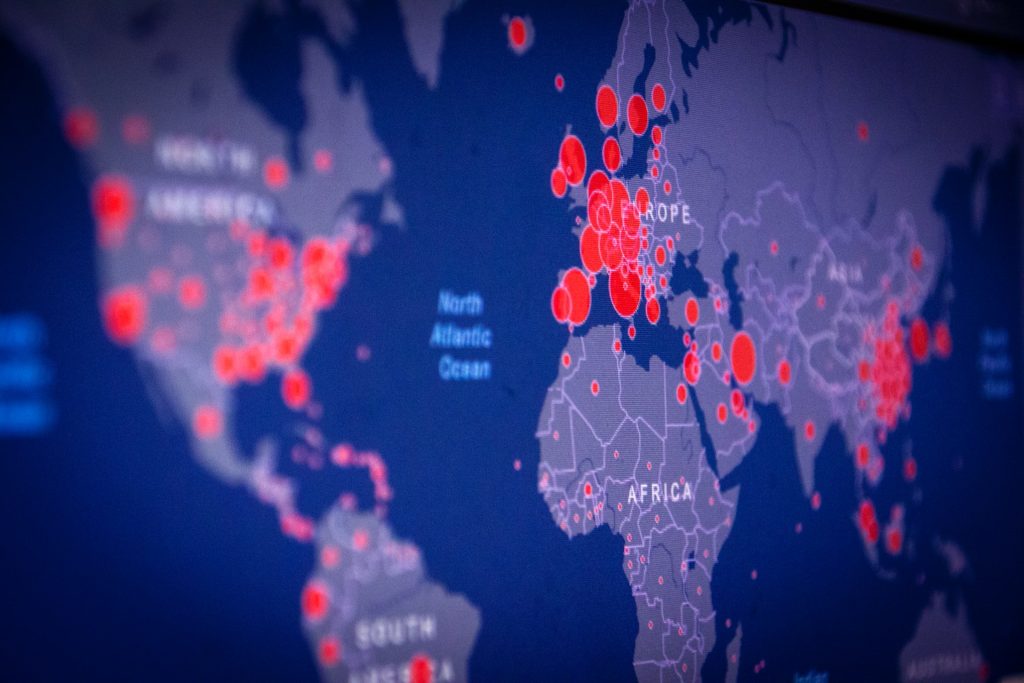
COVID heat map. Photo by Giacomo Carra on Unsplash

During the COVID pandemic, individuals who were distressed, showing signs of anxiety or depression, were less likely to follow recommendations from the Centers for Disease Control and Prevention, yet they were more likely to get vaccinated than non-distressed peers.

The authors refer to this as differential distress: when people act safely in one aspect while disregarding safety in another, both in response to the same psychological distress. This creates a conundrum for those trying to determine how best to communicate risks and best practices to the public.

Their study of 810 people revealed that distress was less likely to affect older people either way, despite their higher risk for severe outcomes if infected with SARS-CoV-2. Reported in Frontiers in Psychology, the findings suggest that fear messaging, which is intended to scare people and can increase their levels of distress, may not be the most effective way to encourage people to change behaviours.

“These findings do not point to a straightforward public health messaging campaign,” said Professor Joel Myerson, study leader. “Instead, officials may have to consider more finely tailored messages for different populations in order to achieve best outcomes: more attention to CDC recommendations as well as more people getting vaccinated.”

In a previous study, the researchers looked at social distancing and hygiene behaviours across a range of demographics. The results suggested that distress was closely tied to the way people responded to recommendations about social distancing. People who were more distressed were less likely to observe social distancing recommendations, perhaps as a way to maintain social connections that can ease anxiety and depression.

In the latest work, researchers again asked people about their adherence to the latest CDC recommendations, including newer recommendations outlining when to wear a mask and suggesting that people avoid spending lots of time inside with others. The results showed similar correlations to the previous study among age, distress and behaviour changes.

In terms of public health and effective messaging, one of the most pressing issues to arise after publication of the first study was the introduction of vaccines and the perceptions around them. Looking at four categories, fully vaccinated; partially vaccinated; unvaccinated but likely to get one; unvaccinated and unlikely to get one, researchers found:

  • People who had been fully vaccinated were more likely than those who were partially vaccinated to have close interactions with others following their shots.
  • Relative to those who said they were unlikely to get vaccinated, those who said they were likely to do so thought their chance of infection was higher.
  • Depending on the person’s age, they responded differently to the same level of stress. Overall, for example, the higher level of distress someone had, the less likely they were to social distance, but the more likely they were to get vaccinated. Both of these correlations became weaker, however, as people aged.

Fear messaging that tries to scare people into following guidelines tends to be useful only for a one-time event, Green said. “Ostensibly, getting vaccinated should count as such an event.” But as breakthrough cases increase and boosters add up, vaccinations are no longer one and done; they are instead a series of events, spread out over more than a year.

Although fear-based messaging may encourage younger people to get vaccinated, it also weakens their resolve to mitigation behaviours like social distancing. Not doing both poses a greater breakthrough infection risk.

Messaging also becomes less effective as people age, just as they become more vulnerable to severe illness.

“Part of the solution to the problem of differential distress may be to avoid the distress altogether,” said Professor Leonard Green, study co-lead. This would entail forgoing the fear campaign. Instead, a gentler approach may be warranted. “Our previous work suggests that what really motivates many people to change behaviours for the better is considering how their actions can benefit, or harm, other people.”

Source: Washington University in St. Louis

How COVID Skewed The Perception of Time

Photo by insung yoon on Unsplash

Many people can agree that an altered passage of time, known as “temporal disintegration” in psychiatric literature, was a common experience during the COVID pandemic, ranging from difficulty in keeping track of days of the week to feeling that the hours themselves rushed by or slowed down. Prior work linked these distortions to persistent negative mental outcomes such as depression and anxiety following trauma.

A new study, published in Psychological Trauma: Theory, Research, Practice, and Policy, documents how pervasive the experience was in the first six months of the pandemic. Pandemic-related secondary stresses such as daily COVID-related media exposure, school closures, lockdowns and financial difficulties were also found to be predictors of distortions in perceived time.

“Continuity between past experiences, present life and future hopes is critical to one’s well-being, and disruption of that synergy presents mental health challenges,” said corresponding author E. Alison Holman, UCI professor of nursing. “We were able to measure this in a nationally representative sample of Americans as they were experiencing a protracted collective trauma, which has never been done before. This study is the first to document the prevalence and early predictors of these time distortions. There are relatively new therapies that can be used to help people regain a more balanced sense of time, but if we don’t know who is in need of those services, we can’t provide that support.”

Researchers assessed results of responses regarding distorted time perceptions and other pandemic related experiences from a national sample of 5661 participants. Surveys were conducted during March 18-April 18, 2020 and Sept. 26-Oct. 26, 2020 with respondents who had completed a mental and physical health survey prior to the COVID outbreak.

“Given that distortions in time perception are a risk factor for mental health problems, our findings have potential implications for public health. We are now looking at temporal disintegration, loneliness, and mental health outcomes over 18 months into the pandemic,” Prof Holman said. “This will help us gain insight into how these common experiences during the pandemic work together, so we can better understand how to help people struggling with these challenges.”

Source: University of California – Irvine

Youth-onset Type 2 Diabetes Increased 77% During COVID Pandemic

Photo by Towfiqu Barbhuiya on Unsplash

Published in The Journal of Pediatrics, a study reviewing medical records has found that new diagnoses of type 2 diabetes in children has surged 77% since the pandemic, accelerating a trend that is already a great concern for parents and healthcare professionals.

The new analysis documented the rise in cases with measures of increased body mass index (BMI) and higher blood glucose and haemoglobin A1c test results.

During the first year of the pandemic, medical records showed that more boys (55%) were diagnosed with type 2 diabetes than girls (45%), a reversal of the percentages during the pre-pandemic years.

In addition, during the pre-pandemic years, more patients were diagnosed while outpatients (57%) than during the pandemic year, when more were diagnosed and treated as inpatients (57%), suggesting greater severity.

Overall, the researchers found that 21% of the young people diagnosed presented with “metabolic decompensation,” of which the most serious symptoms include vomiting, lethargy, confusion and rapid breathing. Pre-pandemic, such symptoms occurred in only 9% of children with new-onset type 2 diabetes. Because the study involved a retrospective review of medical records, the investigators say there is a potential for inconsistencies in reporting or missing information.

“It used to be rare to hear about a child with type 2 diabetes, but its prevalence in adolescents has almost doubled in the past 20 years,” said Dr Kesley. “Type 2 diabetes is associated with rapidly progressive disease and early onset of complications and, unfortunately, was on the rise even prior to the COVID pandemic.”

Data suggests diagnoses of type 2 diabetes in children are increasing by 4 to 5% per year. The COVID pandemic introduced multiple challenges and increased attention to children with pre-existing disorders such as diabetes.

“In the spring of 2020 we were inundated with new youth-onset type 2 diabetes cases,” said Dr Kelsey. “We were used to seeing 50-60 new cases per year and that increased to more than 100 new cases in a year. Colleagues at other institutions were seeing the same thing, so we gathered a team of researchers to evaluate the frequency and severity of new cases during the first year of the pandemic compared to the mean of the prior two years. It was challenging because there is not a funded national registry for youth-onset type 2 diabetes, so this work was done with an enormous and voluntary effort of investigators across the country who are dedicated to treating diabetes in youth.

“To our knowledge, this is the first multicentre study to report the impact of the COVID pandemic on rates of newly diagnosed youth onset type 2 diabetes,” Dr Kesley said. “We found that the pandemic was associated with an increase in new type 2 diabetes cases compared to the two prior years, as well as an increase in proportion of youth presenting in metabolic decompensation.”

Contributing factors could be stem from the immense behavioural and environmental changes since the onset of the pandemic. Worldwide, children were enrolled in school virtually, extracurricular activities were limited and daily routines were adjusted to decrease the potential exposure to COVID. Consequences of this included increased screen time, unhealthy eating habits, decreased physical activity and poor sleep habits, which all have associations with increased BMI.

Whether COVID infection was the direct cause for the increase, or just associated with environmental changes and stressors during the pandemic is unclear. “Further studies are needed to determine whether this rise is limited to the United States and whether it will persist over time,” said Dr Kesley. “There is still a lot of work to be done.”

Source: EurekAlert!

COVID Risks a ‘Lost Generation’ for Psychiatry Research

Photo by Alex Green on Pexels

The field of psychiatry research risks a “lost generation” due to the difficulties of COVID, warn the authors of an editorial published in The Lancet. The burden of the pandemic has strained the critical aspect of the mentor-mentee relationship and the difficult period between the end of training and beginning research as an independent professional.

The authors, Erika E Forbes and David J Kupfer, are directors of the US-based Career Development Institute for Psychiatry, which provides teaching and mentoring programme for those embarking on a career into academic psychiatry, note that the pandemic has had a significant impact on this stage of development. The same challenges noted by the authors no doubt apply to the field of clinical psychology as well, which is also dependent on mentoring.

Both mentors and mentees are exhausted from health-related uncertainty, from Zoom meetings, and struggling to effectively collaborate, they wrote.

They note that starting a career as a scientist is a challenge even in the most stable times, but is now particularly gruelling, something they have recently borne witness to.

“At our April 2022 annual workshop, our fellows were dispirited, telling us that they feel neglected, undermined, and in some cases emotionally abused by the mentors at their home institutions. Many cannot envision a way forward.”

Though the authors are optimistic about adapting to COVID, with the limited of virtual settings and the new acknowledgement of how daily struggles impact work, they cannot deny that cannot deny that “psychiatry research is in a mentoring crisis.”

Mentoring is different in the COVID era, they stress. “If we accept that research will not go back to the pre-pandemic ways, adapt our behaviour to current realities, and enhance our commitment to supporting and guiding others, early-career scientists will again be able to thrive,” the authors conclude.

Trial Suggests Early Metformin is Effective in COVID Treatment

Image from Pixabay

In a study published in the New England Journal of Medicine, researchers have found that metformin, a commonly prescribed diabetes medication, lowers the odds of emergency department visits, hospitalisations, or death due to COVID by over 40%; and over 50% if prescribed early in onset of symptoms. The study also found no positive effect from treatment with either ivermectin or low-dose fluvoxamine.

“Our trial suggests that metformin may reduce the likelihood of needing to go to the emergency room or be hospitalised for COVID,” said Carolyn Bramante, MD, principal investigator of the study.

The primary outcome was in fact low oxygen on a home oxygen monitor, which none of the medications in the trial prevented.

The COVID-OUT trial studied whether metformin, low-doses of the antidepressant fluvoxamine, the controversial antiparasitic ivermectin, or their combinations could serve as possible treatments to prevent ER visits or hospitalisation, as well as Long COVID.

Patients were randomised to receive one of the three drugs individually: placebo, or a combination of metformin and fluvoxamine or metformin and ivermectin. Although the study was placebo-controlled with exact-matching placebo pills, Dr Bramante said that 83% of volunteers received medications supported by existing data because of the six-arm design. Each participant received 2 types of pills to keep their treatment assignment masked, for 3 to 14 days of treatment. Each volunteer tracked their symptoms, and after 14 days, they completed a survey.

The 1323 participants in the trial were limited to adults with a body mass index greater than or equal to 25 kg/m2, which qualifies as overweight. To qualify for the study, volunteers enrolled within three days after receiving a positive COVID test. It was among the first randomised clinical trials for COVID to include pregnant women.

The study included those who were vaccinated and those who were not. This is the first published trial where the majority of participants were vaccinated. 

“Although we know COVID vaccines are highly effective, we know that some new strains of the virus may evade immunity and vaccines may not be available worldwide. So we felt we should study safe, available and inexpensive outpatient treatment options as soon as possible,” said Dr Bramante. “Understanding whether outpatient treatments could ensure more people survive the illness if they contract it and have fewer long-term symptoms is an important piece of the pandemic response.”

The clinical trial launched in January 2021 after researchers noticed that outpatient metformin use appeared to decrease the likelihood of mortality from, or being hospitalised for COVID. Their research was published in the Journal of Medical Virology and in The Lancet Healthy Longevity. Test-tube studies also found that metformin inhibited the -CoV-2 in lab settings. These findings, along with additional prospective studies supporting the use of higher-dose fluvoxamine and ivermectin, provided the evidence to include all three medications as well as combination arms.

Source: University of Minnesota

The COVID Pandemic has Worsened Antimicrobial Resistance

Photo by Mufid Majnun on Unsplash

The COVID pandemic has set back years of progress against antimicrobial resistance, with resistant hospital-onset infections and deaths increasing by at least 15% in the first year of the pandemic alone, according to a new  report from the US CDC.

About 3 million people in the US are infected with antimicrobial-resistant pathogens, often acquired in healthcare settings, with about 50 000 people dying. Some estimates predict that by 2050, there could be more deaths from antibiotic resistance than from cancer.

Corrie Detweiler, a professor of molecular, cellular, and developmental biology at CU Boulder, has spent her career trying to develop solutions to antimicrobial-resistance. CU Boulder Today spoke with her about why so many antimicrobial drugs won’t work anymore, how COVID made things worse and what can be done to make things better.

Prior to the pandemic, how were we doing in addressing this issue?

“A lot of progress had been made, particularly in hospital-acquired infections, based on a better understanding of the problem and better guidelines about when to use antibiotics. Between 2012 and 2017, for instance, deaths from antimicrobial resistance fell by 18% overall and nearly 30% in hospitals. That all fell apart during COVID.”

Why? How did COVID spawn an uptick?

We didn’t know how to treat COVID, and, understandably, there was a fair amount of chaos in the medical system. People were using antibiotics more, often inappropriately. About 80% of COVID patients received antibiotics. People were given them prophylactically, prior to knowing they had a lung bacterial infection. That’s not to say that none of (the patients) needed them. Some did. But the more you use antibiotics, the more you select for resistance. And that’s how you eventually get a superbug. 

What can society do to address this? 

First, we need to go back to this idea of stewardship in hospitals – to only give out antibiotics when there is a clear need. We were doing the right thing. And then something terrible came along and messed it up, and it demonstrated that what we were doing was working well. That’s a good thing. Second, we need to discover and develop novel classes of antibiotics. The last time a new class of antibiotics hit the market was in 1984. The fundamental problem is that they’re not profitable to develop, compared to say a cancer drug. You can go to the drugstore and get a course of amoxicillin for $8. We need programs that reward industry and academic labs like ours for doing the early research.

What does your lab do?

We’re using basic biology to try to figure out new ways to kill bacteria during an infection and identify compounds that work differently than existing drugs. 

Source: University of Colorado

Long COVID Resulted in Long-term Increase in Health Service Use

Image by Quicknews

A US study published in JAMA Network Open found that COVID was associated with a 4% increase in use of health care services across that country over the six months after initial infection.

Long COVID is known to affect some COVID patients long after symptoms of the acute infection had subsided. The typical clinical symptoms in long COVID are tiredness, dyspnoea, fatigue, brain fogginess, autonomic dysfunction, headache, persistent loss of smell or taste, cough, depression, low-grade fevers, palpitations, dizziness, muscle pain, and joint pains. This study showed that the greatest increase in encounters for these patients was in virtual visits, followed by emergency department visits.

“This study showed us that, in terms of the number of follow-up visits, a substantial amount of health care utilisation occurs in the six months following the acute stage of SARS-CoV-2 infection, which highlights the potential for COVID to exert an ongoing demand  on health care organisations,” said epidemiologist Sara Y. Tartof, PhD, one of the study’s lead authors. “A 4% increase in encounters applied across a large population is a large number of visits associated with substantial cost. The absolute number is big. In this case, it was over 27 000 extra encounters among the eight health care organisations included in this study.”

Dr Tartof added: “On a broader scale, this study will help health care organisations develop their long-term strategic plans to meet patients’ needs following COVID infection.”

This study included patients of all ages from eight large integrated health care organizations across the US who completed a COVID diagnostic test between March 1 and November 1, 2020. Patients were matched on age, sex, race, ethnicity, site, and date of COVID test, and were followed for 6 months. The final matched study group consisted of 127 859 patients who tested positive for COVID-19 with an equal number testing negative.

  • Overall coronavirus infection was associated with a 4% increase in health care use over six months, predominantly for virtual encounters, followed by emergency department visits.
  • COVID-associated health care encounters for 18 conditions remained elevated 6 months from the acute stage of illness, with the largest increase in COVID-related utilisation including:
    • lingering COVID
    • alopecia, also known as hair loss
    • bronchitis
    • pulmonary embolism or deep vein thrombosis
    • difficulty breathing
  • In total, extra health care use associated with the effects of COVID infection consisted of 212.9 additional encounters per 1000 patients with COVID.
  • The study is one of the largest and most comprehensive studies of post-COVID utilisation among children under age 17.
  • COVID-positive children experienced increased health care use over six months for pulmonary embolism or deep vein thrombosis; irregular heartbeat; difficulty breathing; and ear, nose, and throat disorders.

“With complete data from all care settings across large integrated health care organisations, this study represents one of the largest and most comprehensive studies of post-COVID conditions to date,” said epidemiologist Debbie Malden, DPhil, another lead author.

Source: Kaiser Permanente

Children’s Nasal Epithelium Protective against Older COVID Variants

Photo by Kelly Sikkema on Unsplash

An Australian study published in PLOS Biology suggests the nasal epithelium of children inhibits infection and replication of the ancestral strain of the SARS-CoV-2 virus and also the Delta variant, but not the Omicron variant.

Children are in general less susceptible to COVID, with a lower infection rate and milder symptoms than adults. However, the factors driving this apparent paediatric resistance to COVID infections remained unknown.

In order to better understand infection and replication of SARS-CoV-2 in children, Kirsty Short at University of Queensland, and colleagues, obtained samples of primary nasal epithelium cells from twenty-three healthy children aged 2–11 and fifteen healthy adults aged 19–66 in Australia. They exposed the cells of adults and children to SARS-CoV-2 and then observed the infection kinetics and antiviral responses in children compared to adults.

The researchers found that ancestral SARS-CoV-2 replicated less efficiently and was associated with a heightened antiviral response in the nasal epithelial cells of children. This lower viral replication rate was also observed with the Delta variant, but not the Omicron variant.

Study limitations included a small sample size, so future clinical studies will be needed to validate these preliminary findings in a larger population and to determine the role of other factors, such as antibodies in protecting children from SARS-CoV-2 infection. Additionally, paediatric protection from emerging variants has yet to be quantified.

The authors wrote, “We have provided the first experimental evidence that the paediatric nasal epithelium may play an important role in reducing the susceptibility of children to SARS-CoV-2. The data strongly suggest that the nasal epithelium of children is distinct and that it may afford children some level of protection from ancestral SARS-CoV-2.”

Short added, “We use nasal epithelial cells from children and adults to show that the ancestral SARS-CoV-2 and Delta, but not Omicron, replicate less efficiently in paediatric nasal epithelial cells.”

Source: Science Daily

Research Throws Cold Water on COVID ‘Lab Leak’ Theory

Photo by KOBU Agency on Unsplash

The source of the COVID pandemic likely is down to live animals sold at the Huanan Seafood Wholesale Market, according to an international team of researchers.

The researchers traced the start of the pandemic to the market in Wuhan, China, where animals susceptible to the virus were sold live immediately before the pandemic began. Their findings were published in a pair of papers in the journal Science.

The publications all but rule out other explanations for the start of the pandemic, such as the ‘lab leak’ hypothesis. The authors further conclude that the first spread to humans from animals likely occurred in two separate transmission events in the Huanan market in late November 2019.

The first study looked at the locations of the first known COVID cases, as well as swab samples taken various places in the market. The second study examined genomic sequences of SARS-CoV-2 from samples collected from COVID patients during the first weeks of the pandemic in China.

The first paper, led by University of Arizona virus evolution expert Michael Worobey and Professor Kristian Andersen, was able to determine the locations of almost all of the 174 COVID cases identified by the World Health Organization in December 2019, 155 of which were in Wuhan.

A ‘bullseye’ on the market

Analyses showed that these cases were clustered tightly around the Huanan market, whereas later cases were dispersed widely throughout Wuhan. A striking percentage of early COVID patients had not visited there but turned out to live near the market. This suggests that vendors got infected first and set off a chain of infections among community members in the surrounding area, said Worobey.

“In a city covering more than 3000 square miles, the area with the highest probability of containing the home of someone who had one of the earliest COVID cases in the world was an area of a few city blocks, with the Huanan market smack dab inside it,” said Worobey.

This conclusion was supported by another finding: When the authors looked at the geographical distribution of later COVID cases, from January and February 2020, they found a “polar opposite” pattern, Worobey said. While the cases from December 2019 mapped “like a bullseye” on the market, the later cases coincided with areas of the highest population density in Wuhan.

“This tells us the virus was not circulating cryptically,” Worobey said. “It really originated at that market and spread out from there.”

Worobey and collaborators also addressed the question of whether health authorities found cases around the market simply because that is where they looked.

To rule out bias even more, from the market outwards the team removed cases ran the stats again. They found that even when two-thirds of cases were removed, the findings remained the same.

“Even in that scenario, with the majority of cases, removed, we found that the remaining ones lived closer to the market than what would be expected if there was no geographical correlation between these earliest COVID cases and the market,” Worobey said.

The study also looked at swab samples taken from market surfaces like floors and cages after Huanan market was closed. SARS-CoV-2-positive samples were significantly associated with stalls selling live wildlife.

The researchers determined that mammals now known to be susceptible to SARS-CoV-2, including red foxes, hog badgers and raccoon dogs, were sold live at the Huanan market in the weeks preceding the first recorded COVID cases. The scientists developed a detailed map of the market and showed that SARS-CoV-2-positive samples reported by Chinese researchers in early 2020 showed a clear association with the western portion of the market, where live or freshly butchered animals were sold in late 2019.

“Upstream events are still obscure, but our analyses of available evidence clearly suggest that the pandemic arose from initial human infections from animals for sale at the Huanan Seafood Wholesale Market in late November 2019,” said Prof Andersen at Scripps Research, co-senior author of both studies.

Virus likely jumped from animals to humans more than once

The second study, was an analysis of SARS-CoV-2 genomic data from early cases.

The researchers combined epidemic modeling with analyses of the virus’s early evolution based on the earliest sampled genomes. They determined that the pandemic, which initially involved two subtly distinct lineages of SARS-CoV-2, likely arose from at least two separate infections of humans from animals at the Huanan market in November 2019 and perhaps in December 2019. The analyses also suggested that, in this period, there were many other animal-to-human transmissions of the virus at the market that failed to manifest in recorded COVID-19 cases.

Using molecular clock analysis, which relies on the natural pace with which genetic mutations occur over time, researchers established a framework for the evolution of the SARS-CoV-2 virus lineages. They found that a scenario of a singular introduction of the virus into humans rather than multiple introductions would not align with molecular clock data. Earlier studies had suggested that one lineage of the virus – named A and closely related to viral relatives in bats – gave rise to a second lineage, named B. The more likely scenario in which the two lineages jumped from animals into humans on separate occasions, both at the Huanan market, Worobey said.

“Otherwise, lineage A would have had to have been evolving in slow motion compared to the lineage B virus, which just doesn’t make biological sense,” said Worobey.

The two studies provide evidence that COVID originated via jumps from animals to humans at the Huanan market, likely following transmission to those animals from coronavirus-carrying bats in the wild or on farms in China. Moving forward, the researchers say scientists and public officials should seek better understanding of the wildlife trade in China and elsewhere and promote more comprehensive testing of live animals sold in markets to lower the risk of future pandemics.

Source: University of Arizona

COVID Vaccine Response in Blood Cancer Patients Only after Booster

Patients with blood cancers have an impaired immune system due to their disease and its treatment, putting them at risk of severe COVID infection and a reduced COVID vaccination response. In a recent study published in CANCER, less than half of patients with haematologic malignancies including leukaemia, lymphoma, and multiple myeloma mounted detectable antibodies after initial COVID vaccination, but 56% of ‘nonresponders’ produced antibodies after receiving a booster dose.

For the study, Thomas Ollila, MD, and colleagues retrospectively analysed antibody responses to initial and booster COVID vaccination in 378 patients with hematologic malignancies.

Anti-SARS-CoV-2 antibodies were detected in the blood of 181 patients (48%) after initial vaccination with one of three FDA-authorised or approved COVID vaccines, and patients with active cancer or those recently treated with an immune cell–depleting therapy were least likely to produce these antibodies. Among patients who did not mount an antibody response following initial vaccination, responses were observed after a booster dose in 48 of 85 (56%) patients who were assessed.

By the end of February 2022, 33 patients (8.8%) developed a COVID infection, with three COVID-related deaths (0.8%). Although there was no significant link between post-vaccination antibody response and incidence of COVID infection, no patient with antibody responses died from COVID

Also, no patient who received tixagevimab plus cilgavimab was diagnosed with a COVID infection. Tixagevimab and cilgavimab are antibody therapies that bind to non-overlapping portions of the SARS-CoV-2 spike protein, preventing the virus from binding to and infecting cells. The FDA authorised the combination therapy for emergency use during the COVID pandemic as a way to help prevent COVID infection in certain individuals.

“Our findings build on the wealth of literature showing that patients with hematologic malignancies have an impaired response to COVID vaccination. Importantly, we show that many of these patients who did not respond initially will in fact have a response to booster vaccination,” said Dr Ollila. “Moreover, when we looked at outcomes, we found that deaths from COVID in the patient population we reviewed only occurred in those with undetectable antibodies, and nobody who received prophylactic antibody therapy was diagnosed with COVID. This suggests to us the importance of checking antibody levels in these patients and arranging prophylactic antibody therapy.”

Dr. Ollila encourages providing booster vaccines for patients and prioritising prophylactic antibody therapy when indicated. “This is real world evidence that these actions can save lives,” he said.

Source: Wiley