A discovery by researchers in Switzerland reveals that the sleeping body also reacts to the external world during sleep, explaining how some information from the sensory environment can affect sleep quality.
A collaboration between University of Liège and University of Fribourg has investigated whether the body is truly disconnected from the external world during sleep.
To do so, they focused on how heartbeat changes when we hear different words during sleep.
They found that relaxing words slowed down cardiac activity as a reflection of deeper sleep and in comparison to neutral words that did not have such a slowing effect.
This discovery, published in the Journal of Sleep Research, sheds new light on brain-heart interactions during sleep.
Matthieu Koroma (postdoctoral researcher), Christina Schmidt and Athena Demertzi (rsesearch) from the GIGA Cyclotron Research Center at ULiège teamed up with colleagues from University of Fribourg led a previous study analysing brain data (electroencephalogram) showing that relaxing words increased deep sleep duration and sleep quality, showing that we can positively influence sleep using meaningful words.
By that time, the authors hypothesised that the brain also remains able to interpret sensory information in a way that makes our body more relaxed after hearing relaxing words during sleep.
In this new study, the authors had the opportunity to analyse cardiac activity to test this hypothesis and found that the heart slows down its activity only after the presentation of relaxing, but not control words.
Markers of both cardiac and brain activity were then compared to disentangle how much they contributed to the modulation of sleep by auditory information.
Cardiac activity has been indeed proposed to directly contribute to the way we perceive the world, but such evidence was so far obtained in wakefulness.
With these results, the ULiège researchers showed that it was also true in sleep, offering a new perspective on the essential role of bodily reactions beyond brain data for our understanding of sleep.
“Most of sleep research focuses on the brain and rarely investigates bodily activity,” says Dr Schmidt.
“We nevertheless hypothesise that the brain and the body are connected even when we cannot fully communicate, including sleep. Both brain and body information need then to be taken into account for a full understanding of how we think and react to our environment,” explains Dr Demertzi.
“We shared freely our methodology following the principles of Open Science hoping that the tools that helped to make this discovery will inspire other researchers to study the role played by the heart in other sleep functions,” Dr Koroma advocates.
This work offers a more comprehensive approach about the modulation of sleep functions by sensory information. By looking into the cardiac responses to sounds, we may, for example, study in the future the role of the body in the way sounds influence emotional processing of memories during sleep.
The drug finasteride, also known as Propecia or Proscar, treats male pattern baldness and enlarged prostate in millions of men worldwide. But a new study published in the Journal of Lipid Research suggests that the drug may also possess a surprising, life-saving benefit: lowering cholesterol and reducing the overall risk of cardiovascular disease.
The study, led by University of Illinois Urbana-Champaign, found significant correlations between finasteride use and lower cholesterol levels in men taking part in the National Health and Nutrition Examination Survey between 2009 and 2016. In mice taking high finasteride doses, the researchers found reductions in total plasma cholesterol, delayed atherosclerosis progression, lower inflammation in the liver, and related benefits.
“When we looked at the men taking finasteride in the survey, their cholesterol levels averaged 30 points lower than men not taking the drug. I thought we’d see the opposite pattern, so it was very interesting,” said lead study author Jaume Amengual, assistant professor at U. of I.
As exciting as the survey results were, they had their limitations. Of nearly 4800 survey respondents meeting general health criteria for inclusion in the analysis, only 155, all men over 50, reported using finasteride. And the researchers couldn’t tell how much or how long men in the survey had taken the drug.
“This was not a clinical study in which you can control everything perfectly,” Amengual said. “It was more of an observation that led us to say, ‘Okay, now we’ve seen this in people. Let’s see what happens in mice.'”
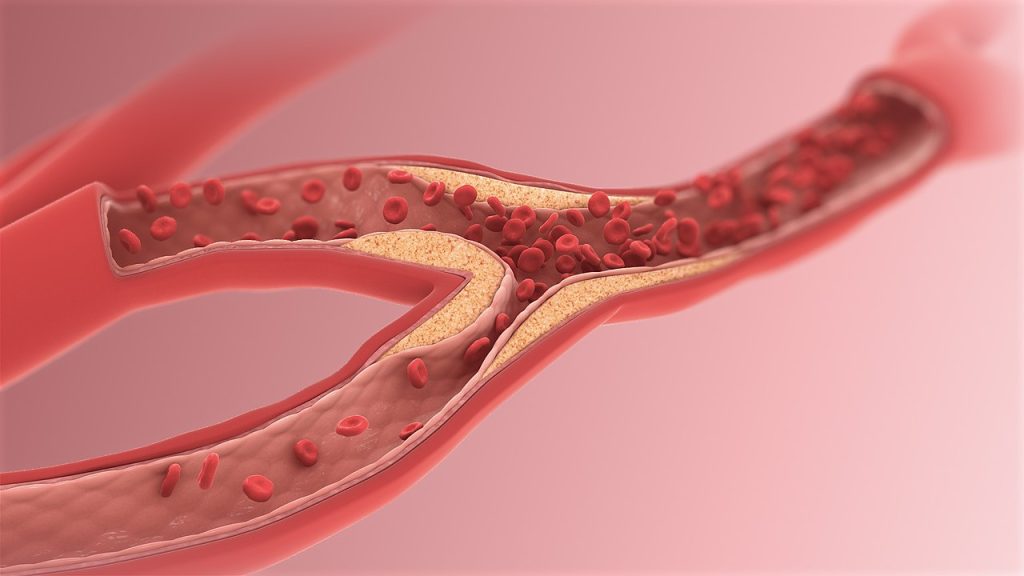
But first, why would a hair loss and prostate drug affect cholesterol? Amengual studies atherosclerosis, the condition in which cholesterol plaques choke arteries, leading to stroke, heart attack, and other forms of cardiovascular disease. Because the disease is far more common in men than premenopausal women, scientists have long suspected the sex hormone testosterone is important in atherosclerosis, though its role isn’t entirely clear.
Finasteride works by blocking a protein found in hair follicles and the prostate gland that activates testosterone. The common thread, testosterone, was enough to pique Amengual’s interest.
“I was reading about this medication one day, and I started to notice that there were not many long-term studies of the implications of the drug. Initially, it was just my own curiosity, based on the fact that hormone levels are known to have an effect on atherosclerosis, hair loss, and prostate issues,” he said. “So, we decided to dig into it.”
After documenting the first-ever link, albeit observational, between finasteride and lower cholesterol in men, Amengual got doctoral student Donald Molina Chaves to see if the pattern held in mice.
Molina Chaves tested four levels of finasteride – 0, 10, 100, and 1000 mg/kg of food – in male mice genetically predisposed to atherosclerosis. The mice consumed the drug, along with a high-fat, high-cholesterol “Western” diet, for 12 weeks. After the experiment, Molina Chaves analysed the levels of cholesterol and other lipids in the mice, along with evidence of atherosclerotic plaques. He also tested gene expression in the liver, looked at bile acid metabolism, and analysed steroids, triglycerides, immune activity, and more.
“Mice that were given a high dose of finasteride showed lower cholesterol levels within the plasma as well as in the arteries,” Molina Chaves said. “There were also fewer lipids and inflammatory markers in the liver.”
Although the effects were only significant at the highest dose, a level Amengual calls outrageous for humans, he explains that mice metabolise finasteride differently than people.
“It’s an incredibly high level of the drug. But we use mice as a model, and they are extremely resistant to things that would kill any of us,” he said. “So it is not that crazy when you think about it that way.”
Humans take 1mg or 5mg doses of finasteride daily for hair loss and enlarged prostate, respectively. The fact that a clear pattern showed up in a survey of men likely taking one of these doses suggests the drug may be lowering cholesterol without the megadoses tested in mice.
The next step is for physicians to start tracking cholesterol in finasteride patients or conduct a clinical trial to verify the effect. Amengual says it may be especially important to understand how finasteride affects trans individuals.
“Over the past decade, doctors have started prescribing this drug for individuals transitioning either from male to female or female to male. In both cases, the hormonal changes can trigger hair loss,” he said. “The interesting thing is that transgender people are also at a higher risk of cardiovascular diseases. So this drug could have a potential beneficial effect to prevent cardiovascular disease not only in cis men, but also in transgender individuals.”
Finally, Amengual notes, like any medication, finasteride is not without risk. People should consult their doctors to learn more.
Cleveland Clinic researchers have identified a new pathway that contributes to cardiovascular disease associated with high levels of niacin, a common B vitamin previously recommended to lower cholesterol.
The team, led by Stanley Hazen, MD, PhD, reported in NatureMedicine that they had found a link between 4PY, a breakdown product from excess niacin, and cardiovascular disease. Higher circulating levels of 4PY were strongly associated with development of heart attack, stroke and other adverse cardiac events in large-scale clinical studies.
The researchers also showed in preclinical studies that 4PY directly triggers vascular inflammation which damages blood vessels and can lead to atherosclerosis over time. The study also details genetic links between 4PY and vascular inflammation.
The findings provide a foundation for potential new interventions and therapeutics to reduce or prevent that inflammation.
“What’s exciting about these results is that this pathway appears to be a previously unrecognised yet significant contributor to the development of cardiovascular disease,” said Dr Hazen, Chair of Cardiovascular and Metabolic Sciences at Cleveland Clinic’s Lerner Research Institute and Co-Section Head of Preventive Cardiology in the Heart, Vascular & Thoracic Institute.
“What’s more, we can measure it, meaning there is potential for diagnostic testing. These insights set the stage for developing new approaches to counteract the effects of this pathway.”
Niacin (vitamin B-3) is very common in a Western diet. “For decades, the United States and more than 50 nations have mandated niacin fortification in staple foods such as flour, cereals and oats to prevent disease related to nutritional deficiency,” said Dr Hazen.
Yet one in four subjects in the researchers’ patient cohorts appear to be getting too much, and had high levels of 4PY, which appears to contribute to cardiovascular disease development.
Dr. Hazen compares our intake of niacin as multiple taps pouring water into a bucket.
Once that bucket is filled, it begins to spill over. The human body then needs to process that spill-over and produce other metabolites, including 4PY.
“The main takeaway is not that we should cut out our entire intake of niacin – that’s not a realistic approach,” said Dr Hazen.
“Given these findings, a discussion over whether a continued mandate of flour and cereal fortification with niacin in the US could be warranted.”
Dr. Hazen notes broader use of over-the-counter supplements made with different forms of niacin have also become popular because of presumed anti-aging purposes.
He adds that patients should consult with their doctors before taking over-the-counter supplements and focus on a diet rich in fruit and vegetables while avoiding excess carbohydrates.
The new findings also might help explain why niacin, one of the first treatments prescribed to lower LDL cholesterol, is no longer a go-to treatment for for this.
Eventually niacin was shown to be less effective than other cholesterol-lowering drugs and was associated with other negative effects and higher mortality rates in previous research.
“Niacin’s effects have always been somewhat of a paradox,” Dr Hazen said.
“Despite niacin lowering of cholesterol, the clinical benefits have always been less than anticipated based on the degree of LDL reduction. This led to the idea that excess niacin caused unclear adverse effects that partially counteracted the benefits of LDL lowering. We believe our findings help explain this paradox. This illustrates why investigating residual cardiovascular risk is so critical; we learn so much more than what we set out to find.”
The study authors note that long-term investigations are needed to assess the effect of chronic elevation of 4PY levels on atherosclerosis and other phenotypes.
Cardiovascular pitfalls to increasing protein intake discovered
Image by Scientific Animations, CC4.0
University of Pittsburgh School of Medicine researchers discovered a molecular mechanism by which excessive dietary protein could increase atherosclerosis risk. The study, published in Nature Metabolism, combined small human trials with in vitro human and mouse cell experiments.
It showed that consuming over 22% of dietary calories from protein can lead to increased activation of immune cells that play a role in atherosclerotic plaque formation, driving the disease risk.
Furthermore, the scientists showed that one amino acid, leucine, seems to have a disproportionate role in driving the pathological pathways linked to atherosclerosis, or stiff, hardened arteries.
“Our study shows that dialling up your protein intake in pursuit of better metabolic health is not a panacea. You could be doing real damage to your arteries,” said senior and co-corresponding author Babak Razani, MD, PhD, professor of cardiology at Pitt.
“Our hope is that this research starts a conversation about ways of modifying diets in a precise manner that can influence body function at a molecular level and dampen disease risks.”
According to a survey of an average American diet over the last decade, Americans generally consume a lot of protein, mostly from animal sources.
Further, nearly a quarter of the population receives over 22% of all daily calories from protein alone.
That trend is likely driven by the popular idea that dietary protein is essential to healthy living, says Razani.
But his and other groups have shown that overreliance on protein may not be such a good thing for long-term health.
Following their 2020 research, in which Razani’s laboratory first showed that excess dietary protein increases atherosclerosis risk in mice, his next study in collaboration with Bettina Mittendorfer, PhD, a metabolism expert at the University of Missouri, Columbia, delved deeper into the potential mechanism and its relevance to the human body.
To arrive at the answer, Razani’s laboratory, led by first-authors Xiangyu Zhang, Ph.D., and Divya Kapoor, M.D., teamed up with Mittendorfer’s group to combine their expertise in cellular biology and metabolism and perform a series of experiments across various models, from cells to mice to humans.
“We have shown in our mechanistic studies that amino acids, which are really the building blocks of the protein, can trigger disease through specific signaling mechanisms and then also alter the metabolism of these cells,” Mittendorfer said.
“For instance, small immune cells in the vasculature called macrophages can trigger the development of atherosclerosis.”
Based on initial experiments in healthy human subjects to determine the timeline of immune cell activation following ingestion of protein-enriched meals, the researchers simulated similar conditions in mice and in human macrophages, immune cells that are shown to be particularly sensitive to amino acids derived from protein.
Their work showed that consuming more than 22% of daily dietary calories through protein can negatively affect macrophages that are responsible for clearing out cellular debris, leading to the accumulation of a “graveyard” of those cells inside the vessel walls and worsening of atherosclerotic plaques overtime.
Interestingly, the analysis of circulating amino acids showed that leucine, an amino acid enriched in animal-derived foods like beef, eggs and milk, is primarily responsible for abnormal macrophage activation and atherosclerosis risk, suggesting a potential avenue for further research on personalized diet modification, or “precision nutrition.”
Razani is careful to note that many questions remain to be answered, mainly: What happens when a person consumes between 15% of daily calories from protein as recommended by the USDA and 22% of daily calories from protein, and if there is a ‘sweet spot’ for maximising the benefits of protein (such as muscle gain) while avoiding kick-starting a molecular cascade of damaging events leading to cardiovascular disease.
The findings are particularly relevant in hospital settings, where nutritionists often recommend protein-rich foods for the sickest patients to preserve muscle mass and strength.
“Perhaps blindly increasing protein load is wrong,” Razani said.
“Instead, it’s important to look at the diet as a whole and suggest balanced meals that won’t inadvertently exacerbate cardiovascular conditions, especially in people at risk of heart disease and vessel disorders.”
Razani also notes that these findings suggest differences in leucine levels between diets enriched in plant and animal protein might explain the differences in their effect on cardiovascular and metabolic health.
“The potential for this type of mechanistic research to inform future dietary guidelines is quite exciting,” he said.
Hypertension has contributed at least 44% to CVD deaths over thirty years, more than dietary factors and tobacco
Raised blood pressure has been the leading risk factor for death in Australia for the past three decades, according to a study published February 21, 2024, in the open-access journal PLOS ONE led by Alta Schutte and Xiaoyue Xu from The George Institute for Global Health and UNSW, Sydney, with colleagues across Australia. It is also the main contributor to deaths from cardiovascular disease (CVD) specifically.
Raised blood pressure has long been recognized as a contributing factor to CVD and death, but is not always prioritized in national health plans. In this study, researchers focused on Australia, which lags behind other high-income countries in hypertension control. Data on how raised blood pressure compares to other risk factors for CVD burden – and how this changes over time – can help to guide public health agendas and inform the effectiveness of public health policies.
Researchers analysed epidemiologic data from the Global Burden of Disease (GBD) study between 1990 and 2019 to determine the leading risk factors associated with both all-cause and CVD deaths, over time and between gender and age groups. The GBD study provides data on nearly 400 diseases and 87 risk factors across 204 countries.
They found that while the contribution of raised blood pressure to these outcomes declined early in the study period (from around 54% to around 44%), it persisted as the leading risk factor for all-cause and CVD deaths. Dietary factors and tobacco use rounded out the top three risk factors. These findings strongly align with the recently established National Hypertension Taskforce of Australia, which aims to improve Australia’s blood pressure control rates from 32% to 70% by 2030 (Hypertension – Australian Cardiovascular Alliance [ozheart.org]). The research findings further advocate for the prioritisation of blood pressure control on the public health agenda.
Differences by gender and age were also seen. For example, the contribution of raised blood pressure to stroke-related deaths in males aged 25–49 years were higher than other age groups, exceeding 60% and increasing steeply over time.
The study reinforces the importance of blood pressure control and awareness. The researchers hope that the data will urge policymakers to prioritise blood pressure control efforts in Australia and will provide insight into age groups and populations that would benefit from more targeted action.
The authors add: “There is no doubt that raised blood pressure has remained the leading risk factor for all-cause and cardiovascular deaths in Australia across the past three decades. Our findings support actions to strengthen primary care and to improve the prevention, detection, treatment and control of raised blood pressure, with the goal of significantly reducing all-cause and cardiovascular deaths in Australia over the next decade.”
People using anabolic steroids could be increasing their underlying risk of atrial fibrillation, according to new research published in the Journal of Physiology.
The team found that male sex hormones, such as testosterone, also called androgenic anabolic steroids (AAS), which are misused for muscle building particularly among in young men can increase the risk of atrial fibrillation in individuals genetically predisposed to heart diseases.
Dr Laura Sommerfeld, Postdoctoral Researcher at the UKE Hamburg, who completed her PhD at the Institute of Cardiovascular Sciences at the University of Birmingham focusing on this work is lead author of the study.
Dr Sommerfeld said: “Our study can significantly contribute to understanding the impact on the heart health of young men who misuse anabolic steroids to increase muscle mass. Recent reports have shown that young men in particular are being targeted on social media such as TikTok being sold testosterone products, but we have shown how the misuse of steroids carries a specific risk that many people will not be aware of.”
Professor Larissa Fabritz, Chair of Inherited Cardiac Conditions at UKE Hamburg and Honorary Chair in the Institute of Cardiovascular Sciences at the University of Birmingham added:
“Heart muscle diseases like ARVC affect young, athletic individuals and can lead to life-threatening heart rhythm disturbances. Atrial fibrillation is a common condition in the general population. Elevated testosterone levels can result in an earlier onset of these diseases.”
The scientists examined potential effects on a condition called arrhythmogenic right ventricular cardiomyopathy (ARVC), which is genetically determined and primarily attributed to disruptions in the formation of cell connections critical for heart muscle stability.
The scientists initially confirmed, based on clinical patient data from UHB and elsewhere, that ARVC occurs more frequently and severely in men than in women.
In laboratory experiments, they discovered that six weeks of AAS intake, combined with impaired cell connections, could lead to reduced sodium channel function in heart tissue and a slowing of signal conduction within the atria.
Dr Andrew Holmes, co-author and Assistant Professor in the Institute of Clinical Sciences at the University of Birmingham said:
“This work implies that young male individuals with key inherited genetic changes have a greater risk of developing electrical problems in the heart in response to anabolic steroid abuse.”
The research was conducted by an interdisciplinary consortium of clinicians and researchers led by University of Birmingham and collaborators in Germany.
Research suggesting a link between migraines and menopause symptoms and cardiovascular disease has gotten a lot of attention. But a pair of new studies in the journal Menopause suggest that most women experiencing these symptoms can rest easier, especially if they don’t have both migraines and long-term hot flashes and night sweats.
Instead, they should focus on tackling the other factors that can raise their cardiovascular risk by getting more sleep, exercise and healthy foods, quitting tobacco, and minding their blood pressure, blood sugar, cholesterol and weight.
For women who have experienced both migraines and hot flashes or night sweats over many years, one of the new studies does suggest an extra level of cardiovascular risk.
That makes heart disease and stroke prevention even more important in this group, says study leader Catherine Kim, MD, MPH, of the University of Michigan.
And for women currently in their 20s and 30s who experience migraines, the new research suggests that they might be heading for a higher risk of long-term menopause-related symptoms when they get older.
Long-term study yields important insights
Kim and her colleagues at Michigan Medicine, U-M’s academic medical centre, published the new pair of studies based on an in-depth analysis of data from a long-term study of more than 1900 women who volunteered to have regular physical exams and blood tests, and to take yearly health surveys, when they were in their late teens to early 30s.
Those women, now in their 50s and 60s, have provided researchers with a priceless view of what factors shape health in the years leading up to menopause and beyond, through their continued participation in the CARDIA study.
“The anxiety and dread that women with migraines and menopausal symptoms feel about cardiovascular risk is real – but these findings suggest that focusing on prevention, and correcting unhealthy habits and risk factors, could help most women,” said Kim, who is an associate professor of internal medicine at U-M and a primary care physician.
“For the subgroup with both migraines and early persistent hot flashes and night sweats, and for those currently experiencing migraines in their early adulthood, these findings point to an added need to control risks, and address symptoms early,” she adds.
Just over 30% of the middle-aged women in the study reported they had persistent hot flashes and night sweats, which together are called vasomotor symptoms or VMS because they relate to changes in the diameter of blood vessels.
Of them, 23% had reported also having migraines. This was the only group for whom Kim and her colleagues found extra risk of stroke, heart attack or other cardiovascular events that couldn’t be explained by other risk factors that have long been known to be linked to cardiovascular problems.
In addition to those with persistent vasomotor symptoms starting in their 40s or before, 43% of the women in the study had minimal levels of such symptoms in their 50s, and 27% experienced an increase in VMS over time into their 50s and early 60s.
The latter two groups had no excess cardiovascular risk once their other risk factors were taken into account, whether or not they had migraines.
Use of hormone-based birth control and estrogen to address medical issues did not affect this risk.
Controlling destiny
In the study of data from the same women in their earlier stages of life, the researchers found that the biggest factors in predicting which ones would go on to have persistent hot flashes and night sweats were having migraines, having depression, and smoking cigarettes, as well as being Black or having less than a high school education.
“These two studies, taken together, underscore that not all women have the same experiences as they grow older, and that many can control the risk factors that might raise their chances of heart disease and stroke later in life,” said Kim.
“In other words, women can do a lot to control their destiny when it comes to both menopause symptoms and cardiovascular diseases.”
She notes that the American Heart Association calls these risk factors the “Essential 8” and offers guides for what women, men and even children and teens can do to address them.
Evolving knowledge and treatment
The long-term study that the two new findings come from was specifically designed to look at cardiovascular risks when it launched in the mid-1980s. CARDIA stands for Coronary Artery Risk Development in Young Adults.
Back in the 80s, knowledge about the biology of blood vessels, down to the cellular and molecular level, was nowhere near where it is today. Both vasomotor symptoms in menopause and migraines have to do with blood vessel contraction and dilation.
But decades of research has shown the microscopic impacts on blood vessels of years of smoking, poor sleep, poor eating habits and lack of activity, as well as a person’s genetic inheritance, life experiences and hormonal history.
Newer injectable migraine medications called calcitonin gene-related peptide (CGRP) antagonists have reached the market in recent years. Using monoclonal antibodies, they target a key receptor on the surface of blood vessel cells to prevent migraines and cluster headaches. But they are expensive and not covered by insurance for all people with migraines.
While the new study is based on data from years before these medications became available, Kim said she recommends them to her patients with persistent migraines, as well as working with them to understand what triggers their migraines and how to use other medications including pain relievers and antiseizure medications to prevent them.
She also notes that the paper on future risk of persistent hot flashes and night sweats echoes the recent trend of using antidepressant medications to try to ease these menopause effects.
Kim also says that evidence has grown about the importance of healthy sleep habits for reducing hot flashes, as well the short-term use of oestradiol-based hormone therapy patches, which have not been shown to have a link to cardiovascular risk. And, she notes that research has not shown any over-the-counter supplement or herbal remedy to be effective, and that these are far less regulated than medications.
A course of acupuncture may curb the heightened risk of stroke associated with rheumatoid arthritis, finds a comparative study published in the open access journal BMJ Open.
The effects seem to be independent of sex, age, medication use, and co-existing conditions, the findings indicate, prompting the researchers to suggest that the procedure may reduce levels of pro-inflammatory proteins (cytokines) in the body that are linked to cardiovascular disease.
The principal cause of death in people with rheumatoid arthritis is cardiovascular disease. And they are more likely to have a stroke than the general population, note the researchers.
Acupuncture is already used to control pain and dampen down inflammation, and the researchers wanted to find out if it might also lower the risk of ischaemic stroke that is associated with systemic inflammation.
They drew on national medical records from the Registry for Catastrophic Illness Patients Database (RCIPD), for 47 809 adults newly diagnosed with rheumatoid arthritis between 1997 and 2010.
The final analysis included 23 226 patients with complete data, 12 266 of whom were treated with acupuncture following their diagnosis up until the end of December 2010.
Of these, 11 613 were each matched for age, sex, co-existing conditions (diabetes, high blood pressure, high blood fats, congestive heart failure, anxiety/depression, obesity, atrial fibrillation, alcohol dependency, and smoking), medication use (non-steroidal anti-inflammatory drugs, statins, and disease modifying drug) and year of diagnosis with a patient who hadn’t been treated with acupuncture.
Women, those aged 40–59, and participants with high blood pressure predominated in both groups.
Most (87%) of those in the acupuncture group were treated with manual acupuncture (87%); 3% were treated with electroacupuncture, whereby an electrode producing a low pulse of electricity is attached to the needle; and 10% received both types.
On average, 1065 days elapsed between a rheumatoid arthritis diagnosis and receipt of the first acupuncture treatment, with the number of treatments averaging around 10 in total.
During the monitoring period up to the end of 2011, 946 patients had an ischaemic stroke. Unsurprisingly, risk rose in tandem with increasing age, and with the number of co-existing conditions.
Those with high blood pressure, for example, were more than twice as likely to have a stroke as those with normal blood pressure, while those with diabetes were 58% more likely to do so.
But there were significantly fewer cases of ischaemic stroke among the acupuncture group: 341 vs 605, equivalent to a 43% lower risk. And this was independent of age, sex, medication use, and co-existing conditions.
This is an observational study, and as such, no firm conclusions can be drawn about cause and effect, and the researchers also acknowledge that they were only able to estimate disease severity from the drugs the patients took.
Nor did they have information on potentially influential factors, such as height, weight, lab tests or physical activity levels, and not everyone would have had the same pressure points needled, they add.
But they point out: “Inflammation is a consistent and independent predictor of cardiovascular disease in [rheumatoid arthritis],” so acupuncture may lower pro-inflammatory proteins, thereby reducing the risk of cardiovascular disease, including ischaemic stroke, they suggest.
“Unstable blood pressure and lipid profiles are the two risk factors for ischaemic stroke, and acupuncture therapy has the advantage of controlling both hypertension and dyslipidaemia,” they explain, adding: “If acupuncture relieves morning stiffness and joint pain, patients might also benefit from increasing daily activities, which might also reduce the risk of stroke.”
For some leukaemia patients, the only potential chemotherapy option is ponatinib, a drug that also carries a high risk of heart failure. This means that some patients who recover from their cancer will end up dying of heart disease brought on by the cure.
In a new study, researchers from the University of Illinois Chicago and other universities have identified mechanisms that cause ponatinib to harm the heart. They also identified a promising treatment that could reverse this process.
The paper, with senior author Sang Ging Ong, assistant professor of pharmacology and medicine at UIC, is published in Circulation Research. The study is part of a growing field called cardio-oncology that investigates drugs that shrink tumours but can also cause heart problems.
While there are three options of drugs for treating chronic myeloid leukaemia, many patients are resistant to the other two, leaving ponatinib as their only choice.
“These patients have no other options for treatment,” Ong said, despite the concerns about the drug’s side effects.
In fact, ponatinib was pulled from the market for a few months after its introduction in 2012 because of concerns about heart problems.
The researchers were interested in understanding the interaction between ponatinib and the heart cells responsible for contraction.
They discovered that ponatinib damages these cells by activating a process known as the integrated stress response.
The mechanism for this is related to the functioning of a kinase (an enzyme involved in energy transfer) called GCN2.
The researchers found that ponatinib, despite being a kinase inhibitor, actually activates GCN2, which in turn switches on the integrated stress response.
While this response isn’t always a bad thing, normally protecting cells, it can also lead to their death under prolonged stress.
To see if this response was harming the cells, the researchers studied what would happen if they used a small molecule to block the integrated stress response in both cells and in mice during ponatinib treatment.
They found that the treatment helped protect heart cells from the damaging side effects of the drug yet did not diminish ponatinib’s tumour-fighting efficacy.
“It protects the heart but at the same time, it still allows us to kill cancer cells,” Ong said.
More research is needed to know if this protective measure would work well in humans, Ong said.
The mechanisms they identified are important in other cardiac diseases, as well, which could lead to future research on how to protect cells against different conditions.
Trial comparing anticoagulant and antiplatelet therapy ends in a draw
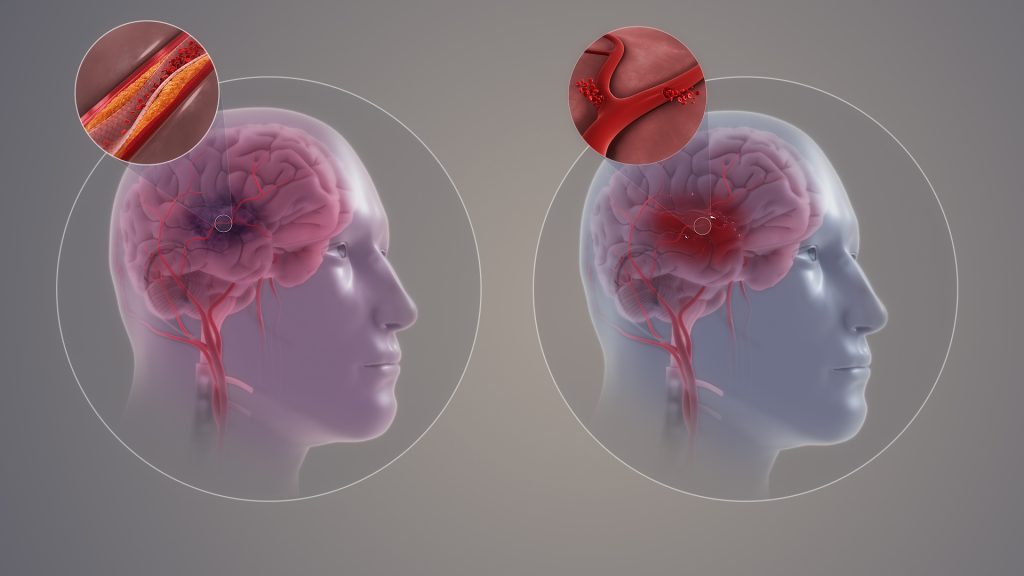
Ischaemic and haemorrhagic stroke. Credit: Scientific Animations CC4.0
Administering apaxiban to patients with cryptogenic stroke and evidence of atrial cardiopathy to prevent recurrence was no more effective than giving aspirin, a large randomised trial has found. The trial, published in JAMA, did however find a possible slight advantage in safety of apaxiban over aspirin.
Cryptogenic stroke (CS) is cerebral ischaemia of obscure or unknown origin. One third of ischaemic strokes are cryptogenic.
Atrial cardiopathy is defined as any complex of structural, architectural, contractile, or electrophysiologic changes affecting the atria with the potential to produce clinically relevant manifestations. Atrial cardiopathy is strongly associated with incident atrial fibrillation and plays a role in thromboembolism related to atrial fibrillation.
Atrial cardiopathy is associated with stroke in the absence of clinically apparent atrial fibrillation. But it was not known whether anticoagulation, which has proven benefit in atrial fibrillation, prevents stroke in patients with atrial cardiopathy and no atrial fibrillation. The Atrial Cardiopathy and Antithrombotic Drugs in Prevention After Cryptogenic Stroke (ARCADIA) trial was therefore designed to determine whether anticoagulation is superior to antiplatelet therapy for preventing recurrent stroke in such patients.
From 2018 to 2023, the researchers conducted a multicentre, double-blind, phase 3 randomised clinical trial of 1015 participants with CS and evidence of atrial cardiopathy – defined as P-wave terminal force greater than 5000μV×ms in electrocardiogram lead V1, serum N-terminal pro-B-type natriuretic peptide level greater than 250pg/mL, or left atrial diameter index of 3cm/m2 or greater on echocardiogram. Participants had no evidence of atrial fibrillation at the time of randomisation.
The participants were randomised 1:1 to receive either apaxiban (5mg or 2.5 mg) twice daily or aspirin (81mg) once daily. The primary outcome measure of stroke occurrence was identical in both arms (40 patients, 4.4%).
There were zero intracranial haemorrhage events for apaxiban vs seven for aspirin, which is known to increase the risk of these. This supports a superior safety profile for apxiban over aspirin, but given the small number of events, the authors caution that this may be a chance finding.
Study limitations included a higher than expected dropout rate due to the COVID pandemic. Additionally, few patients met the atrial cardiopathy criterion of severe left atrial enlargement, but restricting the trial participants to this criterion would have rendered the trial infeasible.