Category: Cancer

New HPV Test Enables Precision Treatment
Source: NCI on Unsplash

Researchers have made advances in improving detection of the human papillomavirus (HPV) in the bloodstream, which could further hone precision treatment of the illness.

The team sequenced circulating tumour DNA, which can lead to the detection of HPV in a person’s blood. Previous science in the field has proven that the virus, which causes cancers in the throat, mouth, and genital areas, can be found in the bloodstream but tests have had limited sensitivity. The new study enables ‘ultrasensitive’ detection, which could pave the way toward greater use of precision medicine for patients with cancers affecting these vulnerable areas of the body.

In a cohort of patients with advanced cervix cancer, the new sequencing method detected 20-fold lower levels of HPV circulating tumour DNA, making it a promising new method to monitor the disease.

The results come from the laboratory of Senior Scientist Dr Scott Bratman at Princess Margaret Cancer Center and are published in Clinical Cancer Research. “Increasingly, as clinicians we’re focused on precision medicine and making sure we’re not over-treating people while still curing them, that’s a very difficult balance to strike,” Dr Bratman said.

One way is to use liquid biopsy approaches or blood-based biomarkers, such as circulating tumour DNA, in order to monitor how the treatment is progressing, he added.

“We’re really at the cusp of a revolution from a technology, clinical implementation and standard of care standpoint, where five to 10 years from now we will not be treating everybody with the same dose of radiation and chemotherapy, and then waiting months to see if the treatment was effective,” he said. “I’m confident we will be giving much more tailored doses.”

When physicians scale back on these treatments, there is a risk of the cancer reoccurring. With more sensitive tests, reoccurrences can be detected early and patients returned to treatment.

“Patients who need more treatment will then be able to continue on, or different treatments can be added,” Dr Bratman said. “We can spare the vast majority of patients who will not need those interventions and provided them with a greater quality of life once they’re cured of the cancer.”

The work will enable further study in the field, refining the approach using larger study groups, and eventually, practice-changing clinical trials. This technique could also be applied to other cancer-causing viruses such as certain types of stomach cancer and lymphomas.

Source: Princess Margaret Cancer Center
SSRI Antidepressants Could be Used To Fight Cancer

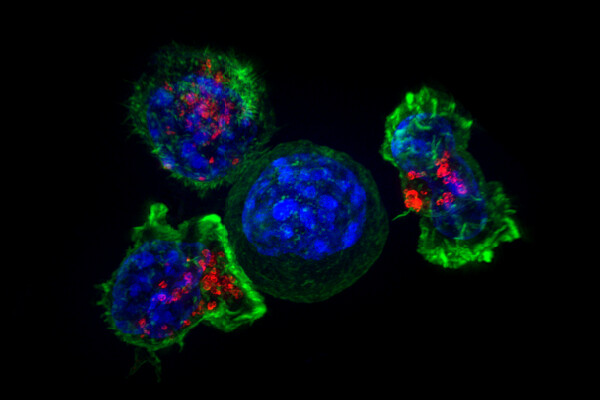
Natural killer (NK) cells target a cancel cell for destruction. Credit: NCI

Long used to treat depression, selective serotonin reuptake inhibitors (SSRIs) could help improve modern cancer treatments.

In mouse experiments, they slowed the growth of pancreatic and colon cancers, and when combined with immunotherapy, they even halted cancer growth long-term. In some cases the tumours disappeared completely. The researchers’ findings will now be tested in human clinical trials.

The neurotransmitter serotonin, known as the happiness molecule, has many other functions and is mostly found outside the brain, stored in blood platelets. Serotonin reuptake inhibitors (SSRIs), which are used to treat depression, increase serotonin levels in the brain but reduce serotonin in platelets.

Serotonin was already known to be involved  in carcinogenesis. Until now, however, the underlying mechanisms had remained obscure. Now, researchers at the University of Zurich (UZH) and University Hospital Zurich (USZ) have shown that SSRIs or other drugs that lower peripheral serotonin levels can also slow cancer growth in mice.

Pierre-Alain Clavien, Director, Department of Surgery and Transplantation, University of Zurich, said: “Drugs that are already approved for clinical use as antidepressants could help improve treatment of hitherto incurable pancreatic and colorectal cancers.”

Although recent years have seen new, effective treatments such as targeted antibodies or immunotherapies, most patients with advanced-stage abdominal tumours such as colon or pancreatic cancer die within a few years of diagnosis. Tumour cells eventually become resistant to the drugs and are no longer recognised by the immune system. Now, the researchers have discovered the role serotonin plays in this tumour cell resistance mechanism.

Cancer cells use serotonin to boost production of an immunoinhibitory molecule, PD-L1, which binds to killer T cells, rendering them dysfunctional. The cancer cells thus escape destruction by the immune system. In mouse models, the researchers were able to show that SSRIs or peripheral serotonin synthesis inhibitors prevent this mechanism. “This class of antidepressants and other serotonin blockers cause immune cells to recognise and efficiently eliminate tumor cells again. This slowed the growth of colon and pancreatic cancers in the mice,” Clavien said.
PD-L1, via which serotonin exerts its effect, is also the target of modern immunotherapies, also called immune checkpoint inhibitors. The researchers then tested a dual treatment approach in mice: immunotherapy, which increases the activity of killer T cells, was combined with drugs that reduce peripheral serotonin. Cancer growth was suppressed in the animal models in the long term, and in some mice, the tumours disappeared completely.

“Our results provide hope for cancer patients, as the drugs used are already approved for clinical use. Testing such drug combinations on cancer patients in clinical trials can be fast-forwarded due to the known safety and efficacy of the drugs,” said Clavien.

Source: University of Zurich

Oxford-AstraZeneca Vaccine Tech Tapped to Treat Cancer

Source: National Cancer Institute on Unsplash

The Oxford-AstraZeneca vaccine’s success against SARS-CoV-2 has prompted scientists to develop a vaccine for cancer, using Oxford’s viral vector vaccine technology.

When tested in mouse tumour models, the two-dose therapeutic cancer vaccine increased the numbers of anti-tumour T cells infiltrating the tumours and improved the efficacy of cancer immunotherapy. Compared to immunotherapy alone, combination with the vaccine resulted in a greater reduction in tumour size and improved survival.

The study, which was done by Professor Benoit Van den Eynde’s group at the Ludwig Institute for Cancer Research, University of Oxford in collaboration with co-authors Professor Adrian Hill and Dr Irina Redchenko at the University’s Jenner Institute, has been published in the Journal for ImmunoTherapy of Cancer.

Cancer immunotherapy has improved outcomes for some cancer patients. Anti-PD-1 immunotherapy works by unleashing anti-tumour T cells to allow them to kill cancer cells. However, in the majority of cancer patients, anti-PD-1 therapy is still ineffective .

One reason for the poor efficacy of anti-PD-1 cancer therapy is that some patients have low levels of anti-tumour T cells. Oxford’s vaccine technology generates strong CD8+ T cell responses, which are necessary for strong anti-tumour effects.

The team developed a two-dose therapeutic cancer vaccine with different prime and boost viral vectors, one of which is the same as the vector in the Oxford-AstraZeneca COVID vaccine. In order to create a vaccine treatment that specifically targets cancer cells, the vaccine was designed to target two MAGE-type proteins found on the surface of many types of cancer cells.

Preclinical experiments in mouse tumour models demonstrated that the cancer vaccine increased the levels of tumour-infiltrating CD8+ T cells and enhanced the response to anti-PD-1 immunotherapy. The combined vaccine and anti-PD-1 treatment resulted in a greater reduction in tumour size and improved the survival of the mice compared to anti-PD-1 therapy alone.

Benoit Van den Eynde, Professor of Tumour Immunology at the University of Oxford, said: “We knew from our previous research that MAGE-type proteins act like red flags on the surface of cancer cells to attract immune cells that destroy tumours.

“MAGE proteins have an advantage over other cancer antigens as vaccine targets since they are present on a wide range of tumour types. This broadens the potential benefit of this approach to people with many different types of cancer.

“Importantly for target specificity, MAGE-type antigens are not present on the surface of normal tissues, which reduces the risk of side-effects caused by the immune system attacking healthy cells.”

Human trials in 80 patients with non-small cell lung cancer will be launched later this year.

Adrian Hill, Lakshmi Mittal and Family Professorship of Vaccinology and Director of the Jenner Institute, University of Oxford, said: “This new vaccine platform has the potential to revolutionise cancer treatment. The forthcoming trial in non-small cell lung cancer follows a Phase 2a trial of a similar cancer vaccine in prostate cancer undertaken by the University of Oxford that is showing promising results.

“Our cancer vaccines elicit strong CD8+ T cell responses that infiltrate tumours and show great potential in enhancing the efficacy of immune checkpoint blockade therapy and improving outcomes for patients with cancer.”

Source: Oxford University

Treating a Mutation Tames The ‘Red Devil’ Chemotherapy Drug

Photo by Charles Parker from Pexels

Harmful side effects from the common chemotherapy drug doxorubicin could be caused by a single mutation, according to a study published in Cell Stem Cell.

The cardiotoxic effects of the chemotherapy drug doxorubicin – an infamous drug nicknamed the ‘Red Devil’ because of its bright red colour and side effects – could be prevented in patients with the mutation by treating them with retinoic acid, according to Paul Burridge, PhD, assistant professor of Pharmacology and senior author of the study.

“In the future patients could be given CD1530, or a similar drug, and this would reduce their chances of experiencing cardiotoxicity,” said Prof Burridge.

Doxorubicin is the most common chemotherapy drug and is mostly used in children and in breast cancer. However, patients receiving doxorubicin experience dose-dependent cardiotoxicity; up to 10% of childhood cancer survivors will develop heart failure in the 30 years after their treatment.

A previous study showed that people who experience cardiotoxicity from chemotherapy were more likely to have a genetic variation called a single nucleotide polymorphism (SNP) in a gene called retinoic acid receptor gamma (RARG).

In this study, Dr Burridge and colleagues created patient-derived heart cells with this SNP and administered doxorubicin, finding that those cells indeed were more sensitive to the treatment. After correcting the mutation using genetic editing tools, the additional toxicity disappeared.

“This confirmed to us that RARG is important in doxorubicin cardiotoxicity sensitivity,” Prof Burridge said.

The researchers tried several drugs that could block the downstream effects of this mutation, finding that one drug, CD1530, made cardiomyocytes less sensitive to the chemotherapy. The drug activates retinoic acid receptors that are usually left inactivated in patients with the SNP, preventing activation of a cardio-protective pathway that is ill-suited for chemotherapy.

The investigators hope to test this drug in human patients, thanks to their use of human cells.

“Because all of our data was generated in human cells, there isn’t a need for a second basic research step,” Prof Burridge said. “We believe we will be able to begin the first stages of a clinical trial, testing the safety of RARG agonists and how effective they are in patients.”

Source: Northwestern University

Mastectomies Significantly Impact Quality of Life in Young Women

Photo by Victoria Strukovskaya on Unsplash

Many young women with breast cancer choose mastectomies but afterwards experience a persistent decline in their sexual and psychosocial well-being, according to new research reported in JAMA Surgery.

In surveys conducted after patients underwent breast cancer surgery, significant quality of life (QoL) impacts were seen with mastectomies, with a greater extent of surgery worsening the QoL outcomes. The findings are important in light of recent trends towards younger women with breast cancer opting for bilateral mastectomies for unilateral breast cancer when breast conserving surgery was also an option.

“Historically, it was felt that 75 percent of breast cancer patients should be eligible for breast conserving surgery. Over time, however, more women, particularly young women, are electing to have a mastectomy,” said study lead author Laura Dominici, MD, a surgeon at Dana-Farber Brigham Cancer Center. “They frequently offer peace of mind as the reason for their decision – even though research shows that unless a woman has a genetic predisposition to breast cancer, she has a very low risk of developing cancer in the healthy breast.”

In this study, 560 participants, 40 and younger with breast cancer, filled in a patient reported outcomes survey known as BREAST-Q, an average 5.8 years after diagnosis.

Compared to those who had breast-sparing surgery, patients who had a mastectomy scored significantly lower in three QoL measures – satisfaction with the appearance of their breasts, psychosocial well-being, and sexual well-being. The results were consistent regardless of whether one or both breasts were removed, and that most had breast reconstruction surgery.

  • For breast satisfaction, patients who had breast-conserving surgery had an average BREAST-Q score of 65.5, compared with 54.6 in the bilateral mastectomy group.
  • For psychosocial well-being,  patients who had breast-conserving surgery had an average BREAST-Q score of 75.9, compared with 65.1 in the bilateral mastectomy group.
  • For sexual well-being, patients who had breast-conserving surgery had an average BREAST-Q score of 57.4, compared with 53.4 for the unilateral mastectomy group and 46.2 for the bilateral mastectomy group.

A fourth area examined by the survey, physical function, showed no difference between the groups. Women with financial challenges tended to have lower scores in all four categories.

“The decision of whether to have a mastectomy or breast-conserving surgery should be a shared decision between patients and their doctors,” Dr Dominici added. “Particularly when talking to young women, who are likely to have a long period of survivorship, it’s important that we as clinicians discuss the potential impacts of mastectomy on their quality of life. As our study indicates, those impacts are not insignificant and persist years into the future.”

The study’s main limitation is that it was not randomised, and quality of life was only evaluated at a single time point. Dr Dominici added there was no information about women’s quality of life prior to the study, which could have infuenced their decision making and their quality of life after surgery.

Source: Dana-Farber Cancer Institute

Added Salt Found to Suppress Tumours in Mice

Source: Pixabay CC0

A new study has found that adding salt to the diet of lab mice can suppress the growth of cancerous tumours.

Dietary salt reduction has been stressed by clinicians for many years, as research has shown that a high-sodium diet can result in inflammation, high blood pressure and an increased heart attack risk. Researchers from the Translational Health Science and Technology Institute wondered if the inflammation resulting from a high-salt diet could also confer positive health benefits, such as fighting cancerous tumours. 

To find out, the researchers fed two groups of mice with implanted melanoma tumours either a normal diet or a high-sodium diet (4.0% sodium chloride above normal diet) and then measured the differences in tumour suppression abilities between the two groups. They found that the mice on the high-sodium diet had an increase in Bifidobacterium probiotics, leading to an increase in natural killer cells that attack cancerous tumors. They also found an increased ability to inhibit PD-1 proteins which have been found to prevent T cells from attacking tumours.

On close examination, it was found that the high-sodium diet caused the gut barrier to be leakier, enabling the movement of Bifidobacteria from the gut to tumour locations. In addition, they found that once the Bifidobacteria arrived at a tumour, crosstalk between them and the immune cells engaged in attacking the tumour improved the success of the attack.

However, the researchers also found that a low-sodium diet worked in conjunction with several cancer-fighting drugs, showing an increased ability to reduce tumour growth. Since the researchers hypothesised that Bifidobacteria were responsible for the tumour immunity of a high-sodium diet, they performed faecal transplants from mice on a high-sodium diet to those on a normal diet and found that it also improved their ability to fight tumour growth.

The study was published in Science Advances.

Source: MedicalXpress

Cancer Follow-up Care Needs Improvement

With greater long-term cancer survival, previous standards of cancer follow-up care and support may no longer meet current needs.

The side-effects of anticancer medicines and impacts of the illness itself that sometimes persist after the end of treatment can hinder  a return to normal life after beating cancer. A study presented at the ESMO Congress 2021 showed that a significant proportion of survivors continue to suffer from burdensome symptoms for several years and reveal widespread dissatisfaction with the assistance provided.

Prof Dorothy Keefe, CEO of Australia’s national cancer agency, Cancer Australia, chair of the congress’s supportive and palliative care track, not involved in the study, underlined its importance in a context where survivorship research has lagged behind research on cancer treatment. “This is probably due to the increase in survival rates itself lagging behind the introduction of new therapies, but also to a lack of prioritisation compared to the need to develop a cure,” Keefe said, and highlighted the scale of the issue today: “We now have millions of cancer survivors in Australia, hundreds of millions around the world – and an ever-increasing number who could potentially have long-term side-effects.”

One of the most common symptoms experienced by patients and survivors alike is cancer-related fatigue (CRF), a persistent sense of exhaustion, not alleviated by sleep or rest and significantly interferes with the person’s usual functioning. The FiX study initially evaluated the patterns, severity and management of CRF among 2508 patients with 15 different types of cancer two years after the discovery of their illness. In a follow-up survey, 36 potential long-term problems, completed by participants around four years after diagnosis, almost 40% of survivors continued to report fatigue that they rated as a moderate or severe burden. As well as fatigue, over 40% of patients reported loss of physical capacity as a burden and over one third suffered from trouble sleeping, sexual problems, joint pains and anxiety.

Although there are recommendations for managing side-effects like CRF, study author Dr Martina Schmidt from the German Cancer Research Centre (DKFZ) in Heidelberg, Germany, drew attention to their lack of implementation and reported that more than one in three affected individuals in the study evaluated the support they were offered for fatigue as poor. “Despite increasing awareness of the effectiveness of mitigating measures like exercise to reduce fatigue, patients are still too often left alone to seek help for symptoms that cannot be directly addressed with medicines in the same way as something like pain, for which satisfaction with the support received was high in our study.”

Prof Keefe commented on the results, saying: “This research shows that a staggeringly high number of patients still suffer from significant health issues years after being declared disease-free. Their dissatisfaction with the care available is a wake-up call that we should be paying more attention to these individuals, trying to understand the mechanisms at play in order to identify interventions that could help them to better recover.”

According to Dr Schmidt, cancer follow-up care should therefore also incorporate more systematic screening for additional symptoms that can burden patients. “The first step should be to make sure that patients themselves are better informed about these potential issues early on, so they know that conditions like CRF are not only expected, but often manageable and that they should not wait for symptoms to disappear on their own,” she said.

Recognising that possible models of long-term support remain largely untested, Keefe further advocated that all patients should be provided with a survivorship care plan when they reach the end of their treatment. “Going forward, we need to develop these models of care in a way that minimises the burden on healthcare systems, implement them and research their impact so that we can come back in five years’ time and evaluate whether they have made a difference for cancer survivors,” she concluded.

Source: European Society for Medical Oncology

Plant Virus-based Treatment Protects Against Lung Tumours

Image source: CDC/Unsplash

Using a virus that grows in black-eyed pea plants, nanoengineers developed a new treatment that could keep metastatic cancers at bay from the lungs. 

Not only did the treatment slow tumour growth in the lungs of mice with either metastatic breast cancer or melanoma, it also prevented or drastically minimised the spread of these cancers to the lungs of healthy mice that were challenged with the disease. The research was published in Advanced Science.

Researchers developed an experimental treatment that combats metastatic spread. This involves a plant virus called the cowpea mosaic virus, harmless to animals and humans, but which the body still registers as a foreign invader, thus triggering an immune response that could also boost the body’s cancer-fighting ability.

The idea is to use the plant virus to help the body’s immune system recognise and destroy cancer cells in the lungs. The virus itself is not infectious in our bodies, but it has all these danger signals that alarm immune cells to go into attack mode and search for a pathogen, said Nicole Steinmetz, professor of nanoengineering at the University of California San Diego.

To draw this immune response to lung tumours, Prof Steinmetz’s lab engineered nanoparticles made from the cowpea mosaic virus to target a protein in the lungs. The protein, called S100A9, is expressed and secreted by immune cells that help fight infection in the lungs. Overexpression of S100A9 has been observed to play a role in tumour growth and spread.

“For our immunotherapy to work in the setting of lung metastasis, we need to target our nanoparticles to the lung,” said Prof Steinmetz. “Therefore, we created these plant virus nanoparticles to home in on the lungs by making use of S100A9 as the target protein. Within the lung, the nanoparticles recruit immune cells so that the tumors don’t take.”

“Because these nanoparticles tend to localise in the lungs, they can change the tumor microenvironment there to become more adept at fighting off cancer — not just established tumors, but future tumors as well,” said Eric Chung, a bioengineering PhD student in Steinmetz’s lab who is one of the co-first authors on the paper.

To make the nanoparticles, the researchers infected black-eyed pea plants with cowpea mosaic virus, and harvested the virus in the form of ball-shaped nanoparticles. They then fixed S100A9-targeting molecules to the particles’ surfaces.

The researchers performed both prevention and treatment studies. In the prevention studies, they first injected the plant virus nanoparticles into the bloodstreams of healthy mice, and then later injected either triple negative breast cancer or melanoma cells into these mice. Treated mice showed a dramatic reduction in the cancers spreading to their lungs compared to untreated mice.

In the treatment studies, the researchers administered the nanoparticles to mice with metastatic tumours in their lungs. The treated mice exhibited smaller lung tumours and survived longer than untreated mice.

Prof Steinmetz envisions that the treatment could be useful after tumourectomy. “It wouldn’t be meant as an injection that’s given to everyone to prevent lung tumours. Rather, it would be given to patients who are at high risk of their tumors growing back as a metastatic disease, which often manifests in the lung. This would offer their lungs protection against cancer metastasis,” she said.

More detailed immunotoxicity and pharmacology studies are needed before this can progress to a treatment. Future studies will also explore combining this with standard cancer therapies such as chemotherapy.

Source: University of California – San Diego

Second or Third-degree Relatives Still Share Colon Cancer Risk

Colon cancer cells. Source: National Cancer Institute on Unsplash

A new study has found that having second- or third-degree relatives with colorectal cancer increases a person’s risk of developing the disease.

Early colonoscopy screening is often recommended for first-degree relatives of someone diagnosed with early-onset (before age 50) colorectal cancer, cases of which have been increasing significantly over the past few decades. But the study suggests that early screening may be beneficial for second- and third-degree relatives as well.

The study reviewed more than 1500 early-onset colon cancer cases in the Utah Cancer Registry,found that first-degree relatives of someone diagnosed with early-onset colorectal cancer are 6 times more likely to be diagnosed with colorectal cancer before age 50, while second-degree relatives (aunts, grandparents etc) are 3 times likelier and third-degree relatives (first cousins etc) 1.56 times likelier.

“Our study provides new insight into the magnitude of risk for more distant relatives of colorectal cancer cases, and in particular, for relatives of cases who were diagnosed before age 50,” said first author Heather Ochs-Balcom, associate professor of epidemiology and environmental health, UB School of Public Health and Health Professions. “This work is important given the rising rates of early-onset colorectal cancer.”

There was also 2.6-fold higher risk of colorectal cancer at any age if they have a first-degree relative with early-onset colon cancer. The risk is 1.96 and 1.3 times greater for second- and third-degree relatives, respectively. In addition, the risk for all degrees of relatives for early-onset colon cancer is higher than the risk for colon cancer at any age.

The findings, published in Cancer Epidemiology, suggest that early colonoscopy screening may be beneficial for second-degree relatives and possibly third-degree relatives, in addition to first-degree relatives of individuals diagnosed with colorectal cancer before age 50.

The researchers also point out that relatives may benefit from being more aware of their extended family history and sharing this information with their physician when making cancer-screening decisions.

Source: University at Buffalo

Childhood Cancer Survivor Set to Break Barriers in Space

Hayley Arcenaux, seated furthest left, is the Medical Officer for the Inspiration4 flight. She is a survivor of childhood cancer and works as a physician assistant at St Jude’s Children’s Hospital, for which the flight is raising funds and awareness.

The first chartered spaceflight into orbit, scheduled for launch on September 15, will have a crewmember who is both a childhood cancer survivor and physician assistant as part of the crew. 

The three-day long mission aboard a SpaceX Dragon spacecraft was chartered by entrepreneur Jared Isaacman. Dubbed Inspiration4, the flight is in fact also raising money and awareness for St Jude Children’s Hospital, which was given two of the four seats on the spacecraft. The funds raised for the hospital are believed to have exceeded the cost of the flight.

Isaacman offered the first seat to 29 year-old Hayley Arceneux, who works as a physician assistant at St Jude’s and will be the medical officer for the flight. She was also a patient at the very same hospital. At age 10, she was diagnosed with osteosarcoma, the most common primary paediatric bone malignancy. In addition to a dozen rounds of chemotherapy, she had a limb-sparing operation which replaced her knee and inserted a titanium reinforcing rod in her femur. This will make her the first person with a prosthetic in space. Such a medical history would have immediately disqualified her for astronaut selection with any of the government-run space agencies like NASA.

In an interview with The Cut, she described her work as a physician assistant at St Jude’s: “I work inpatient… with leukaemia and lymphoma patients specifically. The majority of them received their cancer diagnoses pretty recently, so a big part of  my role is helping to educate and support families through the beginning of treatment. I help them understand, What is cancer? What does the treatment process look like? What should I expect?

“We also manage the kids while they are in treatment. If they get an infection or if they get a fever, we take that really seriously. So I’ll manage their IV antibiotics or other treatment-related complications that can occur.. I check on patients, assess labs, order tests, update families on the results, order meds for outpatients. It is a lot of coordinating and educating. It’s hard, but it’s the greatest job in the world.”

St Jude’s held an auction for the other crew seat that Isaacman offered. The winning bidder declined the seat and gifted it to data engineer Christopher Sembroski. The final seat was won in an entrepreneurial competition by Dr Sian Proctor, a geologist and pilot who narrowly missed out on being chosen as a NASA astronaut. 

Speaking about the auction, Richard C. Shadyac Jr, president and chief executive of American Lebanese Syrian Associated Charities, which raised fund for St Jude’s, said: “The impact of the Inspiration4 mission has been immeasurable, serving as an incredible platform to educate and engage millions in the movement to find cures and deliver care for childhood cancer and other catastrophic diseases through accelerated research and treatment. The auction is a critical component of the overall campaign as it enables us to reach new audiences and supporters as we work to fulfill our mission.”

So far, $100 million has been raised for St Jude’s.

While in space, the crew will conduct experiments such as examining fluid shifts in zero gravity using ultrasound, as well as other medical experiments including measuring blood glucose levels — in order to help expand space travel to those with diabetes.

A documentary has been made of the crew’s training, and is available to stream on Netflix.