To treat Gram-negative sepsis, Purdue University researchers are developing an injectable nanoparticle that can safely deliver Polymyxin B at high enough levels to inactivate endotoxins. Their research is published in Science Advances.
With an estimated annual mortality of between 30 and 50 deaths per 100 000 population,this condition ranks in the top 10 causes of death. One in three patients who die in a hospital has sepsis. Sepsis is a systemic illness caused by microbial invasion of normally sterile parts of the body, occurring when the body’s immune response to an infection or injury goes unchecked. The condition makes blood vessels leaky, leading to inflammation and blood clots, leading to impaired blood flow and possible death.
Professor Yoon Yeo leads a Purdue University team developing biocompatible nanoparticles that treat sepsis systemically through intravenous injection.
Prof Yeo said Polymyxin B, a traditional antibiotic, can inactivate endotoxins that cause a specific type of sepsis, but it may be too toxic for systemic application. For sepsis therapy, it mostly has been tested in extracorporeal blood cleaning, which is cumbersome and time consuming.
“Our nanoparticle formulations reduce dose-limiting toxicity of Polymyxin B without losing its ability to inactivate endotoxins,” Prof Yeo said.
In mouse models of sepsis, 100% treated with the Purdue nanoparticle were protected from excessive inflammation and survived.
“This technology holds promise as a safe, convenient option for patients and physicians,” Prof Yeo said.
Phage therapy is a long-standing technique which makes use of bacteriophage viruses to kill bacteria, but poses the challenge of some strains working in vitro but failing in vivo. Scientists have now found that gut bacteria alter their gene expression to avoid attack by bacteriophages. This research, published in Cell Host & Microbe, helps explains the difference in bacteriophage efficacy.
Phage therapy is a medical approach that involves treating bacterial infectious diseases using the natural ability of certain viruses, known as bacteriophages, to kill bacteria that they specifically recognise. Following the development of antibiotics, the West saw a significant decline in the use of this century-old therapeutic strategy. In the face of the growing threat of antibiotic resistance, scientists are returning to bacteriophages and to understand their mechanism of action.
Bacteria and bacteriophages are the most abundant entities in the human gut microbiota. Although bacteriophages kill bacteria, the two antagonist populations coexist in a balance in the gut.
To date, there has been little data on how phage therapy works in vivo. Interactions between bacteria and bacteriophages have, in contrast, been extensively studied in vitro. In these conditions, bacteriophages quickly infect bacteria, replicate, and destroy bacteria, while releasing new viruses capable of infecting other bacteria. However, the dynamics observed between these two microorganisms are very different in mammalian guts. Some bacteriophages that are effective in culture medium are totally ineffective in the gut environment.
In order to understand this difference, scientists decided to compare the gene expression profile, or transcriptome, of the bacterium Escherichia coli in both contexts: culture media and the gut. Using this method, they revealed genetic regulations that characterise the bacterium’s adaptation to the gut environment.
By closely examining the genes involved in this adaptation, they revealed four genes that modulate the bacterium’s susceptibility to bacteriophages. “We observed that certain genes required for infection by bacteriophages are expressed less in the gut than in vitro, thus protecting bacteria from bacteriophages,” commented Laurent Debarbieux, last author of the study.
The scientists verified their theory by eliminating the expression of one particular gene. They observed that bacterial susceptibility to a bacteriophage was significantly reduced. As a result, bacteria in the gut are able to resist predation by bacteriophages by modulating the expression of certain genes rather than mutating their genome.
This study therefore demonstrates that environment plays a predominant role in interactions between bacteria and bacteriophages. These findings pave the way for improved use of bacteriophages for therapeutic purposes.
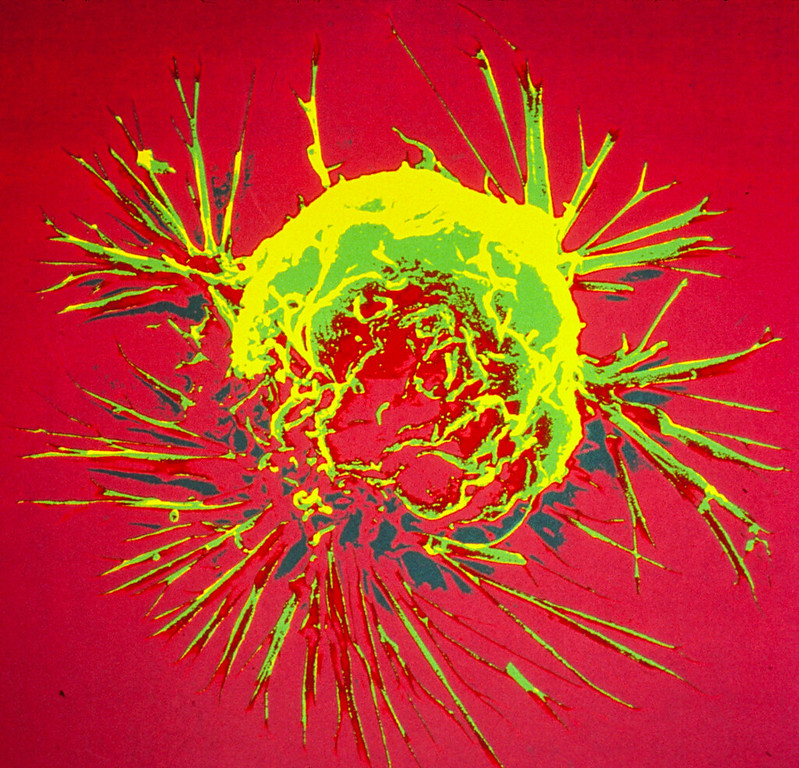
Scanning Electron Micrograph of a breast cancer cell. Credit: NIH
Researchers have found that bacteria lurking inside tumours promote cancer metastasis. They do so by enhancing the strength of host cells against mechanical stress in the bloodstream, promoting cell survival during tumour progression, researchers report in the journal Cell.
“Our study reveals that the cancer cell’s behaviour is also controlled by the microbes hiding inside tumours, the majority of which were originally thought to be sterile,” said senior author Shang Cai of the Westlake Laboratory of Life Sciences and Biomedicine. “This microbial involvement is distinct from the genetic, epigenetic, and metabolic components that most cancer drugs target.”
“However, our study does not mean that using antibiotics during cancer treatment will benefit patients,” he cautioned. “Therefore, it is still an important scientific question of how to manage the intratumor bacteria to improve cancer treatment in the future.”
It is known that microbes play a critical role in affecting cancer susceptibility and tumour progression, particularly in colorectal cancers. New evidence suggests however that, in a broad range of cancer types, they also form integral components of the tumour tissue itself, such as pancreatic cancer, lung cancer, and breast cancer. Microbial features are linked to cancer risk, prognosis, and treatment responses, yet the biological functions of tumour-resident microbes in tumour progression remain unclear.
Whether these microbes are actually drivers of tumour progression has been an intriguing question. “Tumour cells hijacked by microbes could be more common than previously thought, which underscores the broad clinical value of understanding the exact role of the tumour-resident microbial community in cancer progression,” Cai explained.
To find answers, Cai’s team utilised a mouse model of breast cancer with significant amounts of bacteria inside cells, similar to human breast cancer. The bacteria were found to be capable of travelling through the circulatory system with the cancer cells, playing critical roles in tumour metastasis. These passenger bacteria have the capacity to modulate the cellular actin network, promoting cell survival against mechanical stress in circulation.
“We were surprised initially at the fact that such a low abundance of bacteria could exert such a crucial role in cancer metastasis. What is even more astonishing is that only one shot of bacteria injection into the breast tumour can cause a tumour that originally rarely metastasises to start to metastasise,” Cai said. “Intracellular microbiota could be a potential target for preventing metastasis in broad cancer types at an early stage, which is much better than to have to treat it later on.”
While intratumour bacteria was found to have a clear role in promoting cancer cell metastatic colonisation, the authors did not exclude the possibility that the gut microbiome and immune system may act together with intratumour bacteria to determine cancer progression. Future in-depth analyses of how bacteria invade tumour cells, how intracellular bacteria are integrated into the host cell system, and how bacteria-containing tumor cells interact with the immune system will help inform how to properly deploy antibiotics in cancer treatment.
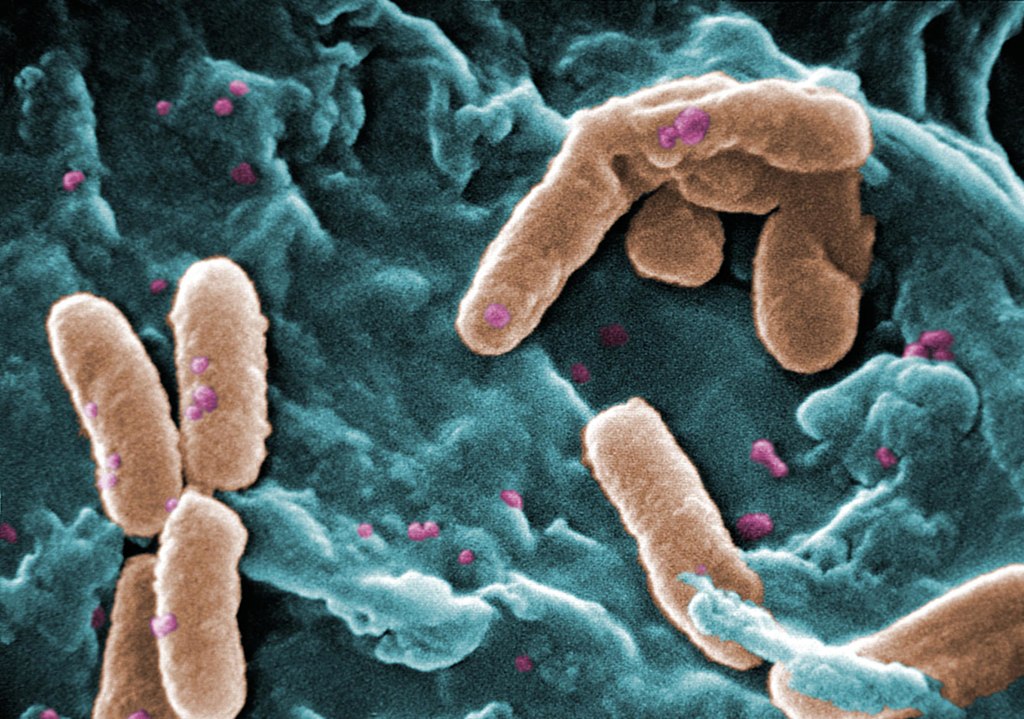
Scanning Electron Micrograph of Pseudomonas aeruginosa. Credit: CDC/Janice Carr
A study has found that much higher doses of antibiotics are needed to eliminate a bacterial infection of the airways when certain other microbes are present. This helps explain why treatment often fails to treat respiratory infections in people with diseases such as cystic fibrosis.
The study’s researchers, whose findings are published in The ISME Journal, say that even a low level of one type of microbe in the airways can have a significant impact on the response of other microbes to antibiotics.
The results highlight the need to consider the interaction between different species of microbe when treating infections with antibiotics – and to adjust dosage accordingly.
“People with chronic infections often have co-infection with several pathogens, but the problem is we don’t take that into account in deciding how much of a particular antibiotic to treat them with. Our results might help explain why, in these people, the antibiotics just don’t work as well as they should,” said Thomas O’Brien, PhD candidate and co-first author.
Chronic bacterial infections such as those in the human airways are very difficult to cure using antibiotics. Although these types of infection are often associated with a single pathogenic species, the infection site is frequently co-colonised by a number of other microbes, most of which are not usually pathogenic in their own right.
Treatment options usually revolve around targeting the pathogen, and take little account of the co-habiting species. However, these treatments often fail to resolve the infection. Until now scientists have had little insight into why this is.
To get their results the team developed a simplified model of the human airways, containing artificial sputum designed to chemically resemble the real thing, packed with bacteria.
The model allowed them to grow a mixture of different microbes, including pathogens, in a stable way for weeks at a time. This is a novel approach, as usually one pathogen will rapidly outgrow the others and spoil the experiment. It enabled the researchers to replicate and study poly-microbial infections in the laboratory.
The three microbes used in the experiment were the bacteria Pseudomonas aeruginosa and Staphylococcus aureus, and the fungus Candida albicans – a combination often found in the airways of cystic fibrosis patients.
The researchers treated this microbial mix with colistin, which kills P. aeruginosa effectively. But when the other pathogens were present alongside P. aeruginosa, the antibiotic didn’t work.
“We were surprised to find that an antibiotic that we know should clear an infection of Pseudomonas effectively just didn’t work in our lab model when other bugs were present,” said Wendy Figueroa-Chavez at the University of Cambridge, joint first author of the paper.
The same effect happened when the microbial mix was treated with fusidic acid – an antibiotic that specifically targets Staphylococcus aureus, and with fluconazole, which specifically targets C. albicans.
The researchers found that significantly higher doses of each antibiotic were needed to kill bacteria when it was part of poly-microbial infection, compared to when no other pathogens were present.
“All three species-specific antibiotics were less effective against their target when three pathogens were present together,” said Professor Martin Welch at the University of Cambridge, senior author of the paper.
Currently, antibiotics are usually only lab tested against the targeted pathogen, to determine the lowest effective dose. But when the same dose is used to treat infection in a person it is often ineffective, and this study helps to explain why. The new model system will enable the effectiveness of potential new antibiotics to be tested against a mixture of microbe species together.
Poly-microbial infections are common in the airways of people with cystic fibrosis. Despite treatment with strong doses of antibiotics, these infections often persist long-term. Chronic infections of the airways in people with asthma and chronic obstructive pulmonary disorder (COPD) are also often poly-microbial.
Genetically analysing the Pseudomonas in their lab-grown mix, the researchers were able to pinpoint specific mutations that give rise to this antibiotic resistance. The mutations were found to arise more frequently when other pathogens were also present.
Comparison with the genetic code of 800 samples of Pseudomonas from around the world revealed that these mutations have also occurred in human patients who had been infected with Pseudomonas and treated with colistin.
“The problem is that as soon as you use an antibiotic to treat a microbial infection, the microbe will start to evolve resistance to that antibiotic. That’s what has happened since colistin started to be used in the early 1990’s. This is another reminder of the vital need to find new antibiotics to treat human infections,” said Prof Welch.
A study may have found that a effects on a key gut bacteria are the reason why some patients experience diarrhoea after receiving the widely prescribed antibiotic amoxicillin-clavulanate.
Researchers, reporting in the journal iScience, found that the level of gut Ruminococcaceae, which plays a role in maintaining an individual’s gut health, strongly impacts diarrhoeal outcomes following antibiotic treatment.
One in three patients prescribed amoxicillin-clavulanate will develop diarrhoea. In some cases, it may be so severe that doctors have to prematurely halt the antibiotic, inadequately treating the infection or else forcing a change in antibiotics. The diarrhoea could also prolong patients’ hospital stays and further exposing them to hospital-acquired infections.
“The problem is very real for patients who are unable to take amoxicillin-clavulanate because it gives them diarrhoea, even though it is an effective and affordable antibiotic for their infection. Knowing why may help us identify those at risk of antibiotic-associated diarrhoea, and devise treatment strategies in the future to minimise or avoid such adverse effects,” said lead researcher Dr Shirin Kalimuddin.
The study recruited 30 healthy volunteers, each receiving a three-day oral course of amoxicillin-clavulanate. Their stool samples were collected over four weeks and analysed using gene sequencing to look for changes in the gut microbiome.
Ruminococcaceae levels in the stools of study volunteers who developed diarrhoea were significantly lower when compared to those who did not, both before and during treatment with amoxicillin-clavulanate. This suggests that individuals may, depending on their gut composition, be predisposed to antibiotic-associated diarrhea. The team further devised a simple polymerase chain reaction (PCR) test based on levels of Faecalibacterium prausnitzii, a species within the Ruminococcaceae family, that could potentially be used in clinical settings to quickly determine an individual’s risk of developing diarrhea with amoxicillin-clavulanate treatment.
“People respond differently to medication. Understanding this response and the ability to predict those at risk will help guide the development of point-of-care diagnostics,” said lead researcher Professor Eric J. Alm.
“While a lot of attention has been paid to how DNA influences a person’s response to medication, the impact of the gut microbiome on the human drug response has not been widely researched. Our findings provide evidence that an individual’s gut microbial composition can influence the risk of developing antibiotics-associated diarrhoea. Tested against amoxicillin-clavulanate, the study provides a framework to identify other potential causes of antibiotic-associated diarrhoea in relation to other classes of antibiotics,” added Prof Alm.
The next step would be a clinical trial to determine whether certain Ruminococcaceae could be used as a probiotic to prevent diarrhoea in patients prescribed antibiotics.
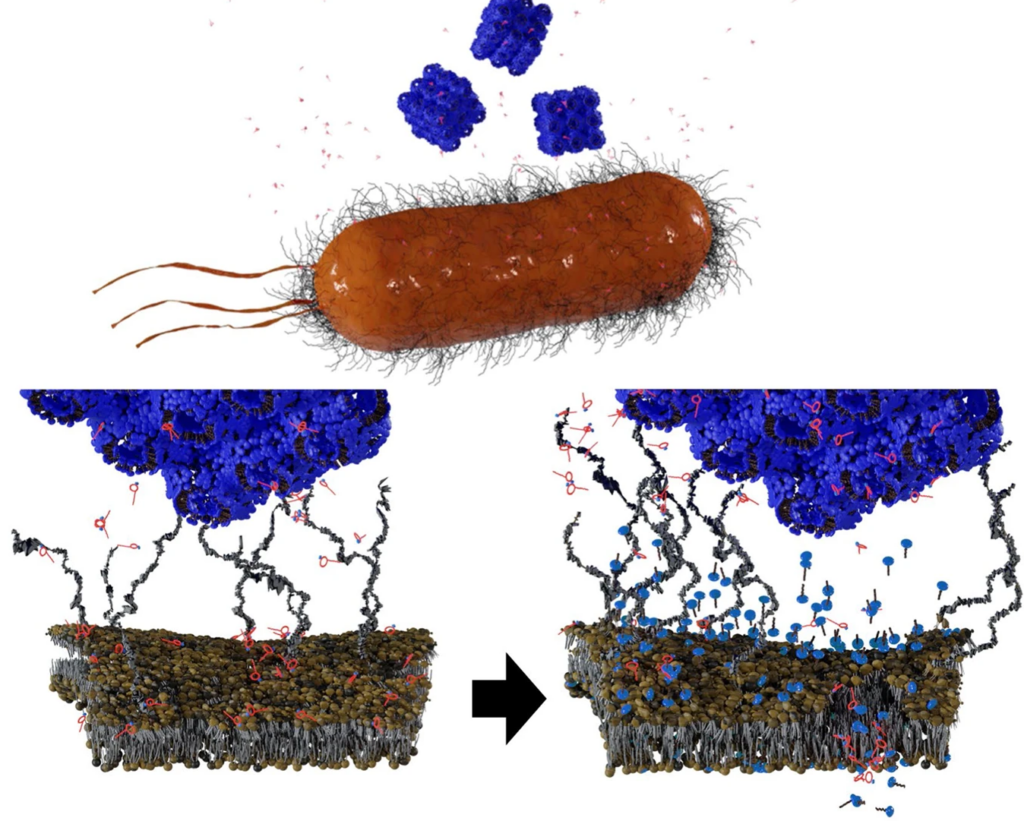
Polytherapy with PMB and cubosomes result in interactions with the bacterial OM in two consecutive ways: PMB initially interacts with the outer leaflet of OM via electrostatic interactions, leading to destabilised areas. Cubosomes then contact with the bilayer, causing further membrane perturbations via a lipid-exchange process. Credit: Monash University/Lai et al.
Researchers from Monash University have discovered a potential new method to circumvent antibiotic resistance, by means of a nanoparticle and antibiotic polytherapy. This approach could also reduce antibiotic intake.
The World Health Organisation (WHO) has declared antimicrobial resistance (AMR) to be among the top 10 global public health threats. A recent report found that in 2019, 1.27 million deaths were directly attributable to AMR infections – more than deaths from either HIV or TB.
AMR occurs when pathogens evolve to no longer respond to medicines, consequently infections become increasingly difficult or impossible to treat.
The study, which appears in Nature Communications, has found that the use of nanoparticles in combination with other antibiotics, is an effective strategy to improve bacterial killing.
For Gram-negative bacteria, polymyxins have been used as drugs of last resort as they disrupt the bacterial outer membrane (OM), causing it to become more permeable, causing cell contents to leak out and kill the bacteria.
The strategy involves administering polymyxin B (PMB) alongside cube-shaped nanoparticles called cubosomes. The PMB disrupted the OM first, but not enough to kill the cell. When the accompanying cubosome bound to the OM, disrupting it further, successfully killing the cell. Interestingly, loading PMB into the cubosomes as a carrier had little effect; in fact, the cubosome strengthened the OM.
“This is a stunning finding in how we deliver medicine and how the medicine we take impacts us in the future,” said lead researcher Dr Hsin-Hui Shen.
This approach also means that lower dosages of antibiotics could be used. “Instead of looking for new antibiotics to counteract superbugs, we can use the nanotechnology approach to reduce the dose of antibiotic intake, effectively killing multidrug-resistant organisms.”
It has been 30 years since the discovery of the last new antibiotic, and in coming years, the growing crisis of antibiotics resistance will result in increased mortality from basic infections because they have developed antimicrobial resistance.
Without effective antimicrobials, the WHO warns that the success of modern medicine in treating infections, including during major surgery and cancer chemotherapy, would be at increased risk.
While nanoparticles had been used for a long time before as antimicrobial carriers, “but the use of nanoparticles in polytherapy treatments with antibiotics in order to overcome antimicrobial resistance has been overlooked,” explained Dr Shen. “The use of nanoparticles-antibiotics combination therapy could reduce the dose intake in the human body and overcome the multidrug resistance.”
Globally, infections by antimicrobial-resistant (AMR) bacteria caused more than 1.2 million deaths worldwide in 2019, according to a study published in The Lancet. It is the largest and most comprehensive one to date of this critical issue.
Lower-income countries are worst affected but antimicrobial resistance remains a global threat, the researchers wrote.
The researchers emphasised that investment in new drugs is urgently needed, as well as vaccination and better antimicrobial stewardship.
The estimate of global deaths from AMR, is based on the researchers’ analysis of 204 countries, assuming the counterfactual that the bacteria responsible would be antibiotic-susceptible.
Of the 4.95 million deaths in which AMR played a role, 1.27 million were directly attributable to it. In 2019, 860 000 deaths were estimated from HIV and 640 000 from malaria.
Most of the AMR-related deaths resulted from lower respiratory infections, such as pneumonia, and bloodstream infections, which can lead to sepsis.
Deaths from AMR were estimated to be highest in sub-Saharan Africa at 23.7 deaths per 100 000, and lowest in North Africa and the Middle East at 11.2 per 100 000. Young children are at most risk, with about one in five deaths linked to AMR being among the under-fives.
The researchers also noted that “resistance is high for multiple classes of essential agents, including beta-lactams and fluoroquinolones.”
MRSA (methicillin-resistant Staphylococcus aureus) was particularly deadly, while E. coli, K. pneumoniae, S. pneumoniae, A. baumannii, and P. aeruginosa were associated with high levels of resistance. The researchers wrote that “each of these leading pathogens is a major global health threat that warrants more attention, funding, capacity building, research and development, and pathogen-specific priority setting from the broader global health community.”
They also recommend that immunity to these pathogens be built up by vaccination, and since currently only S. pneumoniae has a vaccine readily available, these will need to be developed and deployed as a matter of urgency. They noted several limitations to their study, the first being the sparsity of data drawn from low- and middle-income countries, which may in fact lead to an underestimate of the prevalence of AMR. Secondly, there is the possibility of multiple sources of bias inherent in combining datasets from different providers. Finally, there may be bias in surveillance, eg if cultures are drawn only if a patient is unresponsive to antibiotics, leading to an overestimate.
Scientists may have hit upon a way to make frontline antibiotics once again effective against the deadly bacteria that cause pneumonia.
The international team originally developed this as a potential treatment for disorders such as Alzheimer’s, Parkinson’s and Huntington’s diseases to break bacterial resistanceto commonly used frontline antibiotics.
Led by University of Melbourne Professor Christopher McDevitt, this discovery may see the comeback of readily available and cheap antibiotics, such as penicillin and ampicillin, as effective weapons in the fight against the rapidly rising threat of antibiotic resistance.
In a paper published in Cell Reports, Prof McDevitt and colleagues described how they discovered a way to break bacterial drug resistance and then developed a therapeutic approach to rescue the use of the antibiotic ampicillin to treat drug-resistant bacterial pneumonia caused by Streptococcus pneumoniae in a mouse model of infection.
The World Health Organization (WHO) last year named antibiotic resistance as one of the greatest threats to global health, food security, and development. Rising numbers of bacterial infections such as pneumonia, tuberculosis, gonorrhoea, and salmonellosis are becoming harder to treat as the antibiotics lose effectiveness against them.
Prof McDevitt’s prior work on bacterial antibiotic resistance using zinc ionophores led to collaborations with University of Queensland’s Professor Mark Walker and Griffith University’s Professor Mark von Itzstein from the Institute for Glycomics.
“We knew that some ionophores, such as PBT2, had been through clinical trials and shown to be safe for use in humans,” Prof von Itzstein said.
Prof Walker said that “as a group, we realised that if we could repurpose these safe molecules to break bacterial resistance and restore antibiotic efficacy, this would be a pathway to a therapeutic treatment. What we had to do was show whether PBT2 broke bacterial resistance to antibiotic treatment without leading to even greater drug resistance.”
“We focused on bacterial pneumonia and the most commonly used antibiotics. We thought that if we could rescue frontline antibiotics and restore their use for treating common infections, this would solve a global problem,” Prof McDevitt added.
An important component was the research from Prof McDevitt’s group that led to making the treatment effective.
“We knew from earlier research that the immune system uses zinc as an innate antimicrobial to fight off infection. So, we developed our therapeutic approach with PBT2 to use the body’s antimicrobial zinc to break antibiotic resistance in the invading bacteria,” he said.
“This rendered the drug-resistant bacteria susceptible to the antibiotic ampicillin, restoring the effectiveness of the antibiotic treatment in the infected animals.”
Collecting the data required for a clinical trial of PBT2 in combination with antibiotics is the next step, said Prof McDevitt.
“We also want to find other antibiotic-PBT2 combinations that have therapeutic potential for treatment of other bacterial infections,” he said.
“Our work shows that this simple combination therapy is safe, but the combinations require testing in clinical trials. What we need now is to move forward with further testing and pharmacology.”
A surprising discovery in hedgehogs showed that a variant of the MRSA superbug appeared in nature well before antibiotics use in humans and livestock, which has traditionally been blamed for its emergence.
Staphylococcus aureus first developed resistance to the antibiotic methicillin around 200 years ago, according to a large international study which has traced the genetic history of the bacteria.
The finding comes from research showing that up to 60% of hedgehogs in Denmark and Sweden carry a type of MRSA called mecC-MRSA. The new study also found high levels of MRSA in swabs taken from hedgehogs across their range in Europe and New Zealand. Their findings were published in the journal Nature.
The researchers believe that antibiotic resistance evolved in S. aureus as an adaptation to having to exist on hedgehog skin next to the fungus Trichophyton erinacei, which produces its own antibiotics. The discovery of this centuries-old antibiotic resistance predates antibiotic use in medical and agricultural settings.
“Using sequencing technology we have traced the genes that give mecC-MRSA its antibiotic resistance all the way back to their first appearance, and found they were around in the nineteenth century,” said Dr Ewan Harrison, a senior author of the study.
He added: “Our study suggests that it wasn’t the use of penicillin that drove the initial emergence of MRSA, it was a natural biological process. We think MRSA evolved in a battle for survival on the skin of hedgehogs, and subsequently spread to livestock and humans through direct contact.”
Antibiotic resistance in human pathogens was previously thought to be a modern phenomenon, driven by the clinical use of antibiotics. Antibiotic misuse is now accelerating the process, with antibiotic resistance rising dangerously worldwide.
Since nearly all antibiotics used today arose in nature, the researchers say it is likely that resistance to them already exists in nature too. Overuse of any antibiotic in humans or livestock will favour resistant strains of the bacteria, causing it to lose effectiveness over time.
“This study is a stark warning that when we use antibiotics, we have to use them with care. There’s a very big wildlife ‘reservoir’ where antibiotic-resistant bacteria can survive – and from there it’s a short step for them to be picked up by livestock, and then to infect humans,” said Professor Mark Holmes, a senior author of the report.
In 2011, mecC -MRSA was identified in human and dairy cow populations, which was assumed to have arisen due to the large number of antibiotics cows are routinely given.
MRSA was first identified in patients in 1960, and around 1 in 200 of all MRSA infections are caused by mecC-MRSA. Due to its resistance to antibiotics, MRSA is much harder to treat than other bacterial infections. The World Health Organization now considers MRSA one of the world’s greatest threats to human health.
Human infections are rare with mecC-MRSA however, even though it has been present in hedgehogs for more than 200 years.
Drug-resistant, Mycobacterium tuberculosis bacteria, the pathogen responsible for causing the disease tuberculosis (TB). A 3D computer-generated image. Credit: CDC
In a first of its kind study, researchers have spotted signs of antibiotic ‘pre-resistance’ in bacteria for the first time, indicating that they have the potential to develop drug resistance in the future.
The findings, published in Nature Communications, will allow doctors in the future to select the best treatments for bacterial infections.
Mycobacterium tuberculosis (TB) was the second leading infectious cause of death after COVID in 2020, killing 1.5m people. It can be cured if treated with the right antibiotics, but treatment is lengthy and many people most at risk lack access to adequate healthcare. Drug-resistant TB can develop when people do not finish their full course of treatment, or when drugs are not available or are of poor quality.
Multi-drug resistant TB represents a huge, unsustainable burden and totally drug resistant strains have been detected in a handful of countries. As health systems struggle to cope with the pandemic, progress on TB treatment globally has slowed.
To better understand TB for developing new drugs, this study has identified for the first time how to pre-empt drug resistance mutations before they have occurred. Dubbed ‘pre-resistance’ when a pathogen has a greater inherent risk of developing resistance to drugs in the future.
By analysing thousands of bacterial genomes, the study has potential application to other infectious diseases and paves the way towards personalised pathogen ‘genomic therapy’ – which chooses drugs according to the pathogen, preventing drug resistance.
The culmination of 17 years’ work, the study built up a TB bacterial ‘family tree’ from 3135 different tuberculosis samples. Computational analysis identified the ancestral genetic code of bacteria that then went on to develop drug resistance. The team identified the key changes associated with the development of resistance by looking through the ‘branches’ of the family tree to see which had the most potential for developing drug resistance.
Variations in the TB genome predicted that a particular branch would likely become drug resistant, and then validated their findings in an independent global TB data set.
Dr Grandjean, senior author of the study, said: “We’re running out of options in antibiotics and the options we have are often toxic – we have to get smarter at using what we have to prevent drug resistance.
“This is the first example of showing that we can get ahead of drug resistance. That will allow us in the future to use the pathogen genome to select the best treatments.”