Author: ModernMedia

Choice of Breast Cancer Surgery Facilities may Drive Inequality

Photo by Michelle Leman on Pexels

Including patients as partners for making decisions about their medical treatments is an important aspect of patient-centred care. A new study from England examined choices that patients with breast cancer make when considering where to have surgery for their condition and assessed how policies that offer such choices might affect inequalities in the health care system. The findings are published in CANCER.

For the study, investigators analysed data from the National Health Service (NHS), the publicly funded health care system in the United Kingdom that offers patients with cancer the opportunity to select any hospital providing cancer treatment, and identified all women diagnosed with breast cancer from 2016 to 2018 who had breast-conserving surgery or a mastectomy.

Records showed that 22 622 of 69,153 patients undergoing breast-conserving surgery (32.7%) and 7179 of 23 536 patients undergoing mastectomy (30.5%) bypassed their nearest hospital to receive surgery farther away from home. Women who were younger, without additional medical conditions, of white ethnic background, or lived in rural areas were more likely to travel to more distant hospitals.

Patients were more likely to be treated at hospitals classified as specialist breast reconstruction centres even if they personally were not undergoing breast reconstruction after surgery. Patients who had a mastectomy and immediate breast reconstruction were more likely to travel to hospitals that had surgeons with a strong media reputation for breast cancer surgery, and patients were less likely to travel to hospitals with shorter surgical waiting times. Patients did not seem to make choices based on hospitals’ research activity, quality rating, breast re-operation rates (to remove additional cancer cells that were missed), or status as a multidisciplinary cancer centre (where patients can receive all their care at one location).

The investigators noted that this separation – elderly patients, those with comorbidities, and those from ethnic minority backgrounds receiving care at their local hospital, while others travel to other hospitals and specialist centres – could further drive inequalities in access to quality care.

“As marginalized groups already face barriers to high-quality care, it is important for policy makers to consider measures that mitigate against the risks of increasing inequalities in access and outcomes, by for example providing free transport, accommodation, or even protection against loss of income,” said co-author Lu Han, PhD, of the London School of Hygiene & Tropical Medicine. “Moreover, patients prefer to access information on the quality of breast cancer care of the hospitals in their region at the start of the management pathway when a diagnosis is sought. Such information should be easy to understand and presented in a format that can support the trade-offs that patients have to make.”

Source: Wiley

Treating Tuberculosis when Antibiotics Become Ineffective

Tuberculosis bacteria. Credit: CDC

An international research team has found a number of substances with a dual effect against tuberculosis (TB): They make the bacteria causing the disease less pathogenic for human immune cells whilst boosting the activity of conventional antibiotics. They published their findings in the journal Cell Chemical Biology.

Infectious disease specialist Dr Jan Rybniker and colleagues have identified new, antibiotic molecules that target Mycobacterium tuberculosis and make it less pathogenic for humans.

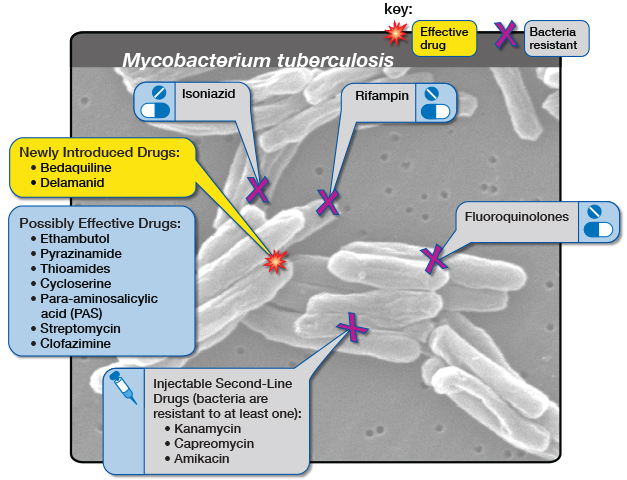
Diagram by the United States-based National Institute of Allergy and Infectious Diseases showing the medicine options for drug-resistant tuberculosis. (Via Flickr, CC BY 2.0 Deed)

In addition, some of the discovered substances may allow for a renewed treatment of tuberculosis with available medications – including strains of the bacterium that have already developed drug resistance.

Although treatable with antibiotics, it still ranks among the infectious diseases that claim the most lives worldwide: According to the World Health Organization (WHO), only COVID was deadlier than TB in 2022. The disease also caused almost twice as many deaths as HIV/AIDS. More than 10 million people continue to contract TB every year, mainly due to insufficient access to medical treatment in many countries.

Limited targets

Multidrug-resistant tuberculosis is emerging especially in eastern Europe and Asia. That is of particular concern to researchers because like all bacteria that infect humans, Mycobacterium tuberculosis possesses only a limited number of targets for conventional antibiotics.

That makes it increasingly difficult to discover new antibiotic substances in research laboratories.

Working together with colleagues from the Institute Pasteur in Lille, France, and the German Center for Infection Research (DZIF), the researchers at University Hospital Cologne have now identified an alternative treatment strategy for the bacterium.

The team utilized host-cell-based high-throughput methods to test the ability of molecules to stem the multiplication of bacteria in human immune cells: From a total of 10,000 molecules, this procedure allowed them to isolate a handful whose properties they scrutinized more closely in the course of the study.

Two-pronged attack

Ultimately, the researchers identified virulence blockers that utilise target structures that are fundamentally distinct from those targeted by classical antibiotics.

“These molecules probably lead to significantly less selective pressure on the bacterium, and thus to less resistance,” said Jan Rybniker, who heads the Translational Research Unit for Infectious Diseases at the Center for Molecular Medicine Cologne (CMMC) and initiated the study.

In deciphering the exact mechanism of action, the researchers also discovered that some of the newly identified chemical substances are dual-active molecules.

Thus, they not only attack the pathogen’s virulence factors, but also enhance the activity of monooxygenases — enzymes required for the activation of the conventional antibiotic ethionamide.

Ethionamide is a drug that has been used for many decades to treat TB. It is a so-called prodrug, a substance that needs to be enzymatically activated in the bacterium to kill it. Therefore, the discovered molecules act as prodrug boosters, providing another alternative approach to the development of conventional antibiotics.

In cooperation with the research team led by Professor Alain Baulard at Lille, the precise molecular mechanism of this booster effect was deciphered.

Thus, in combination with these new active substances, drugs that are already in use against tuberculosis might continue to be employed effectively in the future.

The discovery offers several attractive starting points for the development of novel and urgently needed agents against tuberculosis.

“Moreover, our work is an interesting example of the diversity of pharmacologically active substances. The activity spectrum of these molecules can be modified by the smallest chemical modifications,” Rybniker added.

However, according to the scientists it is still a long way to the application of the findings in humans, requiring numerous adjustments of the substances in the laboratory.

Source: University of Cologne

Activating Specific Neurons Extends the Lifespan of Mice

Photo by Kanashi ZD on Unsplash

Studies have recently begun to reveal that the lines of communication between the body’s organs are key regulators of aging. When these lines are open, the body’s organs and systems work well together. But with age, communication lines deteriorate, and organs don’t get the molecular and electrical messages they need to function properly.

A new study from Washington University School of Medicine in St. Louis identifies, in mice, a critical communication pathway connecting the brain and fat tissue in a feedback loop that appears central to energy production throughout the body. The research suggests that the gradual deterioration of this feedback loop contributes to the increasing health problems that are typical of natural aging.

The study, which appears in Cell Metabolism, has implications for developing future interventions that could maintain the feedback loop longer and slow the effects of advancing age.

The researchers identified a specific set of neurons in the brain’s hypothalamus that, when active, sends signals to the body’s fat tissue to release energy. Using genetic and molecular methods, the researchers studied mice that were programmed to have this communication pathway constantly open after they reached a certain age. The scientists found that these mice were more physically active, showed signs of delayed aging, and lived longer than mice in which this same communication pathway gradually slowed down as part of normal aging.

“We demonstrated a way to delay aging and extend healthy life spans in mice by manipulating an important part of the brain,” said senior author Shin-ichiro Imai, MD, PhD, the Theodore and Bertha Bryan Distinguished Professor in Environmental Medicine and a professor in the Department of Developmental Biology at Washington University. “Showing this effect in a mammal is an important contribution to the field; past work demonstrating an extension of life span in this way has been conducted in less complex organisms, such as worms and fruit flies.”

These specific neurons, in a part of the brain called the dorsomedial hypothalamus, produce an important protein: Ppp1r17. When this protein is present in the nucleus, the neurons are active and stimulate the sympathetic nervous system, which governs the body’s fight or flight response.

The fight-or-flight response is well known for having broad effects throughout the body, including causing increased heart rate and slowed digestion. As part of this response, the researchers found that the neurons in the hypothalamus set off a chain of events that triggers neurons that govern white adipose tissue stored under the skin and in the abdominal area. The activated fat tissue releases fatty acids into the bloodstream for fuelling physical activity, as well as another important protein, an enzyme called eNAMPT, which returns to the hypothalamus and allows the brain to produce fuel for its functions.

This feedback loop is critical for fuelling the body and the brain, but it slows down over time. With age, the researchers found that the protein Ppp1r17 tends to leave the nucleus of the neurons, and when that happens, the neurons in the hypothalamus send weaker signals. With less use, the nervous system wiring throughout the white adipose tissue gradually retracts, and what was once a dense network of interconnecting nerves becomes sparse. The fat tissues no longer receive as many signals to release fatty acids and eNAMPT, leading to fat accumulation, weight gain and less energy for the brain and other tissues.

The researchers, including first author Kyohei Tokizane, PhD, a staff scientist and a former postdoctoral researcher in Imai’s lab, found that when they used genetic methods in old mice to keep Ppp1r17 in the nucleus of the neurons in the hypothalamus, the mice were more physically active, with increased wheel-running, and lived longer than control mice. They also used a technique to directly activate these specific neurons in the hypothalamus of old mice, and they observed similar anti-aging effects.

The high end of the life span of a typical laboratory mouse is generally about 900–1000 days. In this study, all of the control mice that had aged normally died by 1000 days of age. Those that underwent interventions to maintain the brain-fat tissue feedback loop lived 60 to 70 days longer than control mice. This is a roughly 7% increase in lifespan, which translates to a 75-year human lifespan being extended about five more years. The mice receiving the interventions also were more active and looked younger, with thicker and shinier coats, at later ages, suggesting more time with better health as well.

Imai and his team are continuing to investigate ways to maintain the feedback loop between the hypothalamus and the fat tissue. One route they are studying involves supplementing mice with eNAMPT, the enzyme produced by the fat tissue that returns to the brain and fuels the hypothalamus, among other tissues. When released by the fat tissue into the bloodstream, the enzyme is packaged inside compartments called extracellular vesicles, which can be collected and isolated from blood.

“We can envision a possible anti-aging therapy that involves delivering eNAMPT in various ways,” Imai said. “We already have shown that administering eNAMPT in extracellular vesicles increases cellular energy levels in the hypothalamus and extends life span in mice. We look forward to continuing our work investigating ways to maintain this central feedback loop between the brain and the body’s fat tissues in ways that we hope will extend health and life span.”

Source: Washington University School of Medicine

SAHPRA Signs MoU With Medicines Control Authority Of Zimbabwe

The South African Health Products Regulatory Authority (SAHPRA) has signed a Memorandum of Understanding (MoU) with the Medicines Control Authority of Zimbabwe (MCAZ).

The MoU between SAHPRA and MCAZ will allow the regulators to develop a cooperative partnership towards ensuring access to safe, quality, and effective health products in the respective countries.

Areas of cooperation
SAHPRA and MCAZ will cooperate in joint products reviews and inspections to enable efficient access to health products. This partnership will also focus on detection and curbing of substandard and falsified health products moving between the two countries, which has off late been a major challenge that the two regulators have identified.

“The forging of partnerships such as this MoU with the Medicines Control Authority of Zimbabwe, a fellow African National Regulatory Authority, is key to further enhancing and building capacity on the continent”, indicates SAHPRA CEO, Dr Boitumelo Semete-Makokotlela.

“This landmark event marks a significant step towards strengthening the regulatory frameworks of both Zimbabwe and South Africa in the pharmaceutical sector. The MoU is designed to facilitate cooperation and collaboration between the two countries in the areas of medicines regulation, quality control, and pharmacovigilance”, shares MCAZ Director-General, Mr Richard Rukwata.

Feeling Depressed Linked to Short-term Increase in Bodyweight

Photo by I Yunmai on Unsplash

Increases in symptoms of depression are associated with a subsequent increase in bodyweight when measured one month later, new research from the University of Cambridge has found.

The study, published in PLOS ONE, found that the increase was only seen among people with overweight or obesity, but found no link between generally having greater symptoms of depression and higher bodyweight.

Research has suggested a connection between weight and mental health – with each potentially influencing the other – but the relationship is complex and remains poorly understood, particularly in relation to how changes in an individual’s mental health influence their bodyweight over time.

To help answer this question, researchers at Cambridge’s Medical Research Council (MRC) Epidemiology Unit examined data from over 2,000 adults living in Cambridgeshire, UK, who had been recruited to the Fenland COVID-19 Study.

Participants completed digital questionnaires on mental wellbeing and bodyweight every month for up to nine months during the COVID-19 pandemic (August 2020 – April 2021) using a mobile app developed by Huma Therapeutics Limited.

Questions assessed an individual’s symptoms of depression, anxiety and perceived stress.

A higher score indicated greater severity, with the maximum possible scores being 24 for depression, 21 for anxiety and 40 for stress.

The team then used statistical modelling to explore whether having poorer mental wellbeing than usual was related to changes in bodyweight one month later.

The researchers found that for every increment increase in an individual’s usual score for depressive symptoms, their subsequent weight one month later increased by 45g.

This may seem small but would mean, for example, that in an individual whose depressive symptoms score rose from five to 10 (equal to an increase from ‘mild’ to ‘moderate’ depressive symptoms) it would relate to an average weight gain of 225g (0.225kg).

This effect was only observed in those individuals with overweight (defined as BMI 25-29.9kg/m2) or with obesity (BMI of over 30kg/m2). Individuals with overweight had on average an increase of 52g for each increment point increase from their usual depressive symptoms score and for those with obesity the comparable weight gain was 71g.

The effect was not seen in those individuals with a healthy weight.

First author Dr Julia Mueller from the MRC Epidemiology Unit said: “Overall, this suggests that individuals with overweight or obesity are more vulnerable to weight gain in response to feeling more depressed. Although the weight gain was relatively small, even small weight changes occurring over short periods of time can lead to larger weight changes in the long-term, particularly among those with overweight and obesity.

“People with a high BMI are already at greater risk from other health conditions, so this could potentially lead to a further deterioration in their health. Monitoring and addressing depressive symptoms in individuals with overweight or obesity could help prevent further weight gain and be beneficial to both their mental and physical health.”

The researchers found no evidence that perceived stress or anxiety were related to changes in weight.

Senior author Dr Kirsten Rennie from the MRC Epidemiology Unit said: “Apps on our phones make it possible for people to answer short questions at home more frequently and over extended periods of time, which provides much more information about their wellbeing. This technology could help us understand how changes in mental health influence behaviour among people with overweight or obesity and offer ways to develop timely interventions when needed.”

Although previous studies have suggested that poor mental health is both a cause and consequence of obesity, the research team found no evidence that weight predicted subsequent symptoms of depression.

The research was supported by the Medical Research Council.

The original text of this story is licensed under Creative Commons CC BY-SA 4.0.

Source: University of Cambridge.  Note: Content may be edited for style and length.


Journal Reference:

  1. Julia Mueller, Amy L. Ahern, Rebecca A. Jones, Stephen J. Sharp, Alan Davies, Arabella Zuckerman, Benjamin I. Perry, Golam M. Khandaker, Emanuella De Lucia Rolfe, Nick J. Wareham, Kirsten L. Rennie. The relationship of within-individual and between-individual variation in mental health with bodyweight: An exploratory longitudinal studyPLOS ONE, 2024; 19 (1): e0295117 DOI: 10.1371/journal.pone.0295117

A Genetic Clue to Pulmonary Hypertension Risk

Photo by Sangharsh Lohakare on Unsplash

University of Pittsburgh Schools of Medicine researchers uncovered a fundamental mechanism that controls the body’s response to limited oxygen and regulates blood vessel disease of the lung.

By combing through genomes of more than 20 000 individuals in the US, France, England and Japan and combining the results with molecular studies in the lab, the team discovered a shared genetic trait that could predict a higher risk of pulmonary hypertension and its more severe form, pulmonary arterial hypertension, and influence the development of drug therapies that target the body’s response to limited oxygen. The findings were published in Science Translational Medicine.

“This new level of knowledge will help identify people who may be at a higher genetic risk of pulmonary hypertension and jump-start precision medicine practices to offer customised treatments,” said senior author Stephen Chan, MD, PhD.

Pulmonary hypertension encompasses a range of conditions of various causes that manifest in high blood pressure in the arteries of the lung and the right side of the heart.

The disease is accompanied by a decreased supply of oxygen to the lung tissue and the blood, is chronic and deadly, and its molecular origins and genetic background remain unsolved.

Using a combined approach of genomics and biochemistry, the Chan lab found a gene pair that had an important function in regulating blood vessel metabolism and disease.

This gene pair included a long non-coding RNA molecule – a messenger that facilitates the transformation of the body’s genetic code into protein products – and a protein binding partner, and their interaction was frequently active in cells exposed to low oxygen compared to normal cells.

Taking the findings a step further, the team discovered that a single DNA letter change directing expression of this RNA-protein pair under low oxygen conditions was associated with a higher genetic risk of pulmonary hypertension across diverse patient populations.

According to Chan, pulmonary hypertension is a borderline orphan disease, and the limited number of patients with pulmonary hypertension makes it challenging to find genetic variations that are rare but still impactful enough to eclipse individual differences.

With that in mind, Pitt scientists turned to collaborators around the globe and to public research datasets to ensure that the findings are relevant across a diverse global population.

Chan hopes that his findings will spur the development of targeted therapies relevant to oxygen sensitivity in blood vessel lining and that their pending patent application will contribute to the growth on an entirely new field of epigenetic and RNA drug therapeutics that work not by manipulating the genome but by changing how it is being read.

Source: University of Pittsburgh

Clear Link between Autoimmune Disease and Perinatal Depression

This is a pseudo-colored image of high-resolution gradient-echo MRI scan of a fixed cerebral hemisphere from a person with multiple sclerosis. Credit: Govind Bhagavatheeshwaran, Daniel Reich, National Institute of Neurological Disorders and Stroke, National Institutes of Health

Women with autoimmune disease are more likely to suffer from depression during pregnancy and after childbirth; conversely, women with a history of perinatal depression are at higher risk of developing autoimmune disease, according to a new study from Karolinska Institutet which is published in the journal Molecular Psychiatry.

Some of the most common autoimmune diseases are gluten intolerance (coeliac disease), autoimmune thyroiditis, rheumatoid arthritis, type 1 diabetes, and multiple sclerosis (MS). 

In the present study, researchers used data from the Swedish Medical Birth Register and identified all women who had given birth in Sweden between 2001 and 2013. Out of the resulting group of approximately 815 000 women and 1.3 million pregnancies, just over 55 000 women had been diagnosed with depression during their pregnancy or within a year after delivery. 

The researchers then compared the incidence of 41 autoimmune diseases in women with and without perinatal depression, controlling for familial factors such as genes and childhood environment by also including the affected women’s sisters.

Strongest association for MS

The results reveal a bidirectional association between perinatal depression and autoimmune thyroiditis, psoriasis, MS, ulcerative colitis, and coeliac disease. Overall, women with autoimmune disease were 30 per cent more likely to suffer perinatal depression. Conversely, women with perinatal depression were 30 per cent more likely to develop a subsequent autoimmune disease.

The association was strongest for the neurological disease MS, for which the risk was double in both directions. It was also strongest in women who had not had a previous psychiatric diagnosis.

“Our study suggests that there’s an immunological mechanism behind perinatal depression and that autoimmune diseases should be seen as a risk factor for this kind of depression,” says the study’s first author Emma Bränn, researcher at the Institute of Environmental Medicine at Karolinska Institutet.

Can have serious consequences

The researchers will now continue to examine the long-term effects of depression during pregnancy and in the first year following childbirth.

“Depression during this sensitive period can have serious consequences for both the mother and the baby,” says Dr Bränn. “We hope that our results will help decision-makers to steer funding towards maternal healthcare so that more women can get help and support in time.”

Since this was an observational study, no conclusions on causality can be drawn.

The study was financed by Karolinska Institutet, Forte (the Swedish Research Council for Health, Working Life and Welfare), the Swedish Research Councill and the Icelandic Research Fund. The researchers report no conflicts of interest.

Source: Karolinska Institutet

Seizures Identified as Potential Cause of Sudden Unexplained Death in Children

Photo by Caleb Woods on Unsplash

In a study designed to better understand sudden, unexpected deaths in young children, which usually occur during sleep, researchers have identified brief seizures, accompanied by muscle convulsions, as a potential cause.

Experts estimate in excess of 3000 families each year in the US lose a baby or young child unexpectedly and without explanation. Most are infants in what is referred to as sudden infant death syndrome, or SIDS, but 400 or more cases involve children aged 1 and older, and in what is called sudden unexplained death in children (SUDC). Over half of these children are toddlers.

The study, published in the journal Neurology, used a registry of more than 300 SUDC cases, set up a decade ago by researchers at NYU Grossman School of Medicine. Researchers used extensive medical record analysis and video evidence donated by families to document the inexplicable deaths of seven toddlers between the ages of 1 and 3 that were potentially attributable to seizures. These seizures lasted less than 60 seconds and occurred within 30 minutes immediately prior to each child’s death, say the study authors.

For decades, researchers have sought an explanation to sudden death events in children, noticing a link between those with a history of febrile seizures (seizures accompanied by fever). Earlier research had reported that children who died suddenly and unexpectedly were 10 times more likely to have had febrile seizures than children who did not die suddenly and unexpectedly. Febrile seizures are also noted in one-third of SUDC cases registered at NYU Langone Health.

The new study involved an analysis by a team of eight physicians of the rare SUDC cases for which there were also home video recordings, from either security systems or commercial crib cameras, made while each child was sleeping on the night or afternoon of their death.

Five of seven recordings were running nonstop at the time and showed direct sound and visible motion indicative of a seizure happening. The remaining two recordings were triggered by sound or motion, but only one suggested that a muscle convulsion, a sign of seizure, had occurred. As well, only one toddler had a documented previous history of febrile seizures. All children in the study had previously undergone an autopsy that revealed no definitive cause of death.

“Our study, although small, offers the first direct evidence that seizures may be responsible for some sudden deaths in children, which are usually unwitnessed during sleep,” said study lead investigator Laura Gould, a research assistant professor at NYU Langone. Gould lost her daughter, Maria, to SUDC at the age of 15 months in 1997, a tragedy that prompted her successful lobby for establishment of the NYU SUDC Registry and Research Collaborative. Gould points out that if not for the video evidence, the death investigations would not have implicated a seizure.

“These study findings show that seizures are much more common than patients’ medical histories suggest, and that further research is needed to determine if seizures are frequent occurrences in sleep-related deaths in toddlers, and potentially in infants, older children, and adults,” said study senior investigator and neurologist Orrin Devinsky, MD.

Devinsky, a professor in the Departments of Neurology, Neurosurgery, and Psychiatry at NYU Langone, as well as chief of its epilepsy service, adds that “convulsive seizures may be the ‘smoking gun’ that medical science has been looking for to understand why these children die.

“Studying this phenomenon may also provide critical insight into many other deaths, including those from SIDS and epilepsy,” said Devinsky, who cofounded the SUDC Registry and Research Collaborative at NYU Langone with Gould.

Further research, Devinsky notes, is also needed to determine precisely how seizures with or without fever may induce sudden death. Previous research in epilepsy patients, he says, points to difficulty breathing that is known to occur immediately after a seizure and that can lead to death. This has been found to happen more frequently in epilepsy patients, as it does in the children involved in the study, while they are sleeping face down on the stomach and without anyone witnessing the death.

Continuous monitoring of child deaths and improvements in health records to track how often these convulsive seizures precede death, he explains, will be needed for this to be confirmed. Seizure-related deaths are underreported in people with and without epilepsy.

For the study, experts in forensic pathology, neurology, and sleep medicine analysed each recording for video quality, sound, and motion. From this, they were able to determine which toddlers showed signs of muscle convulsions as a sign of seizures prior to their death and when. Access to the videos was and remains strictly limited to the researchers involved in the study.

Source: NYU Langone Health / NYU Grossman School of Medicine

RSV Shown to Infect Nerve Cells, Causing Inflammation and Damage

Photo by Andrea Piacquadio on Unsplash

Respiratory syncytial virus (RSV), a common infection in children and older adults, can also infect nerve cells and trigger inflammation leading to nerve damage, according to a new Tulane University study.

RSV can cause mild symptoms such as coughing, sneezing and fever or lead to more severe conditions such as pneumonia or bronchiolitis. But since the disease was first discovered in 1956, it has been thought to only infect the respiratory tract.

This study, published in The Journal of Infectious Diseases, is the first to prove that RSV can penetrate nerve cells and may provide the clearest link between RSV and reported neurological symptoms in children.

RSV has been previously detected in the spinal fluid of children with seizures. Additionally, 40% of RSV-positive children under the age of 2 have shown acute encephalopathy, brain damage that can result in confusion, memory loss or cognitive difficulties.

The findings underscore the potential long-term impacts of the disease, as well as the importance of preventative measures such as the two RSV vaccines approved by the FDA in 2023.

“This is the most common respiratory virus in the first years of life as well as an impactful virus among the elderly,” said Dr Giovanni Piedimonte, Tulane University vice president for research and professor of pediatrics, biochemistry and molecular biology.

“This adds a new dimension to the importance of RSV vaccines for both the elderly and mothers to protect their babies.”

Researchers studied the virus using 3D peripheral nerve cultures grown from stem cells and rat embryos.

After finding they can be infected by RSV, researchers found RSV induced the release of chemokines – proteins that fight infections by controlling immune cells – and caused significant inflammation.

With low levels of RSV infection, the nerves became hyperreactive to stimulation. At higher levels, they observed a progressive degeneration of the nerve and increased neurotoxicity due to excess inflammation.

“Until this study, the theory was that the inflammatory response was indirectly activating the nerves,” Piedimonte said.

“This study shows that not only does that happen, but the virus can penetrate directly into the nerves.”

The nerve hyperreactivity could explain why children who get RSV are later more likely to have asthmatic symptoms, Piedimonte said.

The study also found that RSV could enter the spinal cord via peripheral nerves despite not having the ability to enter the spinal neurons directly.

More research is needed to explore that mechanism, but Piedimonte theorises that by using the peripheral nerves to enter the spinal cord, RSV can bypass the blood-brain barrier, enter the central nervous system and infect the brain.

If confirmed, it could signal a connection between RSV and other neurological or developmental disorders, Piedimonte said.

“If indeed it’s confirmed in future studies that viruses like this are able to access the central nervous system, that opens a huge Pandora’s box,” Piedimonte said.

Source: Tulane University

Targeted Neurostimulation Makes People More Hypnotisable

Photo by Bruce Christianson on Unsplash

Hypnotisability appears to be a stable trait that changes little throughout adulthood, much like personality and IQ. But now, for the first time, Stanford Medicine researchers have demonstrated a way to temporarily heighten hypnotisablity, potentially allowing more people to access the benefits of hypnosis-based therapy.

In the new study, published in Nature Mental Health, the researchers found that less than two minutes of electrical stimulation targeting a precise area of the brain could boost participants’ hypnotisability for about one hour.

“We know hypnosis is an effective treatment for many different symptoms and disorders, in particular pain,” said lead author Afik Faerman, PhD, a postdoctoral scholar in psychiatry. “But we also know that not everyone benefits equally from hypnosis.”

Focused attention

Approximately two-thirds of adults are at least somewhat hypnotisable, and 15% are considered highly hypnotisable, meaning they score 9 or 10 on a standard 10-point measure of hypnotisability.

“Hypnosis is a state of highly focused attention, and higher hypnotisability improves the odds of your doing better with techniques using hypnosis,” said David Spiegel, MD, a professor of psychiatry and behavioural sciences and a senior author of the study.

Spiegel has devoted decades to studying hypnotherapy and using it to help patients control pain, lower stress, stop smoking and more. Several years ago, Spiegel led a team that used brain imaging to uncover the neurobiological basis of the practice. They found that highly hypnotisable people had stronger functional connectivity between the left dorsolateral prefrontal cortex, which is involved in information processing and decision making; and the dorsal anterior cingulate cortex, involved in detecting stimuli.

“It made sense that people who naturally coordinate activity between these two regions would be able to concentrate more intently,” Spiegel said. “It’s because you’re coordinating what you are focusing on with the system that distracts you.”

Shifting a stable trait

With these insights, Spiegel teamed up with Nolan Williams, MD, associate professor of psychiatry and behavioural sciences, who has pioneered non-invasive neurostimulation techniques to treat conditions such as depression, obsessive-compulsive disorder and suicidal ideation.

The hope was that neurostimulation could alter even a stable trait like hypnotisability.

In the new study, the researchers recruited 80 participants with fibromyalgia, a chronic pain condition that can be treated with hypnotherapy. They excluded those who were already highly hypnotisable.

Half of the participants received transcranial magnetic stimulation, in which paddles applied to the scalp deliver electrical pulses to the brain. Specifically, they received two 46-second applications that delivered 800 pulses of electricity to a precise location in the left dorsolateral prefrontal cortex. The exact locations depended on the unique structure and activity of each person’s brain.

“A novel aspect of this trial is that we used the person’s own brain networks, based on brain imaging, to target the right spot,” said Williams, also a senior author of the study.

The other half of participants received a sham treatment with the same look and feel, but without electrical stimulation. Hypnotisability was assessed by clinicians immediately before and after the treatments, with neither patients nor clinicians knowing who was in which group.

The researchers found that participants who received the neurostimulation showed a statistically significant increase in hypnotisability, scoring roughly one point higher. The sham group experienced no effect.

When the participants were assessed again one hour later, the effect had worn off and there was no longer a statistically significant difference between the two groups.

“We were pleasantly surprised that we were able to, with 92 seconds of stimulation, change a stable brain trait that people have been trying to change for 100 years,” Williams said. “We finally cracked the code on how to do it.”

The researchers plan to test whether different dosages of neurostimulation could enhance hypnotisability even more.

“It’s unusual to be able to change hypnotisability,” Spiegel said. A study of Stanford University students that began in the 1950s, for example, found that the trait remained relatively consistent when the students were tested 25 years later, as consistent as IQ over that time period. Recent research by Spiegel’s lab also suggests that hypnotisability may have a genetic basis.

Bigger implications

Clinically, a transient bump in hypnotisability may be enough to allow more people living with chronic pain to choose hypnosis as an alternative to long-term opioid use. Spiegel will follow up with the study participants to see how they fare in hypnotherapy.

The new results could have implications beyond hypnosis. Faerman noted that neurostimulation may be able to temporarily shift other stable traits or enhance people’s response to other forms of psychotherapy.

“As a clinical psychologist, my personal vision is that, in the future, patients come in, they go into a quick, non-invasive brain stimulation session, then they go in to see their psychologist,” he said. “Their benefit from treatment could be much higher.”

Story Source: Stanford Medicine