High intensity interval training (HIIT) may be the optimal exercise for reducing body fat while maintaining muscle mass in older adults, according to new research led by Australian academics.
“We found that high, medium and low intensity exercises all led to modest fat loss but only HIIT retained lean muscle,” said lead author and exercise physiologist Dr Grace Rose of the University of the Sunshine Coast.
The study examined how the intensity of different exercises could influence body composition in healthy older adults.
“While moderate training reduced fat mass, it also caused a small decline in lean muscle,” she said. “Both high and moderate intensities improved the composition of weight carried around the middle. Further analysis is needed of the low intensity results.” Dr Rose said the findings were particularly useful because body composition was implicated in the progression of many chronic diseases as people aged.
More than 120 healthy older adults from the Greater Brisbane region participated in the study, completing three exercise sessions a week in the gym for six months.
Their average age was 72 years old and average body mass index was 26kg/m2, categorised as normal for people aged over 65.
UniSC Associate Professor of Physiology and co-author Mia Schaumberg welcomed the the paper published in the journal Maturitas, with collaborators including UniSC’s Healthy Ageing Research Cluster and The University of Queensland.
“High intensity training in this study involved repeated short bursts, or intervals, of very hard exercise – where breathing is heavy and conversation is difficult – alternated with easier recovery periods. More than 120 healthy older adults from the Greater Brisbane region participated in the study, completing three exercise sessions a week in the gym for six months.
Their average age was 72 years old and average body mass index was 26kg/m2, categorised as normal for people aged over 65.
UniSC Associate Professor of Physiology and co-author Mia Schaumberg welcomed the timing of the paper published in the journal Maturitas, with collaborators including UniSC’s Healthy Ageing Research Cluster and The University of Queensland.
“High intensity training in this study involved repeated short bursts, or intervals, of very hard exercise – where breathing is heavy and conversation is difficult – alternated with easier recovery periods,” she said.
“HIIT likely works better because it puts more stress on the muscles, giving the body a stronger signal to keep muscle tissue rather than lose it.”
Two specific weather patterns have been identified as capable of increasing the risk of headaches and migraines, thanks to physicians at the University of CincinnatiCollege of Medicine, along with researchers at the Icahn School of Medicine at Mount Sinai, Errex Inc. and Teva Pharmaceuticals.
Headaches and migraines are often associated with weather variables such as barometric pressure, precipitation, humidity and temperature. As weather patterns vary around the world, evidence suggests their impacts vary across geographic regions, seasons and population groups.
For this study, researchers analysed weather patterns in the Northeast U.S. to determine whether any are associated with new-onset headaches in patients with episodic migraines.
“What is significant about this headache research is that we are one of the first to look at weather patterns with a combination of variables, instead of a single weather variable,” said Martin. “We further examined those weather patterns by region and season.”
Which weather patterns are linked to higher headache risk?
They found that two specific weather patterns were associated with a higher risk of new-onset headaches in the Northeastern region. One is an approaching cold front, or low-pressure system, with precipitation, which can occur in all seasons. The other is the Bermuda High, a high-pressure system that heavily dictates summer weather across the eastern half of the U.S.
“This is one of the first studies to more closely implicate frontal passage in the onset of headache,” said Al Peterlin, a co-investigator and meteorologist from Errex Inc.
This is one of the first studies to suggest that a preventive medication might reduce the likelihood of a weather-associated headache.
Brinder Vij, MDLead author, professor of clinical medicine & director of the Division of Headache Medicine in the Department of Neurology and Rehabilitation Medicine
To determine their findings, researchers compared thousands of daily headache diary entries from participants at the Northeastern U.S. sites of the HALO-EM and HALO-LTS studies, both randomised, double-blind, placebo-controlled Phase 3 clinical trials that established the safety and efficacy of the prescription medication fremanezumab (Ajovy) for the preventive treatment of episodic migraines. They linked the headache data to daily meteorological data from the National Climatic Data Center, tracking four years of weather patterns organised into three-day windows.
Researchers also confirmed that at least six months of treatment with fremanezumab significantly reduced the rate of new-onset headaches compared with no medication across all weather patterns, including conditions considered high risk for new headache onset.
“We saw the weather and headache relationship wiped out with the use of this medication,” said Fred Cohen, MD, a co-investigator and faculty member at Icahn School of Medicine at Mount Sinai. “We started to notice its effectiveness as early as one month after the start of the medication.”
“This is one of the first studies to suggest that a preventive medication might reduce the likelihood of a weather-associated headache,” said lead author Brinder Vij, MD, a professor of clinical medicine and director of the Division of Headache Medicine in the Department of Neurology and Rehabilitation Medicine.
He further stated that this study offers new hope for the millions of people with migraine experiencing weather-associated headaches.
To understand what might explain the paradox, my colleagues and I conducted a study that directly compared sleep quality ratings and objective sleep measures between men and women.
We found that women complained more of sleep problems – but slept objectively much better than men. We think this paradox can probably be explained by men overestimating their sleep quality as they’re less able to perceive how often they wake up at night.
A total of 238 randomly selected women participated in the study, plus 238 men who were matched on age and BMI with the women to ensure similar participants were compared against each other.
Sleep was recorded in each participant’s home using a recorder that measured brain waves (electroencephalography – EEG), muscle tension (electromyography – EMG) and eye movements (electrooculography – EOG). These devices tracked what stage of sleep a participant was in and for how long, how much time they spent awake and how quickly they fell asleep.
A researcher visited the participant’s home in the evening, mounted the recording equipment and left. The participant went to bed and awoke at their usual time.
In the morning, the participant rated the degree of difficulty they had falling asleep, if their sleep was restless, if they woke up early, how often they thought they’d woken up, how long it took them to fall asleep, how long they slept and their overall sleep quality.
The sleep recording was scored by a sleep technician based on visual inspection of the EEG, EOG and EMG recordings. The data was then analysed to understand the objective quality of each participant’s sleep and its relation to gender and age.
Analyses were also adjusted for factors such as gender, age and alcohol consumption and smoking, which may affect sleep.
Sleep quality
The results show that women subjectively reported significantly lower sleep quality than men. Yet women actually had considerably fewer nighttime awakenings, less stage one (superficial) sleep and higher sleep efficiency (they spent more time asleep while in bed). Women also experienced more stage three (deep) sleep and slept longer (400 minutes versus 382 minutes for men).
When women did wake up at night, they spent more time awake on average. Photo by Cottonbro on Pexels
The results suggest that women objectively had a good nights’ sleep, compared to men. The only variable that suggests worse sleep in women was that when they did wake up at night, they spent more time awake than men did – around nine minutes each time for women versus just under seven minutes for men.
It only takes around five minutes of being awake at night for a person to remember it the next morning. This may explain why women were better able to remember if they’d woken up the night before and estimate how many times they had. Men, on the other hand, grossly underestimated their number of awakenings (by 72% compared to women’s 37%).
For other quantitative measures, like time to fall asleep, sleep duration and time awake, men and women were equally good at estimating their objective values. And they were relatively correct.
We took this further and found that men who only woke up for a short period of time during the night (around eight minutes or so each time they woke up) often didn’t remember they had.
When this group of men was removed, no gender difference in subjective sleep quality remained. This suggests that men with short nighttime awakenings report better sleep quality than would be expected from their objective sleep measures as they didn’t remember they’d woken up.
It’s also noteworthy that men’s objective sleep deteriorated faster with age than women. This was particularly obvious for stage three sleep. While women aged over 65 got around 80 minutes of stage three sleep each night, men had only 53 minutes. Among those between 30 and 50 years of age, the amount was similar for men and women (around 70 minutes).
Sleep and wellbeing
A key reason women may complain of having a worse nights’ sleep than they objectively had may therefore be the amount of time they spent awake when they woke up, making it easier for them to notice. Likewise, men may overestimate their sleep quality because they’ve spent less time awake when they’ve woken up, so they don’t remember it happening.
Both findings would work towards reducing subjective sleep quality in women and increasing it in men. We assume then, that the experience of awakenings has an important influence on subjective sleep quality.
As our study was only conducted over one night, it will be important for future research to investigate whether these findings remain when participants are studied over longer periods of time.
Future studies may also want to explore the reasons for poor sleep in men – especially since common sources of disturbed sleep, such as alcohol, smoking and BMI, were all adjusted for in our analysis. Researchers may also want to investigate why men’s sleep becomes objectively worse as they get older.
Our research illustrates how sleep quality doesn’t just involve the physiological aspects of sleep. It also includes our own subjective experiences, which can impact our wellbeing and how rested we feel.
It also suggests that because many men overestimate their sleep quality, they may also overlook any sleep problems they’re experiencing. This could mean that some men aren’t getting help for conditions that could be affecting their health and wellbeing.
Glucagon-like peptide-1 receptor agonists (GLP-1 RAs) are widely prescribed for diabetes and obesity, but studies have found evidence that the medications may also influence behaviour, such as supporting impulse control and reducing substance use and alcohol consumption by potentially interacting with the brain’s reward and stress systems. New research in Criminologyadds to this growing evidence.
When investigators analysed data from a 2025 nationally representative US survey involving 821 adults who had ever used GLP-1 medications, they found that while impulsivity and alcohol use were strongly associated with committing violent crime, these associations were significantly weaker among current GLP-1 RA users compared with former users. So even when a GLP-1 RA user drinks or acts impulsively, the situation is less likely to escalate into engaging in violent criminality. More thorough analyses showed that this finding was especially consistent related to impulsivity, but less so with alcohol use.
The findings suggest that GLP-1 RAs may lessen the extent to which certain established risk factors translate into violent behavior.
“As GLP-1 medications become increasingly widespread, understanding their broader behavioral effects becomes an important public health and criminological question that requires careful study,” said corresponding author Daniel C. Semenza, PhD, of Rutgers University.
New research suggests Alzheimer’s disease may affect the brain’s ability to adapt before memory problems become obvious, offering clues for earlier interventions.
When most people think about Alzheimer’s disease, memory loss is usually the first thing that comes to mind. Forgetting a loved one’s name, missing appointments or repeatedly misplacing everyday items are often considered early warning signs.
But what if the disease begins affecting the brain long before memory problems become noticeable? New research from scientists at Texas A&M Health suggests that another change in brain function may appear even earlier: difficulty adapting when circumstances change.
In a recent study, researchers found that animal models with Alzheimer’s-related brain changes developed problems with cognitive flexibility months before they showed signs of memory impairment. Cognitive flexibility refers to the brain’s ability to adjust behavior, learn new rules and adapt when situations change.
“We found that this function was impaired before we could detect deficits in spatial memory,” said neuroscientist Jun Wang, PhD, professor in the Texas A&M University Naresh K. Vashisht College of Medicine at Texas A&M Health.
The findings suggest memory loss is not always the earliest sign of Alzheimer’s disease. Instead, they suggest that by the time memory problems become noticeable, disease-related brain changes may already be underway. Paying attention to earlier changes in executive function may provide additional clues about the earliest stages of the disease.
Testing the brain’s ability to adapt
To investigate these early changes, researchers used a widely studied animal model of Alzheimer’s disease known as 5xFAD. These models develop amyloid-beta plaques, one of the key features found in the brain of humans with Alzheimer’s disease.
The research team focused on measuring cognitive flexibility through a method called reversal learning. In this type of test, animal models first learn that a particular action leads to a reward. Once that association is established, researchers change the rules and reward a different action instead.
Healthy animal models quickly adjusted and learned the new rule. 5xFAD models struggled to adapt, continuing to follow the original rule even after it no longer led to a reward. What made the finding particularly significant was that although they struggled to adapt to change, the animal models still performed normally on tests of spatial memory, which is the ability to remember where things are and helps us navigate our surroundings.
A hyperactive brain circuit
The researchers then discovered abnormally high activity in the medial prefrontal cortex, the region involved in decision-making, behavioral flexibility and goal-directed actions. This hyperactivity extended through a network connecting the prefrontal cortex and the striatum, two brain regions that work together to help people adjust their behaviour when circumstances change.
The team also found reduced activity in a specialised group of brain cells called cholinergic interneurons. These cells play an important role in learning and behavioral adaptation, and their decreased activity closely matched the cognitive flexibility deficits observed in the animal models.
Together, the findings suggest that Alzheimer’s disease may affect neural circuits involved in executive function and adaptability before causing noticeable memory problems.
Breaking a harmful cycle
Scientists have known that amyloid-beta production increases when neurons are highly active. At the same time, amyloid-beta can make neurons even more excitable. This creates a potentially harmful cycle in which increased brain activity promotes amyloid accumulation, which then drives even more activity.
Wang describes this cycle as a “chicken-and-egg” problem. To test whether breaking this cycle could help, the researchers used a targeted approach to quiet the overactive brain pathway. The method worked like a temporary “dimmer switch,” allowing the team to reduce the activity of selected brain cells in the front part of the brain that send signals to the striatum, a region involved in flexible behaviour.
The intervention improved cognitive flexibility, restored more normal patterns of brain activity and reduced amyloid-beta accumulation. The benefits persisted after treatment ended, suggesting lasting changes within the affected neural circuits.
Implications for Alzheimer’s research
Although the study was conducted in animal models and further research is needed to determine whether the same pattern occurs in humans, the findings point to a promising new direction for Alzheimer’s research and potential future treatments.
Rather than focusing exclusively on memory loss, scientists may need to pay closer attention to early changes in cognitive flexibility and executive function that may provide clues that Alzheimer’s-related changes are already underway. The findings also suggest that abnormal brain activity may be more than just a consequence of the disease. Reducing activity in the overactive brain circuit improved cognitive flexibility and reduced amyloid-beta accumulation, suggesting that targeting these neural networks could help slow disease progression.
Wang is hopeful that if future research confirms these findings, cognitive flexibility tests could potentially complement existing diagnostic evaluations. That may help identify people at earlier stages of the disease, perhaps years before more obvious memory symptoms appear.
“One thing that most people in the field agree on is that early diagnosis is extremely important,” Wang said. “Alzheimer’s disease is progressive. Neurons continue to degenerate over time. If we can identify the disease earlier, then treatment has a much better chance of helping.”
Through its countrywide network of quality-assured diagnostic laboratories, the NHLS is the sole provider of diagnostic pathology services to over 80% of the South African population. Photo by National Cancer Institute on Unsplash
Comment & Analysis
By Faith Muthambi
Provincial debt to the National Health Laboratory Service is not just a financial governance matter, but also a public healthcare service delivery risk that affects diagnoses, treatment, disease surveillance, and government’s ability to protect vulnerable patients, writes Faith Muthambi, chairperson of the Portfolio Committee on Health in the National Assembly.
When *Lungile Mbonambi, a hypothetical healthcare user, waits for a blood test at a public hospital, she is not thinking about all the zeros in provincial budgets or intergovernmental disputes. She is thinking about her health. Like some 80% of people in South Africa, she places her trust in the public healthcare system, the inner workings of which she will never see, and in laboratory professionals she will likely never meet. However, in using the system, she experiences its impact.
For her blood test, a nurse will draw the sample, seal the vial and send it to the closest National Health Laboratory Service (NHLS) facility. For patients, waiting for the results often feels uneasy and ridden with dread. In addition to the immediate health concern, patients also find themselves in the hands of a system that needs to function well, not only on paper and in policy, but also in the concrete reality of their particular case.
The NHLS plays a big role in public health in South Africa through epidemiology, surveillance and responding to public health outbreaks. Among other things, it is involved in HIV and TB programmes, conducting diagnostic tests for non-communicable diseases, and the screening for cervical cancer. In essence, contemporary healthcare would grind to a halt without the robust laboratory infrastructure that the NHLS provides.
Ballooning debt
Just recently at the end of May, the Portfolio Committee on Health in Parliament, which is tasked with overseeing the National Department of Health, met with representatives from the NHLS and all nine provincial health departments. The meeting revealed that outstanding debt to the NHLS had climbed to an imposing R11 billion as of March this year. Most of this debt stemmed from KwaZulu-Natal with around R3.94 billion, and Gauteng with roughly R3.3 billion, both of which include debt from previous years.
This meeting confirmed what many in the public health system have warned about for years. This outstanding debt is not merely a matter of the numbers not adding up, but is symptomatic of a serious failure in financial governance. Failing to pay or delaying payments for critical services already rendered to the public health system also reflects poor coordination among government departments and entities.
The consequences of this can be dire.
For the NHLS, without these funds, the institution cannot sustain research, do proper disease surveillance, detect outbreaks or monitor antimicrobial resistance, or upgrade equipment. When a laboratory cannot replace ageing instruments on time, fill critical posts, modernise information technology or plan procurement with certainty, it is felt in hospitals and clinics.
For patients, it means delayed diagnoses and disrupted care, and those living in rural and under-resourced communities often bear the brunt.
Time to act
Listening to presentations from all nine provincial health departments showed that this crisis can be prevented. There are provinces that are getting this right and paying their invoices to the NHLS within the required 30-day period. This shows that, even with budget constraints, laboratory services can be prioritised.
As Chairperson of the Portfolio Committee on Health, I have made it clear that it is now time to shift our oversight from concern to action that leads to actual consequences for those provinces that fail to pay their NHLS debts.
There had been instances in the past where National Treasury intervened by withholding or redirecting funds when provinces failed to fulfil their responsibilities. The committee may need to engage the National Treasury on ways to protect funding for laboratory services, including the possibility of direct transfers or ring-fenced funding where provinces fail to prioritise their obligations to the NHLS. The message is clear: We cannot allow a situation in which a province destabilises another public institution by failing to pay for services central to healthcare provision.
Our next step cannot be to just accept more vague commitments and assurances that the debt will be paid. Provinces with outstanding debt must provide clear repayment plans linked to strict timelines, while continuing to pay current invoices within the required period. The committee will request quarterly progress reports on payments made to reduce the debt, as well as on actions taken against officials involved in this non-payment.
We live in an era marked by emerging health threats and increasing demands on health services. It is therefore important to remind ourselves that health systems do not collapse overnight. They deteriorate gradually through deferred payments and normalised delays, among other things. By the time patients experience the full impact, the horse may have already bolted because we ignored the warning signs.
To be clear – this, here, is a serious warning sign.
Yet notwithstanding these pressures, laboratory professionals continue to demonstrate extraordinary commitment. Samples are being processed, and results are verified. I commend these public servants who work beyond ordinary expectations to protect the service. However, we cannot bank on this devotion to become a permanent substitute for responsible governance.
The decision before us is whether we allow patients’ experience of the public health value chain between health facilities and NHLS laboratories to continue to be determined by delay and uncertainty, or by a public health system that understands the seriousness of its responsibilities and acts accordingly.
Patients like Mbonambi are placing their trust in the state. We must do better.
*Muthambi is a Member of the National Assembly and Chairperson of the Portfolio Committee on Health.
Note: Spotlight aims to deepen public understanding of important health issues by publishing a variety of views on its opinion pages. The views expressed in this article are not necessarily shared by the Spotlight editors.
An analysis of 86 000 Norwegian children found that the association between parental and childhood body weight is largely explained by shared genetics
AI image created with Gencraft
The association between parents’ body mass index (BMI) and their children’s childhood BMI may be primarily due to genetic inheritance rather than to any direct biological effect of parental weight during pregnancy, according to a new study published June 23rdin the open access journal PLOS Medicine by Tom Bond of the University of Bristol, UK, and colleagues from the University of Queensland, Australia and more.
Higher parental BMI is consistently associated with higher childhood BMI. It has been difficult for researchers to disentangle how much of this association is due to genetics and how much is due to biological effects of maternal weight during pregnancy. This may have implications for interventions that aim to control childhood BMI by targeting pre-conception parental weight.
In the new study, researchers analysed data from the Norwegian Mother, Father and Child Cohort Study, a prospective birth cohort of children born between 1999 and 2009. Data on 86 000 children, including their birth weight and BMI from six months to eight years of age, as well as appetite-related eating behaviours at age eight, was available in the dataset. The researchers looked at twin, sibling, and half-sibling relationships across multiple generations to directly quantify how much of the parent-child BMI association could be attributed to genetic confounding.
Maternal BMI was more strongly associated with offspring birth weight than paternal BMI, consistent with an effect of maternal body weight on birthweight through the environment inside the uterus. However, after birth the associations of maternal and paternal BMI with offspring BMI were broadly similar from age two to eight. Models showed that genetic effects explained an estimated 79% of the statistical association between a mother’s BMI and her child’s BMI at age 8, and 94% of the association for fathers. Higher parental BMI was also associated with obesity-related eating behaviours in children, including greater food responsiveness and emotional overeating, although the study was not able to conclusively determine how much of this was genetically driven.
The authors caution that these findings do not support the idea that childhood obesity is inevitable for children of heavier parents. Children who inherit a genetic predisposition to higher BMI may still express those genes differently depending on their environment. The results also do not argue against the importance of maternal health in pregnancy, the authors say. Maternal obesity is well established to increase risk of adverse perinatal outcomes for both mother and child.
“Our results may have important public health implications, when considered alongside prior evidence,” they write. “Maternal BMI may be unlikely to have a large causal effect on child BMI beyond birth… and any causal effect of paternal BMI on offspring childhood BMI is likely to be similar to or smaller than that of maternal BMI. Consequently, reductions in the BMI of either parent before pregnancy may be unlikely to cause large reductions in childhood adiposity.”
Tom Bond states, “Obesity runs in families, but it is difficult to work out why this is. Our results suggest that the link between a mother’s or father’s body mass index (BMI) and their children’s BMI up to age 8 is mostly due to inherited genes. Expectant parents should be encouraged to maintain a healthy weight, but this may not be enough to ensure that their children also have a healthy weight.”
David Evans notes, “We were interested in examining whether obesity in mothers during pregnancy might also have adverse effects on the risk of obesity in their offspring when the children get older. We found that whilst maternal body mass index during pregnancy was likely to adversely affect offspring birthweight, it didn’t appear to have large effects on risk of offspring obesity in later life beyond that explained through the transmission of genes from mothers to their offspring.”
Alexandra Havdahl adds, “Our findings suggest that the link between parents’ and children’s body mass index is driven largely by shared genes rather than by the intrauterine environment or parenting behaviour.”
High doses of intravenous (IV) vitamin C may lower the risks of death and sepsis in trauma patients, as well as shortening hospital stay, suggests a review of the available evidence published online in the journal BMJ Military Health.
Although its effects are biologically plausible, especially given its role in aiding tissue repair and recovery, among other things, the quality of the available evidence isn’t currently good enough to recommend the use of vitamin C in trauma patients, say the researchers.
Major trauma triggers a complex physiological response in those affected and carries a high risk of death. And vitamin C, which helps to boost blood pressure, regulate the vital interface between blood and tissues (endothelial function), and neutralise harmful free radicals, is rapidly depleted in critical illness, explain the researchers.
As such, vitamin C has been mooted as a potentially promising treatment to aid the recovery of trauma patients, including in the context of the war in Ukraine. But this approach is yet to be rigorously reviewed or formally implemented, they add.
In a bid to extend the evidence base, the researchers scoured research databases for relevant published studies on high dose IV vitamin C, published up to the end of 2025.
They focused on its impact on death within 30 days of hospital discharge; prognostic scoring systems (Apache II, SOFA); incidence of complications, including sepsis and organ failure; and length of hospital stay.
Out of an initial haul of 108 studies, six, involving a total of 5171 patients, were eligible for systematic review. Three studies were randomised controlled clinical trials; 3 were observational studies.
The included studies reported a significant reduction in 30 day mortality, with significantly shorter intensive care unit and hospital stays. And 4 studies showed lower rates of sepsis in patients receiving vitamin C; 2 found lower rates of multi-organ failure.
“Overall, our findings demonstrate evidence of possible benefit in using high-dose vitamin C in the management of trauma patients,” but the variation in the reported effects “suggests that treatment effects may be context-dependent rather than generalisable across all critical illnesses,” write the researchers.
And they highlight several limitations to their findings: namely, the small number of studies, half of which were observational; and differences in patient groups, methodology, dosing regimens, co-interventions and outcome reporting.
“As our included studies did not use IV vitamin C monotherapy, we cannot truly associate our results with vitamin C alone. No studies investigated the timing of vitamin C, and therefore the optimal timing to administer vitamin C remains unclear.
“These methodological constraints limit the ability to draw firm conclusions about the optimal treatment protocols to use the potential benefits of vitamin C and contribute to the low certainty of evidence identified in this review,” they add.
But they suggest: “Even slight reductions in mortality, sepsis, organ failure or critical care requirement could be used to consider its use in current operational settings, providing a clear rationale for future trauma-specific research before clinical adoption.”
Commonly available probiotic supplements contain an assortment of microbes sold for specific health purposes despite limited understanding of the microbes’ connections to their marketed use, new University of Virginia School of Medicine research reveals. But the scientists have assembled sophisticated computer models that could lead to more effective products to shape our microbiomes to improve health.
UVA researchers led by Jason Papin, PhD, analysed more than 350 over-the-counter probiotics sold at the three largest pharmacy chains in the United States – CVS, Walgreens and Walmart. Those 352 products were found to contain, collectively, only 36 unique species of bacteria. The most common species were forms of Lactobacillus, a type of bacteria commonly found in yogurt.
More than half the products contained only one probiotic species. The products with the most unique species topped out at 17. Some brands maintained a consistent number of bacterial strains across products, while others did not.
Based on their analysis, the scientists concluded that there was no real consistency in the combination of species used to support gut health, vaginal health or other health claims.
“It is truly fascinating to discover that these probiotic bacteria hold a unique, specialized niche among the trillions of microbes in and on the human body,” said Glynis Kolling, PhD, a research faculty member in UVA’s Department of Biomedical Engineering who works closely with Papin. “By combining our advanced methods, we have the potential to vastly expand the pool of beneficial bacteria and pave the way for targeted solutions to support human health.”
Targeting the Microbiome
We have at least as many microorganisms living on and inside us than we have cells in our bodies. Scientists have increasingly come to appreciate the role these microorganisms – collectively known as the microbiome – play in maintaining our health. We can get beneficial bacteria from our diets, such as from yogurt and fermented foods, but there has also been an explosion in “probiotic” products over the last two decades.
So far, the federal Food and Drug Administration has approved only two microbial products for therapeutic purposes, and both are used to treat recurrent C. difficile infections in the colon. Supplements, however, are not regulated as strictly as drugs in the United States, and there is limited understanding of connections between bacteria and marketed use for many probiotic products, the UVA researchers found.
To improve the effectiveness of probiotic products, Papin and his team have developed HaPaPro, a collection of more than 1000 computer models of bacterial metabolism. They used these models to see if they could identify probiotics with the potential to improve women’s vaginal health.
The vaginal microbiome is a natural ecosystem of bacteria, fungi and other microbes that help support health. Bacterial vaginosis occurs when this natural ecosystem is disrupted, leading to pregnancy complications, pelvic inflammatory disease, higher risk of sexually transmitted disease and general discomfort. The researchers were able to use their models to identify microbes that have the potential to help prevent bacterial vaginosis
The successful results, Papin says, demonstrates HaPaPro’s potential for identifying ways to manipulate the microbiome will have concrete benefits. Such insights, he hopes, will lead to better probiotic products that deliver on their promises.
“It is remarkable how much microbes play a role in human health and well-being,” Papin said. “I love seeing how computational models of these complex biological systems are leading to new ideas for therapies and helping us understand such fundamental biological processes.”
Findings Published
The researchers have published their findings in the scientific journal Nature Microbiology. The research team consisted of Emma M. Glass, Kolling and Papin. The scientists have no financial interest in the probiotic industry, but Papin disclosed he has a stake in Cerillo, the manufacturer of instrumentation used in some of the analyses.
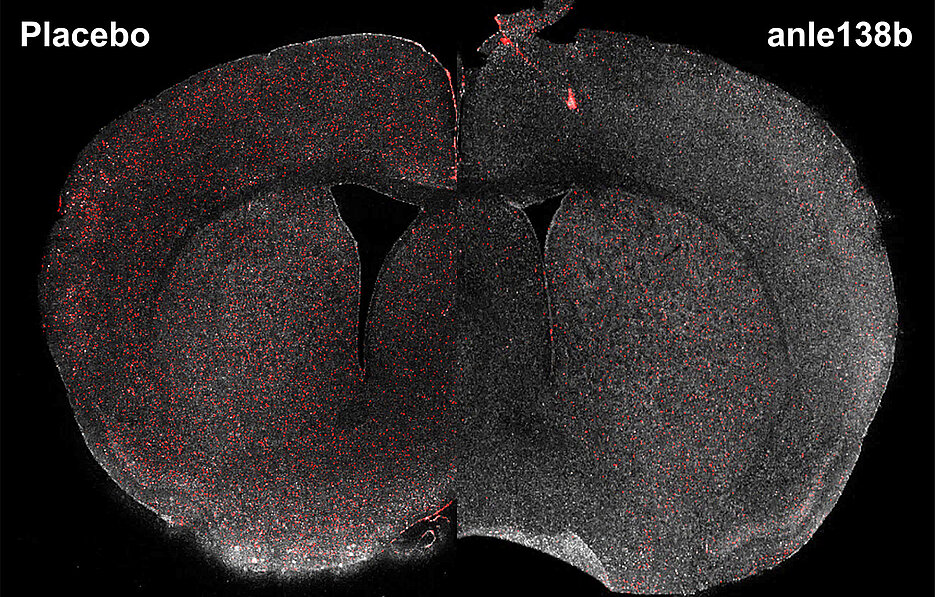
The image shows two halves of mouse brains: on the left, brain of an untreated mouse; on the right, brain of a mouse treated with the drug anle138b. It is clearly visible that the treated mouse has significantly fewer aggregates of mutant huntingtin. (Image: Miguel da Silva Padilha)
An experimental drug has been shown to alleviate symptoms of Huntington’s disease and extend lifespan in mouse models. Further studies are required to determine whether these results may also apply to humans.
The hereditary disorder Huntington’s disease has so far been considered incurable. Its clinical manifestations include impaired motor control and psychiatric symptoms. A new study offers promising insights. It shows that a specific drug candidate called anle138b can significantly reduce the toxic protein clumps in the brain that are characteristic of the disease.
Affected mice that were administered this compound retained their mobility for a longer time, their brains shrank less, and their lifespan was extended compared to untreated mice. Importantly, the compound not only alleviates symptoms but also addresses the underlying cause of the disease by preventing disease-specific harmful protein clumps from destroying nerve cells and their connections. These results were also confirmed in experiments with human stem cells from Huntington’s patients.
Promising Therapeutic Candidate
These are the key findings of a study that has now been published in the journal EMBO Molecular Medicine. The study was led by Professor Irina Dudanova, who holds the Chair of Anatomy and Cell Biology I at the University of Würzburg since April 2026, and her doctoral student Miguel da Silva Padilha. The substance was developed by the teams of Christian Griesinger, Director at the Max Planck Institute of Multidisciplinary Sciences in Göttingen, and Armin Giese from the Ludwig-Maximilians University in Munich, now at MODAG GmbH. Other participants of the study come from the Max Planck Institute of Biological Intelligence in Martinsried and the University of Cologne.
“Our data show that specifically targeting toxic protein aggregates with the compound anle138b is a promising approach for stabilizing neuronal health in the long term,” says Irina Dudanova, commenting on the study’s findings.
Cellular waste destroys nerve cells
Background: Huntington’s disease is an inherited movement disorder caused by a defect in a specific section of DNA, the gene that encodes the protein huntingtin. According to the health insurance organization AOK, approximately 10,000 people in Germany are affected by the disease. Several hundred new cases are diagnosed each year. A faulty repetition of the genetic code (known as CAG repeats) causes the huntingtin protein to take on an abnormal shape and form clumps.
The resulting protein aggregates can be thought of as a form of cellular waste that accumulates inside neurons. The protein aggregates disrupt vital cellular communication and lead to cell death, particularly in brain regions involved in for movement and cognition. An effective therapy that targets the underlying causes is not available. This is where the compound investigated anle138b comes into play, as it prevents the formation of the harmful structures.
The researchers investigated the efficacy of anle138b in two different mouse models: While one suffered from a severe, early-onset form of the disease, the other model mirrored the genetic situation in adult patients. The compound showed beneficial effects in both models.
A characteristic feature of Huntington’s disease is the loss of the protein PDE10A, which is found almost exclusively in the nerve cells that die in this disease. The amount of PDE10A decreases dramatically long before patients show the first severe symptoms. “If PDE10A levels drop, that is a clear signal that the disease is progressing. The protein is therefore well-suited as a biomarker for Huntington’s disease,” explains Miguel da Silva Padilha. If less nerve cells die, then the PDE10A levels stay high. This is exactly what the scientists observed: as a result of anle138b treatment, the concentration of PDE10A remained high in both mouse models.
Efficacy Demonstrated in Human Stem Cells
A key milestone of the study is the confirmation of these effects in human cells. “In our experiments with induced pluripotent stem cells – that is, precursor cells derived from Huntington patients’ cells – we also observed that the addition of anle138b reduced the amount of huntingtin aggregates,” says Irina Dudanova.
Since the compound targets a fundamental mechanism of protein aggregation, it is also of interest for research on other neurodegenerative diseases. Corresponding studies in mouse models have been so promising that two years ago a large clinical trial was started for the treatment of multiple system atrophy – a Parkinson’s-like disorder characterised by severe impairments of motor function, balance, and the autonomic nervous system.
Original publication
Anle138b ameliorates pathological phenotypes in mouse and cellular models of Huntington’s disease. Miguel da Silva Padilha, Seda Koyuncu, Evangeline Chabanis, Sergey Ryazanov, Andrei Leonov, David Vilchez, Rüdiger Klein, Armin Giese, Christian Griesinger and Irina Dudanova. EMBO Molecular Medicine, DOI: 10.1038/s44321-026-00459-9