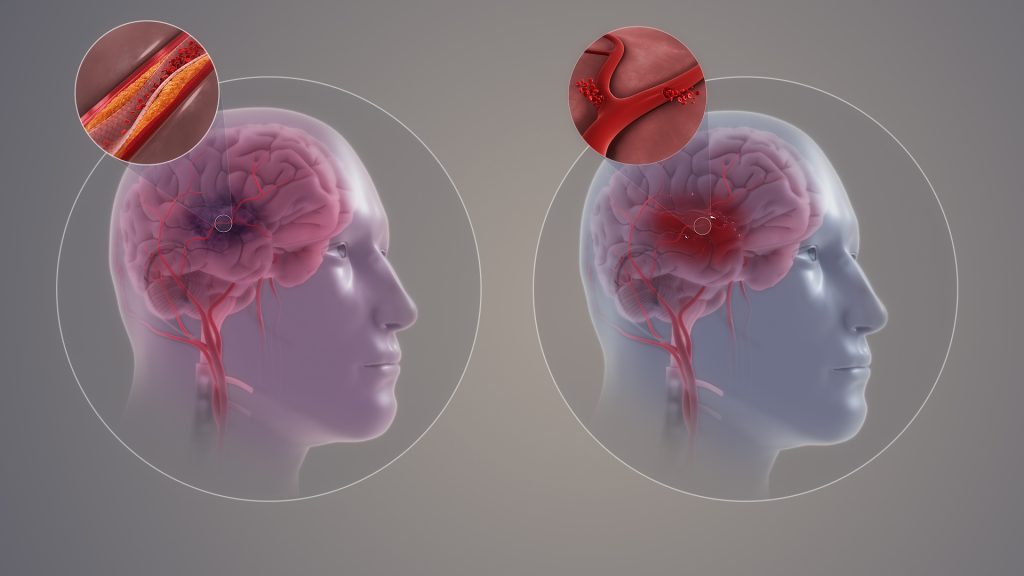
Ischaemic and haemorrhagic stroke. Credit: Scientific Animations CC4.0
A clot forms. Blood flow to the brain is blocked. Starved of oxygen, neurons begin to die.
This scenario, known as an ischaemic stroke, plays out in roughly 21 000 people worldwide each day, threatening long-term disability or even death. In recent years, clot-busting drugs and mechanical tools for removing them have revolutionised care.
Yet, even with the clot gone and the vessel clear, up to 50% of patients never recover neurologically. New research from CU Boulder and the University of Antwerp helps explain why.
The study, published in the journal PNAS, reveals in unprecedented detail how the brain’s own defence mechanisms against stroke can backfire, triggering additional micro-clots in minor vessels which can damage tissue long after the primary culprit is gone.
“We now have a way to explain why so many of these patients are not seeing neurological improvements,” said co-author Debanjan Mukherjee, an assistant professor of mechanical engineering at CU Boulder. “Our findings also point to a new potential target for therapeutics that could be extremely impactful for stroke patients.”
The mystery behind ‘no reflow’
Doctors have long known that removing a stroke-causing clot cannot always restore full blood flow to the brain. But why this phenomenon, known as “no reflow,” occurs has remained a mystery.
To unravel it, Mukherjee, who studies the physics of blood flow, teamed up with senior author Frederik Denorme, an assistant professor of biology at the University of Antwerp who studies, as he puts it, “life after the clot.”
“The dogma used to be that you just need to get rid of that blood clot and then all problems should be solved,” said Denorme. “We now know that is not the case.”
In fact, only about 1 in 10 surviving stroke patients recover completely after a stroke; 25% have minor impairments; and half have moderate to severe impairments.
To examine what, precisely, goes on in the brain after a clot is removed, the research team first turned to mice.
Using a technique called intravital microscopy, they observed in real time how blood flowed in the brain, and cells behaved, in the hour after mice suffering from stroke underwent endovascular thrombectomy. The procedure involves threading a tool through a blood vessel to pluck out an obstructive clot.
While blood quickly started flowing again post-procedure, the researchers were stunned to see that in many mice, it flowed haphazardly, in fits and starts, even reversing course at certain points.
“We saw it with our own eyes. Blood that was flowing left all of a sudden flowed right and vice versa,” said Denorme. “It was remarkable.”
A Jekyll and Hyde protein
An even closer look revealed that, as the brain tried to divert blood around the original obstruction, tiny clots formed where the haphazard channels converged.
To drill down on why those clots formed, Mukherjee’s FLOWLab recreated this scenario using computer simulations. In other research, his lab has recreated similar scenarios using a 3D artificial brain filled with fake blood.
These experiments implicated von Willebrand factor—a protein best known for stopping bleeding when we get a cut.
In its resting state, Mukherjee explained, von Willebrand factor is coiled up like a ball of string inside blood vessels, waiting for distress signals from the body that make it stretch out and start forming clots to stop bleeding.
In a brain experiencing a stroke, something else unfolds the ball.
“If there is some kind of fluid motion induced after the clot is removed, it can stretch out that ball into an extended thread that attracts platelets, forms new clots and blocks flow even after the original culprit clot is gone,” Mukherjee said.
Meanwhile, the study showed, the brain’s inflammatory response to stress interferes with safeguards that normally keep the protein’s clotting efforts in check, creating what the authors call “a perfect storm” of collateral damage.
Other experiments, looking at blood from stroke patients at the University of Washington in St. Louis, suggest a similar phenomenon happens in humans too.
“We are the first to really show in this hyperacute phase of stroke what is happening with these cells inside blood vessels,” said Denorme.
More research is necessary to determine why no reflow happens in some stroke patients but not others. But the study did find that stroke patients with higher blood levels of a pro-inflammatory compound called Interleukin 6 had more overactive von Willebrand factor and fared worse long-term.
The researchers envision a day when therapeutics targeting von Willebrand factor, or the inflammatory compounds that exacerbate its clotting capabilities, could be given to stroke patients alongside clot-busting drugs and surgery.
Notably, several such drugs already exist and are approved for use for other disorders.
“It’s early days. But now that we have a lead on what drives these micro-clots, we have a promising new avenue to explore for improving recovery,” said Denorme.
For years, hospitals have relied on the unpaid, unprotected labour of trainee-specialists to fill their rosters, but these doctors are reaching a breaking point.
Across South Africa’s public sector hospitals, a growing number of aspiring specialists are choosing to work for free — sometimes for years at a time — in pursuit of the coveted title.
Nearly every step of the 12 to 15 years of training required to specialise or sub-specialise can only happen in the public sector, but provincial health departments, bruised by more than a decade of austerity and graft, have few paid posts to offer.
As a result, hundreds of local doctors and hopeful specialists are stuck in a nightmarish competition to be the most impressive candidate. There are waiting lists for both paid and unpaid positions.
Once the paid positions are filled, doctors from poorer backgrounds who did not get placed are at a dead end, perpetuating historical injustices and undercutting transformation targets. “A new apartheid,” several doctors call it.
The volunteer specialists Spotlight interviewed knew they were lucky to have the option to specialise, but their stories suggest it’s a dubious privilege.
They endure the financial and emotional stress of specialising without pay for a number of reasons, passion, to take over the family practise, or, most commonly, to secure a ticket out of the public healthcare sector.
But to reach the predictable hours and high income of specialist private practise, they must first navigate a clinical wasteland left behind by years of budget cuts and mismanagement by provincial health departments.
The gruelling unpaid route to specialisation they describe crosses a financial abyss with toll gates guarded by sometimes powerful bullies and dotted with legal and professional traps that could cast a long shadow over the futures they’re working to build.
How to spot a clinical spectre
South Africa’s phantom doctors have many names; they’re called fellows, volunteers or supernumeraries, depending on the facility.
The role was originally created as part of a regional programme that allows foreign doctors to train in South African hospitals. These trainees’ salaries are covered by their home governments and they’re not guaranteed a work visa through the Department of Home Affairs or accreditation from the Health Professions Council of South Africa (HPCSA) once they are qualified. Only 3% of the 5 772 doctors added to the government’s payroll between January and May were not South African citizens.
In recent years, so many South African doctors have accepted such unpaid positions that some provincial health departments advertise such “opportunities” and plan their budgets accordingly.
Spotlight was unable to quantify South Africa’s unpaid trainee specialist workforce. Only two of the eight medical schools surveyed between April and July provided trainee data and requests for the HPCSA’s list of active training codes for specialists and sub-specialists went unanswered. A training code is a non-negotiable prerequisite for sitting specialist exit exams regardless of funding source or employment status of the trainee. When cross-referenced with provincial payroll data, such a list could help estimate the extent to which the health system relies on unpaid expertise.
Anecdotal evidence suggests however that the trend started around 2020 in the Western Cape, where many interviewees say they wouldn’t mind working for the state. These days, Gauteng and KwaZulu-Natal’s cohorts of unpaid citizen specialists appear to be increasing too.
Interviews with numerous local supernumeraries suggest they often endure toxic hierarchies, bullying and administrative neglect, but they prefer to suffer in silence, terrified that seniors will fail them in expensive tests.
Specialist exams are officially set by the Colleges of Medicine (CMSA), but there are usually only a few qualified specialist examiners for each academic circuit. So, in reality, trainees are often being examined by their own department heads or a close colleague.
Pride, debt and resentment
The cutthroat race to build a standout CV starts as soon as medical students graduate. It’s no longer enough to gain experience as a medical officer and then to apply for a job as a registrar a couple of years later, there simply aren’t enough paid positions for either.
Any job posting can draw hundreds of applications from equally qualified candidates.
The resulting competition is harsh, and requirements ever shifting and often unstated.
Naeema Govender*, an aspiring anaesthesiologist in Gauteng, says it took her a couple of failed interviews to figure out how to decode a government job ad.
Experience in intensive care and internal medicine, she says, are now de facto requirements for anyone applying for a job as an anaesthesia registrar (or trainee-specialist) whether the advert says so or not, and “anaesthesia experience” really means a minimum of two years’ experience.
In highly competitive fields such as urology, registrar candidates are now expected to have completed two out of three major specialist exams (usually written during training) before they even apply.
Pulling shifts for free ends up being a good way to get an edge over others.
After a string of unsuccessful interviews for paid jobs, Meera Patel*, another anaesthesiologist-in-training, says she accepted a supernumerary post at Steve Biko Academic Hospital in Tshwane out of sheer desperation.
“I used to tell anyone who would listen that I would never subject myself to it,” she says. The extra experience did help Patel to get a paid registrar job in the Western Cape, but it left her feeling deep resentment for having to compromise her principles and work without pay to crack the system.
In Johannesburg, Govender says she also reluctantly took an unpaid position to beef up her CV. She’s still conflicted about the exploitation she felt forced into.
“I don’t know if I should be proud or ashamed,” she tells Spotlight.
Paranormal planning
The unpaid trainee specialist workforce does little to eventually increase the number of qualified specialists available to the public at government hospitals, so private healthcare appears to be the overall winner.
Once doctors are qualified specialists, they often flee to the private sector or emigrate. This is perhaps illustrated by the fact that 30% of the 22 405 doctors employed by the state are under the age of 35.
The trend has ultimately turned the public sector clinical platform into a subsidised training ground for private healthcare, argues Bernhard Gaede, an associate professor and head of the Department of Family Medicine at the University of KwaZulu-Natal.
There also seems to be an element of privatisation-by stealth unfolding.
Trainees are increasingly being supported by foundations or private hospital groups to fill a growing niche for sub-specialists, says Marthinus Dicks, a member of the South African Medical Association’s (SAMA) subcommittee for registrars.
At the Groote Schuur Hospital unit where Dicks is training to be a clinical haematologist, he says he’s one of only two who are paid a government salary. He also logged unpaid hours before he was offered a paid post.
He worries that the private money is taking pressure off the government to fulfil its training role. At the same time, he knows his already high workload would be much heavier without his three fellowship-supported colleagues. “It’s just not a life I want to imagine,” he says.
Between the free labour, private funding and foreign trainees, there’s little incentive for cash-strapped health provincial health departments to create permanent posts, according to a SAMA submission to the ministerial advisory committee on health staff.
The unpaid trainee specialist workforce isn’t mentioned in the health department’s health staffing reform plan, which lapses in 2030. The document does outline a five-year plan to improve clinical supervision, boost specialist retention and to develop a broader network of clinical support for trainees by 2025.
A progress report was submitted to Health Minister Dr Aaron Motsoaledi in March but critics say the plan is unlikely to have made a difference because the government lacks the high-quality data on public and private sector personnel that would be needed for implementation.
South Africa needs a Workforce Intelligence Authority that collates and cleans workforce data to be used for planning, suggests governance expert Professor Alex van den Heever. In July, he presented a draft policy brief to SAMA which also proposes ring-fencing training funds to protect salaries from provincial mismanagement and extending training subsidies and accreditation to private health facilities.
Without structural changes to address waste and mismanagement, Van Den Heever argues, simply giving provinces more money to counteract austerity will make no difference.
In the meantime, the government now deliberately budgets for clinical gaps to be filled by volunteers, says Sharon Twum-Boafo, head of SAMA’s registrar subcommittee.
“It’s ludicrous,” she says, “without the volunteers, many hospitals would simply not have enough doctors to cover 24-hour rosters.”
A legal void
Unpaid trainee specialists carry a heavy workload with few administrative and legal protections.
Since they lack a payroll number, they’re locked out of the blanket indemnity for healthcare workers employed by the state. Instead, government compels them to buy expensive private malpractice cover just to log hours for free in public hospitals.
Once they’re in the facility, Spotlight is told that it is possible they might be pressured to perform unsupervised, high-risk procedures far beyond their insured scope.
Speaking to Spotlight, several of these phantom physicians described their fear of being held personally liable for costs in potential lawsuits. Some are privately insured for millions of rands, which means that they would make for more lucrative targets than the government, where mediation often leads to lower payouts.
Ruan Vlok, head of SAMA’s employment law unit, agrees that unpaid specialists might become litigation lightning rods.
“It could become an easy making money machine for attorneys,” he says.
There are long term risks too.
Private insurance premiums are tied to clinical outcomes, so a pattern of bad events could drive up a doctor’s insurance premiums, or even render them uninsurable, the ultimate career-ending risk for a specialist.
Unfinished business
Some unpaid trainees face another tough reality.
They are often summoned to fill critical service gaps left by paid, full-time consultants who have vanished to moonlight in the private sector.
Dual practise is allowed within certain parameters, but enforcement of the rules is patchy across provinces and facilities. Money is one of the factors driving moonlighting among the state’s contracted specialists, whose salaries have not kept pace with inflation. A SAMA report estimates that in 2022, doctors were earning about as much as they were in 2013.
In order to save money, provincial health departments have limited the number of paid overtime hours that consultants can log. In this case, says Vlok, doctors are fully within their rights to refuse to work for free.
Ironically, this is when those who choose to work for free become extra useful in hospitals.
Yet should the phantom doctors themselves attempt to pull a paid shift to survive, they could be threatened with disciplinary action, heavy fines, or the immediate deactivation of their training numbers.
Under HPCSA and university rules, trainee registrars are legally barred from doing private paid work. Worse still, when a crisis occurs, these supernumeraries find themselves locked in dual contracts with universities and hospitals, with little protection from either.
An uneasy peace
The rights of the health system’s unpaid workforce have never been challenged in court, Vlok says, in part because doctors fear that any litigation would lead to them being targeted or failed in their exit exams.
Because supernumeraries aren’t officially employees, they’re also excluded from recourse through the country’s labour dispute resolution body, the Commission for Conciliation, Mediation and Arbitration and the Bargaining Council, leaving them with no mechanism for redress.
Local supernumeraries technically sign away they rights by agreeing to work without pay, but Vlok argues the state is taking advantage of a vulnerable group because the public sector is the only route to specialisation.
The regulations that allow foreign trainees to work in South Africa do not cater to or even make provision for South African citizens, Vlok says. In his view, the Labour Relations Act and the Basic Conditions of Employment Act should take legal precedence, under which he believes unpaid trainees clearly meet the criteria of an employee.
“I don’t use this word lightly,” he says, “this is abuse.”
It’s unclear how much longer the strained peace will hold.
One exhausted trainee specialist told Spotlight: “We have to fix the medical system, it’s broken. Who is going to look after us when we’re old?”
*Spotlight granted the doctors quoted in this article anonymity because of the risk of reprisals from provincial health departments and the hospitals where they are working.
Norepinephrine-induced RHOB is a key regulator of circadian intraocular pressure rhythm
Photo by Cottonbro on Pexels
Glaucoma is an eye disease that causes progressive damage to the optic nerve, leading to loss of sight. One major risk factor is an increase in intraocular pressure (IOP), or the pressure inside the eye. This pressure fluctuates throughout the day and is known to rise at night. However, the detailed molecular mechanisms on why this happens have not been fully understood.
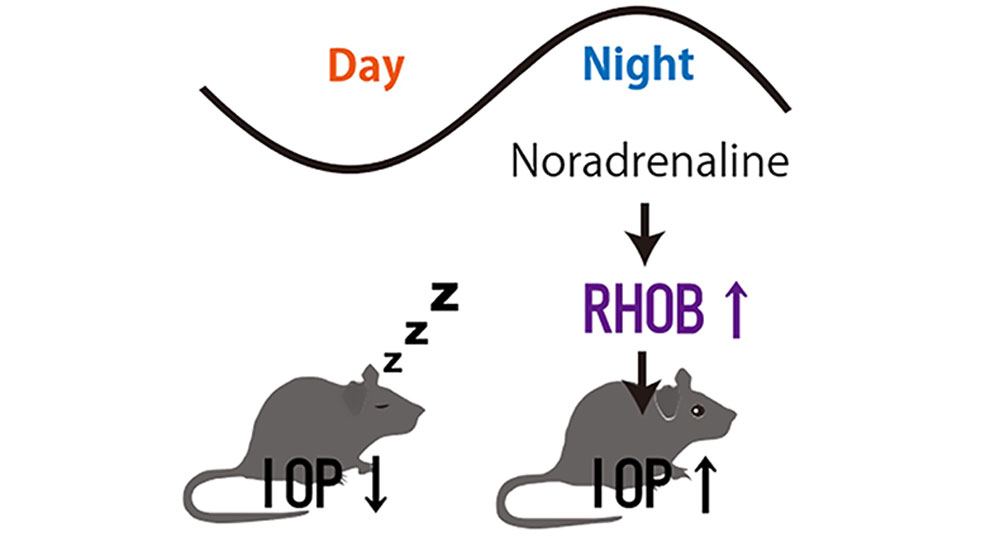
Using human cells and mouse models, researchers at Kyushu University have found a new molecular pathway that explains why IOP increases at night. The neurotransmitter norepinephrine (also known as noradrenaline) increases the levels of a molecule called RHOB in the eye’s drainage system called the trabecular meshwork. This weakens the eye’s ‘cleaning function’, resulting in increased IOP. The team expects these findings will lead to the development of new approaches for the early detection of glaucoma, as well as new treatments for controlling IOP by targeting RHOB. Their results were published in the journal Communications Biology.
IOP is maintained by balancing fluid production and fluid drainage within the eye. As with many bodily functions, it is regulated by the circadian clock. In the case of the eye, IOP increases at night. Elevated IOP is a key factor in identifying the onset of glaucoma, but because pressure tends to be lower during the day, regular checkups can potentially miss these warning signs.
Because the circadian clock regulates IOP, disruptions to a person’s internal clock can lead to increased risk of glaucoma. This is why there is a higher risk of glaucoma in the elderly whose body clocks are desynchronising.
Fig.1. Graphical abstract of the research results Using mice, researchers found that norepinephrine released from the sympathetic nervous system increases RHOB levels and suppresses the eye’s drainage system, thereby contributing to the rise in intraocular pressure at night.
“Previous studies have found that signals from the sympathetic nervous system contribute to the nighttime rise in eye pressure, but that underlying process was not well understood,” explains first author of the study, Associate Professor Keisuke Ikegami from Kyushu University’s Faculty of Agriculture. “Most of the fluid in the eye is drained through a tissue called the trabecular meshwork. These cells also help keep the drainage pathway clear by taking up and removing small particles and waste. We also know that norepinephrine is a chemical that is released by the sympathetic nervous system. We decided to investigate how norepinephrine can change the function of fluid drainage in the eye and whether it can explain why eye pressure increases at night.”
The team began by exposing human and mouse trabecular meshwork cells to norepinephrine and compared changes in their genetic activity. They identified 18 genes that increased in both systems and focused on one called RHOB. RHOB is a molecule that is involved in controlling cell shape, movement, and intracellular transport.
Norepinephrine increased RHOB in the trabecular meshwork cells, and when RHOB was removed from human cells, their ability to take up and clear particles increased. In contrast, increasing RHOB reduced the cleaning activity and fluid movement in the eye. Testing in mice, the team used eye drops that inhibit a chemical pathway that controls RHOB activity, the RHO-ROCK pathway. The results showed that the eye drops reduced the nighttime rise in eye pressure.
While these results are not intended for immediate clinical application, they have identified the RHOB pathway as a new potential target for suppressing nocturnal increase in IOP. While ROCK inhibitors are used in glaucoma treatments today, further verification is needed to determine the most effective time of day for administration and how they alter IOP rhythm.
“Loss of vision from glaucoma occurs slowly, so early detection is crucial. We hope our work will lead to new treatment regimens and strategies for administering medicines to achieve the greatest effect,” concludes Ikegami.
A human neutrophil interacting with Klebsiella pneumoniae (pink), a multidrug–resistant bacterium that causes severe hospital infections. Credit: National Institute of Allergy and Infectious Diseases, National Institutes of Health
What if part of the answer to antibiotic resistance has been growing in plants, fungi and microorganisms all along? Scientists say hundreds of thousands of natural compounds remain largely unexplored as researchers race to protect some of the world’s most important antibiotics.
An international team of scientists led by the University of Pretoria (UP) is calling for a renewed search of the natural world for molecules that could disarm antibiotic-resistant bacteria and potentially make existing medicines effective again.
Researchers from UP, the University of Oxford in the UK, the National University of Lesotho, Kwame Nkrumah University of Science and Technology in Ghana, and the University of North Texas Health Science Center in the US collaborated on a major review of beta-lactam (β-lactam) antibiotics and the bacterial enzymes that destroy them.
Published in Natural Product Reports, the paper highlights a largely untapped opportunity. More than 400 000 naturally occurring compounds have been catalogued, yet only a small fraction has been investigated for their ability to inhibit β-lactamases, enzymes that can render important antibiotics ineffective.
“Antibiotic resistance is often presented as a search for the next completely new antibiotic, but there is another important possibility: protecting the medicines we already have,” said Professor Vinesh Maharaj, Director of UP’s Biodiscovery Centre, Acting Dean of the Faculty of Natural and Agricultural Sciences, and co-author of the paper. “Nature has already provided some of the compounds that have transformed infectious-disease treatment. We should not underestimate what remains to be discovered in the enormous chemical diversity of plants and microorganisms.”
The stakes are high. β-lactam antibiotics, including penicillins, cephalosporins and carbapenems, account for an estimated 60% to 65% of the antibiotic market. But bacteria have evolved increasingly sophisticated defences against them.
Among the most important are β-lactamases. These enzymes effectively break open the part of the antibiotic that allows it to work. More than 2 000 unique β-lactamases have been identified, including enzymes capable of undermining some of medicine’s last-line antibiotics.
The review cites estimates that bacterial antimicrobial resistance (AMR) directly caused approximately 1.14 million deaths in 2021. South Asia and sub-Saharan Africa together accounted for around 47% of global fatalities associated with bacterial AMR, while AMR is projected to cause about 8.2 million deaths annually by 2050 if current trends continue.
For co-author Dr Phanankosi Moyo, a biochemist and natural-product drug discovery scientist in UP’s Department of Plant and Soil Sciences, this makes the search particularly important for Africa.
“Sub-Saharan Africa carries a disproportionate burden of antimicrobial resistance, so this is not an abstract future problem for our region,” Dr Moyo said. “We need new antibiotics, but we also need smarter ways of extending the life of the antibiotics we have. Natural products give us an extraordinary starting library of chemical structures, and modern science now gives us far better tools to find the useful ones.”
Making existing antibiotics work again
There is already a powerful precedent.
Clavulanic acid, one of medicine’s best-known resistance blockers, is itself a natural product. Originally isolated from the bacterium Streptomyces clavuligerus, it has little antibacterial activity of its own. Instead, it blocks certain β-lactamases and protects an antibiotic from destruction.
Combined with amoxicillin, it became the widely used antibiotic treatment amoxicillin-clavulanic acid, a combination commonly marketed under the brand name Augmentin®. Its success demonstrated an important principle: scientists do not always have to replace an antibiotic. Sometimes they can disable the bacteria’s defence and allow the existing drug to work again.
The international team reviewed how scientists are trying to apply that principle to newer and more difficult forms of resistance.
Among the toughest targets are metallo-β-lactamases such as NDM, VIM and IMP. These enzymes use zinc to break down antibiotics and are resistant to the inhibitors used against many other β-lactamases.
Yet the natural world is producing intriguing leads. In one study examined in the review, a natural-product-derived compound called CS-23 inhibited NDM-1 and reduced the amount of the antibiotic meropenem needed to stop an NDM-1-producing strain of E. coli by 32-fold, restoring its effectiveness in the experimental system.
The review also highlights carnosic acid as the first reported natural product to inhibit NDM-1 through an allosteric mechanism. Instead of targeting the enzyme where it usually performs its chemical reaction, the compound acts elsewhere on it, offering researchers another possible route for disabling bacterial resistance.
Searching nature with new tools
The researchers argue that scientists now need to widen the search beyond familiar sources. Potential hunting grounds include Streptomyces and other microorganisms, fungi, plants, marine organisms and even lichens.
They can also search far more efficiently than previous generations. Modern approaches including metabolomics, structural biology, medicinal chemistry, computational screening, biocatalysis and synthetic biology can help identify promising molecules, understand how they work and modify them into better drug candidates.
“The next important β-lactamase inhibitor may not arrive as a ready-made medicine,” Prof Maharaj said. “Nature may give us the starting structure, and then chemistry, microbiology, structural biology and computational science can help us turn that starting point into something clinically useful.”
The international collaboration brings together expertise in natural-product chemistry, microbiology, phytomedicine, biochemistry and antibiotic-resistance research across Africa, the UK and the US.
There are still significant hurdles. A compound that works in a laboratory may struggle to enter bacterial cells, be unstable, lack sufficient selectivity or prove difficult to manufacture at scale. The researchers say promising natural compounds therefore need to be developed alongside medicinal chemistry and other modern drug-discovery approaches.
Finding broad-spectrum inhibitors capable of blocking several classes of β-lactamases at once is a particularly ambitious long-term goal.
“We have been in this race with bacteria since the first antibiotics were introduced,” Dr Moyo said. “The difference today is that we understand resistance at a molecular level and have technologies earlier generations could not have imagined.”
Much of the chemical diversity of plants and microorganisms has yet to be explored. This research shows that nature not only offers a simple cure for antibiotic resistance, but that it may still contain valuable starting points for protecting some of the medicines on which modern healthcare depends.
Harnessing artificial intelligence and metabolomics for discovery
Researchers at UP’s Biodiscovery Centre are working with collaborators to combine artificial intelligence, metabolomics and experimental screening to systematically sift through the centre’s in-house repository of approximately 11 000 plant samples in search of novel β-lactamase inhibitors.
By integrating computational prioritisation with chemical profiling and biological testing, the team aims to narrow this vast natural-product resource to the most promising candidates and accelerate the discovery of compounds that can overcome bacterial resistance mechanisms and help restore the effectiveness of existing β-lactam antibiotics.
Can nature help outsmart antibiotic resistance?
400 000 naturally occurring compounds have been catalogued
60% to 65% of the antibiotic market
2 000 unique β-lactamases
1.14 million deaths in 2021 due to AMR
47% of global fatalities associated with bacterial AMR occur in South Asia and sub-Saharan Africa
8.2 million deaths annually by 2050 if current trends continue
“South Africa’s diabetes epidemic will not be solved by the next pharmaceutical breakthrough. It will be solved by fundamentally reshaping how healthcare is organised and paid for”
– Lungile Kasapato, CEO of PPO Serve.
Diabetes is now South Africa’s leading killer, accounting for more deaths than HIV and TB combined. Global headlines celebrate GLP-1 receptor agonists (RAs) as a breakthrough for metabolic disease and obesity. But this narrative ignores a fundamental reality: for most South Africans, these drugs are inaccessible. Priced between R3 000 and R6 000 per month, they remain unaffordable. Even as cheaper generics become widely available, they won’t solve the problem alone. Without the clinical infrastructure to support treatment, and the social support to access healthy food, access means little.
“We’re pushing an incomplete solution,” says Lungile Kasapato, CEO of PPO Serve, a healthcare management company implementing value-based care in South Africa for over a decade. “GLP-1 RAs offer real benefits – sustained weight loss, reduced inflammation, lower cardiac risk, protection against comorbidities. For someone facing diabetes, these outcomes matter. But we’re acting as if a drug alone can solve a system failure. It can’t. A medication prescribed into a broken healthcare system is just a product. It’s not a national health strategy.”
The scale of the crisis is staggering. Forty percent of low-income South Africans’ diet consists of ultra-processed foods. Across the broader population, nearly 30% have undiagnosed hypertension. Most discover their condition only after complications like strokes or heart attacks emerge. By the time they reach treatment, the system can only manage disease with medications, never addressing what caused it in the first place. When a GLP-1 RA is prescribed in this fractured environment, initial sustained progress stalls because the infrastructure to maintain results was never built.
“This fragmentation isn’t accidental,” says Kasapato. “It’s structural. Fee-for-service rewards volume, not health. A provider, working alone, gets paid for each visit, test, or procedure – regardless of whether the patient’s health improves. With no teamwork or incentive to coordinate, follow-ups become inconsistent and inadequate. Every encounter is transactional, continuity is impossible, and no one is accountable for the patient actually getting better. As long as we pay for activity instead of results, we won’t fix the system or build the infrastructure these medications need.”
PPO Serve’s The Value Care Team, implemented in partnership with the Government Employees Medical Scheme (GEMS), demonstrates what a different payment structure creates. GPs, nurses, dietitians, and care coordinators work together, sharing accountability for patient outcomes rather than billable procedures. Coordination becomes the norm, and prevention becomes profitable, meaning early intervention can stop complications before they escalate. Medication works better because the system supports it, including addressing the social issues that drive obesity in the first place. This is what reshaping incentives creates.
“The real choice isn’t just about drug access,” says Kasapato. “It’s about payment models, and the system it creates. Cheaper GLP-1 RAs could be available tomorrow – generics are already arriving. But availability achieves little without the organisation to deploy them. The conversation must progress from funding medications to funding the teams and systems that make them work. South Africa’s diabetes epidemic will not be solved by the next pharmaceutical breakthrough. It will be solved by fundamentally reshaping how healthcare is organised and paid for.”