Navigating patient confidentiality, social media and professional boundaries
Photo by National Cancer Institute on Unsplash
Date: Thursday 13th August 2026
Time: 18:00 – 19:45
Earn 2 ethics CPD points
During this webinar, the HPCSA Booklet 5: Confidentiality – Protecting and Providing Information and HPCSA Booklet 16: Ethical Guidelines on social media will be explored from a South African legal and ethical practice perspective. The webinar will offer insights into the complexities of digital communication, including WhatsApp and social media use, consent, online reviews and cybersecurity, while focusing on protecting patient confidentiality and public trust across all forms of communication.
The audience will have an opportunity to listen and engage with clinical, legal and medicolegal subject matter experts. During the webinar, a range of learning opportunities will be offered including short lectures, interactive case studies, audience polling and Q&A.
This webinar will focus on healthcare practitioners engaging in digital communication with patients and colleagues. Administrative staff working in these practices are welcome to join the discussion.
Joining us as panellists will be Emma Sadleir, South Africa’s leading expert on social media law, and Dr Isabel do Vale, a practising medical practitioner and President-elect of APRASSA. Attendance will qualify for 2 Ethics CPD points and EthiQal Recognition Programme points.
Taking antiretroviral therapy as recommended has expanded the lifespan of people with HIV. (Photo: Unsplash)
By Elna Schütz for Spotlight
South Africa’s first set of clinical guidelines focused on older people living with HIV has been released. They offer practical steps in a resource-strained health system to take care of an ageing patient population.
The guidelines are particularly important in South Africa since the country has an ageing population of people living with HIV. Many of these people would only have started treatment relatively long after they contracted the virus, largely because of the government’s reluctance to make antiretroviral treatment available in the early 2000s. The sooner people start treatment after infection, the better their long-term prognosis tends to be.
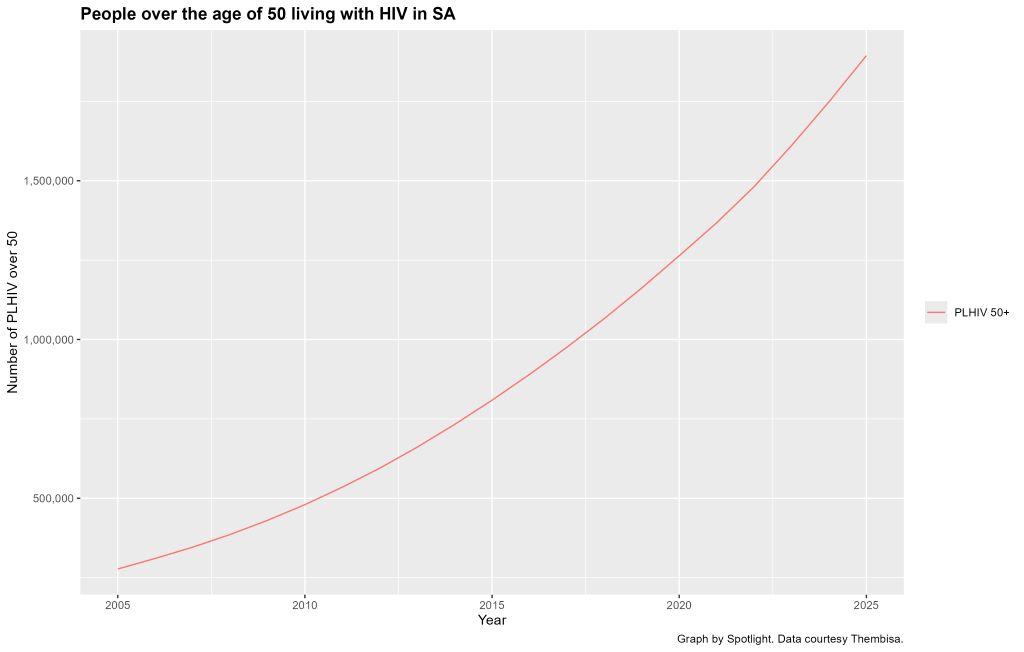
In 2025, there were around 1.9 million people over the age of 50 living with HIV in South Africa, according to Thembisa, the leading mathematical model of HIV in the country. This is 24% of the estimated 7.9 million HIV positive people in the country. The 1.9 million figure is more than double the 800 000 people over 50 who were living with HIV in 2015. This number is projected to rise to over 3.6 million by 2035.
Most people over the age of 50 who are living with HIV contracted the virus before they turned 50. The increase depicted in this graph is thus mainly a function of people who are already living with HIV ageing into the over 50 age group. Some people over 50 do become newly infected with HIV, but those numbers are comparatively small.
The changing make-up of the population of people living with HIV, coupled with the fact that antiretroviral therapy has been crucial for clearing and suppressing HIV in the body was a core driver for developing the new guidelines, Dr Camilla Wattrus, the Clinical Director at the Southern African HIV Clinicians Society, tells Spotlight. She is one of the guidelines’ authors.
“Antiretroviral therapy has expanded the lifespan of people with HIV, but we must now also consider how to preserve the ‘health span’ in this group,” says Wattrus.
She explains that this means increasing the years that are spent in good health with a good quality of life.
Another co-author of the guidelines, Nomathemba Chandiwana, Chief Scientific Officer at the Desmond Tutu Health Foundation, points out that after antiretroviral treatment was introduced in South Africa, the life expectancy of people living with HIV increased dramatically. “We didn’t think people would live as long as they have now, so that’s been a big success,” she says. “But now we have new problems.”
Chandiwana says that older people living with HIV have around 16 fewer years in good health than people without HIV. The 16-year figure (technically 15.3) seems to originate in a study published in 2020 in the JAMA medical journal that compared the health and lifespans of insured people with and without HIV in the United States. For people with HIV who started antiretroviral treatment when they were still healthy (CD4 countes above 500), the difference in healthy years was 9.5 years.
Another broad concern is that clinicians may be focused on HIV-related issues like viral suppression for these patients and not be sufficiently aware of other ageing-related developments. People with HIV get the same ageing related diseases as other people, but there is evidence that they tend to get them earlier.
We know from Thembisa model outputs that on average, people living with HIV today are slightly more likely to die of non-HIV-related causes than AIDS. According to the model, there were 53 000 HIV-related deaths in the year from mid-2024 to mid-2025. This is a thousand fewer than the 54 000 people with HIV who died of non-HIV-related causes over the same period.
What is in the new guidelines
The new guidance states that it is designed to:
Raise healthcare workers’ awareness of the needs and concerns of the population of people living with HIV who are 50 years and older.
Inform healthcare workers about an ageing-related approach to older people with HIV.
Highlight good practices to help healthcare workers provide optimal care for this population.
Provide resources about ageing with HIV for healthcare workers, their patients and their patients’ carers.
Guide clinical settings in implementing geriatric care into HIV clinical practice.
The clinical advice in the guidelines follow the World Health Organisation’s (WHO) principles for Integrated Care for Older People (ICOPE), which emphasises prevention prior to frailty, person-centred assessment, and the involvement of healthcare workers other than doctors.
The guidelines cover a thorough list of challenges faced by older people with HIV that need to be monitored and addressed. For instance, physiologically, there is a risk of comorbid conditions like hypertension and cancer, and an increased risk of complications from polypharmacy, when more than five medicines are used concurrently. Social and behavioural challenges include that older people are perceived to be less likely to get infected with HIV and therefore have lower rates of HIV testing and use of HIV prevention tools.
This population is also at risk of being disregarded or not fully cared for in the healthcare system. The guidelines give examples such as restricted mobility access to health facilities and healthcare workers being unaware of the HIV-related risks in older people. “The health system needs to be equipped to manage their needs in a holistic and integrated way, and that is what this guideline aims to support,” says Wattrus.
The guidelines include a comprehensive schedule of what need to be assessed and screened and at what regularity. There is a particular focus on geriatric syndromes like frailty, cognitive impairment, and managing comorbid non-communicable diseases.
“The idea is that every visit with an older patient involves more than just routine HIV care and that it becomes a conversation about how that person is functioning and living,” says Wattrus.
The guidelines also emphasise how care can be offered by a variety of healthcare providers, depending on the resources available. “Recommendations enable task-shifting, which is a practical necessity in a country where specialists such as geriatricians are scarce, and the bulk of HIV routine care is delivered by healthcare workers at primary care level,” says Wattrus.
Even though the guidelines focus on overall health in older people living with HIV, managing HIV is, of course, a part of this. It cautions that “CD4 recovery may be slower and blunter compared to younger individuals,” but viral suppression is still the primary treatment goal.
The crucial factor here is to choose the correct antiretroviral treatment regimen for the patient. For instance, popular tenofovir disoproxil fumarate (TDF) combinations should be avoided in people at risk of or with osteoporosis, bone fractures, or renal impairment. Regimens with tenofovir-alafenamide or abacavir may be better, though the latter is contraindicated if there is high cardiovascular risk.
The new local guidelines hit largely the same notes as a major commission on HIV and ageing that was published by the journal Lancet HIV to coincide with the AIDS 2026 conference taking place in Rio de Janeiro, Brazil.
“Supporting healthy ageing requires more than sustained viral suppression; it requires care that is informed by what matters most to the individual, with attention to maintaining physical and mental function, minimising healthcare complexity, and addressing multimorbidity, polypharmacy, stigma, and social determinants of health,” the commission found.
Simple systems, big change
Apart from giving healthcare workers a framework for giving better care to older people living with HIV, the guidelines advise how this larger change in the health system can happen for this growing older population. “What is great is that most of the recommendations are not complicated or expensive,” says Wattrus.
She explains that the sensitisation and training of healthcare workers, especially in primary care, is a crucial first step. If they know how to, they can easily incorporate brief screenings, such as those for frailty, into normal appointments. For example, as Chandiwana points out, several geriatric tests need only a chair for the patient to sit down on and get up from. She says it is easier to do these things for people with HIV during their existing appointments, compared to people without HIV who may not be visiting health facilities for regular screenings.
Another relatively easy adaptation is to simply make healthcare services easier to access. “This can be done by having appointments aligned across conditions, fewer unnecessary referrals and genuine attention to broader aspects of their health such as poverty, isolation and limited mobility,” she says.
Chandiwana also suggests that one could consider rolling out geriatric care health cards to track screening, as is often done with children. She would also like to see more community buy-in, in a similar way as there was during the earlier part of the HIV treatment roll-out. For instance, she suggests community health clubs and increased health literacy efforts around ageing.
Avoiding problematic polypharmacy, says Wattrus, is another low-cost, high-yield strategy that does not require specialist input. “Routinely reviewing medication lists, identifying unnecessary drugs, and checking for interactions is straightforward and can make a significant difference,” she says.
More specialists would of course help. Chandiwana says there are fewer than 50 geriatric specialists in the country. She says there is also a much wider need for geriatric-specific training across the healthcare system, including for primary care nurses and community healthcare workers.
Lastly, Chandiwana says the guidelines offer a much-needed look into the unique challenges and needs of older people with HIV as an opportunity for the government to act to prevent a future problem. “So that investment in having scalable, simple systems for people who are ageing, both with HIV and without, I think, would be fantastic, but that needs money,” she says.
Mayo Clinic field trial shows hospitals can reduce emergency department overcrowding using a simple patient-routing checklist based on information already collected at triage.
Photo by Camilo Jimenez on Unsplash
Emergency departments face a common challenge: how to reduce long wait times without adding more beds, hiring more staff or expanding facilities. New research suggests one answer may be hiding in plain sight – making better decisions about where patients receive care.
A new study published in the INFORMS journal Management Science, entitled, “Vertical Patient Streaming in Emergency Departments,” found that a simple, data-driven triage protocol reduced emergency department length of stay by 11 minutes without compromising patient safety or requiring additional resources.
Researchers from Harvard University, Oxford University and Mayo Clinic developed an evidence-based protocol to identify patients who could safely receive care in a seated treatment area – known as a vertical processing pathway – instead of occupying a traditional emergency department bed.
Although many emergency departments already have these areas, decisions about who should be treated there are often made on an ad hoc basis. The researchers sought to replace that variability with a standardised, easy-to-use protocol.
The team first analysed nearly 50 000 emergency department visits at Mayo Clinic Arizona to develop a machine learning model that predicts, using only information collected during triage, whether a patient will ultimately require an emergency department bed. They then combined those predictions with mathematical models of patient flow to determine the most efficient routing strategy before translating the results into a straightforward decision tree that clinicians could implement without new software or changes to hospital IT systems.
To evaluate the approach in practice, the researchers conducted a 13-week prospective field trial involving 11 015 patients at Mayo Clinic Arizona’s new emergency department.
The results demonstrated measurable improvements in efficiency:
11-minute (4.2%) reduction in total emergency department length of stay.
Eight-minute (4.5%) reduction in time from arrival to clinical disposition.
No increase in 72-hour return visits, indicating patient care quality was maintained.
“Our goal wasn’t to add technology to the emergency department,” said Arshya Feizi, lead author of the study and a researcher at Harvard University. “It was to give clinicians a practical, evidence-based way to decide which patients can safely receive care without occupying one of the department’s limited beds.”
The protocol relies only on information hospitals already collect during triage, including a patient’s Emergency Severity Index score, presenting complaint and whether the department is operating over capacity. Because it requires no additional staff, equipment or software integration, the researchers say it could be implemented quickly in many emergency departments.
“Our findings show that improving patient flow doesn’t always require expanding capacity,” said Soroush Saghafian, co-author of the study and professor at Harvard University. “Sometimes the greatest opportunity comes from using existing resources more intelligently.”
The researchers estimate that a medium-sized emergency department treating approximately 40 000 patients annually could recover nearly 6800 bed-hours each year – enough capacity to care for roughly 2000 additional patients while potentially generating approximately $3 million in additional reimbursement, all without expanding facilities or increasing staffing.
Emergency department overcrowding has challenged hospitals for decades, contributing to treatment delays, patient dissatisfaction, clinician burnout and higher healthcare costs. The researchers believe their findings demonstrate that operational improvements grounded in analytics and implemented through simple clinical protocols can produce meaningful gains without sacrificing quality of care.
Cerebrospinal fluid (CSF) protects the central nervous system (CNS). Credit: Scientific Animations Wiki CC-BY 4.0
Deep inside your brain, a clear liquid is constantly on the move. Cerebrospinal fluid (CSF) cushions the brain, delivers nutrients, removes waste and keeps pressure stable. Think of it as an internal tide, circulating through cavities in the brain and around the spinal cord to keep this delicate organ in balance. When that flow is disrupted, the consequences can be serious.
For decades, doctors have relied mainly on static brain scans to guide treatment. But structure tells only part of the story. Researchers at the University of Pretoria (UP) are now focusing on something more dynamic: how fluid actually moves.
Two of the most common neurosurgical conditions worldwide – brain tumours and hydrocephalus (a dangerous build-up of fluid in the brain) – are closely tied to disturbed CSF circulation. Tumours can block or distort the pathways through which fluid moves. Hydrocephalus represents a more obvious breakdown, where fluid accumulates and pressure rises. In both cases, symptoms such as headaches, problems with vision and neurological decline are not simply caused by the presence of disease, but by changes in pressure and pulsating flow inside the skull.
Professor Llewellyn Padayachy, Head of the Department of Neurosurgery at BTC@UP explains: “The optic nerve, which connects the eye to the brain, is surrounded by the same protective layers as the brain itself. CSF flows along this nerve, meaning changes in brain pressure can subtly affect structures at the back of the eye. By using advanced, non-invasive eye imaging, researchers can detect signs of altered fluid flow and pressure without inserting monitors into the brain.”
This matters enormously for children with hydrocephalus and patients with brain tumours who require long-term monitoring. It offers a safer, repeatable way to track disease progression and treatment response. In low- and middle-income countries, where hydrocephalus is common but access to advanced imaging and neurosurgical infrastructure may be limited, such non-invasive tools could reduce reliance on costly technology while still delivering meaningful clinical insight.
The research also helps refine innovation. Modern shunts and endoscopic procedures increasingly aim to restore more natural fluid circulation rather than simply drain excess fluid. Objective eye-based markers provide measurable ways to evaluate whether these technologies truly improve flow.
While the link between the eye and brain pressure has long been recognised, what is new is the integration of advanced imaging, physiological modelling and continuous monitoring. This approach treats CSF flow as a living system, and shifts care from reacting to late damage towards detecting subtle change earlier.
Why this research matters
This work reframes brain disease through a simple but powerful idea: health depends on flow. By learning to read the movements of brain fluid, even through the eye, researchers are paving the way for safer monitoring, smarter surgery and more equitable neurological care worldwide.
Fast fact
The most common surgical treatment for hydrocephalus is the surgical placement of a shunt, which has one of the highest failure rates of any medical device on the market.
Adding oral antihistamines to existing eczema treatments is unlikely to lead to clinically important reductions in eczema and itch severity, and may not reduce sleep disturbance or flare-ups, finds a review of the latest trial evidence published by The BMJ today.
Some antihistamines may also increase side effects such as drowsiness and the risk of patients stopping treatment.
The researchers say this review addresses longstanding uncertainty surrounding the role of antihistamines in treating eczema, and the results do not support their use in routine eczema management.
Atopic dermatitis, commonly known as eczema, is a chronic condition caused by an overactive immune system that leads to dry, inflamed, and intensely itchy skin. It also often impairs quality of life, mental health, and social relationships.
Oral antihistamines are one of the most commonly used drugs for managing eczema, with an estimated one in five UK patients and nearly half of patients in the US using them. Yet despite their widespread use, evidence-based assessments of their benefits and harms in treating eczema remain inconclusive.
To address this uncertainty, researchers reviewed the results of 47 randomised controlled trials involving 6,230 children and adults (average age 20 years; 52% female) with mainly moderate to severe eczema.
The trials compared the effects of adding oral H1 antihistamines, H2 blockers, mast cell stabilizers, or their combinations to placebo (with or without background moisturisers or steroid creams) on eczema severity, itch severity, sleep disturbance, flare-ups and quality of life, as well as harms such as sedation and drowsiness.
The trials were of varying quality, but the researchers were able to assess their risk of bias and certainty of evidence using established tools.
The results show that compared with placebo, H1 antihistamines likely result in a small but clinically unimportant reduction in eczema severity and itch severity and may not reduce sleep disturbance or flare-ups.
First generation (sedating) antihistamines also probably increase cognitive impairment such as sedation and drowsiness, and may increase the risk of stopping treatment due to side effects.
The researchers acknowledge several limitations related to the nature of the included trials, but say these were addressed using standardised and systematic approaches.
As such, they conclude: “This systematic review and network meta-analysis addresses the longstanding uncertainty surrounding the role of antihistamines in treating atopic dermatitis, showing they likely do not meaningfully improve patient important outcomes while probably increasing harms.”
They add: “Our findings do not support their use in routine atopic dermatitis management. We have provided a foundation for an evidence based change in practice, supporting the development of updated atopic dermatitis guidelines that prioritise efficacy, safety, and patient centred care.”