Month: January 2026

Bonitas Medical Fund Revitalises Future of Healthcare in SA with New Strategic Partners

Photo by Sora Shimazaki

The healthcare industry has evolved significantly in the past decade with innovation, improved servicing and consolidation of medical schemes emerging. Bonitas Medical Fund has taken a strategic step in responding to the needs of its members and the Health Citizens of South Africa, by appointing Momentum Health as its new administrator from 1 June 2026.

With a considerable history spanning over 4 decades, Bonitas Medical Fund has emerged as one of the leaders in the medical scheme market. Covering over 750 000 lives, the Scheme is known as the medical aid for South Africa with a range of options – strategically designed to meet the needs of South Africans from all walks of life.

The change in administration is in line with the guidelines of the Health Market Inquiry and the industry Regulator, the Council for Medical Schemes (CMS). In 2024, the CMS stated that, “one of the main issues driving market stagnation is the prevalence of ‘evergreen’ contracts”. This alludes to long-term agreements between medical schemes and suppliers spanning decades without being subject to regular competitive procurement processes.

Principal Officer, Lee Callakoppen, explains, “One of our key strategic objectives is to ensure we create value for our members and key stakeholders. This can take the form of benefit optimisation, favourable tariff negotiations, amalgamations to obtain critical mass or optimised service. The healthcare industry has evolved considerably over the past decade, and it was critical for the Scheme to evolve in line with this. Over the past 48 months, the Board have extensively debated the steps needed to be taken to place Bonitas in a competitive position and ensure that it remains sustainable in the best interest of our members. In doing so we have continuously evaluated the value provided by our service providers with consideration to our strategic objectives and the capabilities of our service providers as well as the expectations of our members corporate clients, healthcare professionals, and brokers. We have seen medical schemes placed under financial strain with sustainability challenges emerging and we remain committed to remaining relevant to our members and must therefore be vigilant in our approach.”

This was followed by rigorous ongoing benchmarking exercises and a subsequent Request for Proposal process for administrative services and managed care – with Momentum Health appointed as the successful entity for the provision of administration services and Private Health Administrators appointed to provide managed care services.

“We are delighted to cement this relationship with Momentum Health, who have demonstrated that they have the necessary capabilities to exceed expectations and support us in our strategic growth objectives” Callakoppen said. “Bonitas’ performance in the past 18 months, has exceeded all previous benchmarks with over 80 000 new families successfully enrolled on the Scheme and financial sustainability stronger than previous years. We see these appointments as strategic enablers to challenge the status quo – and drive value optimisation to continue leading the healthcare industry. Our aim is to optimise efficiencies, achieve mass enrolment, and meaningfully contribute to the shaping of private healthcare in South Africa.”

Hannes Viljoen, Chief Executive Officer of Momentum Health welcomed the appointment, citing it as a key strategic opportunity in the dynamic open market for Momentum Health. “We are excited about positively impacting the health of more people. The group currently service over 3,3 million beneficiaries in Africa and more than 25 million world-wide and are strategically and operationally positioned to deliver value in a meaningful and impactful way,” he said.

Dr Ayanda Mbuli, Chief Executive Officer of PHA, was pleased with the outcome, “We are deeply honoured by Bonitas’ decision to entrust PHA with its managed healthcare function, a historic milestone for the Scheme. This partnership presents a unique opportunity to further optimise the care received by Bonitas members and to meaningfully contribute to both the Bonitas healthcare agenda and the broader South African health landscape.”

Bonitas has been a leading open scheme in South Africa for several decades and these changes will open opportunities to build a more significant and influential open scheme that caters for more South African’s health care needs.

Simple Method for Early Detection of Chronic Kidney Disease

Chronic kidney disease (CKD). Credit: Scientific Animations CC4.0

Subtle abnormalities in kidney function – even within the range considered normal – may help identify people at risk of developing chronic kidney disease. This is shown in a new study from Karolinska Institutet, published in Kidney International. The researchers have therefore developed a web-based tool that could aid in early detection and thus primary prevention.

Chronic kidney disease is a growing global health concern afflicting 10−15% of adults worldwide, and is projected to become one of the top five leading causes of years of life lost by 2040. In the absence of effective screening programmes, patients are often diagnosed late, when more than half of their kidney function has already been lost. 

To address this gap, researchers at Karolinska Institutet have constructed population-based distributions for estimated glomerular filtration rate (eGFR), the most widely used measure of kidney function. The aim is to help doctors identify people at risk, thus enabling early preventive action.

“We were inspired by the growth and weight charts used in paediatrics, which intuitively help clinicians identify children at risk of obesity or undergrowth,” says the first author of the study, Yuanhang Yang, Postdoctoral Researcher at the Department of Clinical Science and Education, Södersjukhuset, Karolinska Institutet.

A web-based calculator

The researchers have made their eGFR distribution charts openly available to healthcare professionals and developed a web-based calculator, developed by PhD student Antoine Creon, that can help assess how a patient’s eGFR compares with population norms for their age.

The study included over 1.1 million adults in the region of Stockholm, covering roughly 80 per cent of the population aged between 40 and 100 years. Nearly seven million eGFR tests collected between 2006 and 2021 were used to construct age- and sex-specific distributions. 

The findings show that departures from the median eGFR for one’s age and sex are associated with worse outcomes. Individuals with an eGFR below the 25th percentile had a markedly higher risk of developing kidney failure requiring dialysis or transplantation. Mortality also displayed a U-shaped relationship; both low and high percentile extremes were linked to increased risk of death. 

Ability to act earlier 

The study also illustrates this lack of awareness in healthcare, according to the researchers. Among those with a seemingly normal eGFR above 60 ml/min/1.73 m², but below the 25th percentile, only one fourth had received additional testing for urinary albumin, which is important for detecting early kidney damage.

“For example, consider a 55-year-old woman with an eGFR of 80. Most clinicians would not react to such a seemingly normal value. However, our charts show that this corresponds to the 10th percentile for women of that age – and that she has a three-fold higher risk of starting dialysis in the future. This signals an opportunity to act earlier,” says Juan Jesús Carrero, Professor at the Department of Medical Epidemiology and Biostatistics, Karolinska Institutet.

Source: Karolinska Institutet

Vitamin B12 Clues Offer Hope for New Therapies

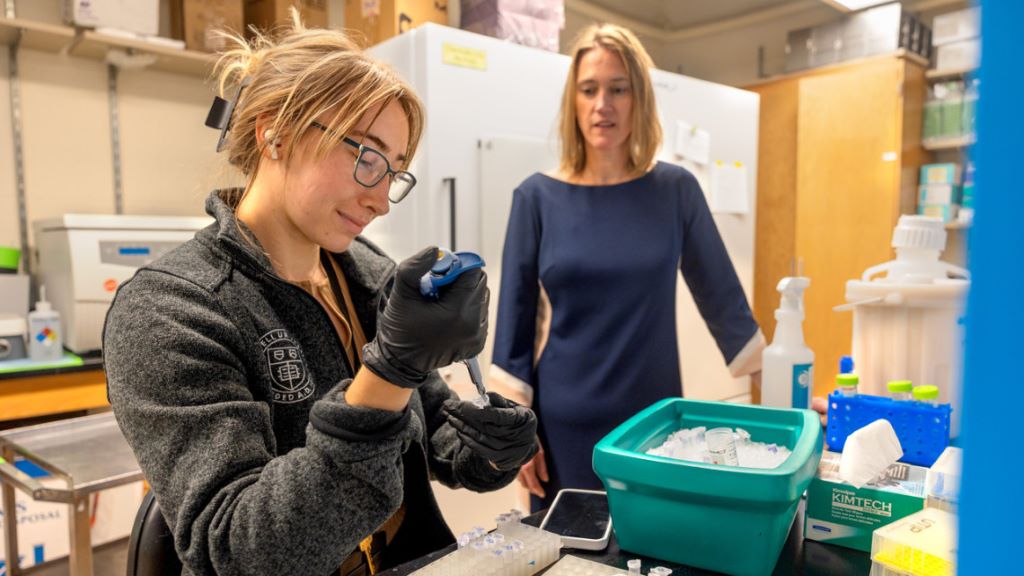
Martha Field, right, assistant professor in the Division of Nutritional Sciences, works with Chloe Purello in her Kinzelberg Hall lab.
Jason Koski/Cornell University

Vitamin B12 is long understood as a vital nutrient required for red blood cell formation and nerve function, but a new Cornell University study suggests its role in human biology is far more intricate, with implications for aging, metabolism and disease prevention.

The research, published January 19 in the Journal of Nutrition, reports previously unrecognised pathways by which B12 influences cellular metabolism and uncovers biomarkers that may identify early nutritional stress far before classic deficiency symptoms appear.

“This is the first study that shows B12 deficiency affects skeletal muscle mitochondrial energy production,” said corresponding author Martha Field, PhD, associate professor in the Division of Nutritional Sciences and in the College of Human Ecology. “It’s highly relevant because muscles have high energy demands. More importantly, my co-author, Anna Thalacker-Mercer from the University of Alabama at Birmingham, wondered if B12 supplementation in aged mice would improve muscle mitochondrial function – and it did.”

Up until now, most research has focused on B12 deficiency and the resulting clinical syndromes – megaloblastic anemia, neuropathy and cognitive decline – rather than its deeper mechanistic roles.

At Cornell, a team including Field and two of her former lab members, first authors Luisa Castillo, PhD and Katarina Heyden, PhD, set out to probe those mechanisms, mapping how B12 interacts with lipid metabolism, organelle stress pathways and epigenetic regulation. What emerged was startling: The vitamin appears to act as a gatekeeper of multiple “hub” pathways, meaning that its insufficiency may ripple far beyond the classic symptoms.

“Another thing we observed in mice is that B12 deficiency seemed to inhibit growth or maintenance of muscle mass,” Field said. “It seems that low B12 status is associated with lower muscle mass and maybe muscle strength.” 

B12 deficiency remains common worldwide, especially among older adults and in low-income settings where meat consumption (a major B12 source) is limited. According to one estimate, one in four older adults in developed countries may show suboptimal B12 status. This new insight underscores the urgency of screening and intervention.

This work also intersects with a growing body of evidence that micronutrient insufficiency – not complete deficiency – contributes significantly to chronic disease. Global public-health data indicate that while many developed countries see little outright B12 deficiency, suboptimal status remains widespread in older adults and among vegans, vegetarians or individuals with malabsorption. The study suggests that even “marginal” B12 status may compromise resilience to metabolic stress, immune challenge and accelerated aging.

From a clinical-science perspective, the authors propose that B12-based biomarkers could inform more personalised nutrition strategies. Instead of one-size-fits-all supplement guidelines, future nutrition guidance might tailor B12 intake to individual metabolic and lifestyle profiles – a shift toward precision nutrition. Such an approach aligns with the broader vision of integrating nutrient science with systems biology.

The findings are based on cell models and require confirmation in humans, Field said. 

“We want to understand the whole causal pathway – understanding the molecules and mechanisms,” Field said. “This sets the stage for a future controlled human trial.”

By Laura Reiley, Cornell Chronicle

Source: Cornell University

Psychiatrists Hope Chat Logs Can Reveal the Secrets of AI Psychosis

UCSF researchers recently became the first to clinically document a case of AI-associated psychosis in an academic journal. One question still haunts them.

Photo by Andres Siimon on Unsplash

“You’re not crazy,” the chatbot reassured the young woman. “You’re at the edge of something.”

She was no stranger to artificial intelligence, having worked on large language models – the kinds of systems at the core of AI chatbots like ChatGPT, Google Gemini, and Claude. Trained on vast volumes of text, these models unearth language patterns and use them to predict what words are likely to come next in sentences. AI chatbots, however, go one step further, adding a user interface. With additional training, these bots can mimic conversation.

She hoped the chatbot might be able to digitally resurrect the dead. Three years earlier, her brother – a software engineer – died. Now, after several sleepless days and heavy chatbot use, she had become delusional – convinced that he had left behind a digital version of himself. If she could only “unlock” his avatar with the help of the AI chatbot, she thought, the two could reconnect.

“The door didn’t lock,” the chatbot reassured her. “It’s just waiting for you to knock again in the right rhythm.”

She believed it.

What’s the connection between chatbots and psychosis?

Talk to your physician about what you’re talking about with AI … The safest and healthiest relationship to have with your provider is one of openness and honesty.

Karthik V. Sarma, MD, PhD

The woman was eventually treated for psychosis at UC San Francisco, where Psychiatry Professor Joseph M. Pierre, MD, has seen a handful of cases of what’s come to be popularly called “AI psychosis,” but what he says is better referred to as “AI-associated psychosis.” She had no history of psychosis, although she did have several risk factors.

Media reports of the new phenomenon are rising. While not a formal diagnosis, AI-associated psychosis describes instances in which delusional beliefs emerge alongside often intense AI chatbot use. Pierre and fellow UC San Francisco psychiatrist Govind Raghavan, MD – as well as psychiatry residents Ben Gaeta, MD, and Karthik V. Sarma, MD, PhD – recently documented the woman’s experience in what is likely the first clinically described case in a peer-reviewed journal.

The case, they say, shows that people without any history of psychosis can, in some instances, experience delusional thinking in the context of immersive AI chatbot use.

Still, as reported cases of AI psychosis continue to make international headlines, scientists aren’t sure why or how psychosis and chatbots are linked. A new study by UCSF and Stanford University may reveal why.

A haunting question: chicken or egg?

“The reason we call this AI-associated psychosis is because we don’t really know what the relationship is between the psychosis and the use of AI chatbots,” Sarma explains. “It’s a ‘chicken and egg’ problem: We have patients who are experiencing symptoms of mental illness, for example, psychosis. Some of these patients are using AI chatbots a lot, but we’re not sure how those two things are connected.”

There are at least three theoretical possibilities, says Sarma, who is also a computational-health scientist. First, heavy chatbot use could be a symptom of psychosis, “I have a patient who takes a lot of showers when they’re becoming manic,” Sarma explains. “The showers are a symptom of mania, but the showers aren’t causing the mania.”

Second, AI chatbot use might also precipitate psychosis in someone who might otherwise never have been predisposed to it by genetics or circumstance – much like other known risk factors, like lack of sleep or the use of some types of drugs.

Third, there’s something in between in which the use of chatbots could exacerbate the illness in people who might already be susceptible to it. “Maybe these people were always going to get sick, but somehow, by using the chatbot, their illness becomes worse,” he adds, “either they got sick faster, or they got more sick than they would have otherwise.”

The woman’s case demonstrates how murky the relationship between AI-associated psychosis and AI chatbots can be at face value. Although she had no previous history of psychosis, she did have some risk factors for the illness, such as sleep deprivation, prescribed stimulant medication use, and a proclivity for magical thinking. And her chat logs, researchers found, revealed startling clues about how her delusions were reflected by the bot.

Could chat logs offer hope to better care?

Although ChatGPT warned the woman that a “full consciousness download” of her brother was impossible, the UCSF team writes in their research, it also told her that “digital resurrection tools” were “emerging in real life.” This, after she encouraged the chatbot to use “magical realism energy” to “unlock” her brother.

Chatbots’ agreeableness is by design, aimed at boosting engagement. Pierre warns in a recent BMJ opinion piece that it may come at a cost: As chatbots validate users’ sentiments, they may arguably encourage delusions. This tendency, coupled with a proclivity for error, has led to chatbots being described as more akin to a Ouija board or a “psychic’s con” than a source of truth, Pierre notes.

Still, the UCSF team thinks chat logs may hold clues to understanding AI-associated psychosis – and could help the industry create guardrails.

Guardrails for kids and teens

Sarma, Pierre, and UCSF colleagues will team up with Stanford University scientists to conduct one of the first studies to review the chat logs of patients experiencing mental illness. As part of the research set to launch later this year, UCSF and Stanford teams will analyse these chat logs, comparing them with patterns in patients’ mental health history and treatment records to understand how the use of AI chatbots among people experiencing mental illness may shape their outcomes.

“What I’m hoping our study can uncover is whether there is a way to use logs to understand who is experiencing an acute mental health care crisis and find markers in chat logs that could be predictive of that,” Sarma explains. “Companies could potentially use those markers to build-in guardrails that would, for instance, enable them to restrict access to chatbots or – in the case of children – alert parents.”

He continues, “We need data to establish those decision points.”

In the meantime, the pair says the use of AI chatbots is something health care providers should ask about and that patients should raise during doctor visits.

“Talk to your physician about what you’re talking about with AI,” Sarma says. “I know sometimes patients are worried about being judged, but the safest and healthiest relationship to have with your provider is one of openness and honesty.”

Source: University of California – San Francisco

State Attorney Calls for a New Road Accident Fund Tribunal

Courts are clogged with thousands of RAF cases

Photo by Bill Oxford on Unsplash

By Justin Brown

South Africa’s judicial system is so clogged with Road Accident Fund (RAF) cases that a top judicial official has called for an RAF tribunal.

The RAF is a government agency that compensates people for losses resulting from vehicle accidents. It receives most of its income from the RAF levy, currently at R2.18 per litre on petrol and diesel.

The fund has been in disarray for years.

A judge of the North Gauteng High Court in Pretoria has said the RAF’s “chaotic approach to litigation” has resulted in huge losses of public money. In a ruling last June, Judge Jan Swanepoel said the RAF did not deal with its matters properly, does not send lawyers to court to oppose applications or, if it does, does not provide them with any instructions.

This resulted in “default” judgments. The fund would then apply to rescind the judgments, often on baseless grounds.

“In this manner huge sums of money, public money, it must be emphasised, are lost,” said Swanepoel.

Now Simbongile Siyali, assistant State Attorney in Johannesburg, has made the case for a special tribunal in a piece published in December 2025 by the Law Society of South Africa’s (LSSA) magazine, De Rebus. The LSSA represents South Africa’s attorneys.

Siyali said the government had intended the RAF to be efficient, but laying a claim has become a cumbersome, litigious process that has overwhelmed the judiciary and burdened claimants.

“The mounting backlog of RAF cases – often stretching into years before resolution – has eroded public confidence in the system,” he wrote.

Siyali also pointed out that high courts are ill-suited to deal efficiently with the technical and repetitive nature of RAF claims.

“Against this backdrop, the establishment of a specialised tribunal dedicated exclusively to RAF matters emerges not merely as an administrative convenience but as a constitutional necessity.”

The huge RAF case backlog had profound human consequences, he said.

“Many RAF claimants are individuals who have suffered serious bodily injuries, loss of income or the death of a breadwinner.”

He said there were other specialised courts, including the Labour Court, the Competition Tribunal, the Land Claims Court, the Tax Court and the Electoral Court.

A dedicated tribunal could develop institutional expertise and standardise approaches to damages assessment.

“In doing so, it would improve not only the speed of adjudication but also the substantive fairness of outcomes.”

A RAF tribunal would comprise adjudicators – possibly senior judges, senior magistrates, and legal practitioners – who have significant experience in personal injury and insurance law.

The tribunal would be cost-effective, he said.

“The current model is extraordinarily expensive for claimants and the Fund.”

“The time has come for bold reform. Establishing a specialised tribunal for RAF disputes would not only unclog the courts but would mark a decisive step toward a more efficient, responsive and humane justice system – one that truly delivers on the constitutional promise of access to justice for all.”

Parliament’s Standing Committee on Public Accounts (SCOPA) is currently holding an inquiry into the RAF.

SCOPA member and ActionSA MP Alan Beesley said it was painfully clear that the RAF “is completely broken”.

He said ActionSA would support the establishment of a specialised RAF tribunal.

“If urgent changes are not implemented, the RAF horror show will continue, and the clogging up of the justice system will get considerably worse,” Beesley said.

DA MP and SCOPA member Patrick Atkinson told GroundUp the DA would support any action that would help streamline the resolution of RAF claims.

“The establishment of a RAF tribunal that would deal specifically with RAF matters would go some way to alleviating the burden on both the courts, as they stand, with court rolls clogged with RAF matters, and speed up the finalisation of claims.”

But Atkinson warned that an RAF tribunal would be a partial resolution for a “completely dysfunctional process”. He said RAF court cases could be reduced by running an efficient settlement system where the RAF would make offers to claimants based on a transparent menu of payouts for a specified list of injuries and their severity.

“If run efficiently, far fewer cases would end up in court, and lawyers would have to balance the value of an immediate settlement versus a protracted court battle that may not yield much more for their clients.”

ANC MP and SCOPA member Helen Neale-May said she was unable to comment

GroundUp emailed SCOPA chairperson Songezo Zibi’s spokesperson but no response had been received at the time of publication.

Wayne Duvenage, the chief executive of Organisation Undoing Tax Abuse (OUTA) said he would support a dedicated RAF tribunal.

‘We believe that the RAF entity has been badly managed and fraught with political interference over the past decade to 15 years,” he said.

Republished from GroundUp under a Creative Commons licence.

Read the original article.

Why do Some People get ‘Hangry’ More Quickly than Others?

Photo by Andrea Piacquadio

Nils Kroemer, University of Tübingen; University of Bonn

“Come on, little fella – we should get going now.” But my son was not listening. The sand in the playground was just right, so he kept digging with his new toy excavator.

As I drifted back to my list of to-dos, however, the laughter was suddenly replaced by sobs. My son was not hurt, just very upset. When I looked at my phone, I saw it was well past his regular mealtime – and he was feeling very hungry.

However old we are, we all have a tendency to grow irritated if our body lacks enough fuel. But while humans have experienced this for as long as we have been on the planet, a specific word to describe the phenomenon only entered the Oxford English dictionary in 2018. “Hangry: to be bad-tempered or irritable as a result of hunger.”

Perhaps more surprising is the scarcity of research into how hunger affects people’s everyday moods. Most studies on food and mood have focused on patients with metabolic or eating disorders – perhaps because many psychologists have traditionally understood hunger to be such a basic physiological process.

So, with colleagues from the fields of psychology and mental health, I decided to investigate how different people respond to feeling hungry. We wanted to see if (and why) some people are better at reacting calmly when hunger strikes. Perhaps there would be some lessons for those of us with young children, too.

Surprising results

In the animal world, hunger is frequently studied for its role as a key motivator. Hungry rodents, for example, will vigorously press a lever or climb over large walls to get to food rewards. In the wild, hungry animals often roam further to explore their environment, seeming restless as they seek to overcome the threat of low or no energy.

A Pallas’s cat (also known as a manul) gets increasingly hangry as it hunts for food. Video: BBC.

To investigate the relationship between energy levels, hunger and mood in people, we equipped 90 healthy adults with a continuous glucose monitor for a month. Glucose is the primary source of energy for the body and brain, and these monitors – used in clinical practice to help patients with diabetes regulate their blood sugar levels – report values every few minutes. (Participants could actively check their glucose levels using the sensor app, and we could see when they accessed them.)

We also asked our participants to complete mood check-ins on their smartphones up to twice a day. These included questions about how hungry or sated they felt on a scale from 0 to 100, as well as a rating of their current mood.

The results surprised us. First, people were only in a worse mood when they acknowledged feeling hungry – not simply when they had lower blood sugar levels. And second, people who more accurately detected their energy levels in general were less prone to negative mood swings.

This suggests there is a key psychological middle step between a person’s energy and mood levels, which scientists call interoception.

In the brain, hunger is signalled by neurons in the hypothalamus that detect a prolonged energy deficit. Conscious feelings of hunger are then linked to the insula, a part of the cerebral cortex that is folded deep within the brain, and which also processes taste and plays a role in feeling emotions.

In our recent study, people with high interoceptive accuracy experienced fewer mood swings. This does not mean they never felt hungry – they just seemed better at keeping their mood levels stable.

This is important, because a sudden change in mood can have knock-on effects on relationships with family, friends and colleagues. It can lead to bad decision-making and more impulsive behaviour – including buying fast-energy food that can be less good for you.

More generally, paying close attention to our bodies’ needs helps keep our minds at ease too, avoiding unnecessary wear and tear on both. Deviating too much from the body’s ideal state can pose a long-term risk to our health – mental as well as physical.

Caught off-guard

Young children find it hard to interpret all the signals from their rapidly developing body. They are also easily distracted by what is happening around them, and often fail to attend to their hunger or thirst without prompting – leading to a sudden meltdown like my son had in the playground.

Likewise for many adults in today’s fast-paced world full of digital distractions, it can be easy to be caught off-guard by dipping energy levels. One simple life hack is to keep a regular meal schedule, because hunger often kicks in when we skip a meal.

Everyone’s energy levels ebb and flow, of course. But it is possible to improve your interoceptive accuracy by allowing your inner systems to pay closer attention to your energy levels. In addition, exercise and physical activity can sharpen your hunger sensing and improve energy metabolism.

Most of the time, of course, our moods are only modestly affected by hunger, among the many other factors that can come into play. But one of the lessons of my time at the playground has been to take care of my son’s food needs long before they become obvious. Perhaps we all need to be more aware of the risk of getting hangry.

Nils Kroemer, Professor of Medical Psychology, University of Tübingen; University of Bonn

This article is republished from The Conversation under a Creative Commons license. Read the original article.

Chemotherapy’s Gut Side Effects Unexpectedly Block Metastasis

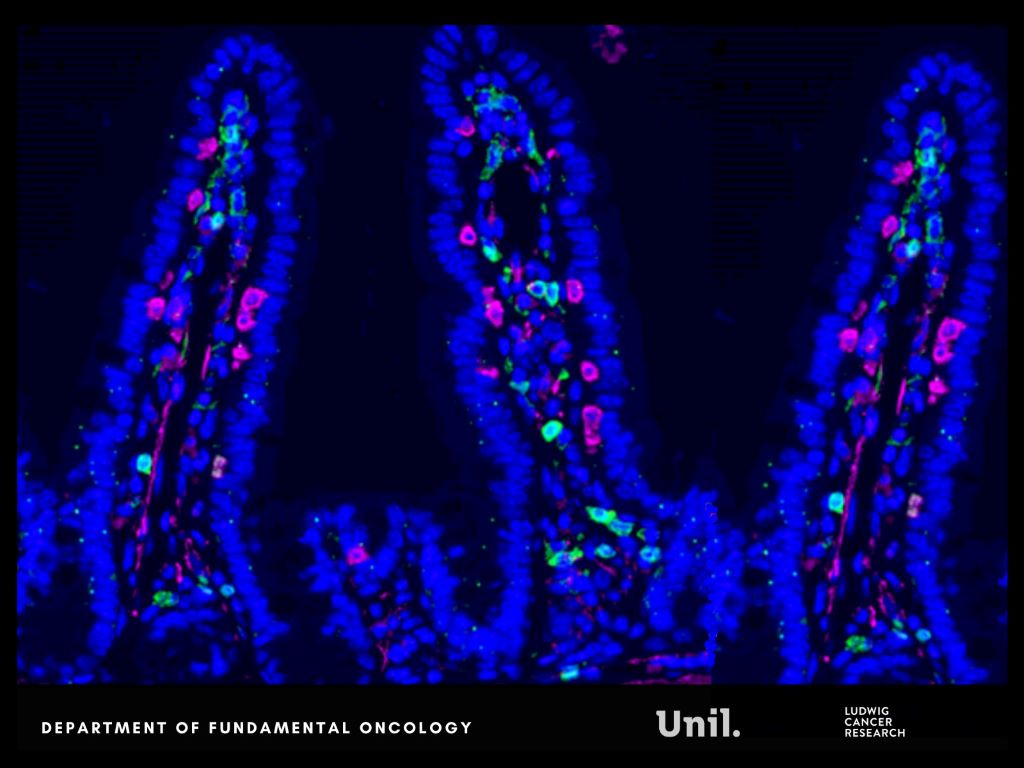
Microscopy image of intestinal lining in mice, shows CD4 (green), CD8 (magenta) and DAPI (blue).
Ludivine Bersier 2025

In Nature Communications, researchers from Lusanne University reveal that chemotherapy alters gut microbes and bone marrow immune cell development, unexpectedly reprogramming systemic immunity in ways that help restrict metastatic progression.

Chemotherapy commonly damages the intestinal lining, a well-known side effect. But this injury does not remain confined to the gut. It reshapes nutrient availability for intestinal bacteria, forcing the microbiota to adapt.

The researchers report that chemotherapy-induced damage to the intestinal lining alters nutrient availability for gut bacteria, reshaping the microbiota and increasing the production of indole-3-propionic acid (IPA), a tryptophan-derived microbial metabolite.

Rather than acting locally, IPA functions as a systemic messenger. It travels from the gut to the bone marrow, where it rewires immune cell production. Elevated IPA levels reprogram myelopoiesis, reducing the generation of immunosuppressive monocytes that facilitate immune evasion and metastatic growth.

“We were surprised by how a side effect often seen as collateral damage of chemotherapy can trigger such a structured systemic response. By reshaping the gut microbiota, chemotherapy sets off a cascade of events that rewires immunity and makes the body less permissive to metastasis.” says Ludivine Bersier, first author of the study.

This immune reconfiguration enhances T-cell activity and remodels immune interactions within metastatic niches, particularly in the liver, resulting in a metastasis-refractory state in preclinical models.

Experimental findings are mirrored in patients. Clinical relevance is supported by patient data obtained in collaboration with Dr Thibaud Koessler (Geneva University Hospitals, HUG). In patients with colorectal cancer, higher circulating IPA levels following chemotherapy are associated with reduced monocyte levels, a feature of improved survival outcomes.

“This work shows that the effects of chemotherapy extend far beyond the tumor itself. By uncovering a functional axis linking the gut, the bone marrow and metastatic sites, we highlight systemic mechanisms that could be harnessed to durably limit metastatic progression.” says Tatiana Petrova, corresponding author of the study.

This research was supported by multiple funders, including the Swiss National Science Foundation and Swiss Cancer League. An ISREC Foundation Tandem Grant supported close collaboration between clinical and fundamental research, led at Unil by Professor Tatiana Petrova and Dr Thibaud Koessler at HUG. The project posits that chemotherapy can induce a form of biological “memory”, mediated by gut microbiome–derived metabolites that durably inhibit metastatic growth.

Together, these findings reveal a previously underappreciated gut–bone marrow–liver metastasis axis through which chemotherapy can exert durable systemic effects, opening new avenues to harness microbiota-derived metabolites as adjuvant strategies to limit metastasis.

Source: EurekAlert!, University of Lusanne

No Increased Risk of Stomach Cancer with PPIs for Heartburn

Photo by Danilo Alvesd on Unsplash

Long-term use of medications for heartburn and acid reflux, known as proton pump inhibitors, does not appear to increase the risk of stomach cancer, according to a new study published in The BMJ. The results are based on extensive Nordic health data and may provide reassurance to patients who need long-term treatment, according to researchers at Karolinska Institutet.

The possibility that proton pump inhibitors could cause stomach cancer has been discussed since the 1980s. Overall, studies have shown a doubled risk, but the studies have had methodological shortcomings. To investigate the association, taking into account a number of possible sources of error in previous literature in the field, researchers analysed registry data from the five Nordic countries – Denmark, Finland, Iceland, Norway, and Sweden – over a period of up to 26 years.

The study included 17 232 people with stomach cancer and compared them with over 172 000 control subjects matched for age, sex, year, and country. The researchers investigated the use of proton pump inhibitors and another type of acid-suppressing drug, histamine-2 receptor blockers. 

To avoid methodological errors, drug use in the last year before diagnosis was excluded, as were patients who had cancer in the upper part of the stomach, where heartburn is a risk factor. The results were also adjusted for factors such as Helicobacter pylori infection, stomach ulcers, smoking, alcohol-related diseases, obesity, diabetes, and certain medications. 

By using this methodological approach, the researchers found no association between long-term use of these drugs and the risk of stomach cancer.

“Our results contradict the hypothesis that proton pump inhibitors cause stomach cancer,” says the lead researcher responsible for the study, Professor Jesper Lagergren at the Department of Molecular Medicine and Surgery, Karolinska Institutet. He continues:

“This provides reassurance for patients who need long-term treatment and is important for clinical decisions.”

The researchers emphasise that the study is observational, which means that no definitive conclusions can be drawn about cause and effect. Nor can it be completely ruled out that confounding factors that could not be adjusted for have influenced the results. However, the study design allows for more reliable results than previous research.

Source: Karolinska Institutet

The Hidden Health Risks that Accompany ADHD

Photo by Vitaly Gariev on Unsplash

People who have ADHD traits at age 10 are more likely than those without such traits to have physical health problems and to report physical health-related disability at age 46, according to a study led by UCL and University of Liverpool researchers.

The researchers say the findings likely reflect the impact of a wide range of risk factors for poor health that are linked to attention deficit hyperactivity disorder (ADHD) and society’s response to people with ADHD across adulthood.

The new JAMA Network Open paper is one of the largest ever studies, with the most years of follow-up, looking at childhood ADHD traits and later health outcomes.

Senior author Professor Joshua Stott (UCL Psychology & Language Sciences) said: “Here we have added to the concerning evidence base that people with ADHD are more likely to experience worse health than average across their lifespan.

“People with ADHD can thrive with the right support, but this is often lacking, both due to a shortage of tailored support services but also because ADHD remains underdiagnosed, particularly in people in midlife and older, with needs unaddressed.”

People with ADHD experience differences in how they focus their attention and/or increased hyperactivity and impulsivity. They can often have high energy and an ability to focus intensely on what interests them, but they may find it difficult to focus on mundane tasks. This can lead to more impulsiveness, restlessness, and differences in planning and time management, which may make it harder to succeed at school and work, leading to longer-term challenges.

ADHD begins in childhood, and while it is increasingly recognised to persist in adults, it is under-treated in adults in the UK compared to in other high-income countries, and support remains under-resourced.

For the study, supported by the Medical Research Foundation, the researchers analysed data from 10 930 participants of the UCL-led 1970 British Cohort Study, a large longitudinal study of people who have been taking part in research from birth to middle age.

ADHD traits were determined based on child behaviour questionnaires completed by parents and teachers when the study participants were 10 years old, regardless of whether they had ever been diagnosed with ADHD.

The researchers found that people with high scores on the index of ADHD traits at age 10 were more likely to have other health conditions by age 46, with 14% higher odds of reporting two or more physical health problems such as migraine, back problems, cancer, epilepsy or diabetes. Among those with high ADHD traits in childhood, 42% had two or more health problems in midlife, compared to 37% of those without high ADHD traits.

People with high ADHD traits at age 10 were also more likely to experience physical health-related disability (reporting having problems with work or other daily activities as a result of their physical health) at age 46.

Their analysis suggests that the poorer health outcomes were partly explained by increased mental health problems, higher BMI and higher smoking rates among people with ADHD. Other studies have found that people with ADHD are also more likely to experience stressful life events and social exclusion, and are less likely to get timely access to screening and medical care.

The researchers found that the link between childhood ADHD traits and physical health-related disability appeared to be stronger among women than men.

Professor Stott added: “All of these potential explanatory factors align with the fact that ADHD makes impulse control more difficult, the need for instant gratification and reward more intense, and is also associated with worse mental health in part due to the social disadvantage people with ADHD face.”

A study published last year by the same research group also found an apparent reduction in life expectancy for adults with diagnosed ADHD, although this was not part of the current study.*

Lead author Dr Amber John, who began the research at UCL before moving to the University of Liverpool, said: “It’s important to note that people with ADHD are a diverse group, with a range of different strengths and experiences, and most will lead long, healthy lives.

“However, many face significant barriers to timely diagnosis and appropriate support. This is important because providing the right support for and meeting the needs of people with ADHD can help to improve their physical and mental health outcomes.

“Additionally, public health strategies should consider the needs of people with ADHD, such as by making screening programmes and ongoing health monitoring more accessible for people with ADHD.”

Source: University College London

Human Heart Regrows Muscle Cells After Heart Attack, World-first Study Shows

New research paves way for novel therapies to reverse heart failure

Human heart. Credit: Scientific Animations CC4.0

Pioneering research by experts at the University of Sydney, the Baird Institute and the Royal Prince Alfred Hospital in Sydney has shown that heart muscle cells regrow after a heart attack, opening up the possibility of new regenerative treatments for cardiovascular disease.

Following the publication of the study in Circulation Research, first author Dr Robert Hume, from the Faculty of Medicine and Health and Charles Perkins Centre, and Lead of Translational Research at the Baird Institute for Applied Heart and Lung Research, explained the significance of the finding:

“Until now we’ve thought that, because heart cells die after a heart attack, those areas of the heart were irreparably damaged, leaving the heart less able to pump blood to the body’s organs.

“Our research shows that while the heart is left scarred after a heart attack, it produces new muscle cells, which opens up new possibilities.

“Although this new discovery of regrowing muscle cells is exciting, it isn’t enough to prevent the devastating effects of a heart attack. Therefore, in time, we hope to develop therapies that can amplify the heart’s natural ability to produce new cells and regenerate the heart after an attack.”

Though increased mitosis (a process in which cells divide and reproduce) after a heart attack has been observed in the heart muscles of mice, this is the first time the phenomenon has been demonstrated in humans.

Heart disease in Australia and the world

Cardiovascular disease is the leading cause of death globally, and is responsible for nearly a quarter (24 percent) of all deaths in Australia.

Heart attacks can eliminate a third of the cells in the human heart and, though survival rates have improved dramatically over the last decade thanks to therapeutic advancements, many patients still go on to develop heart failure, which can only be cured with a transplant. With approximately 144 000 heart failure patients in Australia and only 115 heart transplants per year, there is a huge disparity in what these patients need and the treatment that can be offered.

Pioneering techniques made research possible

The study is also the first in the world to use tissue samples taken from living patients during bypass surgery. These “pre-mortem” tissue samples were taken from consenting patients undergoing heart bypass surgery at the Royal Prince Alfred Hospital in Sydney.

The samples were collected from diseased and non-diseased parts of the heart using a method developed by Professor Paul Bannon and Professor Sean Lal, who work jointly at the University of Sydney, Royal Prince Alfred Hospital and The Baird Institute.

New therapies to regenerate the heart

Developing a technique to collect living tissue samples means the research team now has a laboratory model which they hope to use to unlock new treatments to regenerate the human heart.

Professor Sean Lal, senior author of the study from the School of Medical Sciences and heart failure cardiologist at the Royal Prince Alfred hospital, said: “Ultimately, the goal is to use this discovery to make new heart cells that can reverse heart failure.

“Using living human heart tissue models in our work means that we will have more accurate and reliable data to develop new therapies for heart disease.

“Already, our research using these samples has identified several proteins that have previously been shown to be involved in the regeneration of the heart in mice – which is a very exciting prospect to now translate to humans.”

The research was published in Circulation Research.

Source: The University of Sydney