Year: 2025

Opinion Piece: Rewriting the Rules of Health Insurance

By Shaun Raizenberg, Employee Benefits Consultant at Essential Employee Benefits

Photo by Scott Graham on Unsplash

The health insurance sector is undergoing significant changes that insurers, healthcare professionals and brokers need to be aware of. For one, healthcare costs have risen above the national inflation rate, forcing individuals and corporate entities to reassess their healthcare management strategies.

The industry is moving towards a more personalised and customer -focused approach, companies are revolutionising traditional insurance processes with digital platforms that offer simplicity, transparency and efficiency. The role of technology and data are driving forces behind these trends. With technological advancements reshaping health insurance, other trends like shifting demographics, an ageing population, and rising chronic diseases add complexity. Navigating this landscape requires specialised knowledge. This is where health insurance brokers become essential partners for companies in need of top-quality healthcare solutions for their workforce.

Shifting patterns in the health insurance market

The health insurance industry is currently experiencing significant changes driven by various factors. Healthcare expenditures and utilisation have increased dramatically in recent years given the prevailing South African economic climate and rising healthcare costs. Organisations are scrutinising their healthcare programmes, including those that provide cover for employees. Many employers are now adopting a hybrid approach that includes both medical scheme membership and health insurance to offer maximum flexibility and choice to their workers.

The healthcare sector is also witnessing an increasing adoption of digital solutions; mobile applications with online portals for accessing benefits and services. Users can take advantage of virtual healthcare solutions, such as telemedicine consultations and online appointment scheduling, which not only reduce costs but also save time. Consequently, brokers are focusing on partnering with insurers who offer technologically advanced and user-friendly digital services.

Challenges faced in the market

The health insurance market is facing several challenges. A significant hurdle is the issue of member education. There is a widespread misconception that health insurance operates in the same manner as medical scheme cover, leading to confusion and disappointment among members. Brokers play a crucial role by clarifying the distinctions between each type of cover, and they conduct annual assessment sessions to keep clients informed about new developments or available improvements. Frequent engagements that elucidate various aspects of their benefits empower clients to make more informed decisions.

The healthcare distribution system introduces another layer of complexity as it plays a critical role in ensuring the safe and efficient delivery of healthcare products to patients and healthcare providers. South Africa’s market comprises both public and private sectors, making it difficult to identify and reach the ideal target audience. The insurance sector is heavily competitive, characterised by numerous insurers, each offering a wide range of products. These challenges are compounded by regulatory bodies, stringent rules and requirements that organisations must navigate while attempting to earn customer trust.

Financial pressures significantly impact clients’ decisions regarding attaining affordable healthcare. Financial limitations forces clients to make difficult choices often prioritising essential expenses and, leading many to opt for cheaper health insurance plans even if they have higher out-of-pocket costs or limited cover. Clients who are struggling financially need guidance and sound advice in exploring their options for affordable solutions. By reviewing their existing healthcare costs and assessing their current cover, brokers and insurers can help recommend a more effective healthcare solution that suits their needs. Clients can also consult with a financial advisor to help create a budget that incorporate healthcare costs that includes an emergency fund to cover unexpected additional medical expenses.

The value of consulting health insurance brokers

Given these complexities, one may question why companies should consult health insurance brokers. The answer lies in their expertise and advocacy. Brokers possess in-depth market knowledge and understand insurance products, enabling them to devise tailored solutions that precisely meet the requirements of both companies and employees. They represent their clients in negotiations, ensuring regulatory compliance and striving to secure the best rates and terms while providing ongoing support.

Strategic partnerships: selecting the right insurer

Choosing the right insurance partner is crucial, and brokers focus on several key attributes during this selection process. The insurance company must exhibit sound financial health, offer a comprehensive suite of products and services, and maintain effective claims procedures alongside superior customer care. Additionally, brokers seek partners that demonstrate a commitment to technology and innovation as a means of enhancing the customer experience.

Also, in today’s landscape, an insurance company’s reputation is of paramount importance, as policyholders can easily access customer feedback on social media.

Enhancing the South African healthcare system

The South African healthcare system requires careful navigation. With the assistance of informed and professional brokers, companies can tackle prevailing issues, optimise their healthcare expenditure, and deliver valuable benefits to their employees, ultimately resulting in a healthier and more productive workforce. Brokers serve not only as a source for insurance products but also as providers of expertise and trust, acting on behalf of the client in a complex and dynamic environment.

Microplastics Detected in Human Reproductive Fluids

Photo by FLY:D on Unsplash

New research presented today at the 41st Annual Meeting of the European Society of Human Reproduction and Embryology (ESHRE) reveals the presence of microplastics in human reproductive fluids, raising important questions about their potential risks to fertility and reproductive health.[1]

The study abstract appears in Human Reproduction, one of the world’s leading reproductive medicine journals.

Researchers examined follicular fluid from 29 women and seminal fluid from 22 men, both of which play critical roles in natural conception and assisted reproduction.

A range of commonly used microplastic polymers, including polytetrafluoroethylene (PTFE), polystyrene (PS), polyethylene terephthalate (PET), polyamide (PA), polypropylene (PP) and polyurethane (PU), were identified in both groups.

Microplastics were present in 69% of the follicular fluid samples analysed. Notably, the most frequently detected polymer was PTFE, found in 31% of the samples. This was followed by PP (28%), PET (17%), PA (14%), polyethylene (PE) (10%), PU (10%) and PS (7%), in descending order of prevalence.

In male seminal fluid samples, microplastics were found in 55% of those analysed. PTFE again emerged as the most prevalent polymer, identified in 41% of the samples. Other polymers detected included PS (14%), PET (9%), PA (5%), and PU (5%), though in lower concentrations.

To prevent contamination, all samples were collected and stored in glass containers and underwent chemical treatment before analysis using laser direct infrared microscopy.

Lead researcher Dr. Emilio Gomez-Sanchez commented, “Previous studies had already shown that microplastics can be found in various human organs. As a result, we weren´t entirely surprised to find microplastics in fluids of the human reproductive system, but we were struck by how common they were – found in 69% of the women and 55% of the men we studied.”

Microplastics are defined as plastic particles under 5mm in size, and there is evidence that they pose a threat to environmental and public health.[2] While this research did not directly assess how microplastics affect fertility, their detection highlights the need to explore possible implications for human reproductive health.

“What we know from animal studies is that in the tissues where microplastics accumulate, they can induce inflammation, free radical formation, DNA damage, cellular senescence, and endocrine disruptions”, continued Dr Gomez-Sanchez. “It’s possible they could impair egg or sperm quality in humans, but we don’t yet have enough evidence to confirm that.”

The research team plans to expand their analysis to a larger cohort, alongside detailed lifestyle and environmental exposure questionnaires. Further phases of the project will also explore the potential relationship between the presence of microplastics and oocyte and sperm quality.

Dr Gomez-Sanchez stressed that fertility is influenced by many factors, including age, health, and genetics, and that the findings should not cause alarm among those trying to conceive. “There’s no need for alarm at this point. Microplastics are just one of many elements that may play a role in fertility. However, it is sensible to consider ways of reducing our exposure to them. Simple steps, such as using glass containers to store and heat food, or limiting the amount of water we consume from plastic bottles, can help minimise our intake.”

Source: Focus on Reproduction

References:

[1] Gomez-Sanchez, E., et al. (2025) Unveiling the Hidden Danger: Detection and characterisation of microplastics in human follicular and seminal fluids. Human Reproduction. [insert link when available]

[2] Wang, L., Yin, Y., & He, X. (2024). The hidden threat: Unraveling the impact of microplastics on reproductive health. Science of the Total Environment, 912, 173177.

Multiple Sclerosis Drug Ocrelizumab Works by Reshaping the Immune System

Myelin sheath damage. Credit: Scientific Animations CC4.0

When ocrelizumab became the first FDA-approved treatment for early forms of multiple sclerosis (MS) in 2017, it offered patients immense hope. The long-awaited drug is a monoclonal antibody that depletes B cells – the immune cells that drive MS progression. Exactly how ocrelizumab does this, however, remains unclear.

In a new study published in The Journal of Clinical Investigation, Yale scientists begin to answer this question. By using single-cell RNA sequencing, a technique that provides a window into the gene expression in individual cells, the researchers laid out a detailed view of how ocrelizumab achieves its therapeutic effects.

“The surprise was that the drug doesn’t work at all the way we thought it was working,” says David A. Hafler, MD, Professor of Neurology at Yale School of Medicine, who led the study. “We knew what the end result was and that the drug was enormously effective in patients. But what’s driving the drug’s action is a type of white blood cell in the central nervous system. No one would ever hypothesise that.”

The roles of T cells and B cells in multiple sclerosis

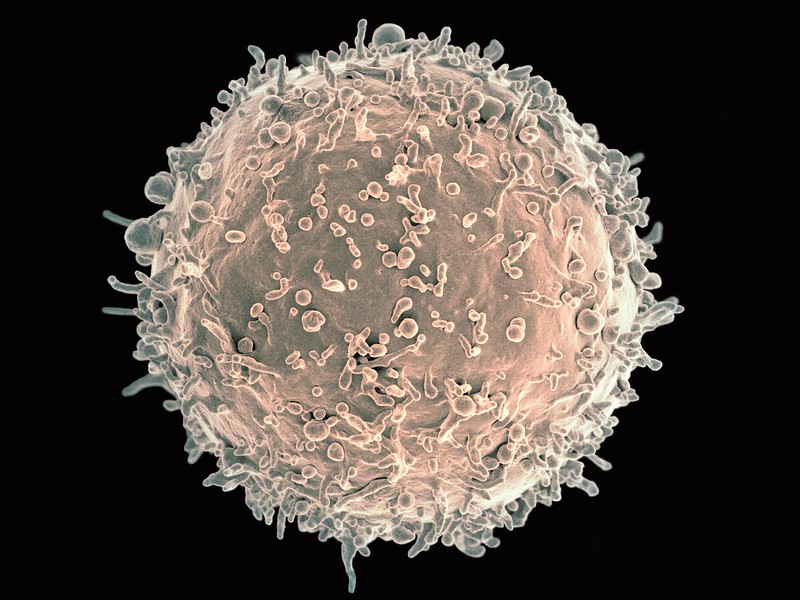
B and T cells have closely intertwined roles in the immune system. B cells are critical cells that recognise foreign objects, bind them, and present them to T cells, which then signal other immune cells to take action. But this relationship goes awry in disease.

Scanning electron micrograph of a B cell. Credit: NIH

In MS, abnormally active B cells trigger T cells to attack the myelin sheath, the protective layer of nerve fibres, leading to neurological symptoms, such as loss of vision, muscle weakness, and cognitive impairment. More than two decades ago, Hafler and his team discovered this was due to defects in regulatory T cells, which normally put the brake on immune responses, but when defective, unleash immune cells that mistakenly target the body’s own tissues.

In the early stages of MS, both B and T cells are deemed to be the drivers of the disease. Once the disease progresses to a neurodegenerative stage, other inflammatory processes become more prominent.

“Once you enter the neurodegenerative phase of the disease, it is much more difficult to stop the process,” Hafler says. “What we’ve learned is that the earlier you treat the disease, the better the outcome.”

Ocrelizumab binds to the surface of B cells, leading to their destruction. And especially for people in the early stages of MS, it can be quite effective. “The drug works incredibly well,” Hafler says. But Hafler and his team found that ocrelizumab was doing far more than just controlling B cells.

In the new study, the researchers analysed the blood and cerebrospinal fluid of 18 patients, all of whom had an early-onset form of multiple sclerosis in which patients cycle between periods of disease remission and relapse. The scientists measured the cell type-specific changes in protein expression before and after the patients received six months of ocrelizumab, in an effort to identify immune molecules that might change in response to the drug.

They discovered that the reduction in B cells driven by ocrelizumab led to an increase in the pro-inflammatory molecule TNF-α. This was unexpected because TNF-α has been shown to trigger the immune system and exacerbate inflammation in certain diseases. In fact, medications that block the activity of TNF-α are typically used for treating various autoimmune diseases such as rheumatoid arthritis and inflammatory bowel disease.

As they looked further, the researchers found that by inducing TNF-α, ocrelizumab led to an increase in a specific type of regulatory T cell. This, in turn, curbed the circulation of T cells that attack the myelin.

“This unpredicted increase in TNF-α shows that ocrelizumab works in a paradoxical way,” says Hafler.

Understanding the cause of multiple sclerosis

One of the current working models of MS suggests that the disease originates from the Epstein-Barr virus. “How the Epstein-Barr virus triggers the disease is a point that we don’t yet understand,” Hafler says. However, there is a strong body of evidence to show that the virus infects B cells. Therefore, understanding how a B cell-depleting drug affects T cell activity may lead to further explanations.

The current finding also explains why a fifth of the genes linked to MS risk involve the TNF pathway and why many of those genetic changes are protective in other diseases, such as inflammatory bowel diseases.

“This shows that biology has a richness to it,” Hafler says. “When these molecules are made, where they’re made, and what cell they’re working on have very different effects.”

Hafler suspects that ocrelizumab might be acting through other mechanisms as well, an inkling that motivates his lab to continue their investigation. “For something to work that well, there must be other things going on,” he says.

The team is now beginning to study the pathogenesis of MS in a large cohort of women who have at least one parent with the disease. By following the genetic evolution of the disease, the scientists are hoping to better understand how B cells change the immune landscape in real time.

“This study is only one piece of the puzzle,” Hafler says. “We’ll continue to look for other pieces.”

Source: Yale School of Medicine

An Early Night is Linked to More Physical Activity than Burning the Midnight Oil

Photo by Ketut Subiyanto on Unsplash

Going to bed earlier than usual may help to optimise physical activity the following day, Monash University-led research has found.

Published in Proceedings of the National Academy of Sciences (PNAS), the study examined whether sleep duration and sleep timing were associated with the duration of moderate-to-vigorous and overall physical activity the following day.

In the primary study, almost 20 000 participants wore a validated biometric device (WHOOP) for one year, resulting in almost six million nights of data. Objective sleep and physical activity metrics were derived from the wrist-worn device.

The study examined how both typical sleep habits and nightly fluctuations in sleep were linked to next-day physical activity levels.

On average, people who went to bed earlier were more physically active. For example, those with a typical bedtime around 9pm logged about 30 more minutes of moderate-to-vigorous physical activity each day compared to those who regularly stayed up until 1am.

Even compared to those who typically went to bed at 11pm (the average bedtime for the entire sample), the 9pm sleepers recorded nearly 15 additional minutes of daily moderate-to-vigorous physical activity.

Lead author Dr Josh Leota, from Monash University’s School of Psychological Sciences, said the findings suggested individuals with later bedtimes may be at a disadvantage under conventional work schedules.

“Standard 9-to-5 routines can clash with the natural sleep preferences of evening types, leading to social jetlag, poorer sleep quality, and increased daytime sleepiness – which can all reduce motivation and opportunity for physical activity the next day,” Dr Leota said.

Importantly, the study also looked at whether individuals can actively alter this relationship. The researchers found that when people went to sleep earlier than usual but still got their typical amount of sleep, they recorded the highest levels of physical activity the next day.

“These insights carry meaningful implications for public health,” Dr Leota said. “Rather than just promoting sleep and physical activity independently, health campaigns could encourage earlier bedtimes to naturally foster more active lifestyles. A holistic approach that recognises how these two essential behaviours interact may lead to better outcomes for individual and community health.”

An additional validation study involving almost 6000 participants from the All of Us Research Program, using Fitbit data, reinforced these findings, showing the relationships were broadly consistent across diverse populations.

Senior author Dr Elise Facer-Childs, from the Monash University School of Psychological Sciences, said that these findings highlight a powerful relationship between sleep timing and physical activity.

“Sleep and physical activity are both critical to health, but until now we didn’t fully grasp how intricately connected they are in everyday life,” Dr Facer-Childs said.

“Our findings are consistent across different populations, and show that if you can get to sleep earlier than usual whilst keeping your sleep duration the same, you may be more likely to increase your physical activity the following day”, says Dr Facer-Childs.

Read the research paper here: DOI 10.1073/pnas.2420846122

Source: Monash University

Celebrate Christmas in July with PinkDrive

Cold Nights, Warm Hearts, Festive Vibes – and Support for Early Detection

Think log fires, festive cheer, a three-course dinner and dancing to a live band – all wrapped up in the joy of giving. On Saturday, 5th July 2025, PinkDrive will host a Christmas in July dinner at the Indaba Hotel in Johannesburg, a night of holiday cheer and hope in action: raising funds for a life-changing cause. And you’re invited.

PinkDrive is a non-profit (NPC) committed to prolonging lives through the early detection of gender-related cancers. It delivers essential health services to thousands of South Africans every year by bringing mobile mammography units directly to communities that need them most, from rural villages to peri-urban areas across the nine provinces. These trucks provide clinical breast exams, mammograms, pap smears, and PSA testing, helping to detect cancer early in areas where healthcare access is often limited or unavailable.

Like many non-profits, PinkDrive depends on the support of corporate partners, sponsors, government, and the public to sustain its vital work, among them, Lee-Chem Laboratories. “This is a cause that is close to our hearts,” says Bhavna Sanker, Marketing Manager at Lee-Chem Laboratories. “Each year, we proudly support PinkDrive through our Mandy’s brand sponsorship, focusing on spreading awareness, sharing survivor stories, and making sure people understand their healthcare options.”

As part of their continued support, every guest at the Christmas in July function will receive a goodie bag from Lee-Chem, filled with products from their Mandy’s brand. “We are truly honoured to have Lee-Chem and the Mandy’s brand as valued sponsors of our Christmas in July Dinner fundraiser,” comments Nelius du Preez, Operations Manager at PinkDrive NPC. “Their continued support, alongside our other generous sponsors, makes events like this possible and helps us not only raise vital funds but also amplify the message of early detection and health education across South Africa.”

The fundraiser will spotlight the resilience of breast cancer survivors, with Deputy Minister of Electricity and Energy, Samantha Graham-Maré, sharing her personal journey with cancer. PinkDrive CEO and Founder, Noelene Kotschan, a passionate advocate for early detection prolonging  lives, will also address guests, and your charming host for the evening? A dashing Mister Global SA finalist will take the mic as MC, steering the evening from heartfelt reflections to lively fundraising with raffles and auctions featuring holiday packages, original artworks, and other exclusive prizes.

“We call the event ‘a night of giving back’ because it is occasions like these that allow us to keep our mobile health units on the road, reaching men and women who might otherwise not have access to screening services,” says du Preez. “Together with compassionate partners like Lee-Chem, we are driving change and prolonging lives, one screening at a time. And we are grateful to every corporate and individual who supports the event by purchasing tickets,” he adds.

All proceeds from the evening will be ringfenced to build and operate a new mobile mammography unit, expanding PinkDrive’s reach to screen more South Africans and detect cancer early, when treatment is most effective. “We encourage the public to join us in this mission by purchasing tickets and supporting the evening’s fundraising efforts,” concludes Sanker.

Tickets for the Christmas in July dinner are R600 per person and available now at pinkdrive.org. Don’t miss this chance to dress up, give back, and help bring hope where it’s needed most.

Diabetes Drug May Serve as Alternative Treatment Option for Hydrocephalus

Photo by Anna Shvets

A drug commonly used to treat type 2 diabetes may reduce excess fluid in the brains of patients with hydrocephalus, which could help treat the disease less invasively than current treatments, according to a Northwestern Medicine study published in the Journal of Clinical Investigation.

Normal pressure hydrocephalus occurs when excess cerebrospinal fluid builds up inside the skull and puts pressure on the brain. The cause of the condition is elusive and affects up to three percent of individuals over the age of 65, with symptoms including cognitive decline, difficulty walking and bladder problems.  

Patients are typically treated with permanent ventriculoperitoneal shunts, which are surgically implanted in the front or back of the skull and are connected to a valve that diverts excess cerebrospinal fluid away from the brain and into the abdomen where it is absorbed. The procedure has been shown to dramatically improve mobility, bladder control and cognitive functioning in patients with hydrocephalus, according to senior study author Stephen Magill, MD, PhD.

“It’s a great procedure because it’s one of the few things you can do that actually reverses these symptoms,” said Magill, who is assistant professor of Neurological Surgery.

There is, however, no pharmacological treatment currently approved to treat hydrocephalus. Additionally, nearly 20% of patients with normal pressure hydrocephalus also have type 2 diabetes and take sodium/glucose cotransporter 2 (SGLT2) inhibitors to manage their blood sugar, cardiovascular and kidney function, and weight loss.

Magill recently observed a reduction in the brain ventricle size in a patient with hydrocephalus who had a ventriculoperitoneal shunt surgically implanted and then began taking SGLT2 inhibitors to treat their type 2 diabetes. This phenomenon prompted Magill to further investigate the impact of SGLT2 inhibitors on ventricular size in patients with hydrocephalus.

“The medication inhibits a receptor found in the kidneys, which is where it works for diabetes. However, that receptor is also expressed in the choroid plexus, which is the structure in the brain that secretes the spinal fluid. Although this was known from animal studies, the clinical aspects of this biology have not been fully appreciated,” Magill said.

In the current study, three patients with hydrocephalus underwent CT scans both before and after surgery for ventriculoperitoneal shunts. After surgery, each patient began taking SGLT2 inhibitors for a medical indication and then underwent additional CT scans.

From analyzing these scans, Magill’s team discovered that all three patients showed a reduction in ventricle size as well as structural changes in their brains after starting SGLT2 therapy. One patient demonstrated dramatic ventricle size reduction due to ventricular collapse and required a shunt valve adjustment to reduce cerebrospinal fluid drainage.

“It’s a really interesting clinical observation because it raises the possibility that these medications could be used to treat normal pressure hydrocephalus in the future, which would normally require surgery,” Magill said.

Magill said the findings have sparked a new line of research in studying how SGLT2 inhibitors could help prevent hydrocephalus, adding that his team is now studying SGLT2 knockout mouse models to better understand the drug’s impact on ventricular size.

Their findings could ultimately inform new therapeutic strategies for treating normal pressure hydrocephalus as well as post-traumatic hydrocephalus, or the buildup of cerebrospinal fluid after traumatic brain injury, according to Magill.

“This sparks a new line of research on how normal pressured hydrocephalus develops, what causes it, how this protein works in creating and secreting spinal fluid, and has direct translational implications,” Magill said. “There’s a whole new avenue of potentially treating this disease that might save a patient from having surgery, and there’s always risks with surgery. It will also evolve our understanding of how these drugs work.”

Source: Northwestern Medicine

New Strategy for the Treatment of Severe Childhood Cancer

Credit: National Cancer Institute

Researchers at Karolinska Institutet and Lund University have identified a new treatment strategy for neuroblastoma, an aggressive form of childhood cancer. By combining two antioxidant enzyme inhibitors, they have converted cancer cells in mice into healthy nerve cells. The study is published in the journal Proceedings of the National Academy of Sciences (PNAS).

Neuroblastoma is a type of childhood cancer that affects the nervous system and is the leading cause of cancer-related death in young children. Some patients have a good prognosis, but those with metastatic tumours often cannot be cured despite modern combinations of surgery, radiation, chemotherapy and immunotherapy.

“The children who survive often have lifelong cognitive difficulties due to the harsh treatment, so there is a great need for new forms of therapies for children with neuroblastoma,” says Marie Arsenian Henriksson, professor at the Department of Microbiology, Tumour and Cell Biology at Karolinska Institutet.

Transform cancer cells

Differentiation therapy is a treatment method used in neuroblastoma that aims to transform cancer cells into more mature and healthy cells. The problem with the current retinoic acid differentiation therapy is that many patients do not respond to treatment, and about half develop resistance.

In collaboration with researchers at Lund University, Marie Arsenian Henriksson’s research team has shown that inhibition of two specific enzymes, PRDX6 and GSTP1, could be an alternative to retinoic acid treatment.

Mature into healthy neurons

Neuroblastoma is characterised by high oxidative stress due to the active metabolism in the cancer cells. Tumours are therefore dependent on antioxidant enzymes such as PRDX6 and GSTP1 to manage the stress and avoid cell death. High levels of these enzymes are associated with a poorer prognosis.

“When we inhibit these enzymes in cell cultures as well as in mouse models, some of the tumour cells die while others mature into active, healthy neurons, impairing tumour growth,” says Judit Liaño-Pons, researcher at the Department of Microbiology, Tumour and Cell Biology.

Needs to be tested in children

In the next step, the treatment will need to be tested in a clinical trial to investigate its safety and efficacy in children. One of the inhibitors has received orphan drug designation from the US Food and Drug Administration for the treatment of a different diagnosis in adults, making it a particularly promising drug candidate, according to the scientists.

Source: Karolinska Institutet

Study Finds that Cognitive Impairment is Common After Cardiogenic Shock

Pexels Photo by Freestocksorg

Many survivors of cardiogenic shock showed evidence of new cognitive impairment after leaving the hospital, according to a study led by UT Southwestern Medical Center researchers. The findings, published in the Journal of the American College of Cardiology, highlight a need to screen survivors and provide referrals to neuropsychology experts, the authors said.

“Our study demonstrated that nearly two-thirds of cardiogenic shock survivors experienced cognitive impairment within three months of hospital discharge, underscoring a critical but overlooked aspect of recovery,” said senior investigator James de Lemos, MD, Professor of Internal Medicine and Chief of the Division of Cardiology at UT Southwestern. “The findings are important for developing interventions that focus not only on improving survival but also on preventing or mitigating the functional consequences of cardiogenic shock, including cognitive decline.”

Cardiogenic shock results from heart failure, heart attack, or complications following cardiac surgery, and is characterised by a sudden drop in heart pumping ability. It results in acute hypoperfusion and hypoxia of the organs and has historically resulted in high mortality.

With advances in treatment during the past two decades, up to 70% of patients suffering from cardiogenic shock can now survive. But there is limited understanding of survivors’ recovery and quality of life after they leave the hospital.

“Our study is the first to systematically examine the cognitive outcomes of cardiogenic shock survivors, evaluating how cognition impacts patients’ ability to return to daily activities,” said Eric Hall, M.D., a clinical fellow in the Division of Cardiology who was the study leader and first author. “We found that cardiogenic shock is associated with cognitive impairment, which is an under-recognized consequence strongly linked to patients’ overall quality of life.”

UTSW researchers conducted the study by enrolling 141 patients who had survived cardiogenic shock before being discharged. To establish a baseline, family members completed a questionnaire, the AD8 survey, about the patients’ cognitive function before hospitalisation.

Before discharge, each patient completed the Montreal Cognitive Assessment-Blind (bMoCA) to screen for signs of cognitive impairment. Three months after discharge, patients repeated the assessments, allowing researchers to track changes in thinking ability and daily functioning over time.

Among patients with no sign of cognitive impairment before admission, 65% were found to have new impairment at discharge, and 53% continued to show impairment at their three-month follow-up. UTSW researchers emphasized that these findings should inform the development of comprehensive survivorship programs including screening protocols to identify impairments patients face and rehabilitation programs to help them recover from those challenges.

“We hope to use this study as a foundation to develop targeted rehabilitation strategies that connect patients with neuropsychology experts and improve long-term recovery in cardiogenic shock survivors,” Dr de Lemos said.

Source: UT Southwestern Medical Center

No Evidence that Common Medications Trigger Microscopic Colitis in Older Adults

Study suggests that patients with the condition do not need to stop taking important medications.

Photo by Kampus Production

Microscopic colitis (MC) is a chronic inflammatory bowel disease that severely reduces quality of life. MC is responsible for over 30% of all chronic diarrhoea cases in people over 65 years of age, and its prevalence is rising worldwide. Although little is known about what causes MC, previous studies have suggested that a range of common medications could trigger the condition, including non-steroidal anti-inflammatory drugs (NSAIDs), blood pressure medications, and selective serotonin reuptake inhibitors (SSRIs).

However, according to a new large-scale, longitudinal study of older adults in Sweden from Mass General Brigham, Broad Institute of MIT and Harvard, and Karolinska Institutet researchers, most of these medications are not associated with increased risk of MC. Results are published in Annals of Internal Medicine.

“Our study demonstrated that, contrary to the previous belief, it’s unlikely that medications are the primary triggers for microscopic colitis,” said corresponding author Hamed Khalili, MD MPH, associate director of the Clinical and Translational Epidemiology Unit and director of Clinical Research at the Crohn’s and Colitis Center at Massachusetts General Hospital, a founding member of the Mass General Brigham health care system. “Clinicians should carefully balance the intended benefits of these medications against the very low likelihood that they cause microscopic colitis.”

To look for associations between medication use and MC diagnosis, the researchers analyzed data for over 2.8 million individuals aged 65 years and older in Sweden. The data included information on prescribed medications, hospitalizations, medical diagnoses, and gastrointestinal biopsy results.

Overall, they found that the risk of developing MC was less than 0.5%. There was no association between NSAIDs, angiotensin converting enzyme (ACE-I) inhibitors, angiotensin II receptor blockers (ARBs), proton pump inhibitors (PPIs), or statins and the risk of developing MC, but individuals prescribed SSRIs had a 0.04% higher risk of developing MC. However, the researchers also showed that individuals prescribed SSRIs were also more likely to receive a colonoscopy, which is necessary to diagnose MC.

“Our analyses suggest that surveillance bias is a likely explanation for earlier findings that implicated medications in the pathogenesis of microscopic colitis and may also explain the continued association with SSRIs,” said senior author Jonas F. Ludvigsson, MD PhD, paediatrician at Örebro University Hospital and Professor at the Department of Medical Epidemiology and Biostatistics, Karolinska Institutet in Sweden.

The study did not include data on primary care visits, which could impact the likelihood of colonoscopy, or lifestyle factors such as diet and smoking status.

Source: Mass General Brigham

Healing Spinal Cord Injuries with the Help of Electricity

Heals spinal cord injuries with the help of electricity. Researchers have developed an ultra-thin implant that can be placed directly on the spinal cord. The implant delivers a carefully controlled electrical current across the injured area. In a recent study, researchers were able to observe how the electrical field treatment led to improved recovery in rats with spinal cord injuries, and that the animals regained movement and sensation. Please note that the image shows a newer model of the implant used in the study. Photo and illustration: University of Auckland

Researchers at Chalmers University of Technology in Sweden and the University of Auckland in New Zealand have developed a groundbreaking bioelectric implant that restores movement in rats after injuries to the spinal cord.

This breakthrough, published in Nature Communications, offers new hope for an effective treatment for humans suffering from loss of sensation and function due to spinal cord injury.

Electricity stimulated nerve fibres to reconnect

Before birth, and to a lesser extent afterwards, naturally occurring electric fields play a vital role in early nervous system development, encouraging and guiding the growth of nerve fibres along the spinal cord. Scientists are now harnessing this same electrical guidance system in the lab.

“We developed an ultra-thin implant designed to sit directly on the spinal cord, precisely positioned over the injury site in rats,” says Bruce Harland, senior research fellow, University of Auckland, and one of the lead researchers of the study.

The device delivers a carefully controlled electrical current across the injury site.

“The aim is to stimulate healing so people can recover functions lost through spinal cord injury,” says Professor Darren Svirskis, University of Auckland, Maria Asplund, Professor of bioelectronics at Chalmers University of Technology.

She is, together with Darren Svirskis, University of Auckland,

In the study, researchers observed how electrical field treatment improved the recovery of locomotion and sensation in rats with spinal cord injury. The findings offer renewed hope for individuals experiencing loss of function and sensation due to spinal cord injuries.

“Long-term, the goal is to transform this technology into a medical device that could benefit people living with life-changing spinal-cord injuries,” says Maria Asplund.

The study presents the first use of a thin implant that delivers stimulation in direct contact with the spinal cord, marking a groundbreaking advancement in the precision of spinal cord stimulation.

“This study offers an exciting proof of concept showing that electric field treatment can support recovery after spinal cord injury,” says doctoral student Lukas Matter, Chalmers University of Technology, the other lead researcher alongside Harland.

Improved mobility after four weeks

Unlike humans, rats have a greater capacity for spontaneous recovery after spinal cord injury, which allowed researchers to compare natural healing with healing supported by electrical stimulation.

After four weeks, animals that received daily electric field treatment showed improved movement compared with those who did not. Throughout the 12-week study, they responded more quickly to gentle touch.

“This indicates that the treatment supported recovery of both movement and sensation,” Harland says.

“Just as importantly, our analysis confirmed that the treatment did not cause inflammation or other damage to the spinal cord, demonstrating that it was not only effective but also safe,” Svirskis says.

The next step is to explore how different doses, including the strength, frequency, and duration of the treatment, affect recovery, to discover the most effective recipe for spinal-cord repair.

Source: Chalmers University of Technology