Year: 2025

#InTheSpotlight | Where are We in the Search for an HIV Cure?

By Elri Voigt
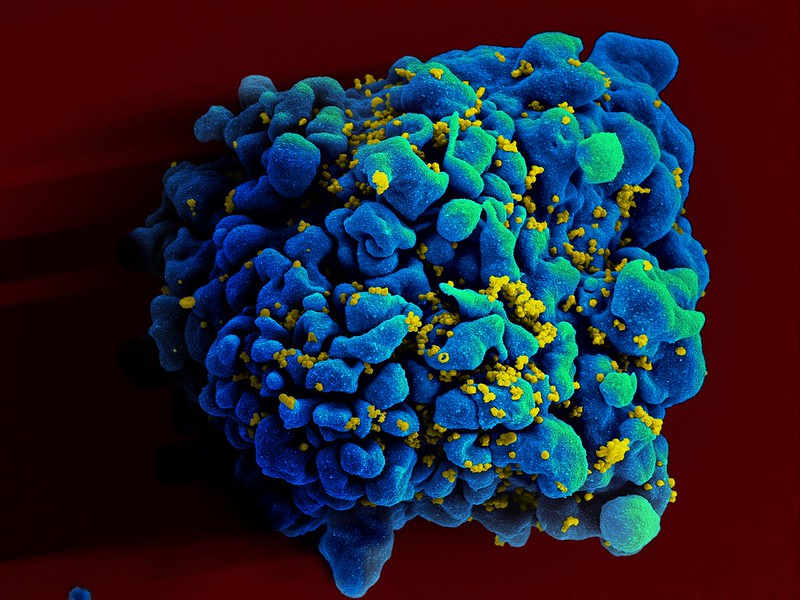
Colourised scanning electron micrograph of HIV (yellow) infecting a human T9 cell (blue). Credit: NIH

Highly effective treatments for HIV have existed since the mid-1990s. But while these treatments keep people healthy, we do not yet have a safe and scalable way to completely rid the body of the virus. In this Spotlight special briefing, Elri Voigt takes stock of where we are in the decades-long search for an HIV cure.

As the science stands, the vast majority of the roughly eight million people in South Africa living with HIV will have to take treatment for the rest of their lives. This is because the antiretrovirals used to treat HIV prevents the virus from replicating but cannot eliminate it from the body. As soon as treatment is stopped, the virus rebounds, resulting in illness and eventually an early death.

A handful of people have been cured of HIV, but these “cures” involve very risky bone marrow transplants given as part of cancer treatment. The harsh reality is that 40 years into the HIV epidemic, and despite major scientific advances, we don’t yet have a viable cure for the roughly 40 million people on the planet who are living with the virus.

The good news, as one will see at any major AIDS conference these days, is that researchers around the world are working very hard to find a cure. In this #InTheSpotlight special briefing, we take a closer look at what progress has been made on this fascinating scientific journey and ask what the possible routes are toward an HIV cure.

What do we actually mean by a cure?

Dr Sharon Lewin, a leading figure in the world of HIV cure research and the inaugural director of the Peter Doherty Institute for Infection and Immunity in Melbourne, explains that a true “cure” for HIV would mean that there is not a single HIV infected cell left in a person’s body.

By contrast, “remission” would mean that the virus is still in the body, but it is being kept under control by the immune system. This could theoretically happen if the amount of HIV infected cells in a person’s body has been reduced to very low levels and the immune system’s ability to control those remaining cells has been enhanced. Basically, Lewin says, it is when the immune system does what antiretroviral therapy (ART) does without needing to take medication. Another term for this is ART-free viral load control.

There are some people living with HIV called “elite controllers” whose immune systems can naturally, without ART, control HIV. There are also extraordinary elite controllers, says Lewin, who through their immune response have been able to get rid of every single piece of the virus that they had in their bodies. Studying what is special about these rare people has been a key area of research in recent years.

Along with concepts like cure, remission, and control, it also helps to understand where vaccines fit in. As Jessica Salzwedel, the senior programme manager for research engagement at New York-based NGO AVAC, explains, a potential HIV vaccine might be therapeutic and not necessarily preventative. A therapeutic vaccine would be given to someone who is already living with HIV, in the hope that the vaccine would prime their immune system to better fight HIV or potentially clear it.

Why don’t we have a viable cure yet?

Finding cures for viral infections is not unheard of. In fact, one of the most consequential medical breakthroughs of the last decade or so was the development of a highly effective cure for hepatitis C. Unfortunately, it seems HIV is a much tougher nut to crack.

HIV works largely by invading a type of immune cell called a CD4 cell. Once inside, HIV writes its own genetic information into the cell’s DNA and then uses the cell’s machinery to produce more HIV. Eventually, the infected CD4 cell bursts and dies. Different types of antiretrovirals work by gumming up different stages of this process by which HIV invades and exploits CD4 cells. Most antiretroviral treatment regimens used today contain two drugs that target two different stages of this process. These medicines can drive HIV replication in the body down to near zero – which is why people who are stable on ART can live essentially normal, healthy lives.

Unfortunately, that is not the full story. As Lewin explains, the virus has a range of “tricks” that allows it to stay in someone’s body for much longer. One of those tricks is that HIV uses one of the immune system’s greatest assets against it. A person’s immune system contains cells that function as an immunological memory – essentially memory cells – which are designed to survive for a very long time. These memory cells, which include special CD4+ (CD4 positive) T-cells, contain information about which antigens it has encountered during a person’s lifetime. This helps the immune system recognise and kill those antigens faster the next time they enter the body.

HIV writes its own genetic code into some of these memory cells, which helps it stay in the body for as long as that person is alive. Lewin explains that once someone is on treatment, these immune system cells infected with HIV go silent and the virus stops replicating. These silent cells that contain infectious virus are rare, about one in every million, and can’t be found easily by the immune system, allowing the virus to hide in an inactive state but still able to release virus should the cell one day be activated.

These memory cells are found mainly in the lymph nodes, although they can also hide away in the gut, the spleen, and even the brain. Collectively, these HIV-infected cells in hiding are known as the latent reservoir. Should someone stop taking antiretroviral treatment, some of the cells in this latent reservoir could reactivate and start replicating again.

Lewin says researchers are getting better at finding these latent HIV-infected cells, but there still isn’t a way to easily tag these cells and destroy them.

Three lines of investigation

According to Lewin, researchers are exploring three broad strategies in search of an HIV cure.

Firstly, with a strategy called “shock and kill”, researchers try to reactivate (shock) the virus in the cells where it is hiding and then destroy (kill) it once it is flushed out. Such an approach will likely require at least two medicines – one to shock and one to kill. Unfortunately, attempts to find treatments that reliably shock HIV-infected cells out of their slumber has not borne much fruit so far.

Secondly, with “block and lock”, researchers hope to permanently silence the HIV that is hiding away in a person’s body. The aim here is to keep HIV latent for good, so that we never need to worry about killing it. This approach might involve using ART together with a latency promoting agent, of which several are currently being researched. “Block and lock” approaches have been picking up momentum in recent years.

Thirdly, with gene editing, researchers aim to “edit” cells to make them resistant to HIV or remove HIV from them. For example, CD4 cells can be modified to not have the specific receptor called CCR5 that HIV requires to gain entry into the cell. Essentially, if you remove the CCR5 receptor from a cell, HIV has no way in and the cell becomes immune to HIV. In this area, there have been some tantalising developments, but nothing yet that amounts to a workable cure. For example, in one study, people had their blood drawn, the CCR5 receptors removed from the CD4 cells in the blood, and then had the blood reinfused. It worked somewhat, but not nearly well enough to call it a cure.

These three categories are not the only way to think about potential cures.

Broadly, we can think about there being two big “buckets” of approaches for an HIV cure, says Salzwedel. The first “bucket” of approaches targets the virus, and those approaches are trying to remove HIV from the cell or “silencing” it so even if it is still present there is no replication. The other “bucket” of approaches looks at the host – or the person living with HIV – and improving their immune system so it can adequately kill HIV or make the cells that have HIV in them easier to spot so these cells can’t hide from the immune system. She says a combination of approaches from both “buckets” will probably need to be used for a cure.

resource of HIV cure trials maintained by Treatment Action Group, a New York-based advocacy organisation, lists hundreds of clinical trials currently underway that are trying these different approaches or combinations of approaches.

What about the people who have been cured?

As mentioned earlier, one area of research has involved trying to understand “elite controllers”. Another critically important group of people in the search for a cure are the seven or so people who were living with HIV, but who have been cured. Some of these people, like Timothy Ray Brown and Adam Castillejo, have become minor celebrities in the HIV world.

Lewin explains that people like Brown and Castallejo, both of whom have essentially no HIV left in their bodies, had to go through interventions that can’t be replicated in everyone. Both had a type of blood cancer and were living with HIV. They had to undergo chemotherapy which wiped out their bone marrow, including the cells that had HIV in them. They were then given a whole new bone marrow system through a donation from someone who was naturally resistant to HIV since their CD4 cells do not have CCR5 receptors. This allowed the latently infected cells to be “flushed out” of their bodies. One of the other people cured of HIV received a bone marrow transplant from umbilical cord blood.

Such transplants are not things you can do for everyone who is living with HIV, its expensive and the severe risks of the procedure can only be taken in people living with both HIV and certain cancers. Even so, these cases, says Salzwedel, has shown us that it is possible to cure HIV and made us aware of some of the challenges.

Lewin says that cases like those of Brown and Castallejo helped advance gene editing approaches because they showed that not having CCR5 receptors makes CD4 cells essentially immune to HIV. This led to studies using special gene scissors – a technique called CRISPR – to find the gene for the CCR5 receptor in cells and remove it. CRISPR has also been used experimentally to remove HIV from cells.

So far only a small number of studies have been conducted using CRISPR-based gene editing approaches in an attempt to cure HIV – and these were mostly in the lab or in mice and monkeys. The first human gene editing study for CCR5 was done ex vivo – meaning cells were taken out of the body, edited, and then reinfused into the body. The first clinical trial of CRISPR for HIV in vivo – meaning it is done inside the body –  is currently underway and early results were presented in July at the AIDS 2024 conference. While initial results in monkeys were promising, the early findings in humans were disappointing. EBT-101, the specific type of CRISPR treatment, did not prevent HIV from returning once treatment was stopped – although one study participant’s HIV only started replicating again after 16 weeks. A longer follow-up study is currently open in the United States for enrolment.

Gene editing could also potentially be used to strengthen the immune system. This could work, Lewin explains, by inserting a new gene that produces an antibody against HIV into cells and then putting those cells back into the body. “So instead of giving an infusion of an antibody, your own body makes the antibody. And that’s been done successfully in people with HIV on ART in two separate clinical trials and more recently in infant monkeys where ART was stopped,” she says. “The investigators injected CRISPR that delivered two different antibodies to infant monkeys who are infected with a monkey adapted form of HIV virus and on ART. The infant monkey’s muscle cells then start making the antibodies, and when they stopped ART, the antibodies kicked in and kept the virus under control, so that’s the most successful type of gene therapy,” Lewin says.

Boosting the immune response

Another promising avenue is broadly neutralising antibodies (bNAbs) – the broadly refers to the ability of these antibodies to neutralise a range of different HIV viral strains. Broadly neutralising antibodies can work as an antiviral while present in the body, but they can also trigger the immune system to control the virus and, according to Lewin, figuring out how bNAbs do this is a very important part of current cure research. Broadly neutralising antibodies that are HIV specific, work by binding with the virus and eliminating it while also enhancing a person’s immune system so it can control the virus that remains in the body by hiding in the immune system’s memory cells. Broadly neutralising antibodies potentially have this beneficial effect on immune control by activating CD4 and CD8 responses – part of the immune system’s defence – to kill HIV cells. There have been several clinical trials where a subset of participants who have been given bNAbs have been able to control the HIV virus for six months after stopping ART and when the bNAbs are no longer detected in blood. The scientific challenge is that this beneficial effect was only seen in a subset of participants and the duration of control is not fully understood as most clinical trials only assess participants up to 24 weeks off of ART.

Lewin says a small study has also looked at using anti-PD1, an antibody that reverses immune system exhaustion and essentially “revs” up the immune system to keep fighting HIV. Early study findings were presented at the Conference on Retroviruses and Opportunistic Infections (CROI) this year. Participants stopped ART and were given four doses of the antibody, called Budigalimab, or placebo over 29 weeks. Six out of the nine people who received the antibody had delayed viral rebound and/or ART free control, and two people had viral control off ART for over 29 weeks. The antibody will now be evaluated in a larger study.

Additional approaches, according to Dr Daniel Douek, an expert in immunology and the Chief of the Human Immunology Section at the National Institute of Allergy and Infectious Diseases in the United States, include HIV vaccines, which so far have not generated a strong enough immune response to be considered successful. Douek was speaking on an IAS webinar on HIV cure research. Another promising approach is to start someone on ART as quickly as possible after infection in the hope of preventing the establishment of the latent reservoir.
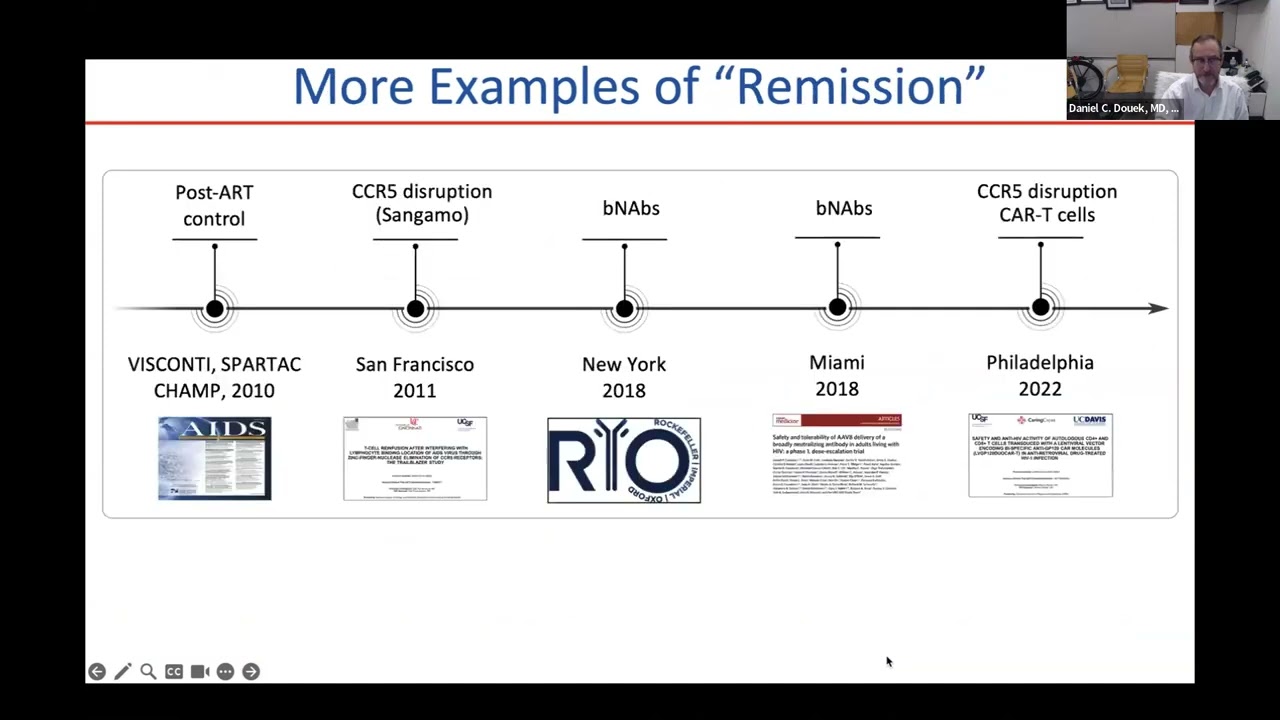
YouTube video

Suppressing the immune system with a drug has also been tried, says Douek, and research so far in this area warrants further investigation. While it seems counterintuitive, the researchers wanted to see if suppressing immune system cells might stop or reduce HIV replication because the virus likes to replicate in activated immune cells. People living with HIV, even when on treatment have a lot of activated immune cells. The drug Ruxolitnib, which is used to treat graft-versus-host disease in transplant patients, was given to 60 people living with HIV alongside their HIV treatment. After five weeks, there was a decrease in markers of immune activation and cell survival. And between five and 12 weeks of using this combination, those with large viral reservoirs displayed signs that their reservoirs were reducing in size. However, Douek cautioned that much more work needs to be done before we can draw firm conclusions about the value of this approach .

What comes next?

Though we don’t yet have a viable cure for HIV, Lewin says a lot of progress has been made, especially over the decade and a half since Brown was cured. We now know a lot more than we did about the virus and how it hides away in cells. Today, she says, we have cure interventions that work well in monkeys and some interventions being investigated in human clinical trials have induced ART-free viral control in some participants. But she is also clear that it will probably be “a very long time” before you can go to your doctor and get an HIV cure.

In this #InTheSpotlight special briefing, we have focused on the science, but as we have learnt from the new hepatitis C cures and from HIV prevention injections, the journey from the lab to your local clinic can be a very long one and involves far more than just the science.

According to Lewin, a successful HIV cure will have to tick several boxes. She says one needs an intervention that is durable, so that it leads to ART-free viral load control over a prolonged period of time. At this point, an intervention that allows for control over two, three or five years, is seen as worthwhile. Although the ideal would be to give something once and have ART-free viral load control over a lifetime. The intervention also needs to be scalable, so it can be given to a lot of people. It also needs to be cheap.

And if there is one insight we’ve gained over our many years covering HIV, it is that affordability and sufficient supply are not things we can take for granted. Given that many of the potential cures involve treatments that are substantially more complicated to produce and administer than antiretrovirals, the challenges here might be more acute than what we’ve seen before.

That we will eventually get a cure is also by no means inevitable. This is why it is critically important that governments and philanthropies continue to invest in cure research and support programmes such as the International AIDS Society’s Toward an HIV Cure initiative. Among others, this initiative is helping to build the capacity needed to conduct cure research in low-and-middle income countries.

Right now, even under a best-case scenario, a world without a cure will mean that many millions of people will still be living with HIV until late in the 21st century. A successful cure could change this trajectory. Ultimately, Salzwedel is right when she says: “We can’t really end an epidemic without a cure”.

Republished from Spotlight under a Creative Commons licence.
Read the original article

An Ancient Brain Area Processes Numerical Concepts

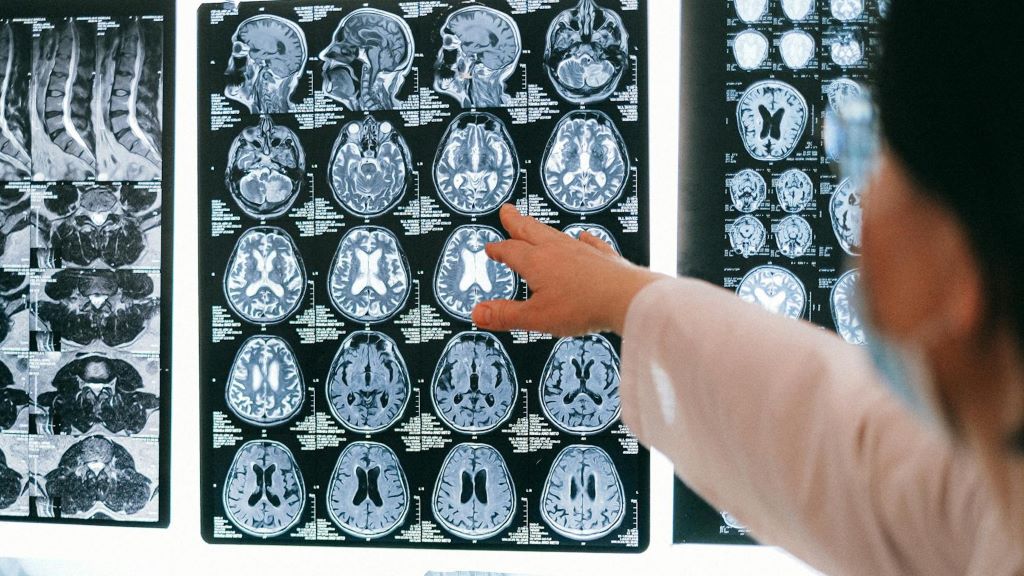
Photo by Anna Shvets

New research in patients undergoing neurosurgery reveals the unique human ability to conceptualise numbers may be rooted deep within the brain. In good news for those who are stumped by maths, the results of the study by Oregon Health & Science University involving neurosurgery patients suggests new possibilities for tapping into those areas to improve learning.

“This work lays the foundation to deeper understanding of number, math and symbol cognition – something that is uniquely human,” said senior author Ahmed Raslan, MD, professor and chair of neurological surgery in the OHSU School of Medicine. “The implications are far-reaching.”

The study appears in the journal PLOS ONE.

Raslan and co-authors recruited 13 people with epilepsy who were undergoing a commonly used surgical intervention to map the exact location within their brains where seizures originate, a procedure known as stereotactic electroencephalography. During the procedure, researchers asked the patients a series of questions that prompted them to think about numbers as symbols (for example, 3), as words (“three”) and as concepts (a series of three dots).

As the patients responded, researchers found activity in a surprising place: the putamen.

Located deep within the basal ganglia above the brain stem, the putamen is an area of the brain primarily associated with elemental functions, such as movement, and some cognitive function, but rarely with higher-order aspects of human intelligence like solving calculus. Neuroscientists typically ascribe consciousness and abstract thought to the cerebral cortex, which evolved later in human evolution and wraps around the brain’s outer layer in folded grey matter.

“That likely means the human ability to process numbers is something that we acquired early during evolution,” Raslan said. “There is something deeper in the brain that gives us this capacity to leap to where we are today.”

Researchers also found activity as expected in regions of the brain that encode visual and auditory inputs, as well as the parietal lobe, which is known to be involved in numerical and calculation-related functions.

From a practical standpoint, the findings could prove useful in avoiding important areas during surgeries to remove tumors or epilepsy focal points, or in placing neurostimulators designed to stop seizures.

“Brain areas involved in processing numbers can be delineated and extra care taken to avoid damaging these areas during neurosurgical interventions,” said lead author Alexander Rockhill, PhD, a postdoc in Raslan’s lab.

Researchers credited the patients involved in the study.

“We are extremely grateful to our epilepsy patients for their willingness to participate in this research,” said co-author Christian Lopez Ramos, MD, neurosurgical resident at OHSU. “Their involvement in answering our questions during surgery turned out to be the key to advancing scientific understanding about how our brain evolved in the deep past and how it works today.”

Indeed, the study follows previous lines of research involving mapping of the human brain during surgery.

“I have access to the most valuable human data in nature,” Raslan said. “It would be a shame to miss an opportunity to understand how the brain and mind function. All we have to do is ask the right questions.”

In the next stage of this line of research, Raslan anticipates discerning areas of the brain capable of performing other higher-level functions.

Source: Ohio State University

Point-of-care Ultrasound Enhances Early Pregnancy Care, Cuts Emergency Visits by 81%

Photo by Mart Production on Pexels

Published in Annals of Family Medicine, a University of Minnesota Medical School research team found that implementing point-of-care ultrasounds (POCUS) to assess the viability and gestational age of pregnancies in the first trimester enhanced care for pregnant patients and cut emergency visits by 81% for non-miscarrying patients.

Previously, early pregnancy care was provided through separate appointments for ultrasound, risk assessment and patient education. This new integrated approach allows patients who are under 14 weeks pregnant to receive comprehensive care during a single visit. This includes ultrasound-based pregnancy dating, immediate assessment of pregnancy viability, risk evaluation and on-site counselling – all based on real-time ultrasound results.

“Our study demonstrates that the use of point-of-care ultrasound provides meaningful benefit to the patients we serve by addressing early pregnancy problems at the time they are identified,” said Allison Newman, MD, an assistant professor at the U of M Medical School and family medicine physician at M Health Fairview Clinic. “POCUS in early pregnancy helps clinicians more efficiently and accurately diagnose problems without compromising the quality of needed first trimester assessments – saving time, money and stress for patients.”

The research team introduced this integrated approach at M Health Fairview Clinic – Bethesda in autumn 2022, allowing the clinic to quickly identify high-risk cases and offer timely intervention for issues such as miscarriage or abnormal pregnancies. They found:

  • The clinic saw an 81% reduction in emergency visits, urgent clinic appointments and first-trimester phone inquiries for non-miscarrying patients. 
  • Clinic implementation led to more timely diagnosis of abnormal pregnancies and improved education and support for all patients, including those who experience miscarriage. 
  • For miscarriage cases, the time from initial concern to diagnosis decreased from an average of 5.8 days to 1.7 days.

Suggested next steps include rolling out the process more widely within other family medicine practices and performing a wider study across multiple sites.

Source: University of Michigan

Does Obesity Affect Children’s Chances of Survival after Cancer Diagnosis?

Photo by Patrick Fore on Unsplash

A recent population-based study indicates that among children with cancer, those with obesity at the time of diagnosis may face an elevated risk of dying. The findings are published by Wiley online in CANCER, a peer-reviewed journal of the American Cancer Society.

The retrospective study was based on information from the Cancer in Young People in Canada (CYP-C) database, including all children with newly diagnosed cancer aged 2 to 18 years across Canada from 2001 to 2020. Obesity was defined as age and sex-adjusted body mass index at or above the 95th percentile.

Among 11 291 children with cancer, 10.5% were obese at the time of diagnosis. Investigators assessed 5-year event-free survival (survival free of cancer relapse), as well as overall survival.

Compared with patients without obesity at the time of initial cancer diagnosis, those with obesity had lower rates of 5-year event-free survival (77.5% versus 79.6%) and overall survival (83.0% versus 85.9%).

After adjusting for factors including age, sex, ethnicity, neighbourhood income quintile, treatment era, and cancer categories, obesity at diagnosis was linked with a 16% increase in the risk of relapse and a 29% increase in the risk of death. The negative impact of obesity on prognosis was especially pronounced in patients with acute lymphoblastic leukaemia and brain tumours.

“Our study highlights the negative impact of obesity among all types of childhood cancers. It provides the rationale to evaluate different strategies to mitigate the adverse risk of obesity on cancer outcomes in future trials,” said co–senior author Thai Hoa Tran, MD, of the Centre Hospitalier Universitaire Sainte-Justine, in Montreal. “It also reinforces the urgent need to reduce the epidemic of childhood obesity as it can result in significant health consequences.”

Source: Wiley

New Blood Test for Pancreatic Cancer Exceeds Gold Standard

Pancreatic cancer. Credit: Scientific Animations CC BY-SA 4.0

A recent double-blinded, peer-reviewed analysis published in Cancer Letters revealed that an experimental test for pancreatic cancer correctly identified 71% of lab samples compared to only 44% correctly identified by the current gold-standard test.

An experimental blood test for pancreatic cancer that was developed by teams led by VAI Professor Brian Haab, PhD, and Randall E. Brand, MD, a physician-scientist and professor of medicine at the University of Pittsburgh, created the test. This evaluation by a commercial laboratory is an important milestone toward making the test available for patients.

Before the new test can be used by doctors to diagnose cancer, it must undergo clinical validation. During this process, a CLIA-accredited diagnostics laboratory adapts the experimental test into a version that reliably works under the strict conditions in a clinical lab. CLIA is a rigorous federal standard that ensures lab quality.

“Validation studies are essential for transforming a test developed in an academic lab into one that is used to diagnose real people,” Haab said. “For a person being evaluated for pancreatic cancer, the stakes are high. Validation studies ensure that new tests work as intended.”

The new test works by detecting two sugars — CA199.STRA and CA19-9 — that are produced by pancreatic cancer cells and escape into the bloodstream. CA19-9 is the current gold-standard biomarker for pancreatic cancer. Haab’s lab identified CA199.STRA as a cancer biomarker and developed the technology to detect it.

The new test also greatly reduced the number of false negatives while maintaining a low false positive rate, according to the recent analysis. Low rates of false positives and false negatives are important because they reflect the test’s ability to correctly identify the presence or absence of cancer.

Clinical validation of the test will be conducted by ReligenDx, a CLIA-accredited diagnostics lab based in Pennsylvania. The process is expected to take two years.  

If successful in clinical validation, Haab envisions the test being used in two main ways: 1. Catching pancreatic cancer more quickly in people at high risk of the disease, which would enable earlier treatment and 2. Monitoring progression and treatment response in people diagnosed with pancreatic cancer.

Source: Van Andel Research Institute

How Blood Vessel Dysfunction can Worsen Chronic Disease

Source: CC0

Researchers have uncovered how specialised cells surrounding small blood vessels, known as perivascular cells, contribute to blood vessel dysfunction in chronic diseases such as cancer, diabetes and fibrosis. The findings, published today in Science Advances, could change how these diseases are treated.

This new study from Oregon Health & Science University shows that perivascular cells sense changes in nearby tissues and send signals that disrupt blood vessel function, worsening disease progression. It was led by he study, led by OHSU’s Luiz Bertassoni, DDS, PhD. 

Nearly a decade ago, Bertassoni and his team developed a method to 3D print blood vessels in the lab, a major breakthrough. Since then, they’ve focused on engineering blood vessels that better mimic those in the human body to study more complex diseases.

“Historically, endothelial cells lining blood vessels have been considered the main contributors of vascular disease,” Bertassoni said. “Our findings represent a paradigm shift, showing how perivascular cells, instead, act as important sentinels. They detect changes in tissues and coordinating vascular responses. This opens the door to entirely new treatment strategies.”

Cristiane Miranda Franca, DDS, PhD, the study’s lead author, said: “The applications of this research are wide. We’ve shown for the first time how perivascular cells trigger inflammation and signal blood vessel changes when surrounding tissues are altered.”

The study used an innovative “blood vessel on-a-chip” model developed by Christopher Chen, MD, PhD, and his team from Boston University and the Wyss Institute at Harvard, who are collaborators on this project. By replicating conditions like tissue stiffening and scarring – common in aging, chronic diseases and cancer – the researchers discovered that perivascular cells drive blood vessel leakage and distortion, worsening inflammation and disease.

“When we removed perivascular cells, blood vessels essentially failed to respond to tissue changes,” Franca said.

The findings shed light on the relationship between the extracellular matrix, blood vessel function and disease progression. Perivascular cells could become targets for therapies aimed at restoring normal vascular function and reducing the progression of various diseases such as fibrosis, diabetes and cancer.

Importantly, the research also holds promise for cancer prevention and early intervention. Early detection and treatment of changes in these cells could help stop tumours before they grow.

“If we intervene early, we might prevent precancerous lesions from advancing to full-blown cancer,” Bertassoni said. “This could revolutionise how we approach cancer prevention and treatment.”

Source: Oregon Health & Science University

Prevention or Crisis: the Hidden Economics of South Africa’s Healthcare Choice

By Dr Yaseen Khan, co-founder and CEO of digital healthcare platform EMGuidance

As South Africa grapples with healthcare costs that consistently outpace inflation, medical aids recently announcing price increases of 10% or more this year, and the proposed National Health Insurance (NHI) estimated to cost as much as R1.3 trillion, the need for innovative solutions has become increasingly urgent.

While much attention in health innovation has focused on specialised solutions and hospital services, evidence points to an underutilised solution: robust primary healthcare (PHC) enhanced by digital innovation. This approach could meaningfully impact the chronic disease prevalence in our country through adequate early diagnosis and preventative treatment using tech and other digital tools. Also, it’s important to bear in mind that managing chronic conditions accounts for the majority of healthcare costs, especially for non-communicable diseases.

The current reactive approach to healthcare is proving unsustainable. Recent data from the Council for Medical Schemes shows that South African medical schemes spend nearly 40% of their resources on hospital-based care, approximately 30% on specialists and downstream care, while less than 10% goes to preventive and primary care services.

In addition, given increasing medical aid costs, more people are opting for low-cost health insurance products that serve primary needs without (or with limited) hospital cover. Recent estimates show that there are now about 1.5 million policyholders using low-cost insurance offerings.

The World Health Organization (WHO) estimates that scaling up primary healthcare interventions across low and middle-income countries could save 60 million lives and increase average life expectancy by 3.7 years by 2030, calling it “the most inclusive, equitable, cost-effective and efficient approach to enhance people’s physical and mental health”.

In addition, it has urged governments and health authorities to refocus and re-strategise on what PHC should be, while innovating to “harness current and future technological advances; and, ultimately, return to and strengthen the human connection between health providers and those they serve”.

GPs are also struggling under large patient loads, as well as trying to juggle the varying requirements of medical aids, multiple digital platforms and networks, and trying to do the best for their patients, optimising for both their health and their pockets, while also keeping track of local public health matters such as vaccine drives and infection screening programmes. This leaves very little time for basic cardiovascular or cancer screening in patients who are high-risk, for instance.

All of this is a starting point for a coordinated and guided digital platform where doctors can get the best out of the system for each patient – choosing the right medicine for them and selecting what the scheme will cover, referring them to the right network hospital, selecting the right network specialist, and really maximising primary healthcare by supporting clinical behaviour tuned to identifying chronic disease and ensuring that high-risk patients are managed aggressively. It’s what “prevention is better than cure” looks like, and will save costs for patients, medical schemes and even the government over the long term.

Both private healthcare providers and medical schemes stand to gain significantly from lower hospital admission rates, a reduction in specialist visits, and better chronic disease management. Proven digital health solutions could also be scaled nationally to assist the NHI with optimised resource allocation, and the implementation of successful preventive care models.

To maximise benefits, several key elements will have to be prioritised in terms of infrastructure development: we need secure digital platforms that integrate existing healthcare systems and portals, and the development of user-friendly interfaces. The goal is to deliver a platform that will make life easier for busy GPs, ease the friction for patients, healthcare practitioners (HCPs) and schemes alike when it comes to managing benefits, and produce better health outcomes at a lower cost.

For South Africa’s healthcare sector, the combination of strengthened primary care and digital innovation presents a compelling opportunity to contain costs while improving care quality. With non-communicable diseases accounting for 55.7% of all deaths in South Africa, and diabetes alone costing the country R2.7 billion annually, the economic case for prevention and early intervention is clear.

Solving for digital adoption among local healthcare providers is fundamental. Providers are overrun with multiple different systems and portals, so simplification of practice systems through integration, enhancing user-friendliness, leveraging systems that are already used, and mobile capabilities is key. A single platform that facilitates co-ordination and collaboration among the various stakeholders in the health sector holds enormous benefits for providers, schemes and patients alike.

The private sector’s experience with digital health solutions and preventive care could also provide valuable insights for both the public and private healthcare sectors, helping to shape a more efficient and sustainable healthcare system for all South Africans. The challenge now lies in accelerating this digital transformation, while ensuring that the human element of healthcare remains central to service delivery.

Heart Rate Activity Influences When Infants Speak

Photo by Johnny Cohen on Unsplash

The soft, gentle murmurs of a baby’s first expressions, like little whispers of joy and wonder to doting parents, are actually signs that the baby’s heart is working rhythmically in concert with developing speech.

Jeremy I. Borjon, University of Houston assistant professor of psychology, reports in Proceedings of the National Academy of Sciences that a baby’s first sweet sounds and early attempts at forming words are directly linked to the baby’s heart rate. The findings have implications for understanding language development and potential early indicators of speech and communication disorders.

For infants, producing recognisable speech is more than a cognitive process. It is a motor skill that requires them to learn to coordinate multiple muscles of varying function across their body. This coordination is directly linked to ongoing fluctuations in heart rate.

Borjon investigated whether these fluctuations in heart rate coincide with vocal production and word production in 24-month-old babies. He found that heart rate fluctuations align with the timing of vocalizations and are associated with their duration and the likelihood of producing recognisable speech.

“Heart rate naturally fluctuates in all mammals, steadily increasing then decreasing in a rhythmic pattern. It turns out infants were most likely to make a vocalisation when their heart rate fluctuation had reached a local peak (maximum) or local trough (minimum),” reports Borjon.

“Vocalisations produced at the peak were longer than expected by chance. Vocalisations produced just before the trough, while heart rate is decelerating, were more likely to be recognised as a word by naïve listener,” he said.

Borjon and team measured a total of 2708 vocalisations emitted by 34 infants between 18 and 27 months of age while the babies played with a caregiver. Infants in this age group typically don’t speak whole words yet, and only a small subset of the vocalisations could be reliably identified as words by naïve listeners (10.3%). For the study, the team considered the heart rate dynamics of all sounds made by the baby’s mouth, be it a laugh, a babble or a coo.

“Every sound an infant makes helps their brain and body learn how to coordinate with each other, eventually leading to speech,” Borjon said.

As infants grow, their autonomic nervous system grows and develops. The first few years of life are marked by significant changes in how the heart and lungs function, and these changes continue throughout a person’s life.

The relationship between recognisable vocalisations and decelerating heart rate may imply that the successful development of speech partially depends on infants experiencing predictable ranges of autonomic activity through development.

“Understanding how the autonomic nervous system relates to infant vocalisations over development is a critical avenue of future research for understanding how language emerges, as well as risk factors for atypical language development,” said Borjon

Source: University of Houston

Sub-Saharan Africa Leads Global HIV Decline

Photo by Sergey Mikheev on Unsplash

The Institute for Health Metrics and Evaluation (IHME) has published a new study in The Lancet HIV journal that revealed significant progress in the global fight against HIV/AIDS, alongside a stark warning that current trends indicate the world is not on track to meet the ambitious UNAIDS 2030 targets.

The research, which analysed the global, regional, and national burden of HIV/AIDS among 204 countries and territories from 1990 to 2021 and forecasted trends to 2050, highlighted a mixed landscape of achievements and challenges in the battle against this global epidemic.

Between 2010 and 2021, new HIV infections decreased from 2.1 million to 1.7 million, and HIV-related deaths decreased from 1.2 million to 718 000. Despite this progress, researchers found regional variation in the HIV response and forecast the world is not on track to meet UNAIDS 2030 targets to cut new HIV infections and AIDS-related deaths by 90%.

Sub-Saharan Africa leads the world in cutting new HIV infections and deaths from the disease

The global decline in HIV incidence is largely driven by sub-Saharan Africa, where the likelihood of getting HIV over a lifetime has fallen by 60% since its peak in 1995. This region also achieved the largest decrease in population without a suppressed level of HIV (PUV), from 19.7 million people in 2003 to 11.3 million people in 2021.

In contrast, the lifetime probability of HIV acquisition increased from 0.4% to 2.8% between 1995 and 2021, while PUV rose from 310 000 people to 680 000 people between 2003 and 2021 in Central Europe, Eastern Europe, and Central Asia.

“The world has made remarkable global progress to significantly reduce the number of new HIV infections and lives lost to the disease, yet there are remaining challenges to overcome,” said Dr. Hmwe Kyu, IHME Associate Professor and study author. “More than a million people acquire a new HIV infection each year and, of the 40 million people living with HIV, a quarter are not receiving treatment,” she added.

Despite progress, UNAIDS’s HIV infection reduction and AIDS-related deaths 2030 targets won’t be met

Although substantial progress has been made against HIV incidence and AIDS-related mortality, the world is not on target to meet the UN’s 2030 targets to reduce new HIV infections and AIDS-related deaths by 90%.

The number of people living with HIV is expected to peak at 44.4 million by 2039, followed by a gradual decrease to 43.4 million people by 2050.

“The global community must make sustained and substantive efforts to sharpen the focus on prevention, optimize access to antiretroviral therapy, and make HIV testing widely available to achieve prompt diagnosis and linkage to care,” said Dr. Kyu.

New cases of HIV, and deaths associated with the disease, are expected to continue to decrease globally. However, long-term increases have been forecast in North Africa and the Middle East, where only 67% of people living with HIV are aware of their status, 50% access ART, and 45% are virally suppressed.

“Although new HIV infections and HIV-related mortality have fallen globally, they are increasing in several nations and regions. Our analysis is designed to inform countries’ sustained response to HIV that includes expanded access to lifesaving antiretroviral therapy (ART), effective prevention options, and innovative care models,” said Austin Carter, IHME Research Scientist.

The study authors set a series of recommendations to sustain and invigorate the global HIV response, including the strengthening of the US President’s Emergency Plan for AIDS Relief (PEPFAR) and other similar public health programs dedicated to HIV control, as well as the expansion of prevention services, with a multitude of existing and emerging technologies. Additionally, interventions and care delivery models that work must be studied and implemented effectively and equitably, with special emphasis on measuring progress and addressing remaining gaps in our collective goal of ending the HIV epidemic.

The findings and recommendations from the new study by the GBD 2021 HIV collaborators serve as a call to action for governments, health care providers, and the global community to renew their commitment to ending the HIV epidemic. Only through sustained, comprehensive, and equitable efforts will the world be able to achieve the UNAIDS 2030 targets and ultimately eradicate HIV/AIDS as a public health threat.

Source: Institute for Health Metrics and Evaluation

PCT Test Fails to Shorten IV Antibiotics for Hospitalised Children

Photo by Marcelo Leal on Unsplash

A groundbreaking UK study led by the University of Liverpool has examined whether an additional procalcitonin (PCT) blood test could safely shorten the time children spend on intravenous (IV) antibiotics in hospitals. Despite promising previous analysis, the findings showed that using the PCT biomarker to guide treatment decisions did not reduce antibiotic duration when compared to usual care.

The study, published in the Lancet Child & Adolescent Health, is part of the ‘Biomarker-guided duration of Antibiotic Treatment in Children Hospitalised with confirmed or suspected bacterial infection’ (BATCH) trial. BATCH is a UK national research trial to tackle antibiotic overuse in hospitalised children and reduce the spread of antimicrobial resistance (AMR).

Antibiotic overuse is a key driver of AMR, one of the world’s greatest public health challenges. Infections caused by resistant bacteria lead to longer hospital stays, higher healthcare costs, and increased mortality. Children are especially vulnerable, and smarter use of antibiotics is essential to protect their future health.

This study, conducted across 15 hospitals, enrolled nearly 2000 children aged between 72 hours and 18 years with suspected bacterial infections.

The researchers found that adding the PCT test to routine care did not reduce the duration of IV antibiotic use. The test was safe but costlier than standard methods, and healthcare teams faced challenges integrating it into their decision-making processes.

The study comes after a systematic review and cost-effectiveness analysis conducted by NICE in 2015 evaluated PCT testing to guide antibiotic therapy for the treatment of sepsis, and recommended further studies to adequately assess the effectiveness of adding PCT algorithms to guide antibiotic treatment in hospitalised adults and children with suspected or confirmed serious bacterial infection.

The results highlight that introducing new tools like PCT tests alone isn’t enough. Effective use requires:

  • Robust Antimicrobial Stewardship (AMS) programmes: Many hospitals already use AMS programmes to ensure antibiotics are prescribed responsibly, reducing unnecessary use.
  • Training and education for Clinicians: Familiarity with new tests and confidence in interpreting results are crucial for success.
  • Implementation research: Future studies should identify barriers and facilitators to implementation to optimise fidelity of the intervention.
  • Behaviour change: Better understanding of the complex interactions influencing whether/how/why clinicians act on information from diagnostic tests to make antibiotic prescribing decisions will improve trial intervention fidelity and facilitate implementation and adoption of tests shown to be effective.

The findings emphasise the importance of continuing to invest in AMS programmes and public health campaigns to reduce antibiotic misuse. The researchers note that although PCT-guided treatment didn’t provide clear benefits in this trial, it could still play a role in specific situations with further refinement.

Chief investigator Professor Enitan Carrol, from the University of Liverpool, said: “The BATCH study was a pragmatic trial evaluating if the intervention works under real-world conditions where clinicians do not have to adhere to diagnostic algorithms about antibiotic discontinuation. Adherence to the algorithm was low in our study, and there were challenges in integrating the test into routine clinical workflows. The study highlights the importance of including behaviour change and implementation frameworks into pragmatic trial designs.”

Source: University of Liverpool