Year: 2023

Sex Differences in Alzheimer’s Rates may be Caused by Stress Responses

Photo by Ravi Patel on Unsplash

Women are about twice as likely as men to be diagnosed with Alzheimer’s disease. Some of that is age: women outlive men in most countries, and advanced age is the strongest risk factor for Alzheimer’s. But not all of it explains the excess risk.

One such factor may be stress may be one such reason. A study published in Brain shows that the effect stress has on the brain differs by sex, at least in mice. In stressful situations, levels of the Alzheimer’s protein amyloid beta rises sharply in the brains of females but not males. In addition, the researchers identified a molecular pathway that is active in brain cells from female mice but not male mice, and showed that it accounts for the divergent responses to stress.

The findings, from researchers at Washington University School of Medicine in St. Louis, add to a growing collection of evidence that sex matters in health and disease. From cancer to heart disease to arthritis, scientists have found differences between males and females that could potentially affect how men and women respond to efforts to prevent or treat chronic diseases.

“How women respond to stress versus how men respond to stress is an important area of research that has implications for not just Alzheimer’s disease but other conditions, too,” said co-corresponding author Carla M. Yuede, PhD, an associate professor of psychiatry. “In recent years, the National Institutes of Health (NIH) has prioritized understanding sex differences in medicine. Stress is one area in which you can clearly see a difference between males and females. This study shows that reducing stress may be more beneficial for women than men, in terms of lowering the risk of Alzheimer’s disease.”

Stress falls into the category of socioeconomic risk factors, along with factors such as depression and social isolation, that together account for an estimated 8% of the risk of developing Alzheimer’s. That risk calculation, however, doesn’t take sex into account. Women consistently report higher levels of stress than men, and it affects them differently.

Corresponding author John Cirrito, PhD, an associate professor of neurology; Yuede; and first author Hannah Edwards, a graduate student in Cirrito’s lab, reasoned that stress also may affect women’s brains differently than men’s, and these differences may help explain the sex imbalance in Alzheimer’s disease.

To find out, they measured levels of amyloid beta in the brains of mice every hour for 22 hours, beginning eight hours before the mice experienced stress. The experience was equally stressful for male and female mice, as measured by the levels of stress hormones in their blood. But the responses in their brains were not the same.

In female mice, amyloid beta levels rose significantly within the first two hours and stayed elevated through the end of the monitoring period. In male mice, brain amyloid levels did not change overall, although about 20% of them did show a delayed and weak rise in amyloid levels.

Further experiments revealed that the difference comes down to a cellular stress response pathway in brain cells. Stress causes the release of a hormone known as corticotropin releasing factor. Neurons from female rodents take up the stress hormone, triggering a cascade of events that results in increasing levels of amyloid beta in the brain. In contrast, neurons from male rodents lack the ability to take up the stress hormone. It is not known whether there are similar sex differences in how human neurons take up stress hormones.

“There’s a fundamental biological difference between males and females in how they respond to stress at the cellular level, in both mice and people,” Cirrito said. “We don’t think that stress is the sole factor driving the sex difference in Alzheimer’s disease. There are many other differences between men and women – in hormones, lifestyle, other diseases they have – that undoubtedly contribute in some way. But that stress is driving one aspect of this sex difference I think is very likely.”

Source: Washington University School of Medicine

Gene Silencing Treatment Lowers Tau Proteins in Alzheimer’s Patients

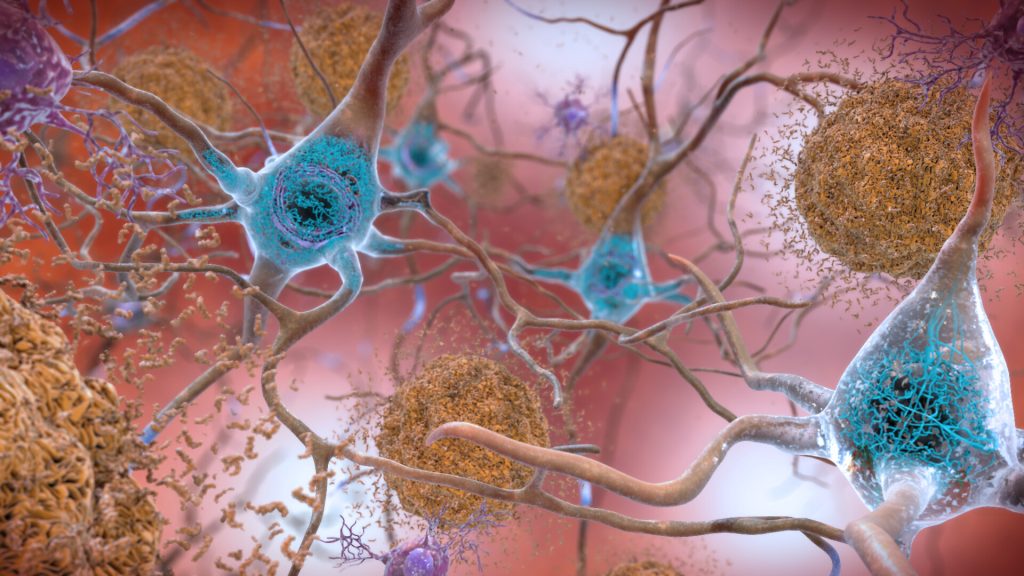
Neurons in the brain of an Alzheimer’s patient, with amyloid plaques caused by tau proteins. Credit: NIH

In a preliminary trial, a new ‘gene silencing’ treatment has been able to safely and successfully lower levels of the harmful tau protein known to cause the disease. This success, published in Nature Medicine, demonstrates that a ‘gene silencing’ approach could work in dementia and Alzheimer’s disease.

The approach uses a drug called BIIB080 (/IONIS-MAPTRx), which is an antisense oligonucleaotide (used to stop RNA producing a protein), to ‘silence’ the gene coding for the tau protein – known as the microtubule-associated protein tau (MAPT) gene. This prevents the gene from being translated into the protein in a doseable and reversible way. It also reduces production of that protein, altering the course of disease.

Further trials will be needed in larger groups of patients to determine whether this leads to clinical benefit, but the phase 1 results are the first indication that this method has a biological effect.

There are currently no treatments targeting tau. The drugs aducanumab and lecanemab – recently approved for use in some situations by the FDA – target a separate disease mechanism in AD, the accumulation of amyloid plaques.

The phase 1 trial enrolled 46 patients with an average age of 66, and looked at the safety of BIIB080, what it does in the body, and how well it targets the MAPT gene. The trial compared three doses of the drug, given by intrathecal injection (an injection into the nervous system via the spinal canal), with the placebo.

Results show that the drug was well tolerated, with all patients completing the treatment period and over 90% completing the post-treatment period.

Patients in both the treatment and placebo groups experienced either mild or moderate side effects – the most common being a headache after injection of the drug. However, no serious adverse events were seen in patients given the drug.

The research team also looked at two forms of the tau protein in the central nervous system (CNS) – a reliable indicator of disease – over the duration of the study.

They found a greater than 50% reduction in levels of total tau and phosphor tau concentration in the CNS after 24 weeks in the two treatment groups that received the highest dose of the drug.

Consultant neurologist Dr Catherine Mummery, who led the study, said: “We will need further research to understand the extent to which the drug can slow progression of physical symptoms of disease and evaluate the drug in older and larger groups of people and in more diverse populations.

“But the results are a significant step forward in demonstrating that we can successfully target tau with a gene silencing drug to slow – or possibly even reverse – Alzheimer’s disease, and other diseases caused by tau accumulation in the future.”

Source: Imperial College London

Higher Risk of Lymphoma in Patients Suffering from IBD

Source: CC0

Karolinska Institutet researchers have found that the risk of developing lymphoma is slightly elevated in inflammatory bowel disease (IBD) and, in recent years has been on the rise in patients with Crohn’s disease. Publishing in Clinical Gastroenterology and Hepatology, the researchers also observed a risk increase in patients taking modern IBD drugs, which was less strong for those not taking them. Thus, the lymphoma risk could be affected by both the medication and the disease activity itself.

Inflammatory bowel disease (IBD), which includes Crohn’s disease and ulcerative colitis, is a chronic intestinal inflammation that can increase the risk of developing lymph node cancer (lymphoma), a disease that affects the immune system.  

“Previous studies of the lymphoma risk of IBD have been too small to draw reliable conclusions,” says the study’s first author Ola Olén, consultant and docent at the Department of Medicine (Solna), Karolinska Institutet. “The studies have not taken into account of important systematic errors or been representative of today’s IBD patients.”  

The present study included almost 170 000 IBD patients identified in Swedish and Danish national registries between 1969 and 2019. Compared to patients with a matched population without IBD, patients with both Crohn’s disease and ulcerative colitis had a higher risk of lymphoma. The highest risk was in patients with Crohn’s disease, the increase being driven mainly by T-cell lymphoma and aggressive B-cell lymphoma.

“We found an elevated relative risk of different types of lymphoma in both Crohn’s disease and ulcerative colitis, but we need to point out that the absolute risk is very low,” says the study’s last author Jonas F Ludvigsson, consultant and professor at Karolinska Institutet.

“The increase in risk equates to only one extra case of lymphoma in 1000 people with IBD, who were followed for ten years.”

“Both inflammation and treatment play a part”

The risk of lymphoma has increased in patients with Crohn’s disease over the past two decades, which coincides with the increasing use of immunomodulating drugs for IBD. While the highest risk of developing the cancer was observed in patients who had received these drugs, the researchers found that patients who were not on such medication were also at a higher risk of lymphoma. 

“This finding indicates that both the inflammation in itself and its treatment play a part,” says Dr Olén. “Since there’s a lot of talk about the lymphoma risk associated with immunomodulating drugs, it’s important to make it clear that also the disease and the inflammation per se seem to drive the development of lymphoma. One has to take account of this and discuss it when prescribing modern treatments where there might be a concern that they will increase the risk of lymphoma.” 

Dr Olén says the teamaims to use more detailed data to determine whether the disease itself or its treatment is more important in terms of lymphoma risk.

Source: Karolinska Institutet

Meal Skipping, Diet Prescription Pills Least Effective Weight Loss Habits

Photo by Andres Ayrton on Pexels

A new study in the Journal of the American Heart Association links a healthier diet and increased exercise to weight loss that reduces heart disease risk – while associating skipping meals and taking prescription diet pills with minimal weight loss, weight maintenance or weight gain.

For many in the study sample of more than 20 000, losing a “clinically significant” 5% of their body weight did not eliminate their risk factors for cardiovascular disease, results showed. In fact, the average composite score on eight risk factors for heart disease was the same across the entirety of the study population – regardless of weight loss or gain.

The study is the first to compare weight-loss strategies and results in the context of the American Heart Association’s “Life’s Essential 8,” a checklist promoting heart disease risk reduction through the pursuit of recommended metrics for body weight, blood pressure, cholesterol, blood sugar, smoking, physical activity, diet and sleep.

The Ohio State University researchers found that overall, US adults had an average score of 60 out of 100 on the Essential 8 suggesting there is plenty of room for improvement even among those whose diet and exercise behaviours helped move the needle on some metrics.

“The Life’s Essential 8 is a valuable tool that provides the core components for cardiovascular health, many of which are modifiable through behaviour change,” said senior study author Colleen Spees, associate professor of medical dietetics in the School of Health and Rehabilitation Sciences at Ohio State.

“Based on the findings in this study, we have a lot of work to do as a country,” she said. “Even though there were significant differences on several parameters between the groups, the fact remains that as a whole, adults in this country are not adopting the Life’s Essential 8 behaviours that are directly correlated with heart health.”

Data for the analysis came from 20 305 U.S. adults aged 19 or older (average age of 47) who participated in the National Health and Nutrition Examination Survey (NHANES) between 2007 and 2016. Participants reported their smoking status, physical activity, average hours of sleep per night, weight history and weight loss strategy, and what they had eaten in the previous 24 hours. Health exams and lab tests measured their body mass index, blood pressure, LDL (bad) cholesterol and blood glucose.

The Ohio State researchers used the data to determine individuals’ values for Life’s Essential 8 metrics and assessed their diet quality according to the Healthy Eating Index, which gauges adherence to US Dietary Guidelines for Americans.

Of the sample, 17 465 participants had lost less than 5% of their body weight, maintained their weight or gained weight in the past year. The remaining 2840 reported intentional loss of at least 5% of their body weight in the same time frame.

“Clinically significant weight loss results in improvements in some health indices,” Spees said. “People should feel hopeful in knowing that losing just 5% of their body weight is meaningful in terms of clinical improvements. This is not a huge weight loss. It’s achievable for most, and I would hope that incentives people instead of being paralysed with a fear of failure.”

In this study, adults with clinically significant weight loss reported higher diet quality, particularly with better scores on intakes of protein, refined grains and added sugar, as well as more moderate and vigorous physical activity and lower LDL cholesterol than the group without clinically significant weight loss. On the other hand, the weight-loss group also had a higher average BMI and HbA1c blood sugar measure and fewer hours of sleep – all metrics that would bring down their composite Life’s Essential 8 score.

A greater proportion of people who did not lose at least 5% of their weight reported skipping meals or using prescription diet pills as weight-loss strategies. Additional strategies reported by this group included low-carb and liquid diets, taking laxatives or vomiting, and smoking.

“We saw that people are still gravitating to non-evidence-based approaches for weight loss, which are not sustainable. What is sustainable is changing behaviours and eating patterns,” Spees said.

Source: Ohio State University

People Near Airports Likely to Suffer from Shorter Sleep

Photo by Daniel Eledut on Unsplash

A new study published in the journal Environmental Health Perspectives has found that people who were exposed to even moderate levels of aircraft noise were less likely to receive the minimum recommended amount of sleep each night, and this risk increased among people living near a major cargo airport, or near a large water body, and among people with no hearing loss.

A new analysis by Boston University School of Public Health (BUSPH) and Oregon State University has found that exposure to even moderate levels of airplane noise may disrupt sleep, building upon a growing body of research on the adverse health effects of environmental noise.

The study found that people who were exposed to airplane noise at levels as low as 45dB were more likely to sleep less than 7 hours per night. For comparison, the sound of a whisper is 30dB, a library setting is 40dB, and a typical conversation at home is 50dB.

Sleep is essential to overall health and well-being, including daily physical and mental functioning, and a lack of adequate sleep can lead to increased risks of cardiovascular disease, depression, diabetes, cancer, and numerous other health conditions. Health experts state that most adults need seven to nine hours of sleep each night for healthy functioning.

This study is the first large-scale analysis of aircraft noise and sleep duration that accounts for the disruptive effects of multiple environmental exposures in communities, such as greenery and light at night (LAN).

Despite how common exposure to noise from aircraft is for many people, little is known about the health effects of aircraft noise, particularly in the U.S., according to study lead author Matthew Bozigar, assistant professor of epidemiology at OSU, and study senior author Junenette Peters, associate professor of environmental health at BUSPH.

“This study helps us understand the potential health pathways by which aircraft noise may act, such as through disrupted sleep,” Peters says.

For the study, Dr. Peters, Dr. Bozigar and colleagues from BUSPH, Brigham and Women’s Hospital, Harvard Medical School, and Harvard T.H. Chan School of Public Health examined airplane noise exposure and self-reported sleep disturbance among more than 35 000 participants living around 90 of the major US airports. The participants were selected from the Nurses’ Health Study (NHS), an ongoing, prospective study of US female nurses who have completed biennial questionnaires since 1976.

The team examined aircraft noise levels every five years from 1995 to 2015, focusing on two measurements: a nighttime estimate (Lnight) that captures airplane noise occurring when people sleep, and a day-night estimate (DNL) that captures the average noise level over a 24-hour period and applies a 10 dB adjustment for aircraft noise occurring at night, when background noise is low. The DNL is also the primary metric that the FAA uses for aircraft noise policies, and the threshold for significant noise impacts is above DNL 65 dB. The team linked these measures at multiple thresholds with the nurses’ geocoded residential addresses.

After accounting for a range of factors, including demographics, health behaviors, comorbidities, and environmental exposures such as greenery and light at night (LAN), the results showed that the odds of sleeping less than seven hours rose as airplane noise exposure increased.

Short sleep duration was also more likely among nurses who lived on the West Coast, near a major cargo airport or a large body of water, as well as among nurses who reported no hearing loss.

“We found surprisingly strong relationships for particular subgroups that we are still trying to understand,” Bozigar says. “For instance, there was a relatively strong signal between aircraft noise and both dimensions of disrupted sleep, short sleep duration and poor sleep quality, near major cargo airports. There is likely more going on to this story, as cargo operations tend to use larger, older, heavily laden, and therefore noisier aircraft that often fly through the nighttime hours. And the quantity of cargo shipped by air has been steadily increasing over the last couple of decades, possibly linked to more e-commerce. If the trends continue, it could mean more aircraft noise impacts to more groups of people.”

While the results suggested a clear link between airplane noise and sleep duration, the researchers observed no consistent association between aircraft noise and quality of sleep.

Source: Boston University School of Public Health

How Psychedelics Alter Brain Activity to Produce ‘Trips’

In a study published in the journal PNAS, detailed brain imaging data from 20 healthy volunteers revealed how the potent psychedelic compound, DMT (dimethyltryptamine), alters brain function. During the immersive DMT experience, there was increased connectivity across the brain, with more communication between different areas and systems. The changes to brain activity were most prominent in areas linked with ‘higher level’ functions, such as imagination.

DMT is a potent psychedelic found naturally in certain plants and animals, and unlike classic psychedelics, such as LSD or psilocybin, DMT’s has shorter-lasting effects on the brain, measured in minutes, rather than hours. It occurs in trace amounts in the human body and is the major psychoactive compound in ayahuasca.

The study is the first to track brain activity before, during and after the DMT experience in such detail.

Dr Chris Timmerman, from the Centre for Psychedelic Research at Imperial College London, and first author on the study, said: “This work is exciting as it provides the most advanced human neuroimaging view of the psychedelic state to-date.

“One increasingly popular view is that much of brain function is concerned with modelling or predicting its environment. Humans have unusually big brains and model an unusually large amount of the world. For example, like with optical illusions, when we’re looking at something, some of what we’re actually seeing is our brain filling in the blanks based on what we already know. What we have seen with DMT is that activity in highly evolved areas and systems of the brain that encode especially high-level models becomes highly dysregulated under the drug, and this relates to the intense drug ‘trip’.”

DMT can produce intense and immersive altered states of consciousness, with the experience characterised by vivid and bizarre visions, a sense of ‘visiting’ alternative realities or dimensions, and similarities with near death experiences. But exactly how the compound alters brain function to account for such effects has been unclear.

In the latest study, 20 healthy volunteers were given an injection of the drug while researchers from Imperial’s Centre for Psychedelic Research captured detailed imagery of their brains, enabling the team to study how activity changes before, during and after the trip.

Volunteers intravenously received a high dose of DMT (20mg), while simultaneously undergoing functional magnetic resonance imaging (fMRI) of their brain and electroencephalography (EEG). The total psychedelic experience lasted about 20 minutes, and at regular intervals, volunteers provided a rating of the subjective intensity of their experience (on a 1 to 10 scale).

The fMRI scans found changes to activity within and between brain regions in volunteers under the influence of DMT. Effects included increased connectivity across the brain, with more communication between different areas and systems. These phenomena, termed ‘network disintegration and desegregation’ and increased ‘global functional connectivity’, align with previous studies with other psychedelics. The changes to activity were most prominent in brain areas linked with ‘higher level’, human-specific functions, such as imagination.

The researchers highlight that while their study is not the first to image the brain under the influence of psychedelics or the first to show the signatures of brain activity linked to psychedelics, it is the first to combine imaging techniques to study the brain during a highly immersive psychedelic experience. They explain the work provides further evidence of how DMT, and psychedelics more generally, exert their effects by disrupting high level brain systems.

Prof Robin Carhart-Harris, founder of the Centre for Psychedelic Research at Imperial College London, and senior author on the paper (now working at the University of California, San Francisco), commented: “Motivated by, and building on our previous research with psychedelics, the present work combined two complementary methods for imaging the brain imaging. fMRI allowed us to see the whole of the brain, including its deepest structures, and EEG helped us view the brain’s fine-grained rhythmic activity.

“Our results revealed that when a volunteer was on DMT there was a marked dysregulation of some of the brain rhythms that would ordinarily be dominant. The brain switched in its mode of functioning to something altogether more anarchic. It will be fascinating to follow-up on these insights in the years to come. Psychedelics are proving to be extremely powerful scientific tools for furthering our understanding of how brain activity relates to conscious experience.”

The Imperial team is now exploring how to prolong the peak of the psychedelic experience through continuous infusion with DMT, and some are also advising on a commercially run trial to assess DMT for patients with depression.

Source: Imperial College London

Vitamin D may be Necessary for Effective Immunotherapy in Skin Cancer

3D structure of a melanoma cell derived by ion abrasion scanning electron microscopy. Credit: Sriram Subramaniam/ National Cancer Institute

Vitamin D has many effects on the body, including regulation of the immune system. New research indicates that for patients with advanced skin cancer, it may be important to maintain normal vitamin D levels when receiving immunotherapy in the form of immune checkpoint inhibitors. The findings are published in CANCER.

To see whether levels of vitamin D might impact the effectiveness of immune checkpoint inhibitors, investigators analysed the blood of 200 patients with advanced melanoma both before and every 12 weeks during immunotherapy treatment.

A favourable response rate to immune checkpoint inhibitors was observed in 56.0% of patients in the group with normal baseline vitamin D levels or normal levels obtained with vitamin D supplementation, compared with 36.2% in the group with low vitamin D levels without supplementation. Progression‐free survival in these groups was 11.25 and 5.75 months, respectively.

“Of course, vitamin D is not itself an anti-cancer drug, but its normal serum level is needed for the proper functioning of the immune system, including the response that anti-cancer drugs like immune checkpoint inhibitors affect,” said lead author Łukasz Galus, MD, of Poznan University of Medical Sciences, in Poland. “In our opinion, after appropriately randomised confirmation of our results, the assessment of vitamin D levels and its supplementation could be considered in the management of melanoma.”

Source: Wiley

Food Shortages at Chris Hani Baragwanath as Suppliers Fail to Deliver

Chris Hani Baragwanath Academic Hospital (CHBAH) has been hit with shortages of essential foods as contractors fail to deliver the quantities of food tendered for, Daily Maverick reports.

Last week, a head of department at CHBAH notified Daily Maverick of the developing crisis, saying “So once again there is a food crises at Bara – suppliers weren’t paid, also no soap and hand towels and as a result infections spreading 😡.”

The unnamed healthcare worker said that the crisis was due to small suppliers being unable to fulfil the quantities for tenders they secured. Dry goods were particularly affected, and protein substitutes were having to be purchased from petty cash which was now depleted. This was verified by another healthcare worker, who described a situation of hospital kitchens having to borrow from one another.

This comes after new details into Gauteng health department tender corruption have emerged thanks to a whistleblower.

One doctor spoke of elective surgeries being cancelled due to financial pressure, and an atmosphere of intimidation. Motalatale Modiba, spokesperson for the Gauteng Department of Health, denied that there was a food shortage situation, but said that delivery of some protein food items, such as chicken and fish, had been withheld due to administrative payment delays.

Read the full story at Daily Maverick.

Preterm Birth and Size Linked to Adult Fibrillation Risk

Photo by Hush Naidoo on Unsplash

A new study published in JAMA Pediatrics showed an association between being born preterm or large for gestational age and increased risks of atrial fibrillation later in life. Being small for gestational age at birth was only associated with an increased risk of atrial fibrillation up to the age of 18.

The incidence of atrial fibrillation in the young has increased over the past few decades, from low levels.

To date there have been little or mixed findings regarding the risk of atrial fibrillation in those with adverse birth outcomes. Atrial fibrillation increases the risk of stroke and other cardiovascular conditions, and is the most common form of cardiac arrhythmia. It mainly affects the middle-aged and the elderly. The estimated incidence in the young is low, 0.12 to 0.16%.

Low incidence in the young

A collaborative study involving researchers from Karolinska Institutet has now investigated the risk of atrial fibrillation according to preterm birth and foetal growth.

“Atrial fibrillation at a young age may involve a heavy socioeconomic burden for the affected individuals and we need to learn more about the underlying causes of the disease,” says first author Fen Yang, doctoral student at Karolinska Institutet. “Our findings may highlight the need to monitor and prevent the disease in individuals with an elevated risk of atrial fibrillation.”

“We found that individuals born preterm and those who were large for gestational age at birth had a slightly higher risk of developing atrial fibrillation up to middle-age than those with corresponding normal birth outcomes,” says principal investigator Krisztina László, associate professor at the Department of Global Public Health, Karolinska Institutet, and senior lecturer at the Department of Public Health and Caring Sciences at Uppsala University. “Individuals who were small for gestational age at birth had an increased risk of atrial fibrillation up to the age of 18, but not later in adulthood.”

The risk increase was 30% for individuals born preterm, 55% for individuals who were large at birth and 71% for individuals who were both preterm and large for gestational age at birth.

Eight million participants

The results of the study are based on statistical analyses of over eight million births from Danish (1978–2016), Finnish (1987–2014) and Swedish (1973–2014) medical birth registries who were followed for incident atrial fibrillation in the national patient and cause of death registries up to 2021. The results were compared with siblings in the same families. Since the study was observational, no causal relationships could be ascertained.

The researchers say that future studies may investigate the association between preterm birth, foetal growth, and the risk of atrial fibrillation up to old age.

Source: Karolinska Institutet

Statins Trial in HIV Patients Ended Early Due to Efficacy

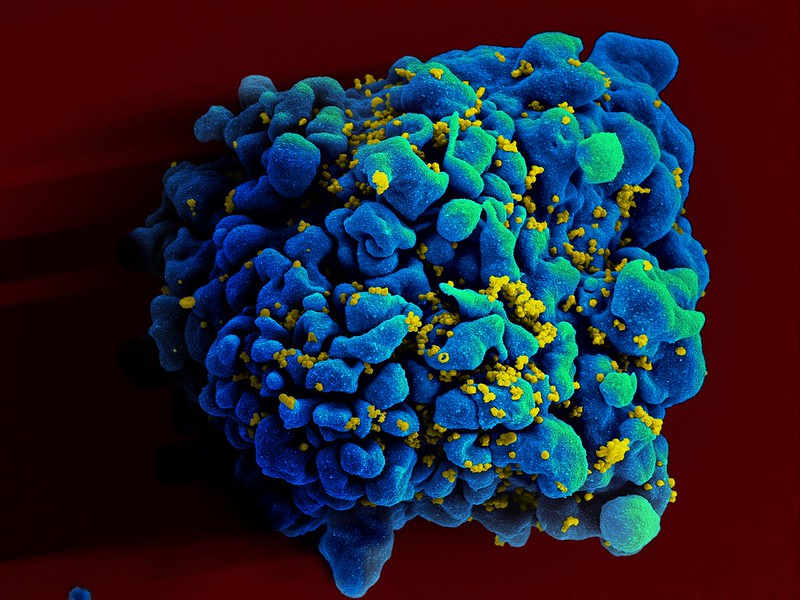
Colourised scanning electron micrograph of HIV (yellow) infecting a human T9 cell (blue). Credit: NIH

A large randomised controlled trial into using statins in people with HIV and low-to-moderate cardiovascular risk was stopped early due to clear benefits, according to an update posted online in JAMA Network. Participants, who were taking 4mg pitavastatin calcium daily, saw a 35% reduction in risk with no significant difference in adverse events compared to placebo, according to the National Institutes of Health.

This recommendation came after a planned interim analysis of data from the Randomized Trial to Prevent Vascular Events in HIV (REPRIEVE) study, which enrolled 7769 participants, across 12 countries across Asia, Europe, North America, South America and Africa. Participants were aged 40–75 years, had 100 cells/mmof blood at enrollment, and had low-to-moderate traditional cardiovascular disease risk that would not typically be considered for statin treatment. 

It was not clear if statins would have the same effect in people living with HIV and who have premature cardiovascular disease despite having low-to-moderate traditional risk. The interim analysis was compelling enough that the study’s independent Data Safety and Monitoring Board recommended at its latest regular meeting that it be halted early given adequate evidence of efficacy.

The study participants are being notified of the findings and will continue to be monitored for several months. Study results from the review are expected to be published in the coming weeks.