Results from a Swedish study of nearly three million women and girls published by The BMJ found that there was no evidence of an increased risk of post-COVID vaccination menstrual changes that were significant enough for healthcare interaction.
The researchers found only weak and inconsistent associations were found between COVID vaccination and contact with healthcare for postmenopausal bleeding. These were even less consistent for menstrual disturbance and premenstrual bleeding.
These findings do not provide any substantial support for a causal association between COVID vaccination and diagnoses related to menstrual or bleeding disorders, say the researchers.
Many women have reported changes to their periods after a COVID vaccination, such as the number of days they bleed and the heaviness of the flow. Self-reporting may capture events that normally would not result in a healthcare contact but may still be sufficiently disturbing to be relevant for the affected women. But calculating the strength of a potential association based on self reports can be unreliable.
To address this, researchers in Sweden drew on high quality health registry data to evaluate the risks of menstrual disturbance and bleeding after COVID vaccination in 2 946 448 women and girls aged 12-74 years from December 2020 to February 2022.
Contact with healthcare included primary care visits, specialist outpatient visits, and days of hospital stay related to menstrual disturbance or bleeding before or after menopause.
Risks were assessed by vaccine (Pfizer-BioNTech, Moderna, or Oxford-AstraZeneca) and dose (unvaccinated and first, second, and third dose) over two time windows (1-7 days, considered the control period, and 8-90 days).
In the main analysis, more than 2.5 million (88%) of women received at least one covid-19 vaccination and over 1.6 million (64%) of vaccinated women received three doses during the study period.
The highest risks for bleeding in postmenopausal women were seen after the third dose in the 1-7 days risk window (28%) and in the 8-90 days risk window (25%).
Adjusting for socioeconomic factors, previous healthcare use, and for several specific medical conditions had only a modest effect on these results.
Analyses of individual vaccines and risk of postmenopausal bleeding suggested a 23-33% increased risk after 8-90 days with Pfizer-BioNTech, and Moderna after the third dose, but a less clear association with Oxford-AstraZeneca.
In premenopausal women, weak associations were found for menstrual disturbance or bleeding after vaccination with any dose (13% or 8% after 1-7 days and 6% or 1% after 8-90 days, respectively). However, adjusting for other factors almost completely removed these weak associations, suggesting that a causal effect is unlikely.
These are observational findings and the authors point to several limitations, including the fact that the time between onset, start of symptoms, and date of healthcare contact might be considerable, making the interpretation of effect of different risk windows challenging.
But this was a large study with near complete follow-up, using mandatory data from nationwide registers.
As such, they say: “We observed weak and inconsistent associations between SARS-CoV-2 vaccination and healthcare contacts for postmenopausal bleeding, and even less consistent for menstrual disturbance, and premenstrual bleeding.”
They add: “These findings do not provide any substantial support for a causal association between SARS-CoV-2 vaccination and healthcare contacts related to menstrual or bleeding disorders.”
Experts have called for further scrutiny of a new Pfizer vaccine given during pregnancy to prevent respiratory infection in infants, after trials of a similar GSK vaccine were stopped after increased preterm birth and infant deaths. Pfizer says its vaccine is safe and effective, but experts contacted as part of an investigation published by The BMJ say that Pfizer’s trial data should be reviewed in light of the trend for preterm births seen in GSK’s trial.
Pfizer’s maternal RSV vaccine aims to protect infants from severe illness caused by the respiratory syncytial virus (RSV). RSV is very common but can be fatal, especially in young children. In 2019, an estimated 3.6% of all deaths worldwide in children aged 1-6 months were due to RSV, with 97% of these deaths occurring in low and middle income countries.
The vaccine has not yet been approved for use, but a decision by the US Food and Drug Administration is expected by August. The European Medicines Agency is also set to make a decision about the vaccine later this year.
In February 2022, GSK halted vaccination in its phase 3 trials of its maternal RSV vaccine after finding an increased risk of preterm birth in vaccinated mothers, mainly in low and middle income countries.
Pfizer published the results of an interim analysis of its phase 3 trial last month, saying that the vaccine was effective against medically attended severe RSV in children and that no safety concerns were identified.
And while the difference in preterm births in the Pfizer trials was not statistically significant, the results have raised concerns about a possible increase in preterm births, and now experts are calling for further analyses of the data and post-approval monitoring of the vaccine should the FDA approve it.
“My interpretation of all these data is that there may be a safety signal for preterm births that should be followed up on,” said Klaus Überla, director of the Virological Institute of the University Hospital Erlangen and member of the RSV working group of the Standing Committee on Vaccination (STIKO), which develops national recommendations for the use of licensed vaccines in Germany.
And a scientist at the National Institutes of Health (NIH) said the Pfizer data should be analysed using more sensitive measures such as average birth weight and subgroup analyses to detect possible signals.
Meanwhile, Cody Meissner, professor of paediatrics and medicine at the Dartmouth Geisel School of Medicine and consultant in the US Centers for Disease Control and Prevention (CDC)’s maternal RSV working group, predicts that possible adverse effects such as premature births will be “closely monitored” in assessment programs by FDA and CDC. “We need a safe vaccine,” he added.
Pfizer did not respond when asked about a possible increase in preterm births associated with its vaccine, but told The BMJ that “no imbalance of neonatal deaths was observed” in its phase 3 trial.
In a linked editorial, researchers point to challenges for RSV vaccine development and the main approaches to protection currently being pursued.
They argue that, while the burden of illness caused by RSV is substantial worldwide, it is particularly important that new vaccines and other prevention strategies are available to infants in low and middle income countries, where the greatest illness and deaths occur.
And they say further research is urgently needed “to identify the best prevention strategies for low and middle income countries, where affordability is paramount and timing of administration is complicated by the lack of predictable seasonal RSV epidemics.”
According to new research findings published in iScience, people living with HIV with a history of pulmonary tuberculosis had broader and more potent HIV antibody responses and differences in HIV sequences predicted to be antibody-resistant as compared to those without tuberculosis. The study suggests that concomitant tuberculosis disease has a significant impact on HIV immune responses and the viruses circulating in people living with HIV.
Tuberculosis infects more than 2 billion people in the world, and although tuberculosis is the most common co-infection in people living with HIV, previous studies have not examined how tuberculosis impacts HIV immune responses and virus characteristics.
This study suggest that tuberculosis may impact the efficacy of antibody based prevention and therapeutic strategies. Vaccines to elicit antibodies and antibodies are also being investigated as a means to treat and cure HIV. Higher prevalence of antibody resistant strains along with tuberculosis disease implies that these antibody-based interventions are more likely to in fail in these individuals.
“Tuberculosis is extremely common, especially in regions of the world with high levels of ongoing HIV transmission, and impacts both the immune responses and the characteristics of the circulating virus in people living with HIV so it is imperative we understand the relationship between the two,” said Manish Sagar, MD, an internist at Boston Medical Center and Professor of Medicine at Boston University Chobanian & Avedisian School of Medicine. “These studies have implications for HIV vaccines and antibody based HIV therapeutics.”
Researchers worked closely with investigators in Uganda and at the AIDS Clinical Trial Group (ACTG) to collect samples from people newly diagnosed with HIV that either did or did not have tuberculosis. From these individuals, they examined samples collected prior to and about 6 months after the start of HIV medications. Researchers compared antibodies, plasma inflammatory markers, and HIV sequences in the baseline and in treatment samples.
Tuberculosis disease is associated with higher prevalence of the some antibody-resistant HIV. High ongoing HIV transmission in areas of the world with frequent tuberculosis disease suggest that a potential vaccine that elicits broad and potent antibodies may not work because these geographic regions are more likely to have antibody resistant strains.
This has implications for HIV vaccine strategies as they aim to generate antibodies that can block the virus after exposure. Generating broad and potent HIV antibodies remains a monumentally difficult goal. Understanding the biological pathways behind the broadly potent antibody responses generated by tuberculosis could provide insight into how tuberculosis enhances HIV antibody responses. This in turn could be leveraged to develop novel strategies for eliciting broad and potent HIV antibodies.
Diagram comparing the nose shape of a Neanderthal with that of a modern human by Dr Macarena Fuentes-Guajardo.
Humans inherited genetic material from Neanderthals that affects the shape of noses of many populations, finds a new study published in Communications Biology. The new study finds that a particular gene, which leads to a taller nose (from top to bottom), may have been the product of natural selection as ancient humans adapted to colder climates after leaving Africa, and is even found in native populations of the Americas.
Co-corresponding author Dr Kaustubh Adhikari (UCL Genetics, Evolution & Environment and The Open University) said: “In the last 15 years, since the Neanderthal genome has been sequenced, we have been able to learn that our own ancestors apparently interbred with Neanderthals, leaving us with little bits of their DNA.
“Here, we find that some DNA inherited from Neanderthals influences the shape of our faces. This could have been helpful to our ancestors, as it has been passed down for thousands of generations.”
The study used data from more than 6000 volunteers across Latin America, of mixed European, Native American and African ancestry, who are part of the UCL-led CANDELA study, which recruited from Brazil, Colombia, Chile, Mexico and Peru. The researchers compared genetic information from the participants to photographs of their faces, specifically looking at distances between points on their faces, such as the tip of the nose or the edge of the lips, to link different facial traits to different genetic markers.
The researchers newly identified 33 genome regions associated with face shape, 26 of which they were able to replicate in comparisons with data from other ethnicities using participants in east Asia, Europe, or Africa.
In one genome region in particular, called ATF3, the researchers found that many people in their study with Native American ancestry (as well as others with east Asian ancestry from another cohort) had genetic material in this gene that was inherited from the Neanderthals, contributing to increased nasal height. They also found that this gene region has signs of natural selection, suggesting that it conferred an advantage for those carrying the genetic material.
First author Dr Qing Li (Fudan University) said: “It has long been speculated that the shape of our noses is determined by natural selection; as our noses can help us to regulate the temperature and humidity of the air we breathe in, different shaped noses may be better suited to different climates that our ancestors lived in. The gene we have identified here may have been inherited from Neanderthals to help humans adapt to colder climates as our ancestors moved out of Africa.”
Co-corresponding author Professor Andres Ruiz-Linares (Fudan University, UCL Genetics, Evolution & Environment, and Aix-Marseille University) added: “Most genetic studies of human diversity have investigated the genes of Europeans; our study’s diverse sample of Latin American participants broadens the reach of genetic study findings, helping us to better understand the genetics of all humans.”
The finding is the second discovery of DNA from archaic humans, distinct from Homo sapiens, affecting our face shape. The same team discovered in a 2021 paper that a gene influencing lip shape was inherited from the ancient Denisovans.*
The study involved researchers based in the UK, China, France, Argentina, Chile, Peru, Colombia, Mexico, Germany, and Brazil.
Most antidepressants used for chronic pain are being prescribed with “insufficient” evidence of their effectiveness, scientists have warned. A major investigation into medications used to manage long-term pain found that harms of many of the commonly recommended drugs have not been well studied.
In a Cochrane review, scientists examined 176 trials consisting of nearly 30 000 patients involved in assessments which prescribed antidepressants for chronic pain.
Among the drugs studied were amitriptyline, fluoxetine, citalopram, paroxetine, sertraline, and duloxetine – with only the latter showing reliable evidence for pain relief. One third of people globally are living with chronic pain, World Health Organization data shows, with many prescribed antidepressants for relieving symptoms.
Lead author Professor Tamar Pincus from the University of Southampton said: “This is a global public health concern. Chronic pain is a problem for millions who are prescribed antidepressants without sufficient scientific proof they help, nor an understanding of the long-term impact on health.
“Our review found no reliable evidence for the long-term efficacy of any antidepressant, and no reliable evidence for their safety for chronic pain at any point. Though we did find that duloxetine provided short-term pain relief for patients we studied, we remain concerned about its possible long-term harm due to the gaps in current evidence.”
The two-year Cochrane study was the largest ever assessment of antidepressants recommended by leading bodies including the UK’s National Institute for Health and Care Excellence (NICE) and the Food and Drug Administration (FDA) in the USA.
Statistician Gavin Stewart, review co-author from Newcastle University, said: “We are calling on governing health bodies NICE and the FDA to update their guidelines to reflect the new scientific evidence, and on funders to stop supporting small and flawed trials. Evidence synthesis is often complex and nuanced but the evidence underpinning the use of these treatments is not equivalent, so current treatment modalities are hard to justify.”
The review revealed that duloxetine was consistently the highest-rated medication and was equally as effective for fibromyalgia, musculoskeletal, and neuropathic pain conditions.
Other results showed:
Standard doses of duloxetine are as successful for reducing pain as higher quantities,
Milnacipran was also effective at reducing pain, but scientists are not as confident as duloxetine due to fewer studies with fewer people.
Prof Tamar Pincus added: “We simply cannot tell about other antidepressants because sufficiently good studies are not available – but it does not mean that people should stop taking prescribed medication without consulting their GP.”
Scientists responsible for the review, funded by the NIHR’s Health Technology Assessment programme, were from the universities of Southampton, Newcastle, Bristol, UCL, Bath, and Keele, alongside Oxford University Hospital.
The team assessed the trials using a statistical method that enables researchers to combine data from relevant studies to estimate the effects of different drugs, which have not been compared directly in individual trials.
University of Southampton researcher Dr Hollie Birkinshaw said: “Though previous investigations show that some antidepressants might relieve pain, there has never been a comprehensive study examining all medications across all chronic conditions – until now.
“The only reliable evidence is for duloxetine. Adopting a person-centred approach is critical to treatment, and when patients and clinicians decide together to try antidepressants they should start from the drug for which there is good evidence.”
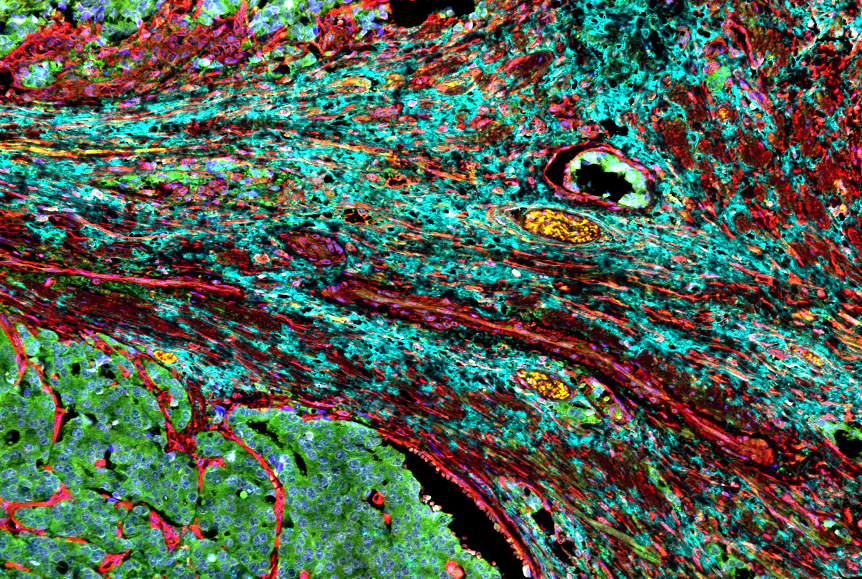
Ccancer-associated fibroplasts surrounding a prostate tumour. Credit: Moscat and Diaz Meco lab.
Transgender women keep their prostates after gender-affirming surgery, and as a result are still at risk for prostate cancer, though to what extent remained unclear. A first-of-its-kind study estimates the risk at about 14 cases per 10 000, a little less than half the risk for cisgender males.
The UC San Francisco-led study drew on 22 years of data from the Veterans Affairs Health System. Despite the small sample size due to the size of the transgender population, it is still the largest of its kind.
“What we know about prostate cancer to date is almost exclusively based on cisgender men,” said the study’s lead author, Farnoosh Nik-Ahd, MD, a urology resident at UCSF. “This is an important first step in reshaping how clinicians think about prostate cancer in transgender women.”
Transgender people often face discrimination and disparities, and there has been a growing acknowledgment of the complexities involved in their health care.
The study found 155 confirmed transgender women with prostate cancer and stratified them according to whether they had used oestrogen: 116 had never used oestrogen, 17 had once used oestrogen but stopped before they were diagnosed with prostate cancer and 22 were actively on oestrogen.
The median age of diagnosis was 61 years, and 88% of the patients were white. Just 8% were Black, suggesting possible disparities affecting this group. Black cisgender men are at higher risk of being diagnosed with and dying from prostate cancer.
Though reduced compared to cisgender males, risk remains
The authors found that prostate cancer occurs in transgender women more frequently than published accounts suggest, with about 14 prostate cancer cases annually per 10 000 transgender women. Still, that rate was lower than what could be expected based on cisgender males, with 33 cases annually per 10 000.
While the numbers were small in the new study, the data suggests that transgender women who take estrogen may have delayed diagnoses. The authors also said that lower rates of prostate cancer may have been due to less PSA screening, misinterpretation of PSA levels in patients on gender-affirming hormone therapies, stigma, lack of awareness of prostate cancer risk and the effects of estrogen.
“We still have a lot of work to do to determine optimal prostate cancer screening for transgender women on oestrogen and related treatments,” said co-senior author Matthew R. Cooperberg, MD, MPH, of the UCSF Department of Urology. “This study should be a reminder to clinicians and patients alike that, regardless of gender, people with prostates are at risk for prostate cancer.”
Photo by Anna Shvets: https://www.pexels.com/photo/person-holding-white-printer-paper-4226124/
A recent phase III clinical trial showed that the drug combination of cemiplimab plus platinum chemotherapy can prolong survival in patients with advanced lung cancer when compared with placebo plus platinum chemotherapy. Now, an analysis published in CANCER indicates that cemiplimab plus platinum chemotherapy also improves quality of life (QoL) compared to chemotherapy alone.
In the multinational phase III EMPOWER-Lung 3 trial, the addition of cemiplimab to platinum-based chemotherapy was associated with improved survival in patients with advanced stage non–small cell lung cancer compared to chemotherapy alone. Because QoL is also an important parameter for treatment benefit, investigators examined how cemiplimab plus platinum affected symptoms in comparison to chemotherapy alone for patients enrolled into this trial using the EORTC QLQ-C30 and QLQ-LC13 questionnaires.
Patients who received cemiplimab plus chemotherapy experienced significant improvements in pain, dyspnoea, constipation, nausea, and vomiting compared to those who received placebo plus chemotherapy. Patients enrolled in the cemiplimab arm also had a significant delay in the clinically meaningful deterioration of symptoms including cough, haemoptysis, and dysphagia.
“The findings support the concept that the superior efficacy and favourable safety profile of cemiplimab plus chemotherapy translate to better patient-reported outcomes compared with chemotherapy alone in patients with advanced non–small cell lung cancer,” said corresponding author Tamta Makharadze, MD, of LTD High Technology Hospital Med Center in Batumi, Georgia.
The cooler months bring with them a surge in cases of influenza or ‘flu’. Flu infection causes up to 650 000 deaths globally each year, and the highest numbers occur in sub-Saharan Africa.1
Seasonal flu is characterised by a sudden onset of fever, cough (usually dry), headache, muscle and joint pain, severe malaise, sore throat and a runny nose. The cough can be severe and can last two or more weeks.2
South Africa’s seasonal flu usually has its highest number of recorded cases between May and September each year, with over 11 000 flu-related deaths occurring in the country annually.1 It is therefore important that healthcare professionals (HCPs) and high-risk population groups such as those living with chronic illnesses do not delay getting their flu shot this winter season.
Who is at risk of contracting severe flu, and of experiencing complications?
According to the National Institute for Communicable Diseases (NICD), the people most at risk for severe/complicated influenza include:1
Pregnant women and women up to 2 weeks postpartum
Young children (particularly those under 2 years of age)
Persons over the age of 65 years
Individuals who are morbidly obese (body mass index ≥40)
immunosuppression (e.g. those on immunosuppressive medication, or who have cancer)
heart disease (e.g. congestive cardiac failure), except for hypertension
metabolic disorders (e.g. diabetes mellitus)
kidney or liver disease
neurological and neurodevelopmental conditions
abnormal production or structure of haemoglobin (e.g. sickle cell disease)
Those under 18 years receiving chronic aspirin therapy
HCPs are particularly vulnerable for contracting flu: a systematic review comparing the incidence of flu in healthy adults and HCPs found a significantly higher incidence in HCPs, since they are exposed to the virus via their patients.3 The World Health Organization (WHO) adds that “Because healthcare workers are dedicated individuals, they often come to work when they are sick, increasing the risk of transmission,” and therefore recommends that all HCPs are vaccinated against seasonal flu every autumn.3
The NICD indicates that it is particularly important to protect HCPs and ensure that they are able to continue to work and to reduce any additional burden on the health system.1
Most people recover from fever and other symptoms within a week of contracting the flu, without requiring medical attention. However, among high-risk groups, and those with serious medical conditions, flu can cause severe illness or death.2
Complicated influenza includes cases requiring hospital admission and/or with symptoms and signs of lower respiratory tract infection (hypoxaemia, dyspnoea, tachypnoea, lower chest wall indrawing and inability to feed), central nervous system involvement and/or a significant exacerbation of an underlying medical condition.1
When is the best time to get vaccinated?
Dr Lourens Terblanche, Medical Head: South Africa, Sanofi Vaccines, says: “People should ideally get vaccinated against flu before the flu season begins for the most effective coverage, although vaccination at any time during the flu season can still help protect against flu infections.”
“Influenza viruses evolve constantly, so twice a year the WHO makes recommendations to update vaccine compositions. HCPs and patients who are known to be at high risk for developing severe or complicated illness as a result of contracting the flu, should prioritise immunisation against flu every year, as recommended by the NICD,” says Dr Terblanche. “The vaccine is however available to any individual from the age of 6 months to help prevent influenza infection.”
How vaccination could protect beyond flu
Flu can impact many systems in the body, so flu vaccination can provide protection where these systems would have been affected. For example, complications of flu include a 10x higher risk of having a heart attack,4 an 8x higher risk of stroke,4 and an 8x greater risk of pneumonia in children under the age of 14,5 while persons with diabetes experience a 75% increase in glycaemic events.6
According to the US Centers for Disease Control (CDC), during the 2019-2020 season, flu vaccination averted 7.5 million cases of flu, 3.7 million medical visits, 105 000 flu-associated hospitalisations, and 6 300 deaths.7
A 2021 study by the CDC also showed that among adults hospitalised with flu, vaccinated patients had a 26% lower risk of having to go into the ICU and a 31% lower risk of death from flu, compared with those who were unvaccinated.7
“Flu vaccination is also essential considering the possible co-circulation of both the flu and SARS-Cov-2 or other respiratory pathogens. However, it is important to remember that the flu vaccine will not prevent COVID-19 and vice versa; therefore, it is important to ensure that HCPs and their patients are vaccinated against both. Simultaneous infection with flu and COVID-19 canresult in severe disease,8” says Dr Terblanche.
Current guidance from the Department of Health regarding administering flu and COVID-19 vaccinations at the same time is that this may be done, if they are given in different arms.9
The WHO reports that there are still a number of myths about the flu vaccine10 – myths to which HCPs are not immune – including that ‘Flu is not serious, so I don’t need the vaccine’. The WHO responds as follows: “As many as 650 000 people a year can die of the flu. This only represents respiratory deaths, so the likely impact is even higher. Even healthy people can get the flu, but especially people whose immune systems are vulnerable. Most people will recover within a few weeks, but some can develop complications including sinus and ear infections, pneumonia, heart or brain inflammation.”
“It is good to be aware of the myths surrounding flu vaccination in order to encourage high-risk individuals to have their flu vaccine timeously,” says Dr Terblanche.
The quadrivalent Vaxigrip Tetra vaccine produced by Sanofi Pasteur complies with the WHO’s Southern Hemisphere recommendations for the 2023 season11 and protects against the following strains:
∙ an A/Sydney/5/2021 (H1N1)pdm09-like virus;
∙ an A/Darwin/9/2021 (H3N2)-like virus;
∙ a B/Austria/1359417/2021 (B/Victoria lineage)-like virus; and
∙ a B/Phuket/3073/2013 (B/Yamagata lineage)-like virus.
4. Warren-Gash C, et al. Laboratory-confirmed respiratory infections as triggers for acute myocardial infarction and stroke: a self-controlled case series analysis of national linked datasets from Scotland. Eur Respir J. 2018; DOI: 10.1183/13993003.01794-2017
5. Kubale J, et al. Individual-level Association of Influenza Infection With Subsequent Pneumonia: A Case-control and Prospective Cohort Study. Clin Inf Dis. 2021; 73(11): e4288–e4295.
6. Samson SI, et al. Quantifying the Impact of Influenza Among Persons With Type 2 Diabetes Mellitus: A New Approach to Determine Medical and Physical Activity Impact. J Diabetes Sci Technol. 2019; 15(1):44-52.
8. Stowe J, et al. Interactions between SARS-CoV-2 and influenza, and the impact of coinfection on disease severity: a test-negative design. International Journal of Epidemiology 2021;1-10. doi: 10.1093/ije/dyab081.
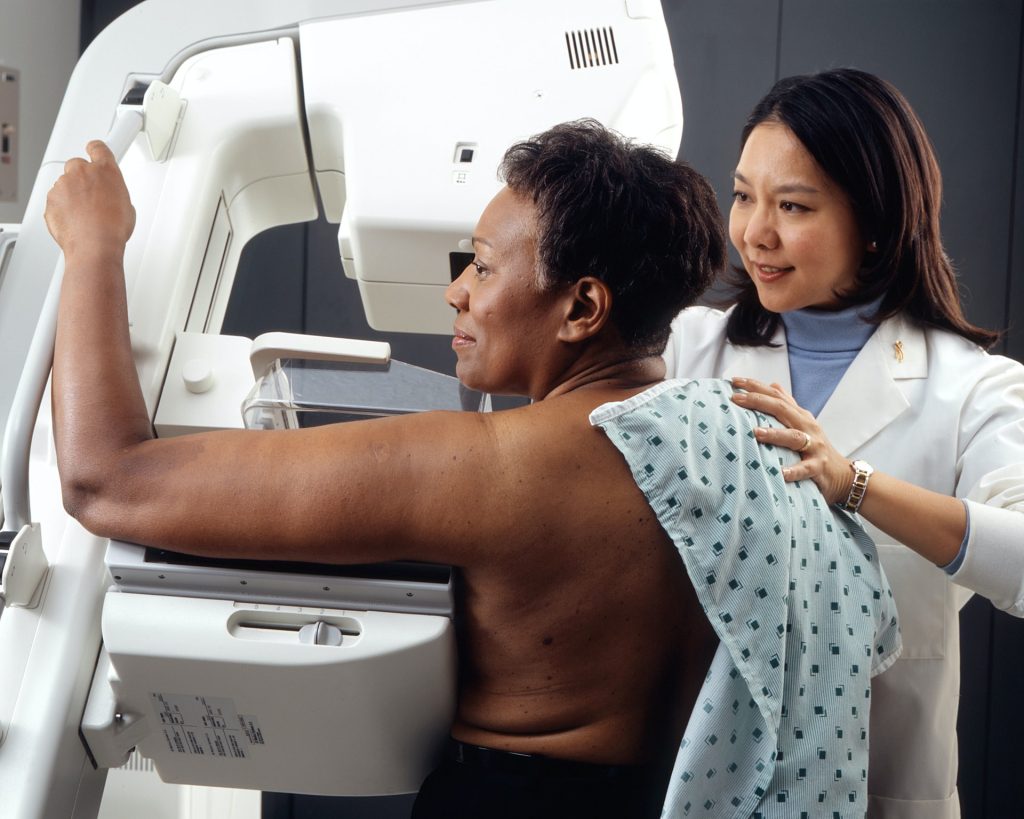
In a move bringing it closer in line with other organisations’ breast cancer screening guidelines, The United States Preventative Task Force (USPSTF) has released a draft statement recommending mammography every other year (biennially) from ages 40 to 74.
These recommendations are not applicable to women with a genetic marker or syndrome linked to increased breast cancer risk, a history of high-dose chest radiotherapy at a young age, or previous breast cancer or a high-risk breast lesion on previous biopsies.
According to the USPSTF, “new and more inclusive science about breast cancer in people younger than 50 has enabled us to expand our prior recommendation and encourage all women to get screened in their 40s. We have long known that screening for breast cancer saves lives, and the science now supports all women getting screened, every other year, starting at age 40.”
South African cancer screening guidelines typically closely follow American ones, according to an article by Lipschitz in the South African Journal of Radiology. Many countries had not recommended screening at the ages of 40–50 due to fears of overdiagnosis.
The UPSTF made particular attention the fact that black women are 40% more likely to die of breast cancer than white women, and have a high rate of aggressive cancers at young ages.
The recommendations are not without criticism. Biennial screenings are not seen as worth it by Desountis et al., as it leaving two years between tests leaves too much time for a tumour to grow.
Debra Monticciolo, MD, of Massachusetts General Hospital in Boston, and a member of the Society of Breast Imaging’s board of directors, told MedPage Today that she was “disappointed” with the decision to recommend biennial scans.
“Even if you look at their own data,” Monticciolo said, “annual screening results in more deaths averted, no matter what type of screening program you put in those models.”
Regarding the ongoing debated about continued screening in women ages 75 and older, and supplemental screening for those with dense breasts, the UPSTF found there was not enough evidence for a recommendation.
Sons of women with polycystic ovary syndrome (PCOS) have a twofold increased risk to develop obesity, according to a study published in Cell Reports Medicine. The findings highlight a previously unknown risk of passing PCOS-related health problems across generations through the male side of a family, say the the researchers from Karolinska Institutet.
PCOS is caused by overproduction of testosterone by the ovaries and affects around 15% of women of childbearing age worldwide, impacting fertility. In addition, the disease is associated with various health problems such as diabetes, obesity, and mental illness.
Daughters of women with PCOS have a fivefold risk of developing the same disease. Although it is not yet clear how sons of women with PCOS are affected, research suggests that they are more likely to have weight and hormone problems
The researchers used both registry data and mouse models in the newly published study to determine if and how PCOS-like traits are passed from mothers to their sons. Just over 460 000 sons born in Sweden between July 2006 and December 2015 were included in the registry study. Of these, roughly 9000 had mothers with PCOS. The researchers then identified which of the children were obese.
“We discovered that sons of women with PCOS have a twofold increased risk of obesity and of having high levels of “bad” cholesterol, which increases the risk of developing insulin resistance and type 2 diabetes later in life”, says study leader Elisabet Stener-Victorin, professor at Karolinska Institutet.
These findings were confirmed in the mouse study, where the researchers examined male offspring of female mice that before and during pregnancy were fed either a standard diet or a diet rich in fat and sugar, and were exposed to high levels of the male sex hormone dihydrotestosterone during pregnancy to mimic the pregnancy of normal weight individuals and obese women with PCOS.
The male mice were then fed a standard diet until adulthood when their fat distribution and metabolism were examined.
“We could see that these male mice had more fat tissue, larger fat cells, and a disordered basal metabolism, despite eating a healthy diet”, says Elisabet Stener-Victorin.
To investigate the reproductive function of the offspring and whether physiological characteristics can be passed on from generation to generation, the first-generation male mice were mated with healthy female mice that were not exposed to male sex hormones or a diet rich in fat and sugar. The whole process was repeated in the second generation to reach the third generation which is the first generation that was not affected by the mother condition.
“Through these experiments, we can show that obesity and high levels of male hormones in the woman during pregnancy can cause long-term health problems in the male offspring. Their fat tissue function, metabolism, and reproductive function deteriorate, which in turn affects future generations”, says Qiaolin Deng, associate professor at the same department and one of the researchers behind the study.
“These findings are important because they highlight the risk of passing health problems down through the male side of a family, highlight the risk of passing this kind of health problem, and they may help us in the future to find ways to identify, treat and prevent reproductive and metabolic diseases at an early stage,” says Elisabet Stener-Victorin.





 Most antidepressants used for chronic pain are being prescribed with “insufficient” evidence of their effectiveness, scientists have warned. A major investigation into medications used to manage long-term pain found that harms of many of the commonly recommended drugs have not been well studied.