Year: 2023

What is the XBB.1.5 ‘Kraken’ Variant? An FAQ

SARS-CoV-2 infecting a human cell
Infected cell covered with SARS-CoV-2 viruses. Source: NIAID

By Sameer Elsayed for The Conversation

Despite intensive public health efforts to grind the COVID-19 pandemic to a halt, the recent emergence of the highly transmissible, extensively drug-resistant and profoundly immune system-evading XBB.1.5 SARS-CoV-2 subvariant is putting the global community on edge.

What is XBB.1.5?

In the naming convention for SARS-CoV-2 lineages, the prefix “X” denotes a pedigree that arose through genetic recombination between two or more subvariants.

The XBB lineage emerged following natural co-infection of a human host with two Omicron subvariants, namely BA.2.10.1 and BA.2.75. It was first identified by public health authorities in India during summer 2022. XBB.1.5 is a direct descendent, or more accurately, the “fifth grandchild” of the original XBB subvariant.

Diagram of the genetic lineage of a COVID-19 subvariant
Genetic lineage of COVID-19 subvariant XBB.1.5. (Sameer Elsayed), Author provided

How does XBB.1.5 differ from Omicron?

XBB.1.5 is one of many Omicron subvariants of concern that have appeared on the global pandemic scene since the onset of the first Omicron wave in November 2021. In contrast to other descendants of the original Omicron variant (known as B.1.1.529), XBB.1.5 is a mosaic subvariant that traces its roots to two Omicron subvariant lineages.

XBB.1.5 is arguably the most genetically rich and most transmissible SARS-CoV-2 Omicron subvariant yet.

Where is XBB.1.5 prevalent?

According to the World Health Organization, XBB.1.5 is circulating in at least 38 countries, with the highest prevalence in the United States, where it accounts for approximately 43 per cent of COVID-19 cases nationwide. Within the U.S., there is wide geographic variation in the proportion of cases caused by XBB.1.5, ranging from seven per cent in the Midwest to over 70 per cent in New England.

XBB.1.5 has also been officially reported by governmental agencies in AustraliaCanada, the European UnionJapanKuwaitRussiaSingaporeSouth Africa and the United KingdomReal-time surveillance data reveals that XBB.1.5 is rapidly spreading across the globe and will likely become the next dominant subvariant.

XBB.1.5 has also been detected in municipal wastewater systems in the United StatesEurope and other places.

How likely is XBB.1.5 to cause serious illness?
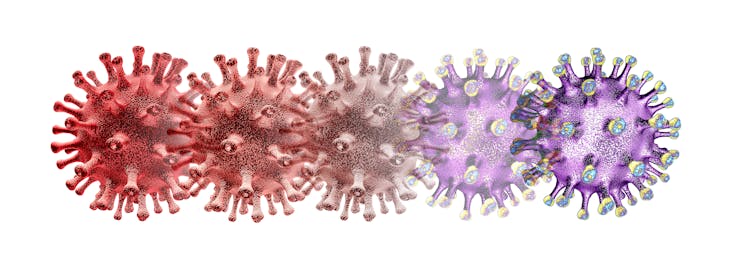
Illustration of five coronaviruses of different colours in a line
The XBB lineage emerged following natural co-infection of a human host with two Omicron subvariants, namely BA.2.10.1 and BA.2.75. (Shutterstock)

There is limited data about the ability of XBB.1.5 to cause serious illness. According to the World Health Organization, XBB.1.5 does not have any specific mutations that make it any more dangerous than its ancestral subvariants.

Nonetheless, XBB.1.5 is perceived as being equally capable of causing serious illness in elderly and immunocompromised persons compared to previous Omicron subvariants of concern.

Are current mRNA vaccines effective against XBB.1.5?

XBB.1.5 and XBB.1 are the Omicron subvariants with the greatest immune-evasive properties. Therefore, one of the most contentious issues surrounding XBB.1.5 relates to the degree of protection afforded by currently available mRNA vaccines, including the latest bivalent booster formulations.

Researchers from the University of Texas determined that first-generation and bivalent mRNA booster vaccines containing BA.5 result in lacklustre neutralizing antibody responses against XBB.1.5. A report (yet to be peer reviewed) from investigators at the Cleveland Clinic found that bivalent vaccines demonstrate only modest (30 per cent) effectiveness in otherwise healthy non-elderly people when the variants in the vaccine match those circulating in the community.

Furthermore, some experts believe the administration of bivalent boosters for the prevention of COVID-19 illness in otherwise healthy young individuals is not medically justified nor cost-effective.

In contrast, public health experts from Atlanta, Ga. and Stanford, Calif. reported that although the neutralizing antibody activity of bivalent booster vaccines against XBB.1.5 is 12 to 26 times less than antibody activity against the wild-type (original) SARS-CoV-2 virus, bivalent vaccines still perform better than monovalent vaccines against XBB.1.5.

However, investigators from Columbia University in New York found that neutralizing antibody levels following bivalent boosting were up to 155–fold lower against XBB.1.5 compared to levels against the wild-type virus following monovalent boosting.

This suggests that neither monovalent nor bivalent booster vaccines can be relied upon to provide adequate protection against XBB.1.5.

How can you protect yourself against XBB.1.5?

A blue sign reading 'wearing a mask is recommended,' in French and English
Standard infection control precautions including indoor masking, social distancing and frequent handwashing are effective measures against XBB.1.5 and other subvariants of concern. THE CANADIAN PRESS/Graham Hughes

The rapid evolution of SARS-CoV-2 continues to pose a challenge for the management of COVID-19 illness using available preventive and therapeutic agents. Of note, all currently available monoclonal antibodies targeting the spike protein of SARS-CoV-2 are deemed to be ineffective against XBB.1.5.

Antiviral medicines such as remdesivir and Paxlovid may be considered for the treatment of eligible infected patients at high risk of progressing to severe disease.

Standard infection control precautions including indoor masking, social distancing and frequent handwashing are effective measures that can be employed for personal and population protection against XBB.1.5 and other subvariants of concern.

Although bivalent boosters may be considered for elderly, immunocompromised and other risk-averse individuals, their effectiveness in preventing COVID-19 illness due to XBB.1.5 remains uncertain.

Why is XBB.1.5 nicknamed ‘Kraken’?

Some scientists have coined unofficially-recognized nicknames for XBB.1.5 and other SARS-CoV-2 subvariants of concern, arguing that they are easier to remember than generic alphanumeric designations.

The ‘Kraken’ label for XBB.1.5 is currently in vogue on social media sites and news outlets, and the nicknames ‘Gryphon’ and ‘Hippogryph’ have been used to denote the ancestral subvariants XBB and XBB.1, respectively. Kraken refers to a mythological Scandinavian sea monster or giant squid, Gryphon (or Griffin) refers to a legendary creature that is a hybrid of an eagle and a lion, while Hippogryph (or Hippogriff) is a fictitious animal hybrid of a Gryphon and a horse.

Notwithstanding their potential utility as memory aids, the use of nicknames or acronyms in formal scientific discussions should be avoided.

Sameer Elsayed is Professor of Medicine, Pathology & Laboratory Medicine, and Epidemiology & Biostatistics at Western University.

Source: The Conversation

A Quick Scan Can Pinpoint Hypertension-causing Adrenal Nodules

Stethoscope
Photo by Hush Naidoo on Unsplash

Doctors have demonstrated a new type of CT scan that lights up tiny nodules in the adrenal glands which give rise to hypertension in about 5% of hypertensive patients. enabling hypertension to be cured by their removal. The nodules are discovered in about 5% of hypertensive patients.

Published in The Journal of Hypertension, this work solves a 60-year problem of how to detect the hormone-producing nodules without a difficult and failure-prone catheter study that is available in only a few hospitals. The research also found that, when combined with a urine test, the scan detects a group of patients who come off all their blood pressure medicines after treatment.

The study, led by doctors at Queen Mary University of London and Barts Hospital, and Cambridge University Hospital, involved 128 participants for whom hypertension was found to be caused by aldosterone. The scan found that in two thirds of patients with elevated aldosterone secretion, this is coming from a benign nodule in just one of the adrenal glands, which can then be safely removed. The scan uses a very short-acting dose of metomidate, a radioactive dye that sticks only to the aldosterone-producing nodule.

The scan was as accurate as the old catheter test, but quick, painless and technically successful in every patient. Until now, the catheter test was unable to predict which patients would be completely cured of hypertension by surgical removal of the gland. By contrast, the combination of a ‘hot nodule’ on the scan and urine steroid test detected 18 of the 24 patients who achieved a normal blood pressure off all their drugs.

Professor Morris Brown, co-senior author of the study and Professor of Endocrine Hypertension at Queen Mary University of London, said: “These aldosterone-producing nodules are very small and easily overlooked on a regular CT scan. When they glow for a few minutes after our injection, they are revealed as the obvious cause of hypertension, which can often then be cured. Until now, 99% are never diagnosed because of the difficulty and unavailability of tests. Hopefully this is about to change.”

In most people with hypertension, the cause is unknown, and the condition requires life-long treatment by drugs. Previous research by the group at Queen Mary University discovered that in 5–10% of people with hypertension the cause is a gene mutation in the adrenal glands, which results in excessive amounts of the steroid hormone, aldosterone, being produced. Aldosterone causes salt retention, driving up blood pressure. Patients with excessive aldosterone levels in the blood are resistant to treatment with standard antihypertensives, and at increased risk of cardiovascular disease.

Source: Queen Mary University of London

HRT May Help Ward off Alzheimer’s in at-risk Women

Older woman smiling
Photo by Ravi Patel on Unsplasj

Hormone Replacement Therapy (HRT) could help prevent Alzheimer’s Dementia among women at risk of developing the disease, according to a study published in Alzheimer’s Research and Therapy.

The study shows that HRT use is associated with better memory, cognition and larger brain volumes in later life among women carrying the APOE4 gene – the strongest risk factor gene for Alzheimer’s disease.

The research team found that HRT was most effective when introduced early in the menopause journey during perimenopause.

Prof Anne-Marie Minihane, from University of East Anglia, led the study in collaboration with Prof Craig Ritchie at the University of Edinburgh.

Prof Minihane said: “We know that 25% of women in the UK are carriers of the APOE4 gene and that almost two thirds of Alzheimer’s patients are women.

“In addition to living longer, the reason behind the higher female prevalence is thought to be related to the effects of menopause and the impact of the APOE4 genetic risk factor being greater in women.

“We wanted to find out whether HRT could prevent cognitive decline in at-risk APOE4 carriers.”

The research team studied data from 1178 women participating in the European Prevention of Alzheimer’s Dementia initiative, a study set up to record participants’ brain health over time.

The project spanned 10 countries and tracked participants’ brains from ‘healthy’ to a diagnosis of dementia in some. Participants were included if they were over 50 and dementia-free.

The research team studied their results to analyse the impact of HRT on women carrying the APOE4 genotype.

Dr Rasha Saleh, also from UEA’s Norwich Medical School, said: “We found that HRT use is associated with better memory and larger brain volumes among at-risk APOE4 gene carriers. The associations were particularly evident when HRT was introduced early — during the transition to menopause, known as perimenopause.

“This is really important because there have been very limited drug options for Alzheimer’s disease for 20 years and there is an urgent need for new treatments.

“The effects of HRT in this observation study, if confirmed in an intervention trial, would equate to a brain age that is several years younger.”

Prof Anne Marie Minihane said: “Our research looked at associations with cognition and brain volumes using MRI scans. We did not look at dementia cases, but cognitive performance and lower brain volumes are predictive of future dementia risk.”

Prof Michael Hornberger, from UEA’s Norwich Medical School, said: “It’s too early to say for sure that HRT reduces dementia risk in women, but our results highlight the potential importance of HRT and personalised medicine in reducing Alzheimer’s risk.

“The next stage of this research will be to carry out an intervention trial to confirm the impact of starting HRT early on cognition and brain health. It will also be important to analyse which types of HRT are most beneficial,” he added.

Source: University of East Anglia

‘Xenobiotics’ from Everyday Chemicals may Contribute to Preterm Birth

Preterm baby
Photo by Hush Naidoo on Unsplash

Chemicals that accumulate in the vagina, potentially originating from personal care products, may contribute to spontaneous preterm birth, according to a new study appearing in Nature Microbiology.

Columbia University Vagelos College of Physicians and Surgeons researchers performed a study of 232 pregnant women and found that a few non-biological chemicals previously found in cosmetics and hygiene products are strongly associated with preterm birth.

“Our findings suggest that we need to look more closely at whether common environmental exposures are in fact causing preterm births and, if so, where these exposures are coming from,” says study co-leader Tal Korem, PhD, assistant professor at Columbia University. “The good news is that if these chemicals are to blame, it may be possible to limit these potentially harmful exposures.”

Preterm birth, childbirth before 37 weeks of pregnancy, is the number one cause of neonatal death and can lead to a variety of lifelong health issues. Two-thirds of preterm births occur spontaneously, but despite extensive research, there are no methods for predicting or preventing spontaneous preterm birth.

Several studies have suggested that imbalances in the vaginal microbiome play a role in preterm birth and other problems during pregnancy. However, researchers have not been able to reproducibly link specific populations of microorganisms with adverse pregnancy outcomes.

The research team opted to take a more expansive view of the vaginal microenvironment by looking at its metabolome – the complete set of small molecules found in a particular biological niche, including metabolites produced by local cells and microorganisms and molecules from external sources. “The metabolome can be seen as a functional readout of the ecosystem as a whole,” Korem says. “Microbiome profiling can tell us who the microbes are; metabolomics gets us close to understanding what the microbes are doing.”

In the current study, the researchers measured over 700 different metabolites in the second-trimester metabolome of 232 pregnant women, including 80 pregnancies that ended prematurely.

The study found multiple metabolites that were significantly higher in women who had delivered early than in those who delivered at full term.

“Several of these metabolites are chemicals that are not produced by humans or microbes – what we call xenobiotics,” says Korem. “These include diethanolamine, ethyl-beta glucoside, tartrate, and ethylenediaminetetraacetic acid. While we did not identify the source of these xenobiotics in our participants, all could be found in cosmetics and hygiene products.”

Algorithm predicts preterm birth

Using machine learning models, the team also developed an algorithm based on metabolite levels that can predict preterm birth with good accuracy, potentially paving the way for early diagnostics.

Though the predictions were more accurate than models based on microbiome data and maternal characteristics (such as age, BMI, race, preterm birth history, and prior births), the new model still needs improvement and further validation before it could be used in the clinic.

Despite the current limitations, Korem says, “our results demonstrate that vaginal metabolites have the potential to predict, months in advance, which women are likely to deliver early.”

Source: Columbia University Irving Medical Center

Great SCOT! Repurposing Old Antipsychotics as Diabetes Treatments

Photo by Myriam Zilles on Unsplash

Researchers have found that a class of older antipsychotic drugs could be a promising new therapeutic option for people with type 2 diabetes, helping fill a need among patients who aren’t able to take other currently available treatments. The drugs interact with the metabolic enzyme succinyl CoA:3-ketoacid CoA transferase (SCOT), preventing the muscles from using ketones for fuel.

“There is a growing need to find new therapies for type 2 diabetes,” says John Ussher, professor in the Faculty of Pharmacy & Pharmaceutical Sciences and lead author of the recent study published in the journal Diabetes.

Metformin is one of the most common therapeutics for type 2 diabetes, but about 15% of patients aren’t able to take it. Iinsulin secretagogues, another commonly used drug class, isn’t as effective for later-stage patients.

“For the patients who can’t take metformin, patients with late-stage diabetes where their beta cells aren’t working as well, when you’re trying to find new therapies or new combination therapies as the disease progresses, it becomes more important to find new drug classes that target new mechanisms so then you have more options to try and lower blood sugar in those individuals,” Ussher explains.

The mechanism Ussher and his team turned their attention to is SCOT, which is an enzyme involved in the body’s process of making energy from ketones. Using computer modelling to find drugs that could potentially interact with SCOT, they landed on an older generation of antipsychotic drugs, a drug class called diphenylbutylpiperidines, or DPBP for short.

Ussher and his team had previously found that a specific drug within this class called pimozide could be repurposed to help treat diabetes, but they’ve since expanded their focus to see whether more of the DPBP class could also be useful for treating the disease.

“We’ve tested three drugs now, and they all interact with this enzyme,” says Ussher. “They all improve blood sugar control by preventing the muscle from burning ketones as a fuel source.”

“We believe this SCOT inhibition is the reason these antipsychotics might actually have a second life for repurposing as an anti-diabetic agent,” he adds.

Developing a drug is a complicated, time-consuming and expensive process. It involves clinical trials to test the safety and efficacy of the drug, and can easily cost hundreds of millions of dollars. Not to mention, it can take years to go from development in the laboratory to use in the clinic or hospital. Repurposing an existing drug may help fast-track the process, Ussher notes.

“With something that’s an older drug which we used historically in humans that we no longer use, we know what the adverse effects are, we know in general that it’s safe,” he says.

Though clinical trials are still needed, repurposing a drug allows researchers to focus specifically on the efficacy and safety of the new intended use, offering a quicker and cheaper path to a new therapy.

“As you already have safety data, it somewhat accelerates the process,” says Ussher. “And from an economic standpoint, often because a lot of these drugs being pursued for repurposing are older, they’re off patent and cheaper.”

Repurposing is effective because it capitalises on a main characteristic of most drugs, ie not being restricted to just one target in the body. As Ussher explains, most drugs actually have numerous targets they can influence.

“That’s where repurposing comes in,” he says. “Can we identify the other targets that a drug may interact with, and by identifying those other targets, can this drug serve a purpose for a different disease?”

This is what Ussher’s lab did in recognising the DPBP drug class could target SCOT activity as well as the dopamine receptors it targets in its original intended use to treat psychosis.

Knowledge of these original targets can also provide valuable context when refining and improving the repurposed drug. Since DPBP drugs were originally antipsychotics, many of their potential side-effects such as drowsiness, dizziness or fatigue arise from their effects on their original target: the dopamine receptors in the brain. Ussher’s lab is planning to try creating a modified version of the drug class that doesn’t reach the brain and has fewer potential adverse effects.

“For us, the excitement is that it looks like the entire family of these compounds interacts with this protein [SCOT] and can improve blood sugar control in type 2 diabetes.”

Source: University of Alberta

Neuroimaging can’t Identify Psychiatric Disorders – Yet

MRI images of the brain
Photo by Anna Shvets on Pexels

Neuroimaging technologies hold great promise in helping clinicians link specific symptoms of mental health disorders to abnormal patterns of brain activity. But a new study published in the American Journal of Psychiatry shows there are still kinks to be ironed out before doctors can translate images of the brain to psychiatric disorders such as post-traumatic stress disorder (PTSD).

Several years ago, The National Institutes of Mental Health launched a multi-billion-dollar research effort to locate biomarkers of brain activity that point to the biological roots of a host of mental health diseases, which today are typically identified by clinical evaluation of a constellation of often overlapping symptoms reported by patients.

“The idea is to forget classification of disease by symptoms and find underlying biological causes,” said Yale’s Ilan Harpaz-Rotem, professor of psychiatry and psychology and senior author of the study.

For the new study, the Yale-led team attempted to replicate the findings of an earlier nationwide neuroimaging study, in which scientists linked clusters of brain activity to a variety of outcomes among patients who had arrived at US emergency departments following traumatic events. Specifically, when researchers measured patients’ brain activity during the performance of simple tasks such as mapping responses to threats and rewards, they detected a cluster of brain activity that showed high reactivity to both threat and reward signals and seemed to predict more severe symptoms of PTSD later on.

However, when Yale researchers analysed similar neuroimaging data collected from recent trauma survivors in Israel, they were not able to replicate these findings. While they did identify the different clusters of brain activity observed in the earlier study, they found no association with prospective PTSD symptoms.

“That is not to say one set of data is right and the other is wrong, just that there is a lot of fundamental work that needs to be done to develop reliable models that could generalise across different studies,” said Yale’s Ziv Ben-Zion, a postdoctoral associate at Yale School of Medicine and the corresponding author of the study.

In fact, Yale researchers are currently working with the investigators of the original study to merge datasets “to search for common underlying patterns of brain activity associated with different responses to trauma,” Ben-Zion said.

“It took about 100 years to come up with current classifications of mental illness, but we’ve only been exploring refining psychiatric diagnoses using biomarkers for the last 10 years,” said Harpaz-Rotem. “We still have a long way to go.”

Source: Yale University

Unusual Sympathetic Nervous Activity in IBS Patients

Photo by Andrea Piacquadio on Pexels

Using a wearable device to record nerve activity, researchers in Japan have discovered that the sympathetic nervous system of patients with irritable bowel syndrome (IBS) activated a few minutes before defecation, and persisted for a few minutes afterwards. Their results are published in the journal PLoS ONE.

Irritable bowel syndrome (IBS) is a difficult disease to treat, characterised by chronic abdominal pain related to bowel movements, of which there are four types: diarrhoeal, constipation, mixed, and unclassifiable. Patients with IBS report a reduction in quality of life and experiences of social discomfort, as they are forced to restrict their activity, such as work or travel, because of the sudden and unpredictable need to use the toilet. While there have been studies of IBS-related abnormalities in the autonomic nervous system based on 24-hour electrocardiogram measurement, until now none of them examined changes in the autonomic nervous system during bowel movements.

Associate Professor Fumio Tanaka and his research group at the Osaka Metropolitan University Graduate School of Medicine recorded the autonomic nervous system activity of IBS patients and healthy subjects using a wearable device and tracked activities such as defecation and sleep. As a result, they found that unlike healthy subjects, the sympathetic nervous system of IBS patients was activated two minutes before defecation and persisted until 9 minutes after defecation. Furthermore, the activation of the sympathetic nervous system was found to be associated with greater abdominal pain and lower quality of life.

“This research is characterised by the fact that autonomic nervous system functions are measured using a clothing-type wearable device, and that lifestyle events such as defecation and abdominal symptoms are input simultaneously in real time, using a smartphone application originally developed by our group. As a result, autonomic nervous system activity during defecation was accurately evaluated. We hope that further research will improve the quality of life of IBS patients and help elucidate the pathophysiology,” Professor Tanaka concluded.

Source: Osaka Metropolitan University

Walking the Tightrope of Prescribing Benzodiazepines

Photo by Towfiqu Barbhuiya on Unsplash

Antidepressants and psychotherapy typically are the preferred treatment options for anxiety and depression, although benzodiazepines can be helpful in treating acute or persistent anxiety that does not respond to first-line therapy. In “Walking the Benzodiazepine High Wire,” published in Psychiatric Services, two experts advocate advocate a multipronged strategy for the cautious prescribing of this class of anxiety medications rather than a stringent and exclusively regulatory approach to their use.

Kurt Kroenke, MD, of the Regenstrief Institute and Indiana University School of Medicine, and Matthew E. Hirschtritt, MD, MPH, of Kaiser Permanente Northern California and University of California, San Francisco,

Noting that the number of benzodiazepine prescriptions in the US has substantially increased over the past decade, leading to a parallel rise in rates of misuse and overdose, Dr Kroenke and Dr Hirschtritt counsel that to stem this disquieting tide, provider and patient education, coupled with prescribing surveillance, may be preferable to overly strict governmental regulation of benzodiazepines.

“Benzodiazepines should not be tried first or probably even second, but as with opiates which can be appropriate for acute pain at end of life or following a severe injury or major surgery, there are appropriate reasons for prescribing benzodiazepines for severe anxiety,” said Dr Kroenke.

He is a pioneer in the field of medical symptomology and international leader in the interpretation and treatment of psychological and physical symptoms. He has co-developed brief survey measures in worldwide clinical use to track symptoms of anxiety (GAD-7); depression (PHQ-9); suicide risk (P-4); and other conditions. These tools have been translated into more than 100 languages and assist clinicians around the world in selecting treatments and evaluating their effectiveness.

The authors conclude: “The tightrope between the benefits and risks of prescribing a medication that may be useful for some patients and harmful for others exists not only for controlled drugs but also for treatments such as antibiotics, which continue to be overprescribed, leading to antibiotic resistance. A multipronged strategy for BZD [benzodiazepine] use that includes ongoing education of providers, patients, and the general population; surveillance to optimise selective and appropriate use; and closer oversight of outlier prescribing patterns is preferable to a stringent and exclusively regulatory approach.”

Source: Regenstrief Institute

Why Many Lung Diseases are Sex-biased

Anatomical model of lungs
Photo by Robina Weermeijer on Unsplash

By studying sex differences in expression across more than 2500 genes in mouse lung cells, researchers may have found an explanation for sex biases in the prevalence and severity of lung diseases, such as the greater severity of COVID for males. In particular, very high numbers of X-linked genes escape transcriptional silencing in lung alveolar type 2 (AT2s) cells, according to their study published in Stem Cell Reports.

“Our study is the first to compare male and female AT2 cells for gene expression, and our findings suggest that there are likely sex differences in lung repair following viral-induced injury,” says co-senior author Montserrat Anguera, an associate professor at the University of Pennsylvania.

Sex differences exist for many lung diseases, but the mechanistic basis for this remains unclear. “We started this project during the beginning of the pandemic, because we were curious about the sex bias with COVID disease, where more older men have increased morbidity, and wondered whether X-chromosome inactivation (XCI) might contribute to this sex bias,” Anguera says. “We realised that the SARS-CoV2 virus first encounters AT2 cells in the lung, and that the virus enters cells through the angiotensin-converting enzyme 2 (Ace2) receptor, which is located on the X chromosome.”

XCI is a process by which one of the copies of the X chromosome is inactivated in female mammals. The inactive X chromosome is silenced by being packaged into a transcriptionally inactive structure called heterochromatin. XCI prevents female mammals from having twice as many X-chromosome gene products as males, who only possess a single copy of the X chromosome.

In the new study, Anguera and co-senior author Andrew Vaughan, an assistant professor at the University of Pennsylvania, investigated XCI maintenance and sex-specific gene expression profiles using male and female AT2s. The results showed that approximately 68% of expressed X-linked genes in mouse AT2s escape XCI. These genes include Ace2, which serves as the entry point into cells for SARS-CoV-2, but is also involved in lung repair.

There were genome-wide expression differences between male and female AT2s, possibly contributing to sex differences in lung injury and repair in multiple settings. Taken together, the findings demonstrate that AT2 cells have the highest levels of XCI escape for mouse cells reported to date and support a renewed focus on AT2s as a potential contributor to sex-biased differences in lung disease.

In addition, the results showed that AT2 cells, similar to immune cells, do not strictly follow the classic rules of XCI. “We were surprised to find that female AT2 cells lack canonical epigenetic modifications that are typically enriched on the inactive X as a result of XCI. These include the long noncoding RNA Xist and heterochromatic histone modifications H3K27me3 and H2AK119-ubiquitin,” Anguera says. “Because the inactive X in female AT2 cells has fewer epigenetic marks, this enables more gene expression chromosome wide, including the Ace2 gene.”

For now, it remains an open question whether ACE2 escapes XCI in human AT2 cells. to The authors say this is a likely scenario because there are significantly higher numbers of XCI escape genes in human cells compared to mouse cells.

Moving forward, the authors plan to investigate how expression from the inactive X in AT2 cells is affected by SARS-CoV2 infections. They also will continue to study how expression from the X chromosome is regulated in other cell types that do not exhibit conventional XCI maintenance. “Our findings open the door to future work investigating the genetic and epigenetic basis, residing within the X chromosome, of sex differences in immune responses to inhaled viruses,” Anguera says.

Source: Science Daily

A Metabolic Switch for Childhood Obesity and Cancer

Researchers have unlocked a means to modify the function of an enzyme crucial to fat production, a finding could lead to more effective treatments for childhood obesity and cancer.

While the research, published in the Proceedings of the National Academy of Sciences, was in fruit fly larvae, the ability to alter the rates of lipid metabolism could have significant implications for human health, said Hua Bai, an associate professor of genetics, development and cell biology at Iowa State University.

“We’ve identified what’s basically a metabolic switch. It’s like the accelerator on a car,” he said.

The initial aim was investigating how ageing was affected by fatty acid synthase, an enzyme that plays a role in de novo lipogenesis, which is the process of turning excess dietary carbohydrates into fat. Typically, levels of fatty acid synthase rise and fall based on an animal’s cellular needs and diet.

Surprisingly, the researchers noticed that early in a fruit fly’s development, de novo lipogenesis increases without an accompanying boost in the expression of fatty acid synthase. That suggested there must be some other factor at play, Bai said.

After proteins such as fatty acid synthase are created based on genetic code, their function can be altered by one of several different types of post-translational modification. Bai’s team found one of those processes, acetylation, affected one of the 2540 amino acids that combine to make fatty acid synthase, changing how effective it was at producing fat.

In addition to its role in obesity, elevated levels of de novo lipogenesis are linked to cancer, so controlling it through a single amino acid could lead to highly targeted treatments, Bai said.

“Fine tuning the acetylation levels of fatty acid synthase would be a much more precise treatment than blocking the entire protein,” he said.

Though the findings may be applicable to humans, any medical application in humans is years away, he said.

“The potential is high, but further testing is needed in other animals,” he said.

Source: Iowa State University