Year: 2022

Unlikely Allies: Bacteria can Promote Cancer Metastasis
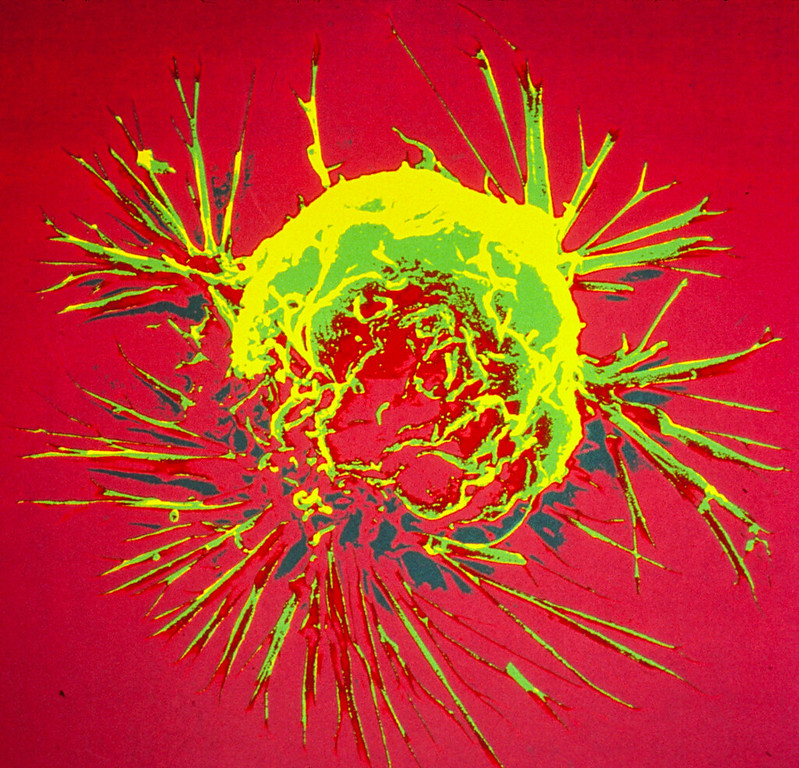
Scanning Electron Micrograph of a breast cancer cell. Credit: NIH

Researchers have found that bacteria lurking inside tumours promote cancer metastasis. They do so by enhancing the strength of host cells against mechanical stress in the bloodstream, promoting cell survival during tumour progression, researchers report in the journal Cell.

“Our study reveals that the cancer cell’s behaviour is also controlled by the microbes hiding inside tumours, the majority of which were originally thought to be sterile,” said senior author Shang Cai of the Westlake Laboratory of Life Sciences and Biomedicine. “This microbial involvement is distinct from the genetic, epigenetic, and metabolic components that most cancer drugs target.”

“However, our study does not mean that using antibiotics during cancer treatment will benefit patients,” he cautioned. “Therefore, it is still an important scientific question of how to manage the intratumor bacteria to improve cancer treatment in the future.”

It is known that microbes play a critical role in affecting cancer susceptibility and tumour progression, particularly in colorectal cancers. New evidence suggests however that, in a broad range of cancer types, they also form integral components of the tumour tissue itself, such as pancreatic cancer, lung cancer, and breast cancer. Microbial features are linked to cancer risk, prognosis, and treatment responses, yet the biological functions of tumour-resident microbes in tumour progression remain unclear.

Whether these microbes are actually drivers of tumour progression has been an intriguing question. “Tumour cells hijacked by microbes could be more common than previously thought, which underscores the broad clinical value of understanding the exact role of the tumour-resident microbial community in cancer progression,” Cai explained.

To find answers, Cai’s team utilised a mouse model of breast cancer with significant amounts of bacteria inside cells, similar to human breast cancer. The bacteria were found to be capable of travelling through the circulatory system with the cancer cells, playing critical roles in tumour metastasis. These passenger bacteria have the capacity to modulate the cellular actin network, promoting cell survival against mechanical stress in circulation.

“We were surprised initially at the fact that such a low abundance of bacteria could exert such a crucial role in cancer metastasis. What is even more astonishing is that only one shot of bacteria injection into the breast tumour can cause a tumour that originally rarely metastasises to start to metastasise,” Cai said. “Intracellular microbiota could be a potential target for preventing metastasis in broad cancer types at an early stage, which is much better than to have to treat it later on.”

While intratumour bacteria was found to have a clear role in promoting cancer cell metastatic colonisation, the authors did not exclude the possibility that the gut microbiome and immune system may act together with intratumour bacteria to determine cancer progression. Future in-depth analyses of how bacteria invade tumour cells, how intracellular bacteria are integrated into the host cell system, and how bacteria-containing tumor cells interact with the immune system will help inform how to properly deploy antibiotics in cancer treatment.

Source: ScienceDaily

Experiment Turns Back the Age of Human Skin Cells by 30 Years

This normal human skin cell was treated with a growth factor that triggered the formation of specialised protein structures that enable the cell to move.
Credit: Torsten Wittmann, University of California, San Francisco

In a finding which could revolutionise regenerative medicine, researchers have found a way to reverse the age of human skin cells by 30 years, reversing genetic ageing measures for cells without losing their specialised function. The function of older cells was partly restored, as well as rejuvenating the molecular measures of biological age. The research was published in the journal eLife.

One of the ways regenerative medicine aims to replace damaged or old cells is by creating ‘induced’ stem cells, which differentiate into specialised cells. Currently the process is not reversible.

The new method, based on stem cell production, overcomes the problem of entirely erasing cell identity by halting reprogramming part of the way through the process. This let researchers find the precise balance between reprogramming cells, making them biologically younger, while still being able to regain their specialised cell function.

Currently, cell reprogramming takes around 50 days using four key molecules called the Yamanaka factors. The new method, called ‘maturation phase transient reprogramming’, exposes cells to Yamanaka factors for just 13 days. At this point, age-related changes are removed and the cells have temporarily lost their identity. The partly reprogrammed cells were given time to grow under normal conditions, to observe whether their specific skin cell function returned. Genome analysis showed that cells had regained markers characteristic of skin cells (fibroblasts), and this was confirmed by observing collagen production in the reprogrammed cells.

To show that the cells had been rejuvenated, the researchers looked for changes in ageing indicators. Dr Diljeet Gill, who conducted the work as a PhD student explained: “Our understanding of ageing on a molecular level has progressed over the last decade, giving rise to techniques that allow researchers to measure age-related biological changes in human cells. We were able to apply this to our experiment to determine the extent of reprogramming our new method achieved.”

Cellular ages examined included the epigenetic clock, where chemical tags present throughout the genome indicate age. Another is the transcriptome, all the gene readouts produced by the cell. According to these two measures, the reprogrammed cells matched the profile of cells that were 30 years younger compared to reference data sets.

However, ‘rejuvenated’ cells need to function as if they were younger as well as looking younger. The rejuvenated fibroblasts were able to produce more collagen proteins compared to control cells that did not undergo the reprogramming process. Fibroblasts also move into areas that need repairing. Researchers tested the partially rejuvenated cells in vitro, and the treated fibroblasts moved into the gap faster than older cells – a sign that these could be used to improve wound healing,

The method also had an effect on other genes linked to age-related diseases and symptoms, the researchers saw, indicating possible future therapies. The APBA2 gene, associated with Alzheimer’s disease, and the MAF gene with a role in the development of cataracts, both showed changes towards youthful levels of transcription.

The researchers plan to explore the mechanism behind the successful transient programming, which is not yet completely understood. It is speculated that key areas of the genome involved in shaping cell identity might escape the reprogramming process.

Dr Diljeet concluded: “Our results represent a big step forward in our understanding of cell reprogramming. We have proved that cells can be rejuvenated without losing their function and that rejuvenation looks to restore some function to old cells. The fact that we also saw a reverse of ageing indicators in genes associated with diseases is particularly promising for the future of this work.”

Professor Wolf Reik, a group leader in the Epigenetics research programme who has recently moved to lead the Altos Labs Cambridge Institute, said: “This work has very exciting implications. Eventually, we may be able to identify genes that rejuvenate without reprogramming, and specifically target those to reduce the effects of ageing. This approach holds promise for valuable discoveries that could open up an amazing therapeutic horizon.”

Source: Babraham Institute

Avoid Goat’s Milk Skin Products in Inflammatory Skin Conditions

Photo by Robin Worrall on Unsplash

Individuals with inflammatory skin conditions should avoid using skincare products that contain food products such as goat’s milk, according to a series of case studies published in Clinical & Experimental Allergy. Such skincare products have been marketed to those with ‘sensitive skin’.

In children, milk allergy is one of the most common food allergies, but usually resolves in the first years of life. Adult-onset milk allergy is rare. In patients with inflammatory conditions of the skin such as atopic dermatitis, associations between the use of food allergen-containing skin products and systemic sensitisation to that foodstuff has been demonstrated for several foods. This is of concern, as food-containing skin products are commonly promoted as a safer and more ‘natural’ way of managing a variety of skin conditions. These are widely available for unprescribed purchase in pharmacies and supermarkets.

The present study reports on seven patients with inflammatory skin conditions who experienced anaphylaxis after ingesting goat’s or sheep’s milk or cheese products.  All of the patients had a history of using goat’s milk skin products to treat their skin conditions prior to the onset of their allergic reaction. Six of them had atopic dermatitis.

“Marketing of skin products derived from goat’s milk is extensive and targeted to patients with ‘sensitive skin’ who commonly have underlying inflammatory skin conditions,” the authors wrote. “Our findings provide novel evidence of the origins of adult-onset milk allergy and adds to the growing body of evidence that use of foodstuffs as therapy for inflammatory skin conditions can lead to the development of new food allergies.” 

Source: Wiley

Many Clinical Trials Ignore Previous Research

Photo by Louise Reed on Unsplash

Researchers evaluating a random selection of clinical trials done in North America found that they neglected to take into account previous or ongoing trials, which may result in researchers conducting redundant or less impactful studies. The findings were published in the journal Med.

Clinical trials are a crucial tool for assessing the safety and efficacy of medical interventions, but sponsors often provide incomplete information for assessing their ethical justification. Incomplete portrayals of supporting evidence hamper the ability of individuals or authorities to evaluate the trials’ risks, benefits, and scientific merit. 

To assess the prevalence of such omissions, researchers accessed the ClinicalTrials.gov registry and evaluated 101 randomly chosen clinical trials. Among those where there was at least one previous trial testing the same drug in the same disease, 30% of industry-sponsored trials and 20% of non-industry-funded trials failed to cite related studies. “Clinical trial protocols undercite easily accessible, relevant trials and do not document systematic searches for relevant clinical trials,” the authors wrote.

“Numerous studies suggest that some clinical trials are pursued despite their clinical hypotheses having been resolved prior to study launch,” write the authors. “Failure to provide a complete and impartial account of prior and ongoing research in study protocols may enable clinical research that fails to inform clinical practice.”

Source: EurekAlert

Not all Dietary Fibre Equally Good at Preventing CVD

Photo by Daria Shevtsova on Pexels

A study published in JAMA Network Open showed that cereal fibre but not fruit or vegetable fibre, was consistently associated with lower inflammation and lower CVD incidence. Until now there had been limited data on the link between fiber and inflammation among older adults, who have higher levels of inflammation compared with younger adults.

The research includes data from a large and well-characterised prospective cohort of elderly individuals, with detailed data on dietary intake, inflammation, and incidence of CVD. The research confirmed previously observed associations between dietary fibre and CVD and extended those investigations to include the source of the fibre, the relationship of fibre with multiple inflammatory markers, and to test whether inflammation mediated the relationship between dietary fibre and CVD.

Of the 4125 adults enrolled in the Cardiovascular Health Study from 1989 to 1990 participants received a food frequency questionnaire that was administered to those without prevalent CVD at enrollment and then were followed up visits for development CVD (stroke, myocardial infarction, and atherosclerotic cardiovascular death) through June 2015. Blood samples were assessed for markers of inflammation.

“Higher intakes of dietary fiber is associated with lower CVD risk. A common hypothesis has been that higher fiber intakes reduce inflammation, subsequently leading to lower CVD risk,” said Rupak Shivakoti, PhD. ‘With findings from this study, we are now learning that one particular type of dietary fiber — cereal fibre — but not fruit or vegetable fibre was associated with lower inflammation. With findings from this study we now are learning that cereal fiber has the potential to reduce inflammation and will need to be tested in future interventional studies.”

Although there are data to suggest that fibre in general might have anti-inflammatory effects by improving gut function, modifying diet and satiety (eg, reduced fat and total energy intake), and improving lipid and glucose profile metabolism, why cereal fibre but not vegetable or fruit fibre is associated with lower inflammation is not clear and warrants further investigation, noted Dr Shivakoti. Additionally, it is unclear whether it is the cereal fibre itself or other nutrients in foods rich in cereal fibre behind the observed relationships.

“Additionally, we learned that inflammation had only a modest role in mediating the observed inverse association between cereal fiber and CVD,” observed Dr Shivakoti. “This suggests that factors other than inflammation may play a larger role in the cereal fiber-associated reduction in CVD and will need to be tested in future interventions of specific populations.

Source: Columbia University’s Mailman School of Public Health

Cardiovascular Risk Factors in Childhood Predict Adulthood Risks

Photo by Margaret Weir on Unsplash

By tracking more than 38 000 participants from childhood for fifty years, researchers have uncovered direct evidence that the five cardiovascular risk factors when present in childhood predicted cardiovascular risk in adulthood. 

Body mass index, blood pressure, cholesterol, triglycerides and youth smoking, particularly in combination in early childhood, were clinically linked with cardiovascular events that predict poor cardiovascular health in adults.

The international study conducted by the International Childhood Cardiovascular Consortium (i3C) and published in the New England Journal of Medicine, found that the increased cardiovascular risk began as early as 40 years of age.

Paper co-author Prof Terence Dwyer at the University of Oxford commented: “Despite the effect medical and surgical care have had on treating heart disease, achieving the greatest possible reduction in the heart disease burden will depend on including preventive strategies that commence in childhood.”

The findings confirm that prevention must start in childhood. “Longitudinal studies like these have been hampered by a lack of inclusion of comprehensive childhood data around body measurements, blood pressure, and blood lipids and a failure to follow-up at ages when cardiovascular disease becomes common.”

The study involved 38 589 participants from Australia, Finland and the US, who were followed from age 3-19 years for a period of 35-50 years. 

The results showed that increased risk for cardiovascular events was seen in over half the children, with those having the highest risk factor levels, at 9 times the risk for an event as for children with below average risk factors.

“While this evidence had not been available previously, the findings were not entirely surprising as it had been known for some time that children as young as five already showed early signs of fatty deposits in arteries. This new evidence justified a greater emphasis on programs to prevent the development of these risk factors in children. Clinicians and public health professionals should now start to focus on how this might best be achieved,” Prof Dwyer concluded.

Source: Murdoch Childrens Research Institute

Home Pulse Oximeters in COVID no Better Than Just Asking

Photo by Mufid Majnun on Pexels

Self-measurement of oxygen levels with pulse oximeters is no better than just regularly asking patients with COVID if they are short of breath, according to new research published in the New England Journal of Medicine. Pulse oximeters have often been applied because of concerns that patients might not notice their blood oxygen levels sliding dangerously. 

However, people in Penn Medicine’s COVID Watch programme, which monitors patients recovering at home via automated text messaging, had the same outcomes whether they used oxygen-measuring devices or not.

“Compared to remotely monitoring shortness of breath with simple automated check-ins, we showed that the addition of pulse oximetry did not save more lives or keep more people out of the hospital,” said the study’s co-lead author, Anna Morgan, MD, medical director of the COVID Watch program and an assistant professor of General Internal Medicine. “And having a pulse oximeter didn’t even make patients feel less anxious.”

The COVID Watch was launched in March 2020 to remotely monitor COVID patients at home, with 28 500 people enrolled to date. Twice a day for two weeks, text messages were automatically sent to these patients asking how they felt and if they were having difficulty breathing. If patients indicated dyspnoea, the programme would alert a nurse to make contact and arrange care.

“The programme made it easy to identify the sickest patients who needed the hospital, and keep the others at home safely,” said David Asch, MD, executive director of the Center for Health Care Innovation and a professor of Medicine, Medical Ethics and Health Policy. “The programme was associated with a 68 percent reduction in mortality, saving a life approximately every three days during peak enrollment early in the pandemic.”

However it was not known if monitoring blood oxygen would help.

“Early in the pandemic, there was a prevalent theory that oxygen levels in the blood dropped before a COVID patient became symptomatic and short of breath,” said study co-lead author Kathleen Lee, MD. “Detecting this earlier with a home pulse oximeter might provide an opportunity to get patients who are on the cusp of deteriorating to the hospital faster and initiate time-sensitive therapies to improve outcomes.”

The use of pulse oximeters was so intuitively appealing that the process got adopted even before this trial, the first randomised trial to test whether it actually worked.

“Several health systems, and even states like Vermont and countries like the United Kingdom, have integrated pulse oximetry into the routine home management of patients with COVID, but there’s been scant evidence to show this strategy makes a difference,” said the research project’s principal investigator M. Kit Delgado, MD.

In this study, more than 2000 patients enrolled in COVID Watch between Nov. 29, 2020, and Feb. 5, 2021, were randomised to receive standard COVID Watch care or the same program with the addition of a pulse oximeter.

However, no statistical difference was seen in the main study measure, the average number of days enrolled patients spent alive and out of the hospital in the 30 days after they were enrolled. For patients with pulse oximeters, the measure was 29.4 days; for those without, it was 29.5, with no difference across racial liines. This was important as black patients are known to have had worse COVID outcomes and concerns had been raised about the accuracy of pulse oximeters in people with darker skin.
The researchers cautioned that the study focused on pulse oximeters in established programme of remote monitoring, and patients don’t have access to a system like COVID Watch or on-call clinicians, self-monitoring with pulse oximeters may still be a reasonable approach until there is evidence to the contrary.

“Overall, these findings suggest that a low-tech approach for remote monitoring systems based on symptoms is just as good as a more expensive one using additional devices. Automated text messaging is a great way for health systems to enable a small team of on-call nurses to manage large populations of patients with COVID,” said co-principal investigator, Krisda Chaiyachati, MD. “There are a lot of other medical conditions where the same kind of approach might really help.”

Source: University of Pennsylvania School of Medicine

Caesarean and Induced Deliveries Fell During Pandemic

Photo by Christian Bowen on Unsplash

During the first few months of the COVID pandemic, premature births from caesarean and induced deliveries fell by 6.5% – and remained consistently lower throughout, according to research reported in the journal Pediatrics. This is likely a result of fewer prenatal visits due to lockdown and social distancing rules, the researchers suggested, and call into question how many such interventions are necessary.   

The study, the first to examine pandemic-era birth data at scale, raises questions about medical interventions in pregnancy and whether some decisions by doctors may result in unnecessary preterm deliveries, according to Assistant Professor Daniel Dench, the paper’s lead author.

“While much more research needs to be done, including understanding how these changes affected fetal deaths and how doctors triaged patient care by risk category during the pandemic, these are significant findings that should spark discussion in the medical community,” A/Prof Dench said.

In effect, the study begins to answer a question that never could have been resolved in a traditional experiment: What would happen to the rate of premature C-sections and induced deliveries if women didn’t see doctors as often, especially in person, during pregnancy?

Doing such a study would be unethical, but lockdown had a side effect of reducing prenatal care visits by more than a third, according to one analysis. That gave A/Prof Dench and colleagues an opportunity to evaluate the impacts, after all.

The researchers took records of nearly 39 million US births from 2010 to 2020, and compared them to expected premature births (born before 37 weeks) from March to December 2020. 

The researchers found that in March 2020, when lockdowns began in the US, preterm births from C-sections or induced deliveries immediately fell from the forecasted number by 0.4%. From March 2020 to December 2020, the number remained on average 0.35% below the predicted values. That translates to 350 fewer preterm C-sections and induced deliveries per 100 000 live births, or 10 000 fewer overall.

Before the pandemic, the number of preterm C-sections and induced deliveries had been rising. Spontaneous preterm births also fell by a small percentage in the first months of the pandemic, but much less than births involving those two factors. The number of full-term caesarean and induced deliveries increased.

“If you look at 1000 births in a single hospital, or even at 30 000 births across a hospital system, you wouldn’t be able to see the drop as clearly,” said A/Prof Dench. “The drop we detected is a huge change, but you might miss it in a small sample.”  

The researchers also corrected for seasonality, for example, preterm births are higher on average in February than in March, which helped them get a clearer picture of the data.

The research comes with caveats. Up to half of all preterm C-sections and induced deliveries are due to a ruptured membrane, which is a spontaneous cause. But in the data Dench and his team used, it’s impossible to distinguish these C-sections from the ones caused by doctors’ interventions. So, Dench and co-authors are seeking more detailed data to get a clearer picture of preterm deliveries.

Still, these findings are significant because the causes for preterm births are not always known.

“However, we know for certain that doctors’ interventions cause preterm delivery, and for good reason most of the time,” A/Prof Dench said. “So, when I saw the change in preterm births, I thought, if anything changed preterm delivery, it probably had to be some change in how doctors were treating patients.”

The researchers’ findings raise a critical question: Was the pre-pandemic level of doctor intervention necessary?

“It’s really about, how does this affect foetal health?” said A/Prof Dench. “Did doctors miss some false positives – did they just not deliver the babies that would have survived anyway? Or did they miss some babies that would die in the womb without intervention?”  

A/Prof Dench plans to use foetal death records from March 2020 to December 2020 to answer this question. If he finds no change in foetal deaths at the same time as the drop in preterm births, that could point to “false positives” in doctor intervention that can be avoided in the future. Learning which pregnancies required care during the pandemic and which ones didn’t could help doctors avoid unnecessary interventions in the future.  

“This is just the start of what I think will be an important line of research,” A/Prof Dench said.

Source: Georgia Institute of Technology

Increased Risk of DVT, Pulmonary Embolism, and Bleeding after COVID

3D illustration of a thrombus. Credit: Mecder, CC BY-SA 4.0, via Wikimedia Commons

There is an increased risk of developing deep vein thrombosis (DVT) for six months after a COVID, a study published in the BMJ suggests, as well as increased risk of pulmonary embolism and bleeding for shorter periods. The risk was particularly evelated for those with severe COVID as well as those infected during the first wave.

This highlights the importance of COVID vaccination, the researchers said. While there has been concern over the risk of blood clots after vaccination, the risk is far smaller, according to a large study last year.

It had previously been observed that people who had COVID had an increased risk of blood clots, and the researchers wanted to find out when that risk returns to normal levels.

The researchers tracked the health of just over one million people in Sweden who tested positive for COVID between February 2020 and May 2021 in Sweden, comparing them against four million people age- and sex-matched non-infected individuals.

Adjusting for confounding factors such as comorbidities, cancer, surgery, long term anticoagulation treatment, previous venous thromboembolism, or previous bleeding event, the researchers found an increased risk of:

  • first DVT, for up to three months
  • first pulmonary embolism, for up to six months
  • first bleeding event, such as a stroke, for up to two months

Comparing blood clot risk after COVID to the normal level of risk, the results showed that:

  • four in every 10 000 COVID patients developed DVT compared with one in every 10 000 non-infected individuals
  • about 17 in every 10,000 COVID patients had a blood clot in the lung compared with fewer than one in every 10,000  non-infected individuals

The authors wrote that the increased risk of blood clots was higher in the first wave than later waves, probably because treatments improved during the pandemic and older patients were starting to be vaccinated by the second wave.

Pulmonary embolism risk in people with severe COVID was 290 times greater than normal, and seven times higher than normal after mild COVID. However, there was no increase in bleeding risk in mild cases.

“For unvaccinated individuals, that’s a really good reason to get a vaccine – the risk is so much higher than the risk from vaccines,” said principal study investigator Anne-Marie Fors Connolly, from Umea University in Sweden.
While COVID’s causing the blood clots cannot be proven in this study, the researchers have a number of theories on the mechanism. It could be the direct effect of the virus on the layer of cells which line blood vessels, an exaggerated inflammatory response to the virus, or the body making blood clots at inappropriate times.

Though vaccines are very effective against severe COVID, but less so against infection, especially with the Omicron variant. This means repeat symptomatic infections are commonplace.

Source: BBC News

Fear of Cancer Recurrence is Widespread in Survivors and Patients

Photo by Alex Green on Pexels

A recent analysis of published research found that more than half (59%) of cancer survivors and patients experience at least a moderate level of fear of cancer recurrence and that about one in five (19%) have a high level of fear. The findings, published in Psycho-Oncology, show women and younger people in particular have more fear of recurrence.

Cancer prevalence is increasing due to ageing populations, and more people are surviving cancer thanks to improved treatments. Managing fear of cancer recurrence (FCR) has been reported as one of the most important unmet needs for this growing group. FCR is defined as “fear, worry, or concern relating to the possibility that cancer will come back or progress”. Low levels of FCR can be helpful by promoting treatment compliance and healthy lifestyle adaptations. However, at clinical levels, FCR can limit quality of life and daily functioning and require professional help. Four features have been defined as key characteristics of clinical FCR: “(a) high levels of preoccupation; (b) high levels of worry; (c) that are persistent; and (d) hypervigilance to bodily symptoms”. It is important to address FCR, because FCR may also lead to increased healthcare costs14 and for most patients, it does not decrease over time without intervention.

The analysis, which is included 46 studies from 13 countries. Investigators found similar fear of cancer recurrence rates in survivors and patients. On average, younger people and women experienced more fear of cancer recurrence.

Additional research is needed to not only identify which patients desire support to address their fear of cancer recurrence but also to determine how to tailor interventions to different levels of fear and to individual needs and preferences.

“Knowing the prevalence and severity of fear of cancer recurrence for the general cancer population and for different subgroups is an important development, because it is essential for shaping healthcare provision, policy, and research on fear of cancer recurrence,” said lead author Yvonne Luigjes-Huizer, a PhD candidate at the Helen Dowling Institute and the University Medical Centre Utrecht, in the Netherlands.

Source: Wiley