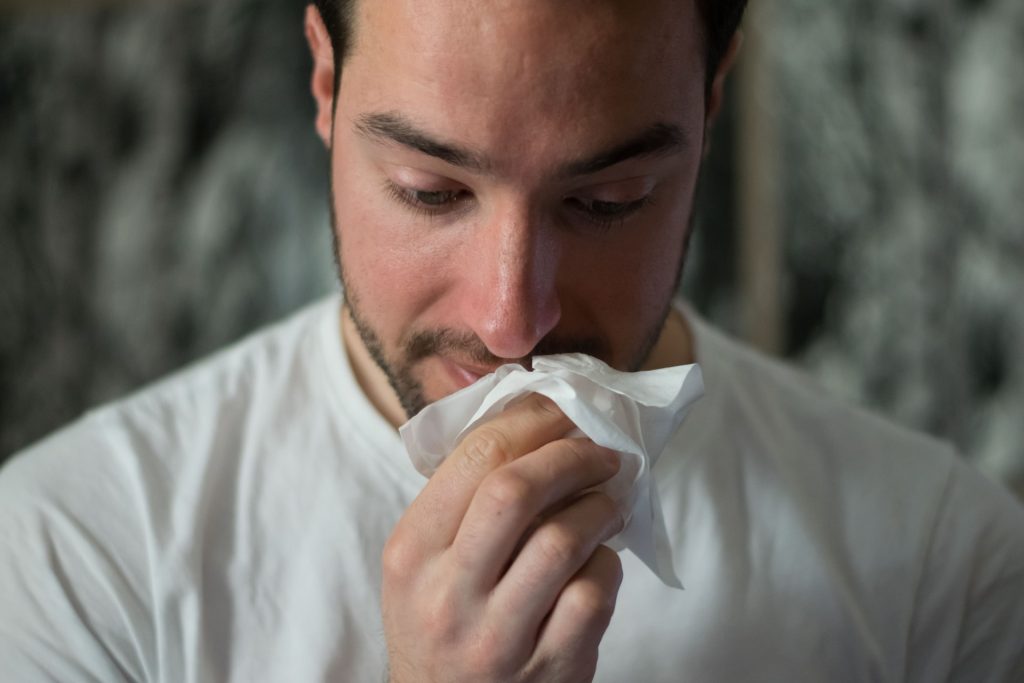
Home-based, self-administered tests for influenza are comparable in accuracy to rapid diagnostic tests in clinical settings, according to a study reported in JMIR Public Health and Surveillance.
“Home tests are a valuable tool to support the management of influenza and other respiratory infections,” explained senior author Matthew J. Thompson, professor at the University of Washington School of Medicine in Seattle.
“The tests facilitate earlier diagnoses and reduce the time from the onset of symptoms to patients seeking appropriate care,” he said.
More than 600 residents in the Seattle area participated in the 2020 study conducted between February and the end of May. Participants received influenza testing kits in the mail. After swabbing their noses, they either recorded the results through an app, or returned the kits to the lab of Lea Starita, assistant professor of genome sciences at the UW School of Medicine and a study co-author.
The researchers found that self-test’s sensitivity and specificity test were comparable with those of influenza rapid diagnostic tests used in clinical settings. They noted that false-negative results were more common when the self-test was administered after 72 hours of the appearance of symptoms, but were not related to inadequate swab collection or severity of illness.
“This study underscores the imperative of expanding access to testing and lowering the costs,” said Barry Lutz, associate professor of bioengineering and another co-author of the paper.
COVID heat map. Photo by Giacomo Carra on Unsplash
According to an analysis of excess mortality published in The Lancet, COVID’s global death toll could be as much as three times higher than official estimates.
From the start of 2020 to the end of 2021, official estimates of the global deaths directly attributed to COVID-19 5.9 million, however this new estimate puts excess deaths at a staggering 18.2 million.
The highest number of excess deaths were reported for India (4.07 million), more than eight times its 489 000 reported COVID deaths, followed by the U.S. (1.13 million), where the official count reached 824,000 by the end of 2021. According to the study, the excess mortality rate in the US (179.3 per 100 000) was about on par with Brazil (186.9 per 100,000). South Africa’s mortality rate was 293·2 per 100 000, just below the rate for Southern Sub-Saharan Africa (308.6 per 100 000). Sub-Saharan Africa’s mortality rate was 101.6 per 100 000, as a result of significant regional variation.
First author Haidong Wang, PhD, of the University of Washington, said in a statement: “Understanding the true death toll from the pandemic is vital for effective public health decision-making. Studies from several countries including Sweden and the Netherlands, suggest COVID-19 was the direct cause of most excess deaths, but we currently don’t have enough evidence for most locations.”
The massive undertaking derived models using all-cause mortality reports for 74 countries and territories and 266 subnational locations, which included 31 locations in low and middle-income countries. These locations reported all-cause death from 2020-2021, and up to 11 years prior. Excess mortality reports were also obtained for the 9 South African provinces 12 Indian states.
Overall, the global rate of estimated excess mortality from COVID was 120.3 deaths per 100 000. A total of 21 countries exceeded 300 per 100 000, with Bolivia having the highest mortality rate at 734.9 per 100 000. Bulgaria, Eswatini, North Macedonia, and Lesotho had the next highest mortality rates. Iceland had the lowest excess mortality rate (-47.8 per 100 000). Australia, Singapore, New Zealand, and Taiwan also had negative excess mortality rates.
Behind India and the U.S. for most excess deaths were Russia (1.07 million), Mexico (798 000), Brazil (792 000), Indonesia (736 000), and Pakistan (664 000). These seven countries were noted to account for more than half of the excess deaths globally during the study period.
Changes in mortality rates also reflected the impact of other diseases suppressed by the same measures that limited the spread of COVID. The researchers wrote: “The most compelling evidence to date of a change in cause-specific mortality in the pandemic period is the decrease, especially in the Northern Hemisphere, in flu and respiratory syncytial virus (RSV) deaths seen in the months of January to March, 2021,” they added. “Given the scarce and inconsistent evidence of the effect of the COVID-19 pandemic on cause-specific deaths, and the extremely scarce high-quality data on causes of death during the pandemic, our excess mortality estimates reflect the full impact of the pandemic on mortality around the world … not just the deaths directly attributable to SARS-CoV-2 infection.”
Limitations included different modelling strategies being used to estimate excess mortality rate, and excess mortality rate by week or month was not estimated.
On Sunday 13 March, the World Health Organization released a statement condemning recent attacks on hospitals and other healthcare facilities in Ukraine, which it called “horrific”. It also called for an immediate end of all such attacks, which are killing and injuring both patients and health care workers, as well as threatening vital health services.
“To attack the most vulnerable – babies, children, pregnant women, and those already suffering from illness and disease, and health workers risking their own lives to save lives – is an act of unconscionable cruelty,” the organisation said.
WHO’s Surveillance System for Attacks on Health Care (SSA) has documented 31 attacks on health care since the outset of the war that started with the Russian invasion on 24 February, now in its third week. These include 24 incidents of damage to or destruction of health care facilities, and five cases of ambulances.
In one incident, a maternity hospital was hit by a Russian air strike, causing three deaths including a child.
There have been 12 deaths and 34 injuries as a result of these attacks, and impaired access to and availability of essential health services, the WHO stated. Since attacks are ongoing, this is expected to continue.
The organisation also stresses that such attacks also directly impact the needs of vulnerable groups, and the health care needs of pregnant women, new mothers, younger children and older people inside Ukraine are rising even as violence curtails health care access.
“For example, more than 4,300 births have occurred in Ukraine since the start of war and 80 000 Ukrainian women are expected to give birth in next three months. Oxygen and medical supplies, including for the management of pregnancy complications, are running dangerously low,” the WHO statement read. WHO warned that Ukraine’s health care system is “clearly under significant strain” and a collapse would be a “catastrophe”. It stresses that “every effort must be made” to prevent this.
“International humanitarian and human rights law must be upheld, and the protection of civilians must be our top priority.
They call for international humanitarian and human rights laws to be upheld, with the protection of civilians as a top priority. Aid and health care workers must be able to continue and strengthen service delivery, and health services should be provided at border crossing, to provide prompt care and referral for children and pregnant people. Care should be unimpeded, with access to civilians in all areas of the conflict, and health care and services should be protected from attacks.
WHO stated that, in the wake of COVID’s huge strain, “such attacks have the potential to be even more devastating for the civilian population.” As such, it called for an urgent ceasefire.
“Finally, we call for an immediate ceasefire, which includes unhindered access so that people in need can access humanitarian assistance. A peaceful resolution to end the war in Ukraine is possible.”
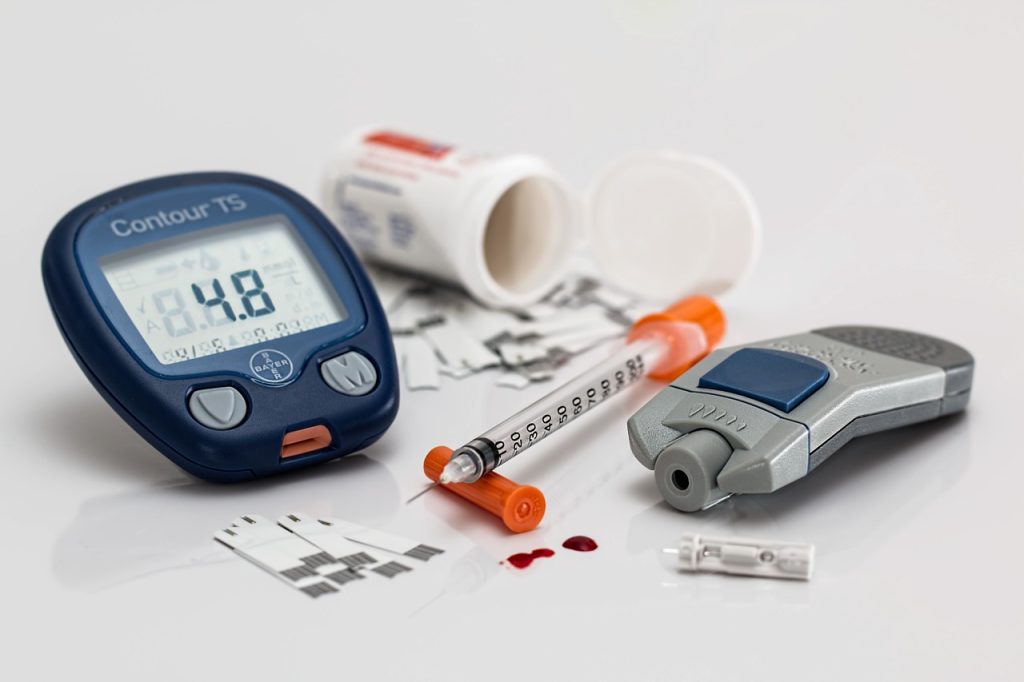
By uncovering the subtle difference between two varieties of a protein, researchers from the Pennsylvania may have discovered how to eliminate the weight gain side effects of thiazolidinediones, which were once widely-used diabetes drugs. These findings, published in Genes & Development, could lead to more effective treatment from modified thiazolidinediones, which many likely avoid in its current form due to side effects.
“One small, undiscovered difference between the two forms of a single protein proved to be extremely significant,” said study senior author Mitchell Lazar, professor at the University of Pennsylvania. “Our findings suggest a way to improve on the mechanism of action of thiazolidinedione drugs, which holds promise for eliminating the side effect of weight gain.”
After their introduction in the 1990s, thiazolidinediones, which include rosiglitazone, soon enjoyed widespread use in diabetes. Since then, they have fallen out of favour due to their side effects. This has led some researchers to investigate whether new compounds could be developed that retain these drugs’ therapeutic effects while having fewer side effects.
In their study, Prof Lazar and his team approached this problem by studying thiazolidinediones’ target, PPARgamma (PPARγ), a protein which helps control fat cell production. The scientists examined two lines of mice: One greatly deficient in one form of the protein, PPARγ1, the other greatly deficient in PPARγ2. In the mice, the scientists showed that activating PPARγ1 or PPARγ2 with a thiazolidinedione had an anti-diabetic effect in each case, protecting mice from the metabolic harm of a high-fat diet.
However, the researchers discovered that activation of these two forms has subtly different downstream effects on gene activity. Specifically, in the PPARγ1-deficient mice (in which most of the present PPARγ takes the form of PPARγ2), the thiazolidinedione treatment caused no weight gain.
The finding therefore suggests that it may be possible to realize the benefits of thiazolidinediones without the weight gain side effect, by selectively activating PPARγ2 and not PPARγ1.
“We’re now studying in more detail how PPARγ1 and PPARγ2 work and how they differ, in the hope of finding ways to selectively activate PPARγ2,” Prof Lazar said.
10 March 2022: Shabir Madhi addresses the crowd outside Baragwanath hospital. Credit: Nation Nyoka
Despite falling struggling staff and falling patient care at Baragwanath Hospital, the contracts of 800 support staff will not be renewed, writes Nation Nyoka for New Frame.
Budget cuts at the Gauteng Department of Health mean that it will not renew the contracts of more than 800 COVID support staff at Chris Hani Baragwanath Academic Hospital, south of Johannesburg, on 31 March.
A picket was held outside the hospital on Thursday 10 March after it emerged that suppliers hadn’t been paid for services such as bread delivery and biohazardous waste removal.
Chief executive Nkele Lesia said on 11 March that the picket was less about the COVID staff and more about staff shortages. But she offered no plan to address the inadequate number of hospital personnel. Lesia said the COVID staff knew their contracts were not going to be renewed.
“Those 800 posts may have been created for COVID-19, but it provides us an opportunity to redress this imbalance that exists with this hospital having been chronically understaffed,” said Shabir Madhi, a vaccinology professor and the dean of health sciences at the University of the Witwatersrand (Wits). “We can’t just remove the staff – we need to incorporate them into the system so that we can have this hospital better staffed to ensure better quality of patient care.”
He said the issue goes beyond staff shortages. “If we remove them, we will find that the permanent staff come under greater pressure and burn out. They are going to resign, creating a greater disaster. Poor planning on the part of the government is not an excuse to punish patients and healthcare workers.”
Gauteng member of the executive council for health Nomathemba Mokgethi said the department is unable to absorb the temporary staff because of budget constraints. But she extended her appreciation for their help and support during the waves of COVID.
A chronic situation
Madhi said neglect and the inadequate management and training of healthcare workers over the past two years will materialise as a heavier burden from chronic diseases, which have been on the back-burner as the healthcare industry prioritised COVID.
“For the next two to three years, we need to expect high levels of people ending up in hospital dying not because of COVID. With COVID, there has unquestionably been a disruption in the care of patients with other conditions because people haven’t been able to access facilities. People have been delayed in the diagnosis, and for some time they probably delayed with the treatment,” he said.
Mokgethi and her team did not offer a plan to handle diseases that have been neglected either.
Madhi said training has been hampered and Baragwanath – one of the biggest academic teaching hospitals on the Wits circuit – needs to function properly for students to learn comprehensively. “It is going to impact patient care in the years to come, so the disaster we sit upon today is just the beginning of a further rot of the system if we don’t reverse it immediately.”
Mmampapatla Ramokgopa, chairperson of the hospital’s medical advisory committee, said resilient and hard-working staff who have gone the extra mile are what has kept Baragwanath going.
“We have doctors and nurses pushing patients because there are no porters. The same with cleaning. You find nurses and doctors scrubbing the floors because there are not enough cleaners. Sometimes patients delay to get into theatres because the cleaners are not there. They dig into their pockets and make contributions to buy either bread or flour to make bread,” said Ramokgopa.
Patient care at risk
The department denied that Gauteng hospitals have run out of food, saying other types of food are being served at Baragwanath. It did admit that the hospital, along with other facilities, experienced “a short supply of bread in the recent past” and that the issue had been resolved.
Madhi said the hospital and surrounding area were compromised when the department failed to pay the service provider who removes biohazardous waste. The department said on 11 March that it had paid the relevant service providers to collect the waste and supply bread.
“The fact that we are in a province where patients are not provided something as basic as bread for two weeks speaks volumes about the incompetence and uncaringness of those responsible for the management of this facility … at the level of the province,” said Madhi.
Ramokgopa said the committee has raised these matters over time. People who have worked at the hospital for years have a collective memory of its legacy and they are eager to engage and find solutions.
National Union of Public Service and Allied Workers branch secretary Monwabisi Somi said employees are providing much-needed staff for an institution that is under strain, and the COVID workers need to be absorbed. “We’ve also got the issue of telephone lines that have not been working for some time in some units, which compromises communication. This is to the detriment of patient care,” he said.
Lerato Madyo, the provincial department’s acting chief financial officer, said its finances are healthy but it is dealing with a backlog of unprocessed invoices from previous years. The department owed service providers R4.2 billion at the end of January.
Madhi said what is happening in state healthcare facilities is compromising the future care of people in South Africa. “It is undermining our ability to provide adequate training to healthcare workers.”
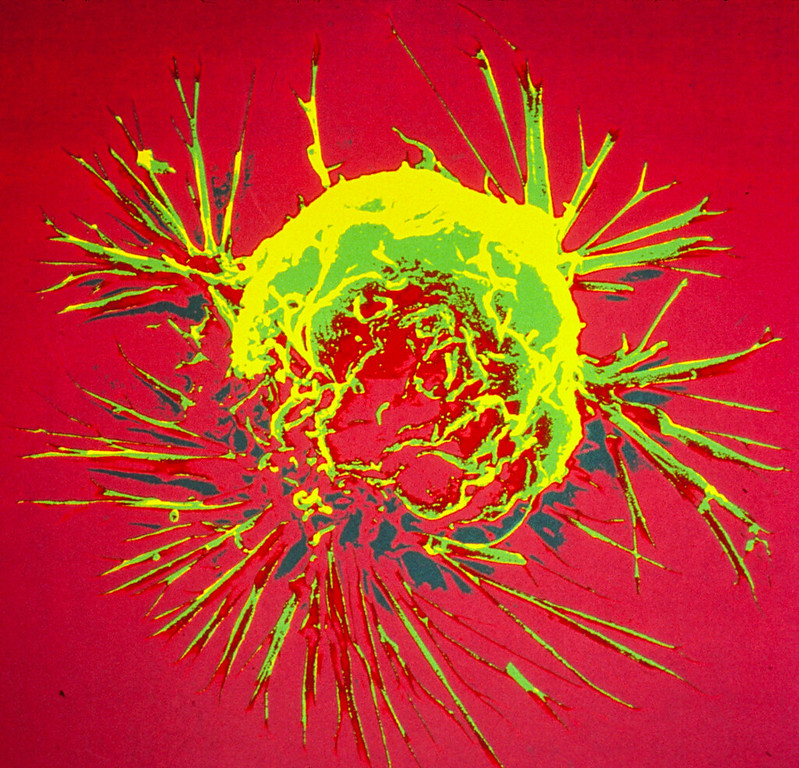
A scanning electron microscope image of a breast cancer cell. Credit: Bruce Wetzel and Harry Schaefer, National Cancer Institute, National Institutes of Health
Squeezing through tight spaces makes cancer cells more aggressive and helps them evade cell death, a study published in eLife shows.
The researchers’ findings reveal how mechanical stress makes cancer cells more likely to metastasise. While metastasis is the cause of most cancer deaths, there are currently no available cures. However, the new results may help scientists develop novel approaches to treat or prevent metastasis.
When cancer cells escape their tumour or enter called capillaries to spread throughout the body, it can be tight squeeze. The cells have to collapse and change shape – a process called confined migration. The cells must also evade the immune system as they spread outwards.
“Mechanical stress can cause cancer cell mutations, as well as an uncontrolled increase in cell numbers and greater tissue invasion,” explained first author Deborah Fanfone, Postdoctoral Fellow at the Cancer Research Center of Lyon. “We wanted to know if the mechanical stress of confined migration makes cancer cells more likely to metastasise, and how this happens.”
To find out, the researchers forced human breast cancer cells through a membrane with 3µm-sized holes to simulate a confined migration environment. After passing through the membrane just once, the cells became more mobile and resistant to anoikis –a form of programmed cell death that occurs when cells become detached from the extracellular matrix. The cells were also able to escape destruction by immune natural killer cells.
More testing showed that expression of inhibitory-of-apoptosis proteins (IAPs) increased the resistance of cancer cells to anoikis. A new type of cancer drug which degrades IAPs (called a SMAC mimetic), removed this protection in the cancer cells.
The team then examined how these squeezed cells behave when administered to immune-suppressed mice. They found these mice developed more lung metastases than mice that were administered with breast cancer cells that had not been exposed to confined migration.
“By mimicking confined migration, we’ve been able to explore its multifaceted effects on cancer aggressiveness,” says senior author Gabriel Ichim, who leads the Cancer Cell Death team at the Cancer Research Center of Lyon. “We’ve shown how the process boosts survival in cancer cells and makes them more prone to forming deadly metastases.”
The authors add that these results may lead to additional studies of potential metastasis treatments, such as therapies that soften tumours to reduce mechanical stress on cancer cells, or that block IAPs. These include SMAC mimetics, which are currently being tested in clinical trials as a possible new treatment approach.
On Thursday, March the 10th, the South African Medical Research Council (SAMRC) honoured a selection of leading SA medical scientists and researchers at its 8th SAMRC Scientific Merit Awards at a hybrid event.
This year’s Presidential Award, which is awarded to scientists who have made exceptional lifelong contributions to medical research and public health, was bestowed upon Professor Koleka Mlisana, the country’s first black microbiologist. With over 40 years’ experience in health sciences, Prof Mlisana is the current executive manager of academic affairs, research, and quality assurance at the National Health Laboratory Service (NHLS) and Co-Chair of the COVID-19 Ministerial Advisory Committee (MAC). In the 1990s, she was one of the scientists investigating the unknowns of HIV. Her research focused on understanding the body’s response to acute HIV infection.
The Platinum Medal, for South Africans who have made seminal scientific contributions and who have also made an impact on health, especially for those living in developing countries, was awarded to Professor Andre Pascal Kengne. As a physician and an internationally renowned non-communicable diseases epidemiologist, his work focuses on cardiovascular disease, diabetes, and chronic kidney disease. He is the current Director of the SAMRC’s Non-Communicable Diseases Research Unit and holds conjoint appointments as Professor of Medicine at the University of Cape Town, as well as Extraordinary Professor of Global Health at Stellenbosch University.
In the Gold Medal category, which is for researchers who have made substantial and influential contributions that have impacted on health especially in the developing world, the awardees are Professors Tulio de Oliveira, Ntobeko Ntusi, Ambroise Wonkam and Grant Theron.
Silver Medals are conferred to emerging and upcoming scientists and those committed to capacity development. This year, the medal recipients are Professors Diane Gray, Marlo Moller, Rabia Johnson, and Dr Nasheeta Peer.
SAMRC President and CEO, Prof Glenda Gray said that scientific research remains fundamental for reducing the nation’s burden of disease and preventing mortality. “The knowledge produced by these exceptional scientists will carry our country’s legacy of science forward and continue to improve the lives of citizens as it is evident with COVID-19.” Their work shows the country’s ingenuity, she added, noting that “it was scientists in South Africa who first discovered and sounded the alarm on Omicron, which rapidly became the dominant variant of concern.”
Due to the sizeable interest in the use of cannabis-based medications in treating drug resistant epilepsy and comparative lack of clinical guidance on prescription, an expert working group in Australia recently developed an interim “consensus advice” for prescribers and published it in the British Journal of Clinical Pharmacology.
The working group was made up of paediatric and adult epilepsy specialists, clinical pharmacists, pharmacologists, and cannabis researchers. Epilepsy occurs in 1–2% of the population, and about one in three people with epilepsy are considered drug resistant to standard antiseizure medications.
Since there are few clinical data available on comparative efficacy of cannabinoids with registered epilepsy treatments, the authors recommend cannabinoids only in drug resistant epilepsy, in carefully selected compliant patients with specific epilepsy phenotypes.
The document provides an overview of the different cannabis medicines currently available for treating epilepsy in children and adults, with information on dose, drug interactions, toxicity, and type and frequency of symptom and seizure relief. The consensus advice will be updated as new evidence emerges and will provide the structure for a more definitive guideline in the future.
“In the absence of a registration dossier, scientific experiments and case reports are helpful to provide some guidance to optimised dosing. However as in this guidance, observational data obtained from clinical practice – which often includes information not included in scientific experiments or even early clinical trial data, such as treating patients with other comorbidities, taking multiple medications, and patient diversity – can be very helpful to clinical practice,” said senior author Jennifer H. Martin, MBChB, MA, PhD, FRACP, a researcher at the University of Newcastle and the Director of the Australian Centre for Cannabis Clinical and Research Excellence.
Colon cancer cells. Source: National Cancer Institute on Unsplash
Emodin, an active compound found in Chinese herbal medicine, can prevent colon cancer in mice, according to researchers, and may be applicable in humans as well, a study has found. The mechanism behind this is likely emodin’s ability to reduce the number of pro-tumour macrophages.
Emodin, a major bioactive anthraquinone derivative extracted from rhubarb, represents multiple health benefits in the treatment of a host of diseases, such as immune-inflammatory abnormality, tumor progression, bacterial or viral infections, and metabolic syndrome. Emerging evidence has made great strides in clarifying the multi-targeting therapeutic mechanisms underlying the therapeutic efficacy of emodin, including anti-inflammatory, immunomodulatory, anti-fibrosis, anti-tumor, anti-viral, anti-bacterial, and anti-diabetic properties.
Besides investigating if emodin could prevent colon cancer, the study’s researchers especially wanted to know whether its anti-cancer properties “could be attributed to its actions on immune cells and particularly macrophages,” said Angela Murphy, PhD, co-author of the study. In this murine model, emodin was shown to reduce both polyp count and size. Also, mice treated with emodin “exhibited lower protumorigenic M2-like macrophages in the colon,” researchers wrote in the study.
Roughly 70% of colon cancer cases can be attributed to diet or other lifestyle factors, said Dr Murphy. Because emodin is also found in some fresh fruits and vegetables, it is hoped that consuming these emodin-containing foods could prevent colon cancer in humans.
A new study calculates that exposure to car exhaust from leaded gas during childhood lowered the IQ levels of about half the population of Americans alive today.
The findings suggest that Americans born before 1996 may now be at greater risk for lead-related health problems, such as faster ageing of the brain. Leaded petrol was banned in the US in 1996, but anyone born in the US before the end of that era, and especially those at the peak of its use in the 1960s and 1970s, had worryingly high lead exposures as children, the researchers said. In South Africa, leaded petrol was only banned at the end of 2005.
Lead is a neurotoxin that can enter the bloodstream via a number of routes and there is no safe level of exposure at any point in life. Young children are especially vulnerable to lead’s ability to impair brain development and lower cognitive ability.
“Lead is able to reach the bloodstream once it’s inhaled as dust, or ingested, or consumed in water,” said study co-author Aaron Reuben, a PhD candidate in clinical psychology. “In the bloodstream, it’s able to pass into the brain through the blood-brain barrier, which is quite good at keeping a lot of toxicants and pathogens out of the brain, but not all of them.”
To answer the complex question of how more than 70 years of leaded petrol use may have left a permanent mark on human health, Reuben and co-authors Michael McFarland and Mathew Hauer, both professors of sociology at Florida State University, opted for a fairly simple strategy.
Using publicly available data on US childhood blood-lead levels, leaded-gas use, and population statistics, they determined the likely lifelong burden of lead exposure carried by every American alive in 2015. From this data, they estimated lead’s assault on our intelligence by calculating IQ points lost from leaded gas exposure as a proxy for its harmful impact on public health – a result which stunned the researchers.
“I frankly was shocked,” Prof McFarland said. “And when I look at the numbers, I’m still shocked even though I’m prepared for it.”
As of 2015, more than 170 million Americans (more than half of the U.S. population) had clinically concerning levels of lead in their blood as children, likely resulting in lower IQs and putting them at higher risk for other long-term health impairments, such as reduced brain size, greater likelihood of mental illness, and increased cardiovascular disease in adulthood.
Leaded gasoline consumption rose rapidly in the early 1960s and peaked in the 1970s. As a result, Reuben and his colleagues found that essentially everyone born during those two decades are all but guaranteed to have been exposed to pernicious levels of lead from car exhaust.
Even more startling was lead’s toll on intelligence: childhood lead exposure may have blunted America’s cumulative IQ score by an estimated 824 million points – nearly three points per person on average. The researchers calculated that at its worst, people born in the mid-to-late 1960s may have lost up to six IQ points, and children registering the highest levels of lead in their blood, eight times the current minimum level to initiate clinical concern, fared even worse, potentially losing more than seven IQ points on average.
While the loss of a few IQ points may seem negligible, the authors note that these changes are dramatic enough to potentially shift people with below-average cognitive ability (IQ score less than 85) to being classified as having an intellectual disability (IQ score below 70).
Prof McFarland is continuing by analysing the racial disparities of childhood lead exposure, hoping to highlight the health inequities suffered by Black children, who were exposed more often to lead and in greater quantities than white children.
Reuben’s next step will be to examine the long-term consequences of past lead exposure on brain health in old age, based on evidence showing that adults with high childhood lead exposure may experience accelerated brain aging.
“Millions of us are walking around with a history of lead exposure,” Reuben said. “It’s not like you got into a car accident and had a rotator cuff tear that heals and then you’re fine. It appears to be an insult carried in the body in different ways that we’re still trying to understand but that can have implications for life.”