Year: 2021

Mistreatment at Med School Leads to Later Exhaustion, Regret

Photo by SJ Objio on Unsplash

Medical students who experienced mistreatment during medical school were more likely to become exhausted or disengaged, have less empathy, and have career regret, a new study has revealed.

Among a large national sample of trainees, the 22.9% of respondents who reported mistreatment on the Association of American Medical Colleges’ Medical School Year 2 Questionnaire (Y2Q) had higher exhaustion and disengagement scores on the Graduation Questionnaire (GQ) 2 years later, reported Liselotte Dyrbye, MD, of the Mayo Clinic in Rochester, Minnesota, and colleagues writing in JAMA Network Open.

Furthermore, of those who had experienced mistreatment, 18.8% reported career regret on the GQ.

Conversely, medical students who experienced a better environment more likely to:

Have lower exhaustion scores: for each 1-point increase on the Y2Q, there was a 0.05 reduction in exhaustion score
Report lower disengagement scores on the GQ: for each 1-point increase on the Y2Q, there was a 0.04 reduction in disengagement score
Further, reports of having positive interactions with faculty on the Y2Q were associated with higher empathy scores on the GQ. For each 1-point increase, there was a rise of 0.02 in empathy score. Positive student-to-student interactions were linked to having lower odds of career regret during the last year of medical school.

“The potential protective effect of positive experiences within the learning environment may provide insight into strengths that organizations can amplify to mitigate burnout, decline in empathy, and career choice regret among their students,” wrote Dyrbye and colleagues.

The team noted the opportunity for potential interventions. “Although the most effective approaches to addressing mistreatment of learners remain elusive, the frequency of mistreatment varies between educational programs, suggesting there are likely to be levers within the control of the organisation that adequate commitment, leadership, infrastructure, resources, and accountability can lead to a meaningful reduction in mistreatment.”

Average age of the respondents was 28 years, 52% were women, 72.8% were single, and 91% reported having no dependents. The study also found that older medical students reported higher disengagement scores, and that women reported lower exhaustion (by 0.27 points) and disengagement (by 0.47 points) scores on the GQ.

However, women and older medical students had higher empathy scores compared with their male peers (0.74 points and 0.05 points, respectively).

The researchers observed that conflicting findings on burnout among women in medicine have been reported. For example, a longitudinal cohort study of resident physicians across specialties in the US found that female residents were “more likely to develop burnout and have worsening in the severity of their emotional exhaustion between the second and third year of training compared with male residents, even after controlling for various forms of mistreatment.”

Limitations of their own study, the researchers noted, included unestablished differences between the exhaustion, disengagement, and empathy scale measures that were used in the questionnaires; and the varying response rates between questionnaires: 55.5% for the Y2Q and 81.5% for the GQ.

Source: MedPage Today

COVID Eradication is Tough but not Impossible, Study Shows

Image by Ivan Diaz on Unsplash

A new analysis shows that the global eradication of COVID is tough but theoretically more feasible than for polio and less so than it was for smallpox.

The article in BMJ Global Health ranked the feasibility of eradicating the three diseases based on technical, socio-political and economic factors.

Smallpox, which was declared eradicated in 1980, had the highest average score for eradication feasibility. It had an average score of 2.7 on a three-point scale across 17 variables.  COVID had an average score of 1.6 which was close to polio’s average score of 1.5.

Professor Nick Wilson from the University of Otago said that their analysis shows COVID’s eradication is feasible.

Vaccination programmes, public health measures and the global interest in combating the disease together contribute to making eradication possible.

“Elimination of COVID-19 at the country level has been achieved and sustained for long periods in various parts of the Asia Pacific region, which suggests that global eradication is possible.”

Vaccination programmes eradicated smallpox and two of the three serotypes of poliovirus, while other diseases are close to eradication. China recently became the 40th country to be certified malaria-free.

In ranking the feasibility of eradication for the three diseases, the researchers incorporated factors including the availability of safe and effective vaccines, the possibility of lifelong immunity, the impact of public health measures, effective infection control messaging by governments, political and public concern about the infection and public acceptance of infection control measures.

While there has been a focus on the need to reach herd immunity to overcome COVID, population immunity may not be essential to combat the disease, as smallpox was eradicated through ring-vaccination programmes which target the contacts of those infected.

The challenges of eradicating COVID relative to smallpox and polio include poor vaccine acceptance in some countries and the emergence of variants of the pandemic virus that may be more transmissible or able to evade the protection from vaccines.

But Professor Wilson said eventually the virus will be reach the limit of more infectious mutations, and so new vaccines will likely be formulated to deal with evolving strains of the disease.

Other obstacles includedthe cost of global vaccination and upgrading health systems, and achieving international cooperation in the face of aggressive anti-science movements and vaccine nationalism.

Professor Wilson says while the virus may infect animal populations, they will note likely hamper eradication.

“Wild animal infections with SARS-CoV-2 appear to be fairly rare to date and when companion animals become infected, they don’t appear to reinfect humans.”

A co-author of the article, Professor Michael Baker from the University’s Department of Public Health, says global concern about the pandemic could be tapped.

“The massive scale of the health, social and economic impacts of COVID-19 in most of the world has generated unprecedented global interest in disease control and massive investment in vaccination programmes.

“Unlike smallpox and polio, control of COVID-19 also benefits from the added impact of public health measures, such as border controls, social distancing, contact tracing and mask wearing, which can be very effective if well deployed.”

Professor Baker says upgrading health systems to target COVID-19 could also help to control other diseases, and could even aid in eradicating measles.

“When all factors are taken into account, it could be that the benefits of eradicating COVID-19 outweigh the costs, even if eradication takes many years and has a significant risk of failure.”

This work is preliminary, the researchers cautioned.

“The World Health Organization or a coalition of national agencies working collaboratively needs to formally review the feasibility and desirability of attempting COVID-19 eradication on a global basis,” Professor Baker says.

The researchers noted it is important to distinguish between eradication of infection, ie the permanent reduction to zero of the worldwide incidence of infection caused by a specific agent as a result of deliberate efforts; and elimination, ie the reduction to zero of the incidence of infection caused by a specific agent in a defined geographical area as a result of deliberate efforts.

COVID elimination has been reached and sustained for long periods in a number of jurisdictions in the Asia-Pacific region (notably China, Hong Kong, Taiwan, Australia and New Zealand), demonstrating that global eradication is technically possible.

Source: EurekAlert!

Single COVID Vaccine Dose Enough For Previously Infected

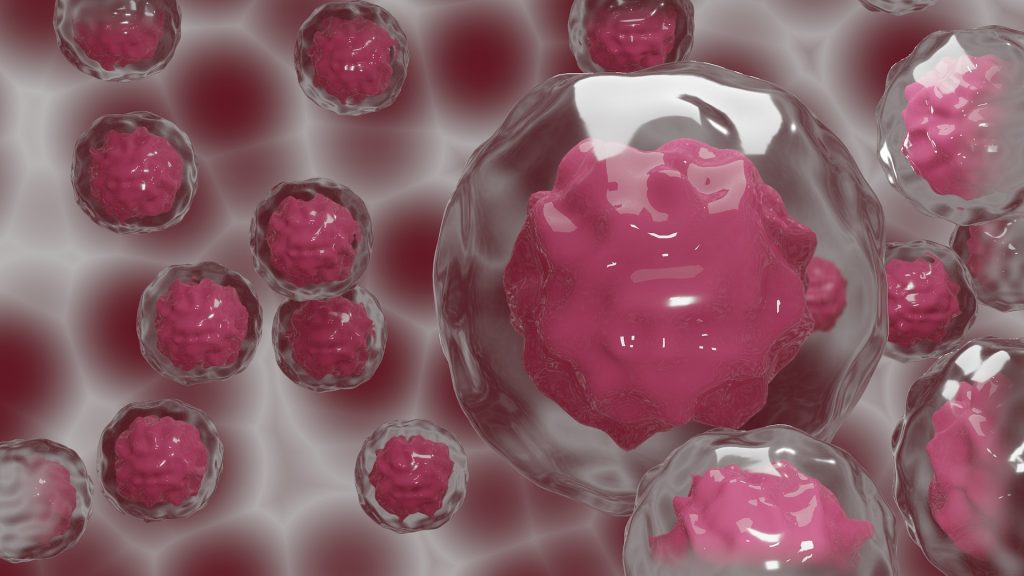
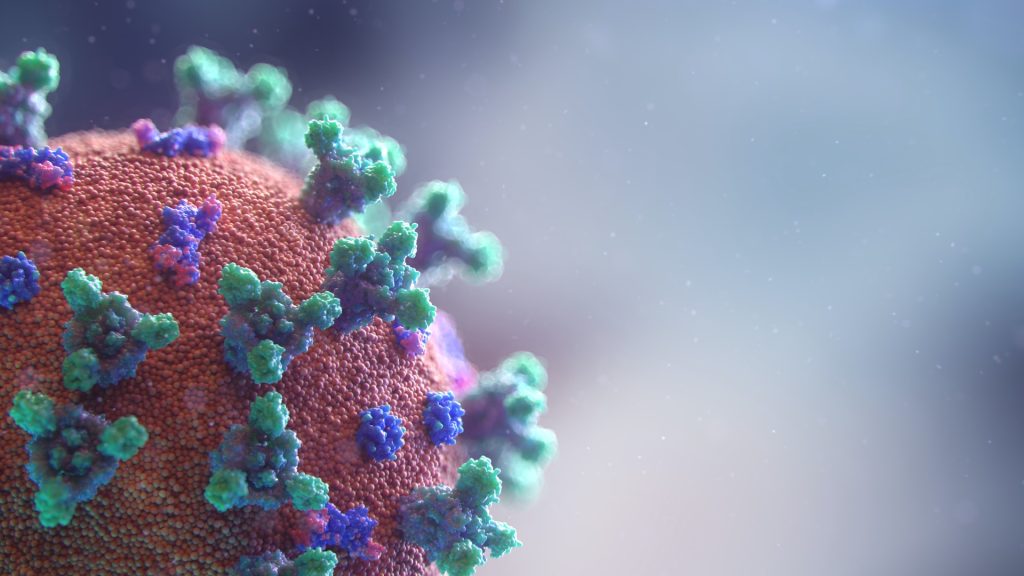
Infected cell covered with SARS-CoV-2 viruses. Source: NIAID

In a small study, people with previous COVID infection were observed to have higher antibody levels after a single dose of Pfizer vaccine compared with uninfected people after two doses.

Furthermore, there was no increase in IgG levels after the second dose among those previously infected, possibly indicating that one dose of vaccine may be sufficient for this population, reported James Moy, MD, of Rush University Medical Center in Chicago, and colleagues  in a JAMA Network Open research letter.

“This study highlights the potential for recommending a single dose for previously infected individuals and may be useful for discussions surrounding vaccination strategy,” the authors wrote.

Whether to offer only a single dose of vaccine to those previously infected with COVID is a hot topic, with some experts conceding that previously infected individuals likely only need one dose, but would be challenging to implement.

Indeed, Dr Moy’s group urged performing “baseline serological testing” for previously infected individuals, but CDC and the agency’s Advisory Committee on Immunization Practices (ACIP) argued that this would be next to impossible to do for the entire country.

At a meeting in March, ACIP Chair José Romero, MD, voiced concern that the one-dose strategy would only work if individuals had sufficiently high antibody titers. If people had no or low antibodies, they may not have “enough memory B-cells to boost to levels that will be protective,” he said.

The researchers recruited adult participants at the team’s academic medical center, sorting them according toinfection status. Prior infection was established by a positive RT-PCR test and/or a positive SARS-CoV-2 antibody result. Overall, 30 participants had no evidence of infection, while 29 did.

The authors measured SARS-CoV-2 spike IgG levels at baseline and then after the first and second doses of the Pfizer vaccine among all participants.

There were no significant IgG differences between the first and second dose in previously infected individuals. Interestingly, four participants reported a previous positive COVID test via RT-PCR, but had no evidence of antibodies.

“Vaccine responses in these four participants resembled infection-naive individuals,” Moy’s group noted, adding that because this group did not develop S-protein antibodies, baseline testing should be required before forgoing a second dose.

The researchers said study limitations included the small sample size and lack of diversity of participants, as well as lack of neutralisation studies and T-cell response studies.

Source: MedPage Today

Doctor’s Presence During BP Measurement Triggers Flight-or-fight Response

Photo by Thirdman from Pexels
Photo by Thirdman from Pexels

A small study has shown that a doctor’s presence during a blood pressure measurement skews the results, according to researchers who studied the effect by measuring nerve activity.

The phenomenon known as ‘white coat hypertension‘ is where the mere presence of a medical professional can raise blood pressure. Known about for decades, it occurs in about a third of patients.

In a small study published in the journal Hypertension, researchers probed the effect by measuring blood pressure, heart rate and nerve traffic in the skin and muscles with and without a doctor present.

The researchers found a “drastic reduction” in the body’s alarm response when a doctor was not present, said co-lead author Dr Guido Grassi, professor of internal medicine at the University of Milano-Bicocca.

Blood pressure and heart rate increases in response to a perceived threat, said Dr Meena Madhur, associate professor of medicine in the divisions of clinical pharmacology and cardiology at Vanderbilt University.

“If you’re out in the wild and a bear was charging after you, you’d want your blood vessels in your skin, for example, to constrict and the blood vessels in your muscles to dilate to provide more blood flow to those organs so that you can run really fast,” said Prof Madhur, who was not involved in the new research.

The study included 18 people, 14 of them men, with untreated mild to moderate hypertension. Each participant was examined in a lab, where an electrode measured nerve activity in the skin and muscles. Readings were taken twice in the presence of a doctor and twice without.

Both blood pressure and heart rate rose when the doctor was present, with nerve traffic patterns to the skin and skeletal muscle suggesting a classic fight or flight reaction.

Without the doctor’s presence, cardiovascular and neural responses were “strikingly different,” the researchers wrote. Fight or flight response indications were “entirely absent”.

Peak systolic blood pressure was an average of 14 points lower when the participant was alone than when a doctor was present, and peak heart rate was lowered by nearly 11 beats per minute.

This was the first study to actually measure sympathetic nervous system responses to doctors supervising a blood pressure measurement, the researchers wrote.

The study’s findings illustrated the complexity of blood pressure measurement and how it is affected by involuntary nervous system reactions, Grassi said. “Measurements without the doctor’s presence may better reflect true blood pressure values.”

White coat hypertension is not a new concept, Prof Madhur said, “this just drives home the fact that we should be more conscious of how the blood pressure is taken in the clinic.”

Last year, the American Medical Association and AHA issued a joint report endorsing more blood pressure measurement at home.

Limitations included the small study size due to the complexity of the measurements, the researchers said. Subsequent research would need to examine blood pressure medication as they could affect the fight or flight response, said Orof Madhur.

The work needs to be repeated with more women to examine possible sex differences. And she’d be interested in seeing whether people have the same response to nurses and other medical professionals as they did to doctors in this study.

Previous work shows that when nurses take blood pressure measurements, the white coat effect is reduced.

This latest research emphasises the need for people to handle blood pressure measurements with care, Prof Madhur said.

“I always tell my patients that we really can’t rely on a single office blood pressure measurement, because that’s just a random point in time,” she said.

Prof Madhur said that to take an accurate reading at home, a patient should sit still, with their back straight and supported and feet on the floor, waiting at least a few minutes before recording blood pressure. They should take multiple readings at the same time of day over the course of a week, and bring that log to their doctor’s appointment. Those at-home readings should be the ones used for planning treatment, she said.

“But,” Prof Madhur added, “if we are going to do an office blood pressure reading, it should be taken with the doctor not in the room.”

Source: American Heart Association

A Specific Type of Fat Cell Responds to Insulin

Source: Pixabay

While it was known that fat cells can influence insulin sensitivity, researchers have recently discovered that there are three different subtypes of mature fat cells in white adipose tissue and that it is only one of these, called AdipoPLIN, that responds to insulin. The findings, which were published in Cell Metabolism, may have implications for the treatment of metabolic diseases such as Type 2 diabetes. 

“These findings increase our knowledge about the function of fat tissue,” said co-corresponding author Niklas Mejhert, researcher at the Department of Medicine, Huddinge, at Karolinska Institutet. “They show that the overall capacity of fat tissue to respond to insulin is determined by the proportion and function of a specific fat cell subtype. This could have implications for diseases such as obesity, insulin resistance and Type 2 diabetes.”

The researchers identified 18 classes of cells that form clusters in white adipose tissue in humans. Of these, three constituted mature fat cells with distinct phenotypes.

To determine if a specific function was linked to the fat cell subtypes, the researchers measured how these subtypes in four people reacted to short-term increases in insulin levels. They found that insulin activated the gene expression in the AdipoPLIN subtype but did not affect the other two subtypes. The response to insulin stimulation was also proportional to the individual’s whole-body insulin sensitivity.

A challenge to the prevailing view
“Our findings challenge the current view of insulin resistance as a generally reduced response to insulin in the fat cells,” said co-corresponding author Mikael Rydén, professor in the same department. “Instead, our study suggests that insulin resistance, and possibly type 2 diabetes, could be due to changes in a specific subtype of fat cells. This shows that fat tissue is a much more complex tissue than previously thought. Like muscle tissue, people have several types of fat cells with different functions, which opens up for future interventions targeted at different fat cell types.”

The researchers employed spatial transcriptomics, which generates information about tissue organisation via microscopy and gene expression via RNA sequencing.

”This study is unique in that it is the first time we’ve applied spatial transcriptomics to fat tissue, which has a special set of characteristics and composition,” said third corresponding author Patrik Ståhl. “We are very happy that the technology continues to contribute to solving biologically complex questions in an increasing number of research areas.”

Source: Karolinska Institute

Marburg Virus Detected in Guinea

Colourised scanning electron micrograph of Marburg virus particles (blue) both budding and attached to the surface of infected VERO E6 cells (orange). Credit: NIAID

Guinea’s health authority announced the first detection of the Marburg virus in the country, which is also the first case in West Africa.

Marburg, a haemorrhagic fever-causing virus related to Ebola, killed more than 200 people in Angola in 2005, the deadliest recorded outbreak. Laboratory tests of samples taken from a now-deceased patient turned out positive for the Marburg virus.

The patient had sought treatment at a local clinic in the southern prefecture of Gueckedou, and a medical team had been sent to investigate the case.  Cases of the 2021 Ebola outbreak in Guinea occurred in Gueckedou, as well as the 2014–2016 West Africa outbreak were initially detected.

“We applaud the alertness and the quick investigative action by Guinea’s health workers. The potential for the Marburg virus to spread far and wide means we need to stop it in its tracks,” said Dr Matshidiso Moeti, World Health Organization (WHO) Regional Director for Africa. “We are working with the health authorities to implement a swift response that builds on Guinea’s past experience and expertise in managing Ebola, which is transmitted in a similar way.”

Contact tracing efforts are underway, and health authorities are launching education and awareness programmes on the disease. 

Four high-risk contacts, including a healthcare worker, have been identified, as well as 146 others who could be at risk, according to expert Dr Krutika Kuppalli, who spoke to the BBC. A team of WHO experts is on the ground helping to investigate the case and aiding the national health authority’s emergency response.

Cross-border surveillance is also being enhanced to quickly detect any cases, with neighbouring countries on alert. The Ebola control systems in place in Guinea and in neighbouring countries are proving crucial to the emergency response to the Marburg virus.

Marburg is transmitted to people from fruit bats and spreads among humans through direct contact of body fluids.

Illness begins abruptly, with high fever, severe headache and malaise. Within seven days, severe haemorrhagic signs appear in many patients. Case fatality rates are high, ranging from 24% to 88% in past outbreaks depending on virus strain and case management.

With no direct treatments for the virus, supportive care, including rehydration with oral or intravenous fluids, and treatment of specific symptoms, improves survival. There are evaluations underway for potential treatments, including blood products, immune therapies and drug therapies.

One experimental antiviral compound being tested works by preventing viral particles from ‘budding off’ of infected cells.

Source: WHO

New Wound Dressing Minimises Scarring

Photo by Diana Polekhina on Unsplash

A new wound dressing technology that can stop bleeding while preventing infection and scarring using a single material, has been developed. This technology also has potential applications in drug delivery, among other areas.

“Scarring is one of the worst consequences of severe wounds,” said Xiaoyang Wu, an associate professor in the Ben May Department of Cancer Research at the University of Chicago, noting that scar tissue formation is particularly common in human skin.

The researchers used a material science approach to develop a new method to overcome scarring, by impeding collagen synthesis by blocking transforming growth factor beta (TGF-β) – a cytokine that plays an important role in cell signaling, both in skin wound repair and tissue fibrosis.

“Increasing evidence suggests TGF-β is important in early phase wound repair for wound closure. But, later on, the signal may promote and enhance scarring,” Prof Wu said. This makes timing crucial. “We cannot simply block the signal, because that would slow down wound healing and would be dangerous for the patient,” he explained.

To get around this, the researchers came up with a delayed-release system combining a sutureless wound closure hydrogel material with a biodegradable microcapsule system, enabling them to control the release of the TGF-β inhibitor. “In this way, we can enhance skin wound repair and after 7-14 days can release the inhibitor that blocks the skin scarring process at the same time by using one material,” Prof Wu added.

The study results were recently published in Nature Communications.

At present, treatment of scarring is not ideal with little besides cosmetic surgery, and little can be done to prevent scar formation if a patient experiences a deep or messy wound. “The system we developed is very convenient for application,” said Wu, adding that the system has many possible future applications, such as drug delivery.

“We believe the novel system will have potential clinical importance in the future,” he said. To this end, the next steps include filing an investigational new drug (IND) application with the US Food and Drug Administration (FDA). Consistent manufacturing of the material is necessary and the researchers are exploring collaborations with pharmaceutical companies to move the research forward.

Since the system is a biocompatible material with adhesive properties, Wu said it has internal applications as well, adhering to and closing bleeding arteries and cardiac walls after irradiation with UV light. This was demonstrated in animal models, suggesting significant advantages as a traumatic wound sealant.

“Normal wound binding material does work well,” said Wu, noting that fibres are the most reliable material currently available, which, like surgical glue, is less biocompatible. “Biocompatibility is a significant advantage of our system,” he explained, “It is superior compared to current existing materials.”

Source: University of Chicago

Vaping Raises Oxidative Stress Levels Even in Nonsmokers

Photo by Toan Nguyen on Unsplash

In addition to the well-documented risks of smoking and vaping, a new UCLA study has revealed that a short vaping session can affect the cells of even healthy younger nonsmokers.

According to their study, published in JAMA Pediatrics, a single 30-minute vaping session can significantly increase cellular oxidative stress, which occurs when the body has an imbalance between free radicals, and the antioxidants which neutralise them.

“Over time, this imbalance can play a significant role in causing certain illnesses, including cardiovascular, pulmonary and neurological diseases, as well as cancer,” said the study’s senior author, Dr Holly Middlekauff, a professor of cardiology and physiology at the David Geffen School of Medicine at UCLA.

E-cigarettes, devices that deliver nicotine with flavouring and other chemicals in a vapour rather than smoke, are popularly seen as a safer cigarette alternative, but research by Prof Middlekauff and others has demonstrated that vaping is associated with a number of adverse changes in the body that can presage future health problems.

For the present study, 32 male and female study participants, aged 21 to 33, were split into three groups: 11 nonsmokers, nine regular tobacco cigarette smokers and 12 regular e-cigarette smokers. The researchers collected immune cells from each individual before and after a 30-minute vaping session to measure and compare changes in oxidative stress among the groups.

The researchers repeated this with a control session where participants spent 30 minutes “sham-vaping,” or puffing on an empty straw.

In nonsmokers, oxidative stress levels were found to be two to four times higher after the vaping session than before. Among the regular cigarette and e-cigarette smokers, the same 30-minute exposure did not lead to an increase in oxidative stress, the researchers noted, most likely because their baseline levels of oxidative stress were already increased.
“We were surprised by the gravity of the effect that one vaping session can have on healthy young people,” Prof Middlekauff said. “This brief vaping session was not dissimilar to what they may experience at a party, yet the effects were dramatic.”

The researchers noted that these results are especially troubling due to the increasing popularity of vaping, particularly among the youth. In a 2020 study, nearly a third of high school students reported e-cigarette use during the previous month.

There is still more to be understood about what exactly causes the changes in oxidative stress levels, whether it is caused by the nicotine or non-nicotine elements in e-cigarettes, which will be the subject of future research.

“While there’s a perception that e-cigarettes are safer than tobacco cigarettes, these findings show clearly and definitively that there is no safe level of vaping,” Prof Middlekauff said. “The results are clear, unambiguous and concerning.”

Source: UCLA

A Cognitive Rejuvenating Effect with Gut Microbe Transplant

Source: Pixabay

A novel approach to reverse aspects of ageing-related deterioration in the brain and cognitive function via the microbes in the gut was revealed in research published in Nature Aging.

With ageing populations increasing worldwide, a key challenge is the development of strategies to maintain healthy brain function. This ground-breaking research with gut microbes lays open new possibilities such as microbial-based interventions to slow down brain ageing and cognitive problems associated with it.

The work was carried out by researchers at Microbiome Ireland (APC) at University College Cork (UCC).

There is a growing appreciation of the importance of the microbes in the gut on all aspects of physiology and medicine. In this most recent study, the authors demonstrated that by transplanting gastrointestinal microbes from young into old mice, they were able to rejuvenate aspects of brain and immune function.

Study leader Professor John F Cryan said: “Previous research published by the APC and other groups internationally has shown that the gut microbiome plays a key role in aging and the ageing process. This new research is a potential game changer, as we have established that the microbiome can be harnessed to reverse age-related brain deterioration. We also see evidence of improved learning ability and cognitive function”.

Despite the promising results, Prof Cryan cautioned that “it is still early days and much more work is needed to see how these findings could be translated in humans”.

APC Director Prof Paul Ross stated that “This research of Prof Cryan and colleagues further demonstrates the importance of the gut microbiome in many aspects of health, and particularly across the brain/gut axis where brain functioning can be positively influenced. The study opens up possibilities in the future to modulate gut microbiota as a therapeutic target to influence brain health”.

Source: University College Cork

Sharply Increased Fatality Rate Estimated for Iota Variant

Photo by Fusion Medical Animation on Unsplash

study available on the medRxiv preprint server has estimated the increases of the SARS-CoV-2 Iota (B.1.526) variant for transmissibility, immune escape ability, and infection fatality rate in New York.

The study findings revealed that the Iota variant has considerably higher transmissibility and immune escape potential than previously circulating variants and that it can increase the infection fatality rate by 62%-82% among older adults.

Iota variant emerges in New York
The lota variant, was first identified in New York City in November 2020 and then spread across the US and to 27 countries.

According to one lab study, the Iota variant modestly resists neutralisation by therapeutic monoclonal antibodies and vaccine/infection-induced antibodies. Fortunately however, evidence indicates that the variant does not increase the risk of breakthrough infections in vaccinated or previously infected individuals.

Study design
For the study, the scientists analysed multiple epidemiological and population datasets collected in New York City and, with mathematical modeling, estimated the transmission rate, immune evasion ability, and infection fatality risk of the Iota variant.

The prevalence of SARS-CoV-2 was estimated at 16.6% at the end of the first wave, and 41.7% at the end of the second wave. Infections in all age groups were seen with the second wave, compared to mostly older age groups in the first.

Transmissibility and breakthrough
A rapid increase in Iota-infected cases was observed during the second pandemic wave. Before the variant was first discovered in a neighbourhood in early November 2020, a rise in cases was seen in that same neighborhood, which remained higher than other neighbourhoods until Iota became prevalent and raised the baseline.

The researchers estimated that Iota is 15–25% more transmissible than previously circulating variants, with breakthrough infections in 0–10% of the population. These increases made the Iota variant become dominant in New York City from November 2020 to March 2021. Afterward, with the surge of more infectious variant B.1.1.7 (Alpha), Iota prevalence fell.

Despite a reduction in mortality rate following mass vaccination, infection fatality rate was seen to increase in New York City during the second pandemic wave. The researchers estimated that the Iota variant increases the infection fatality rates by 46% for 45–64 year olds, 82% (65–74), and 62% (75+). Compared to previously circulating variants, the Iota variant, overall, caused a 60% increase in infection fatality rate, comparable to that estimated for the Alpha variant.

Source: News-Medical.Net