

Tag: migraine

Why is Migraine More Common in Women than Men?

Photo by Andrea Piacquadio

Lakshini Gunasekera, Monash University; Caroline Gurvich, Monash University; Eveline Mu, Monash University, and Jayashri Kulkarni, Monash University

We’ve known for a long time that women are more likely than men to have migraine attacks.

As children, girls and boys experience migraine equally. But after puberty, women are two to three times more likely to experience this potentially debilitating condition.

Recently, an Australian study showed it may be even more common than we previously thought – as many as one in three women live with migraine.

For comparison, migraine affects roughly one in 15 men in Australia.

So, what’s behind the difference? Here’s what we know.

More than a headache

Migraine is not just a bad headache – it is a complex disorder that causes the brain to process sensory information abnormally.

This means “migraine brains” can have difficulty processing information from any of the five senses:

  • sight (leading to problems with light sensitivity and glare)
  • sound (leading to noise sensitivity)
  • smell (certain smells can trigger headaches)
  • touch (leading to face or scalp tenderness)
  • taste (causing distorted taste, nausea and vomiting).

Migraine attacks typically last anywhere from four hours to three days – but can be longer.

In addition to the symptoms above, attacks can include throbbing head pain, dizziness, fatigue and difficulty concentrating. It is these extra symptoms that help diagnose migraine – not the location of head pain or pain severity.

Why are attacks more frequent in women?

Puberty is when the difference between men and women emerges. This is when our bodies massively increase the production of sex hormones.

People are often surprised to learn that both men and women produce oestrogen, progesterone and testosterone. Testosterone levels are higher in men, whereas women have higher levels of oestrogen and progesterone.

However, it is not just the type of hormone that makes a difference, but the way they fluctuate over time.

For many women, there are certain “milestone moments” when their migraine tends to worsen due to hormonal fluctuations – puberty, menstruation, pregnancy and perimenopause (the lead-up to your final period).

For example, some women notice migraine flare-ups every month, linked to phases in their monthly menstrual cycle when oestrogen levels drop.

They might even be able to predict when their period will start, as migraine attacks typically start a few days before the bleeding.

How hormones affect the brain

Women with migraine can be more sensitive to hormonal changes. This is particularly the case for sudden decreases in oestrogen. But even more subtle changes to hormone levels can cause migraine attacks.

These hormonal changes can activate brain processes that trigger migraine, such as cortical spreading depression. This is a very slow wave of electrical activity that spreads in the brain, causing some areas to function more slowly than others after it passes.

Decrease in oestrogen can also affect how we receive and process information through the trigeminal nerve. This plays a key role in the onset and maintenance of migraine pain.
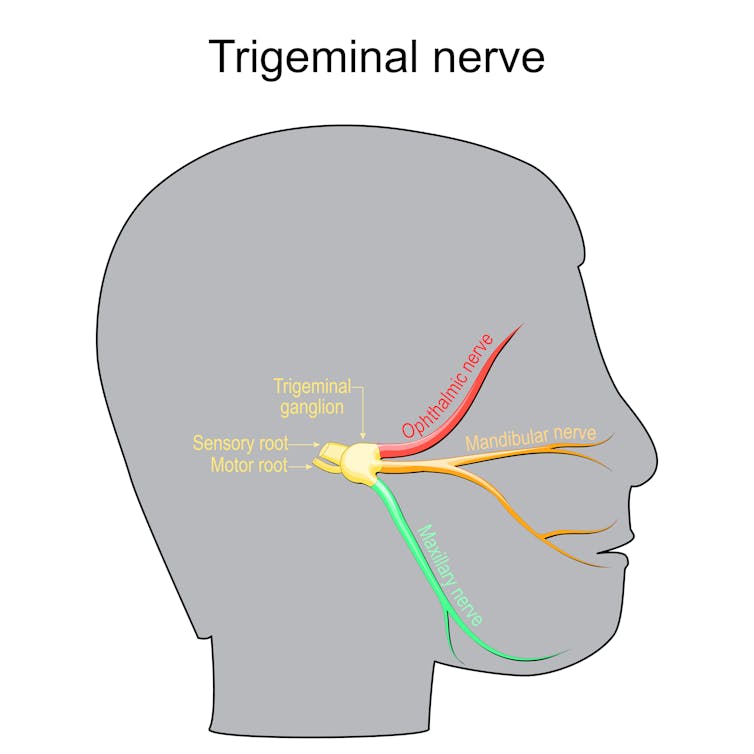
Diagram showing the trigeminal nerve in the head.
Oestrogen can affect how we process information through the trigeminal nerve. ttsz/Getty

All kinds of fluctuations can be a trigger

Pregnancy can often destabilise migraine again and make attacks more likely, even when someone has previously enjoyed a period of good migraine control.

Migraine symptoms often become uncontrolled in the first trimester in particular, due to rapid hormonal changes needed to sustain a pregnancy. This usually settles in the second and third trimesters, when hormonal changes stabilise.

However, giving birth is yet another change.

Towards the end of pregnancy, oestrogen levels can be 30 times higher than pre-pregnancy levels, and progesterone can be 20 times higher. When these hormones plummet back to normal after giving birth, migraine attacks can often sharply worsen again.

Perimenopause can also involve random surges of oestrogen from the dwindling supplies of eggs within the ovaries – which previously produced these hormones cyclically and in abundance. This irregular hormone production can cause random spikes in migraine attacks. It can be extra challenging when combined with other symptoms of menopause such as hot flushes or mood changes.

Hormonal contraceptives and menopause hormone therapy can also affect migraine control. Sometimes, supplementing hormones at a regular, steady daily dose can help manage the hormone-sensitive headaches and other symptoms. However, for others, adding extra hormones can cause head pain to flare up.

Does migraine run in the family?

Genes also play a role. It’s not a coincidence that migraine is passed down in families through the maternal side.

This is because mothers pass on mitochondria to children (while fathers do not). Mitochondria are parts inside the cell that control energy.

People with migraine have fewer functional enzymes within their mitochondria, meaning their brains are in an energy-deficient state. This worsens with migraine attacks as there is even more stress to the system.

This is also why extra stress (such as sleep deprivation, missed meals, or emotional stress) can trigger a migraine and worsen pain.

There is also a strong link between migraine in women and anxiety and depression – conditions women are more likely to develop in response to stressful life events.

Knowing your own patterns

If you suspect hormones may be affecting your migraine attacks, it is helpful to keep a diary of symptoms, including headaches. Mark each day per month where you get migraine symptoms, as well as your period, to find patterns.

Identifying patterns in pain flares helps doctors guide you to a personalised medication plan, which may include hormone therapies or non-hormonal therapies.

Lakshini Gunasekera, PhD Candidate in Neurology, Monash University; Caroline Gurvich, Associate Professor and Clinical Neuropsychologist, Monash University; Eveline Mu, Research Fellow in Women’s Mental Health, Monash University, and Jayashri Kulkarni, Professor of Psychiatry, Monash University

This article is republished from The Conversation under a Creative Commons license. Read the original article.

GLP-1 Therapy Reduces Brain Pressure and Migraine Frequency

A diabetes medication that lowers brain fluid pressure has cut monthly migraine days by more than half, according to a new study presented at the European Academy of Neurology (EAN) Congress 2025

Photo by Kindel Media

A diabetes medication that lowers brain fluid pressure has cut monthly migraine days by more than half, according to a new study presented at the European Academy of Neurology (EAN) Congress 2025.1

Researchers at the Headache Centre of the University of Naples “Federico II” gave the glucagon-like peptide-1 (GLP-1) receptor agonist liraglutide to 26 adults with obesity and chronic migraine (defined as ≥ 15 headache days per month). Patients reported an average of 11 fewer headache days per month, while disability scores on the Migraine Disability Assessment Test dropped by 35 points, indicating a clinically meaningful improvement in work, study, and social functioning.

GLP-1 agonists have gained recent widespread attention, reshaping treatment approaches for several diseases, including diabetes and cardiovascular disease.2 In the treatment of type 2 diabetes, liraglutide helps lower blood sugar levels and reduce body weight by suppressing appetite and reducing energy intake.3,4,5

Importantly, while participants’ body-mass index declined slightly (from 34.01 to 33.65), this change was not statistically significant. An analysis of covariance confirmed that BMI reduction had no effect on headache frequency, strengthening the hypothesis that pressure modulation, not weight loss, drives the benefit.

“Most patients felt better within the first two weeks and reported quality of life improved significantly”, said lead researcher Dr Simone Braca. “The benefit lasted for the full three-month observation period, even though weight loss was modest and statistically non-significant.”

Patients were screened to exclude papilledema (optic disc swelling resulting from increased intracranial pressure) and sixth nerve palsy, ruling out idiopathic intracranial hypertension (IIH) as a confounding factor. Growing evidence closely links subtle increases in intracranial pressure to migraine attacks.6 GLP-1-receptor agonists such as liraglutide reduce cerebrospinal fluid secretion and have already proved effective in treating IIH.Therefore, building on these observations, Dr Braca and colleagues hypothesised that exploiting the same mechanism of action might ultimately dampen cortical and trigeminal sensitisation that underlie migraine.

“We think that, by modulating cerebrospinal fluid pressure and reducing intracranial venous sinuses compression, these drugs produce a decrease in the release of calcitonin gene-related peptide (CGRP), a key migraine-promoting peptide”, Dr Braca explained. “That would pose intracranial pressure control as a brand-new, pharmacologically targetable pathway.”

Mild gastrointestinal side effects (mainly nausea and constipation) occurred in 38% of participants but did not lead to treatment discontinuation.

Following this exploratory 12-week pilot study, a randomised, double-blind trial with direct or indirect intracranial pressure measurement is now being planned by the same research team in Naples, led by professor Roberto De Simone. “We also want to determine whether other GLP-1 drugs can deliver the same relief, possibly with even fewer gastrointestinal side effects”, Dr Braca noted.

If confirmed, GLP-1-receptor agonists could offer a new treatment option for the estimated one in seven people worldwide who live with migraine,8 particularly those who do not respond to current preventives. Given liraglutide’s established use in type 2 diabetes and obesity, it may represent a promising case of drug repurposing in neurology.

References

  1. Braca S., Russo C. et al. GLP-1R Agonists for the Treatment of Migraine: A Pilot Prospective Observational Study. Abstract A-25-13975. Presented at the 11th EAN Congress (Helsinki, Finland).
  2. Zheng, Z., Zong, Y., Ma, Y. et al. Glucagon-like peptide-1 receptor: mechanisms and advances in therapy. Sig Transduct Target Ther 9, 234 (2024).
  3. Lin, C. H. et al. An evaluation of liraglutide including its efficacy and safety for the treatment of obesity. Expert Opin. Pharmacother. 21, 275–285 (2020).
  4. Moon, S. et al. Efficacy and safety of the new appetite suppressant, liraglutide: A meta-analysis of randomized controlled trials. Endocrinol. Metab. (Seoul.) 36, 647–660 (2021).
  5. Jacobsen, L. V., Flint, A., Olsen, A. K. & Ingwersen, S. H. Liraglutide in type 2 diabetes mellitus: clinical pharmacokinetics and pharmacodynamics. Clin. Pharmacokinet. 55, 657–672 (2016).
  6. De Simone R, Sansone M, Russo C, Miele A, Stornaiuolo A, Braca S. The putative role of trigemino-vascular system in brain perfusion homeostasis and the significance of the migraine attack. Neurol Sci. 2022 Sep;43(9):5665-5672. doi: 10.1007/s10072-022-06200-x. Epub 2022 Jul 8. PMID: 35802218; PMCID: PMC9385793.
  7. Mitchell J.L., Lyons H.S., Walker J.K. et al. (2023). The effect of GLP-1RA exenatide on idiopathic intracranial hypertension: a randomised clinical trial. Brain. 146(5):1821-1830.
  8. Steiner T.J., Stovner L.J., Jensen, R. et al. (2020). Migraine remains second among the world’s causes of disabilityThe Journal of Headache and Pain. 21:137.

Source: EurekAlert!

Brain Fluid Dynamics is Key to the Mysteries of Migraine

Credit: University of Rochester Medical Center

New research describes how a spreading wave of disruption and the flow of fluid in the brain triggers headaches, detailing the connection between the neurological symptoms associated with aura and the migraine that follows. The study, which appears in Science, also identifies new proteins that could be responsible for headaches and may serve as foundation for new migraine drugs.

“In this study, we describe the interaction between the central and peripheral nervous system brought about by increased concentrations of proteins released in the brain during an episode of spreading depolarization, a phenomenon responsible for the aura associated with migraines,” said lead author Maiken Nedergaard, MD, DMSc, co-director of the University of Rochester Center for Translational Neuromedicine. “These findings provide us with a host of new targets to suppress sensory nerve activation to prevent and treat migraines and strengthen existing therapies.”

It is estimated that one out of 10 people experience migraines and in about a quarter of these cases the headache is preceded by an aura, a sensory disturbance that can includes light flashes, blind spots, double vision, and tingling sensations or limb numbness. These symptoms typically appear five to 60 minutes prior to the headache.

The cause of the aura is a phenomenon called cortical spreading depression, a temporary depolarization of neurons and other cells caused by diffusion of glutamate and potassium that radiates like a wave across the brain, reducing oxygen levels and impairing blood flow. Most frequently, the depolarization event is located in the visual processing centre of the brain cortex, hence the visual symptoms that first herald a coming headache.

While migraines auras arise in the brain, the organ itself cannot sense pain. These signals must instead be transmitted from the central nervous system to the peripheral nervous system. The process of communication between the brain and peripheral sensory nerves in migraines has largely remained a mystery.

Fluid dynamics models shed light on migraine pain origins

Nedergaard and her colleagues at the University of Rochester and the University of Copenhagen are pioneers in understanding the flow of fluids in the brain. In 2012, her lab was the first to describe the glymphatic system, which uses cerebrospinal fluid (CSF) to wash away toxic proteins in the brain. In partnership with experts in fluid dynamics, the team has built detailed models of how the CSF moves in the brain and its role in transporting proteins, neurotransmitters, and other chemicals.

The most widely accepted theory is that nerve endings resting on the outer surface of the membranes that enclose the brain are responsible for the headaches that follow an aura. The new study, which was conducted in mice, describes a different route and identifies proteins, many of which are potential new drug targets, that may be responsible for activating the nerves and causing pain.

As the depolarization wave spreads, neurons release a host of inflammatory and other proteins into CSF. In a series of experiments in mice, the researchers showed how CSF transports these proteins to the trigeminal ganglion, a large bundle of nerves that rests at the base of the skull and supplies sensory information to the head and face.

It was assumed that the trigeminal ganglion, like the rest of the peripheral nervous system, rested outside the blood-brain-barrier, which tightly controls what molecules enter and leave the brain. However, the researchers identified a previously unknown gap in the barrier that allowed CSF to flow directly into the trigeminal ganglion, exposing sensory nerves to the cocktail of proteins released by the brain.

Migraine-associated proteins double during brain wave activity

Analysing the molecules, the researchers identified twelve proteins called ligands that bind with receptors on sensory nerves found in the trigeminal ganglion, potentially causing these cells to activate. The concentrations of several of these proteins found in CSF more than doubled following a cortical spreading depression. One of the proteins, calcitonin gene-related peptide (CGRP), is already the target of a new class of drugs to treat and prevent migraines called CGRP inhibitors. Other identified proteins are known to play a role in other pain conditions, such as neuropathic pain, and are likely important in migraine headaches as well.

“We have identified a new signaling pathway and several molecules that activate sensory nerves in the peripheral nervous system. Among the identified molecules are those already associated with migraines, but we didn’t know exactly how and where the migraine inducing action occurred,” said Martin Kaag Rasmussen, PhD, a postdoctoral fellow at the University of Copenhagen and first author of the study. “Defining the role of these newly identified ligand-receptor pairs may enable the discovery of new pharmacological targets, which could benefit the large portion of patients not responding to available therapies.”

The researchers also observed that the transport of proteins released in one side of the brain reaches mostly the nerves in the trigeminal ganglion on the same side, potentially explaining why pain occurs on one side of the head during most migraines.

Source: University of Rochester Medical Center

Acid-lowering Meds Linked to Greater Risk of Migraines

Photo by Usman Yousaf on Unsplash

People who take acid-reducing drugs may have a higher risk of migraine and other severe headache than people who do not take these medications, a new study has shown. The acid-reducing drugs include proton pump inhibitors such as omeprazole and esomeprazole, histamine H2-receptor antagonists, or H2 blockers, such as cimetidine and famotidine, and antacid supplements.

The study, study published in Neurology®Clinical Practice, an official journal of the American Academy of Neurology, does not prove causation; only an association.

In acid reflux, stomach acid flows into the oesophagus, usually after a meal or when lying down, causing heartburn and ulcers. People with frequent acid reflux may develop gastroesophageal reflux disease, or GORD, which can lead to cancer of the oesophagus.

“Given the wide usage of acid-reducing drugs and these potential implications with migraine, these results warrant further investigation,” said study author Margaret Slavin, PhD, RDN, of the University of Maryland in College Park. “These drugs are often considered to be overprescribed, and new research has shown other risks tied to long-term use of proton pump inhibitors, such as an increased risk of dementia.”

For the study, researchers looked at data on 11,818 people who provided information on use of acid-reducing drugs and whether they had migraine or severe headache in the past three months.

A total of 25% of participants taking proton pump inhibitors had migraine or severe headache, compared to 19% of those who were not taking the drugs. A total of 25% of those taking H2 blockers had severe headache, compared to 20% of those who were not taking those drugs. And 22% of those taking antacid supplements had severe headache, compared to 20% of those not taking antacids.

When researchers adjusted for other factors that could affect the risk of migraine, such as age, sex and use of caffeine and alcohol, they found that people taking proton pump inhibitors were 70% more likely to have migraine than people not taking proton pump inhibitors. Those taking H2 blockers were 40% more likely and those taking antacid supplements were 30% more likely.

“It’s important to note that many people do need acid-reducing medications to manage acid reflux or other conditions, and people with migraine or severe headache who are taking these drugs or supplements should talk with their doctors about whether they should continue,” Slavin said.

Slavin noted that the study looked only at prescription drugs. Some of the drugs became available for over-the-counter use at non-prescription strength during the study period, but use of these over-the-counter drugs was not included in this study.

Other studies have shown that people with gastrointestinal conditions may be more likely to have migraine, but Slavin said that relationship is not likely to fully explain the tie between acid-reducing drugs and migraine found in the study.

A limitation of the study is that a small number of people were taking the drugs, especially the H2 blockers.

Source: American Academy of Neurology

New Monoclonal Antibody Eptinezumab Success in Hard-to-treat Migraine

A trial for a new monoclonal antibody, eptinezumab, in the treatment of resistant migraine has demonstrated that it significantly reduced migraine days with acceptable safety and tolerability. The findings were published in The Lancet.

Eptinezumab, which targets calcitonin gene-related peptide, has shown migraine preventive effects starting the day following infusion and acceptable safety and tolerability in phase 3 trials, but benefits in the subpopulations of patients with previous preventive treatment failures were not examined.

In the 24-week double-blind placebo-controlled DELIVER phase 3b trial, the researchers recruited adults with episodic or chronic migraine with at least four monthly migraine days and two-to-four previous preventive treatment failures within the past 10 years. Patients were randomised to either eptinezumab 100mg, eptinezumab 300mg, or placebo. The primary efficacy endpoint was the change from baseline in mean monthly migraine days (captured using a daily electronic diary) in weeks 1–12, assessed in the full analysis set. All participants and study personnel were masked to study drug assignments. A 48-week dose-blinded extension period is ongoing.

In all, 865 patients completed the placebo-controlled period. Compared to baseline, weeks 1–12 saw reductions of 4.8 mean monthly migraine days with eptinezumab 100mg and 5.3 days at 300mg, which was a significantly less than the reduction of 2.1 days with placebo.

Adverse events were reported in 42% of patients in the eptinezumab 100mg group, 41% in the 300mg group, and in 40% in the placebo group. COVID was the most common treatment-emergent adverse event. Serious adverse events were uncommon (five [2%] of 299 in the 100mg group, seven [2%] of 294 in the 300mg group, four [1%] of 298 in the placebo group) and included anaphylactic reaction (eptinezumab 300 mg n=2) and COVID-19 (eptinezumab 100 mg n=1 and eptinezumab 300 mg n=1).

In adults with migraine and two-to-four previous preventive treatment failures, eptinezumab provided significant migraine preventive effects compared with placebo, with acceptable safety and tolerability, indicating that eptinezumab might be an effective treatment option for this patient population. The trial has a dose-blinded extension period which will provide additional long-term safety data in patients with migraine and previous preventive treatment failures.