Tag: antibiotic resistance

Using Bacteriophage Therapy to Defeat a Resistant Bacterial Infection

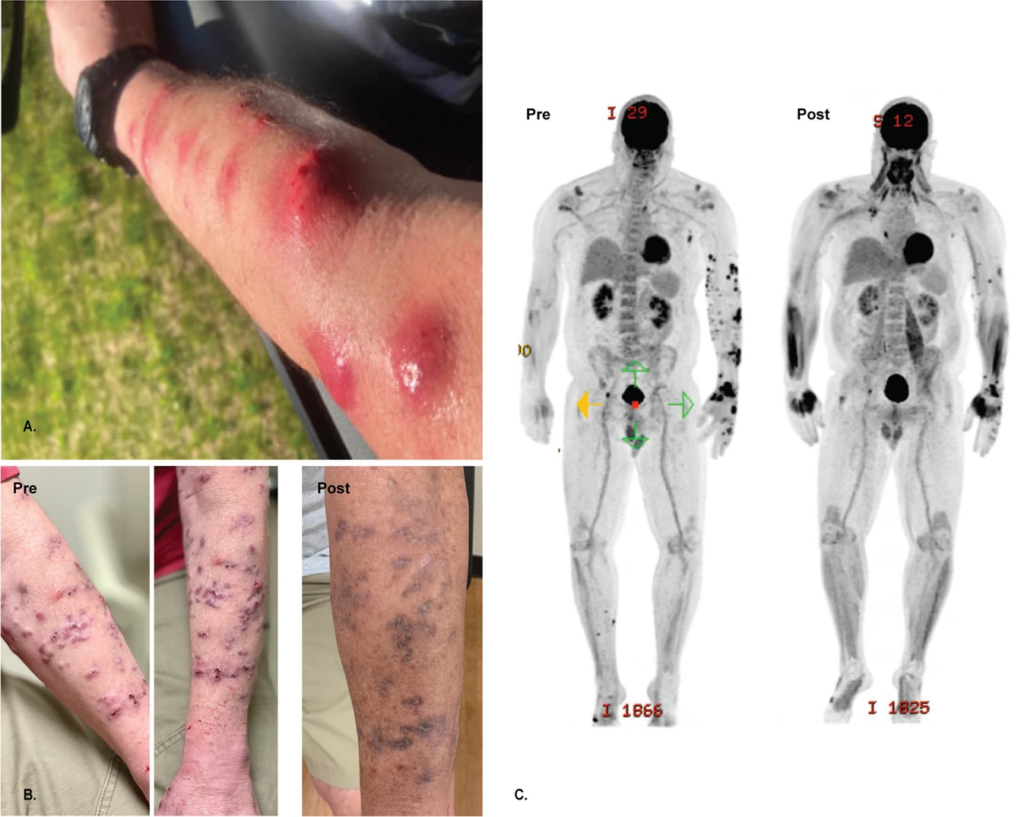
A Left upper extremity with multiple large erythematous, fluctuant to nodular lesions ultimately diagnosed as disseminated cutaneous Mycobacterium chelonae infection. B Images of the left upper extremity lesions prior to (Dec 2020) and following (August 2021) addition of bacteriophage therapy. C PET/CT prior to (March 2021) and following (August 2021) addition of bacteriophage therapy. Credit: Nature

Reporting in the journal Nature, clinicians describe the use of a bacteriophage to treat a flesh-eating infection by an antibiotic-resistant bacteria, with excellent clinical response. Bacteriophages, from the Greek ‘bacteria eater’, are viruses which target bacteria.

Bacteriophage (or more simply ‘phage’) therapy is being explored as a solution to the growing threat of antimicrobial resistance. Despite the exotic-sounding name, bacteriophage therapy is nothing new – in fact, its first application in 1919 predates the discovery of penicillin in 1929. However, their use has not been accompanied with robust research, meaning that there is still uncertainty regarding their use in modern medicine.

The authors report treating Mr. M, a 56 year-old man with disseminated cutaneous Mycobacterium chelonae infection with a single bacteriophage in conjunction with antibiotic and surgical management. He had previously received extensive antimicrobial courses as well as surgical debridement, but the bacterial infection persisted.

M. chelonae is a rapidly growing nontuberculous mycobacterium, ubiquitous in the environment and is known to have antimicrobial resistance. In rare cases, it causes infections in immunocompromised patients. To treat the infection, the researchers used a bacteriophage called Muddy, which had been isolated from a South African eggplant.

After the phage therapy skin started, lesions significantly improved both on examination and in PET/CT scans. Furthermore, two biopsies at two and five months post-treatment revealed no evidence of granulomas or AFB on histopathology and tissue cultures have remained negative. The patient has had no adverse events from the phage therapy and administered the intravenous therapy at home for more than six months.

Bacteriophage therapy is hampered by the development of phage resistance, which can potentially be countered using an appropriately-designed phage cocktail. In this case, the researchers were limited to Muddy, since no other phages tested were highly active against the patient’s strain of M. chelonae. Although resistance to Muddy is likely to occur, it was not detected in vitro, consistent with the infrequency of phage resistance in M. abscessus isolates. Resistance in vivo leading to loss of treatment efficacy was also not observed, which together suggest that phage resistance of NTM pathogens may not be the impediment encountered with other pathogens.

A second barrier to the successful treatment of bacterial infections with phage therapy is the complex interaction between the host immune system and the bacteriophage. In this case, the patient maintained stably improved disease and negative microbiologic and histopathologic studies despite a neutralising antibody response to the phage.

The authors suggested that the phage quickly reduced the burden of infection, allowing the ongoing antimicrobial therapy to have an effect. The phage also became self-replicating at the infection site – administration after the onset of neutralising antibodies therefore became unnecessary.

There are still significant challenges to phage therapy becoming widespread. The mains ones are 1) doctors need to know the bacterial strain behind the infection and 2) they need to have several phages on hand that specifically target that strain. Compounding the latter problem, most pharmaceutical companies are hesitant to focus on developing phage therapies. Since phage therapy is over 100 years old, it is difficult to patent and generate revenue to justify the initial development costs.

Community-acquired Antimicrobial Resistant UTIs can be More Deadly

Pseudomonas
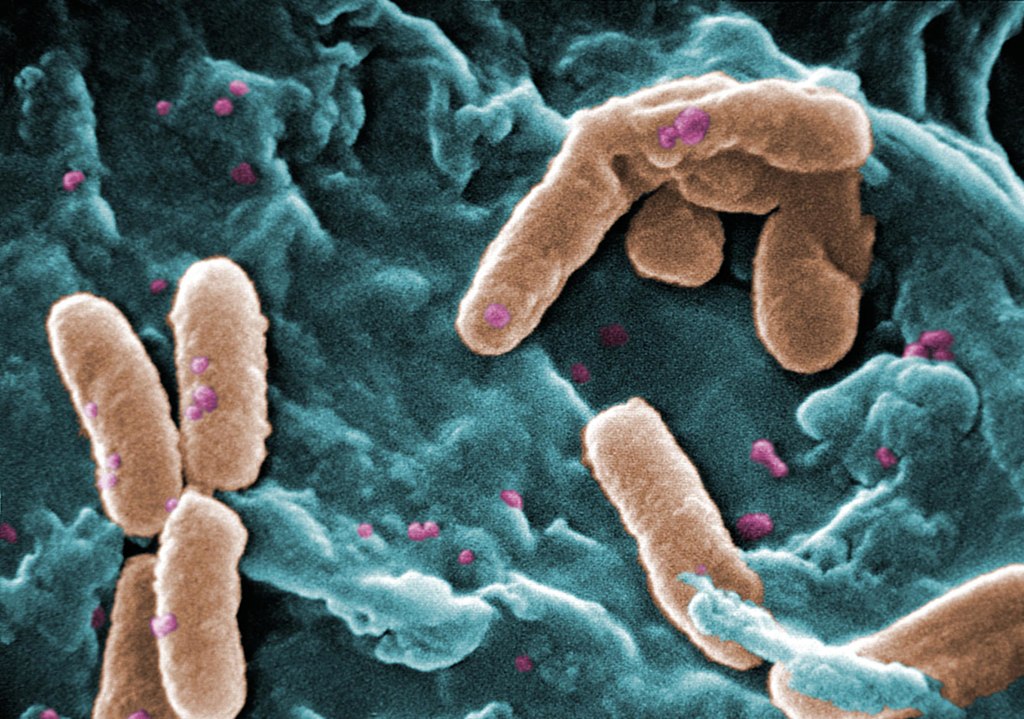
Scanning Electron Micrograph of Pseudomonas aeruginosa. Credit: CDC/Janice Carr.

A study from Australia’s scientific organisation CSIRO has revealed that antimicrobial resistant (AMR) bacteria in urinary tract infections are more lethal, especially Enterobacteriaceae. The findings are published online in Open Forum Infectious Diseases.

Antimicrobial resistance (AMR) bacteria can be passed between humans: through hospital transmission and community transmission. While hospital acquired resistance is well researched, there are few studies focusing on the burden of community transmission.

To address this, the study analysed data from 21 268 patients across 134 Queensland hospitals who acquired their infections in the community. The researchers found that patients were almost two and a half (2.43) times more likely to die from community acquired drug-resistant UTIs caused by Pseudomonas aeruginosa and more than three (3.28) times more likely to die from community acquired drug-resistant blood stream infections caused by Enterobacteriaceae than those with drug-sensitive infections. The high prevalence of UTIs make them a major contributor to antibiotic use, said CSIRO research scientist, Dr Teresa Wozniak.

“Our study found patients who contracted drug-resistant UTIs in the community were more than twice as likely to die from the infection in hospital than those without resistant bacteria,” Dr Wozniak said. “Without effective antibiotics, many standard medical procedures and life-saving surgeries will becoming increasingly life-threatening. “Tracking the burden of drug-resistant infections in the community is critical to understanding how far antimicrobial resistance is spreading and how best to mitigate it.”

The study’s findings will provide further guidance for managing AMR in the community, such as developing AMR stewardship programs that draw on data from the population being treated.

CEO of CSIRO’s Australian e-Health Research Centre, Dr David Hansen, said the magnitude of the AMR problem needs to be understood to mitigate it. “Tracking community resistance is difficult because it involves not just one pathogen or disease but multiple strains of bacteria,” Dr Hansen said. “Until now we haven’t been using the best data to support decision making in our fight against AMR. Data on community acquired resistance is an important contribution to solving the puzzle. “Digital health has an important role in using big data sets to describe patterns of disease and drive important population health outcomes.”

Source: CSIRO

Study Reveals the Intricacy of C. Diff’s Armour

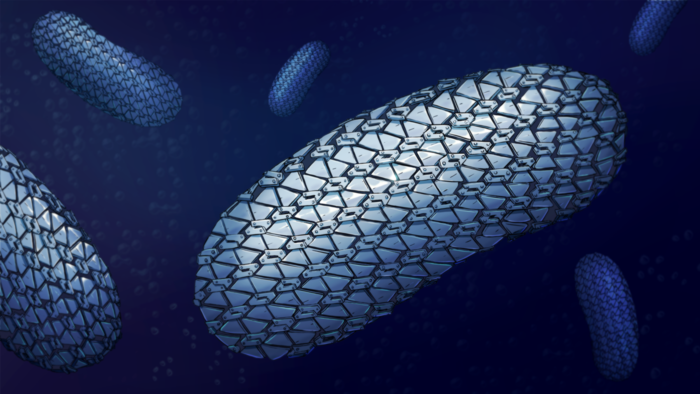
The spectacular structure of the protective armour of superbug C. difficile has been revealed for the first time showing the close-knit yet flexible outer layer – like chain mail. This assembly prevents molecules getting in and provides a new target for future treatments, according to the scientists at Newcastle, Sheffield and Glasgow Universities who have uncovered it. Credit: Newcastle University, UK

The spectacular structure of the protective armour of C. difficile has been revealed for the first time showing the close-knit yet flexible outer layer – like a mediaeval knight’s chain mail.

This tight arrangement keeps molecules from getting in and provides a new target for future treatments, according to the scientists who have uncovered it.

Published in Nature Communications, the team of scientists outlined the structure of the main protein, SlpA, that forms the links of the chain mail and how they link up to form a pattern and create this flexible armour.
One of the many ways that Clostridioides difficile has to protect itself from antibiotics is a special layer that covers the cell of the whole bacteria – the surface layer or S-layer. This flexible armour protects against the entry of drugs or molecules released by our immune system to fight bacteria.

Using a combination of X-ray and electron crystallography, the team determined the structure of the proteins and their arrangement.

Corresponding author and lead researcher Dr Paula Salgado said: “I started working on this structure more than 10 years ago, it’s been a long, hard journey but we got some really exciting results! Surprisingly, we found that the protein forming the outer layer, SlpA, packs very tightly, with very narrow openings that allow very few molecules to enter the cells. S-layer from other bacteria studied so far tend to have wider gaps, allowing bigger molecules to penetrate. This may explain the success of C.diff at defending itself against the antibiotics and immune system molecules sent to attack it.

“Excitingly, it also opens the possibility of developing drugs that target the interactions that make up the chain mail. If we break these, we can create holes that allow drugs and immune system molecules to enter the cell and kill it.”

Antimicrobial resistance (AMR), a growing problem, was declared by WHO as one of the top 10 global public health threats facing humanity.
One of the many bacteria that have evolved resistance to antibiotics, C. diff infects the human gut and is resistant to all but three current drugs. Antibiotics only compound the problem, as the good bacteria in the gut are killed alongside those causing an infection and, as C. diff is resistant, it can grow and cause diseases ranging from diarrhoea to death due to massive lesions in the gut. Since the only way to treat C.diff is to take antibiotics, it creates a vicious cycle of recurrent infections.

This knowledge could lead to the development of C. diff specific drugs that break the protective layer, creating holes to allow drug molecules to penetrate and kill the cell.

Dr Rob Fagan, who helped carry out the electron crystallography work, said: “We’re now looking at how our findings could be used to find new ways to treat C. diff infections such as using bacteriophages to attach to and kill C. diff cells – a promising potential alternative to traditional antibiotic drugs.”

Source: EurekAlert!

Nanoparticle and Antibiotic Polytherapy Defeats AMR Bacteria

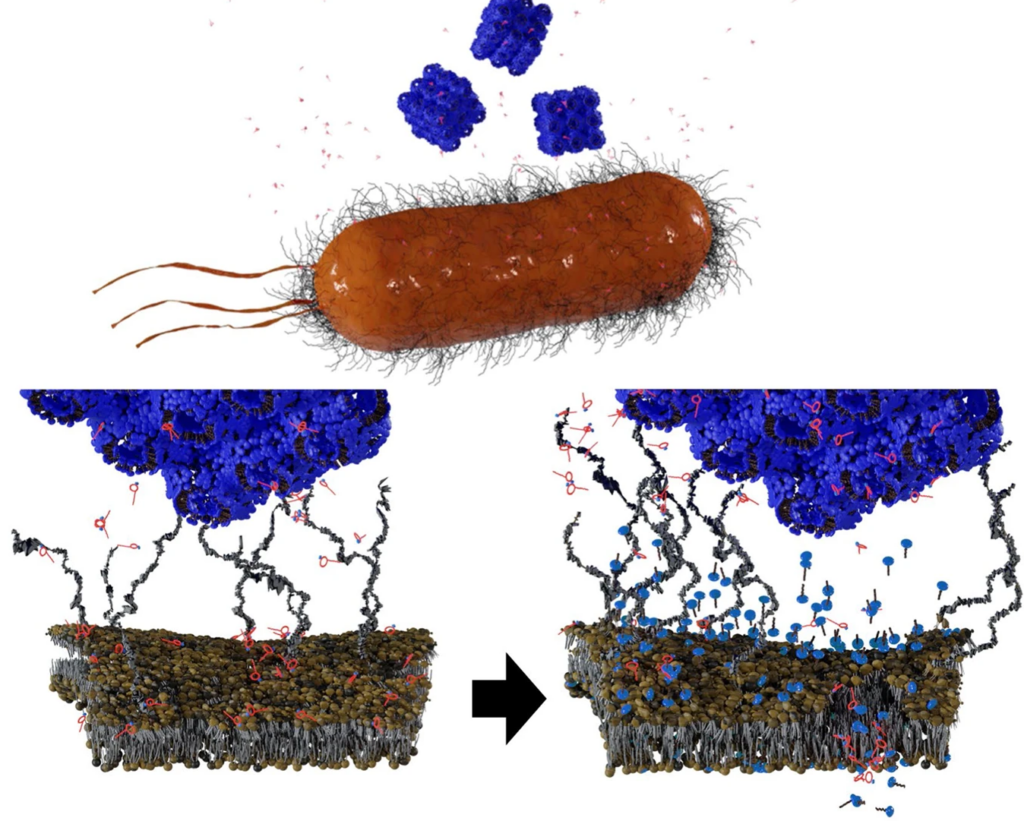
Polytherapy with PMB and cubosomes result in interactions with the bacterial OM in two consecutive ways: PMB initially interacts with the outer leaflet of OM via electrostatic interactions, leading to destabilised areas. Cubosomes then contact with the bilayer, causing further membrane perturbations via a lipid-exchange process. Credit: Monash University/Lai et al.

Researchers from Monash University have discovered a potential new method to circumvent antibiotic resistance, by means of a nanoparticle and antibiotic polytherapy. This approach could also reduce antibiotic intake.

The World Health Organisation (WHO) has declared antimicrobial resistance (AMR) to be among the top 10 global public health threats. A recent report found that in 2019, 1.27 million deaths were directly attributable to AMR infections – more than deaths from either HIV or TB.

AMR occurs when pathogens evolve to no longer respond to medicines, consequently infections become increasingly difficult or impossible to treat.

The study, which appears in Nature Communications, has found that the use of nanoparticles in combination with other antibiotics, is an effective strategy to improve bacterial killing.

For Gram-negative bacteria, polymyxins have been used as drugs of last resort as they disrupt the bacterial outer membrane (OM), causing it to become more permeable, causing cell contents to leak out and kill the bacteria.

The strategy involves administering polymyxin B (PMB) alongside cube-shaped nanoparticles called cubosomes. The PMB disrupted the OM first, but not enough to kill the cell. When the accompanying cubosome bound to the OM, disrupting it further, successfully killing the cell. Interestingly, loading PMB into the cubosomes as a carrier had little effect; in fact, the cubosome strengthened the OM.

“This is a stunning finding in how we deliver medicine and how the medicine we take impacts us in the future,” said lead researcher Dr Hsin-Hui Shen. 

This approach also means that lower dosages of antibiotics could be used. “Instead of looking for new antibiotics to counteract superbugs, we can use the nanotechnology approach to reduce the dose of antibiotic intake, effectively killing multidrug-resistant organisms.”

It has been 30 years since the discovery of the last new antibiotic, and in coming years, the growing crisis of antibiotics resistance will result in increased mortality from basic infections because they have developed antimicrobial resistance.

Without effective antimicrobials, the WHO warns that the success of modern medicine in treating infections, including during major surgery and cancer chemotherapy, would be at increased risk.

While nanoparticles had been used for a long time before as antimicrobial carriers,  “but the use of nanoparticles in polytherapy treatments with antibiotics in order to overcome antimicrobial resistance has been overlooked,” explained Dr Shen. “The use of nanoparticles-antibiotics combination therapy could reduce the dose intake in the human body and overcome the multidrug resistance.”

Research will now progress to the testing phase.

Source: Monash University

AMR Caused Over 1.2 Million Deaths Globally in 2019

Methicillin-resistant Staphylococcus aureus (MRSA) bacteria. Credit: CDC

Globally, infections by antimicrobial-resistant (AMR) bacteria caused more than 1.2 million deaths worldwide in 2019, according to a study published in The Lancet. It is the largest and most comprehensive one to date of this critical issue.

Lower-income countries are worst affected but antimicrobial resistance remains a global threat, the researchers wrote.

The researchers emphasised that investment in new drugs is urgently needed, as well as vaccination and better antimicrobial stewardship.

The estimate of global deaths from AMR, is based on the researchers’ analysis of 204 countries, assuming the counterfactual that the bacteria responsible would be antibiotic-susceptible.

Of the 4.95 million deaths in which AMR played a role, 1.27 million were directly attributable to it. In 2019, 860 000 deaths were estimated from HIV and 640 000 from malaria.

Most of the AMR-related deaths resulted from lower respiratory infections, such as pneumonia, and bloodstream infections, which can lead to sepsis.

Deaths from AMR were estimated to be highest in sub-Saharan Africa at 23.7 deaths per 100 000, and lowest in North Africa and the Middle East at 11.2 per 100 000. Young children are at most risk, with about one in five deaths linked to AMR being among the under-fives.

The researchers also noted that “resistance is high for multiple classes of essential agents, including beta-lactams and fluoroquinolones.”

MRSA (methicillin-resistant Staphylococcus aureus) was particularly deadly, while E. coli, K. pneumoniae, S. pneumoniae, A. baumannii, and P. aeruginosa were associated with high levels of resistance. The researchers wrote that “each of these leading pathogens is a major global health threat that warrants more attention, funding, capacity building, research and development, and pathogen-specific priority setting from the broader global health community.”

They also recommend that immunity to these pathogens be built up by vaccination, and since currently only S. pneumoniae has a vaccine readily available, these will need to be developed and deployed as a matter of urgency. They noted several limitations to their study, the first being the sparsity of data drawn from low- and middle-income countries, which may in fact lead to an underestimate of the prevalence of AMR. Secondly, there is the possibility of multiple sources of bias inherent in combining datasets from different providers. Finally, there may be bias in surveillance, eg if cultures are drawn only if a patient is unresponsive to antibiotics, leading to an overestimate.

Source: The Lancet

Breathing New Life into Old Antibiotics

Source: Pixabay CC0

Scientists may have hit upon a way to make frontline antibiotics once again effective against the deadly bacteria that cause pneumonia.

The international team originally developed this as a potential treatment for disorders such as Alzheimer’s, Parkinson’s and Huntington’s diseases to break bacterial resistance to commonly used frontline antibiotics.

Led by University of Melbourne Professor Christopher McDevitt, this discovery may see the comeback of readily available and cheap antibiotics, such as penicillin and ampicillin, as effective weapons in the fight against the rapidly rising threat of antibiotic resistance.

In a paper published in Cell Reports, Prof McDevitt and colleagues described how they discovered a way to break bacterial drug resistance and then developed a therapeutic approach to rescue the use of the antibiotic ampicillin to treat drug-resistant bacterial pneumonia caused by Streptococcus pneumoniae in a mouse model of infection.

The World Health Organization (WHO) last year named antibiotic resistance as one of the greatest threats to global health, food security, and development. Rising numbers of bacterial infections such as pneumonia, tuberculosis, gonorrhoea, and salmonellosis are becoming harder to treat as the antibiotics lose effectiveness against them.

Prof McDevitt’s prior work on bacterial antibiotic resistance using zinc ionophores led to collaborations with University of Queensland’s Professor Mark Walker and Griffith University’s Professor Mark von Itzstein from the Institute for Glycomics.

“We knew that some ionophores, such as PBT2, had been through clinical trials and shown to be safe for use in humans,” Prof von Itzstein said.

Prof Walker said that “as a group, we realised that if we could repurpose these safe molecules to break bacterial resistance and restore antibiotic efficacy, this would be a pathway to a therapeutic treatment. What we had to do was show whether PBT2 broke bacterial resistance to antibiotic treatment without leading to even greater drug resistance.”

“We focused on bacterial pneumonia and the most commonly used antibiotics. We thought that if we could rescue frontline antibiotics and restore their use for treating common infections, this would solve a global problem,” Prof McDevitt added.

An important component was the research from Prof McDevitt’s group that led to making the treatment effective.

“We knew from earlier research that the immune system uses zinc as an innate antimicrobial to fight off infection. So, we developed our therapeutic approach with PBT2 to use the body’s antimicrobial zinc to break antibiotic resistance in the invading bacteria,” he said.

“This rendered the drug-resistant bacteria susceptible to the antibiotic ampicillin, restoring the effectiveness of the antibiotic treatment in the infected animals.”

Collecting the data required for a clinical trial of PBT2 in combination with antibiotics is the next step, said Prof McDevitt.

“We also want to find other antibiotic-PBT2 combinations that have therapeutic potential for treatment of other bacterial infections,” he said.

“Our work shows that this simple combination therapy is safe, but the combinations require testing in clinical trials. What we need now is to move forward with further testing and pharmacology.”

Source: University of Melbourne

Hedgehog Discovery Shows MRSA Evolved Before the Advent of Antibiotics

Photo by Alexas_Fotos on Unsplash

A surprising discovery in hedgehogs showed that a variant of the MRSA superbug appeared in nature well before antibiotics use in humans and livestock, which has traditionally been blamed for its emergence.

Staphylococcus aureus first developed resistance to the antibiotic methicillin around 200 years ago, according to a large international study which has traced the genetic history of the bacteria.

The finding comes from research showing that up to 60% of hedgehogs in Denmark and Sweden carry a type of MRSA called mecC-MRSA. The new study also found high levels of MRSA in swabs taken from hedgehogs across their range in Europe and New Zealand. Their findings were published in the journal Nature.

The researchers believe that antibiotic resistance evolved in S. aureus as an adaptation to having to exist on hedgehog skin next to the fungus Trichophyton erinacei, which produces its own antibiotics. The discovery of this centuries-old antibiotic resistance predates antibiotic use in medical and agricultural settings.

“Using sequencing technology we have traced the genes that give mecC-MRSA its antibiotic resistance all the way back to their first appearance, and found they were around in the nineteenth century,” said Dr Ewan Harrison, a senior author of the study.

He added: “Our study suggests that it wasn’t the use of penicillin that drove the initial emergence of MRSA, it was a natural biological process. We think MRSA evolved in a battle for survival on the skin of hedgehogs, and subsequently spread to livestock and humans through direct contact.”

Antibiotic resistance in human pathogens was previously thought to be a modern phenomenon, driven by the clinical use of antibiotics. Antibiotic misuse is now accelerating the process, with antibiotic resistance rising dangerously worldwide.

Since nearly all antibiotics used today arose in nature, the researchers say it is likely that resistance to them already exists in nature too. Overuse of any antibiotic in humans or livestock will favour resistant strains of the bacteria, causing it to lose effectiveness over time.

“This study is a stark warning that when we use antibiotics, we have to use them with care. There’s a very big wildlife ‘reservoir’ where antibiotic-resistant bacteria can survive – and from there it’s a short step for them to be picked up by livestock, and then to infect humans,” said Professor Mark Holmes, a senior author of the report.

In 2011, mecC -MRSA was identified in human and dairy cow populations, which was assumed to have arisen due to the large number of antibiotics cows are routinely given.

MRSA was first identified in patients in 1960, and around 1 in 200 of all MRSA infections are caused by mecC-MRSA. Due to its resistance to antibiotics, MRSA is much harder to treat than other bacterial infections. The World Health Organization now considers MRSA one of the world’s greatest threats to human health.

Human infections are rare with mecC-MRSA however, even though it has been present in hedgehogs for more than 200 years.

Source: University of Cambridge

Signs of Antibiotic ‘Pre-resistance’ Identified for the First Time

Drug-resistant, Mycobacterium tuberculosis bacteria, the pathogen responsible for causing the disease tuberculosis (TB). A 3D computer-generated image. Credit: CDC

In a first of its kind study, researchers have spotted signs of antibiotic ‘pre-resistance’ in bacteria for the first time, indicating that they have the potential to develop drug resistance in the future.

The findings, published in Nature Communications, will allow doctors in the future to select the best treatments for bacterial infections.

Mycobacterium tuberculosis (TB) was the second leading infectious cause of death after COVID in 2020, killing 1.5m people. It can be cured if treated with the right antibiotics, but treatment is lengthy and many people most at risk lack access to adequate healthcare. Drug-resistant TB can develop when people do not finish their full course of treatment, or when drugs are not available or are of poor quality.

Multi-drug resistant TB represents a huge, unsustainable burden and totally drug resistant strains have been detected in a handful of countries. As health systems struggle to cope with the pandemic, progress on TB treatment globally has slowed.

To better understand TB for developing new drugs, this study has identified for the first time how to pre-empt drug resistance mutations before they have occurred. Dubbed ‘pre-resistance’ when a pathogen has a greater inherent risk of developing resistance to drugs in the future.

By analysing thousands of bacterial genomes, the study has potential application to other infectious diseases and paves the way towards personalised pathogen ‘genomic therapy’ – which chooses drugs according to the pathogen, preventing drug resistance.

The culmination of 17 years’ work, the study built up a TB bacterial ‘family tree’  from 3135 different tuberculosis samples. Computational analysis identified the ancestral genetic code of bacteria that then went on to develop drug resistance. The team identified the key changes associated with the development of resistance by looking through the ‘branches’ of the family tree to see which had the most potential for developing drug resistance.

Variations in the TB genome predicted that a particular branch would likely become drug resistant, and then validated their findings in an independent global TB data set.

Dr Grandjean, senior author of the study, said: “We’re running out of options in antibiotics and the options we have are often toxic – we have to get smarter at using what we have to prevent drug resistance.

“This is the first example of showing that we can get ahead of drug resistance. That will allow us in the future to use the pathogen genome to select the best treatments.”

Source: EurekAlert!

Understanding Mechanisms of Antibiotic Resistance

Source: NCI

If nothing is done, the problem of multidrug-resistant bacterial infections could be catastrophic by 2050, killing nearly 10 million people each year, according to experts’ predictions.

One person seeking solutions is Joseph Boll, assistant professor of biology at The University of Texas at Arlington, to identify and inhibit the defense mechanisms of Acinetobacter baumannii, a common pathogen in hospitals and clinical settings.

A. baumannii can cause infections in the blood, urinary tract and lungs, or in wounds in other parts of the body. Antibiotics are usually used to treat the infections, but many strains are resistant, including drugs of last resort, carbapenems.

“In previous research, we discovered that when A. baumannii experiences stress, such as antibiotic treatment, it modifies its cell envelope to tolerate the antibiotic for extended periods of time,” Prof Boll said. “Specific modifications allow the bacteria to survive long enough to acquire true antibiotic resistance, which can lead to antibiotic treatment failure. This can happen within 24 hours of antibiotic exposure.”

His team expects to identify what adaptations in the cell envelope allow the pathogen to survive in the presence of antibiotics and how survival contributes to the acquisition of true resistance.

In a recent study published in mBio, the team demonstrated that two LD-transpeptidase enzymes remodel A. baumannii’s cell envelope to promote its survival when under stress, such as the kind experienced during antibiotic treatment.

With this breakthrough, Hannah Bovermann, a senior double-major in biology and microbiology, is dissecting the genes that encode the bacteria’s LD-transpeptidases to learn what stress conditions induce their activation. She isolates the LD-transpeptidase promoters, the part of the DNA that controls when other parts of DNA are used, and glues it to a different gene whose function is to turn the bacterial cell blue. When the cell is in an environment where it wants to modify its cell envelope to protect itself, it turns blue, letting her observe the timing of the change.

To provoke this reaction, she administers antibiotics, experiments with various temperature changes, exposes the cell to pH gradients and subjects the cell to nutrient deprivations.

“Each response brings us closer to an understanding of how cell envelope modifications keep the bacterial cell intact in stress,” Bovermann said.

The researchers hope to find new targets on the cell surface for antibiotics to attack, strengthening existing medications’ potency against A. baumannii infections.

Clinicians have been pushed into using combinatorial therapies, where multiple drugs are employed to treat bacterial infections, but even those methods are becoming increasingly ineffective, Prof Boll said.

“It has become a game. Researchers discover a new antimicrobial, then bacteria become resistant to it. We are running out of options,” Prof Boll said. “Bacterial resistance is quickly outpacing new antibiotic development.”

Source: EurekAlert!

New Antibacterial Molecules Identified

Source: National Cancer Institute on Unsplash

Researchers have identified a new group of molecules with an antibacterial effect against many antibiotic-resistant bacteria. Since the properties of the molecules can easily be altered chemically, the hope is to develop new, effective antibiotics with few side effects. The study appears in PNAS.

Increasing antibiotic resistance is a great concern as few new antibiotics have been developed in the past 50 years.

Most antibiotics work by inhibiting the bacteria’s ability to form a protective cell wall, causing the bacteria to crack (cell lysis). Besides the well-known penicillin, which inhibits enzymes building up the wall, newer antibiotics such as daptomycin or the recently discovered teixobactin bind to a special molecule, lipid II. All bacteria need lipid II as a building block for the cell wall. Antibiotics that bind to Lipid II are usually very large and complex molecules and therefore more difficult to improve with chemical methods. These molecules are in addition mostly inactive against a group of problematic bacteria, which are surrounded by an additional layer, the outer membrane, that hinders penetration of these antibacterials.

“Lipid II is a very attractive target for new antibiotics. We have identified the first small antibacterial compounds that work by binding to this lipid molecule, and in our study, we found no resistant bacterial mutants, which is very promising,” says Birgitta Henriques Normark, professor at the Department of Microbiology, Tumor and Cell Biology, Karolinska Institutet, and one of the article’s three corresponding authors.

For this study, published in PNAS, researchers tested a large number of chemical compounds for their ability to lyse pneumococci – the most common cause of community-acquired pneumonia. After a careful follow-up of active compounds from this screening, the researchers found that a group of molecules called THCz inhibits the formation of the cell wall of the bacterium by binding to lipid II. The molecules could also prevent the formation of the sugar capsule that pneumococci need to escape the immune system and to cause disease.

Small molecules offer several benefits, noted Fredrik Almqvist, professor at Umeå University and one of the corresponding authors: “The advantage of small molecules like these is that they are more easy to change chemically. We hope to be able to change THCz so that the antibacterial effect increases and any negative effects on human cells decrease.”

Laboratory work with THCz showed it has an antibacterial effect against many antibiotic-resistant bacteria, such as methicillin-resistant staphylococci (MRSA), vancomycin-resistant enterococci (VRE), and penicillin-resistant pneumococci (PNSP). An antibacterial effect was also found against gonococci, which causes gonorrhoea, and mycobacteria, bacteria that can cause severe diseases such as tuberculosis in humans. None of the bacteria managed to develop resistance to THCz in a laboratory environment.

“We will now also initiate attempts to change the THCz molecule, allowing it to penetrate the outer cell membrane found in some, especially intractable, multi-resistant bacteria,” says Tanja Schneider, professor at the Institute of Pharmaceutical Microbiology at the University of Bonn and one of the corresponding authors.

Source: Karolinska Institutet