Tag: Alzheimer's disease

Gene Silencing Treatment Lowers Tau Proteins in Alzheimer’s Patients

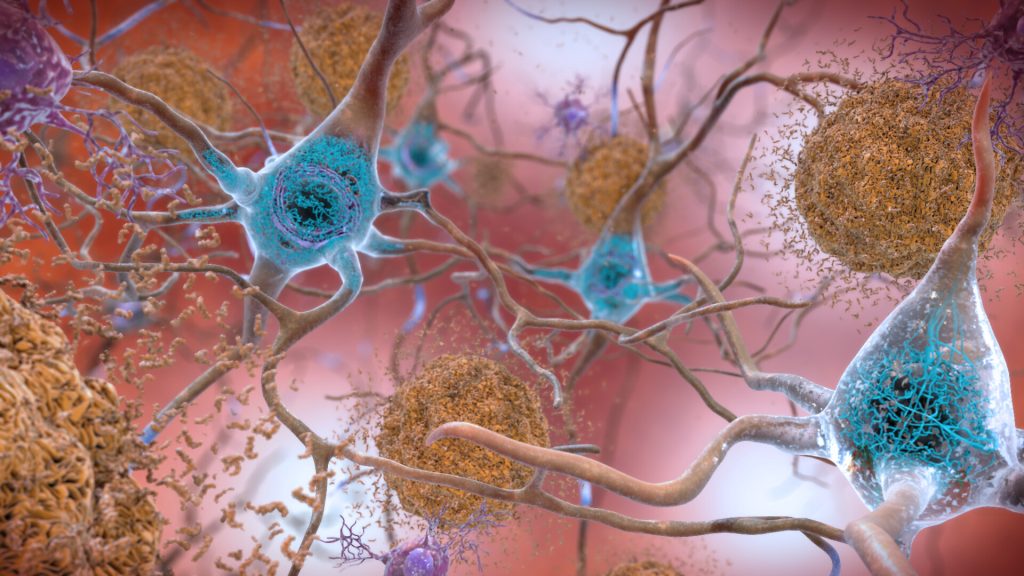
Neurons in the brain of an Alzheimer’s patient, with amyloid plaques caused by tau proteins. Credit: NIH

In a preliminary trial, a new ‘gene silencing’ treatment has been able to safely and successfully lower levels of the harmful tau protein known to cause the disease. This success, published in Nature Medicine, demonstrates that a ‘gene silencing’ approach could work in dementia and Alzheimer’s disease.

The approach uses a drug called BIIB080 (/IONIS-MAPTRx), which is an antisense oligonucleaotide (used to stop RNA producing a protein), to ‘silence’ the gene coding for the tau protein – known as the microtubule-associated protein tau (MAPT) gene. This prevents the gene from being translated into the protein in a doseable and reversible way. It also reduces production of that protein, altering the course of disease.

Further trials will be needed in larger groups of patients to determine whether this leads to clinical benefit, but the phase 1 results are the first indication that this method has a biological effect.

There are currently no treatments targeting tau. The drugs aducanumab and lecanemab – recently approved for use in some situations by the FDA – target a separate disease mechanism in AD, the accumulation of amyloid plaques.

The phase 1 trial enrolled 46 patients with an average age of 66, and looked at the safety of BIIB080, what it does in the body, and how well it targets the MAPT gene. The trial compared three doses of the drug, given by intrathecal injection (an injection into the nervous system via the spinal canal), with the placebo.

Results show that the drug was well tolerated, with all patients completing the treatment period and over 90% completing the post-treatment period.

Patients in both the treatment and placebo groups experienced either mild or moderate side effects – the most common being a headache after injection of the drug. However, no serious adverse events were seen in patients given the drug.

The research team also looked at two forms of the tau protein in the central nervous system (CNS) – a reliable indicator of disease – over the duration of the study.

They found a greater than 50% reduction in levels of total tau and phosphor tau concentration in the CNS after 24 weeks in the two treatment groups that received the highest dose of the drug.

Consultant neurologist Dr Catherine Mummery, who led the study, said: “We will need further research to understand the extent to which the drug can slow progression of physical symptoms of disease and evaluate the drug in older and larger groups of people and in more diverse populations.

“But the results are a significant step forward in demonstrating that we can successfully target tau with a gene silencing drug to slow – or possibly even reverse – Alzheimer’s disease, and other diseases caused by tau accumulation in the future.”

Source: Imperial College London

A Sleeping Pill Lowers Alzheimer’s Protein Levels

An early sign of Alzheimer’s disease is sleep disturbance – many people eventually diagnosed with Alzheimer’s start experiencing difficulty falling and staying asleep years before the emergence of cognitive problems such as memory loss and confusion. In a vicious circle, Alzheimer’s disease disrupts sleep, and poor sleep accelerates harmful changes to the brain.

Now, researchers at Washington University School of Medicine in St. Louis have identified a possible way to help break that cycle. Published in Annals of Neurology, a small, two-night study has shown that people who took a sleeping pill before bed experienced a drop in the levels of key Alzheimer’s proteins – a good sign, since higher levels of such proteins tracks with worsening disease. The study, which involved a sleeping aid known as suvorexant that is already approved by the Food and Drug Administration (FDA) for insomnia, hints at the potential of sleep medications to slow or stop the progression of Alzheimer’s disease, although much more work is needed to confirm the viability of such an approach.

“This is a small, proof-of-concept study. It would be premature for people who are worried about developing Alzheimer’s to interpret it as a reason to start taking suvorexant every night,” said senior author Brendan Lucey, MD, an associate professor of neurology and director of Washington University’s Sleep Medicine Center. “We don’t yet know whether long-term use is effective in staving off cognitive decline, and if it is, at what dose and for whom. Still, these results are very encouraging. This drug is already available and proven safe, and now we have evidence that it affects the levels of proteins that are critical for driving Alzheimer’s disease.”

Suvorexant belongs to a class of insomnia medications known as dual orexin receptor antagonists. Orexin is a natural biomolecule that promotes wakefulness. When orexin is blocked, people fall asleep. Three orexin inhibitors have been approved by the FDA, and more are in the pipeline.

Alzheimer’s disease begins when plaques of the protein amyloid beta start building up in the brain. After years of amyloid accumulation, a second brain protein, tau, begins to form tangles that are toxic to neurons. People with Alzheimer’s disease start experiencing cognitive symptoms such as memory loss around the time tau tangles become detectable.

Lucey and colleagues were among the first to show in people that poor sleep is linked to higher levels of both amyloid and tau in the brain. The question remains as to whether good sleep has the opposite effect – a reduction in amyloid and tau levels, and a halt in or reversal of the progress of Alzheimer’s disease – but mouse studies with orexin inhibitors have been promising.

As a first step to assess the effect of orexin inhibitors on people, Lucey and colleagues recruited 38 participants ages 45 to 65 and with no cognitive impairments to undergo a two-night sleep study. The participants were given a lower dose (10 mg) of suvorexant (13 people), a higher dose (20 mg) of suvorexant (12 people) or a placebo (13 people) at 9 p.m. and then went to sleep in a clinical research unit at Washington University. Researchers withdrew a small amount of cerebrospinal fluid via spinal tap every two hours for 36 hours, starting one hour before the sleeping aid or placebo was administered, to measure how amyloid and tau levels changed over the next day and a half.

Amyloid levels dropped 10% to 20% in the cerebrospinal fluid of people who had received the high dose of suvorexant compared to people who had received placebo, and the levels of a key form of tau known as hyperphosphorylated tau dropped 10% to 15%, compared to people who had received placebo. Both differences are statistically significant. There was not a significant difference between the people who received a low dose of suvorexant and those who received the placebo.

By 24 hours after the first dose, hyperphosphorylated tau levels in the high-dose group had risen, while amyloid levels remained low compared to the placebo group. A second dose of suvorexant, administered on the second night, sent the levels of both proteins down again for people in the high-dose group.

“If we can lower amyloid every day, we think the accumulation of amyloid plaques in the brain will decrease over time,” Lucey said. “And hyperphosphorylated tau is very important in the development of Alzheimer’s disease, because it’s associated with forming tau tangles that kill neurons. If you can reduce tau phosphorylation, potentially there would be less tangle formation and less neuronal death.”

The study is preliminary, since it only looked at the effect of two doses of the drug in a small group of participants. Lucey has studies underway to assess the longer-term effects of orexin inhibitors in people at higher risk of dementia.

“Future studies need to have people taking these drugs for months, at least, and measuring the effect on amyloid and tau over time,” Lucey said. “We’re also going to be studying participants who are older and may still be cognitively healthy, but who already have some amyloid plaques in their brains. This study involved healthy middle-aged participants; the results may be different in an older population.

“I’m hopeful that we will eventually develop drugs that take advantage of the link between sleep and Alzheimer’s to prevent cognitive decline,” he continued. “We’re not quite there yet. At this point, the best advice I can give is to get a good night’s sleep if you can, and if you can’t, to see a sleep specialist and get your sleep problems treated.”

Source: Washington University School of Medicine

A Genetic Treatment for ALS That Restores Key Protein May Be Possible

DNA repair
Source: Pixabay/CC0

In virtually all persons with amyotrophic lateral sclerosis (ALS) and in up to half of all cases of Alzheimer’s disease (AD) and frontotemporal dementia, a protein called TDP-43 is lost from its normal location in the nucleus of the cell. In turn, this triggers the loss of stathmin-2, a protein crucial to regeneration of neurons and the maintenance of their connections to muscle fibres.

Writing in Science, a team of scientists demonstrate that stathmin-2 loss can be rescued using designer DNA drugs that restore normal processing of protein-encoding RNA.

“With mouse models we engineered to misprocess their stathmin-2 encoding RNAs, like in these human diseases, we show that administration of one of these designer DNA drugs into the fluid that surrounds the brain and spinal cord restores normal stathmin-2 levels throughout the nervous system,” said senior study author Don Cleveland, PhD, Distinguished Professor of Medicine, Neurosciences and Cellular and Molecular Medicine at University of California San Diego School of Medicine.

Cleveland is broadly credited with developing the concept of designer DNA drugs, which act to either turn on or turn off genes associated with many degenerative diseases of the aging human nervous system, including ALS, AD, Huntington’s disease and cancer.

Several designer DNA drugs are currently in clinical trials for multiple diseases. One such drug has been approved to treat a childhood neurodegenerative disease called spinal muscular atrophy.

The new study builds upon ongoing research by Cleveland and others regarding the role and loss of TDP-43, a protein associated with ALS, AD and other neurodegenerative disorders. In ALS, TDP-43 loss impacts the motor neurons that innervate and trigger contraction of skeletal muscles, causing them to degenerate, eventually resulting in paralysis.

“In almost all of instances of ALS, there is aggregation of TDP-43, a protein that functions in maturation of the RNA intermediates that encode many proteins. Reduced TDP-43 activity causes misassembly of the RNA-encoding stathmin-2, a protein required for maintenance of the connection of motor neurons to muscle,” said Cleveland.

“Without stathmin-2, motor neurons disconnect from muscle, driving paralysis that is characteristic of ALS. What we have now found is that we can mimic TDP-43 function with a designer DNA drug, thereby restoring correct stathmin-2 RNA and protein level in the mammalian nervous system.”

Specifically, the researchers edited genes in mice to contain human STMN2 gene sequences and then injected antisense oligonucleotides – small DNA or RNA pieces that can bind to specific RNA molecules, blocking their ability to make a protein or changing how their final RNAs are assembled – into cerebral spinal fluid. The injections corrected STMN2 pre-mRNA misprocessing and restored stathmin-2 protein expression fully independent of TDP-43 function.

“Our findings lay the foundation for a clinical trial to delay paralysis in ALS by maintaining stathmin-2 protein levels in patients using our designer DNA drug,” Cleveland said.

Source: University of California – San Diego

Fructose Could Drive Alzheimer’s Disease

An ancient human instinct for foraging, fuelled by fructose production in the brain, may hold clues to the development and possible treatment of Alzheimer’s disease (AD), according to a new study published recently in The American Journal of Clinical Nutrition.

The findings provide a new way of looking at the neurodegenerative disease.

“We make the case that Alzheimer’s disease is driven by diet,” said the study’s lead author Richard Johnson, MD, professor at the University of Colorado School of Medicine specializing in renal disease and hypertension. The study co-authors include Maria Nagel, MD, research professor of neurology at the CU School of Medicine.

Johnson and his team suggest that AD is a harmful adaptation of an evolutionary survival pathway used in animals and our distant ancestors during times of scarcity.

“A basic tenet of life is to assure enough food, water and oxygen for survival,” the study said. “Much attention has focused on the acute survival responses to hypoxia and starvation. However, nature has developed a clever way to protect animals before the crisis actually occurs.”

When threatened with the possibility of starvation, early humans developed a survival response which sent them foraging for food. Yet foraging is only effective if metabolism is inhibited in various parts of the brain. Foraging requires focus, rapid assessment, impulsivity, exploratory behavior and risk taking. It is enhanced by blocking whatever gets in the way, like recent memories and attention to time. Fructose, a kind of sugar, helps damp down these centers, allowing more focus on food gathering.

In fact, the researchers found the entire foraging response was set in motion by the metabolism of fructose whether it was eaten or produced in the body. Metabolizing fructose and its byproduct, intracellular uric acid, was critical to the survival of both humans and animals.

The researchers noted that fructose reduces blood flow to the brain’s cerebral cortex involved in self-control, as well as the hippocampus and thalamus. Meanwhile, blood flow increased around the visual cortex associated with food reward. All of this stimulated the foraging response.

“We believe that initially the fructose-dependent reduction in cerebral metabolism in these regions was reversible and meant to be beneficial,” Johnson said. “But chronic and persistent reduction in cerebral metabolism driven by recurrent fructose metabolism leads to progressive brain atrophy and neuron loss with all of the features of AD.”

Johnson suspects the survival response, what he calls the `survival switch,’ that helped ancient humans get through periods of scarcity, is now stuck in the `on’ position in a time of relative abundance. This leads to the overeating of high fat, sugary and salty food prompting excess fructose production.

Fructose produced in the brain can lead to inflammation and ultimately Alzheimer’s disease, the researchers theorised. Animals given fructose show memory lapses, a loss in the ability to navigate a maze and inflammation of the neurons.

“A study found that if you keep laboratory rats on fructose long enough they get tau and amyloid beta proteins in the brain, the same proteins seen in Alzheimer’s disease,” Johnson said. “You can find high fructose levels in the brains of people with Alzheimer’s as well.”

Johnson suspects that the tendency of some AD patients to wander off might be a vestige of the ancient foraging response.

The study said more research is needed on the role of fructose and uric acid metabolism in AD.

“We suggest that both dietary and pharmacologic trials to reduce fructose exposure or block fructose metabolism should be performed to determine if there is potential benefit in the prevention, management or treatment of this disease,” Johnson said.

Source: University of Colorado Anschutz Medical Campus

Head Injury Doubles Long-term Mortality Risk

Photo by John Simmons on Unsplash

Adults who suffered any head injury during a 30-year study period had two times the rate of mortality than those who did not have any head injury, and mortality rates among those with moderate or severe head injuries were nearly three times higher, according to new research published in JAMA Neurology.

Head injury can be attributed to a number of causes, from motor vehicle crashes, unintentional falls, or sports injuries. Furthermore, head injury has been linked with a number of long-term health conditions, including disability, late-onset epilepsy, dementia, and stroke.

Previous studies have shown increased short-term mortality among hospitalised patients with head injuries. This longitudinal study evaluated 30 years of data from over 13 000 community-dwelling participants (ie not hospitalised or in nursing homes) to determine if head injury has an impact on mortality rates in adults over the long term. Of these, 18.4% reported one or more head injuries during the study period, and of those who suffered a head injury, 12.4% were recorded as moderate or severe. The median period of time between a head injury and death was 4.7 years.

Death from all causes was recorded in 64.6% of those individuals who suffered a head injury, and in 54.6% of those without any head injury. Accounting for participant characteristics, investigators found that the mortality rate from all-causes among participants with a head injury was 2.21 times the mortality rate among those with no head injury. Further, the mortality rate among those with more severe head injuries was 2.87 times the mortality rate among those with no head injury.

“Our data reveals that head injury is associated with increased mortality rates even long-term. This is particularly the case for individuals with multiple or severe head injuries,” explained the study’s lead author, Holly Elser, MD, PhD, MPH a Neurology resident at Penn. “This highlights the importance of safety measures, like wearing helmets and seatbelts, to prevent head injuries.”

Investigators also evaluated the data for specific causes of death among all participants. Overall, the most common causes of death were cancers, cardiovascular disease, and neurologic disorders (which include dementia, epilepsy, and stroke). Among individuals with head injuries, deaths caused by neurologic disorders and unintentional injury or trauma (like falls) occurred more frequently.

When investigators evaluated specific neurologic causes of death among participants with head injury, they found that nearly two-thirds of neurologic causes of death were attributed to neurodegenerative diseases, like Alzheimer’s and Parkinson’s disease. These diseases composed a greater proportion of overall deaths among individuals with head injury (14.2%) versus those without (6.6%). Further research into this association is recommended.

Source: University of Pennsylvania School of Medicine

HRT May Help Ward off Alzheimer’s in at-risk Women

Older woman smiling
Photo by Ravi Patel on Unsplasj

Hormone Replacement Therapy (HRT) could help prevent Alzheimer’s Dementia among women at risk of developing the disease, according to a study published in Alzheimer’s Research and Therapy.

The study shows that HRT use is associated with better memory, cognition and larger brain volumes in later life among women carrying the APOE4 gene – the strongest risk factor gene for Alzheimer’s disease.

The research team found that HRT was most effective when introduced early in the menopause journey during perimenopause.

Prof Anne-Marie Minihane, from University of East Anglia, led the study in collaboration with Prof Craig Ritchie at the University of Edinburgh.

Prof Minihane said: “We know that 25% of women in the UK are carriers of the APOE4 gene and that almost two thirds of Alzheimer’s patients are women.

“In addition to living longer, the reason behind the higher female prevalence is thought to be related to the effects of menopause and the impact of the APOE4 genetic risk factor being greater in women.

“We wanted to find out whether HRT could prevent cognitive decline in at-risk APOE4 carriers.”

The research team studied data from 1178 women participating in the European Prevention of Alzheimer’s Dementia initiative, a study set up to record participants’ brain health over time.

The project spanned 10 countries and tracked participants’ brains from ‘healthy’ to a diagnosis of dementia in some. Participants were included if they were over 50 and dementia-free.

The research team studied their results to analyse the impact of HRT on women carrying the APOE4 genotype.

Dr Rasha Saleh, also from UEA’s Norwich Medical School, said: “We found that HRT use is associated with better memory and larger brain volumes among at-risk APOE4 gene carriers. The associations were particularly evident when HRT was introduced early — during the transition to menopause, known as perimenopause.

“This is really important because there have been very limited drug options for Alzheimer’s disease for 20 years and there is an urgent need for new treatments.

“The effects of HRT in this observation study, if confirmed in an intervention trial, would equate to a brain age that is several years younger.”

Prof Anne Marie Minihane said: “Our research looked at associations with cognition and brain volumes using MRI scans. We did not look at dementia cases, but cognitive performance and lower brain volumes are predictive of future dementia risk.”

Prof Michael Hornberger, from UEA’s Norwich Medical School, said: “It’s too early to say for sure that HRT reduces dementia risk in women, but our results highlight the potential importance of HRT and personalised medicine in reducing Alzheimer’s risk.

“The next stage of this research will be to carry out an intervention trial to confirm the impact of starting HRT early on cognition and brain health. It will also be important to analyse which types of HRT are most beneficial,” he added.

Source: University of East Anglia

Adults Get the Least Sleep From Their 30s to 50s

Photo by Ketut Subiyanto on Pexels

People sleep less in mid-adulthood than they do in early and late adulthood, according to a large study published in Nature Communications. The study investigators found that sleep duration declines in early adulthood until age 33, and then picks up again at age 53.

The study, involving 730 187 participants spread over 63 countries, revealed how sleep patterns change across the lifespan, and how they were largely the same across countries.

Study participants were playing the Sea Hero Quest mobile game, a citizen science venture designed for neuroscience research, which was designed to aid Alzheimer’s research by shedding light on differences in spatial navigational abilities. Thus far, over four million people have played Sea Hero Quest, contributing to numerous studies across the project as a whole.

In addition to completing tasks testing navigational ability, anyone playing the game is asked to answer questions about demographic characteristics as well as other questions that can be useful to neuroscience research, such as on sleep patterns.

The researchers, led by Professor Hugo Spiers (UCL Psychology & Language Sciences) and Dr Antoine Coutrot (CNRS, University of Lyon) found that across the study sample, people sleep an average of 7.01 hours per night, with women sleeping 7.5 minutes longer than men on average. They found that the youngest participants in the sample (age 19) slept the most, and sleep duration declined throughout people’s 20s and early 30s before plateauing until their early 50s and increasing again. The pattern, including the newly-identified key time points of age 33 when declining sleep plateaus and 53 for sleep to increase again, was the same for men and women, and across countries and education levels.

The researchers suggest the decline in sleep during mid-life may be from the demands of childcare and working life.

Professor Spiers said: “Previous studies have found associations between age and sleep duration, but ours is the first large study to identify these three distinct phases across the life course. We found that across the globe, people sleep less during mid-adulthood, but average sleep duration varies between regions and between countries.”

People who report sleeping the most are in Eastern European countries such as Albania, Slovakia, Romania and the Czech Republic, reporting 20–40 minutes extra sleep per night and the least in South East Asian countries including the Philippines, Malaysia and Indonesia. People in the United Kingdom reported sleeping slightly less than the average. People tended to sleep a bit less in countries closer to the equator.

The researchers found that navigational ability was unaffected by sleep duration for most of the sample, except for among older adults (aged 54–70) whose optimal sleep duration was seven hours, although they caution that the findings among older adults might be impacted by underlying health conditions.

Source: University College London

Looking Back at 2022: Pandemic Fades but Other Challenges Remain

Photo by Joshua Hoehne on Unsplash

The year 2022 finally saw the COVID pandemic petering out, largely through the less-lethal but still highly contagious Omicron variant. Significant strides were made in cancer and Alzheimer’s research, although not without controversy. Amid growing public healthcare challenges in South Africa, the NHI Bill advanced closer to reality.

As Omicron displayed greatly reduced severity compared to prior strains, South African medical experts were some of the first to justify no longer being at ‘code red’. This brought an end to the cycles of lockdowns and travel restrictions characterised by the two previous years.

It even saw the lifting of some aspects of China’s ultra-strict ‘zero-COVID’ policy, with citizens paying online tribute to the memory of the heroic doctor who defied government censorship to warn the world. However, the pandemic’s true cost became apparent as the World Health Organization put global excess deaths for the pandemic at almost 15 million.

A number of key medical advances were made during the year for a variety of conditions. Studies showed that administering steroids after COVID hospitalisation with severe inflammation reduced mortality up to one year post-infection.

COVID was found to be linked to a spate of new-onset Type 1 diabetes, but this may just have been due to medical checkups as a result of developing COVID. The rheumatoid arthritis drug auranofin was found to relieve diabetes symptoms. And research suggested a possible way to deliver insulin and cancer drugs orally, by adding a ‘tag’ that lets them enter the bloodstream through the intestines.

The fields of cancer and Alzheimer’s research was rocked by findings of numerous red flags. This controversy did not stop real progress: the first new drug that had any real effectiveness against Alzheimer’s disease was confirmed in a historic trial. Fortunately, the flu jab also seems to protect against developing the disease. Indeed, serious infections appear to increase the risk of both Alzheimer’s and Parkinson’s.

In advanced ER-positive, HER-2 negative breast cancers, the new drug capivasertib halved the rate of progression.

It was also revealed that humans are paying through the nose for common medications compared to those that animals receive. Antimicrobial resistance also remains a growing problem, causing an estimated 1.2 million deaths in 2019.

A major South African Medical Research Council (SMARC) study told a familiar story: unsafe sex, interpersonal violence, obesity, hypertension, and alcohol consumption are the top risk factors for disease and death in South Africa.

Despite lessons learned in the COVID pandemic, South Africa saw the progression of systemic problems in healthcare such as a critical shortage of nurses. Dr Tim de Maayer’s open letter on appalling conditions at Rahima Moosa exposed deep-seated problems in Gauteng’s public healthcare system. This was followed by the shock resignation of top cancer surgeon Professor Carol-Ann Benn. The appointment of Nomantu Nkomo-Ralehoko as Gauteng Health MEC should hopefully change the province’s situation.

As for the National Health Insurance (NHI) Bill, medical aids have aimed to reposition themselves in the new uncertain paradigm while the threat of a mass exodus of healthcare professionals from the country still hangs in the air. A slew of legal challenges now await the Bill, which still has no details on how it will be financed.

‘Thor’ Actor Takes a Break from Acting after Alzheimer’s Gene Discovery

Actor Chris Hemsworth. Credit: Gage Skidmore / Wikimedia Commons

Actor Chris Hemsworth has announced that he is stepping back from acting in order to focus on preventative measures for Alzheimer’s disease.

The 39-year-old star of ‘Thor’ told Vanity Fair that genetic testing had confirmed that he had two pairs of a gene, APOE4. which is highly predictive of developing Alzheimer’s. About one in four have a single copy while 2–3% carry two copies of the gene.

The reason APOE4 increases Alzheimer’s risk isn’t not well understood. The APOE protein helps carry cholesterol and other types of fat in the bloodstream. Recent studies suggest that problems with brain cells’ ability to process lipids may play a key role in Alzheimer’s and related diseases.

Lipid imbalances can impair many of a cell’s essential processes. This includes creating cell membranes, moving molecules within the cell, and generating energy.

Hemsworth had made the discovery while making the TV series ‘Limitless‘, in which he engages in a variety of activities to push the limits of his own body and mind and explores ways of extending the lifespan.

“My concern was I just didn’t want to manipulate it and overdramatise it, and make it into some sort of hokey grab at empathy, or whatever, for entertainment,” said Hemsworth. “It’s not like I’ve been handed my resignation.”

He emphasises that he is thankful at having made the discovery, as it has made him more appreciative of his life, and it now means he can now take steps to protect his health.

Fortunately, research suggests that there are lifestyle changes that may offer preventative effects for APOE4 carriers, such as reducing stress and getting regular exercise – though the latter is unlikely to be a problem for the already athletic actor. Dietary measures include various low-carbohydrate diets (including ketogenic diets), regular portions of oily fish, cruciferous vegetables and abstaining from alcohol.

Supplements with potential benefits include DHA, quercetin, resveratrol, vitamin D3, vitamin K2, B-vitamin complex and possibly lithium.

Alzheimer’s Prions also Appear in Down Syndrome

Plaques and neurons. Source: NIAH

The brains of people with Down syndrome develop the same neurodegenerative tangles and plaques associated with Alzheimer’s disease and they frequently demonstrate signs of the neurodegenerative disorder in their 40s or 50s. A new study in the journal PNAS shows that these tangles and plaques are driven by the same amyloid beta (Aß) and tau prions that they showed are behind Alzheimer’s disease.

Prions begin as normal proteins that become misshapen and self-propagate. They spread through tissue like an infection by forcing normal proteins to adopt the same misfolded shape. In both Alzheimer’s and Down syndrome, as Aß and tau prions accumulate in the brain, they cause neurological dysfunction that often manifests as dementia.

Tau tangles and Aß plaques are evident in most people with Down syndrome by age 40, according to the National Institute on Aging, with at least 50% of this population developing Alzheimer’s as they age.

The new study highlights how a better understanding of Down syndrome can lead to new insights about Alzheimer’s, as well.

“Here you have two diseases – Down syndrome and Alzheimer’s disease – that have entirely different causes, and yet we see the same disease biology. It’s really surprising,” said Stanley Prusiner, MD, the study’s senior author, who was awarded the Nobel Prize in 1997 for his discovery of prions.

Down syndrome is the most common neurodegenerative disease among younger people in the United States, while Alzheimer’s is the most common among adults.

Down syndrome occurs because of an extra copy of chromosome 21. Among the many genes on that chromosome is one called APP, which codes for one of the major components of amyloid beta. With an extra copy of the gene, people with Down syndrome produce excess APP, which may explain why they develop amyloid plaques early in life.

A clearer picture in young brain

It’s been known for some time that Aß plaques and tau tangles are present in both Down syndrome and Alzheimer’s. Having shown earlier that these neurodegenerative features are provoked by prions in Alzheimer’s, the researchers wanted to know whether the same aberrant proteins were present in the brains of people with Down syndrome.

While these plaques and tangles in the brains of people with Alzheimer’s disease have been well-studied, it can be challenging to discern which changes in the brain are from old age and which are from prion activity, said Prusiner.

“Because we see the same plaques-and-tangles pathology at a much younger age in people with Down syndrome, studying their brains allows us to get a better picture of the early process of disease formation, before the brain has become complicated by all the changes that go on during aging,” he said. “And ideally, you want therapies that address these early stages.”

Employing a variation on the novel assay they used in the Alzheimer’s study, the team looked at donated tissue samples from deceased people with Down syndrome, which they obtained from biobanks around the world. Of the 28 samples from donors aged 19 to 65 years old, the researchers were able to isolate measurable amounts of both Aß and tau prions in almost all of them.

New insights could yield preventative measures

The results confirm not only that prions are involved in the neurodegeneration seen in Down syndrome, but that Aß drives the formation of tau tangles as well as amyloid plaques, a relationship that has been suspected but not proven.

“The field has long tried to understand what the intersection is between these two pathologies,” said lead author Carlo Condello, PhD, also a member of the UCSF Institute for Neurodegenerative Diseases. “The Down syndrome case corroborates the idea; now you have this extra chromosome that’s driving the Aß, and there’s no tau gene on the chromosome. So, it’s truly by increasing the expression of Aß that you kick off production of the tau.”

These and other insights gained from studying the brains of people with Down syndrome will lead to a much better picture of how prions begin to form in the first place, said Condello.

Whether the Down syndrome brain tissue will prove to be the ultimate model for developing treatments for Alzheimer’s remains to be seen, the researchers said. While the two disorders share many similarities in their prion pathobiology, there are some differences that may be limiting.

Still, the researchers said, studying the plaques and tangles in Down syndrome is a promising route to identifying the specific prions that arise at the very earliest stages of the disease process. That insight could open new vistas on not only treating but perhaps even fending off Alzheimer’s disease.

“If we can understand how this neurodegeneration begins, we are one big step closer to being able to intervene at a meaningful point and actually prevent these large brain lesions from forming,” Condello said.

Source: University of California – San Francisco