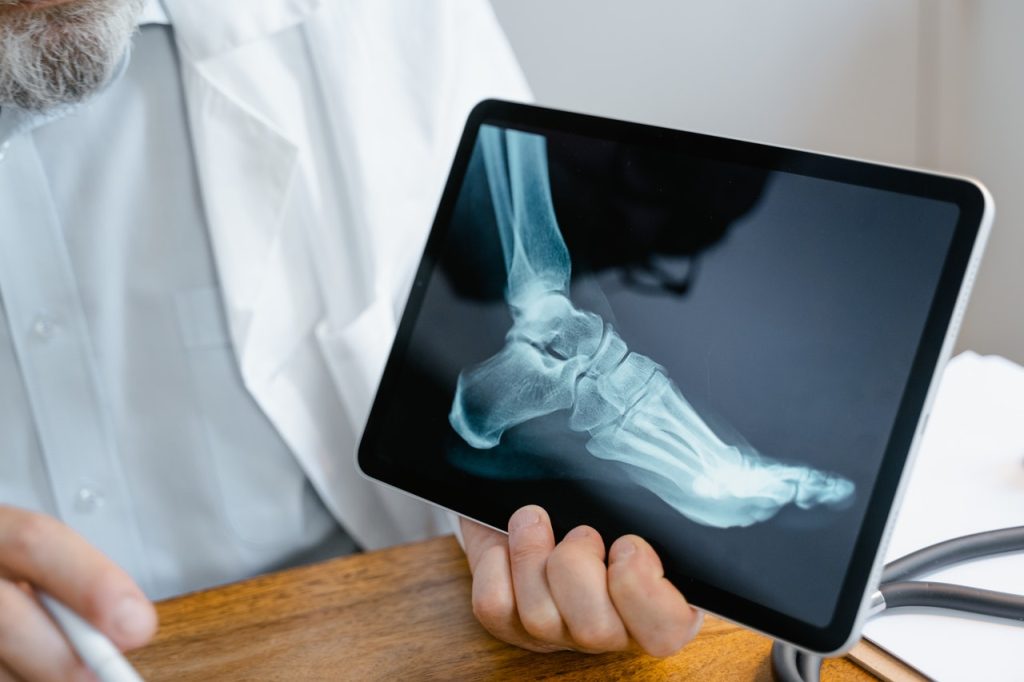
A study published in the Journal of Orthopaedic Research showed that physical activity levels may impact adolescents’ and young adults’ leg alignment during development, as measured by magnetic resonance imaging (MRI) scans.
The study included 57 elite male soccer players compared with 34 male and 34 female controls aged 11–21 years. Outcome measures were the hip knee angle (HKA), medial proximal tibial physeal angle (MPTPhyA), lateral distal femoral physeal angle (LDFPhyA) on full leg length MRI scans, and a physical activity questionnaire score.
Using magnetic resonance imaging scans, physical activity levels were associated with the development of varsus or ‘knock knees’, an abnormal leg alignment, which may represent a physiological adaptation to load where the shin bone meets the knee.
“Our study suggests that abnormal leg alignment, a risk factor for future injury and osteoarthritis, develops in early adolescence due to high activity levels,” said corresponding author Scott Fernquest, DPhil, of the University of Oxford. “Modifying activity levels during this critical period of growth may prevent the development of abnormal leg alignment. We hope our findings lead to further research investigating this possibility.”
A new study has found that teenagers have a hard time discerning between fake and true health messages. Only 48% of the participants trusted accurate health messages (without editorial elements) more than fake ones. Meanwhile, 41% considered fake and true neutral messages equally trustworthy and 11% considered true neutral health messages less trustworthy than fake health messages. The results highlight a need for better training of teenagers to navigate a world where fake health news is so widespread.
Health mis- and disinformation are a serious public health concern, with an increased spread of fake health news on social media platforms in the last few years. Previous research has shown that online health messages are mostly incomplete and inaccurate and have potentially harmful health information. Fake health news can lead to poor health choices, risk-taking behaviour, and loss of trust in health authorities.
“There has been an explosion of misinformation in the area of health during the COVID pandemic,” said principal investigator Dr Radomír Masaryk, of Comenius University.
While most research on message credibility has focused on adults, Dr Masaryk and his colleagues investigated whether teenagers are similarly equipped.
“As adolescents are frequent users of the internet, we usually expect that they already know how to approach and appraise online information, but the opposite seems to be true” Dr Masaryk said.
The researchers found that 41% of teenagers couldn’t tell the difference between true and fake online medical content. Additionally, poor editing of health messages was not perceived as a sign of low trustworthiness. These latest findings were published in Frontiers in Psychology.
Teenagers and the media
As so-called ‘digital natives’, modern teenagers are the world’s most well-connected group, with 71% of the world’s youth using the internet.
Studies have shown that teens increase their risky behaviour in response to positive portrayals of risky behaviour in the media, such as smoking and drinking. On the other hand, online health information that supports information provided by professionals can lead to healthy lifestyle changes, self-care, and treatment compliance.
Teenagers look at the structural features of a website, such as language and appearance, to evaluate online information. For example, authoritative organisations, trusted brands, or websites with business-like language tend to be more trusted.
Previous research on message trustworthiness with adolescents identified five editorial elements that deduced perceived message credibility: superlatives, clickbait, grammar mistakes, authority appeal, and bold typeface. Based on this prior study, the researchers developed a method to evaluate the effects of manipulation with content and format of health online messages on their trustworthiness in an adolescent sample.
They presented 300 secondary school students (aged between 16 and 19 years old) with seven short messages about the health promoting effects of different fruits and vegetables. The messages had different levels: fake message, true neutral message, and true message with editorial elements (superlatives, clickbait, grammar mistakes, authority appeal, and bold typeface). Participants were then asked to rate the message’s trustworthiness.
The participants were able to discern between overtly fake health messages and health messages whether true or slightly changed with editing elements; 48% of participants trusted the true neutral health messages more than the fake ones. However, 41% of participants considered fake and true neutral messages equally trustworthy and 11% considered true neutral health messages less trustworthy than fake health messages.
Clickbait less likely to work
“Putting trust in messages requires identification of fake versus true content,” said Dr Masaryk.
In the case of health messages that seem plausible and reasonable, teenagers could not tell the difference between true neutral health messages and health messages with editorial elements. Teenagers did not seem to decide on the trustworthiness of a message based on editing cues.
“The only version of a health message that was significantly less trusted compared to a true health message was a message with a clickbait headline,” continued Dr Masaryk.
The results highlight a need for better instruction of teenagers to spot editing cues that give away the quality of a piece of information. The authors suggest focusing on health literacy and media literacy training, and skills such as analytical thinking and scientific reasoning.
“Analytical thinking and scientific reasoning are skills that help distinguish false from true health messages,” Dr Masaryk concluded.
A study published today in the American Journal of Preventive Medicine used survey data from US high school students to determine how prevalent vaping is in different sexual orientation, race, and ethnicity groups. They found dramatic differences and surprising patterns in vaping rates across these identity markers.
Vaping is on the rise among teens, with half of all US high school students in having tried vaping at least once and a third of these students vaping regularly.
The study, which uses survey data of over 38 000 high school students from 2015–2019, fills in a wide gap that exists in e-cigarette studies: research on vaping prevalence among young people at the intersections of more than one minoritised identity.
The study uncovered significant differences in the prevalence of current e-cigarette use between lesbian and heterosexual girls when comparing across racial groups.
Current e-cigarette use was higher in Black lesbian girls compared to Black heterosexual girls (18.2% vs 7.1%). The rate was also higher in multiracial girls who identify as lesbian compared to multiracial girls who identify as heterosexual (17.9% vs 11.9%). On the other hand, White lesbian girls were found to be at lower risk of current vaping compared to White heterosexual girls (9.1% vs 16.1%).
Among boys, there were no significant interactions between sexual orientation and race or ethnicity in relation to vaping prevalence.
Previous surveys of gay and lesbian teens suggest that e-cigarette use might be a coping mechanism to deal with the stress of sexual orientation or gender identity-based discrimination or bullying, or a way to bond with others in their social circle, the authors say. However, prior studies have not reported how e-cigarette use prevalence among youth differ at the intersections of sexual orientation, sex, race, and ethnicity.
One possible reason for finding disparities in e-cigarette use at the intersection of sexual orientation and race among girls, but not boys may be due to higher levels of targeted e-cigarette marketing toward queer women of color, the authors say.
Prior research has found that when compared to White heterosexual young women (aged 18-24), bisexual Black and Hispanic women reported higher levels of exposure to ads for tobacco products, while there were no substantial differences in exposure to these ads among young adult men.
“For years, the tobacco industry has targeted marketing toward traditionally marginalised groups, whether in clubs, bars, Pride events, or through magazines,” said co-author Andy Tan, associate professor at the Annenberg School for Communication. “Sexual, racial, and ethnic minority youth are more likely to report engaging with online tobacco advertising including e-cigarette ads on social media.”
Adolescents have more than three times the risk of developing a cannabis addiction than adults, although they may only have the same risk of other mental health problems related to the drug, according to a new study published in the Journal of Psychopharmacology.
The study, led by King’s College London and University College London, found that adolescent cannabis users had the same odds for higher levels of subclinical depression or anxiety than adults cannabis users, nor were they more vulnerable than adult users to cannabis’s associations with psychotic-like symptoms.
These findings build on a separate study by the same teamthat found adolescents were not more vulnerable to associations between chronic cannabis use and cognitive impairment.
Lead author Dr Will Lawn said: “There is a lot of concern about how the developing teenage brain might be more vulnerable to the long-term effects of cannabis, but we did not find evidence to support this general claim.
“Cannabis addiction is a real issue that teenagers should be aware of, as they appear to be much more vulnerable to it than adults.
“On the other hand, the impact that cannabis use has during adolescence on cognitive performance or on depression and anxiety may be weaker than hypothesised.
“But we also replicated previous work that if someone becomes addicted to cannabis, that may increase the severity of subclinical mental health symptoms. Given adolescents are also at a greater risk of experiencing difficulties with mental health than adults, they should be proactively discouraged from regular cannabis use.”
The findings in both papers come from the CannTeenstudy, which is comparing the effects of regular cannabis use among adolescents and adults, while also comparing to age-matched controls (non-users of cannabis), a completely novel design.
The study involved 274 participants, including 76 adolescents (aged 16–17) who used cannabis one to seven days per week, alongside similar numbers of adult (aged 26–29) users, and teenage and adult control (comparison) participants, who all reported their cannabis use over the last 12 weeks and responded to mental health questionnaires. The cannabis users in the study, on average, used it four times per week. The adolescent and adult users were also carefully matched on gender, ethnicity, and type and strength of cannabis.
The researchers found that adolescent cannabis users were three and a half times as likely to develop severe ‘cannabis use disorder’ (ie addiction) than adult users, a finding which is in line with previous studies. Cannabis use disorder is defined by symptoms such as cravings; cannabis use contributing to failures in school or work; heightened tolerance; withdrawal; interpersonal problems caused by or exacerbated by cannabis use; or intending to cut back without success. Oof the teenage cannabis users studied, 50% had six or more cannabis use disorder symptoms, qualifying as severe cannabis use disorder.
Among people of any age, previous studies have found that roughly 9–22% of people who try the drug develop cannabis use disorder, and that risk is higher for people who tried it at a younger age, a finding which has now been robustly replicated.
The researchers say that adolescents might be more vulnerable to cannabis addiction because of factors such as increased disruption to relationships with parents and teachers, a hyper-plastic (malleable) brain and developing endocannabinoid system (the part of the nervous system that THC in cannabis acts upon), and an evolving sense of identity and shifting social life.
Adolescent users had greater odds than adult users or adolescent non-users of developing psychotic-like symptoms, but analysis showed that this is because all adolescents, and all cannabis users, are more likely to newly develop psychotic-like symptoms, rather than a different effect of cannabis for teenagers than adults. Thus, there was no interaction between cannabis use and being an adolescent. The researchers say this fits in with prior evidence that cannabis use may increase the likelihood of developing a psychotic disorder such as schizophrenia, but they warn their study did not investigate the risk of clinical psychosis or schizophrenia.
The researchers found that neither teenage nor adult cannabis users were more likely to develop depressive or anxiety symptoms than non-users. Only the adolescents that have severe cannabis use disorder had worse mental health symptoms, but the researchers caution that the small sample size for this group limits their confidence in this finding.
The separate study found that cannabis users were no more likely to have impaired working memory or impulsivity. Cannabis users were more likely to have poor verbal memory (remembering things said to you); this effect was the same in adults and teenagers, so again there was no adolescent vulnerability. However, the researchers caution that cannabis use could impact school performance during a key developmental stage of life.
The researchers caution that these findings were cross-sectional (only looking at one time point), and that longitudinal analyses of how their participants changed over time are ongoing.
Senior author Professor Val Curran (UCL Clinical Psychopharmacology Unit, UCL Psychology & Language Sciences) said: “Our findings suggest that schools should be teaching pupils more about the risk of addiction to cannabis, which has been neglected in drugs education. Becoming addicted to cannabis is a serious problem in itself, but it can also increase the likelihood of other mental health problems. Teenagers should therefore be informed of their greater risk of addiction.”
Effective anti-vaping advertisements geared to teens have the greatest impact when they emphasise the adverse consequences and harms of vaping e-cigarettes, use negative imagery, and avoid memes, hashtags and other ‘teen-centric’ communication styles, according to a first-of-its-kind study by researchers in the journal Tobacco Control.
The researchers also found that certain messaging content currently being used, especially sweets and flavour-related imagery, increases the appeal of vaping and should be avoided when designing prevention messages.
“E-cigarettes and vaping have become a major public health concern, with nicotine addiction and other harmful outcomes looming large for youth,” said Seth M. Noar, PhD, the paper’s corresponding author and UNC Lineberger professor. “The percentage of teens vaping increased from about 5% in 2011 to over 25% in 2019,” Prof Noar said. “That is an alarming trend, making an understanding of effective vaping prevention messages especially urgent.”
Since the introduction of e-cigarettes, numerous US health departments have created their own anti-vaping messaging geared to teens, as have national health organisations such as the US Food and Drug Administration and Centers for Disease Control and Prevention.
The online study asked 1501 teens to rate seven randomly selected vaping prevention ads from a pool of more than 200 ads. Vaping prevention ads that clearly communicated the health harms of vaping, or compared vaping to cigarette smoking, were comparatively more effective. Neutral or less personally relevant content, such as referencing the environmental impact of vaping or the targeting of youth by the tobacco industry, was less impactful.
“Although we anticipated that vaping prevention ads with neutral or pleasant imagery would not be as effective, we were alarmed to find that flavour-related messages actually heightened the attractiveness of vaping,” said Marcella H. Boynton, PhD, first author
“In retrospect, it stands to reason that by reminding teens about pleasurable aspects of e-cigarettes, even within the context of a prevention ad, we run the risk of doing harm. Notably, we found that flavour-related prevention ad content was associated with vaping appeal among both users and non-users of e-cigarettes, which is a good reminder of how much candy and fruit flavours in e-cigarettes have driven the youth vaping epidemic.”
The researchers hope to next investigate the effects of other types of anti-vaping ads on a wide range of audiences. They also are developing a series of messages and a companion website to test the ability of a text message-driven intervention to reduce youth vaping. In that regard, Prof Noar noted that “We have been developing our own evidence-based messages based on the latest science about the harms of vaping. Our messaging approach has been greatly influenced by the insights generated by this study.”
The study used UNC’s Vaping Prevention Resource, a website designed to provide practitioners, researchers and communities with vaping prevention media content from around the world, as well as strategies and resources for youth vaping prevention. It is the largest repository of free, open-access vaping prevention materials, all available for download at https://vapingprevention.org/.
Per- and polyfluoroalkyl substances (PFAS) and phthalates (two types of endocrine-disrupting chemicals) may be associated with lower areal bone mineral density (aBMD) in teenage boys, according to a new study published in the Journal of Clinical Endocrinology and Metabolism.
Endocrine disrupting chemicals (EDCs) and potential EDCs are mostly man-made found in various materials. By interfering with the body’s endocrine system, endocrine disruptors produce adverse developmental, reproductive, neurological, and immune effects in humans, abnormal growth patterns and neurodevelopmental delays in children. These include per- and polyfluoroalkyl substances (PFAS) are used in non-stick pots and pans, clothing and food packaging, and are increasingly being found in US water supplies. Phthalates are used in medical devices, personal care products, food processing and children’s toys.
“Adolescence is an important time when our bodies build up bone. Almost all US children and adolescents are exposed to PFAS and phthalates, but few studies have looked at how these chemicals could be impacting our bone health,” said Abby F. Fleisch, MD, MPH, of the Maine Medical Center Research Institute and Maine Medical Center. “Our research found an association between certain PFAS and phthalates and reduced bone mineral density in adolescent males. Because bone accrual primarily occurs during adolescence, if replicated, this finding may have implications for lifelong bone health.”
The researchers accessed data on urine and blood samples from 453 boys and 395 girls from the National Health and Nutrition Examination Survey (NHANES). Participants were on average 15.1 years old, and found that higher levels of PFAS and phthalates may be associated with lower aBMD in adolescent males. The same effect was not found in girls; rather a slight increase in aBMD was observed for certain PFAS and phthalates.
The researchers noted that bone mineral density tracks across a lifetime, so if the same results are seen in longitudinal cohorts, this finding may have implications for lifelong skeletal health.
Girls and boys might be more vulnerable to the negative effects of social media use at different times during their adolescence, according to a study in Nature Communications. Girls were found to experience a negative link between social media use and life satisfaction when they are 11–13 years old and boys when they are 14–15 years old. Increased social media use again predicts lower life satisfaction at age 19 years. At other times the link was not statistically significant.
Since its rapid emergence over a decade ago, social media has prompted concern over its possible impacts on wellbeing, especially in younger people.
A team of researchers analysed two UK datasets which included longitudinal data on 17 400 young people aged 10–21 years old. The team looked for a connection between estimated social media use and reported life satisfaction and found key periods of adolescence where social media use was associated with a decrease in life satisfaction 12 months later. Working backwards, the researchers also found that teens who have lower than average life satisfaction use more social media one year later.
In girls, social media use between ages 11 and 13 was associated with a drop in life satisfaction one year later, whereas in boys this occurred between 14 and 15. This suggests that sensitivity to social media use could be linked to developmental changes, possibly changes in the structure of the brain, or to puberty, which occurs later in boys than in girls.
In both females and males, social media use at the age of 19 years was again associated with a decrease in life satisfaction a year later. The researchers suggest that that social changes at this age, such as leaving home, may make people particularly vulnerable.
At other times, the link between social media use and life satisfaction one year later was not statistically significant. Decreases in life satisfaction also predicted increases in social media use one year later; however this does not change across age and or differ between the sexes.
Dr. Amy Orben, the study leader, said: “The link between social media use and mental wellbeing is clearly very complex. Changes within our bodies, such as brain development and puberty, and in our social circumstances appear to make us vulnerable at particular times of our lives.”
Professor Sarah-Jayne Blakemore, a co-author of the study, said: “It’s not possible to pinpoint the precise processes that underlie this vulnerability. Adolescence is a time of cognitive, biological and social change, all of which are intertwined, making it difficult to disentangle one factor from another. For example, it is not yet clear what might be due to developmental changes in hormones or the brain and what might be down to how an individual interacts with their peers.”
Dr. Orben added: “With our findings, rather than debating whether or not the link exists, we can now focus on the periods of our adolescence where we now know we might be most at risk and use this as a springboard to explore some of the really interesting questions.”
A further complication is that social media use can negatively impact wellbeing, but also the reverse is true, previously reported and confirmed by this study.
The researchers stress that these population-level findings do not predict which individuals are most vulnerable.
Professor Rogier Kievit said: “Our statistical modeling examines averages. This means not every young person is going to experience a negative impact on their wellbeing from social media use. For some, it will often have a positive impact. Some might use social media to connect with friends, or cope with a certain problem or because they don’t have anyone to talk to about a particular problem or how they feel—for these individuals, social media can provide valuable support.”
Professor Andrew Przybylski said: “To pinpoint which individuals might be influenced by social media, more research is needed that combines objective behavioural data with biological and cognitive measurements of development. We therefore call on social media companies and other online platforms to do more to share their data with independent scientists, and, if they are unwilling, for governments to show they are serious about tackling online harms by introducing legislation to compel these companies to be more open.”
One in five teens and young adults seeking treatment for substance use may have traits characteristic of a previously unrecognised autism spectrum disorder (ASD), according to a study by researchers at Massachusetts General Hospital (MGH).
The study, published in The American Journal on Addictions, found that among patients with an average age of 18.7 years being treated in an outpatient substance use disorder (SUD) clinic, 20% had elevated scores on the Social Responsiveness Scale-2 (SRS-2), a parent- or teacher-reported measure that has been shown to reliably identify the presence and severity of social impairment among individuals along the autism spectrum, and to distinguish autism from other disorders.
Lead author James McKowen, PhD, said this is the first study examining the prevalence of autistic traits among young people with SUD.
“Usually studies of substance use disorder in autism are done in those with an autism diagnosis already,” he said. “We have looked at this question from the other side, asking how many people with substance use disorder have autism.”
The researchers asked parents of 69 youths reporting for the first time to a specialty outpatient psychiatric SUD clinic to fill out the SRS-2 form. The form is designed to measure an individual’s social awareness, cognition, communication and motivation, and restricted interests and repetitive behaviours.
Though few differences were found between those with elevated autistic trait scores and those with lower, non-autistic scores in terms of demographic or psychiatric factors, adolescents with higher SRS-2 scores had a nearly eightfold higher likelihood of stimulant use disorder, and a fivefold higher risk for opioid use disorder.
According to the researchers, the findings highlight the importance of assessing patients in a SUD treatment setting for autistic traits.
“For clinicians, the big takeaway point from this study is that we need to get better at screening and certainly training in the presence of autism spectrum disorder,” said Dr McKown. Clinicians treat the SUD “but don’t have specialty developmental training, particularly for issues around autism.”
The researchers are developing a free clinical therapy protocol that can help clinicians better address the issues of autistic traits in patients with SUD.
Suicide and motor vehicle traffic accidents are two of the most common forms of death among adolescents. A new study published in JAMA Pediatrics found that adolescents who reported at least one suicide attempt within the last year, compared to those reporting no attempts, were also more likely to report infrequent seat belt use and driving with a drunk driver. There were also over twice as likely to report driving drunk.
The researchers analysed data from over 13 500 U.S. high school students who participated in the 2019 Youth Risk Behavior Survey, and found that 19% of the sample reported suicidal ideation. Texting or e-mailing while driving was the most commonly reported form of risky driving behaviours.
Study lead author Kyle T. Ganson, PhD, assistant professor at the University of Toronto, said: “The findings from this study emphasise the need for mental health support for adolescents experiencing suicidality as a means of increasing safety for themselves and their communities, as accidental injury deaths via car accidents were the leading cause of death among adolescents in 2019.”
“The more severe the suicidality, the stronger the association with risky driving behaviours,” Dr Ganson continued. “Adolescents who reported a suicide injury, such as a poisoning or overdose needing to be treated by a medical professional, had the highest likelihood to report all four risky driving behaviors we examined.”
The researchers stress the importance of the implications their findings have to protect the health and well-being of adolescents. “Health care professionals should consider discussing risky driving behaviours with teens who report suicidality,” said co-author Jason M. Nagata, MD, MSc, assistant professor at the University of California, San Francisco.
A case study details three teenagers with mild or asymptomatic COVID presented with suicidal thoughts, “paranoia-like fears,” delusions and “foggy brain”, which could be explained by anti-neural antibodies – ‘turncoat’ antibodies that may attack brain tissue.
Mounting evidence points to neurological and psychiatric effects of COVID, with a UK study finding a 13% risk of a first-time diagnosis after COVID. The study, published in JAMA Neurology, is the first to look at anti-neural antibodies in paediatric patients previously infected with SARS-CoV-2.
Over five months in 2020, 18 children and teens were hospitalised with confirmed COVID at UCSF Benioff Children’s Hospital San Francisco, three of whom were the patients in the study who underwent neurological evaluations.
The researchers examined the patients’ cerebrospinal fluid (CSF) and found that two of the patients, both of whom had histories of unspecified depression and/or anxiety, had antibodies indicating that SARS-CoV-2 may have invaded the central nervous system. They also had anti-neural antibodies in their CSF, suggesting a rampant immune system accidentally targeting the brain.
The research follows a previous UCSF study that also found a high level of autoantibodies in the cerebrospinal fluid of adult patients with acute COVID, who experienced neurological symptoms, including intractable headaches, seizures and loss of smell.
“It is way too soon to know whether COVID is a common trigger for neuropsychiatric illnesses, but it does seem to be a potent trigger for the development of autoantibodies,” said co-corresponding author Samuel Pleasure, MD, PhD. “It is currently totally unknown whether patients predisposed to neuropsychiatric illnesses are more likely to develop worsened symptoms after COVID, or whether COVID infection can act as an independent trigger.”
Unlike most psychiatric presentations, the three patients in the UCSF study had symptoms with sudden onset and rapid progression, representing a marked change from their baselines, said co-first author Claire Johns, MD. “The patients had significant neuropsychiatric manifestations despite mild respiratory symptoms, suggesting potential short and long-term effects of COVID.”
After hospitalisations lasting weeks and ongoing psychiatric medications, the two UCSF patients, whose cerebrospinal fluid tested positive for SARS-CoV-2 antibodies and anti-neural antibodies, were treated with intravenous immunoglobulin, an immunomodulatory therapy that curbs inflammation in autoimmune disorders. After five days, the first patient had “more organised thoughts, decreased paranoia and improved insight.”
Autoantibodies targeting the protein TCF4 were also found, which has genetic links in some schizophrenia cases. However, “we don’t know that the antibodies are actually interfering with the protein’s function,” said co-corresponding author, Michael R. Wilson, MD, noting that the diagnosis of schizophrenia is based on a constellation of symptoms, not a biomarker. The second patient partially responded to immunotherapy with improved cognition and working memory, but continued to have “impaired mood and cognitive symptoms” six months later. The third patient, with no psychiatric history and without SARS-CoV-2 antibodies or anti-neural antibodies in their cerebrospinal fluid, recovered with psychiatric medications. Their symptoms were attributed to recreational drug use.
In another case study, a 30-year-old patient with mildly symptomatic COVID who presented at a hospital emergency department with delusions, violent outbursts, hyper-anxiety and paranoia was unresponsive to antipsychotic medication but after being diagnosed with possible “autoimmune-mediated psychosis”, responded to intravenous immunoglobulin.
Nonetheless, the researchers agree it’s unlikely that there were pre-existing autoantibodies, and they point to other disorders with psychiatric symptoms, like anti-NMDAR encephalitis syndrome, that are caused by anti-neural antibodies and respond to treatment directed at these rogue antibodies.
The researchers agree that more study is warranted, although Dr Pleasure noted that the rarity of cerebrospinal fluid samples from paediatric patients is a challenge, as they rarely have severe enough COVID to warrant a lumbar puncture.