
Tag: 23/11/26

Hypnosis May Help Relieve Stomach Pain

Photo by Bruce Christianson on Unsplash

Many children and young people experience recurring stomach problems, even though their symptoms cannot be explained by any known disease or abnormality of the gastrointestinal tract. Researchers are now investigating hypnosis as a possible treatment option.

Stomach pain and other gastrointestinal complaints are common among children and adolescents. When symptoms recur over a long period, the cause may be a form of DGBI (Disorders of Gut-Brain Interaction), in which communication between the brain and the gut does not function as it should. This can affect both intestinal motility and the way pain is perceived.

“It means that patients can have quite severe symptoms even when a basic medical assessment does not reveal any underlying organic condition that could explain them,” says Ola Olén, adjunct professor at Karolinska Institutet and senior physician in pediatric gastroenterology at Sachsska children’s and youth hospital, Stockholm.

A common example is IBS (irritable bowel syndrome), which may cause diarrhoea, constipation and abdominal pain. Other patients experience recurrent stomach pain without changes in their bowel habits. What these conditions have in common is that symptoms are often influenced by stress and mental health.

“Poor mental health is a well-established and very strong risk factor, but the relationship between psychological wellbeing and gastrointestinal symptoms works both ways,” says Ola Olén.

Psychological treatments are the most effective

The foundation of treatment is learning more about the gut and what causes the symptoms. According to Ola Olén, this alone is enough to help many patients feel better.

He describes the intestine as a muscular tube that squeezes food forwards. Certain foods produce more gas, and sometimes the process becomes poorly coordinated, causing part of the intestine to balloon out, rather like squeezing the ends of a long balloon.

“The intestinal wall is sensitive to stretching. It can be very painful, but it is completely harmless,” he says.

For those who need additional support, psychological treatments such as CBT (cognitive behavioural therapy) and gut-directed hypnotherapy have shown the best results, according to Ola Olén.

“It may sound strange to treat gastrointestinal symptoms with psychological methods, but I do not think it is. When the brain learns to pay less attention to signals coming from the gut, the symptoms can become less troubling,” he says.

Through CBT, patients can identify fear-related and safety-seeking behaviours that may have developed around their symptoms, and gradually reduce both anxiety and their focus on the symptoms.

However, waiting times are often long, and there is a need for more accessible treatments for children and young people. One such approach currently being investigated by the research team is hypnosis.

Hypnosis is being tested in an ongoing project

“This is not the kind of hypnosis people may have seen on television, where a hypnotist gets people to say or do strange things against their will. Patients remain in control throughout. The aim is to enter a deeply relaxed state in which different visualisations and thought patterns can be explored,” explains Tea Soini, paediatrician and postdoctoral researcher leading the project.

Patients listen to audio recordings containing relaxation exercises and guided imagery designed to encourage new ways of thinking about the gut.

“One example is travelling down a long, winding waterslide where they can control the speed themselves and the journey moves smoothly and comfortably forwards. Another is imagining the stomach as a hot-air balloon where the amount of air can be regulated,” says Tea Soini.

The hope is that children will later be able to reconnect with this sense of calm and these new ways of thinking in everyday life.

“Signals between the gut and the brain travel in both directions, and we believe the treatment changes the way the brain influences the gut. As stress levels decrease, symptoms improve,” says Tea Soini.

The method is already used in clinical practice in the Netherlands and has shown promising results there, according to Tea Soini. She and her colleagues have now evaluated it in a pilot study involving 32 Swedish children and adolescents with conditions such as IBS or recurrent abdominal pain.

After listening to the audio recordings at home for around 15 minutes a day over a twelve-week period, 40 per cent reported a clinically meaningful improvement in their symptoms. The study did not include a control group and the findings should therefore be interpreted with caution, but the researchers consider the method sufficiently promising to warrant further investigation.

The research team is now conducting a larger study, the PIPPI project, in which hypnosis is being compared with CBT. The 300 participants are randomly assigned to the different treatments, allowing researchers to investigate whether the methods are equally effective or whether some children benefit more from one treatment than the other.

“If we can show that hypnosis works well enough, it could become an easily accessible treatment option that children and young people can use at home, regardless of where they live in the country,” says Tea Soini.

Text: Ola Danielsson, first published in Medicinsk Vetenskap nr 3 2026

Source: Karolinska Institutet

Why Older People Take Longer to Recover Muscle Strength

Photo by Mikhail Nilov

A class of fatty acid molecules called prostaglandins may be responsible for why older adults often fail to recover muscle strength after illness or injury, while young adults quickly bounce back, a new study has found. Produced by non-dividing “zombie cells” called senescent cells, excessive prostaglandins promote muscle atrophy.

In mice, low-dose ibuprofen reduced prostaglandins and the number of senescent cells, helping older muscles recover more quickly and completely. If the results hold true in people, existing medications that target prostaglandins could be a powerful tool to promote muscle recovery in older adults, prevent further injury and disability, and improve quality of life.

“The end goal is to help older adults regain muscle mass and strength after a period of inactivity, like bed rest following hip surgery, so a temporary setback doesn’t become a lasting loss of independence,” says Paul-Emile Bourrant, PhD, first author on the study, who did the research as a predoctoral researcher at University of Utah Health. 

The results are published in Aging Cell.

An alarm that doesn’t turn off

In a mouse model of muscle recovery, young mice rapidly regained their original strength after a period of muscle disuse, while old mice didn’t fully recover. But a low dose of ibuprofen helped old mice bounce back faster, the study found.

Differences in recovery between old and young mice correlated with dramatically different levels of specific kinds of fatty acid molecules within muscles. A specific group of molecules called prostaglandins, which help regulate inflammation, stood out as especially distinct. In young individuals, a brief spike in prostaglandins helps kickstart muscle repair. It’s like an alarm that signals that the tissue is stressed and needs help. But in older individuals, that alarm never turns off.

The same pattern happens in older people recovering from muscle disuse, the researchers found. Prostaglandins stay high for much longer. The researchers suspect this keeps muscles in an inflamed state, preventing full recovery.

“Prostaglandins are important for the healing of muscle, but when they’re heightened and sustained, you get a chronic inflammatory response and the cells get stressed,” explains Micah Drummond, PhD, professor of pathology at U of U Health and senior author on the study.

Ibuprofen appears to turn off the overactive alarm. The common over-the-counter medication turned down the pathway that produces prostaglandins, helping older mice regain strength and muscle mass.

“Zombie cells” slow recovery

The source of the excessive prostaglandins? “Zombie cells,” Bourrant says. As people age, their cells increasingly transition to a state called cellular senescence, in which they stop dividing and start producing molecules that can cause various aging-associated problems. In aging muscle, senescent immune cells produce excessive prostaglandins, preventing muscles from fully recovering. Excessive prostaglandins can also trigger healthy cells to become senescent, kicking off a harmful feedback loop.

In cell culture experiments, the researchers found that reducing prostaglandin production from these ‘zombie cells’ helped preserve muscle cell size.

Steps to faster recovery

The researchers hope that their results can ultimately lead to therapies that help older adults bounce back quickly and completely after injury or illness. The fact that ibuprofen, an existing over-the-counter drug, had a positive effect on muscle function is promising. The team hopes that more specific inhibitors of the pathway that produces prostaglandins could be even more effective.

Because prostaglandins are an important part of the early healing process, timing and dosage will be important considerations for future therapies. A low dose of ibuprofen improved muscle recovery in older mice, but a high dose – which may have interfered with the necessary early spike of prostaglandin signaling – didn’t help. 

“We’ve added a promising new piece to the puzzle of why older adults struggle to regain muscle mass and strength after a period of inactivity,” Bourrant says. “We don’t have the full picture yet, and that’s what makes science exciting. Each discovery brings us closer to helping people stay strong and independent as they age.”

The results are published in Aging Cell as “Excessive COX-Prostaglandin Signaling Promotes Cellular Senescence and Impaired Skeletal Muscle Recovery in Aging.”

Source: University of Utah Health

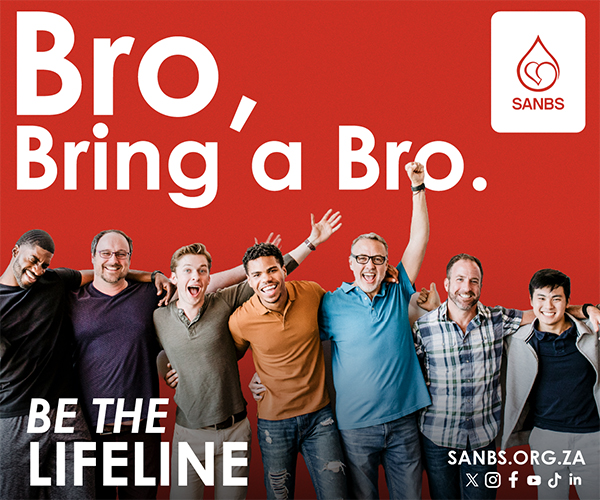
This Movember, SANBS Encourages Men to Bring a Friend and Donate Blood

Johannesburg, 20 November 2026 – This Movember, the South African National Blood Service (SANBS) has a challenge for the guys: check in on your health, look out for your mates and, while you’re at it, bring a bro along to donate blood.

Known for its moustaches and conversations about men’s health, Movember is also a reminder that looking after ourselves and one another goes beyond growing facial hair. Through its Bro, Bring a Bro initiative, SANBS is encouraging men to turn a simple catch-up with a friend into an opportunity to make a lifesaving difference.

After all, what’s better than doing something good with a good friend?

The idea is simple: if you’re already a blood donor, bring another man along when you next visit a donor centre. It could be your brother, best mate, work colleague, gym partner or that friend who has always said he should donate blood but hasn’t quite got around to it.

And if you’ve never donated before, having a familiar face beside you can make that first visit a little less daunting. No need to go it alone – your bro has your back!

While Movember encourages men to take their health seriously, it also creates an opportunity to think about the many ways men can positively influence the wellbeing of others. For SANBS, one of those ways is through blood donation – a simple act of generosity that can make an extraordinary difference to someone in need.

“Every day, patients need blood for reasons that have nothing to do with the calendar. A mother experiencing complications during childbirth, someone recovering from a serious accident, a patient undergoing cancer treatment or a person preparing for surgery may all depend on the generosity of blood donors. A single donation can save up to three lives,” says Sifiso Khoza, Reputation and Communications Manager at SANBS.

That’s potentially three lives helped by one decision to donate. Not a bad result for around 30 minutes of your day!

The message is particularly important as South Africans begin looking forward to the festive season. Holiday plans, road trips and celebrations do not mean hospitals close their doors or that patients stop needing transfusions. A consistent supply of donated blood remains essential throughout November, December and beyond.

SANBS is therefore encouraging men to make blood donation part of their plans. Whether you’re a regular donor or considering donating for the first time, inviting a friend along is a great way to grow the donor community and encourage more men to get involved.

And no, you don’t need a moustache to take part! You simply need to meet the eligibility requirements for blood donation and be ready to make a difference.

This Movember, make the commitment to look after yourself, check in on your mates and do something meaningful together. Challenge your bro, book the time and make your next catch-up count.

Bro, Bring a Bro. Because saving lives is better when we do it together.

To find your nearest SANBS donor centre or an upcoming mobile blood drive, contact SANBS on 0800 11 90 31 or visit www.sanbs.org.za

Be the Lifeline. Donate today.

Stay connected with SANBS on social media:

  • X (@theSANBS)
  • Facebook (@SANBS)
  • Instagram (@thesanbs)
  • TikTok (@thesanbs)

How ‘People Power’ and Business Transformed Medicine, but Created a Whole New Set of Risks

Christine Mary Hallinan, The University of Melbourne

Photo by Etactics Inc on Unsplash

There’s been a shift in how some medicines and therapeutic products are accessed and used.

Medicinal cannabis, glucagon-like peptide-1 (GLP-1) weight-loss medicines, ketamine, psychedelics, testosterone and peptides illustrate this shift.

Increasingly, consumer demand, telehealth, social media, wellness influencers and commercial models are shaping how people learn about and access these treatments.

This is different from the traditional doctor-led model, where medicines are generally tested, approved and included in clinical guidelines.

Now we’re seeing what happens when strong consumer demand collides with commercial interests.

There are benefits for improved access to certain medicines, if those medicines are safe, effective, and prescribed and monitored with proper oversight.

But, as we’re seeing, this is not always the case.

When demand meets innovation

A recent example is the launch of LillyDirect, Eli Lilly’s new Australian platform. The platform currently focuses on Mounjaro (tirzepatide), a drug used to treat type 2 diabetes and manage weight. Patients with an electronic prescription can upload it to the platform, have the medicine dispensed through an online pharmacy and delivered directly to their door.

Eli Lilly argues the model will improve affordability and convenience. But doctors and pharmacists have raised concerns about the lack of continuity of care and what happens when prescribing, dispensing and ongoing clinical care become increasingly separated.

It is a timely example of what happens when strong consumer demand meets commercial innovation.Ketamine is another example. It has long been used as an anaesthetic. But its use for mental health conditions has expanded. This includes via private clinics offering ketamine treatment.

This creates questions about who is providing ketamine treatment, how patients are assessed and monitored, and whether their usual doctors know about their treatment.

These concerns don’t just apply to ketamine. They relate to other drugs when the uptake moves faster than the evidence to say they are safe and effective, and the systems needed to monitor their safety.

Patients may use a drug before we know enough about whether it works, whether there are longer-term harms, whether the drug is right for them, how it interacts with other drugs they might be taking, if it is being monitored, or when treatment should stop.

The rise of people power

Patient demand is understandable, particularly where existing treatments have not worked, are poorly tolerated, difficult to access, or patients feel they have not been heard.

Greater access to health information can empower patients and increase their participation in health-care decisions. But access to more information does not necessarily mean access to better information.

Patients are also prepared to advocate for their own treatment. That agency is important, but it needs to sit within a system that can assess benefit, harm and appropriate use.Stigma can also influence where people seek care. This is particularly evident with medicinal cannabis. But this also affects people with obesity, mental health conditions, menopause, sexual health concerns, hair loss and erectile dysfunction.

People who feel embarrassed, judged or who have had their concerns previously dismissed may be reluctant to raise them with their usual GP or seek further care. Instead, they may turn to online providers.

But patient demand should not substitute for evidence, safety monitoring or clinical oversight.

Fragmented care

Treatment may start through telehealth, an online platform or a commercial clinic. But patients do not stop needing their usual health care. They may return to their GP with side effects, potential drug interactions, requests for pathology (such as blood tests), monitoring, mental health concerns or questions about whether treatment should continue.

This can leave GPs managing the consequences of treatment they did not initiate, having limited visibility of the treatment their patient is receiving elsewhere. When treatment is initiated elsewhere, there is often no record of this on the GP electronic medical records.

If the treating GP cannot see what has been prescribed or dispensed, it is harder to know whether a treatment is appropriate, identify potential drug interactions and adverse effects, or recognise other safety concerns.

Medicinal cannabis illustrates this problem particularly clearly. National medicinal cannabis approval data show rapid growth in access, including for mental health conditions, chronic pain and sleep disorders.

But these data cannot tell us how many individual patients are being treated, what is actually dispensed or what happens to patients after treatment begins.

Other drugs have specific issues

Peptides are more complex. Some are increasingly promoted for wellness, anti-ageing, performance and body image, despite limited evidence about their benefits and risks. For consumers, it can be difficult to tell the difference between a promising new therapy and a commercial claim that has moved ahead of the science.

Testosterone shows how treatment can also become tied to self-optimisation and body image. Social media marketing promotes treatment for low testosterone (“low T”) through messages about restoring youthfulness, muscularity, sexual performance and becoming a better version of yourself. This marketing also directs consumers towards testing, treatment and commercial clinics.GLP-1 medicines are different because there is strong evidence they work for conditions such as diabetes and obesity.

But interest is rapidly expanding into other areas, including substance use disorders and Alzheimer’s disease, even though these medicines are not currently approved for many of these uses. This expansion is occurring alongside strong consumer demand, social media interest, and the growth of private and online prescribing models.

Psychedelics raise similar issues around strong public interest, advocacy and commercial activity. These also require clear safeguards around who should receive treatment, in which setting and how this should be monitored. Commercial interests also need to be considered. Where the same business attracts the patient, prescribes, arranges dispensing and provides follow-up, there are legitimate questions about financial incentives to prescribe and clinical independence.

Patients can demand more than access

Getting access to medicines right is not just about making them available. It also means knowing when a treatment should not be started or when it should be stopped.

This changes the conversation about consumer advocacy.

Advocacy does not have to be about access alone. Patients can demand better evidence, better monitoring and safer care – from a health system that integrates their treatment choices with their everyday health care.

Equity matters too. Increased consumer access does not necessarily mean equitable access. Many of these treatments are privately funded, so access may depend heavily on the ability to pay.

What can we do?

One solution is to make better use of the health data we already collect. GP electronic medical records could help identify patients already using rapidly adopted treatments, track other medicines and outcomes, and identify gaps in monitoring and possible side effects. These medical records could help connect patients to clinical trials. This way, treatments already being used in the community contribute to the evidence needed to determine whether they are effective and safe.

When demand and innovation move faster than evidence and oversight, access to medicines cannot be the only measure of progress. Access must also be appropriate, evidence-based and safe. That means making these treatments more visible across the health system, strengthening safety monitoring, and better connecting them with a patient’s usual GP and the rest of their health care.

Innovation may continue to move quickly. Our systems for generating evidence and protecting patients need to move just as fast.

Christine Mary Hallinan, Senior Research Fellow, Department of General Practice and Primary Care, Faculty of Medicine, Dentistry and Health Sciences, The University of Melbourne

This article is republished from The Conversation under a Creative Commons license. Read the original article.