Tag: 2/9/26

Meta Faces Multi-billion US Settlement, Spotlighting SA’s Child Safety Gaps

Photo by Emily Wade on Unsplash

Meta Platforms, the parent company of Facebook and Instagram, has agreed to a record-breaking $18-billion  (over  R300-billion)  settlement  in  the  United  States following legal action alleging that its platforms contributed to harm among children and teenagers and failed to do enough to protect young users. The settlement, which involves almost all U.S. states, mandates specific safeguards including default daily limits, nighttime lockouts, and the disabling of notifications during school hours.

While Meta has denied any wrongdoing, the settlement has intensified an already urgent global debate about children’s digital safety. Around the world, governments are taking action, from Australia’s nationwide ban on under-16s to Brazil’s parental consent requirements, the UK’s proposed restrictions, and similar measures being considered in many other countries.

However, as governments and courts grapple with how platforms should protect young users, Pretoria based, Professor Anke de Beer believes the solution must start earlier and closer to home: with education. She is the founder of the Smart Device Licence, a pioneering South African programme designed to teach children and teenagers how to use smart devices safely, responsibly and with greater awareness of the risks they may encounter online before they are given unrestricted access.

“When you give your child a smart device, you don’t just give them access to the world. You give the world access to your child,” says Prof Anke. “The Smart Device Licence is about turning that access into a valuable skill for navigating the digital world responsibly.”

Why this matters now

Children are entering the digital world at increasingly young ages, often gaining access to social media, online gaming, messaging platforms and other digital environments before they fully understand the risks involved. Concerns around cyberbullying, inappropriate content, privacy, online exploitation, excessive device use and digital addiction have made children’s online safety an increasingly important issue for families, schools and policymakers. The latest record action against Meta is one of several developments internationally placing greater scrutiny on how technology platforms operate.

But platform regulation and landmark settlements are only part of the solution. Children also need to know how to navigate the digital world before they are given a device.​

A personal mission becomes a national programme

Prof Anke’s journey from housewife to academic and activist was sparked by a deeply personal family experience involving gaming addiction and its devastating consequences. The experience opened her eyes to the potential risks of unrestricted digital access and the importance of equipping children with the knowledge to make safer choices. What began as a family’s fight for survival became a broader mission to help protect South Africa’s young people.

The Smart Device Licence was developed with input from professionals working across education, psychology and child protection, with the aim of providing children with practical skills they can use in their everyday digital lives, filling the gap left by slow-moving regulation and corporate settlements.

How the Smart Device Licence works

The Smart Device Licence is an interactive e-learning programme covering:

  • Digital citizenship
  • Privacy protection
  • Cyberbullying recognition
  •  Responsible social media use
  • Healthy device habits
  • Online safety
  • Understanding digital risks

There are two levels:

Junior Licence: Designed for primary school learners, focusing on healthy device habits, responsible digital behaviour and avoiding harmful online content.

Senior Licence: Designed for high school learners, covering privacy, adult content, sharing personal images or messages, cyberbullying, responsible online communication and the psychology of digital addiction. Learners complete modules, quizzes and practical exercises. Those who complete the programme receive an official Smart Device Licence certificate. Schools including Rabboni Christian School in Brits are already using the platform. The programme is voluntary. The licence is an educational milestone, not a legal requirement.

Expanding access

​The Smart Device Licence is available to schools, parents and learners across South Africa.​

“The conversation about children’s digital safety is becoming impossible to ignore,” says Prof Anke. “But we should not wait for a court case, legislation or a crisis, whether in the US or here at home, before we prepare our children. The best time to teach a child how to use a smart device responsibly is before they receive one.”

The licence fee is R115, including VAT, providing access to the programme’s modules, exercises and quizzes. Content will be updated regularly to reflect emerging technologies, digital trends and relevant developments.

Research Uncovers How SGLT2 Inhibitors Restore Power in Heart Failure

A study identifies PANK1 as a previously unknown target of SGLT2 inhibitors, revealing how the medications boost energy production and improve heart function.

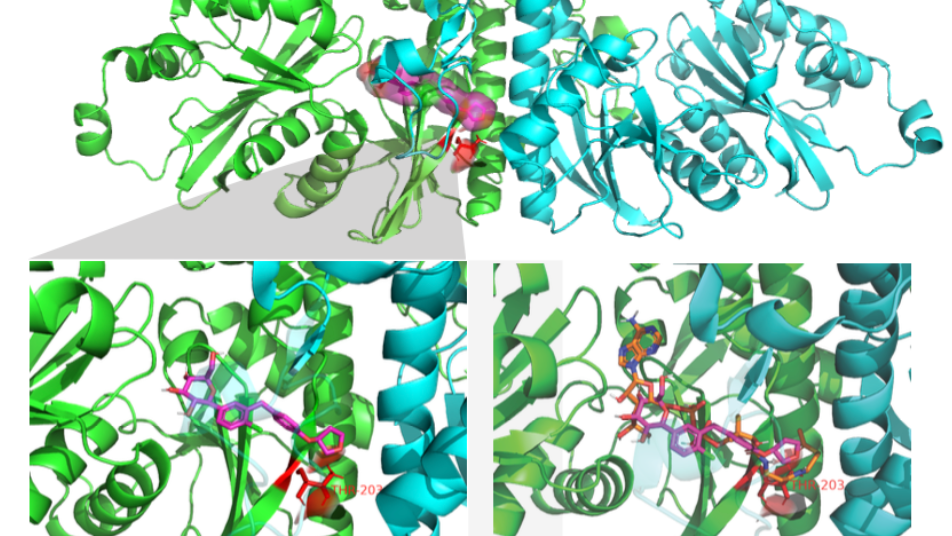
Top: ribbon model of PANK1 dimer. Bottom left: zoom-in of pantothenate binding to PANK1. Bottom right: super-imposed binding of AcCoA, showing extension into the PANK1 enzymatic pocket. Credit: University of Pennsylvania

Researchers have discovered that SGLT2 inhibitors, a class of drugs originally developed to treat diabetes and now widely used for heart failure, work by activating a key enzyme that helps heart cells produce and use energy more efficiently. The study, published in Science, potentially solves a longstanding gap in knowledge about these drugs and opening the door to potential new treatments for heart failure.

The study, led by researchers in the Perelman School of Medicine at the University of Pennsylvania, found that SGLT2 inhibitors directly activate an enzyme called PANK1 in heart cells. This activation boosts production of coenzyme A (CoA), a molecule essential for converting nutrients into energy. Researchers found that increasing CoA production improved the ability of human heart cells to contract and relax, two critical functions that are impaired in heart failure.

“Our findings suggest these drugs are helping the failing heart restore its energy-producing capacity,” said senior author Zoltan Arany, MD, PhD, the Samuel Bellet Professor of Cardiology and chair of Physiology at Penn Medicine. “We identified PANK1 as a direct target of these medications and found that activating this pathway makes heart cells work better. This may explain many of the remarkable benefits patients experience with these drugs.”

Figuring out why it works

For years, physicians have known that SGLT2 inhibitors significantly reduce hospitalisations and deaths among heart failure patients, but have struggled to explain exactly why, because the drugs were designed to target the SGLT2 protein which is found in the kidneys, not the heart.

Using human heart tissue from transplant recipients and donors, the researchers found that SGLT2 inhibitors increased the heart’s ability to use multiple fuel sources, including sugars, fats, amino acids, and ketones. The drugs also increased levels of CoA, which plays a central role in cellular energy production. To identify how that happened, the team traced the effect back to PANK1, an enzyme that regulates the first and most important step in CoA production. The researchers demonstrated that the drugs physically bind to PANK1 and activate it.

“The evidence was especially compelling when we found that activating PANK1 alone reproduced many of the benefits of the drugs, while blocking the pathway largely eliminated those benefits,” said Nicholas Forelli, MD, an internal medicine resident in the Arany lab and co-author of the study. “We cannot completely rule out other contributing mechanisms, but the data strongly support PANK1 as a major driver.”

The discovery may also help explain why SGLT2 inhibitors often begin benefiting heart failure patients within days of starting treatment.

Exciting possibilities ahead

Despite years of research into these medications, the role of PANK1 had gone unnoticed. “Honestly, no one thought to look,” Arany said. “Researchers knew these drugs were doing something important in the heart, but the target responsible for those effects had remained elusive.”

The findings could have important implications for future drug development. While SGLT2 inhibitors are highly effective, they can cause side effects such as urinary tract infections, dehydration, and, in rare cases, diabetic ketoacidosis.  “One of the most exciting possibilities is developing drugs that directly target PANK1,” Arany said. “That could allow us to capture the heart benefits while potentially avoiding some of the side effects associated with current therapies. We’re actively working on that now.”

Source: Penn Medicine

New ESC Guidelines Recommend all Heart Disease Patients are Tested for Kidney Disease

Chronic kidney disease (CKD). Credit: Scientific Animations CC4.0

The first-ever European Society of Cardiology Guidelines on the management of cardiovascular disease and chronic kidney disease have been developed in collaboration with the European Renal Association. The new guidelines were published online in the European Heart Journal [1] and presented at ESC Congress 2026 on 29 August.[2] 

Chronic kidney disease (CKD) is defined as the presence of abnormalities of kidney structure or function present for at least 3 months, with implications for health.[4] It has been estimated there are around 100 million people in Europe with CKD,[5] all of whom are at increased risk of a wide range of cardiovascular diseases (CVD) as a result of their kidney problem. 

“The disability and lifetime lost to each disease are profound, but CKD can accelerate CVD and vice versa, resulting in cardiovascular events and the need for dialysis much earlier in life,” said Task Force Chair, Associate Professor Kevin Damman from University Medical Centre Groningen, Netherlands. “The good news is that there have been major advances over the last few years, which mean there are now several simple treatments that can substantially lower the risk of both cardiovascular and kidney complications.” 

Task Force Chair, Professor William Herrington from the University of Oxford, UK, noted: “Many patients with CKD are treated by the cardiology community and the new ESC Guidelines aim to increase the use of kidney function and urine albumin testing in patients with CVD. With improved screening, more at-risk patients can be identified and the most appropriate treatments for both CKD and CVD can be prescribed.” 

The Task Force developed the ‘STAMP on CKD’ acronym, which stands for: Screen, Triage, Address CKD Risk, Modify CVD management and Plan health services. The first step is screening all patients with CVD at diagnosis for CKD using blood and urine tests (estimated glomerular filtration rate from blood creatinine plus urine albumin-to-creatinine ratio). A key message on triage is the accurate assessment of risk of kidney failure and accurate assessment of CVD risk using validated scoring systems that incorporate kidney function. 

Addressing risk means ensuring the early use of proven cost-effective risk-modifying therapies that have been shown to slow CKD progression and reduce the risk of cardiovascular events. “Early use of drugs called RAS inhibitors and SGLT2 inhibitors alongside statin-based therapy are particularly important and effective,” explained Associate Prof. Damman. 

The guidelines highlight key areas where modifications to CVD management are needed in the context of CKD, including recommendations for medications that are permitted in patients who may not be able to clear standard treatments from their bodies due to decreased kidney function.  

Finally, appropriate planning of health services ensures that services are set up to recognise high-risk patients and provide timely access to care from cardiologists and nephrologists. “Active and efficient communication between specialties is often necessary due to the complexities associated with CKD,” noted Prof. Herrington. “Engagement of patients and family/caregivers in the multidisciplinary care process also helps to ensure patients’ priorities are met, improve their experience and promote patient-centred care.” A version of the new guidelines for patients aims to give individuals the knowledge and confidence to be involved in shared decision-making with healthcare providers.[3] 

The Task Force Chairs concluded, “CVD and CKD are major burdens on patients, healthcare systems and society. The key messages in these guidelines should be noted by all relevant healthcare stakeholders and policymakers, and research planned to fill several gaps in the evidence. Raising awareness will help realise the hope that the guidelines will lead to important individual and societal improvement for those with, or at risk of, CVD and CKD.” 

References

[1] 2026 ESC Guidelines for the management of cardiovascular disease and chronic kidney disease. Eur Heart J. 2026. doi:10.1093/eurheartj/ehag098. 

[2] 2026 ESC Guidelines for the Management of Cardiovascular Disease and Chronic Kidney Disease presented at ESC Congress 2026 on 29 August from 13:45 to 15:00 in Munich, the Main Auditorium (Hall B3). 

[3] ESC Guidelines for the management of cardiovascular disease and chronic kidney disease: What patients need to know. Available on the Patient Versions of ESC Guidelines webpage

[4] Kidney Disease Improving Global Outcomes CKD Work Group. KDIGO 2024 Clinical Practice Guideline for the Evaluation and Management of Chronic Kidney Disease. Kidney Int. 2024;105:S117–S314.  

[5] GBD Chronic Kidney Disease Collaboration. Global, regional, and national burden of chronic kidney disease, 1990-2017: a systematic analysis for the Global Burden of Disease Study 2017. Lancet. 2020;395:709–733. 

Source: European Society of Cardiology

Neuroscience Reports of Sex-dependent Effects Often Lack Evidence

Photo by Daniil Onischenko on Unsplash

Studies in the behavioural and brain sciences reporting a major sex-dependent effect – that a drug, treatment or other intervention is more effective in one sex than another – are supported by appropriate evidence less than 25% of the time, an analysis finds.

The Proceedings of the National Academy of Sciences (PNAS) published the analysis of 200 recent articles with a claim of a sex- or gender-dependent effect in the title. The articles included studies on human and non-human subjects and spanned six brain-related research areas: behavioural sciences, clinical neurology, neurosciences, psychiatry, psychology and substance abuse.

“We found that studies in psychology had the highest rate of appropriate evidence – 39% of the published papers included statistical evidence to support the claim of a sex difference,” says Donna Maney, corresponding author of the study and professor of psychology at Emory University. “Research in neuroscience had the lowest rate of appropriate evidence, at just 18%.”

The low rate of appropriate evidence in neuroscience is particularly troubling, Maney says. She notes that claims of sex-dependent effects are more numerous in neuroscience, where such reports are currently being published at triple the rate seen in any other field.

“The high number of reports seen in neuroscience may be due to bias – neuroscientists looking harder for sex differences than other scientists,” Maney says. “But most current evidence shows that the brain is one of the least sexually differentiated organs in the body.”

Maney’s team was particularly alarmed by the number of calls for changes in clinical approaches that were based on faulty analyses. Many of the 200 articles they reviewed, for example, called for sex-specific approaches to suicide prevention, stress-related psychiatric disorders, substance-use disorder and psychopathy – all without providing statistical comparisons of effects across sex.

First author of the PNAS paper is Madeline Olivier, who did the work as an Emory student and has since graduated with a BS in psychology. 
 

Summary of findings

  • In 24% of the 200 papers, the effect compared statistically across sex and the results supported the claim of a sex-dependent effect.
  • In 9%, the researchers tested for a sex difference, but the results were missing.
  • In 9.5%, the sex difference in the effect was reported as not statistically significant, which was incompatible with the claim in the title.
  • In 57.5%, the sexes were not statistically compared — the researchers did not test the claim in the title at all.


A logical error 

Maney is a neuroscientist who studies hormonal and genetic influences on behaviour. For more than a decade, she has also focused on investigating how sex differences are tested for and reported in biomedical research. 

One issue she emphasises is that, instead of comparing the sexes directly with each other, researchers often test for the effect in each sex separately. Although it might make sense on the surface, the practice reduces the number of subjects to the point where a real effect can be missed. If the effect is detected in one sex but missed in the other, researchers are vulnerable to a logical error: that the effect differs between the sexes, when they have not been directly compared. 

To show that the sexes differ, females and males must be directly compared with each other in a statistical test. Most of the articles analysed by Maney and colleagues for the current PNAS paper did not do that. Instead, the researchers relied on the individual, within-sex tests – an invalid way of comparing the sexes that produces the illusion of a difference up to 50% of the time. “It’s no better than flipping a coin,” Maney says.

It’s also easy to miss true sex differences with a subgroup approach. For example, men and women could respond differently to a treatment but when the sample is divided in half and tested separately, the effect could be missed in both.

Maney cites the classic example of a large clinical trial showing that aspirin significantly reduced mortality from heart attacks. To illustrate the problem with the subgroup error, cardiologist Peter Sleight reanalysed the data by dividing participants into subgroups according to their astrological signs. Once the trial was split into 12 zodiac groups, the benefit of aspirin was no longer statistically detectable among the Libras and Geminis.

Sleight’s “findings” demonstrated how dividing a large group into subgroups can make a real effect disappear in some of the groups, even when the treatment is clearly beneficial. 

“This problem is not new,” says Maney. “I made the error myself until I learned about it. “Many researchers don’t receive training in how to test whether an effect differs between two groups.”
 

A simple solution

To provide evidence that an effect differs by sex, the effect must be statistically compared between males and females, Maney emphasises. Only that approach can show sufficient evidence for a sex difference.

She designed an open-source tool, housed on the web at sexdifference.org, to help guide researchers to verify sex-specific effects.

Maney’s interests extend beyond statistical sex comparisons.

“Ultimately,” she says, “I would like to see researchers not treat sex as the most important variable in a biomedical study. Variation in participants’ weights, ages or habits, for example, likely explains variation in the effect of a treatment better than which sex category they are in.”

Original written by Carol Clark

Source: Emory University

Memory Decline Starts Earlier than You Think, New Research Suggests

Researchers explore brain patterns through different ages to pinpoint where memories get mixed up

Photo by Fakurian Design on Unsplash

Memory loss is usually thought of as something to address as a person ages. Slip-ups like forgetting someone’s name or recognising a familiar face but not remembering where you know them from are often viewed as issues that arise later in life.

New research by a team at Binghamton University reveals why memory shifts as we age – and that shift happens earlier in life than most people think, potentially at middle age.

“This is one of a growing list of studies highlighting that the period of middle age is really important for memory functioning and shouldn’t be ignored. For a long time, most studies have been focused on young adults versus older adults,” said Binghamton Associate Professor of Psychology Ian McDonough, co-author of a new study published in Cerebral Cortex.

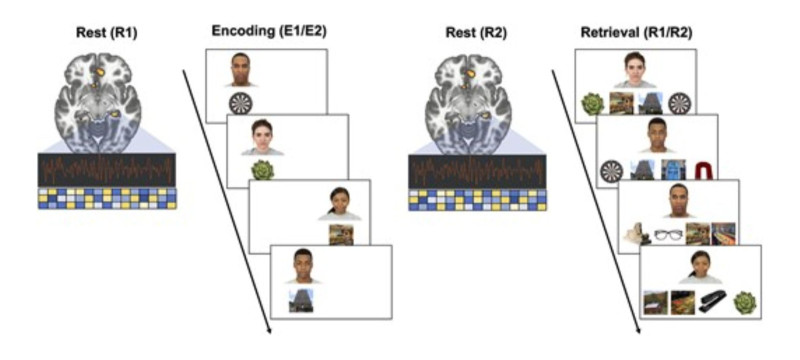
McDonough and postdoctoral associate Destaw Mekbib tested a group of approximately 60 adults ages 18 to 74 by showing them faces paired with various objects and scenes. After a five-minute rest period, participants completed a memory test where they were prompted to pick the correct object or scene for each face – all while an MRI machine took readings of their hippocampal activity.

McDonough said the test mirrors how memories are formed. First, the brain records the new memory. Then, over a short period, the hippocampus replays the memory to stabilise it. Later, the brain retrieves the memory when needed.

The question the researchers had, however, was how aging affects the continuity of the information passing between those stages.

“We’re seeing a big decline in memory accuracy from the 20- to 30-year-old age group, to people in their 50s. Some of these hippocampal processes already start to decline by midlife,” McDonough said. “That suggests middle age is really a transition point.”

 Image Credit: Figure 1. Overview of the experiment. Reprinted from Mekbib and McDonough (2026), Cerebral Cortex, 36(7), bhag114, https://doi.org/10.1093/cercor/bhag114, used under CC BY-NC 4.0..

In the context of this research, middle-aged participants often paired a face with the wrong object or scene. They had recalled that they had seen it before, but not which pairing was correct, almost as an “I’ve seen something like this before” phenomenon. 

“It becomes hard because now all of these images on the screen during the test seem familiar,” McDonough said. “They know they’ve seen all of these before, but now what they have to remember is that specific link. And that’s where, as people age, they start to really show these errors.”

In comparing how younger and older people access memories, the researchers assumed that older adults would show weaker hippocampal activity, but this wasn’t exactly the case. What they did find was more interesting. When young adults made mistakes in the memory tests, it was because their brains were not activating the original memory patterns, which was expected.

However, when older adults made mistakes, their brains showed strong reactivation of those memory patterns. 

“The more they reactivate the hippocampus that’s consistent with encoding, the more likely they are to make these memory errors,” McDonough said. “So instead of that reactivation pattern being associated with better memory, it’s associated with those errors.”

McDonough said it’s not yet known why older adults can show strong hippocampal reactivation while making memory errors. Future follow-up studies could look at memory encoding, consolidation, and retrieval at the individual level, and explore how brain stimulation after learning impacts memory.

He noted that researchers should focus more on people in middle age, following them over many years, given this new information that memory can shift earlier in life.

“We really don’t have a good scientific understanding of what is happening in middle age, because the brain is not declining uniformly across this time, with some regions declining faster than others,” McDonough said. “Finding when those tipping points are is going to be important.”

Original written by David Hermanovitch

Source: Binghamton University