A large, long-term study led by Cedars-Sinai Health Sciences University investigators suggests that some medications commonly prescribed to treat irritable bowel syndrome (IBS) – including antidepressants – may be associated with a small but measurable increase in the risk of death.
The findings, published in Communications Medicine, are based on nearly two decades of electronic health records from more than 650 000 US adults with IBS, making it the largest real-world study to examine the long-term safety of IBS treatments.
IBS is a chronic gastrointestinal condition which has no cure, but dietary modifications, behavioural therapy and medications can help manage symptoms.
“Many patients are diagnosed with IBS at a young age and may remain on medications for years,” said Ali Rezaie, MD, medical director of the GI Motility Program at Cedars-Sinai and senior author of the study. “However, most clinical trials of these medications last less than a year, so we know very little about their long-term safety. This study begins to address that gap.”
Researchers assessed patients taking Food and Drug Administration-approved IBS medications, as well as antidepressants, antispasmodics and opioid-based antidiarrhoeal drugs, such as loperamide and diphenoxylate – widely used and recommended in IBS care. They found that long-term antidepressant use was associated with a 35% higher risk of death, and that loperamide and diphenoxylate use were associated with roughly double the risk of death.
The study does not establish that these medications directly cause death; rather, the observed associations may reflect higher rates of adverse outcomes, such as cardiovascular events, falls and stroke, which were more frequent among exposed patients.
Although antidepressants are not FDA-approved for IBS, they are commonly prescribed for IBS patients to help reduce pain, calm symptoms and make the condition easier to manage. The study found that other recommended treatments, including FDA-approved medications and antispasmodics, were not associated with increased mortality risk.
Researchers emphasised that while the increase in risk is significant and may sound concerning, the overall risk to any individual patient is small.
“IBS patients should not panic, but they do need to understand and weigh the small but meaningful risks when considering long-term treatments,” said Rezaie, the director of Bioinformatics at the Medically Associated Science and Technology (MAST) Program at Cedars-Sinai. “Patients should speak with their healthcare provider about the safest and most effective options for managing their symptoms.”
Rezaie said more research is needed to confirm these findings and identify which patients may be at greatest risk. He also called for future treatment guidelines to better address the long-term safety of medications commonly used to manage IBS.
In the meantime, he emphasized a more personalised approach to IBS patient care.
“Treatment for IBS patients should focus on identifying the underlying causes and using the safest, evidence-based options available rather than relying on a single class of medications for long-term management,” Rezaie said.
Across the world, countless women enter perimenopause only to be told that “everything is normal” because their blood tests do not match their symptoms.
This is one of the most damaging failures in modern women’s health. Perimenopause is not a laboratory diagnosis. It is a clinical diagnosis, made by listening to the woman and recognising the pattern of hormonal transition. Yet many clinicians continue to rely on FSH, LH and oestrogen levels – tests that were never designed to diagnose perimenopause and are physiologically incapable of doing so.
1. Hormone levels in perimenopause are wildly erratic
Oestrogen does not decline smoothly. It surges, crashes, and oscillates unpredictably. FSH and LH follow the same chaotic pattern. A single blood test captures only a moment in this turbulence. It cannot represent the hormonal instability that defines the transition.
This is why women with severe vasomotor symptoms often have “normal” results, while women with mild symptoms may show “abnormal” ones.
Erratic physiology produces erratic numbers. The numbers do not reflect the suffering.
2. Lab ranges do not correlate with symptoms
Laboratory ranges were created for research and population studies – not for diagnosing perimenopause. They do not account for:
daily hormonal swings
stress
sleep deprivation
illness
cycle timing
individual sensitivity to hormonal change
A woman may be drenched in night sweats, unable to sleep, emotionally unstable, and struggling to function – yet her blood tests may look “normal”. This leads to the most common and harmful phrase in women’s health: “Your results are normal, so this is not hormonal.”
3. The harm of relying on lab results
When clinicians wait for “abnormal” results before offering help, women suffer. They are:
dismissed
misdiagnosed
told they are anxious or depressed
denied treatment
left to struggle through years of avoidable distress
Or are treated inappropriately for life with antidepressants, mood stabilisers, axyiolytics and sedatives. These do little to address the underlying problem but create another set of problems: addiction and a range of side effects. This is not medicine. This is neglect disguised as protocol.
Suffering is prolonged because clinicians rely on lab results rather than the woman’s symptoms. Treating the lab instead of the woman is a betrayal of clinical responsibility.
4. The only test worth doing
There is one test that adds value: TSH and T4 – to exclude thyroid disease, which can mimic some perimenopausal symptoms. Beyond this, further hormone testing wastes time, money, and emotional energy.
5. The clinical truth
Perimenopause is diagnosed by listening to the woman, not by chasing fluctuating hormones. If she has:
• hot flushes
• night sweats
• irritability
• emotional instability
• sleep disturbance
• cycle changes
— she is in perimenopause, regardless of what the blood tests say.
The woman’s story is the evidence.
The numbers are often unreliable and misleading tools.
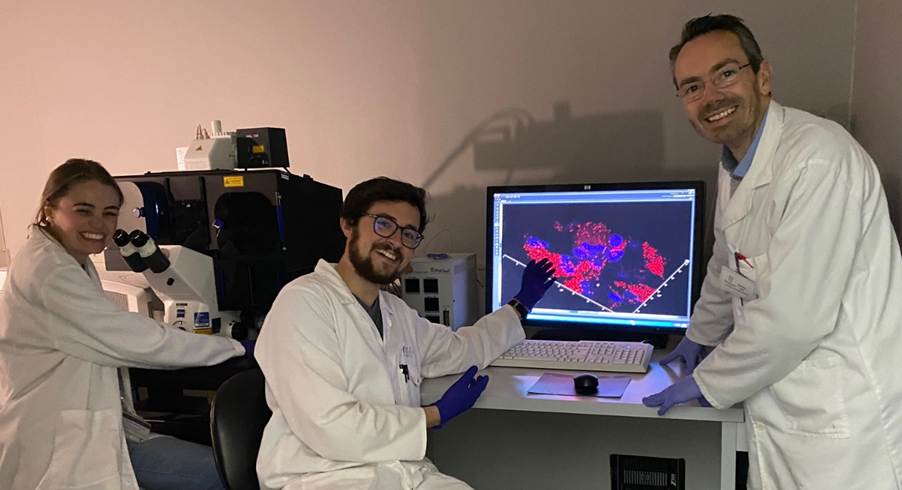
Scientists use cutting-edge imaging to explore how Rooibos may support healthy brain cells. From left: Catherine Smit, Dr Sholto de Wet and Prof Ben Loos.
In a world of endless notifications, relentless multitasking and constant information overload, the ability to focus is slipping through our fingers. Research suggests the human attention span has shrunk dramatically over the past two decades, with a widely cited Microsoft study putting it at just eight seconds today, down from 12 seconds in 2000. That’s shorter than the attention span of a goldfish.
Meanwhile, chronic stress and cognitive overload are now recognised as major contributors to burnout, anxiety and reduced productivity.
The role of simple rituals in restoring focus
Against this backdrop, scientists are beginning to explore not only what we consume, but also how we consume it, including the role of simple rituals like tea preparation, in restoring mental clarity.
Emerging research into Rooibos, a naturally caffeine-free herbal tisane indigenous to South Africa, suggests that both its bioactive compounds and the act of drinking it may support the brain under pressure.
How stress impacts the brain
From a neuroscience perspective, chronic distraction has measurable consequences.
According to Prof Ben Loos from Stellenbosch University’s Department of Physiological Sciences, stress isn’t good for the brain and can affect how well it functions. “It can contribute to a pro-inflammatory state and neuro-inflammation.” He explains that prolonged cognitive overload increases the production of reactive oxygen species (ROS), creating a damaging cellular environment that impairs brain function.
Over time, this affects critical regions, such as the prefrontal cortex, responsible for attention and decision-making, and disrupts neuroplasticity – the brain’s ability to adapt and learn. “Individuals may feel depleted due to an overload of the prefrontal cortex,” Prof Loos notes, adding that unmanaged stress can impair memory and learning capacity.
While much of the modern response to fatigue involves stimulants like caffeine, researchers are increasingly interested in alternatives that support the nervous system without overstimulation. Naturally caffeine-free Rooibos presents one such option.
Antioxidants and cellular protection
At a molecular level, Rooibos contains potent antioxidants, notably aspalathin and quercetin, which have been studied for their neuro-protective potential.
Prof Loos explains that Rooibos works in different parts of the body to help protect cells from the kind of damage that can build up as we age. “In simple terms, the compounds in Rooibos help keep brain cells healthy, support the body’s natural energy levels and keep cells working as they should, which is important for maintaining a sharp, active mind.
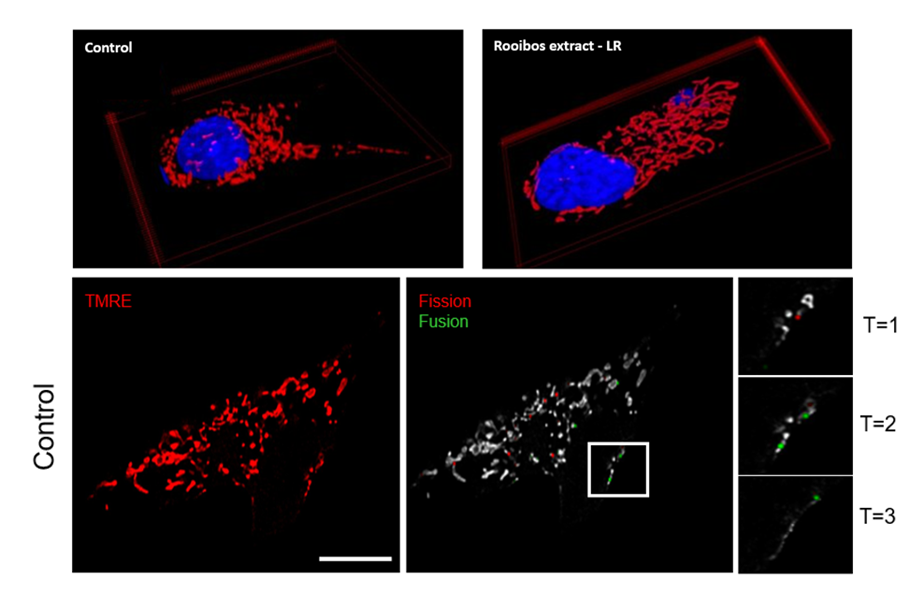
“A big part of this comes down to structures in our cells called mitochondria. These are like tiny energy generators that turn the food we eat into fuel, giving both the body and brain the energy they need to function properly, grow and stay healthy,” he says. For the brain cells, this means, making new connections with other brain cells and simply aging healthier.
Research has highlighted that mitochondrial dysfunction is closely linked to cognitive decline and neurodegenerative diseases. By supporting mitochondrial health, Rooibos compounds may help create a more stable internal environment for cognitive function.
This microscopic image shows active mitochondria (in red) inside brain cells. Rooibos appears to help these energy-producing structures stay strong and adaptable, supporting overall cell health. (Image: Catherine Smit)
Supporting brain chemicals linked to learning and memory
Dr Taskeen Docrat from the Applied Microbial Health and Biotechnology Institute (AMHBI) at CPUT explains that the natural compounds in Rooibos not only help protect our cells, but might also support the brain chemicals that are important for memory and learning. These antioxidants help the body manage and reduce harmful stress that can damage cells.
Dr Taskeen Docrat, researcher from the Applied Microbial Health and Biotechnology Institute (AMHBI) at Cape Peninsula University of Technology (CPUT) explores how Rooibos antioxidants may support cognitive health.
She mentions that Aspalathin, one of the compounds in Rooibos, helps protect the brain by lowering this kind of stress. Quercetin, another compound, may boost the levels of a protein called BDNF, which plays an important role in helping the brain learn, adapt and store new information.
The science of ritual and the nervous system
But beyond biochemistry, there is growing recognition of the psychological benefits of ritual. Structured, repetitive behaviours, such as preparing and drinking tea, can activate the parasympathetic nervous system, which promotes relaxation and recovery.
Dr Docrat explains that ritualised behaviours activate the part of our nervous system that calms us down. This can lower stress hormones in our body, specifically, cortisol. When cortisol levels drop, we tend to feel less stressed, which can lead to better emotional regulation and clearer thinking.”
This aligns with broader psychological research showing that small, intentional rituals can reduce anxiety and improve focus by creating a sense of control and predictability in otherwise chaotic environments.
Importantly, Rooibos offers these benefits without the potential downsides of caffeine. While moderate caffeine intake can enhance alertness, excessive consumption – particularly in high-stress contexts – may increase heart rate, anxiety and sleep disruption.
“Opting for a caffeine-free drink like Rooibos could provide safer support for the nervous system without the crash,” Dr Docrat notes.
A holistic approach to focus and mental clarity
Although direct evidence linking Rooibos consumption to improved focus is still emerging, the underlying mechanisms are compelling. Prof Loos cautions that it’s not easy to correlate what they see on the molecular level to high-level functions, such as mental focus, but adds that improved cellular health in the brain likely supports better neuronal function overall.
In a world where distraction is the norm, the solution may not lie in pushing the brain harder, but in creating conditions that allow it to function optimally. Incorporating simple, non-caffeinated rituals like drinking Rooibos may offer a dual benefit – biochemical support for brain health and a psychological pause that resets attention.
As Prof Loos concludes, we need moments of calm, silence and focus to manage stress, sharpen the mind and support resilience and creative thinking.
New research reveals how oestrogen levels in the brain influence vulnerability to stress-related memory problems, helping explain sex differences in PTSD risk.
For some people, a single traumatic event like a shooting, a natural disaster or a violent assault, can leave an imprint that lingers long after the immediate danger has passed. Memories of that event may return with unusual intensity, shaping mood, behaviour, and mental health in ways that are difficult to predict. Others exposed to similar trauma recover without developing lasting memory problems or trauma-related symptoms.
Why those outcomes diverge is a central question in stress and trauma research. Clinicians have long observed that severe acute stress can permanently alter memory for some people but not others, and that women face roughly twice the lifetime risk of posttraumatic stress disorder (PTSD). Recent research from the University of Pennsylvania in collaboration with the University of California-Irvine suggests that part of the answer may lie in the brain’s biological state at the precise moment trauma occurs.
Elizabeth Heller, PhD, an associate professor of Pharmacology in the Perelman School of Medicine at the University of Pennsylvania, and her team in the Heller Lab, have now shed light on how the brain’s biological state at the time of stress, particularly its oestrogen levels, can shape vulnerability long after the acute stress has lifted. Heller helped uncover that oestrogen levels in the brain may play a surprising role in this vulnerability, and for both sexes. The study, published in Neuron, also provides new insight into why women are more likely than men to develop post-traumatic stress disorder (PTSD) and to face higher dementia risk later in life.
Unpacking oestrogen’s role in memory vulnerability
Oestrogen is widely known to support learning and memory. This study found that high levels of oestrogen in the hippocampus, a brain region critical for memory, help the brain’s cells change and adjust more easily. However, in the context of severe acute stress, this flexibility can increase vulnerability to stress-related memory problems.
Heller and the Penn team mapped how high levels of oestrogen interact with chromatin structure (the storage packaging up DNA inside cells) in the hippocampus to make some brains more susceptible to PTSD‑like memory changes.
The findings help explain why traumatic events such as natural disasters, mass violence, and assaults can cause long-term memory problems, and why women are roughly twice as likely as men to develop PTSD.
“A lot of what determines vulnerability is the state your brain is already in,” Heller explained. “If a traumatic event hits during a period when oestrogen is already unusually high, the resulting plasticity can amplify the impact in lasting ways, promoting vulnerability to stress. Even with these findings in hand, the word oestrogen can mislead readers into assuming the biology applies only to women. That assumption shaped public understanding for decades, but it doesn’t hold up against what this research, and years of foundational neuroscience, actually shows.
As Heller notes, oestrogen is a critical brain hormone in both sexes. It is produced locally in regions like the hippocampus where it helps regulate learning, mood, and responses to stress. Recognising that universality is essential to understanding what this study truly reveals.
“The striking thing is that oestrogen levels are actually high in both males and in females in some parts of the hormonal cycle. Thus, the effects of high oestrogen levels happen in both males and females,” Heller said. “We tend to treat oestrogen as a women’s health hormone, but the brain makes its own oestrogen, and it plays powerful roles in stress, memory, mood, and emotion across sexes.”
Memory cells in the nose slow the influenza virus as soon as it enters the body. They reduce viral levels and may help protect against more severe illness. A new study from the University of Gothenburg may help guide the development of better influenza vaccines.
Today’s influenza vaccines are given as injections in the arm and mainly stimulate immune responses in the blood. At the same time, researchers are working to develop influenza vaccines that can be administered through the nose – an effort this study helps inform. The goal is to strengthen the body’s defences where the virus first encounters the immune system.
Memory cells remain in the nose
The researchers identified a group of memory cells, known as CD4 memory T cells, that remain in nasal tissue after an influenza infection. When the body encounters the virus again, these cells can rapidly reactivate and help other parts of the immune system fight the infection. The study shows that these cells can reduce viral replication in the nose and thereby contribute to better protection against illness.
“We show that CD4 memory T cells can remain in nasal tissue after an influenza infection and rapidly reactivate when the virus returns. This means the immune system can respond directly at the site where the virus first enters the body,” says Nimitha R. Mathew, a researcher at the Sahlgrenska Academy, University of Gothenburg, and one of the study’s lead authors.
In studies in mice, the researchers showed that these immune cells help limit viral levels and reduce tissue damage in the nose during a subsequent infection.
Similar cells found in humans
The researchers also analysed cells from the nasal mucosa of healthy adults. There, they found the same type of influenza-specific memory cells, suggesting that a similar local immune defence may also exist in humans. The study is published in the Journal of Experimental Medicine.
“Many people likely already have these kinds of memory cells in their noses after previous infections, but they are not always enough to stop the virus completely. The important thing about our findings is that we now know which immune cells can limit the virus where infection begins. That knowledge can be used when developing future nasal vaccines,” says Davide Angeletti, professor at the Sahlgrenska Academy, University of Gothenburg, and also one of the study’s lead authors.
Article: Nasal CD4⁺ tissue resident memory T cells provide cross protective immunity to influenza; 10.1084/jem.20251793