How Immune Cells Fight Infection Using Body Fat
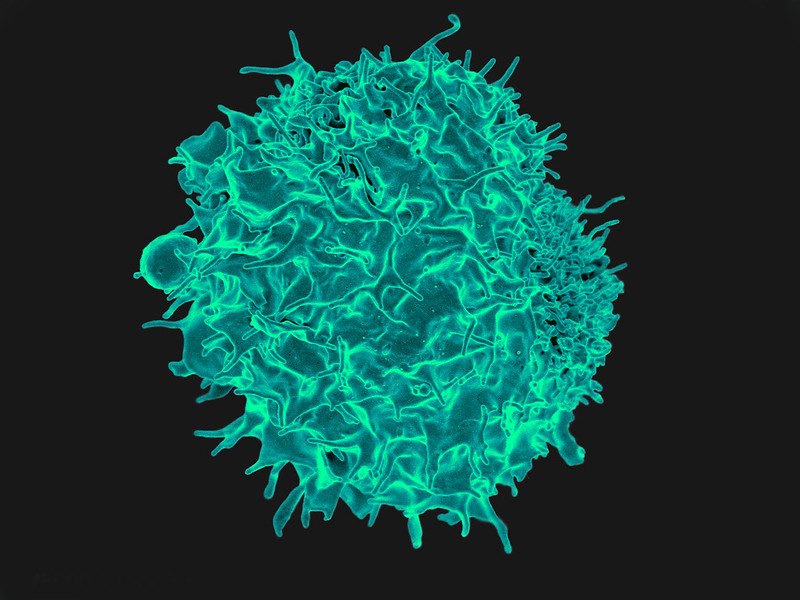
T lymphocyte. Credit: NIH/NIAID

A new study from the University of East Anglia and Quadram Institute sheds light on how our immune cells make use of body fat to fight infection. The research, published today in Nature Communications, could lead to new approaches to treating people with bacterial infections.

The work could one day help treat infections in vulnerable and older people, the researchers said. The team studied Salmonella bacteria and tracked fatty acid movement and consumption in live stem cells. They then examined the immune response to Salmonella bacterial infection, by analysing liver damage.

They uncovered how blood stem cells respond to infection, by acquiring high energy fatty acids from the body’s fat stores. In the bone marrow where blood stem cells are resident, infection signals drive adipocytes to release their fat stores as fatty acids into the blood.

And they identified that these high energy fatty acids are then taken up by blood stem cells, effectively feeding the stem cells and enabling them to make millions of Salmonella-fighting white blood cells. The researchers also identified the mechanism by which the fatty acids are transferred and discusses the potential impact this new knowledge could have on future treatment of infection.

Dr Stuart Rushworth, from UEA’s Norwich Medical School, said: “Our results provide insight into how the blood and immune system is able to respond to infection.

“Fighting infection takes a lot of energy and fat stores are huge energy deposits, which provide the fuel for the blood stem cells to power up the immune response.

“Working out the mechanism through which this ‘fuel boost’ works gives us new ideas on how to strengthen the body’s fight against infection in the future.”

Dr Naiara Beraza, from the Quadram institute, said: “Our results allow us to understand how our immune system uses fat to fuel the response to infection. Defining these mechanisms will enable us to develop new therapeutics to treat infections in the liver.”

Source: University of East Anglia

Cholesterol Screening Recommended for Children with Autism

Phot by Ben Wicks on Unsplash

Physicians have recommended that children with autism spectrum disorder (ASD) receive screening for abnormally high or low cholesterol levels at least once during their childhood, since ASD is a risk factor for cardiovascular disease in both children and adults.

The recommendation stemmed from a recent study, published in Translational Psychiatry, that found reduced levels of high density lipoprotein cholesterol (HDL-C) in individuals from families with two or more children with ASD. Additionally, they found reduced or elevated levels of other lipids, apolipoprotein A1 (ApoA1) and apolipoprotein B (ApoB). Individuals with low HDL-C levels or ApoA1 levels had lower adaptive functioning than other individuals with ASD.

“This latest research is part of our ongoing work to understand some of the co-occurring conditions with ASD,” said Elaine Tierney, MD, a child and adolescent psychiatrist with Kennedy Krieger Institute. “Our work indicates that lipids are abnormal in many individuals with ASD. Our findings, in addition to studies that show an increase in heart disease in individuals with ASD, lead us to recommend that children with ASD be screened for abnormal total and HDL cholesterol levels. We hope our work underscores the importance of cholesterol screening and raises awareness for families in the ASD community.”

Previously, Dr Tierney and colleagues identified that Smith-Lemli-Opitz Syndrome (SLOS), a genetic condition of impaired cholesterol biosynthesis, is associated with autism. This led to a recommendation that all children with ASD be screened for SLOS if they exhibit some of its characteristics, such as slow growth, microcephaly, mental retardation and other birth defects, although the severity of this rare disease can vary.

Source: Kennedy Krieger Institute

Use of Electronic Devices Linked to Depression and Anxiety

Photo by Tracy le Blanc from Pexels

In a study published in Addiction Biology, researchers uncovered significant associations between use of electronic devices and signs of depression and anxiety, as well as cigarette smoking and alcohol drinking. The team also found certain genetic variants that were linked with these traits.

A review of studies on smartphone addiction found that anxiety and depression were commonly mediated mental health problems. A wide range of physical health sequelae was also associated with smartphone addiction. Furthermore, there was an association between smartphone addiction and neurological disorders.

The study included data on hundreds of thousands of individuals from the UK Biobank. Three indicators of use of electronic devices were included in the study: TV watching, computer using, and computer playing.

Their findings suggested that electronic devices use was associated with common mental traits and provided new clues for understanding genetic architecture of mental traits.

The authors wrote that the study’s findings suggest that reducing time spent using electronic devices may help reduce mental health burdens. 

Source: Wiley

Netcare Reports Less Severe COVID in Fourth Wave

Image by Quicknews

In a news release by Netcare, the company’s CEO Dr Richard Friedland said that more than three weeks after the discovery of the new Omicron variant in South Africa, data across its hospitals and primary healthcare facilities are demonstrating important early trends.

“Having personally seen many of our patients across our Gauteng hospitals, their symptoms are far milder than anything we experienced during the first three waves,” commented Dr Friedland.

“Approximately 90% of COVID patients currently in our hospitals require no form of oxygen therapy and are considered incidental cases. While we fully recognise that it is still early days, if this trend continues, it would appear that with a few exceptions of those requiring tertiary care, the fourth wave can be adequately treated at a primary care level.”

Rates of community transmission and hospital admission possibly decoupled
During the first three waves, the rate of hospital admissions rose in tandem with the rate of community transmission (the number of people testing positive). Dr Friedland noted that, in the first three waves of the pandemic, Netcare treated 126 000 COVID patients across its 49 acute hospitals, of which 55 000 (44%) patients required admission and 26% of these patients were treated in High Care and Intensive Care (ICU). Significantly, all COVID patients admitted were sick and required some form of oxygen therapy. The high admission rate, as well as the high percentage of patients requiring ICU or High Care indicates the severity of cases during the first three waves.

“As of today we have 337 COVID positive patients admitted (72% in the Gauteng area and 18% in KwaZulu-Natal). Of these patients approximately 10% (33 patients) are on some form of oxygenation versus 100% in the first three waves. Eight of these patients (2%) are being ventilated and of these, two are primary trauma cases that are also COVID positive.”

Netcare’s policy is to test all patients for COVID before or on admission. Patients admitted for other primary diagnoses or surgical procedures who test positive for COVID] but do not require any form of oxygenation are considered to be incidental COVID cases, which currently accounts for 90% of COVID cases now in Netcare hospitals.

“During the first three waves, when the overall community positivity rate breached 26% across South Africa, we were inundated with COVID admissions to hospital. Within Netcare we had over 2000 COVID patients in hospitals during the first wave, over 2 250 patients in hospital during the second wave and over 3000 patients in hospital during the third wave. At present the 337 patients represent a fraction compared to previous waves,” said Dr Friedland.

“The very rapid rise in community transmission as compared to previous waves may partially explain this relatively low hospital admission rate. However, there does appear to be a decoupling in terms of the rate of hospital admissions at this early stage in the evolution of the fourth wave,” suggested Dr Friedland.

Majority of patients unvaccinated
Dr Friedland added that of a total of 800 COVID positive patients that were admitted since 15 November, 75% of patients were unvaccinated. Netcare has seen seven deaths over this period in this group of patients, of which four may be ascribed to COVID. These four patients were 58 to 91 years of age and had significant co-morbidities. Of these patients, three were not vaccinated.

Dr Friedland observed that COVID patients admitted since 15 November are on average younger than those seen during the first three waves. Over 71% are under 50, with an average age of 38.5. This compares to only 40% below 50 in the first three waves, with an average age of 54.

Virtually all patients have presented with mild to moderate flu-like symptoms, including a blocked or runny nose, headache and a scratchy or sore throat and have been treated symptomatically.

Dr Friedland reiterated that the best way to support South Africa remains to take COVID extremely seriously and to be as cautious as ever.

Evidence for Omicron Causing Less Severe Disease

Source: Fusion Medical Animation on Unsplash

While Omicron appears to be extremely transmissible and has been shown to have a greater ability to evade immunity from vaccination and prior infection, there is some evidence the Omicron variant may cause less severe disease.

In Gauteng, NICD hospital surveillance data show that 1904 COVID cases were admitted last week, and 177 COVID patients are currently in ICU with 51 ventilated as of yesterday. Nationwide, 13 147 new cases were detected with a positivity rate of 24.86%. While the fourth wave is still in the early stages, with a higher proportion of younger patients who develop less severe disease, anecdotal evidence points to reduced severity with the Omicron variant.

According to the Financial Times, preliminary data from the Steve Biko and Tshwane District Hospital Complex showed that on December 2 only nine of the 42 patients on the COVID ward, all of whom were unvaccinated, were being treated for the virus and were in need of oxygen. The remainder of the patients were COVID positive but asymptomatic and were being treated for other conditions.

“My colleagues and I have all noticed this high number of patients on room air,” said Dr Fareed Abdullah, an infectious disease doctor at the Steve Biko hospital and a director of the South African Medical Research Council.

“You walked into a COVID ward any time in the past 18 months… you could hear the oxygen whooshing out of the wall sockets, you could hear the ventilators beeping… but now the vast majority of patients are like any other ward.”

US chief medical adviser Dr Anthony Fauci remarked that initial South African data was “a bit encouraging regarding the severity”.

“Thus far, it does not look like there’s a great degree of severity to it,”  he said. “But we’ve really got to be careful before we make any determinations.” Existing vaccines could provide “a considerable degree” of protection against Omicron, he added.

A small positive note for South Africa was Dr Fauci saying the administration is reevaluating the travel ban on eight southern African countries as more becomes known about Omicron and its spread.

“That ban was done at a time when we were really in the dark – we had no idea what was going on,” he said.

Is Milk Allergy Being Overdiagnosed in Infants?

Photo from Pexels CC0

Current guidelines could be causing cow’s milk allergy to be over-diagnosed in infants, according to a new study. 

Researchers analysed data on 1303 healthy infants who were exclusively breastfed until at least three months of age, and found that 38% and 74% of infants had multiple mild-to-moderate milk allergy symptoms – as defined by current allergy guidelines – at three months and 12 months old, respectively. By comparison, non-IgE-mediated cow’s milk allergy has a prevalence of less than 1% in children.

The researchers’ findings, which are published in Clinical & Experimental Allergy, suggest that following current guidelines may lead to over-diagnoses in infants by labelling normal infant symptoms as possible milk allergies.

“There is an assumption that the existence of a guideline is more beneficial than no guideline. However, well-meaning guidelines need to be supported by robust data to avoid harms from over-diagnosis that exceed the damage of missed and delayed cow’s milk allergy diagnoses that they are seeking to prevent,” the researchers wrote.

Source: Wiley

Older Antipsychotic Drugs Linked to Breast Cancer


Source: National Cancer Institute

A number of commonly prescribed older antipsychotic drugs, and some newer ones, are associated with a significant increase in risk of breast cancer, according to a new study.  The findings are published online in the Journal of Clinical Psychopharmacology.

Previous research uncovered the link between antipsychotic drug use, prescribed for a wide array of mental health problems, and breast cancer risk. This study compared newer antipsychotics to older drugs, and examined how the drugs affect prolactin levels, which have been associated with breast cancer. However, many antipsychotics elevate prolactin levels and can produce side effects such as menstrual cycle irregularities, abnormal breast milk production and abnormal breast tissue growth.

“Many women with psychiatric illnesses such as schizophrenia and bipolar disorder will take antipsychotics for decades, and they are essential to keeping symptoms in check,” said first author Tahir Rahman, MD. “But both older antipsychotic medicines and some newer drugs raise levels of prolactin and increase the risk of breast cancer, which is concerning. Our study confirms findings from a smaller European study that advised women and their doctors to first try drugs that don’t affect prolactin levels. We agree with that advice and believe psychiatrists should start to monitor prolactin levels in their patients taking antipsychotics.”

Antipsychotic drugs were classified into three categories, based on their established effects on prolactin. Category 1 included drugs associated with high prolactin levels, such as haloperidol, paliperidone and risperidone. Category 2 had mid-range effects and included iloperidone, lurasidone and olanzapine. Category 3 had low-effect drugs such as aripiprazole, asenapine, brexpiprazole, cariprazine, clozapine, quetiapine and ziprasidone.

Comparing the three drug categories to anticonvulsant drugs and lithium, the relative risk of breast cancer was 62% higher for women who took Category 1 drugs and 54% higher for those taking Category 2 drugs, whereas Category 3 antipsychotics were not associated with any increase in breast cancer risk.

“Certain drugs are known to elevate prolactin, and the women taking those drugs were more likely to have breast cancer,” Dr Rahman said. “But we didn’t detect any increased risk in women taking antipsychotics that don’t raise prolactin levels.”

In mouse models, prolactin can help weaken systems keeping precancerous lesions from becoming breast cancer. In humans, prolactin levels tend to be lower in women who have had more children at a younger age than in women who have fewer children or wait until they are older to do so.

In this study using data collected from 2012 through 2016, the research team performed a retrospective, observational study of breast cancer risk in women ages 18 through 64 who took antipsychotics.

The researchers identified which patients were treated for breast cancer during a 12-month period and matched that information to patients taking antipsychotic drugs. Of the 540 737 women in the database taking antipsychotics, only 914 were identified as having breast cancer – a significant number of whom were taking drugs known to increase prolactin.

“Antipsychotic medications can be lifesaving for patients who have psychotic episodes where they experience symptoms such as hallucinations and delusions,” Dr Rahman said. “In recent years, the drugs have been approved to treat other conditions, too, including depression and bipolar disorder. As those high-prolactin agents are used more widely, the number at risk could increase. We’ve been advising against using these high-prolactin agents in women who already have breast cancer, but we’d like to investigate whether keeping prolactin levels lower even might prevent some of these cancers.”

In another recent study, the antipsychotic drug aripiprazole did not increase prolactin levels in women and that a few women who began the study with high prolactin levels experienced decreases in prolactin levels after 12 weeks of treatment.

Those findings, combined with preclinical evidence of the anticancer effects of some antipsychotics, have inspired Dr Rahman and colleagues to propose repurposing some antipsychotic drugs in the fight against breast cancer.

“We don’t want to alarm patients taking antipsychotic drugs for life-threatening mental health problems, but we also think it is time for doctors to track prolactin levels and vigilantly monitor their patients who are being treated with antipsychotics,” Dr Rahman said.

Source: Washington University School of Medicine

Tick Saliva Yields Powerful Anticoagulants

Source: Wikimedia CC0

A novel study has isolated powerful anticoagulants from the saliva of ticks, which may have reduced potential for bleeding.

Blood-feeding animals rely on specific molecules in their saliva to overcome defence mechanisms of their mammalian hosts for successful survival. The saliva of ticks, for example, contains molecules that can prevent blood from clotting, and which can also suppress inflammation or immune response to enable continuous feeding on the same bite site for days, sometimes undetected by the host. The harmful effects of these parasites can actually be harnessed for medical treatments.

In their paper, published in Nature Communications, the authors explain how the cardiovascular team developed a series of thrombin inhibitors to be potent anticoagulants based on sequences of inhibitors of blood coagulation enzyme thrombin found in the tropical bont tick Amblyomma variegatum.

The team developed a series of thrombin inhibitors to be powerful anticoagulants.

Anticoagulants are used in conditions where there is an increased propensity to form blood clots in our body depriving blood supplies to important tissues and organs, otherwise known as thrombosis. These drugs are needed in many diseases caused by blood clots including heart attacks, strokes, deep vein thrombosis, pulmonary embolism and even some severe complications caused by SARS-CoV-2 infection.

These next-generation anticoagulants will now need to be tested in human trials to determine if they can effectively counteract clotting without the bleeding side effects of currently available anticoagulants.

Source: EurekAlert!

The Secret of ‘Rejuvenating’ Blood Transfusions Between Mice

Photo by Kanasi on Unsplash

Researchers have identified an important mediator of youthfulness in mouse muscle, which explains the ‘rejuvenating’ blood transfusions effect between young and old mice. The discovery could also lead to new therapies for age-related muscle loss.

Published in Nature Aging, the study showed that circulating shuttles called extracellular vesicles, or EVs, deliver genetic instructions for the longevity protein known as Klotho to muscle cells. Reduced muscle function and repair in old mice may be driven by aged EVs, which carry fewer instructions than those in young animals.

The findings help further as to understanding why muscle regeneration capacity diminishes with age.

“We’re really excited about this research for a couple of reasons,” said senior author Dr Fabrisia Ambrosio. “In one way, it helps us understand the basic biology of how muscle regeneration works and how it fails to work as we age. Then, taking that information to the next step, we can think about using extracellular vesicles as therapeutics to counteract these age-related defects.”

Decades of research have shown that when old mice are given blood from young mice, youthful features are restored to many cells and tissues. But until now, it was unclear which components of young blood confer these rejuvenating effects.

“Amrita Sahu releaseWe wondered if extracellular vesicles might contribute to muscle regeneration because these couriers travel between cells via the blood and other bodily fluids,” said lead author Dr Amrita Sahu. “Like a message in a bottle, EVs deliver information to target cells.”

Ambrosio and her team collected serum from young mice and injected it into aged mice with injured muscle. Mice that received young serum showed enhanced muscle regeneration and functional recovery compared to those that received a placebo treatment, but the serum’s restorative properties were lost when EVs were removed, indicating that it is these vesicles which deliver the beneficial effects of young blood.

The researchers then found that EVs deliver genetic instructions, or mRNA, encoding the anti-ageing protein Klotho to muscle progenitor cells, important stem cells for muscle regeneration. EVs collected from old mice carried fewer copies of Klotho instructions than those from young mice, causing muscle progenitor cells to produce less of this protein.

With advancing age, muscle doesn’t recover from damage as well because scar tissue is laid down. In earlier work, Ambrosio and her team showed that Klotho is an important regulator of regenerative capacity in muscle progenitor cells and that this protein declines with age.

The new study shows for the first time that age-related shifts in EV cargo contribute to depleted Klotho in aged stem cells, suggesting that EVs could be developed into novel therapies for healing damaged muscle tissue.

“EVs may be beneficial for boosting regenerative capacity of muscle in older individuals and improving functional recovery after an injury,” said Ambrosio. “One of the ideas we’re really excited about is engineering EVs with specific cargoes, so that we can dictate the responses of target cells.”

Beyond muscles, EVs also could help reverse other effects of ageing. Previous work has demonstrated that young blood can boost cognitive performance of aged mice.


Source: University of Pittsburgh

Eating More Avocados Edges Out Unhealthy Foods

Photo by Dirk Ribbler on Unsplash

In a novel study, researchers conducted a randomised controlled trial comparing the potential health effects between families of Mexican descent that consumed a low allotment of avocados (three per week) and families that consumed a high allotment (14 per week).

They found that the high avocado allotment families self-reported lower caloric consumption, reducing their intake of other foods, including dairy, meats and refined grains and their associated negative nutrients, such as saturated fat and sodium.

The findings, published in Nutrients, may offer insights into how to better address the burgeoning public health issues of obesity and related diseases, particularly in high-risk communities, said the authors.

“Data regarding the effects of avocado intake on family nutritional status has been non-existent,” said senior author Matthew Allison, MD, professor at UC San Diego School of Medicine.

“Recent trials have focused on individuals, primarily adults, and limited to changes in cardiometabolic disease blood markers. Our trial’s results provide evidence that a nutrition education and high avocado allotment reduces total caloric energy in Mexican heritage families.”

The soft and buttery insides of the avocado are rich in vitamins C, E, K and B6, plus riboflavin, niacin, folate, pantothenic acid, magnesium, potassium, lutein, beta carotene and omega-3 fatty acids.

Half of a medium-sized fruit provides up to 20% of the recommended daily fibre, 10% potassium, 5% magnesium, 15% folate and 7.5 grams of monounsaturated fatty acids.

For the study, researchers enrolled 72 families (231 individuals) consisting of at least three members each over the age of five, residing in the same home, free of severe chronic disease, not on specific diets, and of Mexican heritage. The families were randomised into two groups for six months, during which time both groups also received bi-weekly nutrition education sessions.

Researchers wanted to assess if increased but moderated consumption of a single, nutrient-dense food might measurably improve overall health and decrease diet-related disparities.

While no change in BMI or waist circumference was seen between the two groups during the trial, researchers noted that consuming more avocados appeared to speed satiety. Fats and some dietary fibres, such as those found in avocados, can impact total energy intake by influencing gastrointestinal functions, such as introducing bulk that slows gastric emptying, regulating glucose and insulin reactions, prolonging nutrient absorption and modifying key peptide hormones that signal fullness.

Interestingly, the study found that families consuming more avocados correspondingly reduced their consumption of animal protein, specifically chicken, eggs and processed meats, the latter of which are typically higher in fat and sodium. Current nutrition guidelines recommend reduced consumption of both fat and sodium.

But surprisingly, high avocado consumers also recorded decreased intake of calcium, iron, sodium, vitamin D, potassium and magnesium, which researchers said might be associated with eating less.

“Our results show that the nutrition education and high avocado intake intervention group significantly reduced their family total energy intake, as well as carbohydrate, protein, fat (including saturated), calcium, magnesium, sodium, iron, potassium and vitamin D,” said first author Lorena Pacheco.

“In secondary energy-adjusted analyses, the nutrition education and high avocado allotment group significantly increased their intake of dietary fibre, monounsaturated fatty acids, potassium, vitamin E and folate.”

Source: EurekAlert!