Using a rice-grain sized wireless implant to stimulate peripheral nerves from within blood vessels could potentially treat drug-resistant neuropathic pain, according to a study published in Nature Biomedical Engineering.
After receiving a grant, a team set out to create implantable, wirelessly powered nerve stimulators that can be used in place of opioids for pain management. The 1-millimetre large implants are small enough to be placed on stents and delivered within blood vessels adjacent to specific areas of the central and peripheral nervous system.
Co-principal investigator of the study, Sunil A. Sheth, MD, explained: “We’re getting more and more data showing that neuromodulation, or technology that acts directly upon nerves, is effective for a huge range of disorders—depression, migraine, Parkinson’s disease, epilepsy, dementia, etc. – but there’s a barrier to using these techniques because of the risks associated with doing surgery to implant the device, such as the risk of infection. If you can lower that bar and dramatically reduce those risks by using a wireless, endovascular method, there are a lot of people who could benefit from neuromodulation.”
Neuropathic pain can be a disabling disorder that accounts for nearly 40% of chronic pain sufferers, often leading to anxiety, depression, and opioid addiction. Previous studies showed that electrical stimulation is an effective treatment for reducing pain when doctors target the spinal cord and dorsal root ganglia (DRG), a bundle of nerves that carry sensory information to the spinal cord. However, existing DRG stimulators require invasive surgery to implant a battery pack and pulse generator.
According to the researchers, this new type of technology offers a way to perform minimally invasive bioelectronic therapy that helps with more precise placement of the implant and more predictable outcomes. The team are hoping to move forward with regulatory approval, which Dr Sheth estimates may take a few years.
Long-term brain damage resulting from neonatal hypoglycaemia can be warded off with proper treatment such as later education and dextrose gel after birth, new studies have found.
The study is the first of its kind to show that stabilising blood sugar levels in neonatal hypoglycaemia prevents brain damage.
Hypoglycaemia is very common, affecting more than one in six babies. Since glucose is the main energy source for the brain and the body, untreated low blood sugar can cause adverse effects on a child’s neurodevelopment up to the age of 4.5 years old.
While hypoglycaemia is known to alter early development, there has been a significant gap in our understanding of how hypoglycaemia can alter a child’s development after early childhood. A study in JAMA investigated the long-term impact on brain development in mid-childhood – ages 9 to 10 – and found that, compared to peers, there was no significant difference in academic outcomes for children exposed to hypoglycaemia as newborns.
“Rich pre-school and school experiences may help a child’s brain to re-organise and improve their academic abilities up to the developmental milestones of their peers,” said Professor Ben Thompson, who is part of the research team.
Following 480 children born at risk of neonatal hypoglycaemia, researchers assessed each child at aged nine to 10 in five key areas: academic achievement, executive function, visual-motor function, psychosocial adaptation, and general health. All child participants were involved in previous studies, providing researchers with information on their neuro-development outcomes at two and 4.5 years old.
This ability to catch-up in neuro-cognitive function could be because of the brain’s plasticity, the researchers suggest.
“It’s a big relief to know that babies who are born with and treated for a condition as common as hypoglycaemia are not likely to suffer long-term brain damage,” Prof Thompson said.
The researchers have also continued studying the efficacy of dextrose gel to treat low blood sugar in the first 48-hours of a newborn’s life, avoiding the need for babies to go to newborn intensive care units immediately after delivery.
In an additional study published in JAMA, the team assessed the later risks of dextrose gel as a treatment for hypoglycaemia in infancy, and found change to the risk of neuro-sensory impairment at age two. This treatment continues to be widely used in a growing number of countries, including Canada, Australia, the United Kingdom and the United States.
A recent study published in JAMA Surgery has demonstrated the viability of living-donor liver transplant for patients who have systemically controlled colorectal cancer and liver tumours that cannot be surgically removed.
“This study proves that transplant is an effective treatment to improve quality of life and survival for patients with colorectal cancer that metastasised to the liver,” said senior study author Dr Gonzalo Sapisochin.
The study focused on colorectal cancer partly for its tendency to spread to the liver. Nearly half of all patients with colorectal cancer develop liver metastases within a few years of diagnosis and 70% of liver tumours in these patients cannot be removed without removing the entire liver.
Unfortunately, most of these patients cannot get deceased-donor liver transplants because their liver function is fairly normal in spite of their tumours. This puts them near the bottom of the national organ transplant waiting list.
Thanks to recent advances in cancer treatments, many of these patients are able to get their cancer under systemic control, which means only their liver tumours prevent them getting a ‘cancer free’ label. It also increases the odds that these patients – and their new livers – will remain cancer free, which is crucial when balancing the benefit to the patient with the risk to a living donor.
“I’ve seen so many cancer patients, whose cancers were not spreading, but we couldn’t remove the tumours from their livers and we knew they would die,” said first study author Dr Roberto Hernandez-Alejandro. “We hoped living-donor liver transplant could give them another chance.”
Because it offered a last resort, the study attracted patients from near and far. All patients and donors went through a rigorous screening process to ensure they were good candidates for the procedure, and they were educated about the risks of the surgery and the possibility of cancer recurrence.
Patients and donors underwent staggered surgeries to fully remove patients’ diseased livers and replace them with half of their donors’ livers. Over time, both patients’ and donors’ livers regenerated and regain normal function.
Patient imaging and blood analysis was closely monitored for any signs of cancer recurrence and will continue to be followed for up to five years after their surgery. At the time of study publication, two patients had follow-up of two or more years and both remained alive and well, cancer-free.
“We have seen very good outcomes with this protocol, with 100 percent survival and 62 percent of patients remaining cancer free one year and a half after surgery,” said study author Dr Mark Cattral. “It is very strong data to support that we can offer this treatment safely and make appropriate use of scarce life-saving organs.”
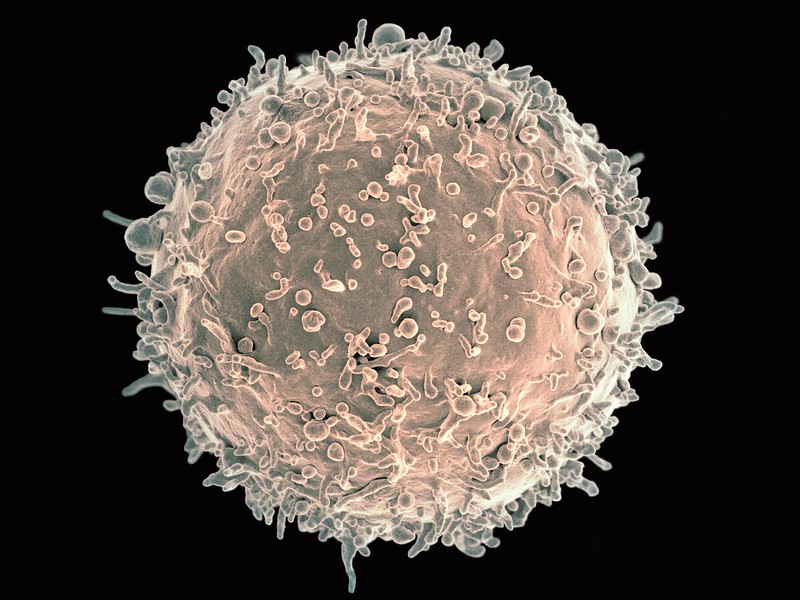
Scanning electron micrograph image of a human B cell. Credit: NIH/NIAID
New research in Nature Immunology has found that B cells play a surprising role in increasing or decreasing the bone marrow’s output of white blood cells. The findings may lead to new treatments for conditions that arise when white blood cell production goes out of balance.
Professor Matthias Nahrendorf, senior author of the study, explained that the nervous system plays a role in controlling blood cell production through neurotransmitters. “This is for instance important in people exposed to stress, where stress hormones — part of the ‘fight-or-flight’ response controlled by the sympathetic nervous system — may increase bone marrow activity and cardiovascular inflammation in response to the neurotransmitter noradrenaline,” he said. The parasympathetic nerves on the other hand, slow down responses and bring about a state of calm to the body, mainly through the neurotransmitter acetylcholine.
Because acetylcholine can have a protective effect against inflammation and heart disease, the researchers studied this neurotransmitter in the bone marrow. “When we looked into how acetylcholine acts on the production of blood cells, we found that it does the expected — it reduces white blood cells, as opposed to noradrenaline, which increases them,” said Prof Nahrendorf. “What was unexpected though was the source of the neurotransmitter acetylcholine.”
In the bone marrow, the typical nerve fibres that are known to release acetylcholine were not found. Instead, it was the antibody-producing B cells supplied the acetylcholine in the bone marrow. “Thus, B cells counter inflammation — even in the heart and the arteries — via dampening white blood cell production in the bone marrow. Surprisingly, they use a neurotransmitter to do so,” said Prof Nahrendorf.
Tapping into this process may help investigators develop strategies to block inflammation in cardiovascular conditions such as atherosclerosis. “Ultimately this may lead to new therapeutics that combat myocardial infarction, stroke, and heart failure,” said Prof Nahrendorf.
A small clinical trial published in Pediatrics has shown that intranasal flu vaccine is just as safe for children with asthma as the intramuscular vaccine. According to the researchers, within 42 days of vaccination, 10.8% of children who received the intranasal quadrivalent live attenuated influenza vaccine (LAIV4) had an asthma exacerbation compared with 14.7% of those who received the intramuscular quadrivalent inactivated influenza vaccine (IIV4).
According to the researchers, regardless of asthma severity, LAIV4 remained noninferior to IIV4. Among those with mild asthma, one of 25 kids who received the LAIV4 experienced an asthma exacerbation versus three of 16 in the IIV4 group, the researchers reported. In children with moderate to severe asthma, exacerbations occurred in seven of 49 in the LAIV4 group and seven of 52 in the IIV4 group.
“These data add to the compelling safety record of LAIV in children, including those with persistent asthma,” the researchers wrote.
The two groups also did not differ significantly in the frequency of asthma-related symptoms, including nighttime awakening, unscheduled albuterol use, cough, wheezing, or chest tightness, within 14 days of administration. Similarly, no differences were seen in peak expiratory flow rate, or changes in childhood asthma control test or asthma control test scores from baseline through 42 days.
At present, the CDC recommends against the nasal spray vaccine for children and people with asthma, citing an increased risk of exacerbations.
A previous study had suggested that the LAIV was linked increased asthma risk and reactive airway disease in children under 36 months of age, but more recent research has found no difference in risk between the LAIV and IIV, the researchers explained.
“Building off these previous studies, our prospective study suggests that LAIV may be appropriate for some children with asthma,” they noted.
“These data support reexamining precautions to using LAIV4 in children with asthma, which could be particularly important during influenza pandemics, at times when IIV4 supplies are limited, in situations of public/school mass vaccination clinics using LAIV, or for children with significant needle aversions,” they added.
The study was conducted over the 2018 and 2019 flu seasons with children aged five to 11 but expanded to include children ages 5 to 17 in its second year. The primary outcome of asthma exacerbation after 42 days was defined as an episode for which the participant sought medical care or a new prescription for corticosteroids.
The median age of the 151 enrolled participants was 9 years, and 58% were boys.
Systemic reactogenicity events in the 14 days after vaccination were not different between the LAIV4 and IIV4 groups, with the exceptions of myalgia and sore throat, which were more common in the IIV4 group.
Cedars-Sinai researchers have developed a clinical algorithm that is the first to be able to distinguish between treatable sudden cardiac arrest and untreatable forms of the condition. The findings, published in the Journal of the American College of Cardiology: Clinical Electrophysiology, may help prevent sudden cardiac arrest based on key risk factors identified in this study.
“All sudden cardiac arrest is not the same,” explained Professor Sumeet Chugh, MD, lead author of the study. “Until now, no prior research has distinguished between potentially treatable sudden cardiac arrest versus untreatable forms that cause death in almost all instances.”
In the US, 300 000 people die due to out-of-hospital sudden cardiac arrest each year. For those affected, 90% will die within 10 minutes of cardiac arrest.
Prevention could have an enormous impact for this largely fatal condition. The biggest challenge, however, lies in distinguishing between those who stand to benefit the most from an implantable cardioverter defibrillator and those who would not.
“Defibrillators are expensive and unnecessary for individuals with the type of sudden cardiac arrest that will not respond to an electrical shock,” said Prof Chugh. “However, for patients with treatable, or ‘shockable,’ forms of the disease, a defibrillator is lifesaving.”
Prof Chugh said that this new research provides a clinical risk assessment algorithm that can better identify patients at highest risk of treatable sudden cardiac arrest—and thus, a better understanding of those patients who would benefit from a defibrillator.
The risk assessment algorithm consists of 13 clinical, electrocardiogram, and echocardiographic variables that could put a patient at higher risk of treatable sudden cardiac arrest.
The risk factors include diabetes, myocardial infarction, atrial fibrillation, stroke, heart failure, chronic obstructive pulmonary disease, seizure disorders, syncope—a temporary loss of consciousness caused by a fall in blood pressure—and four separate indicators found with an electrocardiogram test, including heart rate.
New computational simulations of the behaviour of the SARS-CoV-1 and SARS-CoV-2 spike proteins before they fuse with human cell receptors show that SARS-CoV-2, is in fact more stable and slower changing than SARS-CoV-1 that caused the SARS epidemic in 2003.
Though severe acute respiratory syndrome coronaviruses 1 and 2 (SARS-CoV-1 and SARS-CoV-2) have striking similarities, why the latter is more transmissible remains unclear.
The spike proteins of each, which bind to host cell angiotensin converting enzyme 2 (ACE-2), otherwise known as the human cell receptor, have been proposed as the reason for their difference in transmissibility. A more detailed understanding of the spike proteins prior to binding could lead to the development of better vaccines and medications.
The new finding, which appears in the Journal of Biological Chemistry, does not necessarily mean that SARS-CoV-2 is more likely to bind to cell receptors, but it does mean that its spike protein has a better chance of effective binding.
“Once it finds the cell receptor and binds to it, the SARS-CoV-2 spike is more likely to stay bound until the rest of the necessary steps are completed for full attachment to the cell and initiation of cell entry,” explained Associate Professor Mahmoud Moradi, of the Fulbright College of Arts and Sciences.
To determine differences in conformational behaviour between the two versions of the virus, the researchers performed equilibrium and nonequilibrium simulations of the molecular dynamics of SARS-CoV-1 and SARS-CoV-2 spike proteins, leading up to binding with cell angiotensin converting enzyme 2.
Equilibrium simulations allow the models to evolve spontaneously on their own time, while nonequilibrium simulations change according to external input. The former is less biased, but the latter is faster and allows for many more simulations to run. Both methodological approaches provided a consistent picture, independently demonstrating the same conclusion that the SARS-CoV-2 spike proteins were more stable.
The models revealed other important findings, namely that the energy barrier associated with activation of SARS-CoV-2 was higher, meaning the binding process happened slowly. Slow activation allows the spike protein to evade human immune response more efficiently, because remaining in an inactive state longer means the virus cannot be attacked by antibodies that target the receptor binding domain.
Researchers understand the importance of the receptor-binding domain (RBD), which viruses use to gain entry to human cells. The team’s modelling confirms the importance of the RBD but also suggest that other domains, such as the N-terminal domain, could play a crucial role in the different binding behaviour of SARS-CoV-1 and -2 spike proteins.
N-terminal domain of a protein is a domain located at the N-terminus or simply the start of the polypeptide chain, as opposed to the C-terminus, which is the end of the chain. Though it is near the receptor-binding domain and is known to be targeted by some antibodies, the function of the N-terminal domain in SARS-CoV-1 and -2 spike proteins is not fully understood. Moradi’s team is the first to find evidence for potential interaction of the N-terminal domain and the receptor binding domain.
“Our study sheds light on the conformational dynamics of the SARS-CoV-1 and SARS-CoV-2 spike proteins,” Moradi said. “Differences in the dynamic behaviour of these spike proteins almost certainly contribute to differences in transmissibility and infectivity.”
Girls and boys might be more vulnerable to the negative effects of social media use at different times during their adolescence, according to a study in Nature Communications. Girls were found to experience a negative link between social media use and life satisfaction when they are 11–13 years old and boys when they are 14–15 years old. Increased social media use again predicts lower life satisfaction at age 19 years. At other times the link was not statistically significant.
Since its rapid emergence over a decade ago, social media has prompted concern over its possible impacts on wellbeing, especially in younger people.
A team of researchers analysed two UK datasets which included longitudinal data on 17 400 young people aged 10–21 years old. The team looked for a connection between estimated social media use and reported life satisfaction and found key periods of adolescence where social media use was associated with a decrease in life satisfaction 12 months later. Working backwards, the researchers also found that teens who have lower than average life satisfaction use more social media one year later.
In girls, social media use between ages 11 and 13 was associated with a drop in life satisfaction one year later, whereas in boys this occurred between 14 and 15. This suggests that sensitivity to social media use could be linked to developmental changes, possibly changes in the structure of the brain, or to puberty, which occurs later in boys than in girls.
In both females and males, social media use at the age of 19 years was again associated with a decrease in life satisfaction a year later. The researchers suggest that that social changes at this age, such as leaving home, may make people particularly vulnerable.
At other times, the link between social media use and life satisfaction one year later was not statistically significant. Decreases in life satisfaction also predicted increases in social media use one year later; however this does not change across age and or differ between the sexes.
Dr. Amy Orben, the study leader, said: “The link between social media use and mental wellbeing is clearly very complex. Changes within our bodies, such as brain development and puberty, and in our social circumstances appear to make us vulnerable at particular times of our lives.”
Professor Sarah-Jayne Blakemore, a co-author of the study, said: “It’s not possible to pinpoint the precise processes that underlie this vulnerability. Adolescence is a time of cognitive, biological and social change, all of which are intertwined, making it difficult to disentangle one factor from another. For example, it is not yet clear what might be due to developmental changes in hormones or the brain and what might be down to how an individual interacts with their peers.”
Dr. Orben added: “With our findings, rather than debating whether or not the link exists, we can now focus on the periods of our adolescence where we now know we might be most at risk and use this as a springboard to explore some of the really interesting questions.”
A further complication is that social media use can negatively impact wellbeing, but also the reverse is true, previously reported and confirmed by this study.
The researchers stress that these population-level findings do not predict which individuals are most vulnerable.
Professor Rogier Kievit said: “Our statistical modeling examines averages. This means not every young person is going to experience a negative impact on their wellbeing from social media use. For some, it will often have a positive impact. Some might use social media to connect with friends, or cope with a certain problem or because they don’t have anyone to talk to about a particular problem or how they feel—for these individuals, social media can provide valuable support.”
Professor Andrew Przybylski said: “To pinpoint which individuals might be influenced by social media, more research is needed that combines objective behavioural data with biological and cognitive measurements of development. We therefore call on social media companies and other online platforms to do more to share their data with independent scientists, and, if they are unwilling, for governments to show they are serious about tackling online harms by introducing legislation to compel these companies to be more open.”
Researchers in Spain have found that caffeine may be beneficial in alleviating cognitive symptoms of ADHD, such as improving attention span and retention capacity. Their findings, published in Nutrients, may provide a less controversial addition to the therapeutic arsenal for this disorder.
Attention deficit hyperactivity disorder (ADHD) diagnoses have increased exponentially over the last 20 years. It is currently estimated that this disorder affects between 2% and 5% of children in Spain, an average of one or two children per classroom, and up to 4% of the adult population.
Despite these high incidence rates, controversy surrounds the treatment of this pathology and the therapeutic approach to it. This varies widely depending on each patient, the symptoms they present and their intensity. For this reason, experts are continuing to investigate different components and substances that may be capable of providing new treatment opportunities for patients diagnosed with ADHD.
A team of experts at the Universitat Oberta de Catalunya (UOC) has investigated caffeine to alleviate some of the symptoms of ADHD, given the controversy surrounding the use of some medicines derived from methylphenidate, among others. Their systematic review of animal studies concludes that a prescribed consumption of caffeine can increase attention and retention capacity in adolescents and adults with ADHD.
“The therapeutic arsenal for alleviating ADHD is limited, and there is a certain degree of controversy around the use of some types of medications and stimulants, especially during childhood and adolescence. That’s why it’s useful to study the efficacy of other substances, such as caffeine,” explained Javier Vázquez, one of the paper’s main authors.
This is the first systematic review with results linking caffeine consumption in different animal models of ADHD with an increased attention span, improved concentration, learning benefits, and improvements in some types of memory.
“This substance improves these types of cognitive procedures, and increases capacity and flexibility in both spatial attention and selective attention, as well as in working memory and short-term memory,” emphasised Vazquez, who added that controlled treatment with this substance “doesn’t alter blood pressure, and doesn’t lead to an increase or reduction in body weight.”
The researchers point out that while possibly effective for cognitive symptoms, the results are unclear for other characteristic symptoms of ADHD, such as hyperactivity and impulsivity. “The results are very positive, but we must be much more careful when prescribing a caffeine-based medical treatment for these symptoms. In diagnoses in which the problem is purely attentional, caffeine may be an appropriate therapy, but if there’s a symptomatological presence of hyperactivity or impulsivity, we must be more cautious,” said Vasquez.
However, the results show that caffeine has a clear benefit in ADHD’s cognitive symptoms. “Our results reinforce the hypothesis that the cognitive effects of caffeine found in animal models can be translated and applied in the treatment of ADHD in people, especially at young ages such as adolescence,” the authors concluded.
“We want to emphasise that we aren’t against medication for ADHD, but we’re open to investigating all possible alternatives for improving this type of disorder, and for being able to use caffeine from a therapeutic point of view with all the appropriate medical supervision, a prescribed treatment and follow-up,” said Vázquez.
For the first time, children with severe congenital myopathy may have a better chance at learning to walk thanks to a new therapeutic approach using enzyme-inhibiting cancer drugs, as reported in the journal eLife.
Professor Susan Treves remembers seeing one child affected by the condition at the age of six months. The boy seemed more like a newborn, she said. Today, several years later and thanks to intensive physiotherapy, he is at least able sit. “He made it,” she said. As yet there is no cure for children like this one. Their first priority is survival. Another child with mutations in the same gene as the boy mentioned above, did not survive. However, his genetic alterations now form the basis of a therapeutic approach presented by the research group led by Professors Susan Treves and Francesco Zorzato.
The affected gene is for the calcium channel RYR1 in skeletal muscle. The mutations render the gene useless, which severely impacts muscle function. The researchers used the gene alterations found in a patient, as a template to develop a mouse model for this type of congenital myopathy. “The mice don’t die, but their muscle system is severely impaired,” says Treves. “They’re smaller, and move much less.” With a combination of two drugs, however, the research team was able to significantly improve muscle function and movement of the mice.
The therapy is based on the observation that certain enzymes are produced in excessive quantities in the skeletal muscles of affected patients. These enzymes – histone deacetylases and DNA methyltransferases – affect how densely genes are packed, making them less accessible to the cellular machinery that reads them and translates them into instructions for protein production.
Prof Treves and her team used inhibitors against these enzymes, which are already approved as cancer drugs or are in clinical trials. The treatment significantly improved the mice’s movement ability, although they were still smaller. No adverse side effects were noted during the study period.
The approach is still far from being a clinical therapy, said Prof Treves. “But it’s a first step in the right direction.” The researchers aim to further optimise the treatment and test combinations of newly developed drugs targeting the same enzymes for even better effects. “We anticipate around about two more years of optimisation and testing before we can initiate a phase I clinical trial,” she said.
For Profs Treves and Zorzato, these first promising results are the culmination of 10 years of research – especially as Prof Zorzato was the one who first isolated the gene affected in these muscle disorders years ago. “We’ve now succeeded in bridging the gap from the isolation of the affected gene to a therapeutic approach,” said Prof Treves.