Close-up of monkeypox lesions on the arm and leg of a female child. Credit: Wikimedia Commons
On Friday, May 20, the World Health Organization has reported that there were 80 cases of monkeypox reported in 12 countries, but has not mentioned which countries those are. However, the National Institute for Communicable Diseases has not reported any cases in South Africa, though there has now been a case reported in Australia.
Update: as of 23 May, the NICD has reported that there are 145 cases in 15 countries, but confirms there are no local cases.
Normally endemic to certain countries where it resides in animal reservoirs, monkeypox is rarely encountered in countries outside those regions. The WHO notes that this is “atypical” for the zoonotic orthopoxvirus, which causes smallpox-like symptoms but with a lower mortality. European public health agencies have so far reported that the UK, Spain, Portugal, Germany, Belgium, France, the Netherlands, Italy and Sweden have seen cases. The first patient in the UK with the virus had returned from a trip to Nigeria, likely catching it there. Cases have been reported in the US and Canada.
The WHO advises that, “As monkeypox spreads through close contact, the response should focus on the people affected and their close contacts. People who closely interact with someone who is infectious are at greater risk for infection: this includes health workers, household members and sexual partners.”
At present, it is unclear why this unusual outbreak is happening now, especially amid the heightened vigilance of the COVID pandemic. One possibility is that some mutation is responsible, though there is little evidence at present to suggest a new variant is responsible.
Another explanation could be that this is simply a matter of the right place and time for the virus. It may also be easier for monkeypox to spread nowadays compared to when there was more widespread use of smallpox vaccine.
In a Cochrane analysis of therapeutic or educational interventions for very young children with or at high likelihood for autism, researchers found that certain types of interventions were beneficial. The analysis, published in Developmental Medicine & Child Neurology, included seven reviews which summarised the results of 63 studies from 2009 to 2020.
The analysis found that naturalistic developmental behavioural interventions, developmental interventions, and behavioural interventions were effective.
Heterogeneity in design, intervention and control group, dose, delivery agent, and measurement approach was noted. Inconsistent methodological quality and potential biases were identified.
“We have a growing evidence base that supports the importance of early intervention and its ability to promote communication, adaptive behavior, and facilitate social interactions and relationships. However, there are limitations to this evidence base, which leaves families with some work to do in order to understand which approach is the best fit for themselves, their child, or their family,” said lead author Lauren Franz, MBChB, MPH, of Duke University Medical Center.
Valve replacement surgery should be performed earlier than conventionally thought for people with aortic stenosis, as shown by new research published in the journal Open Heart.
Aortic stenosis is a common valvular disorder, especially in the elderly population, causing left ventricular outflow obstruction. Aetiologies include congenital (bicuspid/unicuspid), calcific, and rheumatic disease. Symptoms such as exertional dyspnoea or fatigue gradually develop after a long asymptomatic latent period of about 10 to 20 years. But many patients with aortic stenosis do not have symptoms even when they have severe narrowing of the valve and are thus not eligible for valve replacement.
The findings from this study show that these patients would benefit by undergoing a valve replacement – before they suffer irreversible heart muscle damage.
Lead researcher Prof Vassilios Vassiliou, from UEA’s Norwich Medical School, said: “The heart has four valves, which allow the blood to flow in one direction efficiently. With increasing age, one of the valves, the aortic valve, becomes increasingly narrowed or ‘stenosed’.
“A lot of patients with severe aortic stenosis do not have symptoms and therefore are not eligible for valve replacement according to the current guidelines.
“For these patients without symptoms, the guidelines suggest a ‘watchful waiting’ approach and intervention is recommended only when they show symptoms or develop pump failure.
“We wanted to know if it would be better to perform surgery and replace the valve sooner rather than later.”
In a systematic review, researchers compared early intervention versus conservative management in patients with asymptomatic severe aortic stenosis.
They then analysed data from all the available studies which involved a total of 3798 patients, out of which 302 were included in the two largest randomised controlled trials and 3496 in the observational studies.
Prof Vassiliou said: “We found that early intervention, before patients have symptoms, is associated with lower risk of death and hospitalisation for heart failure.
“By the time the patients develop symptoms, there has likely been irreversible damage to the muscle of the heart. This in turn may preclude a worse prognosis and adverse outcomes even after successful intervention.
“The timing of aortic valve intervention is crucial.
“We hope that our findings may herald the beginning of a change in the management of aortic stenosis patients, enabling the intervention to take place more commonly whilst the patients are asymptomatic.
“Ongoing trials investigating this high-risk population are anticipated to shed more light into the matter and in the identification of the optimal time of intervention,” he added.
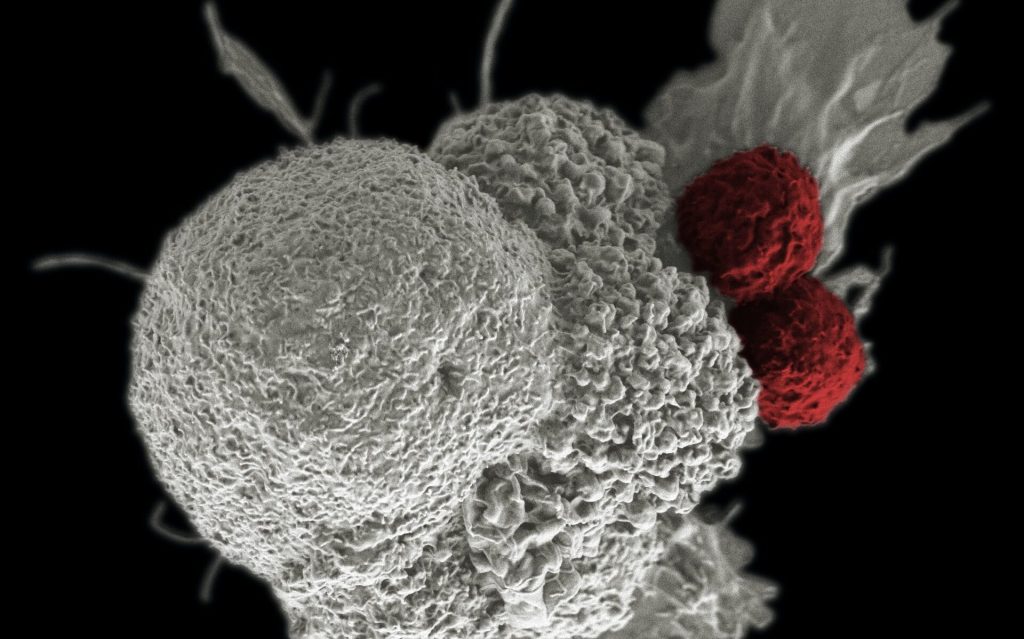
Shown here is a pseudo-colored scanning electron micrograph of an oral squamous cancer cell (white) being attacked by two cytotoxic T cells (red), part of a natural immune response. Photo by National Cancer Institute on Unsplash
Researchers have found that oxidative stress plays a role the inevitable occurrence of multi-drug resistance during tumour therapy, which they report in the Journal of Biochemical and Molecular Toxicology.
While chemotherapy is a mainstay of cancer treatment, it is often hindered by the development of drug resistance, eventually evolving into multidrug-resistance which renders most drugs ineffective.
Multidrug resistance is responsible for over 90% of deaths in cancer patients receiving traditional chemotherapeutics or novel targeted drugs. Its mechanisms include elevated metabolism of xenobiotics, enhanced efflux of drugs, growth factors, increased DNA repair capacity, and genetic factors (gene mutations, amplifications, and epigenetic alterations).
The most well-known mechanism is the induction of Adenosinetriphosphate (ATP)-binding cassette (ABC) transporters by chemotherapeutic drugs. These transporters are highly expressed in cancer cells and pumped out chemotherapeutics to make the treatment ineffective.
Earlier research had shown that non-substrate nanoparticles could induce multidrug resistance by inducing oxidative damage, suggesting that multidrug resistance could be induced by oxidative damage as well as the substrate.
To confirm the this, Yin Jian and his team investigated the interaction of three chemical agents (ethanol, hydrogen peroxide, and doxorubicin) with ABC transporters using a lung cancer cell line (A549) as a model.
Among the three chemicals, doxorubicin is the substrate of ABC transporter and chemotherapeutic drugs, while ethanol and hydrogen peroxide are small-molecule compounds, which have no relationship with the function of ABC transporter.
“When the three substances enter the cells, they can cause significant oxidative stress inside cells,” said Yin.
The elevated oxidative stress induced the expression of transporters, and the elevated transporters reduce intracellular oxidative stress by effluxing oxidized glutathione. In this process, pregnane X receptor played an important regulatory role.
Their results suggested that non-substrate chemicals could also induce ABC transporter expressions similar to chemotherapeutic agents after inducing oxidative damage. This phenomenon could be regarded as a non-specific feedback of tumor cells/ABC transporters to external stimuli.
The conclusions validated the relationship between multidrug resistance mechanisms and oxidative stress. This would help to design advanced strategies on how to enhance this mechanism to more effectively combat ABC transporter-mediated multidrug resistance.
“Considering that peroxidative damage is the main source of the toxicity of current environmental pollutants, long-term exposure to environmental pollutants could not only induce direct toxicity, but also further threaten human health by inducing multi-drug resistance,” said Yin Huancai, another researcher from the team.
Delegates at the 21st Annual Board of Healthcare Funders (BHF) Conference currently being held in Cape Town.
19 May 2022: Healthcare – Cape Town, South Africa: The healthcare system in South Africa and on the continent is beset with structural challenges and skewed political priorities that hamper the attainment of universal healthcare coverage, therefore a fundamental overhaul of the healthcare system and renewed political will is required to improve citizen’s access to quality healthcare services.
Connected virtually, South Africa’s Minister of Health, Dr Joe Phaahla invited the private sector to submit recommended solutions to strengthen the country’s healthcare systems, emphasising the need for a collaborative approach to transform healthcare.
Dr Phaahla conceded that the health system in the country was already weak before the outbreak of COVID and inequality in access to reliable health services is inextricably linked to the economic and social inequality that our country is facing.
The Minister added, “The country’s healthcare system should be restructured to focus more on preventative services rather than the current curative approach.”
“The socio-economic inequality is perpetuated further by our own health services, which are highly heavily commodified. Our two-tiered healthcare system with one being driven by the private sector for a few who can afford it and the other by the public sector being provided for the majority of the population does not bode well for the future prospects of the country. This system is unsustainable and if we are going to talk about a change in strengthening the health system, we cannot avoid talking about the need to accelerate the creation of a more equitable health system.”
He acknowledged that the passing of the NHI Bill will not in itself be a silver bullet in the transformation of our health system, however, will lay a good foundation for the country to timely start to fundamentally transform our health system towards equity.
Speaking about the relationship between politics and healthcare, Professor Patrick Lumumba, former Director of the Kenya Anti-Corruption Commission, said, “Politics is at the very heart of the provision of sound healthcare systems.”
He challenged some of the perceptions around the delivery of national healthcare insurance across Africa, asking governments and the private sector to closely examine suitable healthcare solutions that will consider the continent’s current different types of conflicts.
He highlighted that considerations should be made in the best interest of the continent’s populations when making the decision on an approach to be taken for the continent’s healthcare needs, bearing in mind what is affordable to the different countries across the continent, especially given that the continent’s entire GDP is less than that of Italy, which has just under 60 million people.
“The continent is currently under different types of conflict at various intensities, and these conflicts are in turn undermining the provision of healthcare,” said Prof Lumumba.
He noted that in Africa, there is a lack of political will to spend more on healthcare despite the commitments made at Abuja, Nigeria, in 2001 to invest a minimum of 15% of their national budget in healthcare.
“Politicians are rich in making promises. The evidence we have in different countries is that universal health care as promised by politicians and as desired by the population is not easily achievable,” he said.
He cautioned against the temptation to compare the healthcare system in Africa with that of developed countries, citing a lower tax base and GDP in Africa to fund a healthcare system that services a substantially larger population.
“The entire GDP of Africa is slightly over two trillion US dollars, which is smaller than the GDP of Spain, which has a population of no more than 50 million people, it is critical that the private and public sectors; and politicians work together to come up with a system that is going to be beneficial to the majority of Africa’s people,” said Professor Lumumba.
He said the envisaged economic revival of Africa cannot be sustained if the continent’s healthcare needs are not adequately addressed.
“If the continent of Africa is to enjoy the perceived economic growth that is expected, then the population must be healthy. Healthcare is about creating healthcare systems that are also able to retain the skills that are required for Africa’s emerging or growing economies. There is also a clear need for collaboration in the delivery of health services,” said Lumumba.
Dr Millicent Hlatshwayo Chairperson of the Government Employees Medical Scheme (GEMS) reiterated the need for the private healthcare sector to play a meaningful role towards shaping the proposed healthcare funding model to ensure its sustainability.
She acknowledged that the healthcare sector is faced with several systemic challenges, and this is reflected in our international rankings; where South Africa ranks 49th out of 89 countries on the 2022 Global Healthcare Index. Though South Africa is the highest-ranked African country in this index, it has been rated below its peers in BRICS such as China and India, which are rated 40th and 44th respectively.
Dr Hlatshwayo said, “Proposed reforms such as the implementation of the NHI can help to facilitate better cooperation between the public and private sectors. We cannot afford to be passive observers in these deliberations, because our failure to act on these opportunities will be an indictment on the industry.”
Dr Hlatshwayo said from its inception, GEMS has been aligned with the transformation of the healthcare industry and supportive of the principles of universal health coverage.
She said universal health coverage can only be achieved if we get the basics in place, namely qualified staff, equipment and technology, infrastructure and working systems.
A 3D map of the islet density routes throughout the healthy human pancreas. Credit: MariusOrion/Wikimedia Commons
In a paper published in The Lancet Diabetes & Endocrinology, researchers report that their long-running islet cell transplant programme has shown that is safe and helps control diabetes for up to 20 years.
The researchers reported on patient survival, graft survival, insulin independence and protection from life-threatening hypoglycaemia for 255 patients who have received a total of more than 700 infusions of islets at the University of Alberta Hospital over the past two decades.
“We’ve shown very clearly that islet transplantation is an effective therapy for patients with difficult-to-control Type 1 diabetes,” said Professor James Shapiro at the University of Alberta. “This long-term safety data gives us confidence that we are doing the right thing.”
In Type 1 diabetes, the immune system mistakenly destroys the cells within the insulin-producing islets so patients have to take insulin by injection. Patients with hard-to-control diabetes face dangerous hypo- or hyperglycaemia and long-term complications.
Between March 1999 and October 2019, 255 patients received islet transplants by infusion into their livers. Seventy per cent of the grafts survived for a median time of nearly six years. The researchers reported that a combination of two anti-inflammatory medications given during the first two weeks following transplant significantly increased long-term islet function.
The transplant recipients have to take lifelong immunosuppression drugs, which in some cases lead to skin cancer or infection, but most such complications were not fatal during the study period.
After two or more islet infusions and a median time of 95 days following the first transplant, 79% of the recipients could go off insulin. A year later, 61% remained insulin-independent, 32% at five years and 8% after 20 years, the researchers reported. Even though most patients had to start taking insulin again, doses were generally much smaller and diabetes control was improved.
“Being completely free of insulin is not the main goal,” said Prof Shapiro. “It’s a big bonus, obviously, but the biggest goal for the patient — when their life has been incapacitated by wild, inadequate control of blood sugar and dangerous lows and highs — is being able to stabilise. It is transformational.”
With trials ongoing in other countries, Prof Shapiro will continue to focus on finding a more plentiful supply of islet cells to replace the current reliance on deceased donors. Human trials have already shown success using stem cells programmed to produce insulin. Trials have just started to transplant cells that have been gene edited to make them invisible to the immune system.
“Islet transplant as it exists today isn’t suitable for everybody, but it shows very clear proof of concept that if we can fix the supply problem and minimize or eliminate the anti-rejection drugs, we will be able to move this treatment forward and make it far more available for children and adults with Type 1 and Type 2 diabetes in the future,” said Shapiro.
In unvaccinated individuals, omicron-derived immunity provides little long-term immunity against other variants, according to new research in the journal Nature.
In experiments using mice and blood samples from omicron-infected, the team found that the omicron variant induces only a weak immune response. In vaccinated individuals, this weak response helped strengthen overall protection against a variety of COVID strains. In contrast, the immune response in unvaccinated individuals failed to confer broad, robust protection against other strains.
“In the unvaccinated population, an infection with omicron might be roughly equivalent to getting one shot of a vaccine,” said Melanie Ott, MD, PhD, director of the Gladstone Institute of Virology and co-senior author of the new work. “It confers a little bit of protection against COVID, but it’s not very broad.”
A weaker infection
When it emerged in late 2021, omicron infection was soon observed to cause less severe disease, but whether it conferred broad, long-term immunity was not known.
“When the omicron variant first emerged, a lot of people wondered whether it could essentially act as a vaccine for people who didn’t want to get vaccinated, eliciting a strong and broad-acting immune response,” said Irene Chen, co-first author of the new study and graduate student in Ott’s lab.
To find the answer, the team of researchers first examined the effect of omicron in mice. In the omicron-infected mice, despite the milder symptoms, the immune system still generated the T cells and antibodies typically seen in response to other viruses.
“We demonstrated in this study that the lower pathogenicity of omicron is not because the virus cannot take hold,” said Nadia Roan, PhD, an associate investigator at Gladstone.
This means the difference in symptoms and immune response due to other reasons, such as lower replication or the type of antibodies that are generated.
No cross-variant protection
The researchers took blood samples from mice infected with the ancestral, delta, or omicron variants of SARS-CoV-2 and measured the ability of their immune cells and antibodies to recognise five different viral variants – ancestral (WA1), alpha, beta, delta, and omicron.
Blood from uninfected animals was unable to neutralise any of the viruses. Samples from WA1-infected animals could neutralise alpha and, to a lesser degree, the beta and delta virus – but not omicron. Samples from delta-infected mice could neutralise delta, alpha and, to a lesser degree, the omicron and beta virus.
Blood from omicron-infected mice could only neutralise the omicron variant.
The team confirmed these results using blood from ten unvaccinated people who had been infected with omicron, and found their blood was unable to neutralise other variants. When they tested blood from 11 unvaccinated people who had been infected with delta, the samples could neutralise delta and, as had been seen in mice, the other variants to a lesser extent.
When they repeated the experiments with blood from vaccinated people, the results were different: vaccinated individuals with confirmed omicron or delta breakthrough infections all showed the ability to neutralize all the tested variants, conferring higher protection.
“When it comes to other variants that might evolve in the future, we can’t predict exactly what would happen, but based on these results, I’d suspect that unvaccinated people who were infected with omicron will have very little protection,” said Ott. “But on the contrary, vaccinated individuals are likely to be more broadly protected against future variants, especially if they had a breakthrough infection.”
While the COVID pandemic put the spotlight on the issue of mental health and burnout among doctors and nurses, less was known about the mental health of pharmacists. Results of a longitudinal study published in the Journal of the American Pharmacists Association reveal a suicide rate among pharmacists nearly twice that of the general population.
The figures are based on data from 2003 through 2018, show a suicide rate of 20 per 100 000 pharmacists compared to 12 per 100 000 in the general population. Study authors expect numbers to be even higher in subsequent years due to the additional stressors of the pandemic, and are currently evaluating more recent data.
“If we learned anything from the pandemic, it’s that there is a breaking point for health professionals,” said corresponding author Kelly C. Lee, PharmD, professor at UC San Diego.
The study identified the most common means of suicide in this population, with 49.8% of cases involving firearms, 29.4% involving poisoning and 13% involving suffocation. The use of firearms was similar between pharmacists and the general population, but poisoning via benzodiazepines, antidepressants and opioids was more frequent among pharmacists.
The data also provide some insight into contributing factors, including a history of mental illness and a high prevalence of job problems. Job problems are the most common feature of suicides across health care professions.
For pharmacists, Lee said job problems reflect significant changes in the industry in recent years, with more pharmacists being employed by hospitals and chain retailers as opposed to the small, private pharmacies more common in the past. Pharmacist responsibilities have also grown considerably, with larger volumes of pharmaceuticals to dispense and increasing demands to administer vaccines and other health care services.
“Pharmacists have many more responsibilities now, but are expected to do them with the same resources and compensation they had 20 years ago,” said Prof Lee. “And with strict monitoring from state and federal regulatory boards, pharmacists are expected to perform in a fast-paced environment with perfect accuracy. It’s difficult for any human to keep up with that pressure.”
Future research will further evaluate which job problems have the biggest impact and how the field can better respond. In the meantime, Prof Lee advised pharmacists to encourage help-seeking behaviours amongst themselves and their colleagues.
“Mental health is still highly stigmatised, and often even more so among health professionals,” said Prof Lee. “Even though we should know better, there is such an expectation to appear strong, capable and reliable in our roles that we struggle to admit any vulnerabilities. It’s time to take a look at what our jobs are doing to us and how we can better support each other, or we are going to lose our best pharmacists.”
A comparison of vaccinations has demonstrated that mRNA vaccines perform better against variants of concern (VOCs) than viral vector vaccines. Although they all effectively prevent severe disease by VOCs, the research published in PLOS Medicine suggests that people receiving a viral vector vaccine are more vulnerable to infection by new variants.
The Pfizer-BioNTech and Moderna are mRNA vaccines, which deliver genetic code to the bodies’ cells, whereas Oxford/AstraZeneca and J&J are viral vector vaccines which uses a modified virus to deliver instructions. J&J is delivered as a single dose while the rest are administered two weeks apart.
Marit J. van Gils at the University of Amsterdam, Netherlands, and colleagues, took blood samples from 165 healthcare workers, three and four weeks after first and second vaccination respectively, and for J&J at four to five and eight weeks after vaccination. Samples were collected before, and four weeks after a Pfizer-BioNTech booster.
Four weeks after the initial two doses, antibody responses to the original SARS-CoV-2 viral strain were highest in recipients of Moderna, followed closely by Pfizer-BioNTech, and were substantially lower in those who received viral vector vaccines. Tested against the VOCs Alpha, Beta, Gamma, Delta and Omicron, neutralising antibodies were higher in the mRNA recipients than the viral vector recipients. Neutralisation ability against VOCs was reduced in all vaccine groups, with the greatest reduction against Omicron. The Pfizer-BioNTech booster increased antibody responses in all groups with substantial improvement against VOCs, including Omicron.
The researchers caution that their AstraZeneca group was significantly older, because of safety concerns for the vaccine in younger age groups. As immune responses tend to weaken with age, this could affect the results. This group was also smaller because the Dutch government halted use for a period.
In an opinion piece, Neil Tabatznik reflects on how starting the Tshemba Foundation reignited his passion for his native South Africa.
South Africa is not only the most unequal country in the world, it also does not care well enough for its weak and sick. Its inequitable access to healthcare is iniquitous in many parts of the developing world. But to me, a former South African who left the country during one of South Africa’s darkest periods in history, which was rife with government oppression at the time, it reflects the legacy of apartheid.
Having departed for England in 1971, where I practiced law before leaving for Canada, South Africa became a distant and awful memory: I had planned to leave and never come back.
I stayed away for 36 years and cut all ties with the country.
However, seventeen years ago, I returned to South Africa, for personal reasons: my son’s bar mitzvah. With family dispersed across North America, Europe and Australia, South Africa felt like a central place to congregate. It was during the new, post-apartheid period in South Africa that I fell in love with the country all over again.
I started the Tshemba Foundation in Hoedspruit, Mpumalanga, out of complete selfishness initially: It was an excuse to come back to South Africa, while doing good.
At the time, The Tshemba Foundation approached the provincial health department, pitched the concept and offered to bring skilled medical volunteers to the region – and a partnership was born.
The Foundation operates a medical volunteer programme that serves as a model of public-private partnership in the healthcare sector. Initially, I had reached out to colleagues and friends approaching retirement in the UK and Canada, recognising that they had immense skills, time on their hands, and could easily be enticed to come and help while staying at a lodge we had set up on a game reserve in South Africa. The Health Professions Council of SA (HPCSA) proved to be a barrier to this idea, because they refused to register any doctor who had left SA during the Apartheid era (intending never to return) demanding that they pay membership fees accruing during the intervening years. Although this barrier remains, we have still been able to recruit hundreds of volunteers from South Africa and abroad.
Designed to connect skilled professionals from the medical and allied professions with a desire to give back to rural communities in need, we have operated out of the Tintswalo Hospital, a 423-bed public hospital, and surrounding clinics, since 2017.
The Foundation relies on medical volunteers to bridge the gaps in patient care in rural Mpumalanga: Professionals who give up their time and expertise to bring value to underprivileged and underserved communities, while supporting existing staff with training, educational opportunities and fresh perspectives. We assist volunteers with HPCSA registration, to allow them to volunteer in South Africa, but they have to make their own way to Mpumalanga and are provided with free lodging.
Tintswalo Hospital is one of the biggest in the province, serving a rural, underserved population of about 300 000. The hospital has no specialist doctor posts, and if any staff member leaves, from groundsman to senior doctor, it is extremely difficult to replace them due to severe budgetary constraints.
Our “leave of purpose” programme recruits both local and international medics to volunteer their services in these rural areas. They cover a wide range of disciplines, from generalists and dentists to ophthalmologists that perform cataract surgeries and specialist researchers who are spearheading a rural ultrasound project.
Our flagship projects, offered in partnership with the Mpumalanga Department of Health and Tintswalo Hospital, are a state-of-the-art eye clinic and cataract operating theatre, which screens and remedies common, treatable eye diseases, and the Hlokomela Women’s Clinic where pap smears, cryotherapy, and breast, pelvis, abdomen and pregnancy ultrasounds are offered. Women no longer need to travel vast distances to receive screening and treatment: they can get such specialist care at Tintswalo.
Tshemba’s eye clinic volunteers have helped over 700 elderly patients – many of whom were being cared for by grandchildren and other family members, thereby depriving them of access to education and employment.
The programme would not have been possible without the cooperation and enthusiasm of medics, the community, the Mpumalanga Department of Health and international benefactors.
To date, we have attracted about 200 local and global volunteers, mostly from the US, Canada, Europe and Australia, who have devoted the equivalent of over 9,000 healthcare professional days, treated 19,630 patients and held 294 training sessions. These training sessions not only assist local healthcare professionals with continuing professional development and informal clinical teaching, but they also ensure that the Foundation makes a lasting and sustainable impact on the quality of rural healthcare.
Now, the challenge is to make The Tshemba Foundation sustainable. We are registering it as a charity in the UK, Canada and the United States, but we need more support.
We hope to strengthen our relationship with the province to improve healthcare, without flooding hospitals with volunteers. Instead, we would like to build on the power of the clinics by posting medics to smaller healthcare centres.
Our work makes a real difference, not only in the lives of the communities who lack access to healthcare that people in urban centres take for granted, but also in the lives of those who volunteer their services.