How Will Roe v Wade Decision Influence the World?

Photo by Andy Feliciotti on Unsplash

With the US Supreme Court’s overturning the Roe v Wade decision, abortion rights are now up to individual US states. However, while there are no legal implications for the rest of the world, it will undoubtedly have a huge influence on other countries’ abortion campaigning and lawmaking decisions. Future anti-abortion efforts in the US may also impact the country’s funding of reproductive services in regions such as Africa.

Without access to legal, safe abortion, many pregnant people will turn to unsafe methods. According to the World Health Organization, 97% of all unsafe abortions happen in developing countries. Some 4.7–13.2% of maternal deaths are attributable to unsafe abortion.

Although Roe v Wade does not have a legal effect in Africa, it was frequently invoked in abortion. Tunisia liberalised its abortion law just nine months after the Roe v Wade ruling – allowing women to access the service on demand. Additionally, in 1986, Cape Verde allowed for abortion on request prior to 12 weeks gestation which aligns with Roe v Wade holding of the same.

In South Africa, the right to abortion is not directly enshrined in the Constitution, but the 1996 Choice in Termination of Pregnancy Act greatly widened accessibility to safe, legal abortions, causing a 90% drop in abortion mortality from 1994 to 2001. The previous apartheid-era laws and their enforcement were predictably stained by racism: abortion was limited to encourage white population growth while contraceptives were promoted to control the population growth of black and coloured people. Wealthy whites could fly to England for an abortion there if they could not arrange one. The 1996 Act was met with significant opposition on religious grounds, and it is speculated that had the ANC done this with an open vote, it would not have passed with such a wide margin.

Even today, research shows that abortion remains highly stigmatised among South Africans, with 75.4% of people surveyed indicating that it was “always wrong” in case of family poverty, and 52.5% indicating the same for either foetal abnormality or family poverty. Provincial splits are apparent, with Gauteng and Limpopo having a > 1 odds ratio of being against abortion.

The 2003 Maputo Protocol adopted by the African Union requires countries to authorise medical abortions in cases of sexual assault, rape, incest, or where the health of the mother is endangered. This specific provision draws from the 1979 United Nations Convention on the Elimination of All Forms of Discrimination Against Women (CEDAW), whose clause on access to safe abortion was based on on Roe v Wade. However, 12 AU members have not ratified the protocol, and many of those who did have not fully brought their laws into line. South Africa is only one of six African nations that effectively allow elective abortions. Of these, Mozambique and Benin only fully changed their laws in 2020 and 2021.

Abortion opponents led by the Catholic Church and its affiliates enjoy widespread political and social support in many African countries. In 2020, Bhekisisa investigated African pregnancy crisis centres funded by US anti-abortion groups. These centres actively discourage abortion, exerting pressure on girls and women and are rife with misinformation, such as grossly exaggerating the size and development of the foetus in early stages of pregnancy. One NGO offered training to say that abortion would “turn” women’s partners gay if they got an abortion.

Thus, while the legal outcome of Roe v Wade being overturned will have no bearing on South Africa, it will conceivably embolden anti-abortion groups both domestically and abroad and likely to increase the influence they already exert in the country.


ECT Particularly Effective in Treating Severe Mania

Photo by Zoltan Tasi on Unsplash

Most patients with mania responded to electroconvulsive therapy (ECT), according to a Swedish study published in JAMA Network Open. Patients with more severe illness were also far more likely to respond to treatment, the study’s researchers found.

The study recruited 571 individuals who were in a manic episode treated with ECT, 482 (84.4%) responded. Of these, 28% of these patients were able to achieve remission of mania, the researchers found. ECT treatments were mostly given three times a week.

The patient group was 63% female, with a median age of 46. Most had mania with psychotic symptoms, and roughly a quarter were voluntarily admitted to the hospital, while 60% were involuntarily committed. About 45% had been exposed to prior ECT.

“These findings suggest that ECT may be a highly effective option for treating mania, which is in line with the literature reporting response rates of 56% to 100%,” the authors noted.

The severity of illness was associated with an increased chance of responding to ECT; 83% for markedly ill, 84% for severely ill, and 92% for extremely ill patients. Illness severity was graded according to Clinical Global Impression Improvement scale (CGI-I) score.

Additionally, patients who underwent more ECT treatments in an index series were significantly more likely to have a clinical response, with the greatest odds of response being among patients who received more than 9 treatments.

Clinical factors reducing a patient’s odds of responding to ECT included comorbid anxiety and comorbid obsessive compulsive disorder.

Factors not associated with a clinical response to ECT were age of mania onset, as well as psychopharmacotherapy before index admission, including lithium, lamotrigine, a first or second generation antipsychotic, valproate, benzodiazepine, antidepressant, anxiolytic, or a central stimulant.

“It is worth highlighting that 63% of patients in our study were treated with 1 or more antimanic agents before admission, suggesting that these treatments may not have been sufficient in reducing symptoms of mania,” the group noted.

Source: MedPage Today

Varenicline Effective in Helping Smokers with Diabetes to Quit

Cigarette butts
Source: Pawel Czerwinski on Unsplash

A new study published in JAMA Network has found that varenicline helps patients with type 2 diabetes to quit smoking.

Not only is cigarette smoking a major risk factor for cardiovascular disease, it is highly prevalent among patients with type 2 diabetes. Smoking worsens the effects of hyperglycaemia and other risk factors, accelerating vascular damage in patients with diabetes.

Compared with nonsmokers with diabetes, smokers have greater risks of mortality, coronary heart disease, stroke, and peripheral arterial disease. Quitting smoking has been associated with reduced mortality risk in patients with type 2 diabetes, as welling achieving better glycaemic control and lower cardiometabolic risk factors.

Smokers with type 2 diabetes are more reluctant quit than smokers without diabetes in part due to fear of weight gain. Weight gain needs to be controlled as part of any cessation intervention. The smoking cessation drug varenicline has been shown to help people without diabetes to quit, but considering the special behavioural and metabolic conditions of smokers with type 2 diabetes, its use and efficacy warranted investigation,

To this end, Cristina Russo, MD, and colleagues conducted a multicentre, double-blind, placebo-controlled randomised clinical trial with 300 participants. Patients with type 2 diabetes, average age 57.4 years who were smoking at least 10 cigarettes a day, and who intended to quit were randomised to either twice-daily varenicline 1mg or placebo treatment. Both groups received smoking cessation counselling. The trial consisted of a 12-week treatment phase followed by a 40-week follow-up, nontreatment phase. Intention-to-treat data analysis was performed from December 2020 to April 2021.

At weeks 9 to 24, continuous smoking abstinence was significantly higher for the varenicline than placebo group (24.0% vs 6.0%). At weeks 9 to 12 (31.3% vs 7.3%) and weeks 9 to 52 (18.7% vs 5.3%) were significantly higher for the varenicline vs placebo group. Adverse events in the varenicline group compared with the placebo group were nausea, insomnia, abnormal dreams, anxiety, and irritability. Serious adverse events were infrequent in both groups and not treatment-related.

The researchers concluded that using varenicline in a smoking cessation programme for people with type 2 diabetes is effective in achieving long-term abstinence without serious adverse events.

Flu Jab May Protect Against Developing Alzheimer’s

Old man
Source: JD Mason on Unsplash

In a study with nearly 2 million older adults, those who received at least one influenza vaccine were 40% less likely than their non-vaccinated peers to develop Alzheimer’s disease over four years of follow-up, according to a new study from UTHealth Houston.

An early online version of the paper detailing the findings is available in advance of its publication in the Journal of Alzheimer’s Disease in August.

“We found that flu vaccination in older adults reduces the risk of developing Alzheimer’s disease for several years. The strength of this protective effect increased with the number of years that a person received an annual flu vaccine – in other words, the rate of developing Alzheimer’s was lowest among those who consistently received the flu vaccine every year,” said first author Avram S. Bukhbinder, MD. “Future research should assess whether flu vaccination is also associated with the rate of symptom progression in patients who already have Alzheimer’s dementia.”

The study comes two years after UTHealth Houston researchers found a possible link between the flu vaccine and reduced risk of Alzheimer’s disease. This new study analysed a much larger sample than previous research, including 935 887 flu-vaccinated patients and 935 887 non-vaccinated patients.

During four-year follow-up appointments, about 5.1% of flu-vaccinated patients were found to have developed Alzheimer’s disease. Meanwhile, 8.5% of non-vaccinated patients had developed Alzheimer’s disease during follow-up.

These results underscore the strong protective effect of the flu vaccine against Alzheimer’s disease, according to Bukhbinder and Schulz. However, the underlying mechanisms behind this process require further study.

“Since there is evidence that several vaccines may protect from Alzheimer’s disease, we are thinking that it isn’t a specific effect of the flu vaccine,” said Professor Paul. E. Schulz, MD, senior author of the study. “Instead, we believe that the immune system is complex, and some alterations, such as pneumonia, may activate it in a way that makes Alzheimer’s disease worse. But other things that activate the immune system may do so in a different way – one that protects from Alzheimer’s disease. Clearly, we have more to learn about how the immune system worsens or improves outcomes in this disease.”

Past research has uncovered a decreased risk of dementia associated with prior exposure to various adulthood vaccinations, including those for tetanus, polio, and herpes, in addition to the flu vaccine and others.

Additionally, as more time passes since the introduction of the COVID vaccine and longer follow-up data becomes available, Dr Bukhbinder said it seeing if there is a similar link between COVID vaccination and the risk of Alzheimer’s disease.

Source: The University of Texas Health Science Center at Houston

Little to No Link Between Glaucoma and Cognitive Function

Older woman smiling
Photo by Ravi Patel on Unsplasj

Previous studies looking for an association between the neurodegenerative disorder glaucoma and cognitive function have produced mixed results. Now, findings from a large study recently published in the Journal of the American Geriatrics Society suggest that any association, if it exists, will only be small.

Glaucoma, the leading cause of irreversible blindness, is a progressive optic neuropathy with incompletely understood pathogenesis that results in progressive vision loss, often beginning with peripheral visual field defects. As a neurodegenerative process, glaucoma is associated with trans-synaptic degeneration in the brain, specifically in the lateral geniculate nucleus and visual cortex. Some prior studies have suggested that the pathogenesis of primary open angle glaucoma (POAG) and normal tension glaucoma (NTG), specifically, may be part of a broad neurodegenerative mechanism with ocular and non-ocular manifestations. Evidence also suggests that impaired vision is associated with a significant increase in the risk of accelerated cognitive decline and incident dementia. Therefore, there is interest in measuring an association between glaucoma and dementia.

The study included 7073 US adults aged 51 years and older who were interviewed by phone every two years. Those who developed glaucoma tended to have higher cognitive function scores but steeper rates of cognitive score decline over a maximum follow-up time of 18 years. The observed associations between glaucoma and cognitive function were small and unlikely to be clinically meaningful. 

“In this large longitudinal study, a diagnosis of glaucoma was not associated with steeper rates of cognitive decline; however, this study did not have access to clinical data to determine whether glaucoma-related vision loss is a risk factor for cognitive decline and dementia,” said senior author Joshua R. Ehrlich MD, MP, of the University of Michigan Medical School. “This is an important question for future studies to consider.” 

Source: Wiley

‘Goldilocks’ Window for Immunotherapy Without Side Effects

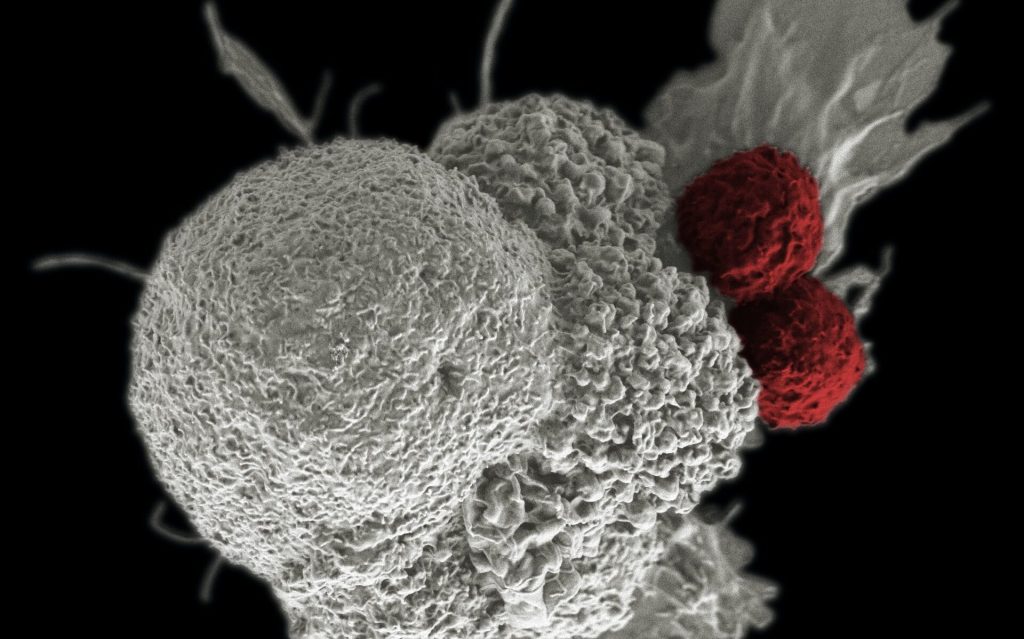
Shown here is a pseudo-colored scanning electron micrograph of an oral squamous cancer cell (white) being attacked by two cytotoxic T cells (red), part of a natural immune response. Photo by National Cancer Institute on Unsplash

Researchers have developed a way to potentially reduce the toxic side-effects of CAR T cell immunotherapy, in findings that could overcome the pioneering treatment’s biggest limitation.

Their new study, reported in eLife, has come up with a way to identify a ‘goldilocks’ window that fine-tunes the cells used in the immunotherapy so that their activity is strong enough to eliminate the cancer but not so strong that they generate toxic side-effects.

Therapy provokes ‘perfect storm’

CAR T cell therapies involve collecting T cells from a cancer patient and supercharging the cells by individually re-engineering them in the laboratory. These enhanced cells are then put back into patients.

CAR T cell immunotherapy can be up to 90% effective in certain blood cancers, even curing some patients. But the treatment has harmful side-effects, with about 50% of patients experiencing dangerous complications.

The T cells are engineered to produce proteins on their surface called chimeric antigen receptors (CARs), which enable T cells to recognise and bind to specific proteins on the surface of cancer cells more efficiently.

Associate Professor Matthew Call said this synthetic sensor is what gives T cells the enhanced ability to attack and eliminate threats, like cancer cells.

“While putting these supercharged T cells into a patient with a high tumour burden can swiftly eradicate cancer cells, it also creates the perfect storm for an ongoing toxic response that can be harmful,” Associate Prof Call said.

There is currently no way of reliably predicting how strong CAR T cell therapy will be for a patient.

While previous studies have attempted to fine-tune T cells by targeting the end sections of the sensor, which either bind to the cancer cell or instruct the T cells to kill, the new research is the first to look at completely redesigning the middle part.

Researchers leveraged the computational expertise of the Weizmann Institute of Science to stitch together pieces of natural immune sensors with custom-designed synthetic elements, to generate new circuits that could be used to tune and assess variations of potency.

“Focusing on the connector fragment in the middle allows us to generate different versions of CARs that we know are stronger or weaker, enabling us to customise them to a patient’s potency requirements,” Associate Prof Call said.

“Being able to predictably tune this T cell activity significantly broadens our research, contrary to previous studies, because we are targeting something that exists in every immunotherapy scenario.

“For the first time, we can establish rules that will be applicable to any cancer where CAR T cell immunotherapy is being used.”

Enhanced treatment

Associate Prof Call said the ability to fine-tune T cells would dramatically reduce the number of patients experiencing severe side-effects from the treatment, which can include fever, high blood pressure and respiratory distress.

“CAR T cell therapy has proven effective in eradicating very advanced leukaemias and lymphomas, while also keeping the cancer at bay for many years – even after a patient has stopped taking cancer medication,” Associate Professor Call said.

“The therapy has incredible potential for cancer patients, but is currently used as a last resort due to these potentially severe side-effects.

“Our tools could lead to a fundamental rethink of the way CAR T cell therapy is offered by reducing a patient’s exposure risk to harmful side-effects. This would allow patients with a broad range of cancers to be given CAR T cell therapy far earlier in the treatment process.”

There are currently over 600 clinical trials of CAR T cell immunotherapy, with the treatment already being used for several blood cancers.

Researchers hope their new tool could be used to triage immunotherapy patients according to the potencies required in the early treatment phases, bringing the field closer to hitting that ‘goldilocks’ treatment window for many different cancers.

The next research phase will focus on progressing these findings into a clinical setting to see CAR T cell therapy used as a safer, first-line treatment.

Source: Walter and Eliza Hall Institute of Medical Research

Erectile Dysfunction Drugs Repurposed for Cancer Treatment

Killer T cells about to destroy cancer cell
Killer T cells about to destroy cancer cell (centre). Credit: NIH

Researchers report repurposing an unusual class of drugs to combat oesophageal cancer – PDE5 inhibitors, which are mainly used as erectile dysfunction treatments.

Tumours are surrounded by a microenvironment made up of blood vessels, immune cells, enzymes and a variety of other cells the tumour needs to survive, including cells called fibroblasts that are essential in building connective tissue.

Research suggests that this microenvironment is key to a cancer’s development, and now researchers have found that an erectile dysfunction drug that targets the tumour microenvironment that could improve treatment for certain cancers.

Finding a new target

In some cancers, the tumour microenvironment allows tumours to resist treatment, preventing chemotherapy from having a beneficial effect.

This is the case in oesophageal cancers, which, though rare, currently has poor survival outcomes.

To try to overcome this resistance, a team of researchers led by Professor Tim Underwood at the University of Southampton, wanted to identify the cells in the tumour microenvironment that protect the tumour from treatment so they could target them.

“Where targeting cancer cells with one specific treatment can be difficult because they differ between patients, targeting the microenvironment cells may be more likely to have traction because they are similar across patients,” said Prof Underwood.

“Rather than going after the cancer cells, actually, if we take away their ‘soil’ and go after the environment they live in, we might have more success.

“The plants might be different, but if you poison the soil, they’ll all die.”

New uses for old drugs

By examining cells from oesophageal cancers called adenocarcinomas, the team found that levels of an enzyme called PDE5 are higher in these cancer cells than in health oesophageal tissues.

Specifically, the high levels of PDE5 were found in cells called cancer associated fibroblasts (CAFs), which are important for tumour growth. They also found that the more PDE5 a tumour contained, the worse the prognosis was, suggesting that PDE5 would be an effective target for treatment.

Luckily, PDE5 inhibitors already exist, commonly used to treat erectile dysfunction.

The researchers discovered that in addition to its usual function of relaxing muscles to allow increased blood flow, PDE5 inhibitors were able to suppress CAF activity, and make them behave like normal fibroblasts again.

Improving treatment safely

Once Prof Underwood’s team had found that PDE5 inhibitors worked, a collaborating team took samples of tumour cells from 15 tissue biopsies from 8 patients and used them to create artificial lab-grown tumours. With these tumours, the researchers could test a combination of PDE5 inhibitions and standard chemotherapy in the lab.

Twelve of these samples were taken from people whose tumours had shown a poor response to chemotherapy in the clinic. Of these, 9 were made sensitive to chemotherapy following the addition of the PDE5 inhibitor targeting CAFs.

They also tested the treatment on mice implanted with chemotherapy resistant oesophageal tumours and found that there were no adverse side effects to the treatment, and that chemotherapy combined with PDE5 inhibitors shrunk the tumours more than chemotherapy alone.

Repurposing existing drugs like PDE5 inhibitors takes advantage of well-established safety profiles.

However giving PDE5 inhibitors to people with oesophageal cancer would be extremely unlikely to cause erections without the appropriate stimulation.

“The chemotherapy resistant properties of oesophageal tumours mean that many patients undergo intensive chemotherapy that won’t work for them,” said Prof Underwood.

“Finding a drug, which is already safely prescribed to people every day, could be a great step forward in tackling this hard-to-treat disease.”

Source: Cancer Research UK

New Study Launched to Examine How Sleeps Aids Stroke Recovery

Sleeping woman
Photo by Cottonbro on Pexels

Researchers at the University of East Anglia are launching a new study to investigate how sleep can aid in stroke recovery, by examining whether people’s sleep patterns influence recovery of neuromuscular function.

Lead researcher Prof Valerie Pomeroy, from UEA’s School of Health Sciences, said: “We want to better understand how the brain recovers after a stroke – so we will be investigating how stroke survivors regain movement, and how this is influenced by sleep and time.

“We hope to find out more about sleep patterns that are beneficial for movement recovery after stroke.”

The team are looking for people in the region who have had a stroke to take part in the study. Participants will undertake measures of daily activity, sleep and movement.

The project will involve measuring people’s movement using small sensors placed on the skin’s surface that record natural muscle activity whilst they carry out a daily task – picking up a telephone.

Participants will be asked to attend two visits at the university, during which participants will undertake the movement measures and complete questionnaires about how they sleep. 

In-between visits, participants will wear a motion watch on each wrist for seven days to measure their everyday activity at home.

Prof Valerie Pomeroy said: “There is strong evidence that physiotherapy improves the ability of people to move and be independent after a stroke.  But at six months after stroke many people remain unable to produce the movement needed for everyday activity such as answering a telephone. 

“We are undertaking this study to understand more about whether this situation could be improved by using interventions to change a patient’s sleep pattern and thus improve recovery of movement ability.”

Source: University of East Anglia

Regulatory T Cells Play a Surprising Role in Hair Growth

Photo by Engin Akyurt on Unsplash

In an unexpected finding in studying alopecia, scientists have uncovered an unexpected link between T cells and hair growth, which could potentially be used to treat the condition. The findings, published in Nature Immunology, describe how regulatory T cells interact with skin cells using a hormone as a messenger to generate new hair follicles and hair growth.

Alopecia is an autoimmune condition where the immune system attacks the hair follicles, resulting in hair loss.

“For the longest time, regulatory T cells have been studied for how they decrease excessive immune reactions in autoimmune diseases,” explained Ye Zheng, associate professor at the Salk Institute and the paper’s corresponding author. “Now we’ve identified the upstream hormonal signal and downstream growth factor that actually promote hair growth and regeneration completely separate from suppressing immune response.”

Initially, the researchers were investigating the roles of regulatory T (Treg) cells and glucocorticoid hormones in autoimmune diseases. (Glucocorticoid hormones are cholesterol-derived steroid hormones produced by the adrenal gland and other tissues.) They first investigated how these immune components functioned in multiple sclerosis, Crohn’s disease and asthma.

They found that glucocorticoids and Treg cells did not function together to play a significant role in any of these conditions. So, they thought they’d have more luck looking at environments where Treg cells expressed particularly high levels of glucocorticoid receptors (which respond to glucocorticoid hormones), such as in skin tissue. The scientists induced hair loss in normal mice and mice lacking glucocorticoid receptors in their Treg cells.

“After two weeks, we saw a noticeable difference between the mice — the normal mice grew back their hair, but the mice without glucocorticoid receptors barely could,” says first author Zhi Liu, a postdoctoral fellow in Associate Prof Zheng’s lab. “It was very striking, and it showed us the right direction for moving forward.”

The findings suggested that some sort of communication must be occurring between Treg cells and hair follicle stem cells to allow for hair regeneration.

The scientists then investigated how the regulatory T cells and glucocorticoid receptors behaved in skin tissue samples, and found that glucocorticoids instruct the Treg cells to activate hair follicle stem cells, leading to hair growth. This crosstalk between the T cells and the stem cells depends on a mechanism whereby glucocorticoid receptors induce production of the protein TGF-beta3, all within the regulatory T cells. TGF-beta3 then activates the hair follicle stem cells to differentiate into new hair follicles, promoting hair growth. Additional analysis confirmed that this pathway was completely independent of regulatory T cells’ ability to maintain immune balance.

However, Treg cells don’t normally produce TGF-beta3, as they did here. A database search revaled that this phenomenon occurs in injured muscle and heart tissue, similar to how hair removal simulated a skin tissue injury in this study.

“In acute cases of alopecia, immune cells attack the skin tissue, causing hair loss. The usual remedy is to use glucocorticoids to inhibit the immune reaction in the skin, so they don’t keep attacking the hair follicles,” said Associate Prof Zheng. “Applying glucocorticoids has the double benefit of triggering the regulatory T cells in the skin to produce TGF-beta3, stimulating the activation of the hair follicle stem cells.”

This study revealed that Treg cells and glucocorticoid hormones are not just immunosuppressants but also have a regenerative function. Next, the scientists will look at other injury models and isolate Treg cells from injured tissues to monitor increased levels of TGF-beta3 and other growth factors.

Source: Salk Institute

First Confirmed Monkeypox Case in SA

Source: Wikimedia CC0

South Africa has recorded its first case of monkeypox Thursday, 23 June. Health Minister Dr Joe Phaahla said that he received a report from the National Health Laboratory Services’ CEO that lab tests have confirmed the first case of monkeypox in South Africa, a 30-year-old man from Johannesburg.

The South African Health Products Regulatory Authority (SAHPRA) has prepared information on monkeypox symptoms and treatment. However, the pharmaceutical treatments for it (tecovirimat and brincidofovir) are not registered in South Africa.

Symptoms and epidemiology

The monkeypox virus causes symptoms similar to smallpox, but less severe. Symptoms include:

  • Skin rash
  • Headache
  • Swollen lymph nodes
  • Muscle and body pains
  • Back pain
  • Weakness

The monkeypox virus is endemic to Central and West Africa in two distinct clades with differing severities: the West Africa (< 1% case fatality rate) and the Congo Basin (11% case fatality rate). Human-to-human transmission can occur via contact with bodily fluids, skin lesions or internal mucosal surfaces such as the mouth or throat, respiratory droplets, and contaminated objects.

The polymerase chain reaction (PCR) test is the best, most reliable testing method, and the best specimens are sourced from rash, fluids or crusts. Antigen and antibody detection are not accurate.

Since 15 June 2022, 2 103 laboratory confirmed cases of monkeypox, one probable case, and one death have been reported to the World Health Organisation (WHO) from 42 countries.  Endemic countries include Benin, Cameroon, Central African Republic, DRC, Gabon, Ghana, Ivory Coast, Liberia, Nigeria, Sierra Leone and South Sudan. To date all cases have been identified as being infected by the West African Clade.

Cases have been identified in South Africa, Australia, Belgium, Canada, France, Germany, Italy, The Netherlands, Portugal, Spain, Sweden, UK, and the USA.

Information suggests that this is common among homosexual men and who seek treatment and care at healthcare institutions. Furthermore, those at risk are individuals who have had physical contact with someone with monkeypox.

Monkeypox management and treatment

Any patient with suspected symptoms should be investigated, and if confirmed, isolated until such time that their lesions have crusted, scabs have fallen off and a fresh layer of skin has formed.

According to the National Institute Communicable Diseases (NICD), this type of infection does not require specific treatment as the disease does resolve on its own. Currently in South Africa, there is no specific vaccine registered for monkeypox; however, the Varicella Zoster is registered for smallpox.

There are no specific treatments for the Monkeypox infection, but outbreaks can be controlled. The Food and Drug Administration (FDA) has approved tecovirimat (TPOXX) and brincidofovir (TEMBEXA) for the treatment of smallpox; however, these have not been registered in South Africa.

It is important to note that most human cases of Monkeypox resolve within 2–3 weeks of being infected without side-effects. Also, an infected person is infectious at the start of the rash/lesions through the stage when scabs form. However, when these scabs fall off, the person is no longer contagious.

Source: SAHPRA