Understanding the Basic Steps to Obtaining Informed Consent

Taking the time to obtain proper informed consent is one of the most effective ways to avoid medico-legal challenges. Other than building the doctor-patient relationship, it ensures that patients do not encounter unpleasant surprises on their care journey which may result in unnecessary anger and blame. 

Informed consent is a process where you provide information sufficient to enable the patient to make an informed decision relating to their healthcare. Although the signature of a consent form often constitutes completion of the consent process, a signature on a consent form without a balanced discussion does not constitute informed consent.

Informed consent is both a legal and ethical requirement. The National Health Act gives patients the right to be informed of the various treatment options available, and the benefits, risks and costs of each treatment option. It also gives patients the right to participate in decisions regarding their treatment and the right to consent before any treatment is given unless it is an emergency and they aren’t able to consent. From an ethical perspective, informed consent has two main objectives, firstly to respect and promote patients’ autonomy and secondly, to protect patients from potential harm. Medical intervention with a patient’s body is potentially an infringement of the constitutional right to bodily integrity and is legally wrongful unless there is a ground of justification. One such ground of justification is patient consent.

  • Knowing your patient will help focus the discussion during the informed consent process. Enquire about your patient’s personal circumstances, expectations and fears, and assess their understanding of medical concepts and ability to make decisions.  
  • Use simple language and avoid technical terminology when discussing medical facts.
  • Ensure your patient understands their medical condition and its natural history before discussing treatment options. This lets them know what to expect without treatment.
  • List the range of diagnostic procedures and treatment options generally available.  For each, highlight potential benefits and risks, including recognised complications and any potential follow-up treatment.
  • Explain the possible need for emergency management of unforeseen conditions that may emerge.
  • Discuss cost implications and payment responsibility. This considers medical aid coverage, any out-of-pocket costs, the cost of the different procedures, as well as any complications.
  • Allow an opportunity for questions and answers.  Encourage your patient to ask questions. Test your patient’s understanding. Let patients contact you prior to the planned procedure, if they have more questions or concerns.

If a patient has specified that they would rather a procedure didn’t go ahead in the event of certain clinical findings, the patient’s decision must be recorded and respected.

If the patient decides to consent to an intervention, obtain their signed written consent. The patient’s details, health status, the treatment options discussed and the procedure to be performed must be entered into your consent form.

Document complications that have a reasonable likelihood of occurring and/or which are likely to be of importance to your patient, considering personal circumstances.

For example, an abnormal sense of touch after carpal tunnel syndrome surgery may affect a practising dentist more significantly than a retired librarian. 

  • Ensure that your consent form documents that no guarantees or promises have been made regarding the outcomes of the procedure and the patient has a right to refuse the procedure.
  • Your consent form must include any discussions relating to financial consent, the use of anaesthesia and blood products and the need for emergency management in the event of unforeseen complications.
  • Check that the patient initials the document and signs with the correct date. Countersign and date the consent form. Attach any relevant patient information sheet to the informed consent form and allow the patient to take a copy and keep one for the practice.

Consent remains valid until it is withdrawn by the patient or until their circumstances change in a meaningful way. However, if significant time has passed since the original consent was obtained, you may need to update and document your discussion with the patient. Additions or corrections to the consent form must be dated, timed and signed by both parties.

Trust EthiQal to provide you with local legal advice and professional support when you need it most.

EthiQal is a division of Constantia Insurance Company Limited, a licenced non-life insurer and an authorised Financial Services Provider (FSP 31111).


Junior Doctors Get the Chance to Train with ‘Holographic’ Patients

From left to right: Junior doctor Aniket Bharadwaj with trainers Dr Ruby Woodard and Dr Jonny Martin, diagnosing a hologram patient. Credit: University of Cambridge

A new effort from Cambridge University brings medical training in ‘mixed reality’ one step closer with modules that allow student doctors to interact with a ‘holographic’ patient.

Traditional simulation has numerous costs including maintaining simulation centres, their equipment and the faculty and staff hours to operate the labs and hire and train patient actors. This new technology could provide more flexible, cost-effective training that can be accessed all over the world.

HoloScenarios is a new training application based on life-like holographic patient scenarios, is being developed by Cambridge University Hospitals NHS Foundation Trust (CUH), in partnership with the University of Cambridge and US tech company GigXR. The first module focuses on common respiratory conditions and emergencies.

Mixed reality is increasingly recognised as a useful method of simulator training,” said project leader Dr Arun Gupta, consultant anaesthetist at CUH and director of postgraduate education at CUH.

“As institutions scale procurement, the demand for platforms that offer utility and ease of mixed reality learning management is rapidly expanding,” he said. 

Learners wearing mixed-reality headsets can interact with each other and a multi-layered, medically accurate ‘holographic’ patient. This creates a unique environment to learn and practice vital, real-time decision making and treatment choices.

Medical instructors with their own headsets can make changes on the fly, by changing patient responses or introducing complications – whether in person in a teaching group or over the internet.

Learners can also watch, contribute to and assess the holographic patient scenarios from Android, iOS smartphone or tablet. This means true-to-life, safe-to-fail immersive learning can be accessed, delivered and shared across the world, with the technology now available for license to learning institutions everywhere.

Professor Riikka Hofmann at Cambridge’s Faculty of Education is leading an analysis of the technology as a teaching method.

“Our research is aimed at uncovering how such simulations can best support learning and accelerate the adoption of effective mixed reality training while informing ongoing development,” said Prof Hofmann.

“We hope that it will help guide institutions in implementing mixed reality into their curricula, in the same way institutions evaluate conventional resources, such as textbooks, manikins, models or computer software, and, ultimately, improve patient outcomes.”

Junior doctor Aniket Bharadwaj is one of the first to try out the new technology. “Throughout medical school we would have situations where actors would come in an act as patients. With the pandemic a lot of that changed to tablet based interactions because of the risk to people of the virus,” he said.

“Having a hologram patient you can see, hear and interact with is really exciting and will really make a difference to student learning.”

The first module features a hologram patient with asthma, followed by anaphylaxis, pulmonary embolism and pneumonia. Further modules in cardiology and neurology are in development.

Delivered by the Gig Immersive Learning Platform, HoloScenarios aims to centralise and streamline access and management of mixed reality learning, and encapsulate the medical experience of world-leading doctors at CUH and across the University of Cambridge.

Source: University of Cambridge

Just Looking at a Meal Triggers Inflammation

A hamburger
Photo by Ilya Mashkov on Unsplash

Insulin is released just by the sight and smell of a meal, but now, researchers report in Cell Metabolism that this insulin release depends on a short-term inflammatory response that takes place in these circumstances. In overweight individuals, however, this inflammatory response is so excessive that it can impair insulin secretion.

Even the anticipation of a forthcoming meal triggers a series of responses in the body. Insulin is released in this neurally mediated (or cephalic) phase of insulin secretion.

Meal stimulates immune defence

Until now, it was unclear how the sensory perception of a meal generated a signal to the pancreas to ramp up insulin production. Now, researchers from the University of Basel and University Hospital Basel have identified an important piece of the puzzle: an inflammatory factor known as interleukin 1 beta (IL1B), which is also involved in the immune response to pathogens or in tissue damage.

“The fact that this inflammatory factor is responsible for a considerable proportion of normal insulin secretion in healthy individuals is surprising, because it’s also involved in the development of type 2 diabetes,” explained study leader Professor Marc Donath from the Department of Biomedicine and the Clinic of Endocrinology.

Chronic inflammation damaging the insulin-producing cells of the pancreas is one of the causes of type 2 diabetes. This is another situation in which IL1B plays a key role – in this case, it is produced and secreted in excessively large quantities. Thus, researchers are investigating whether inhibiting IL1B could be a treatment for diabetes.

Short-lived inflammatory response

Circumstances are different when it comes to neurally mediated insulin secretion: “The smell and sight of a meal stimulate specific immune cells in the brain known as the microglia,” said study author Dr Sophia Wiedemann, resident physician for internal medicine. “These cells briefly secrete IL1B, which in turn affects the autonomic nervous system via the vagus nerve.” This system then relays the signal to the pancreas.

In the case of morbid obesity, however, this neurally mediated phase of insulin secretion is disrupted. Specifically, by the initial excessive inflammatory response, as explained by doctoral candidate Kelly Trimigliozzi, who carried out the main part of the study in collaboration with Dr Wiedemann.

“Our results indicate that IL1B plays an important role in linking up sensory information such as the sight and smell of a meal with subsequent neurally mediated insulin secretion – and in regulating this connection,” Prof Marc Donath said.

Source: EurekAlert!

Long COVID Risk only Slightly Lower after Vaccination

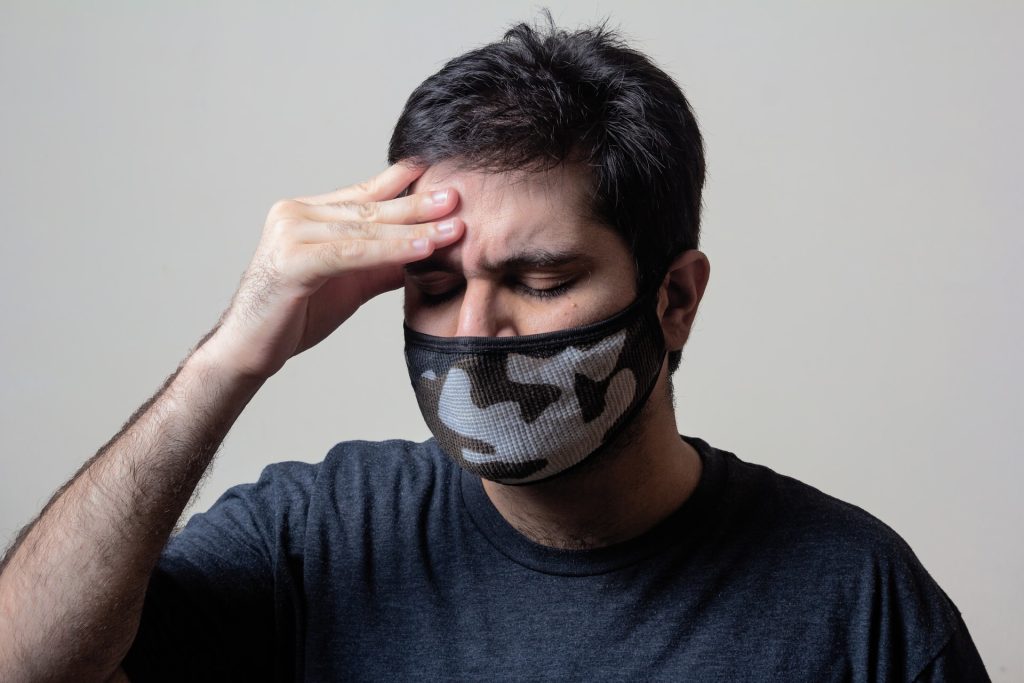
Man wearing mask with headache
Source: Usman Yousaf on Unsplash

Vaccination only reduces the risk of long COVID after infection by only about 15%, according to a study of more than 13 million people published in Nature Medicine. That’s the largest cohort that has yet been used to examine how much vaccines protect against the condition, but it is unlikely to end the uncertainty as other studies have produced conflicting results.

Studying long COVID has been challenging not least because of how hard it is to define from its constellation of symptoms. Even its prevalence has been hard to determine, with some studies suggesting it occurs in 30% of people after COVID infections. But nephrologist Ziyad Al-Aly and colleagues conducted a study of about 4.5 million people treated at US Department of Veterans Affairs (VA) hospitals, and the findings suggested that the number is 7% overall and lower than that for those who were not hospitalised.

Another mystery has been whether long COVID is less likely to occur after a breakthrough infection. But Al-Aly’s team now looked at VA health records from January to December 2021, including those of about 34 000 vaccinated people who had breakthrough SARS-CoV-2 infections, 113 000 people who had been infected but not vaccinated and more than 13 million people who had not been infected.

These results indicated only 15% a reduction of Long COVID in vaccinated individuals, a marked contrast to previous, smaller studies which suggested much higher protection rates. It’s also a departure from another large study, which used self-reported data from 1.2 million UK smartphone users and found that vaccination halved the risk of long COVID.

The authors of the latest study also compared symptoms such as brain fog and fatigue in vaccinated and unvaccinated people for up to six months after they tested positive for SARS-CoV-2. The team found no difference in type or severity of symptoms between those who had been vaccinated and those who had not. “Those same fingerprints we see in people who have breakthrough infections,” Al-Aly said.

In the US alone there have been over 83 million COVID infections, he noted. If even a small percentage of those turn into long COVID, “that’s a staggeringly high number of people affected by a disease that remains mysterious”.

Such limited protection means putting vulnerable people such as the immunocompromised at risk if measures such as masking are withdrawn. “We’re literally solely reliant, now almost exclusively, on the vaccine to protect us and to protect the public,” said Al-Aly. “Now we’re saying it’s only going to protect you 15%. You remain vulnerable, and extraordinarily so.”

“Generally speaking, this is horrifying,” said David Putrino, a physical therapist at Mount Sinai Health System in New York City who studies long COVID. While he praises the study, he notes that it is limited because it does not break the data down by key factors, such as medical history. “These are very important questions we need answers to,” Putrino says. “We don’t have any really well constructed studies just yet.”

Steven Deeks, an HIV researcher at the University of California, San Francisco, points out that the study includes no data from people infected during the period when the Omicron variant was causing the majority of infections. “We have no data on whether Omicron causes long COVID,” he says. The findings, he adds, “apply to a pandemic that has changed dramatically”.

Deeks added, that the results do highlight the need for more research on long COVID, and for accelerated development of therapies. “We don’t have a definition, we don’t have a biomarker, we don’t have an imaging test, a mechanism or a treatment,” he said. “We just have questions.”

Source: Nature

HIV Infection Found to Accelerate Ageing Process

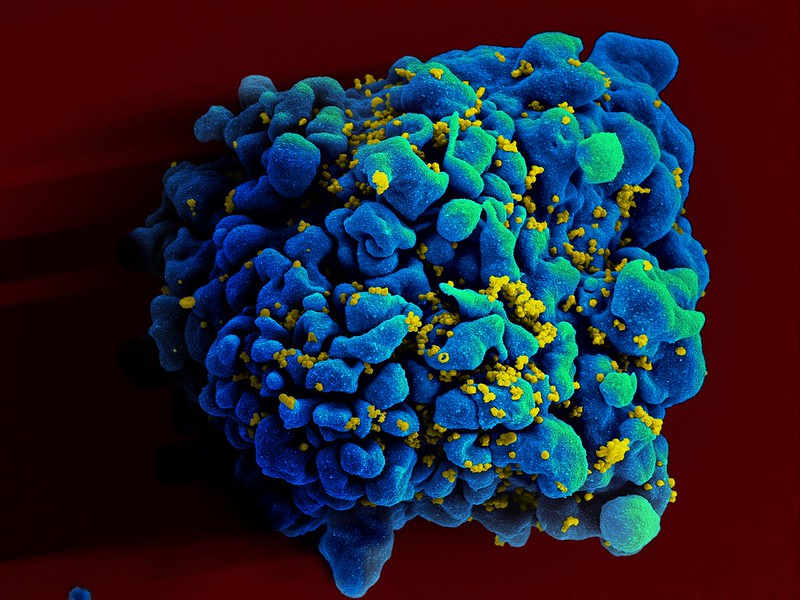
HIV Infecting a T9 Cell. Credit: NIH

Within just two to three years of infection, HIV causes an “early and substantial” impact on ageing in infected people, accelerating epigenetic changes and telomere shortening associated with normal ageing, according to a study in iScience.

The findings suggest that new HIV infection may act to reduce an individual’s life span by five years compared to an uninfected person.

“Our work demonstrates that even in the early months and years of living with HIV, the virus has already set into motion an accelerated ageing process at the DNA level,” said lead author Elizabeth Crabb Breen, a professor emerita at UCLA. “This emphasises the critical importance of early HIV diagnosis and an awareness of ageing-related problems, as well as the value of preventing HIV infection in the first place.”

In previous studies, HIV and antiretroviral treatment has been observed to accelerate age-related conditions such as cardiovascular and renal disease, grail and cognitive impairment.

Researchers analysed stored blood samples from 102 men collected six months or less before they became infected with HIV and again two to three years after infection. They compared these with matching samples from 102 non-infected age-matched men taken over the same time period. All the men were participants in the Multicenter AIDS Cohort Study, an ongoing US study initiated in 1984.

The study examined how HIV affects epigenetic DNA methylation. Epigenetic changes are those made in response to the influence of outside factors such as disease that affect how genes behave without changing the genes themselves.

Five epigenetic measures of ageing were analysed – four of them are epigenetic ‘ clocks’, each of which uses a slightly different approach to estimate biological age acceleration in years, relative to chronologic age. The fifth measure assessed telomere length, which shorten with age and cell divisions.

Compared to non-infected controls, HIV-infected individuals showed significant age acceleration in each of the four epigenetic clock measurements – ranging from 1.9 to 4.8 years – as well as telomere shortening over the period beginning just before infection and ending two to three years after, in the absence of highly active antiretroviral treatment.

“Our access to rare, well-characterised samples allowed us to design this study in a way that leaves little doubt about the role of HIV in eliciting biological signatures of early ageing,” said senior author Professor Beth Jamieson. “Our long-term goal is to determine whether we can use any of these signatures to predict whether an individual is at increased risk for specific ageing-related disease outcomes, thus exposing new targets for intervention therapeutics.”

Study limitations included having only men as participants, with few non-white participants. The sample size was also too small to take into consideration later effects of highly active antiretroviral treatment or to predict clinical outcomes. Additionally, there presently is no consensus on what is normal ageing or how to define it, the researchers wrote.

Source: UCLA

Court Action to Stop Immigrants Being Denied Life-saving Healthcare

Gavel
Photo by Bill Oxford on Unsplash

The rights of immigrant and undocumented women and children to access free healthcare in South Africa will be put to the test in a court challenge launched by SECTION27 in the Gauteng High Court in Johannesburg.

In December 2019, two-year-old Sibusiso Ncube died of poisoning after he was refused treatment at Charlotte Maxeke Hospital because his Zimbabwean mother could not instantly produce his birth certificate or pay R5000, says an affidavit in the court case.

This was not an isolated incident according to Umunyana Rugege, executive director of SECTION27.

“Since 2013, SECTION27 has been repeatedly approached by pregnant migrant women and children under six, who have been denied access to free health services. This is perpetuated through discriminatory subordinate laws and practices,” Rugege says in her affidavit.

“They have routinely been denied access to the health care services, or they are pressured into signing acknowledgements of debt and undertakings to pay for services.”

SECTION27 wants all the relevant ordinances and regulations scrapped. It also seeks an an order that the Minister of Health issue a circular to all provincial health departments recording that all pregnant or lactating women, and children under six, who are not members of medical aid schemes and who have not come to South Africa to obtain health care, be entitled to free health services at any public health establishment, irrespective of their nationality and documentation status.

Rugege says that while the National Health Act does not place any limitation on the right to free health services, there are a range of subordinate laws and practices implemented at hospitals that impose conditions requiring proof of nationality and financial means.

“These laws and practices are unlawful,” she says.

Rugege cited other examples, such as a pregnant asylum seeker who was denied treatment after she was injured in a robbery. She was told she had to pay R2000 before a “file could be opened” at Steve Biko Academic Hospital.

Two months later, when she was eight months pregnant and went to Charlotte Maxeke, she was told she had to pay R20 000 if she wanted treatment and give birth at the hospital. Only after SECTION27 intervened, was she given an appointment, but the night before it she lost her baby.

Another Zimbabwean woman whose child needed emergency surgery was forced to sign an admission of debt for more than R34 000 at the same hospital. Then when he needed further surgery, it was denied because of the outstanding debt. The woman was further told that she would have to pay R5000 for admission and R50 000 for the second surgery.

Again SECTION27 intervened. But in March, when the mother took him back for a checkup, a nurse addressed everyone in the queue and told them that foreign nationals would not be attended to if they did not have money to pay. The mother, and others, left without being seen.

The application is supported by the Jesuit Refugee Service, The Southern African HIV Clinicians Society, and Doctors Without Borders; all are expected to file affidavits soon. Rugege says these will highlight discriminatory institutional policies and systematic xenophobic practices and attitudes that have “detrimental and sometimes fatal consequences”.

“There is simply no coherent approach at different public health establishments … even within a single establishment, different officials treat patients differently,” she said. Access to health care depends on who is on duty that day. On “lucky days” people will gain access without any trouble.

The respondents – the MEC and Gauteng health department head, the Minister and Director-General of Health – have 15 days to file notices of opposition.

By Tania Broughton

This article is republished from GroundUp under a Creative Commons Attribution-NoDerivatives 4.0 International License.

Source: GroundUp

Norovirus and Other Enteric Viruses can Spread via Saliva

A microscopic view of salivary gland acinar epithelial cells (pink) infected with rotavirus (green), a type of enteric virus, in a mouse. Credit: Nihal Altan-Bonnet (NIH/NHLBI)

Enteric viruses can grow in the salivary glands of mice and spread through their saliva, scientists at the National Institutes of Health have discovered. Enteric viruses transmission through saliva suggests that coughing, talking, sneezing, sharing food and utensils, and even kissing all have the potential for spreading the viruses.

The findings, which appear in the journal Nature, could lead to better ways to prevent, diagnose, and treat diseases caused by these viruses, potentially saving lives.

Enteric viruses, such as noroviruses and rotaviruses, have long been known to spread by eating food or drinking liquids contaminated with faecal matter containing these viruses. Enteric viruses were thought to bypass the salivary gland and target the intestines, exiting later through faeces. Though another route of transmission was suspected, this theory remained largely untested until now.

Now researchers will need to confirm that salivary transmission of enteric viruses is possible in humans. If they find that it is, the researchers said, they may also discover that this route of transmission is even more common than the conventional route. A finding such as that could help explain, they said, why the high number of enteric virus infections each year worldwide fails to adequately account for faecal contamination as the sole transmission route.

“This is completely new territory because these viruses were thought to only grow in the intestines,” said senior author Nihal Altan-Bonnet, PhD. “Salivary transmission of enteric viruses is another layer of transmission we didn’t know about. It is an entirely new way of thinking about how these viruses can transmit, how they can be diagnosed, and, most importantly, how their spread might be mitigated.”

Dr Altan-Bonnet, who has studied enteric viruses for years, said the discovery was completely serendipitous. Her team had been conducting experiments with enteric viruses in infant mice, which are the animal models of choice for studying these infections because their immature digestive and immune systems make them susceptible to infections.

For the current study, the researchers fed a group of newborn mice that were less than 10 days old with either norovirus or rotavirus. The mouse pups were then returned to cages and allowed to suckle their mothers, who were initially virus-free. After just a day, one of Dr Altan-Bonnet’s team members, NHLBI researcher and study co-author Sourish Ghosh, PhD, noticed something unusual. The mouse pups showed a surge in IgA antibodies – important disease-fighting components – in their guts. This was surprising considering that the immune systems of the mouse pups were immature and not expected to make their own antibodies at this stage.

Ghosh also noticed other unusual things: The viruses were replicating in the mothers’ milk duct cells at high levels. When Dr Ghosh collected milk from the breasts of the mouse mothers, he found that the timing and levels of the IgA surge in the mothers’ milk mirrored the timing and levels of the IgA surge in the guts of their pups. It seemed the infection in the mothers’ breasts had boosted the production of virus-fighting IgA antibodies in their breast milk, which ultimately helped clear the infection in their pups, the researchers said.

Eager to know how the viruses got into the mothers’ breast tissue in the first place, the researchers conducted additional experiments and found that the mouse pups had not transmitted the viruses to their mothers through the conventional route – by leaving contaminated faeces in a shared living space for their mothers to ingest. That’s when the researchers decided to see whether the viruses in the mothers’ breast tissue might have come from the saliva of the infected pups and somehow spread during breastfeeding.

To test the theory, Dr Ghosh collected saliva samples and salivary glands from the mouse pups and found that the salivary glands were replicating these viruses at very high levels and shedding the viruses into the saliva in large amounts. Additional experiments quickly confirmed the salivary theory: suckling had caused both mother-to-pup and pup-to-mother viral transmission.

Source: National Institutes of Health

Sleep Now Part of American Heart Association’s Cardiovascular Health Score

Sleeping man
Photo by Mert Kahveci on Unsplash

Sleep duration is now considered an essential component for ideal heart and brain health. Life’s Essential 8™ cardiovascular health score replaces Life’s Simple 7™, according to a new American Heart Association advisory published in Circulation.

Other updates to the measures of optimal cardiovascular health, now for anyone ages 2 and older, include a new guide to assess diet; accounting for exposure to second-hand smoke and vaping; using non-HDL cholesterol instead of total cholesterol to measure blood lipids; and expanding the blood sugar measure to include haemoglobin A1c to assess Type 2 diabetes risk.

“The new metric of sleep duration reflects the latest research findings: sleep impacts overall health, and people who have healthier sleep patterns manage health factors such as weight, blood pressure or risk for Type 2 diabetes more effectively,” said American Heart Association President Professor Donald M. Lloyd-Jones, MD, who led the advisory writing group. “In addition, advances in ways to measure sleep, such as with wearable devices, now offer people the ability to reliably and routinely monitor their sleep habits at home.”

The Association first defined the seven metrics for cardiovascular health in 2010 to identify the specific health behaviours and health factors that drive optimal heart and brain health.

After 12 years and more than 2400 scientific papers on the topic, new discoveries in heart and brain health and in the ways to measure cardiovascular health provided an opportunity to revisit each health component in more detail. Four of the original metrics have been redefined for consistency with newer clinical guidelines or compatibility with new measurement tools. Also, the scoring system can now be applied to anyone ages 2 and older.

The Life’s Essential 8™ components of optimal cardiovascular health are divided into two major areas: health behaviours (diet, physical activity, nicotine exposure and sleep) and health factors (BMI, cholesterol levels, blood sugar and blood pressure). “The idea of optimal cardiovascular health is important because it gives people positive goals to work toward at any stage of life,” said Lloyd-Jones.

“Life’s Simple 7™ has served as a proven, powerful tool for understanding how to achieve healthy aging and ways to improve cardiovascular health while decreasing the risks of developing heart disease and stroke, as well as cancer, dementia and many other chronic diseases,” he said. “Given the evolving research, it was important to address some limitations to the original metrics, particularly in ways they’ve been applied to people from diverse racial and ethnic populations.”

Prof Lloyd-Jones explained that some of the previous metrics, such as diet, were not as sensitive to differences among people, or as responsive to changes over time within a single individual. “We felt it was the right time to conduct a comprehensive review of the latest research to refine the existing metrics and consider any new metrics that add value to assessing cardiovascular health for all people.”

Life’s Essential 8™ includes:

  1. Diet (updated):  A new guide to assess diet quality for adults and children at the individual level (for individual health care and dietary counselling) and at the population level (for research and public health purposes).
  2. Physical activity (no changes): The optimal level is 150 minutes of moderate physical activity or more per week or 75 minutes per week of vigorous-intensity physical activity for adults; 420 minutes or more per week for children ages 6 and older; and age-specific modifications for younger children.
  3. Nicotine exposure (updated): Use of inhaled nicotine-delivery systems, which includes e-cigarettes or vaping devices, is added since the previous metric only monitored traditional, combustible cigarettes. This reflects use by adults and youth and their implications on long-term health. Life’s Essential 8™ also includes second-hand smoke exposure for children and adults.
  4. Sleep duration (new): Sleep duration is associated with cardiovascular health. Measured by average hours of sleep per night, the ideal level is 7-9 hours daily for adults. Ideal daily sleep ranges for children are 10-16 hours per 24 hours for ages 5 and younger; 9-12 hours for ages 6-12 years; and 8-10 hours for ages 13-18 years.
  5. Body mass index (no changes): The writing group acknowledges that body mass index (BMI) is an imperfect metric, yet it is easily calculated and widely available; therefore, BMI continues as a reasonable gauge to assess weight categories that may lead to health problems. BMI of 18.5–24.9 is associated with the highest levels of cardiovascular health. The writing group notes that BMI ranges and the subsequent health risks associated with them may differ among people from diverse racial or ethnic backgrounds or ancestry. This aligns with the World Health Organization’s recommendations to adjust BMI ranges for people of Asian or Pacific Islander ancestry because recent evidence indicates their risk of conditions such as  CVD or Type 2 diabetes is higher at a lower BMI.
  6. Blood lipids (updated): The metric for blood lipids (cholesterol and triglycerides) is updated to use non-HDL cholesterol as the preferred number to monitor, rather than total cholesterol. Other forms of cholesterol, when high, are linked to CVD risk. This shift is made because non-HDL cholesterol can be measured without fasting beforehand (thereby increasing its availability at any time of day and implementation at more appointments) and reliably calculated among all people.
  7. Blood glucose (updated): This metric is expanded to include the option of haemoglobin A1c readings or blood glucose levels for people with or without Type 1 or Type 2 diabetes or prediabetes. Haemoglobin A1c can better reflect long-term glycaemic control.
  8. Blood pressure (no changes): Blood pressure criteria remain unchanged from the Association’s 2017 guidelines that established levels less than 120/80 mm Hg as optimal, and hypertension defined as 130-139 mm Hg systolic pressure (the top number in a reading) or 80-89 mm Hg diastolic pressure (bottom number).

Each component of Life’s Essential 8™, which is assessed by the My Life Check tool, has an updated scoring system ranging from 0 to 100 points. The overall cardiovascular health score from 0 to 100 points is the average of the scores for each of the 8 health measures. Overall scores below 50 indicate “poor” cardiovascular health, and 50-79 is considered “moderate” cardiovascular health. Scores of 80 and above indicate “high” cardiovascular health. The advisory recommends measuring cholesterol, blood sugar, blood pressure, height and weight at least every five years for the most complete and accurate Life’s Essential 8™ score.

The writing group also reviewed data about the impacts of stress, mental health and social determinants of health, such as access to health care, income or education level, and structural racism, which are critical to understanding the foundations of health, particularly among people from diverse racial and ethnic populations.

“We considered social determinants of health carefully in our update and determined more research is needed on these components to establish their measurement and inclusion in the future,” said Lloyd-Jones. “Nonetheless, social and structural determinants, as well as psychological health and well-being, are critical, foundational factors in an individual’s or a community’s opportunity to preserve and improve cardiovascular health. We must consider and address all of these issues for people to have the opportunity for a full, healthy life as measured by Life’s Essential 8™.”

Source: American Heart Association

Greater Hospitalisation or ED Visit Risk for Cannabis Users

Photo by RODNAE Productions from Pexels

Compared to non-users, cannabis users have 22% higher rates in emergency department (ED) visits and hospitalisations, according to new research findings. The study, published in BMJ Open Respiratory Research revealed that serious physical injury and respiratory-reasons were the two leading causes of ED visits and hospitalisations among cannabis users.

The findings suggest an association between cannabis use and negative health events, which the researchers say should underline the need to educate and remind the public of the harmful impacts of cannabis on health.

“Our research demonstrates that cannabis use in the general population is associated with heightened risk of clinically serious negative outcomes, specifically, needing to present to the ED or be admitted to hospital,” said Dr Nicholas Vozoris, lead author, a respirologist at St. Michael’s and an associate scientist at the hospital’s Li Ka Shing Knowledge Institute.

“Unlike tobacco, there is some uncertainty or controversy regarding the adverse health impacts of cannabis. Some individuals may perceive that cannabis has some health benefits and is otherwise benign. Our research highlights to those using – or considering to use – cannabis, that this behaviour is associated with important negative health events.”

To compare health outcomes among cannabis users and individuals who don’t use cannabis, researchers used data collected in a survey of individuals who self-reported cannabis use and linked it with health administrative data for Ontario residents.

Using propensity score matching, researchers compared the health outcomes of nearly 4800 individuals who reported any cannabis use in the preceding 12 months with the health outcomes of over 10 000 individuals never-users, or having used cannabis only once and more than 12 months ago. Researchers incorporated 31 different variables while matching study participants to minimise an unfair comparison, including demographics, multiple physical and mental health diseases, and tobacco, alcohol and illicit drug use.

The study’s main aim was to see if there was a link between cannabis use and respiratory-related hospitalisation or ED visits. No significant associations were found between cannabis use and respiratory-related ED visits, hospitalisations, or death from any cause. However, they did find that overall visits to the ED or hospitalisations for any reason was significantly higher among cannabis users.

In addition to having greater odds of ED visits or hospitalisation, the findings show that one of every 25 cannabis users will go to the emergency department (ED) or be admitted to hospital within a year of using cannabis.

Among the reasons for ED visits or hospitalisations of cannabis users, acute trauma was the most common, with 15% of cannabis users who got medical attention receiving it for this reason, and 14% receiving care for respiratory reasons.

“The results of our research support that health care professionals and government should discourage recreational cannabis consumption in the general population,” noted Dr Vozoris.

Source: EurekAlert!

Omicron Viral Load Shedding May Be Unaffected by Vaccination

SARS-CoV-2 virus
SARS-CoV-2 virus. Source: Fusion Medical Animation on Unsplash

A small study published in the New England Journal of Medicine has found that viral load shedding of the omicron variant is similar to other strains, and is not significantly affected by vaccination status.

The SARS-CoV-2 omicron variant has a shorter incubation period and a higher transmission rate than previous variants. Recently, the Centers for Disease Control and Prevention recommended shortening the strict isolation period for infected persons from 10 days to 5 days after symptom onset or initial positive test, followed by 5 days of masking. However, the viral delay kinetics and load shedding of omicron is still unclear.

Using nasal swabs to measure viral load, sequencing, and viral culture, they enrolled 66 participants, including 32 with delta variant and 34 with omicron. Participants who received COVID–specific therapies were excluded; only one participant was asymptomatic.

The characteristics of the participants were similar in the two variant groups except that more participants with omicron infection had received a booster vaccine than had those with delta infection (35% vs 3%). After adjustments for age, sex, and vaccination status, the number of days from an initial positive polymerase-chain-reaction (PCR) assay to a negative PCR assay and the number of days from an initial positive PCR assay to culture conversion were similar in the two variant groups.

The median time from the initial positive PCR assay to culture conversion was 4 days in the delta group and 5 days in the omicron group; the median time from symptom onset or the initial positive PCR assay, whichever was earlier, to culture conversion was 6 days and 8 days, respectively. There were no appreciable between-group differences in the time to PCR conversion or culture conversion according to vaccination status, although the sample size was quite small, which led to imprecision in the estimates.

In these participants with nonsevere COVID, the viral decay kinetics were similar with omicron infection and delta infection. No large differences in the median duration of viral shedding was seen among participants who were unvaccinated, vaccinated but not boosted, and those who were vaccinated and boosted.

Discussing limitations, the authors cautioned that the small sample size limits precision, and there are possible residual confounding variables. Further studies are need to properly correlate culture positivity with infectivity.

They conclude by saying: “Our data suggest that some persons who are infected with the omicron and delta SARS-CoV-2 variants shed culturable virus more than 5 days after symptom onset or an initial positive test.”