Young adults who were prescribed stimulant medications for attention-deficit/hyperactivity disorder (ADHD) were significantly more likely to develop cardiomyopathy compared with those who were not prescribed stimulants, in a study presented at the American College of Cardiology’s Annual Scientific Session.
The study found that people prescribed stimulants such as Adderall and Ritalin were 17% more likely to have cardiomyopathy at one year and 57% more likely to have cardiomyopathy at eight years compared with those who were not taking these medications. Cardiomyopathy involves structural changes in the heart muscle that weaken its pumping ability. It can cause a person to tire easily and limit their ability to perform daily tasks, and it often worsens over time.
However, researchers said that the overall risk of cardiomyopathy remained relatively low even when stimulants were used long-term. They said the findings do not necessarily point to a need for clinicians to change their approach to screening patients or prescribing stimulants.
“The longer you leave patients on these medications, the more likely they are to develop cardiomyopathy, but the risk of that is very low,” said Pauline Gerard, a second-year medical student at the University of Colorado School of Medicine in Aurora, Colorado, and the study’s lead author. “I don’t think this is a reason to stop prescribing these medications. There’s very little increased risk of these medications over the long term; it’s a real risk, but it’s small.”
ADHD is one of the most common neurodevelopmental disorders in children, affecting about 1 out of 10 American children aged 3 to 17, and can continue into adulthood. It is typically treated with behavioural therapy initially, which may be combined with stimulant or non-stimulant medications to help control behaviours that interfere with daily life and relationships. Stimulant medications can elevate blood pressure by causing the heart to beat faster and with greater force.
Most previous studies assessing the safety of stimulant medications have focused on the first year or two of use and found no evidence of harm to the heart. Since many patients are prescribed these medications in early childhood and continue taking them into adulthood, this new study was designed to assess their potential to cause harm over a longer period of time, Gerard said.
Using the TriNetX research database that includes information from about 80 hospitals across the U.S., researchers analysed data from people diagnosed with ADHD between 20–40 years of age. Individuals with the presence or absence of a prescription for stimulant medications along with rates of cardiomyopathy that could potentially be linked to stimulant use were included. Those with heart damage caused by other known factors, such as cancer treatments, were excluded.
For the analysis, the researchers paired each person who had been prescribed stimulants with an individual who had not been prescribed stimulants but was as similar as possible in all other respects, such as age, sex and other health conditions. Overall, 12 759 pairs were created and were followed for at least 10 years. Of these pairs, people prescribed stimulants were found to be significantly more likely to develop cardiomyopathy throughout the 10-year follow-up period, with the gap growing larger each year except the last two, when it narrowed slightly.
Despite the significant gap, the overall prevalence of cardiomyopathy was still quite low in both groups. After being prescribed stimulants for 10 years, 0.72% (less than three-quarters of one percent) of patients developed cardiomyopathy, compared with 0.53% (a little over half of one percent) among those who were not prescribed stimulants.
To put the numbers into context, Gerard said, “You can have almost 2000 patients on these medications for a year and you might only cause one of them to have a cardiomyopathy that they otherwise would not have had, but if you leave them on it for 10 years, 1 in 500 will have that happen.”
At these levels, researchers said the study does not suggest that aggressive testing for cardiovascular risk is warranted before prescribing stimulants, given that the potential benefits of testing must be balanced against the risks and costs. They suggest that further studies could help to identify subgroups of patients at greater risk who may benefit from future screening approaches.
Gerard said that it could also be helpful to study potential differences among different types of ADHD medications and different types of cardiomyopathies.
Condom distribution in South Africa has dropped dramatically over the last five years, finds a Spotlight analysis of data recently published in the Health System Trust’s District Health Barometer.
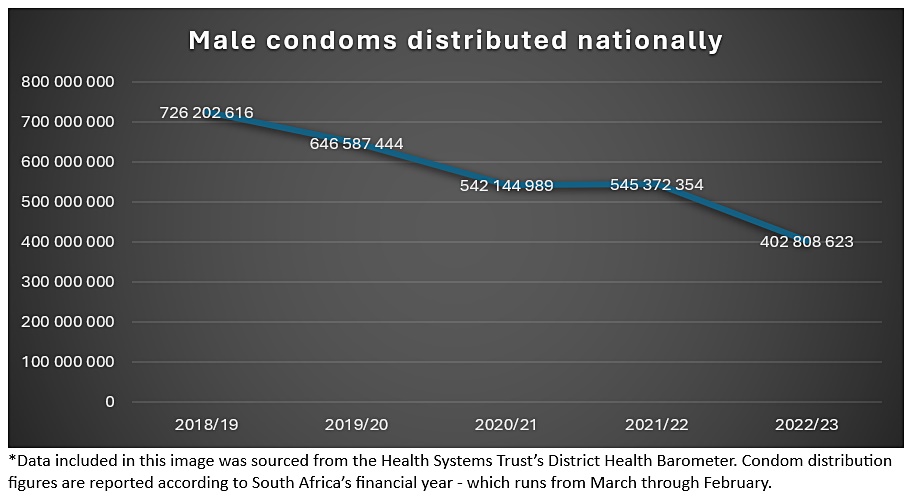
The South African government distributed 45% fewer male condoms in 2022 than it did in 2018. The total number of male condoms distributed dropped by over 300 million from 728 million in the financial year from March 2018 to February 2019 to 403 million in 2022/2023. Female condom supply also declined over this period, but not as sharply.
The full extent of the actual decline in condom supply across the country over the past five years has not previously been reported. The Democratic Alliance, though, did raise the alarm bells about condom supply challenges in Gauteng in April 2023.
Provincial departments of health have pin-pointed the time required for certification of condoms by the South African Bureau of Standards (SABS) following the start of a new condoms tender in 2022 as a key driver of the decline, yet Health System Trust’s District Health Barometer (DHB) data shows that condom distribution figures have in fact steadily declined over the past five years. Similarly, while COVID-19-related supply chain interruptions were a contributing factor to supply shortages at the height of the pandemic, the decline in government supplied condoms started before the pandemic and continued after COVID-19 supply chain disruptions were resolved (as shown in the below graph).
The large decline in condom distribution in South Africa is alarming in the context of the country’s ongoing fight against HIV. While other biomedical interventions are now available to protect against HIV (such as HIV prevention pills), condoms should remain a cornerstone of countries’ HIV prevention strategies according to the World Health Organization.
Research conducted by the University of Witwatersrand’s Health Economics and Epidemiology Research Office (HE2RO) has found that condoms are not only the most cost-effective intervention available to government to combat HIV, but that provision of condoms is in fact cost saving for the country’s health system.
Where did condom distribution fall the most in 2022?
According to the DHB data, all provinces except for the Free State saw a decline in condom distribution in 2022/2023 compared with 2018/19 levels (as shown in the below graph).
The Eastern Cape distributed 65% fewer condoms in 2022/23 than it did in 2018/19, Gauteng and the Northern Cape distributed around 60% fewer, Limpopo 52% fewer, and the Western Cape around 46% fewer. With a reduction of around 19% over the five years, the decrease was much less pronounced in KwaZulu-Natal than in South Africa’s other provinces with large populations.
Male condoms distributed by province
Province
2018/19
2019/20
2020/21
2021/22
2022/23
Eastern Cape
73 672 416
78 817 157
51 122 509
45 839 588
25 490 700
Free State
50 756 150
53 246 000
52 248 000
55 352 800
52 469 700
Gauteng
172 953 486
135 857 486
146 303 254
129 075 303
69 220 678
KwaZulu-Natal
111 028 599
108 503 920
96 529 200
106 967 000
89 664 600
Limpopo
82 563 322
67 818 200
53 325 900
52 862 900
38 910 442
Mpumalanga
67 150 600
51 749 400
38 316 000
31 364 066
35 627 000
Northern Cape
13 934 960
12 959 400
10 825 929
9 518 000
5 194 000
North West
50 820 283
55 579 921
39 841 971
42 361 097
30 810 803
Western Cape
103 322 800
82 055 960
53 632 226
72 031 600
55 420 700
*This table shows a breakdown of male condoms distributed by province, according to data from the Health Systems Trust’s District Health Barometer.
What caused the decline in condom supply?
Condoms are tendered nationally by the National Department of Health for a three-year period. Condoms procured by government must be tested and certified by the SABS before distribution.
Neither the National Department of Health, nor the Gauteng Department of Health responded to questions from Spotlight about the reasons for the decline in condom distribution. However, Gauteng’s Department of Health has previously pinpointed SABS certification processes as the culprit for condom supply shortages in the province. According to an April 2023 media statement by the Gauteng Department of Health, suppliers that received tenders to supply condoms to the public sector were unable to supply condoms to the province while awaiting SABS certification in 2022 – resulting in low condom stock in the province.
Spokesperson for the Eastern Cape Health Department, Sizwe Kupelo, told Spotlight in response to questions for this article that in 2022/23 “for most of the year there were no condoms to distribute”.
Kupelo said that the decline in condom distribution in the Eastern Cape was due to a combination of lags in supply availability while condom suppliers were awaiting SABS certification and challenges in delivering condoms to distribution sites in the province.
“2022/23 was the end of the condom supply contract and the period to award a new contract effective from 1st April 2022. This transition experienced a delay in availing the condoms due the SABS quality assurance process that could be finalised only around September 2022,” said Kupelo, adding that the province started to receive condoms from October of the same year.
“The second reason were related to suppliers who were not finding it easy to deliver to Eastern Cape areas due to the high cost of transportation to the identified 26 delivery distribution sites across the province. Suppliers are all based in Gauteng,” said Kupelo. This matter he said was now resolved.
Kupelo added that condom supply in the province is now improving. He said that the province had reached 96.7% of its target to distribute 17 million condoms in quarter 3 of 2023/24 (quarter 3 of 2023/24 is September to November 2023).
The SABS’ response
Lungelo Ntobongwana, acting CEO of the SABS, told Spotlight that all condoms that are distributed nationally by the Department of Health are tested at the SABS condom laboratory in Groenkloof, Pretoria. “The laboratory is an accredited and dedicated laboratory for the testing of condoms,” he said.
“Downtime or challenges to operations as a result of unplanned disruptions have been experienced on rare occasions and the SABS has incorporated contingency plans to ensure that the testing processes and deliverables would not be negatively impacted.
“The value chain, from the production of condoms to the distribution and usage of condoms, requires the intervention of various role players. When there is a shortage of condoms, it could be due to several reasons and chinks in the value chain. The SABS can categorically state that there are currently no challenges in its laboratory or deliverables regarding the testing of samples,” said Ntobongwana.
Did clinics run out of condoms in 2022/23?
The National Department of Health insisted in April 2023 that while Gauteng was facing low stocks of condoms, there were no serious condom shortages in the country.
Surveys conducted by community-lead clinic monitoring group Ritshidze also show that condoms remained available in most facilities – but not all – throughout the year, but also indicate a pattern of rationing by health care workers and clinics. In some cases, they say condoms are only available in public clinics on request, and key populations often face stigma and discrimination when seeking to access condoms and lubricant.
Surveys conducted by Ritshidze in 2022, found that only 55% of sex workers could get enough condoms at public facilities. Ritshidze recommends that “condoms and lubricants should be available at all facilities and can easily be placed in the toilets or other areas of the clinic where people could take them without the fear of being seen and judged by others, or being told to put some back”.
Anele Yawa, General Secretary of the Treatment Action Campaign (a member of Ritshidze), told Spotlight that the organisation faced challenges in accessing adequate condoms for its community outreach efforts. He said when TAC undertakes community outreach efforts, its members request condoms from public health facilities for distribution in communities but are sometimes told that there are not enough condoms for this.
Yawa added that people seeking condoms from public clinics are often told they can only take a limited number of condoms because of stock availability and that in some clinics “the condom box is empty, there are no condoms”.
Has the decline in condom availability impacted condom usage?
There are some concerning indicators that condom usage in the country is declining, which may in part be related to the drastic decline in condom supply.
The Human Science Research Council (HSRC), which conducts regular surveys of HIV knowledge and sexual behaviour in South Africa, recently released early data from its 2022 survey. The survey showed that teenagers and young adults between 15 and 24 years old reported lower rates of condom use at last sex than in previous survey years. The data presented did not pin-point a cause for the decline – apart from supply constraints, other factors like a decrease in people’s perceived risk of contracting and dying of HIV may also play a role.
The HSRC will release its full survey results in April 2024, which are expected to provide more insight into why condom use at last sex declined among 15- to 24-year-olds in 2022.
Another concerning indicator of declining condom usage is the reported rise in sexually transmitted infections (STIs) in Gauteng. Spotlight reported in February that the worried resurgence in reported cases of STIs in Gauteng in 2023 is a wake-up call that control and management strategies are not keeping pace with the growing disease burden in South Africa’s most populous province.
In response to the increase in STIs, Gauteng’s Health MEC Nomantu Nkomo-Ralehoko recommended expanded, consistent condom use – noting a number of factors including non-use of condoms, inconsistent use of condoms, and the forgoing of condoms by people using Pre-Exposure Prophylaxis (PrEP) as contributors to the rise in STIs. PrEP refers to antiretrovirals taken to prevent HIV infection.
Dismissing the conclusion of a causal relationship between a higher number of people being initiated on PrEP and the higher recorded number of STIs, Professor Linda-Gail Bekker, director of the Desmond Tutu Health Foundation, told Spotlight that there is no evidence to back up the claim that PrEP is leading to lower rates of condom usage. She added that the increase in STI diagnoses may be attributed to increased rates of testing, which has increased in the PrEP era.
“The notion that sexually transmitted infections have suddenly increased in the era of PrEP does not have evidence to support this,” said Bekker, adding “we have no strong evidence to suggest that people are having more condomless sex than before”.
“The value of condoms as a measure against sexually transmitted infections as well as unwanted pregnancy is not disputed and condoms remain the corner stone of the HIV response” said Bekker. “However, we know that for many people, and particularly young women and young men who have sex with men, the choice to use male condoms is not always a given and negotiating condom use may not be easy and can be dangerous,” she said.
Researchers from Rutgers University in the U.S. believe that they are ahead in a race to find an oral COVID-19 treatment to supplement or replace the antiviral Paxlovid. Their report, published in Science, shows that an alternative medication, a viral papain-like protease inhibitor, inhibits disease progression in animals while also possessing an important advantage over Paxlovid – fewer prescription drug contraindications.
“COVID-19 remains the nation’s third leading cause of death, so there’s already a massive need for additional treatment options,” said Jun Wang, senior author of the study and associate professor at Rutgers. “That need will grow more urgent when, inevitably, COVID-19 mutates in ways that prevent Paxlovid from working.”
The Rutgers team hoped to make a drug that interfered with viral papain-like protease (PLpro), a protein that performs important functions in all known strains of COVID-19.
Creating such a drug required detailed information about PLpro’s structure, which Wang’s team got from the Arnold Lab at Rutgers’ Center for Advanced Biotechnology and Medicine (CABM).
Precise knowledge of PLpro’s structure enabled Wang’s team to design and synthesise 85 drug candidates that would bond to – and interfere with – this vital protein.
“The PLpro crystal structures showed an unexpected arrangement of how the drug candidate molecules bind to its protein target, leading to innovative design ideas implemented by professor Wang’s medicinal chemistry team,” said Eddy Arnold, who is a professor at CABM.
Laboratory testing established that the most effective of those drug candidates, a compound dubbed Jun12682, inhibited several strains of the SARS-CoV-2 virus, including strains that resist treatment with Paxlovid.
Oral treatment with Jun12682 on SARS-CoV-2-infected mice was shown to reduce viral lung loads and lesions while improving survival rates.
“Our treatment was about as effective in mice as Paxlovid was in its initial animal tests,” said Wang, who added the experimental drug appears to have at least one major advantage over the older drug.
“Paxlovid interferes with many prescription medications, and most people who face the highest risk of severe COVID-19 take other prescription medicines, so it’s a real problem,” Wang said.
“We tested our candidate Jun12682 against major drug-metabolising enzymes and saw no evidence that it would interfere with other medications.”
Mycobacterium tuberculosis drug susceptibility test. Photo by CDC on Unsplash
With resistance to chemical antibiotics on the rise, the world needs entirely new forms of antibiotics. A new study published in Microbiology Spectrum, a journal of the American Society for Microbiology, shows that an enzymatic cocktail can kill a variety of mycobacterial species of bacteria, including those that cause tuberculosis. The research was carried out by scientists at Colorado State University and Endolytix Technologies.
“We have a mycobacterial drug that works for Nontuberculous Mycobacteria and M. tuberculosis that is biological, not phage therapy, and not small molecule antibiotics,” said Jason Holder, Ph.D., a study coauthor and Founder and Chief Science Officer at Endolytix Technology.
“Mycobacterial infections are particularly hard to treat due to poor efficacy with standard of care drugs that are used in multidrug regimens resulting in significant toxicities and treatments lasting 6 months to years. This is often followed up by reemergence of the bacterial infection after a year of testing negative.”
In the new proof of principle study, the researchers took a biological approach instead of a chemical one to develop a cocktail of enzymes that attack the cell envelope of mycobacteria.
The cocktail of enzymes contains highly specific biochemical catalysts that target and degrade the mycobacteria cell envelope that is essential for mycobacterial viability.
To increase efficacy, the researchers delivered the enzymatic drug inside of host macrophages where mycobacteria grow. In laboratory experiments, the drug was effective against M. tuberculosis and Nontuberculous Mycobacteria (NTMs), both lethal pulmonary lung diseases (PD). TB kills roughly 1.5 million people per year.
“We characterised the mechanism of bactericide as through shredding of the bacterial cells into fragments,” Holder said.
“We’ve shown we can design and develop biological antibiotics and deliver them to the sites of infection through liposomal encapsulation. By combining drug delivery science with enzymes that lyse bacteria, we hope to open up treatment options in diseases such as NTM pulmonary disease, tuberculosis pulmonary disease and others.”
According to study coauthor Richard Slayden, PhD, a professor in the Department of Microbiology, Immunology and Pathology at Colorado State University, the new therapy complements current standard-of-care drugs and does not have many of the drug-drug interactions that are problematic with many anti-mycobacterial drugs in use. “Endolytix enzymes work powerfully with standard-of-care antibiotics to kill bacteria with lower drug concentrations,” Holder said. “This has the potential to reduce the significant toxicities associated with multi-drug regimens that are the standard for mycobacterial infections and hopefully lead to more rapid cures.”
To improve the efficacy of treating skin blemishes with laser treatment while reducing complications, an Osaka Metropolitan University-led research group has developed an index of the threshold energy density, known as fluence, and the dependent wavelength for picosecond lasers. The use of this indicator, described in Lasers in Surgery and Medicine, is expected to help set irradiation conditions in clinical practice and reduce complications.
Picosecond lasers have in recent years been used to remove pigmented lesions. These lasers deliver energy beams in pulses that last for about a picosecond – a trillionth of a second. The lasers target melanosomes, which produce, store, and transport the melanin responsible for pigment.
Postdoctoral Fellow Yu Shimojo of OMU’s Graduate School of Medicine and Specially Appointed Professor Toshiyuki Ozawa and Professor Daisuke Tsuruta of the school’s Department of Dermatology were among the researchers who developed this first picosecond laser index for each of the wavelengths used in clinical practice in treating pigmented lesions.
Using a mathematical model based on the thresholds, the researchers quantitatively evaluated irradiation parameters for 532-, 730-, 755-, 785-, and 1064-nm picosecond laser treatments.
A suspension of melanosomes extracted from pig eyes was irradiated using picosecond lasers with varying fluence. The mean particle size of the irradiated melanosomes was measured by dynamic light scattering, and their disruption was observed by scanning electron microscopy to determine the disruption thresholds. A mathematical model was developed, combined with the threshold obtained and Monte Carlo light transport to calculate irradiation parameters required to disrupt melanosomes within the skin tissue.
The numerical results quantitatively revealed the relationship between irradiation wavelength, incident fluence, and spot size required to disrupt melanosomes distributed at different depths in the skin tissue. Comparing previously reported clinical studies, the researchers confirmed that clinical results showing low complication rates and high efficacy can be explained based on these wavelength-dependent indicators.
“The use of this indicator is expected to play an important part in setting irradiation conditions in clinical practice,” Postdoc Fellow Shimojo said. “In addition, the implementation of picosecond laser therapy based on scientific evidence, rather than relying solely on physicians’ experience, is expected to improve the safety and effectiveness of the treatment.”
Researchers at Stockholm University have discovered that sleep affects how old you feel, with important health implications. The study is published in the scientific journal Proceedings of the Royal Society B.
Feeling young is not just a matter of perception: it is actually related to objective health outcomes. Previous studies have shown that feeling younger than one’s actual age is associated with longer, healthier lives. There is even support for subjective age to predict actual brain age, with those feeling younger having younger brains.
“Given that sleep is essential for brain function and overall well-being, we decided to test whether sleep holds any secrets to preserving a youthful sense of age,” says Leonie Balter, researcher at the Department of Psychology, Stockholm University.
In the first study, 429 individuals aged 18 to 70 were asked how old they felt, how many days in the past month they had not gotten enough sleep, and how sleepy they were.
It turned out that for each night with insufficient sleep in the past month, participants felt on average 0.23 years older.
In a second study, the researchers tested whether it was indeed the lack of sleep causing participants to feel older. They conducted an experimental sleep restriction study involving 186 participants aged 18 to 46. Participants restricted their sleep to four hours a night for two nights and another time slept sufficiently for two nights, with nine hours in bed each night.
After sleep restriction, participants felt on average 4.4 years older compared to when having enjoyed sufficient sleep.
The effects of sleep on subjective age appeared to be related to how sleepy they felt. Feeling extremely alert was related to feeling 4 years younger than one’s actual age, while extreme sleepiness was related to feeling 6 years older than one’s actual age.
“This means that going from feeling alert to sleepy added a striking 10 years to how old one felt,” says Leonie Balter, and states that the implications for our daily lives are clear:
“Safeguarding our sleep is crucial for maintaining a youthful feeling. This, in turn, may promote a more active lifestyle and encourage behaviours that promote health, as both feeling young and alert are important for our motivation to be active.”
Scientists have uncovered a key step in the wound healing process that becomes disabled in diseases like diabetes and ageing. Importantly, the research published in Nature reveals a molecule involved in the healing of tissues that leads to a drastic acceleration of wound closure, up to 2.5 times faster, and 1.6 times more muscle regeneration.
The immune system has a critical role in orchestrating tissue healing. As a result, regenerative strategies that control immune components have proved effective. This is particularly relevant when immune dysregulation that results from conditions such as diabetes or advanced age impairs tissue healing following injury. Nociceptive sensory neurons have a crucial role as immunoregulators and exert both protective and harmful effects depending on the context. However, how neuro–immune interactions affect tissue repair and regeneration following acute injury was unclear.
Lead researcher, Associate Professor Mikaël Martino, from Monash University’s Australian Regenerative Medicine Institute (ARMI) in Melbourne, Australia, said the discovery “could transform regenerative medicine, because it sheds light on the crucial role of sensory neurons in orchestrating the repair and regeneration of tissues, offering promising implications for improving patient outcomes.”
The cost of managing poorly healing wounds costs around $250 billion a year.
“In adults with diabetes alone – where poor blood flow can lead to quickly worsening wounds that are often very slow or impossible to heal – the lifetime risk of developing a diabetic foot ulcer (DFU), the most common diabetes-related wound, is 20 to 35 per cent and this number is rising with increased longevity and medical complexity of people with diabetes,” co-lead author, ARMI’s Dr Yen-Zhen Lu said.
Nociceptive sensory neurons, also called nociceptors, are the nerves in our body that sense pain.
These neurons alert us to potentially damaging stimuli in tissues by detecting dangers like tissue damage, inflammation, extremes in temperature, and pressure.
The researchers discovered that, during the healing process, sensory neuron endings grow into injured skin and muscle tissues, communicating with immune cells through a neuropeptide called calcitonin gene-related peptide (CGRP).
“Remarkably, this neuropeptide acts on immune cells to control them, facilitating tissue healing after injury,” Associate Professor Martino said.
Importantly they found that sensory neurons are crucial to the dissemination of CGRP because they showed that the selective removal of sensory neurons in mice reduce CGRP and significantly impairs skin wound healing and muscle regeneration following injury.
When the scientists administered an engineered version of CGRP to mice with neuropathy similar to that seen in diabetic patients, it led to rapid wound healing and muscle regeneration.
According to Associate Professor Martino, these findings hold significant promise for regenerative medicine, particularly for the treatment of poorly-healing tissues and chronic wounds.
“By harnessing neuro-immune interactions, the team aims to develop innovative therapies that address one of the root causes of impaired tissue healing, offering hope to millions,” he said.
“This study has uncovered significant implications for advancing our understanding of the tissue healing process after acute injury. Harnessing the potential of this neuro-immuno-regenerative axis opens new avenues for effective therapies, whether as standalone treatments or in combination with existing therapeutic approaches. “
Photo by Inzmam Khan: https://www.pexels.com/photo/man-in-black-shirt-and-gray-denim-pants-sitting-on-gray-padded-bench-1134204/
Antipsychotic medications for serious mental illness like schizophrenia or bipolar disorder often causes metabolic side effects such as insulin resistance and obesity, leading some patients to discontinue the treatment.
Now, a pilot study led by Stanford Medicine researchers has found that a ketogenic diet not only restores metabolic health in these patients as they continue their medications, but it further improves their psychiatric conditions. The results, published in Psychiatry Research, suggest that a dietary intervention can be a powerful aid in treating mental illness.
“It’s very promising and very encouraging that you can take back control of your illness in some way, aside from the usual standard of care,” said Shebani Sethi, MD, associate professor of psychiatry and behavioral sciences and the first author of the new paper.
The senior author of the paper is Laura Saslow, PhD, associate professor of health behavior and biological sciences at the University of Michigan.
Making the connection
Sethi, who is board certified in obesity and psychiatry, remembers when she first noticed the connection. As a medical student working in an obesity clinic, she saw a patient with treatment-resistant schizophrenia whose auditory hallucinations quieted on a ketogenic diet.
That prompted her to dig into the medical literature. There were only a few, decades-old case reports on using the ketogenic diet to treat schizophrenia, but there was a long track record of success in using ketogenic diets to treat epileptic seizures.
“The ketogenic diet has been proven to be effective for treatment-resistant epileptic seizures by reducing the excitability of neurons in the brain,” Sethi said. “We thought it would be worth exploring this treatment in psychiatric conditions.”
A few years later, Sethi coined the term metabolic psychiatry, a new field that approaches mental health from an energy conversion perspective.
Meat and vegetables
In the four-month pilot trial, Sethi’s team followed 21 adult participants who were diagnosed with schizophrenia or bipolar disorder, taking antipsychotic medications, and had a metabolic abnormality – such as weight gain, insulin resistance, hypertriglyceridaemia, dyslipidaemia or impaired glucose tolerance. The participants were instructed to follow a ketogenic diet, with approximately 10% of the calories from carbohydrates, 30% from protein and 60% from fat. They were not told to count calories.
“The focus of eating is on whole non-processed foods including protein and non-starchy vegetables, and not restricting fats,” said Sethi, who shared keto-friendly meal ideas with the participants. They were also given keto cookbooks and access to a health coach.
The research team tracked how well the participants followed the diet through weekly measures of blood ketone levels, which are produced when the body breaks down fat instead of glucose for energy. By the end of the trial, 14 patients had been fully adherent, six were semi-adherent and only one was non-adherent.
Physical and mental improvement
The participants underwent a variety of psychiatric and metabolic assessments throughout the trial.
Before the trial, 29% of the participants met the criteria for metabolic syndrome, defined as having at least three of five conditions: abdominal obesity, elevated triglycerides, low HDL cholesterol, elevated blood pressure and elevated fasting glucose levels. After four months on a ketogenic diet, none of the participants had metabolic syndrome.
On average, the participants lost 10% of their body weight; reduced their waist circumference by 11% percent; and had lower blood pressure, body mass index, triglycerides, blood sugar levels and insulin resistance.
“We’re seeing huge changes,” Sethi said. “Even if you’re on antipsychotic drugs, we can still reverse the obesity, the metabolic syndrome, the insulin resistance. I think that’s very encouraging for patients.”
The psychiatric benefits were also striking. On average, the participants improved 31% on a psychiatrist rating of mental illness known as the clinical global impressions scale, with three-quarters of the group showing clinically meaningful improvement. Overall, the participants also reported better sleep and greater life satisfaction.
“The participants reported improvements in their energy, sleep, mood and quality of life,” Sethi said. “They feel healthier and more hopeful.”
The researchers were impressed that most of the participants stuck with the diet. “We saw more benefit with the adherent group compared with the semi-adherent group, indicating a potential dose-response relationship,” Sethi said.
Alternative fuel for the brain
There is increasing evidence that psychiatric diseases such as schizophrenia and bipolar disorder stem from metabolic deficits in the brain, which affect the excitability of neurons, Sethi said. The researchers hypothesise that just as a ketogenic diet improves the rest of the body’s metabolism, it also improves the brain’s metabolism.
“Anything that improves metabolic health in general is probably going to improve brain health anyway,” Sethi said. “But the ketogenic diet can provide ketones as an alternative fuel to glucose for a brain with energy dysfunction.”
Likely there are multiple mechanisms at work, she added, and the main purpose of the small pilot trial is to help researchers detect signals that will guide the design of larger, more robust studies.
As a physician, Sethi cares for many patients with both serious mental illness and obesity or metabolic syndrome, but few studies have focused on this undertreated population. She is founder and director of the metabolic psychiatry clinic at Stanford Medicine.
“Many of my patients suffer from both illnesses, so my desire was to see if metabolic interventions could help them,” she said. “They are seeking more help. They are looking to just feel better.”
Replacing sugar with artificial and natural sweeteners in foods has been the subject of a great deal of controversy, due to conflicting reports about their potential to increase appetite. But according to a significant new study published in eBioMedicine, it does not in fact make people hungrier as is often held – and also helps to reduce blood sugar levels.
Previous studies into whether sugar replacement with sweeteners increase appetite have been carried out but did not provide robust evidence. But the researchers say that their study, which meets the gold standard level of proof in scientific investigation, provides very strong evidence that sweeteners and sweetness enhancers do not negatively impact appetite and are beneficial for reducing sugar intake.
The double blind randomised controlled trial found that consuming food containing sweeteners produced a similar reduction in appetite sensations and appetite-related hormone responses as sugary foods. Additionally, it was found to provide some benefits such as lowering blood sugar, which may be particularly important in people at risk of developing type 2 diabetes.
The trial was led by the University of Leeds in collaboration with the The Rhône-Alpes Research Center for Human Nutrition. It is the latest study to be published by the SWEET consortium of 29 European research, consumer and industry partners which is working to develop and review evidence on long term benefits and potential risks involved in switching over to sweeteners and sweetness enhancers in the context of public health and safety, obesity, and sustainability. It was funded by Horizon Europe.
Lead author Catherine Gibbons, Associate Professor in the University of Leeds’ School of Psychology, said: “Reducing sugar consumption has become a key public health target in the fight to reduce the rising burden of obesity-related metabolic diseases such as type 2 diabetes.
“Simply restricting sugar from foods without substitution may negatively impact its taste or increase sweet cravings, resulting in difficulties sticking to a low-sugar diet. Replacing sugars with sweeteners and sweetness enhancers in food products is one of the most widely used dietary and food manufacturing strategies to reduce sugar intake and improve the nutritional profile of commercial foods and beverages.”
Principal investigator Graham Finlayson, Professor of Psychobiology in the University of Leeds’ School of Psychology, said: “The use of sweeteners and sweetness enhancers has received a lot of negative attention, including high profile publications linking their consumption with impaired glycaemic response, toxicological damage to DNA and increased risk of heart attack and stroke. These reports contribute to the current befuddlement concerning the safety of sweeteners and sweetness enhancers among the general public and especially people at risk of metabolic diseases.
“Our study provides crucial evidence supporting the day-to-day use of sweeteners and sweetness enhancers for body weight and blood sugar control.”
Until now, virtually all studies of the effects of sweeteners and sweetness enhancers on appetite and glycaemia have been conducted using beverages as the vehicle. Few studies include volunteers with overweight or obesity and few have included volunteers of both sexes.
Most studies have only compared a single sweetener, mostly aspartame, with a control, and very few studies have examined the effect of repeated daily intake of a known sweetener or sweetness enhancer in the normal diet.
The study, which is the first of its kind, looked at the effects of consuming biscuits containing either sugar or two types of food sweetener: natural sugar substitute Stevia, or artificial sweetener Neotame on 53 adult men and women with overweight or obesity. Participants were all aged 18 to 60, with overweight or obesity.
The trial consisted of three two-week consumption periods, where participants consumed biscuits with either fruit filling containing sugar; natural sugar substitute Stevia, or artificial sweetener Neotame, each separated by a break of 14–21 days. Day 1 and day 14 of the consumption periods took place in the lab.
Participants were instructed to arrive in the lab after an overnight fast, a blood sample was taken to establish baseline levels of glucose, insulin and appetite-related hormones. They were also asked to rate their appetite and food preferences.
After consuming the biscuits, they were asked to rate how full they felt over several hours. Glucose and insulin levels were measured, as were ghrelin, glucagon-like peptide 1 and pancreatic polypeptide – hormones associated with the consumption of food.
The results from the two sweetener types showed no differences in appetite or endocrine responses compared to sugar, but insulin levels measured over two hours after eating were reduced, as were blood sugar levels.
Researchers have discovered a gene on the Y chromosome that contributes to the greater incidence of heart failure in men when the Y chromosome is lost to ageing.
Y chromosome loss in men occurs progressively throughout life and can be detected in approximately 40% of 70-year-old men. In 2022, Kenneth Walsh, PhD, at University of Virginia discovered that this loss can contribute to heart muscle scarring and lead to heart failure. (That finding was the first to directly link Y chromosome loss to a specific harm to men’s health; Y chromosome loss is increasingly thought to play a role in diseases ranging from Alzheimer’s to cancer.)
In an important follow-up finding published in Nature Cardiovascular Research, Walsh and his team have discovered how Y chromosome loss triggers changes in heart immune cells that make the cells more likely to cause scarring and heart failure.
Further, the researchers found they could reverse the harmful heart changes by giving lab mice a drug that targets the process of fibrosis that leads to the heart scarring, which could lead to a similar treatment for men.
“Our previous work identified that it was loss of the entire Y chromosome that contributed to heart disease in men,” said Walsh, the director of UVA’s Hematovascular Biology Center. “This new work identified a single gene on the Y chromosome that can account for the disease-promoting effects of Y chromosome loss.”
About Y chromosome loss
Unlike women, who have two X chromosomes, men have an X and a Y. For a long time, the genes found on the Y chromosome were not thought to play important roles in disease. Sex hormones, scientists thought, explained the differences in certain diseases in men and women. But Walsh’s groundbreaking work has helped change that perception. It also suggested an explanation for why heart failure is more common in men than women. (Cardiovascular disease, which includes heart failure, is the leading cause of death worldwide.)
Y chromosome loss occurs in only a small percentage of affected men’s cells. This results in what is called “mosaicism,” where genetically different cells occur within one individual. Researchers aren’t entirely sure why this partial Y chromosome loss occurs, but predominantly it strikes elderly men and men who smoke compared to those who don’t.
To better understand the effects of Y chromosome loss, Walsh and his team examined genes found on the Y chromosome to determine which might be important to heart scarring. One gene they looked at, Uty, helps control the operating instructions for immune cells called macrophages and monocytes, the scientists determined. When the Uty gene was disrupted, either individually or through Y chromosome loss, that triggered changes in the immune cells in lab mice. Suddenly, the macrophages were much more “pro-fibrotic,” or prone to scarring. This accelerated heart failure as well, the scientists found.
“The identification of a single gene on the Y chromosome provides information about a new druggable target to treat fibrotic diseases,” said Walsh, of UVA’s Division of Cardiovascular Medicine and Robert M. Berne Cardiovascular Research Center.
Walsh and his team were able to prevent the harmful changes in the mice’s macrophages by giving them a specially designed monoclonal antibody. This halted the harmful changes in the heart, suggesting the approach might, with further research, lead to a way to treat or avoid heart failure and other fibrotic diseases in men with Y chromosome loss.
“Currently, we are working with our clinician colleagues in the Division of Cardiovascular Medicine at UVA to assess whether loss of the Y chromosome in men is associated with greater scarring in the heart,” Walsh said. “This research will provide new avenues for understanding the causes of heart disease.”
Based on their findings, Walsh and his team believe that a small group of genes found on the Y chromosome may have big effects on a wide array of diseases. Their new work identifies mechanisms that may lead to this, and they are hopeful that further research will provide a much better understanding of unknown causes of sickness and death in men.
“This research further documents the utility of studying the genetics of mutations that are acquired after conception and accumulate throughout life,” Walsh said. “These mutations appear to be as important to health and lifespan as the mutations that are inherited from one’s parents. The study of these age-acquired mutations represents a new field of human genetics.”