Research published in Diabetologia by Amsterdam UMC and the University of Ghana reveals that type 2 diabetes manifests in two fundamentally different ways depending on a patient’s body mass index (BMI). While type 2 diabetes in patients with a higher BMI is primarily driven by insulin resistance, the study demonstrates that in individuals within a lower BMI range, the condition is caused by the pancreas failing to produce sufficient insulin. Despite these opposing biological mechanisms, medical professionals currently treat both groups with the exact same medications.
Type 2 diabetes is generally seen as a disease associated with being overweight. In wealthy countries that picture holds true: nine out of ten people with type 2 diabetes are overweight. In Africa the situation is different. Almost four in ten African adults with type 2 diabetes are lean, with a normal or even low body weight. In some rural areas, such as in Ghana, it is as many as six in ten. First Author Sabrina Esmail: “This means that there are an estimated ten million lean patients on the African continent who do not fit the standard picture. For them, the problem is therefore a shortage of insulin, not a reduced response to insulin.” Projectleader Charles Agyemang at Amsterdam UMC believes “this study shows that we need to look for better treatments for this large group of lean Africans.”
A different disease process, so a different treatment too
Yet in Africa both groups are almost always given the same treatment, based on international guidelines: oral tablets such as metformin or sulfonylureas. These medicines, however, are mainly effective against insulin resistance, not against a shortage of insulin. They are therefore probably receiving the wrong treatment, and until now the consequences of this had not been investigated.
The researchers analysed data from more than 3300 African adults with type 2 diabetes from Ghana, Nigeria, Kenya and Europe. “From this we concluded that lean patients more often develop eye damage, known as retinopathy, and strokes. People who are overweight, by contrast, more often have high blood pressure and an increased risk of cardiovascular disease. Chronic kidney disease occurred equally often in both groups,” says senior author Felix Chilunga. The amount of body fat explained the greater part of these differences, which points to genuinely different disease processes. The risk factors differ as well: whereas being overweight is often linked to an unhealthy lifestyle, lean patients have more often experienced malnutrition or a low birth weight, which can disrupt the development of the pancreas.
Type 2 diabetes in lean Africans is therefore, biologically and clinically, a different type of disease from the one seen in people who are overweight. But it is still being treated as though it were the same. As a result, millions of people may not be receiving the right care. Chilunga: “We are calling for targeted clinical trials to determine which treatment works best for this large and often overlooked group of patients.”
Africans in Europe
For Africans in Europe, too, it is very likely that a different treatment is needed. Another study with analysis from data from the UK Biobank showed that people of African descent with a BMI of 26 already have the same diabetes risk as Europeans with a BMI of 30. Studies of migrants in Europe consistently show that Africans are more likely to have type 2 diabetes, develop it around ten years earlier, and have poorer blood sugar control than the native population. Agyemang: “So a considerable proportion of African patients in Europe have a lower BMI but are treated according to guidelines written for the form of the disease found in people who are overweight, and their control is demonstrably worse. There is no reason to assume that the treatment mismatch we describe stops at the border.”
This study was carried out by Amsterdam UMC, University of Ghana, the national Institutes of Health (Center for Research on Genomics and Global Health) via de cohorts AADM and RODAM. The findings were published today in Diabetologia.
After several years of living with HIV, some people are able to produce a special type of antibody known as broadly neutralising antibodies. (Photo: Pixabay)
By Catherine Tomlinson for Spotlight
HIV is known for its ability to outsmart our immune system’s normal defences. A small number of people living with the virus are however able to generate unusually effective immune responses. In this special briefing, Spotlight zooms in on broadly neutralising antibodies, the secret sauce in these immune responses, and their potential role in the future of HIV treatment and prevention.
Our immune systems are highly effective at identifying and fighting off foreign invaders, such as viruses. One way our immune systems does this is by producing antibodies. In short, antibodies recognise viruses and then latch on to them. This blocks the viruses from entering our cells and flags them for destruction by other parts of the immune system.
One of the most remarkable things about our immune system is that it is able to create an enormous variety of such antibodies tailored to each different virus and other disease-causing pathogen that we encounter over our lifetime.
The human immunodeficiency virus (HIV), however, outsmarts our bodies’ normal immune responses by constantly changing the parts of its surface that antibodies recognise. This makes HIV difficult for antibodies to attach to and neutralise.
After several years of living with HIV, some people are able to produce a special type of antibody, known as broadly neutralising antibodies, or bNAbs. These antibodies are more effective at neutralising HIV than regular antibodies because they recognise parts of the virus that change very little, known as ‘conserved regions’. By targeting parts of the virus that are less prone to change, bNAbs are more effective than regular antibodies in identifying and neutralising the constantly changing virus.
“About 20 percent of people living with HIV naturally develop bNAbs, after many years,” explains AVAC, a US-based NGO seeking to advance the development of HIV prevention tools. “By the time bNAbs have developed in these individuals, the constantly mutating HIV has outpaced these defenders, changing too fast and too significantly for bNAbs to be effective in that individual. But that same bNAb, or a combination of them, may work in someone else,” they say.
A vibrant area of research
Researchers first identified bNAbs in a person living with HIV in the 1990s. Since then, they have discovered many more bNAbs and papers and presentations on the topic have become a staple at HIV conferences. At the 2026 International AIDS Conference held in Rio de Janeiro, Brazil, in July, there were 21 abstracts related to the topic.
Since the 1990s, researchers have learned how to replicate and produce bNAbs in the lab. They have conducted early-stage trials showing that bNAbs can be safely administered to people and they have learned how to engineer bNAbs to increase their potency and make them last longer in our bodies.
Currently, researchers are studying whether bNAbs, given by infusion or injection, can prevent HIV infection in people who are HIV negative and control the virus in people who are already living with it. There is also an interesting cross-over with vaccine research, whereby researchers are trying to develop HIV vaccines that prompt the body into making bNAbs.
Before we dig into the details, it is worth stressing that all of this research is still at an early stage. Whereas bNAbs show promise, they have neither set the world alight, nor completely failed. For now, antiretroviral medicines remain the only effective form of HIV treatment, as well as being an extremely effective form of HIV prevention. It is not clear whether bNAbs will ever reach the high bar set by antiretrovirals.
bNAbs for HIV prevention
One of the big HIV stories of the last decade or so has been the use of antiretrovirals to prevent HIV infection. Antiretroviral tablets to prevent HIV infection are already widely available in the public sector, and since June this year, government has been rolling out the six-monthly lenacapavir HIV prevention injection to around 10% of clinics. Such pre-exposure prophylaxis, taking something to prevent infection, is commonly referred to as PrEP.
One of the big hopes for bNAbs is that an infusion of the cells could similarly work as a form of HIV PrEP. The thinking is that these ‘smarter’ immune responses will be more effective than our regular immune responses in recognising and neutralising the shape-shifting virus, and thus clearing it before it can get a foothold in the body.
Substantial research has already been done in this area with two landmark studies, the AMP trials, having garnered the most attention. In the two trials, researchers evaluated an infusion of a bNAb called VRC01 to prevent HIV acquisition in men and transgender people who have sex with men, as well as in cis-gender women. The trials were conducted by the HIV Vaccine Trials Network (HVTN) and the HIV Prevention Trials Network (HPTN).
The AMP trials found that VRC01 did not prevent HIV infection. While this was disappointing, the studies did make a breakthrough by showing that bNAbs could neutralise strains of the HIV virus under certain conditions. While HIV could shape-shift enough to get around VRC01 and cause HIV infection, VRC01 was able to neutralise the HIV strains that were vulnerable to this specific bNAb.
This pattern of bNAbs blocking some, but not all strains of HIV, has been seen in several other studies. It provides both reason for hope, since there is clearly some efficacy, but also frustration, since the efficacy is not nearly as good as what is achieved with antiretrovirals.
Learning from the AMP trials, scientists are now studying whether combining different bNAbs that target a broader range of HIV strains, as well as different regions of the virus’ surface, into a single infusion or injection can be used to prevent HIV.
HVTN and HPTN’s planned Combo-AMP trial will evaluate whether providing people with a combination of different bNAbs can prevent HIV, explained Fred Hutchinson Cancer Center’s Holly Janes at the recent AIDS Conference.
Beyond the AMP trials, the Durban-based research group CAPRISA has also led important studies on the use of bNAbs for HIV prevention. They recently announced the results of a trial called CAPRISA 012C that evaluated the use of a combination of two bNAbs to prevent HIV acquisition in young women in Southern Africa.
Disappointingly, the combination bNAb provided in this trial did not prevent HIV infection. However, CAPRISA reported that “a positive finding was that there was a trend towards protection when the viruses were sensitive to both or one of the two bNAbs compared to when the viruses were resistant to both bNAbs.” In other words, HIV infections occurred more frequently with strains of the virus that were resistant to the bNAbs studied than with strains that were sensitive to them.
“The CAPRISA 012C trial is a culmination of 22 years of research – while it has not led to a new HIV prevention product, it provides valuable information to guide further bNAb research,” said CAPRISA, adding that sensitivity to bNAbs in contemporary circulating viruses will need to be factored into planning future trials of bNAbs.
bNAbs for HIV treatment
bNAbs are also being evaluated as potential treatment for HIV. Researchers are trying to understand whether, under what circumstances, and for how long bNAbs can control the virus in people living with HIV, with the goal of developing products that can achieve long-lasting HIV control without antiretroviral treatment.
This is important because the emotional and psychological burden of having to adhere to a life-long daily pill regimen to treat HIV is a known cause of poor treatment adherence. For infants and young children there are also practical challenges to swallowing and keeping down daily treatment.
One of the main ways that researchers are evaluating the potential of bNAbs to treat HIV is through analytical treatment interruption (ATI) studies. In ATI studies, people living with HIV are given bNAb infusions or injections – sometimes in combinationwith long-acting injectable antiretroviral drugs – and then temporarily taken off their regular antiretroviral treatment under close medical observation.
Researchers then monitor how long HIV remains suppressed in order to learn whether and how well bNAbs can control HIV infection.
The results from ATI studies, including the RIO and FRESH trials, have been tantalizing. bNAb infusions have allowed some study participants to remain off antiretroviral treatment for more than a year without the virus rebounding in their bodies.
Yet, the studies have also raised questions about how and why bNAbs have such mixed efficacy. Researchers are still trying to understand why some people are able to maintain periods of viral control after receiving bNAbs, while others experience rapid viral rebound. The reasons for this appear to extend beyond a person’s sensitivity to the specific bNAbs being used to also include other factors related to the characteristics of one’s HIV infection and immune response.
At the 2026 AIDS Conference, Michel Nussenzweig, senior physician at the Rockefeller University, told delegates that research so far indicates that bNAb therapy is more likely to deliver periods of post-treatment control in individuals with a less diverse HIV reservoir, pre-existing autologous antibodies, and pre-existing stem cell like CD8+ T cells.
Scientists are now considering whether the factors associated with bNAb treatment success can be boosted through other interventions, said Nussenzweig.
Another important area of research is whether bNAbs can be used as a form of treatment for infants and young children living with HIV. An infusion or injectable treatment could be a gamechanger for this group, given the challenges faced by caregivers in getting infants and young children to swallow and keep down daily antiretroviral treatment.
The Tatelo and Tatelo Plus studies conducted in Botswana were set up to evaluate whether young children given bNAbs can maintain viral suppression after stopping antiretrovirals. Results from the Tatelo study reported in 2022 showed that some children (44%) who received a combination of two bNAbs were able to maintain a period of viral control (24 weeks) after stopping HIV treatment. The Tatelo Plus study, now underway, is evaluating whether and for how long a combination of three bNAbs can maintain HIV suppression in young children after antiretrovirals are stopped.
bNAbs for HIV vaccination
While bNAbs have not yet been shown to be a practical and effective form of HIV prevention or treatment, research has demonstrated that, under the right conditions, they can protect against and suppress HIV strains that are susceptible to them.
These findings have generated excitement about using bNAbs as a target for HIV vaccines. Unlike research into bNAbs for PrEP or HIV treatment, in which laboratory made bNAbs are infused or injected directly into our bodies, some HIV vaccine researchers are trying to figure out how to trigger our bodies to produce their own bNAbs.
In other words, vaccine researchers are trying to make our bodies, rather than laboratories, the factories that make bNAbs against HIV.
At this stage, scientists do not expect that a single vaccination will be able to trigger our bodies to produce mature bNAbs capable of combating HIV. Instead, they anticipate that a vaccine protocol that involves a series of vaccines will be needed to coax our immune systems to produce mature bNAbs.
While this branch of research remains at its early stages, many HIV researchers are hopeful that it may one day produce an effective vaccine protocol against HIV.
One study to watch is a Phase 1 safety and dosing trial launched by the International AIDS Vaccine Initiative (IAVI) and partners in South Africa at the end of 2025. “The hypothesis being tested is that highly specialized vaccine immunogens, delivered in a specific sequence, can target certain B cells within the immune system and coach them toward the production of broadly neutralizing antibodies against HIV,” says IAVI, adding “scientists widely believe that a vaccine inducing broadly neutralizing antibodies (bNAbs) could provide broad protection against many strains of HIV.”
Where to from here?
Since the first bNAbs against HIV were discovered in the 1990s, scientists have made important, but incremental, progress towards translating these immune responses into tools that can prevent and treat HIV.
As we’ve seen in this Spotlight special briefing, research into bNAbs for HIV treatment is arguably the furthest along, with bNAbs already demonstrating the ability to control HIV during extended periods of antiretroviral treatment interruption in some people. But why some people respond to this treatment and not others remains uncertain. This is an important area for future research.
In the HIV prevention space, bNAbs have delivered protection against HIV strains susceptible to the specific bNAbs studied, but this protection has not been broad enough to protect against HIV infection by the highly diverse, mutating virus. Hope however remains that combining different bNAbs that target different conserved regions of the HIV virus, as well as currently circulating viruses, could broaden protection enough to prevent HIV infection. Here too, as with attempts to develop vaccines that spark the production of bNAbs, it is imperative that the research continues.
Of course, even if scientists can crack the code and find a way to produce highly effective bNAbs, the road ahead might not be a smooth one. For these products to have an impact in the developing world, where they are most needed, they will have to be cost-effective compared to cheap antiretroviral therapy. They will also have to be easy to administer in often stretched and under-resourced healthcare systems.
While much remains to be done, the scientific leads are certainly there, waiting to be explored.
Over the past five years, medications called GLP-1s have revolutionised the treatment of metabolic disorders like obesity, diabetes and fatty liver diseases. These drugs are highly effective at helping people lose weight and manage their blood sugar levels.
However, they do come with some risks. Some people taking GLP-1s experience nausea and other gastrointestinal side effects that can be difficult to manage. And, by suppressing appetite and reducing food intake, they have the potential to cause nutritional deficiencies and muscle loss, which can lead to frailty and other problems long term.
At UC Berkeley, researchers have found a new potential treatment for obesity and diabetes that works by increasing energy expenditure – boosting the body’s metabolic rate – rather than limiting energy intake.
In a study published online in the journal Science Advances, the researchers show that a molecular compound called 5-tetradecyloxy-2-furoic acid (TOFA) is able to block the production of lipids like cholesterol and triglycerides while simultaneously turning up genes that help cells burn fat and generate energy.
In experiments in mice, the researchers found that TOFA is effective at improving insulin sensitivity and glucose control, lowering triglycerides and improving features of fatty liver disease. When obese mice took the compound, they lost weight from fat but experienced no significant loss of lean muscle mass.
“Body weight responds to two levers: taking in fewer calories, or spending more energy,” said Anders Näär, a professor of metabolic biology and nutrition at UC Berkeley and senior author of the study. “GLP-1s work almost entirely on the first, so we went after the second.”
TOFA was first discovered in the 1970s and is known for being part of a class of compounds called ACC inhibitors, which help block the production of lipids in the body. Though several ACC inhibitors reached mid-stage clinical testing, none has been approved for metabolic disease. This is largely because many of these compounds can also raise triglycerides, posing a significant risk to heart health.
In the new study, the researchers found that TOFA doesn’t just act as an ACC inhibitor, but also activates PPARα and PPARδ, cellular receptors which turn on genes that let cells take up fat and burn it for energy. In mice, this caused the cells to burn up to 18% more energy with no change in physical activity or increase in body temperature. Perhaps because of this dual mechanism, TOFA also did not raise triglycerides like other ACC inhibitors.
“TOFA appears to engage a coordinated metabolic response,” said study first author Justin Y. Lee, a postdoctoral student at UCSF who conducted the research as a Ph.D. student at Berkeley. “It is not simply blocking lipid synthesis. It is also activating energy expenditure pathways that may help the body handle excess lipid and glucose more effectively.”
When the researchers tried giving mice two separate compounds – one to block lipid production and a second to boost energy expenditure – they found that the combination was not as effective at improving overall metabolic health as TOFA alone.
The researchers also explored whether TOFA could be used together with GLP-1 medications like semaglutide, which is sold under the brand names Ozempic or Wegovy, and tirzepatide, which is sold as Mounjaro and Zepbound. In mice, they found that combining TOFA with these GLP-1 drugs led to greater improvements in body weight, glucose control, insulin levels and triglycerides than either treatment alone.
“In our combination experiments, TOFA worked additively or synergistically with the GLP-1 appetite suppressing drugs, so we view it as complementary rather than as a replacement,” Näär said.
The researchers caution that TOFA has only been studied in animals, and its safety and efficacy in humans has yet to be tested. With support from Berkeley’s life sciences entrepreneurship ecosystem, including Nucleate and Berkeley SkyDeck, they have founded a new company ReRx Therapeutics to help carry this work to patients.
Review offers insights on evidence-based strategies.
Low- and middle-income countries (LMICs) bear a disproportionate burden of gynaecologic malignancies – cancers of the cervix, endometrium, ovary, vagina, and vulva. A review published by Wiley online in CANCER, a peer-reviewed journal of the American Cancer Society, reveals that survival disparities for these cancers are driven by late-stage diagnosis, limited screening coverage, inadequate radiotherapy infrastructure, workforce shortages, and restricted access to essential and novel therapies.
By analysing studies published between 2015 and 2024, investigators observed that LMICs account for approximately 94% of global cervical cancer deaths, with the highest mortality observed in East Africa. Despite persistent survival disparities in LMICs, research has generated evidence that cost-effective and scalable interventions – including single-dose HPV vaccination, screen-and-treat strategies, HPV self-sampling, radiotherapy expansion, and workforce development with international training partnerships – can substantially improve outcomes when embedded within national cancer control policies and supported by sustainable financing mechanisms.
The authors stressed that policy-driven, system-level reforms should prioritise prevention, strengthen service delivery, and expand equitable access to care.
“The survival gap in gynaecologic cancers between low- and middle-income countries and wealthier nations is not inevitable – it is largely the result of delayed diagnosis and under-resourced health systems,” said corresponding author Dr Alfi Sophian, SSi, MSi, of the Indonesian Food and Drug Authority. “Our review shows that proven, cost-effective interventions already exist. What is needed now is stronger political commitment and sustainable financing to embed them into national cancer control policies.”
CANCER’s Editor-in-Chief, Suresh S. Ramalingam, MD, FASCO, who is the Executive Director of the Winship Cancer Institute of Emory University and the Roberto C. Goizueta Chair in Cancer Research at the Emory University School of Medicine, agreed that the review highlights key opportunities to reduce the burden of gynaecological malignancies in low- and middle-income countries. “Gynaecological malignancies claim the lives of far too many women globally; implementation of evidence-based tools consistently and uniformly across the world will save numerous lives,” he said.
Women have driven the expansion of the global health workforce over the past three decades, yet substantial workforce shortages remain, according to a new study published in The Lancet Public Health. Researchers estimate that an additional 34.4 million doctors, nurses, midwives, dentists, and pharmacists are needed worldwide to achieve moderate levels of universal health coverage, where people can access essential health services without financial hardship.
The study found that the global health workforce nearly tripled between 1990 and 2023, growing from 40.9 million to 122.1 million workers. Women accounted for 71.4% of this growth and represented 68.9% of all health workers in 2023. Despite this progress, substantial shortages persist across many regions, particularly South Asia and sub-Saharan Africa, where health systems continue to face some of the world’s lowest workforce densities.
Based on Global Burden of Disease (GBD) 2023 estimates, this study provides the first global, sex-disaggregated estimates of 20 health worker cadres, or groups of specially trained health personnel such as doctors, nurses, midwives, pharmacists, dentists, and community health workers, across 204 countries and territories from 1990 to 2023, including the first global estimates of community health workers. It also offers the most comprehensive assessment of the global health workforce to date.
Women have driven global health workforce growth but remain underrepresented in many higher-paid professions.
Between 1990 and 2023, the global health workforce expanded by more than 81 million workers, including 18.9 million nurses and 8.7 million doctors. Most regions saw substantial growth over this period, although the pace of expansion varied across countries and health professions.
In 2023, the global health workforce included 122.1 million health workers, including 33.2 million nurses, 15.1 million doctors, 7.6 million community health workers, 6.8 million pharmacists and pharmaceutical assistants, and 6.1 million dentists and dental assistants. Women represented nearly seven in ten health workers worldwide, comprising 80.7% of nurses, 96.0% of midwives, and 89.5% of community health workers, while less than half of doctors were women. Similar patterns were observed across dentistry and pharmacy, where women were more likely to work as assistants than as dentists or pharmacists.
“Women have transformed the global health workforce over the past three decades, but they continue to be concentrated in professions that generally offer lower pay and fewer opportunities for leadership,” said Megan Knight, lead author of the study and researcher at the Institute for Health Metrics and Evaluation (IHME). “Building stronger health systems will require not only expanding the workforce, but also creating equitable opportunities for career advancement, leadership, and safe, supportive working environments.”
Millions of health workers will be needed to achieve universal health coverage.
Despite substantial workforce growth, researchers estimate the world would need an additional 34.4 million health workers to achieve a score of 80 out of 100 on the GBD universal health coverage effective coverage index, a benchmark representing moderate levels of universal health coverage. This includes shortages of 23.9 million nurses and midwives, 7.1 million doctors, 1.8 million dentists, and 1.6 million pharmacists.
Workforce shortages were greatest in South Asia, which would require an additional 2.6 million doctors and 10 million nurses and midwives to reach moderate universal health coverage. Sub-Saharan Africa also faced severe shortages across major health professions, with nursing density of 14.5 per 10 000 population compared with 121.8 per 10 000 in high-income countries. At the country level, nurse density was as low as 3.2 per 10,000 in Chad and 3.3 in Madagascar, compared with 171.7 per 10 000 in Belgium and 161.4 in the United States.
“Health workers are the foundation of every health system,” said Dr Annie Haakenstad, senior author of the study and Assistant Professor of Health Metrics Sciences at IHME. “Although the global workforce has expanded dramatically, millions more doctors, nurses, midwives, dentists, and pharmacists will be needed to ensure people everywhere can access essential health services. These findings provide countries with minimum thresholds for planning the workforce needed to strengthen health systems and move toward universal health coverage.”
Meeting global health goals will require sustained investments in the health workforce.
The study estimates that achieving moderate universal health coverage is associated with minimum workforce densities of 23.8 doctors and 64.5 nurses and midwives per 10 000 people, along with 5.2 dentists and 5.6 pharmacists per 10 000. These minimum benchmarks can help countries identify workforce gaps and plan the investments needed to meet future health needs.
The estimates also provide a measure of progress toward Sustainable Development Goal (SDG) target 3.c.1, which calls for substantially increasing the recruitment, development, training, and retention of the health workforce, as well as SDG target 3.8 on achieving universal health coverage.
Closing global workforce gaps will require sustained investments in health worker education, recruitment, retention, and working conditions. Gender-responsive policies, including leadership development, workplace protections, paid parental leave, and flexible work arrangements, can also help support the predominantly female health workforce. Building a well-supported health workforce will be essential to expanding access to care and ensuring health systems are equipped to meet future health challenges.
In a Journal of the American Geriatrics Society analysis of nationally representative data from 6905 US adults aged 65 or older followed between 2011–2024, higher body mass index (BMI) was associated with lower mortality risk, whereas higher waist circumference, a marker of abdominal obesity, was independently associated with higher mortality risk after accounting for BMI.
Compared with normal weight, overweight males and males with class I and II obesity (BMI of 30 to less than 40 kg/m2) had 46% and 51% lower risks of mortality, respectively. Additionally, a high waist circumference was also associated with a 24% higher mortality risk in males. Similar patterns were observed in females.
When BMI and waist circumference were evaluated together, being overweight was associated with lower mortality risk regardless of waist circumference among males. Class I and II obesity also remined associated with lower mortality risk exclusively among males with elevated waist circumference. In contrast, being underweight, regardless of waist circumference, and having normal BMI with elevated waist circumference were both associated with higher mortality risk in both males and females.
“BMI and waist circumference provide complementary information about health risk in older adults,” said study co-author, Bryan Blissmer, PhD, of the University of Rhode Island. “Our findings suggest that considering both measures together, rather than relying on BMI alone, may improve mortality risk assessment and support more informed clinical decision-making.”
Technique developed for treating Parkinson’s disease also disrupts growth of glioblastoma
Postdoctoral researcher Erin Iredale, who has worked on intratumoral modulation therapy since her undergraduate degree, hopes the proposed electric fields treatment will one day be used for patients with brain cancer. (Christopher Kindratsky/Western Communications)
More than a decade ago, Dr Matthew Hebb was treating patients with Parkinson’s disease using deep brain stimulation by implanting tiny electrodes into the brain and delivering electrical signals to control tremors. He wondered if the same basic technology could be used against brain cancer.
Hebb, neurosurgery professor at Western University’s Schulich School of Medicine & Dentistry, took tumour samples removed during surgery back to his laboratory, implanted electrodes and stimulated the cancer cells. The tumours responded.
That unexpected observation set in motion years of research into what is now called Intratumoral Modulation Therapy, or IMT – an original approach that uses low-amplitude electric fields to disrupt the growth of glioblastoma, one of the most aggressive and difficult-to-treat brain cancers.
Now, a Western-led research team has taken another step toward potentially bringing the technology from the laboratory to patients.
The latest study, published in Neuro-Oncology Advances, shows that IMT can safely deliver stronger, dynamic electric fields directly to a glioblastoma tumour while significantly slowing brain tumour growth, in an animal model.
The research team, which included Hebb, physics and astronomy professor Eugene Wong, medical biophysics professor Terry Peters, anatomy and cell biology professor Susanne Schmid and postdoctoral researcher Erin Iredale, observed an eight-fold reduction in tumour growth measured through bioluminescence and a five-fold reduction in tumour volume measured by magnetic resonance imaging (MRI) after seven days of treatment.
For Iredale, the first author on the study and has worked on the IMT project since her undergraduate degree, the results represent another important step toward a treatment she hopes could one day help patients.
“It’s so interdisciplinary,” said Iredale. “We need everyone from different fields, with their own expertise, to come together to solve this huge problem in health care.”
Different kind of electrical treatment
Glioblastoma is a devastating cancer that begins in the cells or tissues of the brain. Even with current treatments, including surgery, radiation and chemotherapy, patients diagnosed with the disease have a median survival of just more than a year. One of the challenges is that glioblastoma cells divide rapidly despite aggressive conventional treatments, leading to recurrence mainly near the site of the surgery. IMT takes direct aim at that process.
Rather than using electricity to acutely burn or destroy the tumour, the treatment delivers chronic low-amplitude electric fields that interfere with the way cancer cells divide.
“When we put this electric field on those cells, it prevents them from dividing properly,” said Iredale. “So, they’re kind of stalled in their cell division process.”
The exact biological mechanisms are still being investigated, but the team has repeatedly observed reduced tumour growth when the electric fields are applied.
The idea grew from Hebb’s early experiments and then expanded as physicists and biomedical researchers joined the project. Deep brain stimulation normally operates at frequencies designed to produce a neurological response. For cancer treatment, however, the goal is different.
The researchers increased the frequency so the stimulation could target the tumour without producing unwanted effects in normal brain tissue. The result is a treatment designed to destroy the cancer while leaving the surrounding brain largely undisturbed.
Finding the sweet spot
Iredale joined the IMT project in 2016 as an undergraduate student when she was studying medical physics and applied mathematics. She was drawn to the possibility of combining physics and mathematics with the practical goal of helping patients – an interest that eventually led to a PhD in medical biophysics, where her research focused on developing a treatment-planning system for IMT.
Iredale’s work in the Hebb lab has helped address one of the central challenges of treating a tumour inside the brain: precisely controlling where the electric field goes and how strong it is.
The latest study, done in rats, marks the first time the team used multiple electrodes in a living brain to create a dynamic electric field. Three electrodes were implanted around the tumour. By shifting the phase of the electrical signals delivered by each electrode, the researchers created an electric field that rotates over time.
The approach helps cover the tumour more completely, reducing the possibility of ‘cold spots’ where cancer cells might escape treatment.
“We’re basically triangulating the tumour,” said Iredale.
“We’re using the electrodes to target very specific areas, making sure the electrical stimulation reaches the tumour while delivering the right amount of energy to each spot.”
– Western postdoctoral researcher Erin Iredale
The researchers used computational modelling to determine how the fields would be distributed through the brain and then confirmed those predictions with direct electrical measurements. Importantly, the treatment produced no neurological adverse effects or imaging evidence of brain injury.
From computer models to the clinic
The new treatment-planning system, devised by Iredale, is designed to eventually help physicians personalise IMT for individual patients. A physician could provide a patient’s MRI, and the system would calculate where electrodes should be implanted and what stimulation parameters should be used to provide the necessary tumour coverage.
The system currently relies on traditional computational methods, including an optimisation algorithm developed by Iredale. Artificial intelligence and machine learning could potentially be incorporated in the future.
The research has progressed from studies in cancer cells to animal models, and while further work will be required before the treatment can be tested in people, the team is already developing a prototype with the goal of moving toward a first-in-human clinical trial.
“In five to 10 years, I would hope to see IMT go through an initial clinical trial to test its efficacy against glioblastoma,” said Iredale. “From there, we could start to see it become part of the treatment options available to patients with brain cancer.”
Phase 1/2 trial of a targeted treatment regimen showed promising activity and manageable side effects in patients with HR-positive, HER2-positive cancer
Colourised scanning electron micrograph of a breast cancer cell. Credit: NIH
Researchers at the Icahn School of Medicine at Mount Sinai found that a chemotherapy-free combination of four targeted therapies showed encouraging results in patients with HR-positive, HER2-positive metastatic breast cancer, offering a potential first-line treatment option that may be more convenient for some patients and avoids chemotherapy.
The findings, published in the Journal of the National Cancer Institute, come from the multicentre phase 1/2 ASPIRE clinical trial, which evaluated anastrozole, palbociclib, trastuzumab, and pertuzumab as first-line treatment for patients with hormone receptor (HR)-positive, HER2-positive metastatic breast cancer. The regimen combines endocrine therapy with medicines that target two key pathways that drive tumour growth, potentially allowing patients to avoid chemotherapy in the initial treatment setting.
“This study demonstrates that a chemotherapy-free treatment approach can produce durable responses while maintaining a manageable safety profile for many patients with this subtype of metastatic breast cancer,” said senior author Amy Tiersten, MD, Professor of Medicine (Hematology and Medical Oncology) and Clinical Director of Breast Medical Oncology at the Icahn School of Medicine at Mount Sinai. “Although these findings need to be confirmed in larger randomised clinical trials, they suggest that some patients may eventually have an effective alternative to chemotherapy as their first treatment.”
Breast cancer is the most frequently diagnosed cancer in women, and approximately 10 percent of breast cancers are HR-positive and HER2-positive. While current first-line treatments often combine HER2-targeted therapy with chemotherapy, chemotherapy can cause significant short- and long-term side effects that affect patients’ quality of life.
The ASPIRE trial enrolled patients with previously untreated HR-positive, HER2-positive metastatic breast cancer across five clinical sites affiliated with Mount Sinai, NYU Langone Health, and Columbia University. Researchers first established the optimal dose of palbociclib before evaluating the four-drug combination in 29 patients.
In the trial, 97 percent of patients experienced clinical benefit during the first six months of treatment. Patients lived a median of nearly 25 months before their disease progressed; median overall survival had not yet been reached at the time of the analysis. After a median follow-up of approximately 39 months, nearly 93 percent of participants were still alive. Several patients also experienced durable responses to treatment, including one who has remained on the regimen for more than six years.
The treatment’s side effects were consistent with those expected from the medications used. The most common were neutropenia (having low levels of a type of white blood cell called neutrophils in your blood), low white blood cell counts, diarrhea, and anemia. Only one patient discontinued treatment because of side effects, and no treatment-related deaths occurred.
“The challenge in treating this type of breast cancer is balancing effectiveness with quality of life,” said Rima Patel, MD, Assistant Professor of Medicine (Hematology and Medical Oncology) at the Icahn School of Medicine and first author of the study. “Many patients, particularly older adults or those with other medical conditions, may not be ideal candidates for chemotherapy. A targeted regimen that can be given primarily through oral medication and subcutaneous injection could offer a more convenient option while reducing some of chemotherapy’s burden.”
Researchers caution that the study was relatively small and did not compare the regimen directly with current standard treatments. Because of those limitations, the findings should be viewed as hypothesis-generating until confirmed in larger randomized trials.
The investigators are planning additional studies to determine whether the regimen can improve outcomes compared with current standard-of-care treatment.
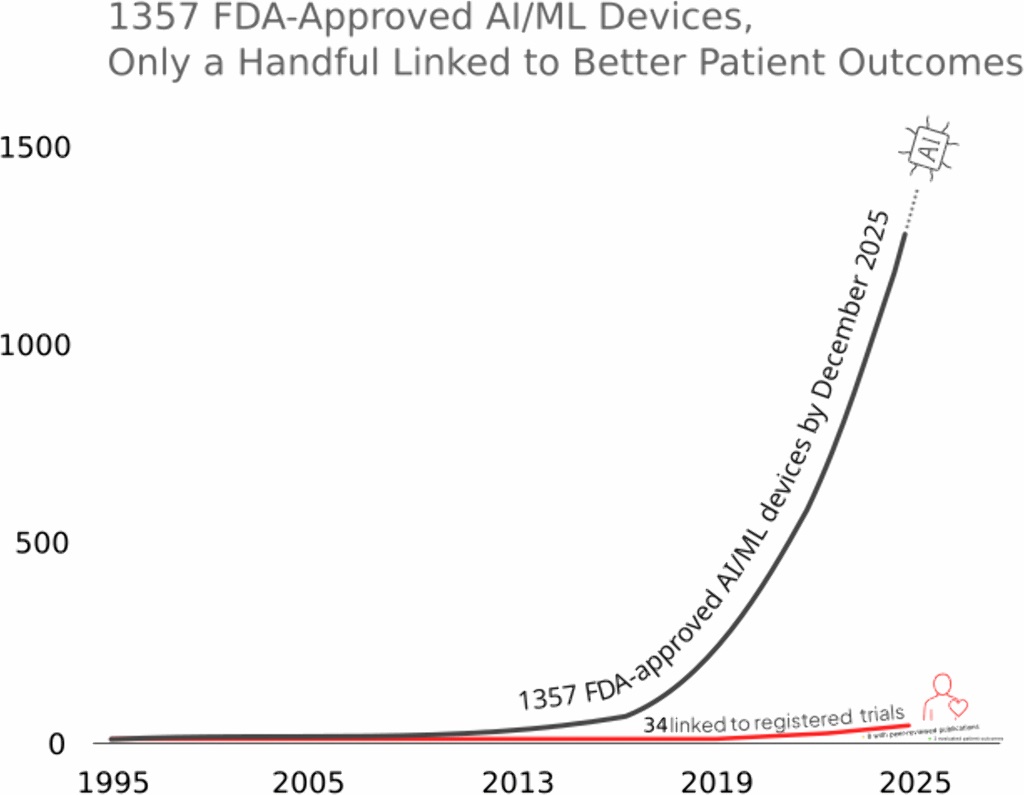
Of 1357 devices authorised by the US FDA, only 3 were evaluated on clinical effectiveness
Growth of FDA-cleared AI/ML-enabled medical devices from 1995 to December 2025. Of 1,357 cleared devices, only 34 were linked to registered clinical trials and only 3 were evaluated for patient-centred outcomes. (Fig 1 of the article.), Credit: Abulibdeh R, Cajas Ordóñez SA, Celi LA, Gorijavolu R, Izath N, Markussen Lunde T, 2026, PLOS Digital Health, CC-BY 4.0 (https://creativecommons.org/licenses/by/4.0/)
A new analysis shows that, of 1357 artificial intelligence (AI)-based medical devices authorised by the US Food and Drug Administration (FDA) for use in patient care, only three had been tested on whether they actually improve patients’ health. Rawan Abulibdeh of the University of Toronto, Canada, and colleagues present these findings in the open access journal PLOS Digital Health on August 19, 2026.
New AI devices increasingly inform clinical care, such as systems that aid surgical planning, calculate cardiovascular risks, and guide interpretation of mammograms and other imaging. In order to be authorised for use in the US, AI devices typically only need to show “substantial equivalence” to an existing authorised device, and developers are not required to demonstrate whether new AI devices help people live healthier lives – with benefits shared equitably across diverse subgroups.
To deepen understanding of this topic, Abulibdeh and colleagues investigated how all 1357 AI devices authorised by the FDA as of December 5, 2025, had been evaluated in patients prior to authorization.
They found that only 34 of the devices had been included in registered clinical trials, with results posted for 12 and peer-reviewed manuscripts published for 12. Only 3 devices had been tested on patient-centred outcomes, such as death rates, strokes, hospitalizations, and quality of life. Most studies were conducted in highly resourced healthcare systems, and most excluded key patient subgroups, such as pregnant women, adults over 75, and non-English speakers.
The researchers suggest that structural barriers such as financial incentives and logistical challenges discourage developers from testing AI devices on patient outcomes, resulting in greater emphasis on speedy development than on rigor. They discuss how this framework could allow new tools to amplify existing disparities in healthcare and how it could lead to patients in low- and middle-income countries becoming inadvertent test populations for under-studied AI devices, as many countries rely on higher-income countries’ authorisation decisions.
On the basis of their findings, the researchers conclude that existing policies for AI medical device authorization should be redesigned. They propose a novel, three-phase framework that includes demonstration of effectiveness across diverse patient subgroups and healthcare settings.
The authors add: “We expected the evidence base to be thin, but not this thin. Out of 1357 AI devices the FDA has cleared for use in patient care, only three have been tested on whether patients actually live longer or better. Clearance tells you a device resembles something already on the market. It does not tell you it helps anyone.”
New Emory University research suggests that higher vitamin D supplement intake may be associated with better cognitive function in adults with an elevated risk of dementia.
In a study of 54 adults with sleep disturbances and mild cognitive impairments (MCI), two hallmarks of early dementia, participants taking at least 5000 IU of vitamin D daily showed better cognitive function compared to those who didn’t.
The study, recently published in Sleep Medicine, found that participants who reported taking 5000 IU or more of vitamin D daily scored more than 13% higher on the Montreal Cognitive Assessment (MoCA) than those who didn’t, even after accounting for other factors.A screening tool to detect risk of developing dementia, MoCA is widely used to assess memory and thinking skills. In this study, lower daily doses of vitamin D were not associated with higher cognitive scores.
The study also emphasises the significance of timing. MCI is an intermediate stage between normal cognitive aging and dementia.
“In older adults experiencing both sleep disturbance and mild cognitive impairment, this may represent a critical window for intervention, when cognitive changes are emerging, but opportunities to support brain health may remain,” says Victoria Pak, senior author of the study.
“Identifying accessible and modifiable factors, such as vitamin D supplement intake, during the earlier stages of cognitive decline may become increasingly important, particularly as rates of Alzheimer’s disease continue to rise,” adds Pak, associate professor at Emory University’s Nell Hodgson Woodruff School of Nursing.
In addition to the timing of the intervention, the study also found that cognitive performance did not differ based on the form of vitamin D – D2, typically derived from plants or fungi, or D3, produced after sun exposure or consuming animal-based foods.
Vitamin D, an essential nutrient, is not only necessary for muscle and nerve function, but also influences sleep quality and sleep-wake cycles. Additionally, 50% of those with moderate to severe Alzheimer’s disease report having sleep disturbances, indicating a bidirectional relationship between sleep deprivation and cognitive decline.
While vitamin D deficiencies have been implicated in sleep disorders, such as insomnia and more nighttime awakenings, this preliminary study is the first to assess the relationship between vitamin D supplement intake and cognitive function in a high-risk population with both MCI and sleep disturbances.