Category: Neurology

The Brain Unconsciously Excels at Spotting Deepfakes

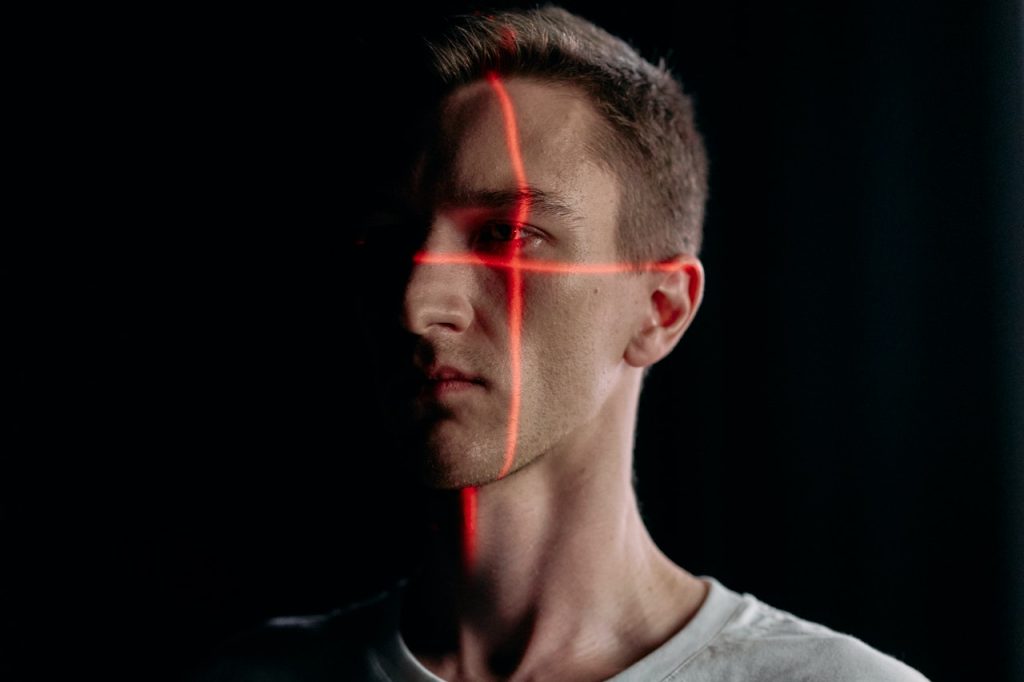
Photo by Cottonbro on Pexels

When looking at real and ‘deepfake’ faces created by AI, observers can’t consciously recognise the difference – but their brains can, according to new research which appears in Vision Research.

Convincing fakes made by computers, deepfake videos, images, audio, or text are rife in the spread of disinformation, fraud and counterfeiting.

For example, in 2016, a Russian troll farm deployed over 50 000 bots on Twitter, making use of deepfakes as profile pictures, to try to influence the outcome of the US presidential election, which according to some research may have boosted Donald Trump’s votes by 3%. More recently, a deepfake video of Volodymyr Zelensky urging his troops to surrender to Russian forces surfaced on social media, muddying people’s understanding of the war in Ukraine with potential, high-stakes implications.

Fortunately, neuroscientists have discovered a new way to spot these insidious fakes: people’s brains are able to detect AI-generated fake faces, even though people could not distinguish between real and fake faces.

When looking at participants’ brain activity, the University of Sydney researchers found deepfakes could be identified 54% of the time. However, when participants were asked to verbally identify the deepfakes, they could only do this 37% of the time.

“Although the brain accuracy rate in this study is low – 54 percent – it is statistically reliable,” said senior researcher Associate Professor Thomas Carlson.

“That tells us the brain can spot the difference between deepfakes and authentic images.”

Spotting bots and scams

The researchers say their findings may be a starting-off point in the battle against deepfakes.

“The fact that the brain can detect deepfakes means current deepfakes are flawed,” Associate Professor Carlson said. “If we can learn how the brain spots deepfakes, we could use this information to create algorithms to flag potential deepfakes on digital platforms like Facebook and Twitter.”

They project that in the more distant future that technology, based on their and similar studies, could developed to alert people to deepfake scams in real time. Security personnel for example might wear EEG-enabled helmets to alert them of a deepfake.

Associate Professor Carlson said: “EEG-enabled helmets could have been helpful in preventing recent bank heist and corporate fraud cases in Dubai and the UK, where scammers used cloned voice technology to steal tens of millions of dollars. In these cases, finance personnel thought they heard the voice of a trusted client or associate and were duped into transferring funds.”

Method: eyes versus brain

The researchers conducted two experiments, one behavioural and one using neuroimaging. In the behavioural experiment, participants were shown 50 images of real and computer-generated fake faces and were asked to identify which were real and which were fake.

Then, a different group of participants were shown the same images while their brain activity was recorded using EEG, without knowing that half the images were fakes.

The researchers then compared the results of the two experiments, finding people’s brains were better at detecting deepfakes than their eyes.

A starting point

The researchers stress that the novelty of their study makes it merely a starting point. It won’t immediately – or even ever – lead to a foolproof way of detecting deepfakes.

Associate Professor Carlson said: “More research must be done. What gives us hope is that deepfakes are created by computer programs, and these programs leave ‘fingerprints’ that can be detected.

“Our finding about the brain’s deepfake-spotting power means we might have another tool to fight back against deepfakes and the spread of disinformation.”

Source: The University of Sydney

MRI Scans of Video Gamers Show Superior Sensorimotor Decision-making

Photo by Igor Karimov on Unsplash

Video gamers who play regularly show superior sensorimotor decision-making skills and enhanced activity in key regions of the brain as compared to non-players, according to a recent US study published in the Neuroimage: Reports journal.

Analysis of functional magnetic resonance imaging (fMRI) scans of video game players suggested that video games could be a useful tool for training in perceptual decision-making, the authors said.

“Video games are played by the overwhelming majority of our youth more than three hours every week, but the beneficial effects on decision-making abilities and the brain are not exactly known,” said lead researcher Mukesh Dhamala, associate professor at Georgia State University.

“Our work provides some answers on that,” Assov Prof Dhamala elaborated. “Video game playing can effectively be used for training – for example, decision-making efficiency training and therapeutic interventions – once the relevant brain networks are identified.”

Assoc Prof Dhamala was the adviser for Tim Jordan, PhD, the paper’s lead author, who had a personal example of how such research could inform the use of video games for training the brain.

Dr Jordan, had weak vision in one eye as a child. As part of a research study when he was about 5, he was asked to cover his good eye and play video games as a way to strengthen the vision in the weak one. Dr Jordan credits video game training with helping him go from legally blind in one eye to building strong capacity for visual processing, allowing him to eventually play lacrosse and paintball. He is now a postdoctoral researcher at UCLA.

The Georgia State research project involved 47 university-aged-age participants, with 28 categorised as regular video game players and 19 as non-players.

The subjects lay inside an fMRI machine with a mirror that let them see a cue immediately followed by a display of moving dots. Participants were asked to press a button in their right or left hand to indicate the direction the dots were moving, or resist pressing either button if there was no directional movement.

Video game players proved to be faster and more accurate with their responses. Analysis of the brain scans found that the differences were associated with enhanced activity in certain parts of the brain.

“These results indicate that video game playing potentially enhances several of the subprocesses for sensation, perception and mapping to action to improve decision-making skills,” the authors wrote. “These findings begin to illuminate how video game playing alters the brain in order to improve task performance and their potential implications for increasing task-specific activity.”

No trade-off was observed between speed and accuracy of response – the video game players were better on both measures.

“This lack of speed-accuracy trade-off would indicate video game playing as a good candidate for cognitive training as it pertains to decision-making,” the authors wrote.

Source: Georgia State University

Retinal Scans May be Able to Detect ASD and ADHD

Eye
Source: Daniil Kuzelev on Unsplash

By measuring the electrical activity of the retina in responses to a light stimulus, researchers found that they may be able to neurodevelopmental disorders such as ASD and ADHD, as reported in new research published in Frontiers in Neuroscience.

In this groundbreaking study, researchers found that recordings from the retina could identify distinct signals for both Attention Deficit Hyperactivity Disorder (ADHD) and Autism Spectrum Disorder (ASD) providing a potential biomarker for each condition.

Using the ‘electroretinogram’ (ERG) – a diagnostic test that measures the electrical activity of the retina in response to a light stimulus – researchers found that children with ADHD showed higher overall ERG energy, whereas children with ASD showed less ERG energy.

Research optometrist at Flinders University, Dr Paul Constable, said the preliminary findings indicate promising results for improved diagnoses and treatments in the future.

“ASD and ADHD are the most common neurodevelopmental disorders diagnosed in childhood. But as they often share similar traits, making diagnoses for both conditions can be lengthy and complicated,” Dr Constable says.

“Our research aims to improve this. By exploring how signals in the retina react to light stimuli, we hope to develop more accurate and earlier diagnoses for different neurodevelopmental conditions.

“Retinal signals have specific nerves that generate them, so if we can identify these differences and localise them to specific pathways that use different chemical signals that are also used in the brain, then we can show distinct differences for children with ADHD and ASD and potentially other neurodevelopmental conditions.”

“This study delivers preliminary evidence for neurophysiological changes that not only differentiate both ADHD and ASD from typically developing children, but also evidence that they can be distinguished from each other based on ERG characteristics.”

According to the World Health Organization, one in 100 children has ASD, with 5–8% of children diagnosed with ADHD.

Attention Deficit Hyperactivity Disorder (ADHD) is a neurodevelopmental condition characterised by being overly active, struggling to pay attention, and difficulty controlling impulsive behaviours. Autism spectrum disorder (ASD) is also a neurodevelopmental condition where children behave, communicate, interact, and learn in ways that are different from most other people.

Co-researcher and expert in human and artificial cognition at the University of South Australia, Dr Fernando Marmolejo-Ramos, says the research has potential to extend across other neurological conditions.

“Ultimately, we’re looking at how the eyes can help us understand the brain,” Dr Marmolejo-Ramos says.

“While further research is needed to establish abnormalities in retinal signals that are specific to these and other neurodevelopmental disorders, what we’ve observed so far shows that we are on the precipice of something amazing.

“It is truly a case of watching this space; as it happens, the eyes could reveal all.”

Source: Flinders University

Newly Discovered Neuron Type may Help Explain Memory Formation

A healthy neuron.
A healthy neuron. Credit: NIH

Scientists publishing in Neuron have described how a newly discovered neuron type may be involved with the formation of memory in the hippocampus, which is marked by high-frequency electrical events.

It is known that memory is represented by changes in the hippocampus. One of the well-established changes in the hippocampus that has been associated with memory is the presence of so-called sharp wave ripples (SWR). These are brief, high-frequency electrical events generated in the hippocampus, and they are believed to represent a major event occurring in the brain in the so-called episodic memory, such as recalling a life event or a friend’s phone number.

However, what happens in the hippocampus when SRWs are generated has not been well understood.

Now a new study sheds light on the existence of a neuron type in the mouse hippocampus that might be a key to better understanding of episodic memory.

Professor Marco Capogna and Assistant professor Wen-Hsien Hou have contributed to the discovery of the novel neuron that is associated with sharp wave ripples and memory.

Possible disruption in dementia and Alzheimer’s

The study describes the novel neuron type in the hippocampus.

“We have found that this new type of neuron is maximally active during SWRs when the animal is awake – but quiet – or deeply asleep. In contrast, the neuron is not active at all when there is a slow, synchronized neuronal population activity called “theta” that can occur when an animal is awake and moves or in a particular type of sleep when we usually dream,” Prof Capogna said.

Because of this dichotomic activity, this novel type of neuron is named theta off-ripples on (TORO).

“How come, TORO-neurons are so sensitive to SWRs? The paper tries to answer this question by describing the functional connectivity of TORO-neurons with other neurons and brain areas, an approach called circuit mapping. We find that TOROs are activated by other types of neurons in the hippocampus, namely CA3 pyramidal-neurons and are inhibited by inputs coming from other brain areas, such as the septum,” Prof Capogna explained.

“Furthermore, the study finds that TOROs are inhibitory neurons that release the neurotransmitter GABA. They send their output locally – as most GABAergic neurons do – within the hippocampus, but also project and inhibit other brain areas outside the hippocampus, such as the septum and the cortex. In this way, TORO-neurons propagate the SWR information broadly in the brain and signal that a memory event occurred,” he concluded.

The team has monitored the activity of the neuron by using electrophysiology – a technique that detects activity of the neurons by measuring voltage versus time, and by using imaging that detects activity by measuring changes in calcium signalling inside the neurons.

Demonstrating a causal link between the activity of TORO-nerve cells and memory will be the next step, and exploring whether inhibition of TORO-neurons and sharp wave ripples occurs in dementia and Alzheimer’s diseases. 

Source: Aarhus University

Illusion Tricks Pupils into Dilating

Looking at this image, do you perceive that the central black hole is expanding, as if you’re moving into a dark environment, or falling into a hole? If so, you’re not alone: a new study published in Frontiers in Human Neuroscience shows that this ‘expanding hole’ illusion, which is new to science, is perceived by approximately 86% of people.

The study’s first author, Professor Bruno Laeng at the University of Oslo, explained: “The ‘expanding hole’ is a highly dynamic illusion: The circular smear or shadow gradient of the central black hole evokes a marked impression of optic flow, as if the observer were heading forward into a hole or tunnel.”

Optical illusions aren’t simple curiosities: researchers study them to better understand the complex processes our visual system uses to anticipate and make sense of the visual world.

In the new study, Prof Laeng and colleagues demonstrated that the ‘expanding hole’ illusion deceives the brain so well that it even prompts a dilation reflex of the pupils to let in more light, just as if the observer was entering a dark area.

“Here we show based on the new ‘expanding hole’ illusion that that the pupil reacts to how we perceive light – even if this ‘light’ is imaginary like in the illusion – and not just to the amount of light energy that actually enters the eye. The illusion of the expanding hole prompts a corresponding dilation of the pupil, as it would happen if darkness really increased,” said Prof Laeng.

Prof Laeng and colleagues explored how the colour of the hole (besides black: blue, cyan, green, magenta, red, yellow, or white) and of the surrounding dots affect how strongly we mentally and physiologically react to the illusion. On a screen they presented variations of the “expanding hole” image to 50 women and men with normal vision, asking them to rate subjectively how strongly they perceived the illusion. While participants gazed at the image, the researchers measured their eye movements and their pupils’ unconscious constrictions and dilations. As controls, the participants were shown “scrambled” versions of the expanding hole image, with equal luminance and colours, but without any pattern.

The illusion appeared most effective when the hole was black. Fourteen percent of participants didn’t perceive any illusory expansion when the hole was black, while 20% didn’t if the hole was in color. Among those who did perceive an expansion, the subjective strength of the illusion differed markedly.

The researchers also found that black holes promoted strong reflex dilations of the participants’ pupils, while coloured holes prompted pupil to constriction. For black holes, but not for coloured holes, the stronger participants rated their perception of the illusion, the more their pupil diameter tended to change.

Minority not susceptible

Just why a minority seem unsusceptible to the “expanding hole” illusion is still unclear. It is also not known whether other vertebrate species, or even nonvertebrate animals with camera eyes such as octopuses, might perceive the same illusion as we do.

“Our results show that pupils’ dilation or contraction reflex is not a closed-loop mechanism, like a photocell opening a door, impervious to any other information than the actual amount of light stimulating the photoreceptor. Rather, the eye adjusts to perceived and even imagined light, not simply to physical energy. Future studies could reveal other types of physiological or bodily changes that can ‘throw light’ onto how illusions work,” concluded Prof Laeng.

Source: Frontiers

MRI Unveils Secrets of Brains under Anaesthesia

Depiction of a human brain
Image by Fakurian Design on Unsplash

A study published in eLife reveals how the brains of humans and other primates under anaesthesia differ from mammals such as mice, with the visual cortex in primates being isolated from certain effects.

Anaesthesia still holds mysteries for modern science. Electroencephalography (EEG) studies show that, during anaesthesia, the brain is put into a deep sleep-like state in which periods of rhythmic electrical activity alternate with periods of complete inactivity. This state is called burst-suppression. Until now, it was unclear where exactly this state happens in the brain and which brain areas are involved.

Shedding light on the phenomenon would help better understand how the brain functions under anaesthesia. To this end, researchers used functional magnetic resonance imaging (fMRI) to study the precise spatial distribution of synchronously working brain regions in anaesthetised humans, long-tailed macaques, common marmosets and rats. They were able to show for the first time that the areas where burst-suppression is evident differ significantly in primates and rodents. While in rats large parts of the cerebral cortex synchronously show the burst-suppression pattern, in primates individual sensory regions, such as the visual cortex, are excluded from it.

“Our brain can be thought of as a full soccer stadium when we are awake,” explained Nikoloz Sirmpilatze, lead author of the study. “Our active neurons are like tens of thousands of spectators all talking at once. Under anaesthesia, however, neuronal activity is synchronised. You can measure this activity using EEG as uniform waves, as if all the spectators in the stadium were singing the same song. In deep anaesthesia, this song is repeatedly interrupted by periods of silence. This is called burst-suppression. The deeper the anaesthesia, the shorter the phases of uniform activity, the bursts, and the longer the periodically recurring inactive phases, the so-called suppressions.”

The phenomenon is caused by many different anaesthetics, some of which vary in their mechanisms of action. And burst-suppression is also detectable in coma patients. However, it is not known whether this condition is a protective reaction of the brain or a sign of impaired functioning. It has also been unclear where in the brain burst-suppression occurs and which brain areas are involved, as localisation by EEG alone is not possible.

To answer this question, the researchers fMRI. In the first part of the study, the researchers established a system to evaluate fMRI data in humans, monkeys and rodents in a standardised manner using the same method. To do this, they used simultaneously-measured EEG and fMRI data from anaesthetised patients that had been generated in a previous study. “We first looked to see whether the burst-suppression detected in the EEG was also visible in the fMRI data and whether it showed a certain pattern,” says Nikoloz Sirmpilatze. “Based on that, we developed a new algorithm that allowed detecting burst-suppression events in the experimental animals using fMRI, without additional EEG measurement.”

The researchers then performed fMRI measurements in anaesthetised long-tailed macaques, common marmosets and rats. In all animals, they were able to detect and precisely localise burst-suppression as a function of anesthetic concentration. The spatial distribution of burst-suppression showed that in both humans and monkey species, certain sensory areas, such as the visual cortex, were excluded from it. In contrast, in the rats, the entire cerebral cortex was affected by burst-suppression.

“At the moment, we can only speculate about the reasons,” said Nikoloz Sirmpilatze, who was awarded the German Primate Center’s 2021 PhD Thesis Award for his work. “Primates orient themselves mainly through their sense of sight. Therefore, the visual cortex is a highly specialised region that differs from other brain areas by special cell types and structures. In rats, this is not the case. In future studies, we will investigate what exactly happens in these regions during anaesthesia to ultimately understand why burst-suppression is not detectable there with fMRI.”

Susann Boretius, senior author of the study adds: “The study not only raises the question of the extent to which rodents are suitable models for many areas of human brain research, especially when it comes to anaesthesia, but the results also have many implications for neuroscience and the evolution of neural networks in general.”

Source: Deutsches Primatenzentrum (DPZ)/German Primate Center

An Anti-HIV Drug for Memory Recall in Older Adults?

Old man
Photo by Kindel Media on Pexels

The human brain usually stores memories in groups so that the recollection of one significant memory triggers the recall of others connected by time. With ageing, the brain gradually loses this ability to link related memories.

Now, researchers have discovered a key molecular mechanism behind this memory linking, and also identified a way to restore this brain function in middle-aged mice. They also found an anti-HIV drug that can do this.

Published in Nature, the findings suggest a new method for strengthening human memory in middle age and a possible early intervention for dementia.

“Our memories are a huge part of who we are,” explained Professor Alcino Silva. “The ability to link related experiences teaches how to stay safe and operate successfully in the world.”

The team from UCLA focused on a gene called CCR5 that encodes the CCR5 receptor – the same one that HIV hitches a ride on to infect brain cells, resulting in memory loss in AIDS patients.

In previous work, Prof Silva’s lab showed that CCR5 expression reduced memory recall.

In the current study, Prof Silva and his colleagues discovered a central mechanism underlying mice’s ability to link their memories of two different cages. Using a tiny microscope, the researchers observed neurons firing and creating new memories in the brains of the mice.

They found that boosting CCR5 gene expression in the brains of middle-aged mice interfered with memory linking, with animals forgetting the connection between the two cages.

Mice with the CCR5 gene knocked out were able to link memories that normal mice could not.

Proof Silva had previously studied the anti-HIV drug maraviroc, which inhibits the entry of HIV into human cells. His lab discovered that maraviroc also suppressed CCR5 in the brains of mice.

“When we gave maraviroc to older mice, the drug duplicated the effect of genetically deleting CCR5 from their DNA,” said Prof Silva. “The older animals were able to link memories again.”

The finding suggests that maraviroc could be used off-label to help restore middle-aged memory loss, as well as reverse the cognitive deficits caused by HIV infection.

“Our next step will be to organise a clinical trial to test maraviroc’s influence on early memory loss with the goal of early intervention,” said Prof Silva. “Once we fully understand how memory declines, we possess the potential to slow down the process.”

All of this raises a question: what’s the purpose of a gene that interferes with the brain’s ability to link memories?

“Life would be impossible if we remembered everything,” said Prof Silva. “We suspect that CCR5 enables the brain to connect meaningful experiences by filtering out less significant details.”

Source: University of California – Los Angeles Health Sciences

Scientists Discover a Difference in Brains of Psychopathic Individuals

Brain scan image
Image source: Mart Production on Pexels

Neuroscientists report in the Journal of Psychiatric Research that they have discovered a biological difference between psychopaths and non-psychopaths.

Using magnetic resonance imaging (MRI) scans, they found that a region of the forebrain known as the striatum was on average 10% larger in psychopathic individuals compared to a control group of individuals with low or no psychopathic traits.

Psychopaths, or those with psychopathic traits, are generally defined as individuals that have an egocentric and antisocial personality. It is a neuropsychiatric disorder marked by deficient emotional responses, lack of empathy, and poor behavioural controls, commonly resulting in persistent antisocial deviance and criminal behaviour. Accumulating research suggests that psychopathy follows a developmental trajectory with strong genetic influences, and which precipitates deleterious effects on widespread functional networks, particularly within paralimbic regions of the brain.

The striatum, which is a part of the forebrain, the subcortical region of the brain that contains the entire cerebrum, coordinates multiple aspects of cognition, including both motor and action planning, decision-making, motivation, reinforcement, and reward perception.

Previous studies had indicated an overly active striatum in psychopaths but had not conclusively determined the impact of its size on behaviours. The new study reveals a significant biological difference between people who have psychopathic traits and those who do not.

A better understanding of the role of biology in antisocial and criminal behaviour may help improve existing theories of behaviour, as well as inform policy and treatment.

Source: Nanyang Technical University

How the Brain Blocks out Unwanted Memories

Bald man
Photo by Brett Sayles on Pexels

In order to prevent the mind becoming flooded with unwanted memories, a brain region determines when a person is about to think of an unwanted memory and then signals other regions to suppress it. The discovery was recently published in JNeurosci.

Preventing unwanted memories from coming to mind is an adaptive ability of humans. This ability relies on inhibitory control processes in the prefrontal cortex to modulate hippocampal retrieval processes. How and when reminders to unwelcome memories come to trigger prefrontal control mechanisms remains unknown.

Crespo García et al. measured participants’ brain activity with both EEG and fMRI while they completed a memory task. The participants memorised sets of words (ie, gate and train) and were asked to either recall a cue word’s pair (see gate, think about train) or only focus on the cue word (see gate, only think about gate). During proactive memory suppression, activity increased in the anterior cingulate cortex (ACC), a brain region involved in cognitive control, within the first 500 milliseconds of the task. The ACC relayed information to the dorsolateral prefrontal cortex (DLPFC), which then inhibited activity in the hippocampus, a key region for memory recall. The activity levels in the ACC and DLPFC remained low for the rest of the trial, a sign of success — the memory was stopped early enough so no more suppression was needed. If the memory was not suppressed in time, the ACC generated a reactive alarm, increasing its activity to signal to the DLPFC to stop the intrusion.

Source: EurekAlert!

People with Epilepsy Live Significantly Shorter Lives

Depiction of a human brain
Image by Fakurian Design on Unsplash

A Danish cohort study published in Brain shows that people with epilepsy live 10-12 years fewer than those without the condition, with a slightly greater reduction for men than women. The study researchers also found that excess mortality is particularly pronounced among people with epilepsy and mental disorders.

One of the most frequently occurring neurological diseases, epilepsy affects 50 million people worldwide, and is known to increase the risk of early death by three times.

“The significantly reduced life expectancy is found both in people who develop epilepsy as a result of an underlying condition, such as brain cancer or stroke, and in those who develop epilepsy without an obvious underlying cause,” explained Julie Werenberg Dreier, one of the researchers behind the study.

The average reduction in life expectancy was 12 years for men with epilepsy and 11 years for women. Among people with epilepsy and mental disorders life expectancy was on average reduced by up to 16 years.

“We discovered that the reduced life expectancy for people with epilepsy was related to a wide range of causes of death which don’t just include the neurological, but also cardiovascular diseases, psychiatric disorders, alcohol related conditions, accidents and suicide,” said Jakob Christensen, one of the researchers behind the study.

Researchers used Danish healthcare register to follow almost six million Danes, including more than 130 000 people with epilepsy.

“The large study has enabled detailed analyses of a range of different causes of death and, for the first time, we’ve been able to estimate the number of years lost due to individual causes of death in people with epilepsy. This is important information as it can be used to target preventive efforts in order to reduce the mortality gap that we currently see in people with epilepsy,” said Julie Werenberg Dreier.

The mortality rate among people with epilepsy is due to a wide range of different conditions that cut across virtually all medical specialities, the researchers said. There is therefore a need for a collective effort to reduce mortality.

“The alarming results provide important knowledge for all healthcare professionals who, in one way or another, come into contact with people with epilepsy — also when prioritising and allocating resources in the healthcare system. The results clearly show how serious a disease epilepsy can be, and the findings of the study should be used in the prioritisation and planning of preventive measures,” said Jakob Christensen, emphasising that the results confirm the tendencies that have been shown in a few smaller studies which have estimated reduction in life expectancy in people with epilepsy.

“The study should be followed up by additional research, for example into the questions of how medical treatment and recurring seizures affect life expectancy.”

Source: Aarhus University