Category: Neurology

Breast Cancer Chemo Disrupts Gut Microbiome and Impacts Cognition

Photo by Tima Miroshnichenko on Pexels

Chemotherapy is known to cause behavioural side effects, including cognitive decline. Notably, the gut microbiome communicates with the brain to affect behaviour, including cognition. 

“For the first time ever, our Intelligut Study found that the gut microbiome has been implicated in cognitive side effects of chemotherapy in humans,” said senior author Leah Pyter, associate professor of psychiatry and neuroscience at Ohio State University. “The potential connection between the gut and the brain would allow us to create treatments for the gut to treat the brain.”

Study findings are published in the journal Brain, Behavior, and Immunity.

This clinical longitudinal observational study explored whether chemotherapy-induced disruption of the gut microbiome relates to cognitive decline and circulating inflammatory signals. 

Faecal samples, blood and cognitive measures were collected from 77 patients with breast cancer before, during and after chemotherapy.

“We found that patients treated with chemotherapy who showed decreases in cognitive performance also had reductions in the diversity of their gut microbiome,” said Pyter, also a researcher with Ohio State’s Institute for Behavioral Medicine Research and member of the Cancer Control Research Program at The Ohio State University Comprehensive Cancer Center – Arthur G. James Cancer Hospital and Richard J. Solove Research Institute (OSUCCC – James)

This research builds on Pyter’s prior research in mouse models that found chemotherapy-induced shifts in the gut microbiome cause neurobiological changes and behavioural side effects.  The current study indicates that an association between gut microbiome and cognitive performance exists in humans as well. 

“Side effects of chemotherapy are common and may reduce quality of life, but these side effects can be dismissed as ‘part of chemotherapy’ and therefore overlooked and under-treated,” Pyter said. “We believe that gut microbiome-focused interventions, such as faecal microbial transplantation, may improve behavioural side effects of chemotherapy.” 

OSUCCC—James researchers are also conducting research studies on how the gut microbiome impacts cancer treatment effectiveness and its role in reducing or increasing cancer risk. 

“Chemotherapy is a very important tool for stopping many cancers and side effects should not deter patients who would benefit from this type of therapy from pursuing it, but we know the side effects of some treatment regimens can be quite challenging for patients to complete,” said David Cohn, MD, interim chief executive officer of the OSUCCC – James. “It’s a careful tightrope of walking between effective cancer control and side effect management – and our team is working every day, in the hospital clinics and the lab, to develop ways to manage the side effects of disease treatment with an eye toward quality of life.” 

Source: Ohio State University

New Brain Surgery Approach Targets Difficult Tumours at Skull Base

Source: CC0

Tumours arising in the base of the skull are among the most difficult to remove in neurosurgery. The current treatment method is to perform surgical removal by what is known as the microscopic anterior transpetrosal approach (ATPA). Seeking to lessen the risk of damage and postoperative complications, as the skull base is densely packed with nerves, blood vessels, and other tissues, not to mention the brain stem, an Osaka Metropolitan University medical research team is taking a new approach.

Led by Dr Hiroki Morisako, a lecturer in the Graduate School of Medicine’s Department of Neurosurgery, and its department head Professor Takeo Goto, the team has developed a minimally invasive surgical technique called a purely endoscopic subtemporal keyhole ATPA. The team members write in The Journal of Neurosurgery that this is, to their knowledge, the first time this procedure to remove lesions in the skull base region known as the petrous apex has been described in an article.

Diagram of skin incision and extent of craniotomy. New endoscopic neurosurgery approach does not require a large craniotomy, so the result is a smaller scar. Credit: Osaka Metropolitan University

The endoscopic technique means a smaller area of the skull needs to be surgically opened compared to the microscopic approach, an average of only 11.2 cm² versus 33.9 cm². The risk of damage to the brain is also reduced.

The team performed 10 neurosurgeries using their method from 2022 to 2023 at Osaka Metropolitan University Hospital and compared the results to 13 surgeries using the microscopic ATPA from 2014 to 2021. In terms of operative time, the endoscopic approach reduced it noticeably, from an average of 410.9 minutes to 252.9 minutes. Similarly, blood loss lessened from a mean of 193 ml to 90 ml. The degree of tumour resection (surgical removal) was just as high as the microscopic method, while neurological functions were preserved at a rate equal to or higher than with the conventional approach.

“Comparison of the new endoscopic method and the conventional microscopic method showed no significant difference in tumour resection rate or in the ability to perform daily activities before and after surgery, with the new endoscopic approach resulting in shorter operative times and less blood loss,” Professor Goto stated. “The widespread use of this surgical procedure is expected to improve the treatment results of brain tumours in the base of the skull, not only in Japan but also worldwide.”

Source: Osaka Metropolitan University

How does Oxygen Depletion Disrupt Memory Formation in the Brain?

Scientists identify a positive molecular feedback loop which could explain stroke-induced memory loss.

Ischaemic and haemorrhagic stroke. Credit: Scientific Animations CC4.0

In learning, neurons communicate with each other, and the connections between them getting stronger with repetition. This is known as long-term potentiation or LTP.  

Another type of LTP occurs when the brain is deprived of oxygen temporarily – anoxia-induced long-term potentiation or aLTP. aLTP blocks the former process, thereby impairing learning and memory. Therefore, some scientists think that aLTP might be involved in memory problems seen in conditions like stroke. 

Researchers at the Okinawa Institute of Science and Technology (OIST) and their collaborators have studied the aLTP process in detail. They found that maintaining aLTP requires the amino acid glutamate, which triggers nitric oxide (NO) production in both neurons and brain blood vessels. This process forms a positive glutamate-NO-glutamate feedback loop. Their study, published in iScience, indicates that the continuous presence of aLTP could potentially hinder the brain’s memory strengthening processes and explain the memory loss observed in certain patients after experiencing a stroke.  

The brain’s response to low oxygen 

When there is a lack of oxygen in the brain, the neurotransmitter glutamate is released from neurons in large amounts. This increased glutamate causes the production of NO. NO produced in neurons and brain blood vessels boosts glutamate release from neurons during aLTP. This glutamate-NO-glutamate loop continues even after the brain gets enough oxygen. 

“We wanted to know how oxygen depletion affects the brain and how these changes occur,” stated Dr Han-Ying Wang, a researcher in the former Cellular and Molecular Synaptic Function Unit at OIST and lead author of the study,. “It’s been known that nitric oxide is involved in releasing glutamate in the brain when there is a shortage of oxygen, but the mechanism was unclear.”  

During a stroke, when the brain is deprived of oxygen, amnesia – the loss of recent memories – can be one of the symptoms. Investigating the effects of oxygen deficiency on the brain is important because of the potential medicinal benefits. “If we can work out what’s going wrong in those neurons when they have no oxygen, it may point in the direction of how to treat stroke patients,” Dr Patrick Stoney, a scientist in OIST’s Sensory and Behavioral Neuroscience Unit, explained. 

Brain tissues from mice were placed in a saline solution, mimicking the natural environment in the living brain. Normally, this solution is oxygenated to meet the high oxygen demands of brain tissue. However, replacing the oxygen with nitrogen allowed the researchers to deprive the cells of oxygen for precise lengths of time.  

The tissues were then examined under a microscope and electrodes were placed on them to record electrical activity of the individual cells. The cells were stimulated in a way that mimics how they would be stimulated in living mice. 

Stopping memory and learning activity 

The aLTP process is activated when the brain is deprived of oxygen
The aLTP process is activated when the brain is temporarily deprived of oxygen and glutamate levels increase. If aLTP is maintained for an extended period, this hijacks the normal functioning of the memory strengthening process (LTP), resulting in memory loss. Blocking nitric oxide (NO) synthesis or the molecular pathways that boost glutamate release eventually stops aLTP. Credit: Wang et al., 2024 

The scientists found that maintaining aLTP requires NO production in both neurons and in blood vessels in the brain. Collaborating scientists from OIST’s Optical Neuroimaging Unit showed that in addition to neurons and blood vessels, aLTP requires the activity of astrocytes, another type of brain cell. Astrocytes connect and support communication between neurons and blood vessels. 

“Long-term maintenance of aLTP requires continuous synthesis of nitric oxide. NO synthesis is self-sustaining, supported by the NO-glutamate loop, but blocking molecular steps for NO-synthesis or those that trigger glutamate release eventually disrupt the loop and stop aLTP,” Prof. Tomoyuki Takahashi, leader of the former Cellular and Molecular Synaptic Function Unit at OIST, explained.  

Notably, the cellular processes that support aLTP are shared by those involved in memory strengthening and learning (LTP). When aLTP is present, it hijacks molecular activities required for LTP and removing aLTP can rescue these memory enhancing mechanisms. This suggests that long-lasting aLTP may obstruct memory formation, possibly explaining why some patients have memory loss after a short stroke. 

Prof Takahashi emphasised that the formation of a positive feedback loop formed between glutamate and NO when the brain is temporarily deprived of oxygen is an important finding. It explains long-lasting aLTP and may offer a solution for memory loss caused by a lack of oxygen.  

Source: Okinawa Institute of Science and Technology

Pre-menopausal Ovary Removal Linked to Reduced White Matter Integrity

Photo by Anna Shvets

Women who have their ovaries removed before menopause, particularly before the age of 40, have reduced white matter integrity in multiple regions of the brain later in life. The findings appear online in Alzheimer’s & Dementia: The Journal of the Alzheimer’s Association.

“We know that having both ovaries removed before natural menopause causes abrupt endocrine dysfunction, which increases the risk of cognitive impairment and dementia,” said Michelle Mielke, PhD, professor at Wake Forest University School of Medicine. “But few neuroimaging studies have been conducted to better understand the underlying mechanisms.”

For the study, the research team examined data from the Mayo Clinic Study of Aging to identify women over the age of 50 with available diffusion tensor imaging, a magnetic resonance imaging (MRI) technique that measures white matter in the brain. The cohort was comprised of:

  • 22 participants who had premenopausal bilateral oophorectomy (PBO) before age 40 
  • 43 participants who had PBO between the ages of 40 and 45
  • 39 participants who had PBO between the ages of 46 and 49
  • 907 participants who did not have PBO before the age of 50

“Females who had premenopausal bilateral oophorectomy before the age of 40 had significantly reduced white matter integrity in multiple regions of the brain,” said Mielke, the study’s corresponding author. “There were also trends in some brain regions such that women who had PBO between the ages of 40–44 or 45–49 years also had reduced white matter integrity, but many of these results were not statistically significant.”

Mielke said that 80% of participants who had their ovaries removed also had a history of oestrogen replacement therapy. Therefore, the study was not able to determine whether the use of oestrogen replacement therapy after PBO mitigated the effects of PBO on white matter integrity. She noted that the ovaries secrete hormones both before (primarily oestrogen, progesterone and testosterone) and after menopause (primarily testosterone and androstenedione). 

“Having both ovaries removed results in an abrupt decrease in both oestrogen and testosterone in women,” Mielke said. “Therefore, one possible explanation for our results is the loss of both oestrogen and testosterone.”

Mielke said additional research is needed to further understand how white matter changes are associated with cognitive impairment.

“While these findings are important for women to consider before having premenopausal bilateral oophorectomy for non-cancerous conditions, we need a larger and more diverse cohort of women to validate these results.”

Source: Wake Forest University School of Medicine

Visual Cortex Stimulation Boosts Brain-computer Interface

Deep brain stimulation illustration. Credit: NIH

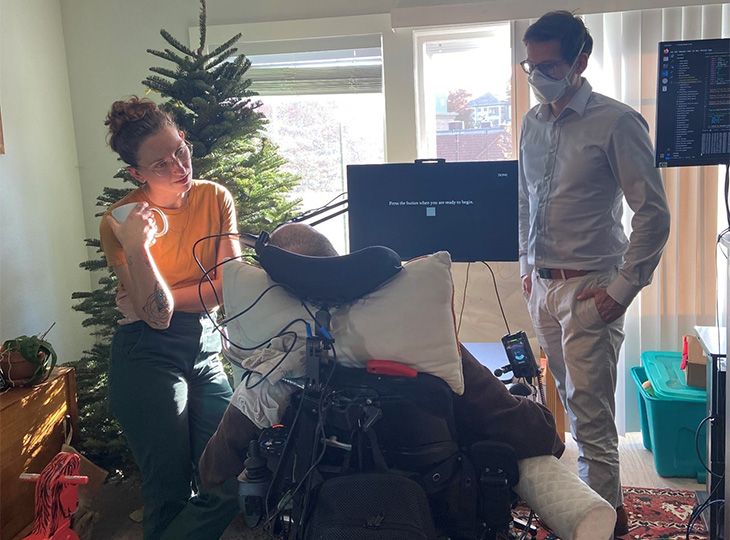
Brain-computer interfaces, or BCIs, promise life-changing benefits for people suffering from a range of neurological conditions, but implementation is for both the invasive and noninvasive methods is challenging. Researchers led by Bin He at Carnegie Mellon University used an innovative electroencephalogram (EEG) wearable. They successfully integrated a novel focused ultrasound stimulation to realise bidirectional BCI that both encodes and decodes brain waves using machine learning in a study with 25 human subjects.

This work, published in Nature Communicationsopens up a new avenue to significantly enhance not only the signal quality, but also, overall nonivasive BCI performance by stimulating targeted neural circuits.

Noninvasive BCI is lauded for its merits of being cheap, safe, and virtually applicable to everyone, but because signals are recorded over the scalp versus inside the brain, low signal quality presents some limitations. The He group is exploring ways to improve the effectiveness of noninvasive BCIs and, over time, has used deep learning approaches to decode what an individual was thinking and then facilitate control of a cursor or robotic arm.

In their latest research, the He group demonstrated that through precision noninvasive neuromodulation using focused ultrasound, the performance of a BCI could be improved for communication.

“This paper reports a breakthrough in noninvasive BCIs by integrating a novel focused ultrasound stimulation to realise bidirectional BCI functionality,” explained Bin He, professor of biomedical engineering at Carnegie Mellon University. “Using a communication prosthetic, 25 human subjects spelled out phrases like ‘Carnegie Mellon’ using a BCI speller. Our findings showed that the addition of focused ultrasound neuromodulation significantly boosted the performance of EEG-based BCI. It also elevated theta neural oscillation that enhanced attention and led to enhanced BCI performance.”

For context, a BCI speller is a 6×6 visual motion aide containing the entire alphabet that is commonly used by nonspeakers to communicate. In He’s study, subjects donned an EEG cap and just by looking at the letters, were able to generate EEG signals to spell the desired words. When a focused ultrasound beam was applied externally to the V5 area (part of the visual cortex) of the brain, the performance of the noninvasive BCI greatly improved among subjects. The neuromodulation-integrated BCI actively altered the engagement of neural circuits to maximize the BCI performance, compared to previous uses, which consisted of pure processing and decoding recorded signals.

Following this discovery, the He lab is further investigating the merits and applications of focused ultrasound neuromodulation to the brain, beyond the visual system, to enhance noninvasive BCIs. They also aim to develop more compact-focused ultrasound neuromodulation device for better integration with EEG-based BCIs, and to integrate AI to continue to enhance the overall system performance.

“This is my lifelong interest, and I will never give up,” emphasized He. “Working to improve noninvasive technology is difficult, but I strongly believe that if we can find a way to make it work, everyone will benefit. I will keep working, and someday, noninvasive lifesaving technology will be available for every household.

Source: College of Engineering, Carnegie Mellon University

Scarring after Spinal Cord Injury is More Complex than Previously Thought

Fibrotic scar 14d after spinal cord injury, red – Col1a1+ perivascular fibroblast derived cells Photo: Daniel Holl

New research has found that scar formation after spinal cord injuries is more complex than previously thought. Scientists at Karolinska Institutet have identified two types of perivascular cells as key contributors to scar tissue, which hinders nerve regeneration and functional recovery. These findings, published in Natural Neuroscience, are also relevant for other brain and spinal cord injuries and could lead to targeted therapies for reducing scarring and improving outcomes.

The central nervous system (CNS) has very limited healing abilities. Injuries or autoimmune diseases like multiple sclerosis often lead to permanent functional deficits. 

Regardless of the injury’s cause, the body responds by forming a boundary around the damaged tissue, which eventually becomes permanent scar tissue. 

Two contributing cell types

While scar tissue seals the damaged area, it also prevents functional repair. After spinal cord injuries, scar tissue blocks the regeneration of nerve fibers that connect the brain with the body, resulting in paralysis after severe injuries.

The research team led by Christian Göritz at Karolinska Institutet has made significant progress in understanding how scar tissue forms in the CNS. The group now identified two distinct types of perivascular cells, which line different parts of blood vessels, as the major contributors to fibrotic scar tissue after spinal cord injury. Depending on the lesion’s location, the two identified cell types contribute differently.

“We found that damage to the spinal cord activates perivascular cells close to the damaged area and induces the generation of myofibroblasts, which consequently form persistent scar tissue,” explains first author Daniel Holl, researcher at the Department of Cell and Molecular Biology.

By examining the process of scar formation in detail, the researchers hope to identify specific therapeutic targets to control fibrotic scarring.

Brain’s Structure Hangs in ‘a Delicate Balance’

Photo by Fakurian Design on Unsplash

When a magnet is heated up, it reaches a critical point where it becomes demagnetisated. Called “criticality,” this point of high complexity is reached when a physical object is transitioning smoothly from one phase into the next.

Now, a new Northwestern University study has discovered that the brain’s structural features reside in the vicinity of a similar critical point – either at or close to a structural phase transition. Surprisingly, these results are consistent across brains from humans, mice and fruit flies, which suggests the finding might be universal. Although the researchers don’t know what phases the brain’s structure is transitioning between, they say this new information could enable new designs for computational models of the brain’s complexity and emergent phenomena.

The research was published in Communications Physics.

“The human brain is one of the most complex systems known, and many properties of the details governing its structure are not yet understood,” said Northwestern’s István Kovács, the study’s senior author. “Several other researchers have studied brain criticality in terms of neuron dynamics. But we are looking at criticality at the structural level in order to ultimately understand how this underpins the complexity of brain dynamics. That has been a missing piece for how we think about the brain’s complexity. Unlike in a computer where any software can run on the same hardware, in the brain the dynamics and the hardware are strongly related.”

“The structure of the brain at the cellular level appears to be near a phase transition,” said Northwestern’s Helen Ansell, the paper’s first author. “An everyday example of this is when ice melts into water. It’s still water molecules, but they are undergoing a transition from solid to liquid. We certainly are not saying that the brain is near melting. In fact, we don’t have a way of knowing what two phases the brain could be transitioning between. Because if it were on either side of the critical point, it wouldn’t be a brain.”

While researchers have long studied brain dynamics using functional magnetic resonance imaging (fMRI) and electroencephalograms (EEG), advances in neuroscience have only recently provided massive datasets for the brain’s cellular structure. These data opened possibilities for Kovács and his team to apply statistical physics techniques to measure the physical structure of neurons.

For the new study, Kovács and Ansell analysed publicly available data from 3D brain reconstructions from humans, fruit flies and mice. By examining the brain at nanoscale resolution, the researchers found the samples showcased hallmarks of physical properties associated with criticality.

One such property is the well-known, fractal-like structure of neurons. This nontrivial fractal-dimension is an example of a set of observables, called “critical exponents,” that emerge when a system is close to a phase transition.

Brain cells are arranged in a fractal-like statistical pattern at different scales. When zoomed in, the fractal shapes are “self-similar,” meaning that smaller parts of the sample resemble the whole sample. The sizes of various neuron segments observed also are diverse, which provides another clue. According to Kovács, self-similarity, long-range correlations and broad size distributions are all signatures of a critical state, where features are neither too organised nor too random. These observations lead to a set of critical exponents that characterise these structural features.

“These are things we see in all critical systems in physics,” Kovács said. “It seems the brain is in a delicate balance between two phases.”

Kovács and Ansell were amazed to find that all brain samples studied – from humans, mice and fruit flies – have consistent critical exponents across organisms, meaning they share the same quantitative features of criticality. The underlying, compatible structures among organisms hint that a universal governing principle might be at play. Their new findings potentially could help explain why brains from different creatures share some of the same fundamental principles.

“Initially, these structures look quite different – a whole fly brain is roughly the size of a small human neuron,” Ansell said. “But then we found emerging properties that are surprisingly similar.”

“Among the many characteristics that are very different across organisms, we relied on the suggestions of statistical physics to check which measures are potentially universal, such as critical exponents. Indeed, those are consistent across organisms,” Kovács said. “As an even deeper sign of criticality, the obtained critical exponents are not independent – from any three, we can calculate the rest, as dictated by statistical physics. This finding opens the way to formulating simple physical models to capture statistical patterns of the brain structure. Such models are useful inputs for dynamical brain models and can be inspirational for artificial neural network architectures.”

Next, the researchers plan to apply their techniques to emerging new datasets, including larger sections of the brain and more organisms. They aim to find if the universality will still apply.

Source:: Northwestern University

Fruit Fly Study Shows Role of Age and Sex-related Head Injury Outcomes in Females

Photo by Fakurian Design on Unsplash

A new study has discovered that even very mild, non-lethal head injuries early in life can lead to neurodegenerative conditions later in life upon ageing. Using fruit flies as a model, the researchers found that chronic immune suppression after mating might make female fruit flies susceptible to delayed brain deterioration following early-life head injuries, which may lead to insights for humans.

The study, published as a Reviewed Preprint in eLife, is described by the editors as fundamental work that advances our understanding of how sex-dependent responses to traumatic brain injury occurs. The work, by a team at Emory University provides what they call compelling results showing the immune and reproductive pathways that may contribute to these differences.

Environmental insults, including mild head trauma, significantly increase the risk of neurodegeneration later in life. However, identifying a causative connection between early-life exposure to mild head trauma and late-life emergence of neurodegeneration is challenging, and it remains unclear as to how sex and age compound the outcomes.

“With their short lives, fruit flies allow scientists to track brain-injury-related changes across their entire lifespan,” says lead author Changtian Ye, a graduate student in the Emory Neuroscience Program, and a member of senior author James Zheng’s lab, at the Emory University School of Medicine. “We recently developed a fruit fly model of mild traumatic brain injury that allows us to deliver mild headfirst impacts and then track what happens in male and female flies from the moment of injury to the occurrence of brain impairments later in life.”

Using their model, Ye and colleagues monitored the impact of mild traumatic brain injury on the flies’ behaviour. Whilst injury initially caused minimal acute deficits in the flies, it led to more profound brain-associated behavioural deficits and degeneration later in life, and these conditions worsened with age. Additionally, they were disproportionately elevated in females, affecting their climbing speed and ability, and leading them to have more damaged brain tissue than their male counterparts.

The researchers also found that female flies that had mated had worse outcomes than unmated (virgin) flies. They identified a protein called ‘sex peptide’ – which is transferred to the female reproductive tract through semen during mating – as a key player in making these flies more susceptible to the harmful effects of brain injury.

“Our analysis of the flies’ RNA data suggested that the chronic suppression of innate immune defence networks in mated females exposed to sex peptide makes them disproportionately vulnerable to neurodegeneration after mild head trauma,” Ye explains.

Together, the findings support the idea that a head injury can pose a major threat for brain health, even if it is mild, and that females can be disproportionately affected. The authors say that additional studies are now needed to determine if similar processes occur in other species.

“Our work establishes a causal relationship between early head trauma and late-life neurodegeneration, emphasising sex differences in injury response and the impact of age during and after injury,” concludes senior author James Zheng, Principle Investigator at the Zheng Lab, Emory University School of Medicine. “It will be interesting to understand if this relationship occurs in other organisms, and to dissect the genetic components and molecular players involved in the sex-different development of neurodegenerative conditions following mild head trauma.”

Source: eLife

Researchers Offer New Understanding of Antidepressant Mechanism

Evidence suggests serotonin-boosting actions relieve depression by restoring normal communication and connections in the brain

Photo by Sydney Sims on Unsplash

Researchers at the University of Colorado Anschutz Medical Campus have established a new framework for understanding how classic antidepressants work in treating major depressive disorder (MDD), reemphasising their importance and aiming to reframe clinical conversation around their role in treatment.

The nature of the dysfunction at the root of MDD has been under investigation for decades. Classic antidepressants, such as SSRIs (selective serotonin reuptake inhibitors, such as fluoxetine) cause an elevation in serotonin levels, a key neurotransmitter. This observation led to the idea that antidepressants work because they restore a chemical imbalance, such as a lack of serotonin.

But subsequent years of research showed no significant decrease in serotonin in people with depression. While experts have moved away from this hypothesis due to lack of concrete evidence, this has led to a shift in public opinion on the effectiveness of these medications.

Antidepressants, such as SSRIs and serotonin and norepinephrine reuptake inhibitors (SNRIs), are still effective in alleviating depressive episodes in many patients, however. In a paper published in Molecular Psychiatry, researchers outline a new framework for understanding how antidepressants are efficacious in treating MDD. This framework helps clarify how antidepressants like SSRIs can still be helpful, even if MDD isn’t caused by a lack of serotonin.

Evidence points to a communication problem

“The best evidence of changes in the brain in people suffering from MDD is that some brain regions are not communicating with each other normally,” said Scott Thompson, PhD, professor in the Department of Psychiatry and senior author. “When the parts of the brain responsible for reward, happiness, mood, self-esteem, even problem-solving in some cases, are not communicating with each other properly, then they can’t do their jobs properly,” Thompson said.

“There is good evidence that antidepressants that increase serotonin, like SSRIs, all work by restoring the strength of the connections between these regions of the brain. So do novel therapeutics such as esketamine and psychedelics. This form of neuroplasticity helps release brain circuits from being ‘stuck’ in a pathological state, ultimately leading to a restoration of healthy brain function,” Thompson said.  

Thompson and colleagues liken this theory to a car running off the road and getting stuck in a ditch, requiring the help of a tow truck to pull the car out of its stuck state, allowing it to move freely down the road again. Researchers are hoping healthcare providers will use their examples to bolster conversations with apprehensive patients about these treatments, helping them better understand their condition and how to treat it.

Study aims to reshape the conversation

“We are hoping this framework provides clinicians new ways to communicate the way these treatments work in combating MDD,” said C. Neill Epperson, MD, co-author of the paper and professor of the Department of Psychiatry at the CU School of Medicine.

“Much of the public conversation around the effectiveness of antidepressants, and the role serotonin plays in diagnosis and treatment, has been negative and largely dangerous,” Epperson said. “While MDD is a heterogenous disorder with no one-fits-all solution, it is important to emphasise that if treatments or medications are working for you, then they are lifesaving. Understanding how these medications promote neuroplasticity can help strengthen that message.”

Source: CU Anschutz Medical Campus

Poor Sleep, Social Media Use and Adolescents’ Developing Brains

Photo by Steinar Engeland on Unsplash

A new study to be presented at the SLEEP 2024 annual meeting found a distinct relationship between sleep duration, social media usage, and brain activation across brain regions that are key for executive control and reward processing.

Results show a correlation between shorter sleep duration and greater social media usage in teens. The analysis points to involvement of areas within the frontolimbic brain regions, such as the inferior and middle frontal gyri, in these relationships. The inferior frontal gyrus, key in inhibitory control, may play a crucial role in how adolescents regulate their engagement with rewarding stimuli such as social media. The middle frontal gyrus, involved in executive functions and critical in assessing and responding to rewards, is essential in managing decisions related to the balancing of immediate rewards from social media with other priorities like sleep. These results suggest a nuanced interaction between specific brain regions during adolescence and their influence on behaviour and sleep in the context of digital media usage.

“As these young brains undergo significant changes, our findings suggest that poor sleep and high social media engagement could potentially alter neural reward sensitivity,” said Orsolya Kiss, who has a doctorate in cognitive psychology and is a research scientist at SRI International. “This intricate interplay shows that both digital engagement and sleep quality significantly influence brain activity, with clear implications for adolescent brain development.”

This study involved data from 6516 adolescents, aged 10–14 years, from the Adolescent Brain Cognitive Development Study. Participants answered questionnaires about sleep duration and recreational social media use. Brain activities were analysed from functional MRI scans during the monetary incentive delay task, targeting regions associated with reward processing. The study used three different sets of models and switched predictors and outcomes each time. Results were adjusted for age, COVID-19 pandemic timing, and socio-demographic characteristics.

Kiss noted that these results provide new insights into how two significant aspects of modern adolescent life, social media usage and sleep duration, interact and impact brain development.

“Understanding the specific brain regions involved in these interactions helps us identify potential risks and benefits associated with digital engagement and sleep habits,” Kiss said. “This knowledge is especially important as it could guide the development of more precise, evidence-based interventions aimed at promoting healthier habits.”

The American Academy of Sleep Medicine recommends that teenagers 13 to 18 years of age should sleep 8 to 10 hours on a regular basis. The AASM also encourages adolescents to disconnect from all electronic devices at least 30 minutes to an hour before bedtime.

Source: American Academy of Sleep Medicine