A study conducted at Turku PET Centre in Finland and published in showed that changes in the functioning of opioid neurotransmitters in the brain may underlie anorexia.
Anorexia nervosa is a serious psychiatric disorder characterised by restricted eating, fear of gaining weight, and body image disturbances, which may lead to severe malnutrition, depression and anxiety. This new study from Turku PET Centre, published in Molecular Psychiatry, shows how changes in neurotransmitter function in the brain may underlie anorexia.
“Opioid neurotransmission regulates appetite and pleasure in the brain. In patients with anorexia nervosa, the brain’s opioidergic tone was elevated in comparison with healthy control subjects. Previously we have shown that in obese patients the activity of the tone of this system is lowered. It is likely that the actions of these molecules regulate both the loss and increase in appetite,” says Professor Pirjo Nuutila from the University of Turku.
Number of opioid receptors in the brain (top row) and sugar intake (bottom row) in patients with anorexia nervosa. Credit: University of Turku
In addition, the researchers measured the brain’s glucose uptake. The brain accounts for about 20% of the body’s total energy consumption, so the researchers were interested in how a reduction in the energy intake affects the brain’s energy balance in anorexia.
“The brains of patients with anorexia nervosa used a similar amount of glucose as the brains of the healthy control subjects. Although being underweight burdens physiology in many ways, the brain tries to protect itself and maintain its ability to function for as long as possible,” says Professor Lauri Nummenmaa from Turku PET Centre and continues:
“The brain regulates appetite and feeding, and changes in brain function are associated with both obesity and low body weight. Since changes in opioid activity in the brain are also connected to anxiety and depression, our findings may explain the emotional symptoms and mood changes associated with anorexia nervosa.”
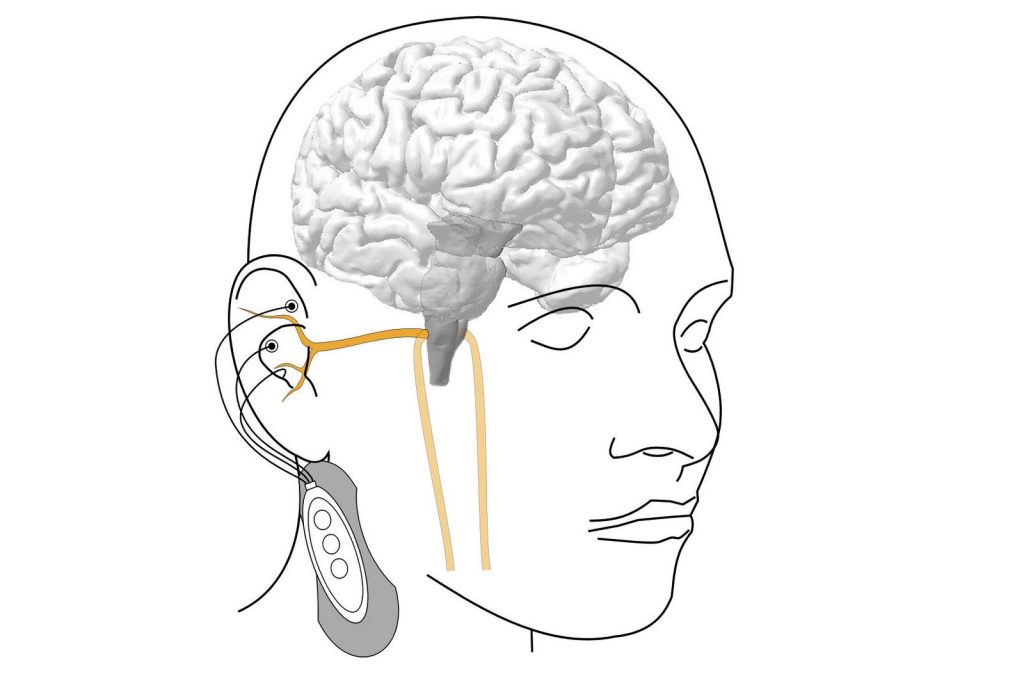
A small device worn on the body can stimulate the nervous system via electrodes on the ear. Credit: Vienna University of Technology.
Various diseases can be treated by stimulating the vagus nerve in the ear with electrical signals, but the results can be ‘hit or miss’. A study recently published in Frontiers in Physiology has now shown that the electrical signals must be synchronised with the body’s natural rhythms – heartbeat and breathing.
Some health problems, from chronic pain and inflammation to neurological diseases, can also be treated by nerve stimulation, for example with the help of electrodes that are attached to the ear and activate the vagus nerve. This method is sometimes referred to as an ‘electric pill’.
However, vagus nerve stimulation does not always work the way it is supposed to. A study conducted by TU Wien (Vienna) in cooperation with the Vienna Private Clinic now shows how this can be improved: Experiments demonstrate that the effect is very good when the electrical stimulation is synchronised with the body’s natural rhythms – the actual heartbeat and breathing.
The ‘electric pill’ for the parasympathetic nervous system
The vagus nerve plays an important role in our body: it is the longest nerve of the parasympathetic nervous system, the part of the nervous system that is significantly involved in the precise control of the internal organs and blood circulation, and is responsible for recovery and building up the body’s own reserves. A branch of the vagus nerve also leads from the brain directly into the ear, which is why small electrodes in the ear can be used to activate the vagus nerve, stimulate the brain and thus influence various functions of the body.
“However, it turns out that this stimulation does not always produce the expected results,” says Prof Eugenijus Kaniusas from the Institute of Biomedical Electronics at TU Wien. “The electrical stimulation does not have an effect on the nervous system at all times. You could say that the brain is just not always listening. It’s as if there is a gate to the control centre of the nervous system that is sometimes open and then closed again, and this can change in less than a second.”
Five people have now been examined in a pilot study. Their vagus nerve was electrically activated to lower their heart rate. It is already known from previous studies that heart rate is a potential indicator of whether stimulation therapy is beneficial or not.
It was shown that the temporal connection between the stimulation and the heartbeat plays a decisive role. If the vagus nerve is stimulated at a rhythm that is not synchronised with the heartbeat, hardly any effect can be observed. However, if the stimulation signals are always applied when the heart is contracting (during systole), a strong effect can be observed – much stronger than if stimulation is applied during the relaxation phase of the heart, diastole.
Breathing is also important in this context: the stimulation was significantly more effective during the inhalation phase than during the exhalation phase.
“Our results show that synchronising vagus nerve stimulation with the heartbeat and breathing rhythm significantly increases effectiveness. This could help to improve the success of treatment for chronic illnesses, especially for those who have not previously responded to this therapy for reasons that are as yet unexplained,” says Eugenijus Kaniusas.
Larger clinical studies to follow
If nerve stimulation can be customised electronically so that it is tailored to the body’s own individual rhythms at any given time, it should be possible to achieve significantly greater successes than has been possible to date. Future studies should examine larger and clinically relevant patient groups and develop even more precise algorithms in order to be able to tailor the stimulation even more precisely to individual needs.
“This technology could be an effective and non-invasive way of modulating the autonomic nervous system in a targeted and gentle manner – a potential milestone in the neuromodulatory treatment of various chronic diseases,” believes Dr Joszef Constantin Szeles from the Vienna Private Clinic.
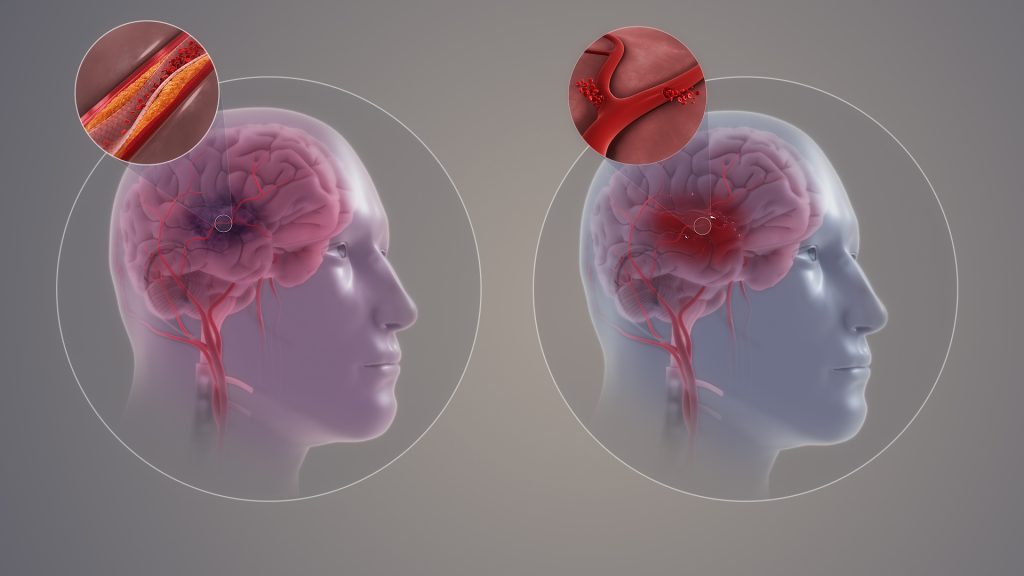
Ischaemic and haemorrhagic stroke. Credit: Scientific Animations CC4.0
A new study by researchers at the Department of Molecular Medicine at SDU sheds light on one of the most severe consequences of stroke: damage to nerve fibres – the brain’s “cables” – which leads to permanent impairments. The study, which is published in the Journal of Pathology, used unique tissue samples from Denmark’s Brain Bank located at SDU, may pave the way for new treatments that help the brain repair itself.
The brain tries to repair damage
Following an injury, the brain tries to repair the damaged nerve fibres by re-establishing their insulating myelin sheaths. Unfortunately, the repair process often succeeds only partially, meaning many patients experience lasting damage to their physical and mental functions. According to Professor Kate Lykke Lambertsen, one of the study’s lead authors, the brain has the resources to repair itself. “We need to find ways to help the cells complete their work, even under difficult conditions,” Prof Lykke said.
The researchers have thus focused on how inflammatory conditions hinder the rebuilding. The study has identified a particular type of cell in the brain that plays a key role in this process. These cells work to rebuild myelin, but inflammatory conditions often block their efforts.
How researchers used the brain collection
-Using the brain collection, we can precisely map which areas of the brain are most active in the repair process, explains Professor Kate Lykke Lambertsen.
This mapping has enabled researchers to analyse tissue samples from Denmark’s Brain Bank and gain a deeper understanding of the mechanisms that control the brain’s ability to heal itself.
Through advanced staining techniques, known as immunohistochemistry, the researchers have been able to detect specific cells that play a central role in the reconstruction of myelin in the damaged areas of the brain.
The samples were analysed to distinguish between different areas of the brain, including the infarct core (the most damaged area), the peri-infarct area (surrounding tissue where rebuilding is active), and tissue that appears unaffected.
The analysis provided insight into where repair cells accumulate and how their activity varies depending on gender and time since the stroke.
Women and men react differently
An interesting discovery in the study is that women’s and men’s brains react differently to injuries.
-The differences underscore the importance of future treatments being more targeted and taking into account the patient’s gender and individual needs, says Kate Lykke Lambertsen.
In women, it seems that inflammatory conditions can prevent cells from repairing damage, while men have a slightly better ability to initiate the repair process. This difference may explain why women often experience greater difficulties after a stroke.
The brain collection at SDU is key to progress
The researchers behind the study emphasise that the discoveries could not have been made without the Danish Brain Bank at SDU. The collection consists of tissue samples from humans, used to understand brain diseases at a detailed level.
With access to this resource, researchers can investigate the mechanisms behind diseases like stroke and develop new treatment strategies.
A brain-computer interface, surgically placed in a research participant with tetraplegia, paralysis in all four limbs, provided an unprecedented level of control over a virtual quadcopter – just by thinking about moving his unresponsive fingers.
The technology divides the hand into three parts: the thumb and two pairs of fingers (index and middle, ring and small). Each part can move both vertically and horizontally. As the participant thinks about moving the three groups, at times simultaneously, the virtual quadcopter responds, manoeuvring through a virtual obstacle course.
It’s an exciting next step in providing those with paralysis the chance to enjoy games with friends while also demonstrating the potential for performing remote work.
“This is a greater degree of functionality than anything previously based on finger movements,” said Matthew Willsey, U-M assistant professor of neurosurgery and biomedical engineering, and first author of a new research paper in Nature Medicine. The testing that produced the paper was conducted while Willsey was a researcher at Stanford University, where most of his collaborators are located.
While there are noninvasive approaches to allow enhanced video gaming such as using electroencephalography to take signals from the surface of the user’s head, EEG signals combine contributions from large regions of the brain. The authors believe that to restore highly functional fine motor control, electrodes need to be placed closer to the neurons. The study notes a sixfold improvement in the user’s quadcopter flight performance by reading signals directly from motor neurons vs. EEG.
To prepare the interface, patients undergo a surgical procedure in which electrodes are placed in the brain’s motor cortex. The electrodes are wired to a pedestal that is anchored to the skull and exits the skin, which allows a connection to a computer.
“It takes the signals created in the motor cortex that occur simply when the participant tries to move their fingers and uses an artificial neural network to interpret what the intentions are to control virtual fingers in the simulation,” Willsey said. “Then we send a signal to control a virtual quadcopter.”
A screenshot of the game display shows the quadcopter following a green path around the rings. The inset shows a hand avatar. The neural implant records from nearby neurons and algorithms determine the intended movements for the hand avatar. The finger positions are then used to control the virtual quadcopter. Image credit: Nature Medicine
The research, conducted as part of the BrainGate2 clinical trials, focused on how these neural signals could be coupled with machine learning to provide new options for external device control for people with neurological injuries or disease. The participant first began working with the research team at Stanford in 2016, several years after a spinal cord injury left him unable to use his arms or legs. He was interested in contributing to the work and had a particular interest in flying.
“The quadcopter simulation was not an arbitrary choice, the research participant had a passion for flying,” said Donald Avansino, co-author and computer scientist at Stanford University. “While also fulfilling the participant’s desire for flight, the platform also showcased the control of multiple fingers.”
Co-author Nishal Shah, incoming professor of electrical and computer engineering at Rice University, explained, “controlling fingers is a stepping stone; the ultimate goal is whole body movement restoration.”
Jaimie Henderson, a Stanford professor of neurosurgery and co-author of the study, said the work’s importance goes beyond games. It allows for human connection.
“People tend to focus on restoration of the sorts of functions that are basic necessities – eating, dressing, mobility – and those are all important,” he said. “But oftentimes, other equally important aspects of life get short shrift, like recreation or connection with peers. People want to play games and interact with their friends.”
A person who can connect with a computer and manipulate a virtual vehicle simply by thinking, he says, could eventually be capable of much more.
“Being able to move multiple virtual fingers with brain control, you can have multifactor control schemes for all kinds of things,” Henderson said. “That could mean anything, from operating CAD software to composing music.”
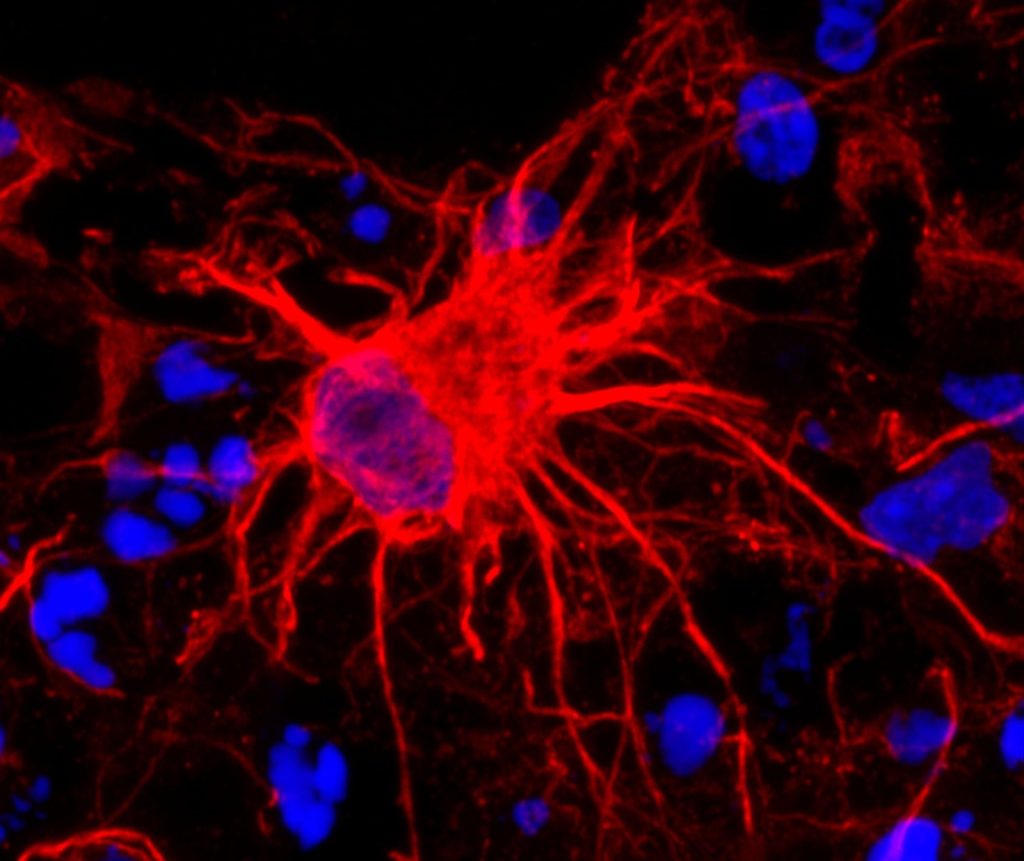
Image of an astrocyte, a subtype of glial cells. Glial cells are the most common cell in the brain. Credit: Pasca Lab, Stanford University NIH support from: NINDS, NIMH, NIGMS, NCATS
New research from the University of Rochester finds that microglia function may not be as similar across sex as once thought. This discovery could have broad implications for how diseases like Alzheimer’s and Parkinson’s are approached and studied, and points to the necessity of having gender-specific research. It is already known that more women are diagnosed with Alzheimer’s and more men are diagnosed with Parkinson’s, but it’s unclear why.
Microglia are the immune cells of the central nervous system, clearing toxins in the brain. But if they are overactive, they can damage neurons instead and, in some cases, have been found to promote the progression of neurodegenerative diseases like Alzheimer’s and Parkinson’s. Although there are known sex-related differences in how microglia function, it was thought to be less variation in how they behave in adulthood. The new study showied how microglia respond differently in adult male versus female mice when given an enzyme inhibitor to block its microglia survival receptor.
“It is a fortuitous finding that has repercussions for what people are doing in the field, but also helps us understand microglia biology in a way that people may not have been expecting,” said Ania Majewska, PhD, professor of Neuroscience and senior author of the study in Cell Reports. “This research has a lot of ramifications for microglia biology and as a result all these diseases where microglia are important in a sex-specific manner.”
Pexidartinib or PLX3397 is an enzyme inhibitor commonly used to remove microglia in the lab setting to help researchers better understand the role of these cells in brain health, function, and disease. PLX3397 is also used to treat the rare disease tenosynovial giant cells tumours (TGCT), a condition that causes benign tumours to grow rapidly in the joints.
Researchers in the Majewska Lab were using PLX3397 in male versus female experiments but continued to run into difficulties, so they decided to take a different approach with the inhibitor. Instead of using it to ask other questions, they decided to better understand how microglia were responding to the drug in males versus females.
First author Linh Le, PhD (‘24), currently a Research Scientist, SetPoint Medical Corp, was a graduate student in the Majewska Lab when she found the expected response from microglia to PLX3397 in male mice: it blocked the receptor that signals microglial survival and depleted the microglia. However, Le, et al, were surprised to find that female microglia responded with a different signalling strategy that resulted in increased microglial survival and less depletion.
“These findings are crucial in the rapidly emerging field of developing disease-modifying therapies that target microglia,” said Majewska. “We do not yet know why the microglia are acting differently in the two sexes. I think we’d like to understand how the signaling through this receptor is regulated in different conditions, such as hormonal changes, basal state, inflammatory, or an anti-inflammatory state.”
Sickle cell disease. Credit: National Institutes of Health
Individuals with sickle cell disease are at a higher risk for stroke and resulting cognitive disability. But even in the absence of stroke, many such patients struggle with remembering, focusing, learning and problem solving, among other cognitive problems, with many facing challenges in school and in the workplace.
Now a multidisciplinary team of researchers and physicians at Washington University School of Medicine in St. Louis has published a study that helps explain how the illness might affect cognitive performance in sickle cell patients without a history of stroke. The study, appearing in JAMA Network Open, found such participants had brains that appeared older than expected for their age. Individuals experiencing economic deprivation, who struggle to meet basic needs, even in the absence of sickle cell disease, had more-aged appearing brains, the team also found.
“Our study explains how a chronic illness and low socioeconomic status can cause cognitive problems,” said Andria Ford, MD, a professor of neurology and chief of the section of stroke and cerebrovascular diseases at WashU Medicine and corresponding author on the study. “We found that such factors could impact brain development and/or aging, which ultimately affects the mental processes involved in thinking, remembering and problem solving, among others. Understanding the influence that sickle cell disease and economic deprivation have on brain structure may lead to treatments and preventive measures that potentially could preserve cognitive function.”
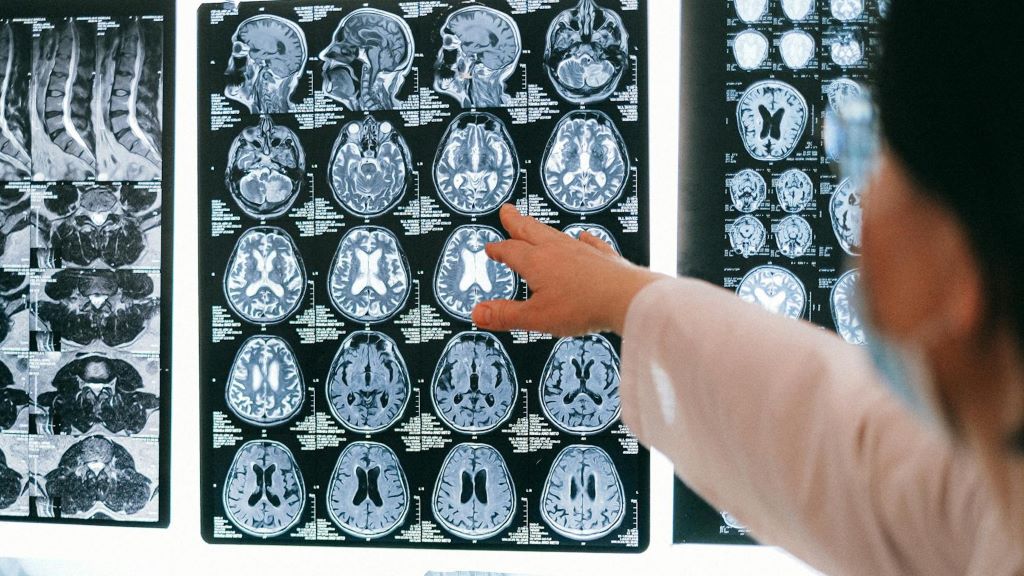
More than 200 young, Black adults with and without sickle cell disease, living in St. Louis and the surrounding region in eastern Missouri and southwestern Illinois, participated in brain MRI scans and cognitive tests. The researchers – including Yasheng Chen, DSc, an associate professor of neurology at WashU Medicine and senior author on the study – calculated each person’s brain age using a brain-age prediction tool that was developed using MRI brain scans from a diverse group of more than 14 000 healthy people of known ages. The estimated brain age was compared with the individual’s actual age.
The researchers found that participants with sickle cell disease had brains that appeared an average of 14 years older than their actual age. Sickle cell participants with older-looking brains also scored lower on cognitive tests.
The study also found that socioeconomic status correlates with brain age. On average, a seven-year gap was found between the brain age and the participants’ actual age in healthy individuals experiencing poverty. The more severe the economic deprivation, the older the brains of such study subjects appeared.
Healthy brains shrink as people age, while premature shrinking is characteristic of neurological illnesses such as Alzheimer’s disease. But a smaller brain that appears older can also result from stunted growth early in life. Sickle cell disease is congenital, chronically depriving the developing brain of oxygen and possibly affecting its growth from birth. Also, children exposed to long-term economic deprivation and poverty experience cognitive challenges that affect their academic performance, Ford explained.
As a part of the same study, the researchers are again performing cognitive tests and scanning the brains of the same healthy and sickle cell participants three years after their first scan to investigate if the older-looking brains aged prematurely, or if their development was stunted.
“A single brain scan helps measure the participants’ brain age only in that moment,” said Ford, who treats patients at Barnes-Jewish Hospital. “But multiple time points can help us understand if the brain is stable, initially capturing differences that were present since childhood, or prematurely aging and able to predict the trajectory of someone’s cognitive decline. Identifying who is at greatest risk for future cognitive disability with a single MRI scan can be a powerful tool for helping patients with neurological conditions.”
A bundle of extremely fine electrode fibres in the brain (microscope image). (Image: Yasar TB et al. Nature Communications 2024, modified)
Researchers at ETH Zurich have developed ultra-flexible brain probes that accurately record brain activity without causing tissue damage. This technology, described in Nature Communications, opens up new avenues for the treatment of a range of neurological and neuropsychiatric disorders.
Neurostimulators, also known as brain pacemakers, send electrical impulses to specific areas of the brain via special electrodes. It is estimated that some 200 000 people worldwide are now benefiting from this technology, including those who suffer from Parkinson’s disease or from pathological muscle spasms. According to Mehmet Fatih Yanik, Professor of Neurotechnology at ETH Zurich, further research will greatly expand the potential applications: instead of using them exclusively to stimulate the brain, the electrodes can also be used to precisely record brain activity and analyse it for anomalies associated with neurological or psychiatric disorders. In a second step, it would be conceivable in future to treat these anomalies and disorders using electrical impulses.
To this end, Yanik and his team have now developed a new type of electrode that enables more detailed and more precise recordings of brain activity over an extended period of time. These electrodes are made of bundles of extremely fine and flexible fibres of electrically conductive gold encapsulated in a polymer. Thanks to a process developed by the ETH Zurich researchers, these bundles can be inserted into the brain very slowly, which is why they do not cause any detectable damage to brain tissue.
This sets the new electrodes apart from rival technologies. Of these, perhaps the best known in the public sphere is the one from Neuralink, an Elon Musk company. In all such systems, including Neuralink’s, the electrodes are considerably wider. “The wider the probe, even if it is flexible, the greater the risk of damage to brain tissue,” Yanik explains. “Our electrodes are so fine that they can be threaded past the long processes that extend from the nerve cells in the brain. They are only around as thick as the nerve-cell processes themselves.”
The tentacle electrodes (right) shown alongside three current technologies using thicker electrodes or an electrode mesh. (Yasar TB et al. Nature Communications 2024, modified)
The research team tested the new electrodes on the brains of rats using four bundles, each made up of 64 fibres. In principle, as Yanik explains, up to several hundred electrode fibres could be used to investigate the activity of an even greater number of brain cells. In the study, the electrodes were connected to a small recording device attached to the head of each rat, thereby enabling them to move freely.
No influence on brain activity
In the experiments, the research team was able to confirm that the probes are biocompatible and that they do not influence brain function. Because the electrodes are very close to the nerve cells, the signal quality is very good compared to other methods.
At the same time, the probes are suitable for long-term monitoring activities, with researchers recording signals from the same cells in the brains of animals for the entire duration of a ten-month experiment. Examinations showed that no brain-tissue damage occurred during this time. A further advantage is that the bundles can branch out in different directions, meaning that they can reach multiple brain areas.
Human testing to begin soon
In the study, the researcher used the new electrodes to track and analyse nerve-cell activity in various areas of the brains of rats over a period of several months. They were able to determine that nerve cells in different regions were “co-activated”. Scientists believe that this large-scale, synchronous interaction of brain cells plays a key role in the processing of complex information and memory formation. “The technology is of high interest for basic research that investigates these functions and their impairments in neurological and psychiatric disorders,” Yanik explains.
The group has teamed up with fellow researchers at the University College London in order to test diagnostic use of the new electrodes in the human brain. Specifically, the project involves epilepsy sufferers who do not respond to drug therapy. In such cases, neurosurgeons may remove a small part of the brain where the seizures originate. The idea is to use the group’s method to precisely localise the affected area of the brain prior to tissue removal.
Brain-machine interfaces
There are also plans to use the new electrodes to stimulate brain cells in humans. “This could aid the development of more effective therapies for people with neurological and psychiatric disorders”, says Yanik. In disorders such as depression, schizophrenia or OCD, there is often impairments in specific regions of the brain, which leads to problems in evaluation of information and decision making. Using the new electrodes, it might be possible to detect the pathological signals generated by the neural networks in the brain in advance, and then stimulate the brain in a way that would alleviate such disorders. Yanik also thinks that this technology may give rise to brain-machine interfaces for people with brain injuries. In such cases, the electrodes might be used to read their intentions and thereby, for example, to control prosthetics or a voice-output system.
New research in patients undergoing neurosurgery reveals the unique human ability to conceptualise numbers may be rooted deep within the brain. In good news for those who are stumped by maths, the results of the study by Oregon Health & Science University involving neurosurgery patients suggests new possibilities for tapping into those areas to improve learning.
“This work lays the foundation to deeper understanding of number, math and symbol cognition – something that is uniquely human,” said senior author Ahmed Raslan, MD, professor and chair of neurological surgery in the OHSU School of Medicine. “The implications are far-reaching.”
Raslan and co-authors recruited 13 people with epilepsy who were undergoing a commonly used surgical intervention to map the exact location within their brains where seizures originate, a procedure known as stereotactic electroencephalography. During the procedure, researchers asked the patients a series of questions that prompted them to think about numbers as symbols (for example, 3), as words (“three”) and as concepts (a series of three dots).
As the patients responded, researchers found activity in a surprising place: the putamen.
Located deep within the basal ganglia above the brain stem, the putamen is an area of the brain primarily associated with elemental functions, such as movement, and some cognitive function, but rarely with higher-order aspects of human intelligence like solving calculus. Neuroscientists typically ascribe consciousness and abstract thought to the cerebral cortex, which evolved later in human evolution and wraps around the brain’s outer layer in folded grey matter.
“That likely means the human ability to process numbers is something that we acquired early during evolution,” Raslan said. “There is something deeper in the brain that gives us this capacity to leap to where we are today.”
Researchers also found activity as expected in regions of the brain that encode visual and auditory inputs, as well as the parietal lobe, which is known to be involved in numerical and calculation-related functions.
From a practical standpoint, the findings could prove useful in avoiding important areas during surgeries to remove tumors or epilepsy focal points, or in placing neurostimulators designed to stop seizures.
“Brain areas involved in processing numbers can be delineated and extra care taken to avoid damaging these areas during neurosurgical interventions,” said lead author Alexander Rockhill, PhD, a postdoc in Raslan’s lab.
Researchers credited the patients involved in the study.
“We are extremely grateful to our epilepsy patients for their willingness to participate in this research,” said co-author Christian Lopez Ramos, MD, neurosurgical resident at OHSU. “Their involvement in answering our questions during surgery turned out to be the key to advancing scientific understanding about how our brain evolved in the deep past and how it works today.”
Indeed, the study follows previous lines of research involving mapping of the human brain during surgery.
“I have access to the most valuable human data in nature,” Raslan said. “It would be a shame to miss an opportunity to understand how the brain and mind function. All we have to do is ask the right questions.”
In the next stage of this line of research, Raslan anticipates discerning areas of the brain capable of performing other higher-level functions.
The soft, gentle murmurs of a baby’s first expressions, like little whispers of joy and wonder to doting parents, are actually signs that the baby’s heart is working rhythmically in concert with developing speech.
Jeremy I. Borjon, University of Houston assistant professor of psychology, reports in Proceedings of the National Academy of Sciences that a baby’s first sweet sounds and early attempts at forming words are directly linked to the baby’s heart rate. The findings have implications for understanding language development and potential early indicators of speech and communication disorders.
For infants, producing recognisable speech is more than a cognitive process. It is a motor skill that requires them to learn to coordinate multiple muscles of varying function across their body. This coordination is directly linked to ongoing fluctuations in heart rate.
Borjon investigated whether these fluctuations in heart rate coincide with vocal production and word production in 24-month-old babies. He found that heart rate fluctuations align with the timing of vocalizations and are associated with their duration and the likelihood of producing recognisable speech.
“Heart rate naturally fluctuates in all mammals, steadily increasing then decreasing in a rhythmic pattern. It turns out infants were most likely to make a vocalisation when their heart rate fluctuation had reached a local peak (maximum) or local trough (minimum),” reports Borjon.
“Vocalisations produced at the peak were longer than expected by chance. Vocalisations produced just before the trough, while heart rate is decelerating, were more likely to be recognised as a word by naïve listener,” he said.
Borjon and team measured a total of 2708 vocalisations emitted by 34 infants between 18 and 27 months of age while the babies played with a caregiver. Infants in this age group typically don’t speak whole words yet, and only a small subset of the vocalisations could be reliably identified as words by naïve listeners (10.3%). For the study, the team considered the heart rate dynamics of all sounds made by the baby’s mouth, be it a laugh, a babble or a coo.
“Every sound an infant makes helps their brain and body learn how to coordinate with each other, eventually leading to speech,” Borjon said.
As infants grow, their autonomic nervous system grows and develops. The first few years of life are marked by significant changes in how the heart and lungs function, and these changes continue throughout a person’s life.
The relationship between recognisable vocalisations and decelerating heart rate may imply that the successful development of speech partially depends on infants experiencing predictable ranges of autonomic activity through development.
“Understanding how the autonomic nervous system relates to infant vocalisations over development is a critical avenue of future research for understanding how language emerges, as well as risk factors for atypical language development,” said Borjon
A new analysis of mortality data reveals the disproportionate impact of traumatic brain injuries (TBI) on older adults, males and certain racial and ethnic groups. The study, published in the peer-reviewed journal Brain Injury, provides a comprehensive analysis of TBI-related deaths across different population groups across the US in 2021.
The findings indicate that suicides remain the most common cause of TBI-related deaths, followed by unintentional falls, and specific groups are disproportionately affected by these tragedies.
Men, in particular, were found to be most likely to die from a TBI – more than three times the rate of women (30.5 versus 9.4). The reasons observed were multifactorial and could reflect differences in injury severity following a fall or motor vehicle crash, to the interaction of sex and age – with TBI outcomes in men worsening with age, while postmenopausal women fare better than men of similar age.
“While anyone is at risk for getting a TBI, some groups have a higher chance than others of dying from one. We identified specific populations who are most affected. In addition to men, older adults are especially at risk, with unintentional falls being a major cause of TBI-related death. American Indian or Alaska Native people also have higher rates of these fatal injuries,” says lead author Alexis Peterson PhD, of the National Center for Injury Prevention and Control at the Centers for Disease Control and Prevention.
“These findings highlight the importance of tailored prevention strategies to reach groups who may be at higher risk and the role healthcare providers can play in reducing TBI-related deaths through early intervention and culturally sensitive care.”
TBI remains a leading cause of injury-related death in the US In 2020, TBIs were associated with around a quarter of all injury-related deaths.
Using data from the National Vital Statistics System, the new analysis identified 69 473 TBI-related deaths among US residents during 2021. The age-adjusted TBI-related mortality rate was 19.5 per 100 000, representing an 8.8% increase from 2020.
Through statistical modeling, the researchers examined the simultaneous effect of multiple factors such as geographic region, sex, race and ethnicity, and age, on TBI-related mortality.
Key findings include:
Older adults (75+) had the highest rates of TBI-related deaths, with unintentional falls being the most common cause in this age group.
Non-Hispanic American Indian/Alaska Native individuals experienced the highest TBI-related death rate (31.5) compared to other racial and ethnic groups.
There were 37,635 TBI-related deaths categorised as unintentional injuries (ie, motor vehicle crashes, unintentional falls, unintentionally struck by or against an object, other).
30,801 were categorized as intentional injuries (ie, all mechanisms of suicide and homicide).
Children aged from birth to 17 years accounted for around 4% of TBI-related deaths (2,977).
The authors emphasise the critical role of healthcare providers in preventing TBI-related deaths, particularly with groups at higher risk. “By assessing patients who may be at higher risk for TBI, especially due to falls or mental health challenges, healthcare providers can make timely referrals and recommend culturally tailored interventions to prevent further injury or death,” says Dr Peterson.
Public health efforts should focus on addressing the underlying causes of TBI-related deaths, such as unintentional falls and mental health crises, to help prevent further loss of life. “TBIs remain a significant public health concern, especially among older adults, men, and certain racial and ethnic groups,” says Peterson. “CDC has proven resources that healthcare providers can use to not only reduce health disparities that increase the risk for TBI but also improve care for anyone affected by a TBI.”
The authors note the COVID-19 pandemic could have influenced TBI-related death trends in 2021. They also acknowledge several limitations of this analysis, including potential misclassification or incomplete documentation of causes on death certificates, which may lead to inaccuracies in estimating TBI-related deaths.