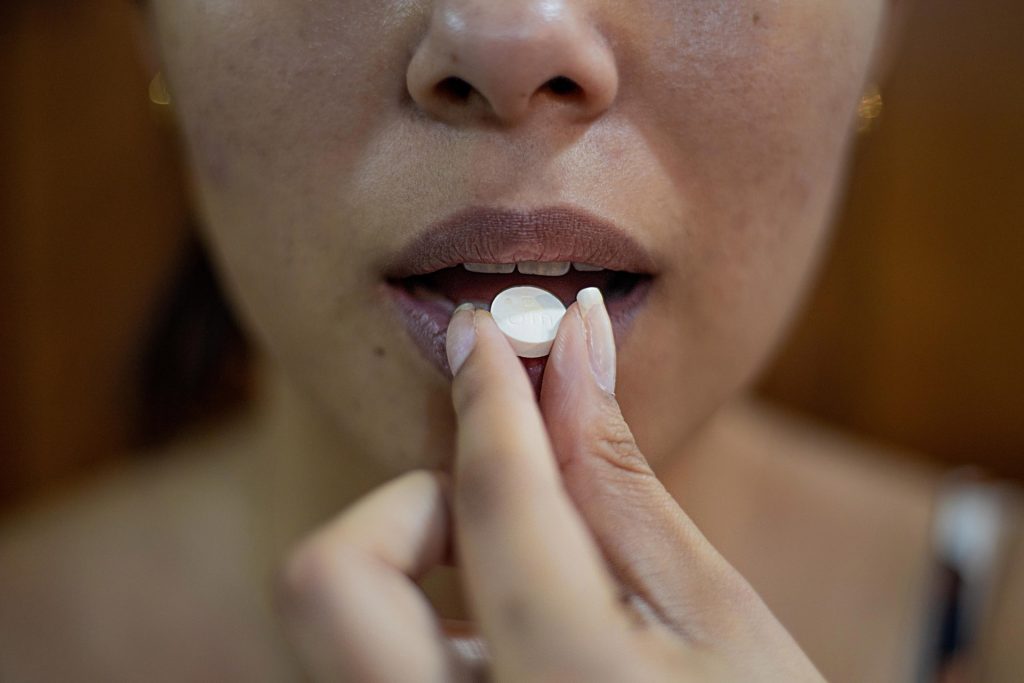
Study analysed data from the US National Youth Tobacco Survey on more than 60 000 middle and high school students.
Photo by Nery Zarate on Unsplash
Adolescents who use either e-cigarettes or conventional tobacco products (CTP) – like cigarettes, cigars, hookah and pipes – are significantly more likely to report symptoms of depression and anxiety than teens who don’t use tobacco products at all, according to a study published this week in the open-access journal PLOS Mental Health by Noor Abdulhay of West Virginia University, USA, and colleagues.
Tobacco use and mental health challenges are known to have a complex, bidirectional relationship. Understanding the interplay between adolescent tobacco use and mental health is particularly important, since adolescence is a critical developmental period during which many health-related risk-taking behaviors begin. Moreover, there are increasing rates of anxiety, depression, and suicide among adolescents in the U.S. as well as shifting patterns of tobacco use.
In the new study, researchers used data on tobacco use, depression and anxiety symptoms, among different demographics, from the 2021-2023 National Youth Tobacco Survey. Among the 60,072 middle and high school students who had completed all questionnaires in full, 21.37% had used tobacco products, with 9.94% using only e-cigarettes, 3.61% using only CTPs, and 7.80% using both.
Overall, 25.21% of respondents reported symptoms associated with depression and 29.55% reported anxiety symptoms. Compared to adolescents who had not used any tobacco products, users of e-cigarettes or CTPs displayed a potentially heightened risk of depression and anxiety, whilst those who used both CTPs and e-cigarettes had the highest odds of reporting mental health struggles
The authors conclude that “while causality cannot be determined, the results from this study showed that all forms of tobacco use were significantly associated with mental health issues. There is a need to continue promoting mental health support and implementing tailored interventions to combat all forms of tobacco use among adolescents”.
Research finds music therapy could be used on NHS wards as an alternative to medication
Photo by Sergio Capuzzimati on Unsplash
A new treatment that uses music therapy on dementia wards could improve care and support for some of the NHS’s most vulnerable patients.
Researchers at Anglia Ruskin University (ARU) and Cambridgeshire and Peterborough NHS Foundation Trust have piloted a music therapy approach called MELODIC, across two NHS dementia wards.
More alternatives to psychotropic medication are needed to support dementia patients who experience severe distress.
The pilot study involved a music therapist being embedded on hospital wards, the delivery of clinical music sessions and the implementation of musical care plans for each patient, and results from the research have been published in Frontiers of Psychiatry.
Music therapy, delivered by trained therapists, can include singing, playing or listening to music. The therapist can also identify specific ways that music can be used by families and carers in an individual’s daily care routine.
During the study, patient data suggested a slight improvement in quality-of-life scores among patients and a reduction in the severity of distress symptoms and disruptiveness, although agitation scores increased slightly.
There were no increases in routinely reported incidents, and no adverse events related to music therapy interventions were reported. This is relevant for future research on mental health dementia wards where limited studies have been conducted to date.
“People with dementia on inpatient mental health wards are often experiencing very high levels of distress, and staff are under immense pressure to manage this in ways that are safe and compassionate.
“Our study yielded promising results and importantly showed that the MELODIC tool can be used effectively in these highly complex settings, giving an alternative option to current ways of managing severe distress, such as psychotropic medication.”Lead author Naomi Thompson, a researcher at ARU’s Cambridge Institute for Music Therapy Research
The approach was shaped by interviews with 49 healthcare professionals, patients, and their families about their experiences managing distress on dementia wards and using music in everyday care and life to help develop the intervention. Results were published in the Journal of Geriatric Psychiatry.
Importantly, the intervention, co-designed by clinicians, researchers, and people with lived experience, cost just £2025 per month for the therapist and £400 initial outlay for equipment, suggesting a low-cost, scalable model.
“Some people with dementia can get so confused and distressed that we need to admit them to hospital to keep them safe. It can be difficult to manage distress in a ward environment and hard for patients, families and staff.
“I am very excited that it may now be possible for NHS staff to improve their experience on dementia wards using the power of music, and we look forward to working with ARU to develop this further.”
Dr Ben Underwood, Research and Development Director and Honorary Consultant Psychiatrist at CPFT
Changes in food insecurity go hand in hand with symptoms of anxiety and depression, according to research published in the open access journal PLOS Mental Health. Melissa Bateson of Newcastle University, UK, and colleagues at École Normale Supérieure, Northumbria University and York University, collected monthly data from adults in the UK and France and found that changes in food insecurity one month went hand-in-hand with changes in symptoms of anxiety and depression the next. The authors propose that interventions to reduce food insecurity might have immediate positive impacts on mental health.
Social determinants play a role in the development of poor mental health, and food insecurity has been associated with increased anxiety and depression, though it has been unclear whether this effect is causal and the timescale over which it occurs. The authors collected monthly data between September 2022 and August 2023 from almost 500 adults in the UK and France. They assessed food insecurity for the previous week and measured anxiety and depression with two commonly used questionnaires — GAD-7 and PHQ-8.
The team found a surprisingly high prevalence of food insecurity, with 39.5% of participants experiencing it in at least one month of the study. For those individuals, fluctuations between food insecurity and security were associated with changes in anxiety and depression, with deteriorations in mental health occurring when they experienced food insecurity and improvements when food security improved. The authors were able to predict mental health variations based on food security changes during the previous month. Such rapid changes in mental health suggest that the effects could be related to food security rather than longer-term nutritional changes which would take longer to manifest in mood alterations.
The authors state their results support the hypothesis that food insecurity could rapidly cause symptoms of anxiety and depression, such that interventions to prevent food insecurity might be likely to quickly and effectively reduce prevalence of anxiety and depression symptoms in populations currently experiencing periodic food insecurity.
The authors note: “What really impressed us was how rapidly symptoms of anxiety and depression responded to changes in participants’ food insecurity status and the large size of the effects”.
They add: “Our results suggest that eliminating periodic food insecurity in those currently experiencing it could reduce the number of people with clinically concerning symptoms of anxiety and depression by 20 percentage points.”
In the largest clinical trial to date, pramipexole was found to be substantially more effective than a placebo at reducing the symptoms of treatment resistant depression (TRD) over the course of nearly a year, when added to ongoing antidepressant medication.
The trial, supported by National Institute for Health and Care Research (NIHR) and published in The Lancet Psychiatry,included 150 patients with treatment resistant depression, with equal numbers receiving 48 weeks of pramipexole or a placebo, alongside ongoing antidepressant medication.
Overall, the group taking pramipexole experienced a significant and substantial reduction in symptoms by week twelve of treatment, with the benefits persisting over the course of a year. However, there were also significant side effects, such as nausea, sleep disturbance and dizziness, with around one in five people on pramipexole dropping out of the trial as a result.
Professor Michael Browning, from the Department of Psychiatry, University of Oxford, and workstream lead in Mood Disorders for the NIHR Mental Health-Translational Research Collaboration (MH-TRC) Mission, who led the trial, said: ‘Effectively treating people who have not responded to first-line interventions for depression is a pressing clinical problem and there has long been an urgent need to find new treatments.
‘These findings on pramipexole are a significant breakthrough for patients for whom antidepressants and other treatments and therapies have not worked.
‘Pramipexole is a medicine licensed for Parkinson’s disease and works by boosting the brain chemical dopamine. This differs from the majority of other antidepressant medications which act on brain serotonin and may explain why pramipexole was so helpful in this study.
‘We now need more research focusing on reducing the side effects of pramipexole, evaluating its cost-effectiveness, and comparing it with other add-on treatments.’
Previous research into using the drug for depression had shown promise, but there had been limited data on its long-term outcomes and side effects until now.
Current guidelines for people with treatment resistant depression recommend adding new treatments, such as lithium or antipsychotics, to ongoing antidepressant treatment, but these have limited effectiveness and do not work for everyone.
Phil Harvey, 72, from Oxfordshire, was diagnosed with depression 20 years ago and tried different tablets and counselling but nothing worked. Eventually he had to take a year off work before retiring. He started on the trial in 2022.
He said: ‘Within a few weeks I felt the effects, it was amazing. I kept a diary which they gave us on how my mood was, motivation and how it improved. It was dragging me out of this dark black hole that I’ve been in for years.’
Participants were recruited from across the country, including as part of the NIHR-funded MH-TRC Mission mood disorder clinics, which are hosted at Oxford but located across the country. The clinics efficiently, and largely remotely, assess patients with difficult to treat mood disorders and offer them enrolment in research studies. The network can also support primary care services by providing assessment and treatment advice for patients who have not responded to initial treatment.
In South Africa, men are four to five times more likely to die by suicide than women. The silence around men’s mental health has become a national crisis. Momentum Health is confronting the uncomfortable truth: traditional ideas of masculinity are costing South African men their lives. The need for a more inclusive and proactive approach to men’s health is urgent.
With men accounting for a staggering 37.6 suicides per 100 000 people2 and depression affecting over 27% of South Africans3, the economic and human cost of ignoring men’s overall wellbeing has reached a breaking point. Mental health-related absenteeism alone costs the economy billions every year, a price tag that extends far beyond financial metrics into affected families and communities.
“We’ve long lived in a society that praises men for physical strength but punishes them for emotional vulnerability. While this is slowly changing, it’s not happening fast enough to make real impact,” says Damian McHugh, Chief Marketing Officer at Momentum Health. “This is why we’re challenging South Africa to redefine what strength really means. True strength is not silently suffering; it’s having the courage to reach out before crisis hits.”
A New Narrative for Men’s Health
In many communities across South Africa, men delay seeking medical help until conditions become critical and avoid mental health services despite growing internal struggles.
“When we tell boys to ‘man up’ we’re essentially telling them to disconnect from their emotional and mental wellbeing,” McHugh explains. “At Momentum Health, we believe real strength lies in connection to yourself, to professional support and to your community. That is why our approach integrates physical, mental, emotional and financial wellbeing, rather than treating them as separate issues.”
This holistic approach sets Momentum Health apart from conventional healthcare models that focus only on symptoms instead of the whole person.
The New Frontline for Men’s Mental Health
According to the 2025 Digital Report for South Africa5, 78.9% of the population are now online, with mobile connectivity exceeding 193% due to multiple device ownership. Recognising that many men would rather engage privately through an app than visit a therapist’s office, Momentum Health has deployed technology to meet men where they are.
“Technology is a powerful equaliser,” says McHugh. “It breaks down barriers of stigma, geography, and access. By meeting men in the digital spaces, they already inhabit, we’re not just offering support, we are changing the way mental health care is delivered.”
The Hello Doctor platform lets men chat privately with health experts right on their phones. It gives them a safe, non-judgmental space to talk about their mental health without feeling embarrassed. This service isn’t just offering help; it’s changing the way mental health care works in South Africa.
Health and Wealth: Two Sides of the Same Coin
The link between health and financial wellbeing is clear. Poor health can derail financial goals, while financial stress can strain mental and emotional resilience. Momentum Health’s integration of financial and health services addresses a critical reality: mental health struggles and financial problems can create a devastating downward spiral.
“You cannot separate these aspects of wellbeing and expect sustainable outcomes. When we say, ‘your health is your wealth,’ we are talking about a fundamental truth: without mental and physical resilience, financial success becomes meaningless,” says McHugh.
Creating a Culture of Support
South African men must take a proactive stance, not just for themselves, but for their families, their communities and future generations.
“This is not about perfection. It is about progress,” says McHugh. “And this is not just about saving lives, though that alone would be enough, it is about transforming what it means to be a man in today’s society.”
New UCLA research finds that small group professional coaching can reduce physician burnout rates by up to 30%, suggesting that it is more effective than the traditional, and more expensive, one-on-one coaching method.
Nearly half of physicians in the US suffer from burnout, which is marked by emotional exhaustion, depersonalisation and decreased personal accomplishment. These can lead to medical errors and other harmful consequences to the healthcare system and patient outcomes, said lead author Dr Joshua Khalili, director of physician wellness in the UCLA Department of Medicine and assistant clinical professor of medicine at the David Geffen School of Medicine at UCLA.
“Most current evidence related to professional coaching is related to individual coaching and its impact on reducing burnout,” Khalili said. “But individual coaching can be quite costly, which is a barrier to broad implementation.”
Physician burnout is estimated to cost the US healthcare system about $4.6 billion annually, mostly due to costs associated with physician turnover and fewer clinical hours.
The researchers conducted a randomised, wait-list controlled trial with 79 UCLA attending internal medicine physicians for just over a year starting in March 2023. The intervention consisted of six one-hour coaching sessions, with one-third of the group receiving one-on-one coaching via Zoom while another third were coached in small groups consisting of three physicians and one coach. The final third acted as control group, receiving no coaching during the first few months of the trial, and subsequently received six, one-on-one coaching sessions.
The primary outcome the researchers measured was overall burnout. They also examined areas of work life such as workload, control rewards, community, fairness, and values; work engagement such as vigour, dedication, and absorption; self-efficacy, and social support. They measured each of these outcomes before and after the intervention and again six months afterwards.
They found that small group intervention participants experienced a nearly 30% reduction in burnout rate. The burnout rate for the one-on-one coaching fell by 13.5%. By contrast, the control group experienced an 11% increase in burnout rates. Burnout remained stable among the small group participants and continued to fall in the one-on-one group six months after the initial intervention.
Coaching for the one-on-one sessions cost $1000 per participant, compared with $400 for the small group coaching sessions.
“This new, small-group model of professional coaching can make a significant impact in physician burnout and costs much less than the one-on-one model,” Khalili said.
Study limitations include potential selection bias among participants who would most likely benefit from the intervention. The baseline overall burnout rate was higher in the small group coaching arm (70.4%) compared to the one-on-one group (40.0%); however, relative reductions in burnout were similar: 42% in the small group intervention compared to 34% the one-on-one group. In addition, the study was conducted at a large academic centre whose physicians may not be comparable to those in other healthcare institutions.
The researchers are now providing coaching to physicians in the UCLA Department of Medicine and hope that this research encourages other health care institutions and organisations to implement professional coaching, Khalili said.
“By improving physicians’ well-being, engagement, and sense of support, interventions like coaching can enhance the quality of care patients receive, making this a public health priority, not just a workplace issue,” he said.
The largest review of ‘gold standard’ antidepressant withdrawal studies to date has identified the type and incidence of symptoms experienced by people discontinuing antidepressants, finding most people do not experience severe withdrawal.
In a systematic review and meta-analysis of previous randomised controlled trials relating to antidepressant withdrawal, a team of researchers led by Imperial College London and King’s College London concluded that, while participants who stopped antidepressants did experience an average of one more symptom than those who continued or were taking placebos, this was not enough to be judged as significant. The results are out now in JAMA Psychiatry.
The most common symptoms were dizziness, nausea, vertigo and nervousness. Importantly, depression was not a symptom of withdrawal from antidepressants, and was more likely to reflect illness recurrence.
Researchers at Imperial College London, King’s College London, UCL and UK collaborators say their study provides much needed, clearer guidance for clinicians, patients and policymakers.
Dr Sameer Jauhar, lead author, at Imperial College London, said: “Our work should reassure the public because we replicated other findings, from high-quality studies, and have highlighted the clinical symptoms to look out for. Despite previous concern about stopping antidepressants, our work finds that most people do not experience severe withdrawal, in terms of additional symptoms. Importantly, depression relapse was not linked to antidepressant withdrawal in these studies, suggesting that if this does occur, people will need to see their health professional to rule out a recurrence of their depressive illness.”
Clinical academics from around the UK worked collaboratively to conduct the largest and most rigorous analysis of randomised controlled trials in antidepressant withdrawal, examining data from 50 trials across multiple conditions. The data involved a total of 17,828 participants, with an average age of 44 years, of whom 70% were female. Two meta-analyses were conducted, one of the trials that used a standardised measure known as the Discontinuation Emergent Signs and Symptoms scale (DESS), and the other of the trials that used various other scales.
Across antidepressants, irrespective of type taken, the number of extra symptoms generally equated to one more symptom on the 43-symptom item scale. In placebo-controlled randomised controlled trials, the most common symptoms across antidepressants were dizziness (7.5% vs 1.8%), nausea (4.1% vs 1.5%), vertigo (2.7% vs 0.4%) and nervousness (3% vs 0.8%).
Experiencing just one symptom is below the 4 or more cutoff for clinically important discontinuation syndrome.
The nature and rates of different symptoms varied between antidepressants, and some symptoms were also seen with placebo. This helped to clarify which symptoms were likely to be illness recurring, such as the participant relapsing into depression.
The data involved different types of antidepressants, including the serotonin-norepinephrine reuptake inhibitors (SNRIs) venlafaxine and duloxetine; the selective serotonin reuptake inhibitors escitalopram, sertraline and paroxetine; agomelatine, which is a melatonin receptor agonist and selective serotonin receptor antagonist; and vortioxetine, which inhibits the reuptake of serotonin as well as partial agonist and antagonist effects on various serotonin receptors.
The most symptoms were seen with discontinuance of venlafaxine, where approximately 20% of people suffered from dizziness, compared to 1.8% taking placebo. With vortioxetine, fewer than one extra symptom was seen on the standardised discontinuation scale. No extra symptoms were seen with agomelatine.
Relapse of depression was not seen in those withdrawing from antidepressants, even in people with existing depression.
The review included studies with different discontinuation regimes, but in the majority of studies (44), people either discontinued abruptly or tapered over 1 week.
Michail Kalfas, of the Institute of Psychiatry, Psychology & Neuroscience at King’s College London, said: “While uncommon, our study highlights that there could be a sub-group of people who develop more severe withdrawal symptoms than the wider population of antidepressant users. Our focus must now turn to look at the pharmacological basis for this reaction, and ask whether it relates to the way they metabolise these drugs.”
In terms of study limitations, 38 of the trials followed people up for up to two weeks post-discontinuation (the time period one would expect most discontinuation symptoms to occur), so researchers say this limits long-term conclusions. However, they note that findings from the 2021 UCL-led ANTLER trial involving long-term antidepressant users – which was included in this review – suggested severe withdrawal is infrequent, even after prolonged use.
The study follows recent concerns about the effects of stopping antidepressants, as well as various guidance changes on their prescribing. This current meta-analysis helps resolve the debate by showing that withdrawal is a real and drug-specific phenomenon, though not an inevitable outcome.
Researchers at Princeton University and the Simons Foundation have identified four clinically and biologically distinct subtypes of autism, marking a transformative step in understanding the condition’s genetic underpinnings and potential for personalised care.
Analysing data from over 5000 children in SPARK, an autism cohort study funded by the Simons Foundation, the researchers used a computational model to group individuals based on their combinations of traits. The team used a “person-centred” approach that considered a broad range of over 230 traits in each individual, from social interactions to repetitive behaviours to developmental milestones, rather than searching for genetic links to single traits.
This approach enabled the discovery of clinically relevant autism subtypes, which the researchers linked to distinct genetic profiles and developmental trajectories, offering new insights into the biology underlying autism. Their results were published July 9 in Nature Genetics.
The study defines four subtypes of autism: Social and Behavioural Challenges, Mixed ASD with Developmental Delay, Moderate Challenges, and Broadly Affected. Each subtype exhibits distinct developmental, medical, behavioural and psychiatric traits, and importantly, different patterns of genetic variation.
Individuals in the Social and Behavioural Challenges group show core autism traits, including social challenges and repetitive behaviours, but generally reach developmental milestones at a pace similar to children without autism. They also often experience co-occurring conditions like ADHD, anxiety, depression or obsessive-compulsive disorder alongside autism. One of the larger groups, this constitutes around 37% of the participants in the study.
The Mixed ASD with Developmental Delay group tends to reach developmental milestones, such as walking and talking, later than children without autism, but usually does not show signs of anxiety, depression or disruptive behaviours. “Mixed” refers to differences within this group with respect to repetitive behaviours and social challenges. This group represents approximately 19% of the participants.
Individuals with Moderate Challenges show core autism-related behaviours, but less strongly than those in the other groups, and usually reach developmental milestones on a similar track to those without autism. They generally do not experience co-occurring psychiatric conditions. Roughly 34% of participants fall into this category.
The Broadly Affected group faces more extreme and wide-ranging challenges, including developmental delays, social and communication difficulties, repetitive behaviours and co-occurring psychiatric conditions like anxiety, depression and mood dysregulation. This is the smallest group, accounting for around 10% of the participants.
“These findings are powerful because the classes represent different clinical presentations and outcomes, and critically we were able to connect them to distinct underlying biology,” said Aviya Litman, a PhD student at Princeton.
Distinct genetics behind the subtypes
For decades, autism researchers and clinicians have been seeking robust definitions of autism subtypes to aid in diagnosis and care. Autism is known to be highly heritable, with many implicated genes.
“While genetic testing is already part of the standard of care for people diagnosed with autism, thus far, this testing reveals variants that explain the autism of only about 20% of patients,” said co-author Jennifer Foss-Feig, a clinical psychologist at the Icahn School of Medicine at Mount Sinai and vice president and senior scientific officer at the Simons Foundation Autism Research Initiative (SFARI). This study takes an approach that differs from classic gene discovery efforts by identifying robust autism subtypes that are linked to distinct types of genetic mutations and affected biological pathways.
For example, children in the Broadly Affected group showed the highest proportion of damaging de novo mutations, while only the Mixed ASD with Developmental Delay group was more likely to carry rare inherited genetic variants. While children in both of these subtypes share some important traits like developmental delays and intellectual disability, these genetic differences suggest distinct mechanisms behind superficially similar clinical presentations.
“These findings point to specific hypotheses linking various pathways to different presentations of autism,” said Litman, referring to differences in biology between children with different autism subtypes.
Moreover, the researchers identified divergent biological processes affected in each subtype. “What we’re seeing is not just one biological story of autism, but multiple distinct narratives,” said Natalie Sauerwald, associate research scientist at the Flatiron Institute and co-lead author. “This helps explain why past genetic studies often fell short – it was like trying to solve a jigsaw puzzle without realising we were actually looking at multiple different puzzles mixed together. We couldn’t see the full picture, the genetic patterns, until we first separated individuals into subtypes.”
Autism biology unfolds on different timelines
The team also found that autism subtypes differ in the timing of genetic disruptions’ effects on brain development. Genes switch on and off at specific times, guiding different stages of development. While much of the genetic impact of autism was thought to occur before birth, in the Social and Behavioural Challenges subtype – which typically has substantial social and psychiatric challenges, no developmental delays, and a later diagnosis – mutations were found in genes that become active later in childhood. This suggests that, for these children, the biological mechanisms of autism may emerge after birth, aligning with their later clinical presentation.
“By integrating genetic and clinical data at scale, we can now begin to map the trajectory of autism from biological mechanisms to clinical presentation,” said co-author Chandra Theesfeld, senior academic research manager at the Lewis-Sigler Institute and Princeton Precision Health.
A paradigm shift for autism research
This study builds on more than a decade of autism genomics research led by Troyanskaya and collaborators. It is enabled by the close integration of interdisciplinary expertise in genomics, clinical psychology, molecular biology, computer science and modelling, and computational biology.
“The Princeton Precision Health initiative uses artificial intelligence and computational modelling to integrate across biological and clinical data,” said Jennifer Rexford, Princeton University provost and Gordon Y.S. Wu Professor in Engineering. “This initiative could not exist without the University’s charitable endowment. Our investments allow experts to collaborate across a range of disciplines to conduct transformative research that improves human health, including the potential for major advances in the diagnosis and treatment of autism made possible in this exciting project.”
“It’s a whole new paradigm, to provide these groups as a starting point for investigating the genetics of autism,” said Theesfeld. Instead of searching for a biological explanation that encompasses all individuals with autism, researchers can now investigate the distinct genetic and biological processes driving each subtype.
This shift could reshape both autism research and clinical care – helping clinicians anticipate different trajectories in diagnosis, development and treatment. “The ability to define biologically meaningful autism subtypes is foundational to realising the vision of precision medicine for neurodevelopmental conditions,” said Sauerwald.
While the current work defines four subtypes, “this doesn’t mean there are only four classes,” said Litman. “It means we now have a data-driven framework that shows there are at least four – and that they are meaningful in both the clinic and the genome.”
Looking ahead
Beyond its contributions to understanding autism subtypes and their underlying biology, the study offers a powerful framework for characterising other complex, heterogeneous conditions and finding clinically relevant disease subtypes. As Theesfeld put it: “This opens the door to countless new scientific and clinical discoveries.”
Hearing loss doesn’t just affect how people hear the world — it can also change how they connect with it. New research from the University of Southern California, published in JAMA Otolaryngology – Head & Neck Surgery, is the first to link hearing aids and cochlear implants, surgically implanted devices that help those with profound hearing loss perceive sound, to improved social lives among adults with hearing loss.
“We found that adults with hearing loss who used hearing aids or cochlear implants were more socially engaged and felt less isolated compared to those who didn’t use them,” said lead researcher Janet Choi, MD, MPH, an otolaryngologist with Keck Medicine at USC. “This suggests that hearing devices may help prevent the social disconnection and broader health consequences that can follow untreated hearing loss.”
Hearing loss affects an estimated 40 million American adults, yet many go untreated. When left unaddressed, hearing loss can make communication difficult, leading people to withdraw from conversations and social activities, according to Choi.
Previous research has shown that over time, social withdrawal can reduce mental stimulation and increase the risk of loneliness, anxiety, depression, cognitive decline and dementia. It has also linked chronic social isolation to biological and neurological changes, including increased brain inflammation and alterations in brain structure.
“Understanding the link between hearing loss, hearing device use and social isolation is crucial,” said Choi. “Until this study, it has been unclear whether hearing devices could help reverse the isolation.”
Choi and her fellow researchers conducted a comprehensive, systematic review and meta-analysis of 65 previously published studies, encompassing over five thousand participants, on how hearing aids and cochlear implants affect three key measures: social quality of life, perceived social handicap, which refers to the limitations and frustrations hearing loss can create in social situations, and loneliness.
The researchers found that adults using hearing devices feel more socially connected and less limited in social situations. They are better able to engage in group conversations and feel more at ease in noisy or challenging listening environments. Participants also reported feeling less socially handicapped by their hearing loss, with fewer barriers and frustrations during interactions and an improved ability to stay engaged without feeling excluded. This increased confidence can help users connect more easily with family, friends and colleagues, leading to stronger feelings of belonging and reduced social anxiety. The study also suggested hearing devices may reduce loneliness, although further research is needed in this area, according to Choi.
Those with cochlear implants reported the most improvement in their social quality of life. This is likely because cochlear implants offer greater hearing restoration than hearing aids, especially for individuals with more severe hearing loss. As a result, they may experience more noticeable improvements in social engagement once their hearing is restored.
While it was outside the scope of the study to measure how better social lives relate to improved cognitive outcomes, Choi believes there may be a connection, as previous research has found managing hearing loss may be key to reducing the risk of cognitive decline and dementia. “While our study didn’t directly measure cognitive outcomes, the improvements we saw in communication and social engagement suggest that by restoring clearer communication, hearing devices may help preserve cognitive health by keeping the brain more actively involved and people more connected,” Choi said.
This research follows a January 2024 study by Choi showing that adults with hearing loss who use hearing aids have an almost 25% lower risk of mortality, suggesting that treating hearing loss can improve lifespan as well as social quality of life.
“These new findings add to a growing body of research showing that hearing health is deeply connected to overall well-being,” said Choi. “We hope this encourages more people to seek treatment and helps clinicians start conversations with patients about how hearing devices can improve their quality of life.”
Millions of adults around the world are diagnosed with ADHD every year, and there is a great need for research in the field. Yet much clinical research on adult ADHD suffers from serious methodological shortcomings that make it difficult to use the results in practice, researchers from the University of Copenhagen and the University of Sao Paulo show in a new study.
Originally developed for children, the diagnosis of ADHD is often difficult to make in adults. This is partly because the diagnostic criteria are based on behaviour in children. When diagnosing adults, however, these criteria are often based on adults’ subjective experiences, eg, of having difficulty concentrating or being very impulsive.
“The rising number of adults diagnosed with ADHD raises important questions about diagnostic validity – especially since many were never identified in childhood and are now seeking help, sometimes prompted by ADHD content on social media. That made us curious: how have randomised controlled trials on ADHD dealt with this diagnostic challenge?” explains Dr Igor Studart, who is first author of the study published in European Psychiatry.
Moreover, ADHD shares its symptoms with a number of other mental disorders such as depression, schizophrenia, and bipolar disorder, making it crucial to exclude these disorders when diagnosing ADHD. This requires a thorough diagnostic assessment by an experienced psychologist or psychiatrist.
But it is not always the case that such a thorough assessment is made. The study now shows that even psychiatric research into ADHD often neglects this fundamental work.
“We have examined how 292 of the most credible studies in evidence-based medicine – the so-called randomised controlled trials – diagnosed their adult subjects,” says Professor of Psychiatry and Consultant Psychiatrist Julie Nordgaard, who conducted the study together with Associate Professor and Senior Researcher Mads Gram Henriksen and Dr Igor Studart.
She continues:
“We conclude that half of the studies did not ensure a broad and thorough diagnostic assessment of the patients before the trial to rule out other disorders. This means that they can’t actually know, if their subjects have other mental disorders such as depression or schizophrenia. And that’s not all. More than half of the studies included subjects, who have also been diagnosed with other mental disorders, making the diagnosis even more difficult to allocate”, Julie Nordgaard explains.
According to the researchers, these methodological shortcomings are problematic, because they imply that it is impossible to know which disorders and symptoms the treatment investigated in these trials potentially had an effect on.
“This makes the research results from many of these clinical trials difficult to utilise. Yet, the results of randomised controlled trials are considered particularly trustworthy, and they may inform the guidelines we use to treat adult ADHD patients, even though the results from many of these trials should be assessed very carefully,” says Mads Gram Henriksen.
A need for consistent and robust diagnoses
According to the researchers, one of the problems with the diagnostic assessment in many of the clinical trials is that it seems to have been carried out by people who are not trained to do so. And often with methods that are not thorough enough.
“In 61% of the studies, they do not state who diagnosed the subjects. In only 35% of the studies, it is stated that a psychiatrist or psychologist made the diagnosis. But diagnostic assessment should always be performed by an experienced professional with the necessary training to ensure that the diagnosis is made correctly, and this should be stated in the studies’ method section,” explains Mads Gram Henriksen.
In some cases, the assessment and thus the diagnosis was made by the subject themselves, and in one particularly egregious case, it was done with the help of a computer, the researchers explain.
“In psychiatry, we really need that all diagnoses, not just ADHD, are made with the same uniform criteria and by trained professionals. Otherwise, we cannot rely on the results or compare them across studies,” says Julie Nordgaard and concludes:
“Especially in a situation where a diagnosis such as ADHD in adults is increasing, we need to be very thorough and have a solid foundation. Otherwise, we risk too many people getting a wrong diagnosis and not being able to give them the most effective treatment. Or they risk receiving unnecessary treatment that causes side-effects.”