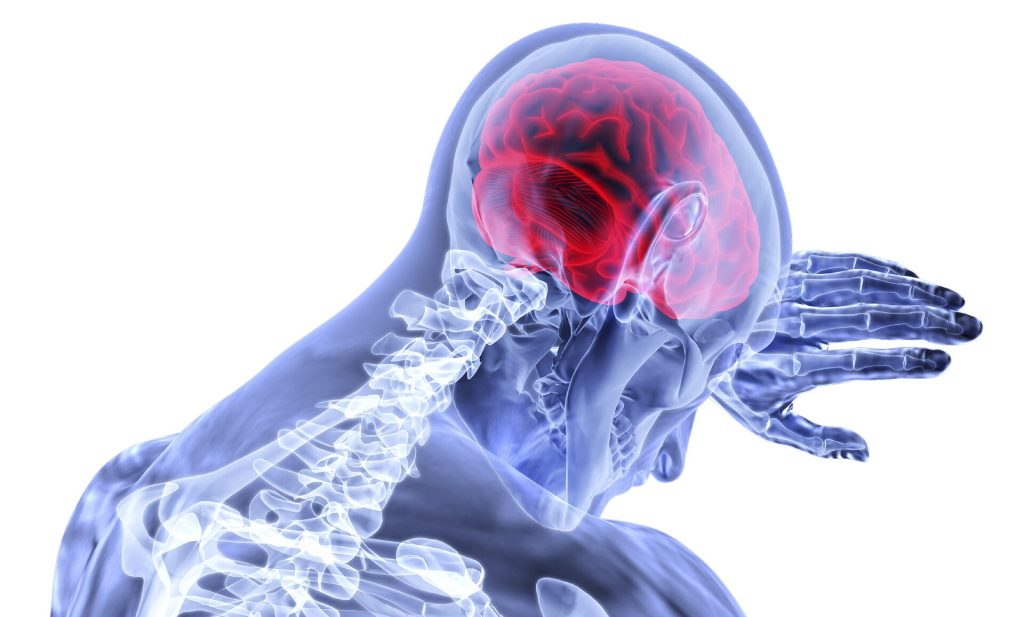
A growing body of research has shown that autoimmunity influences certain psychiatric disorders. A new study by Nemani et al., currently in preprint, has shown that schizophrenia is strongly associated with an elevated level of autoantibodies that target the central nervous system. Using Rapid Extracellular Antigen Profiling (REAP) to screen 352 patients against 971 controls, the researchers found that schizophrenia is marked by an increased autoantibody burden that tracks with disease severity and duration, nearly doubling in the most chronic cases.
These immune responses are present near the start of the illness and tend to increase as the disease progresses, particularly targeting neuronal ion channels and synaptic proteins. Notably, certain autoantibodies appear to compromise the blood–brain barrier, which may further expose the brain to peripheral immune attacks.
The study also discovered that patients with a higher autoantibody burden respond less effectively to standard antipsychotic treatments like risperidone. However, clinical trials showed that these antibody levels significantly declined during successful treatment courses. These findings suggest that humoral autoimmunity is a core component of the disorder, potentially offering new pathways for immune-based therapies.
To understand what might explain the paradox, my colleagues and I conducted a study that directly compared sleep quality ratings and objective sleep measures between men and women.
We found that women complained more of sleep problems – but slept objectively much better than men. We think this paradox can probably be explained by men overestimating their sleep quality as they’re less able to perceive how often they wake up at night.
A total of 238 randomly selected women participated in the study, plus 238 men who were matched on age and BMI with the women to ensure similar participants were compared against each other.
Sleep was recorded in each participant’s home using a recorder that measured brain waves (electroencephalography – EEG), muscle tension (electromyography – EMG) and eye movements (electrooculography – EOG). These devices tracked what stage of sleep a participant was in and for how long, how much time they spent awake and how quickly they fell asleep.
A researcher visited the participant’s home in the evening, mounted the recording equipment and left. The participant went to bed and awoke at their usual time.
In the morning, the participant rated the degree of difficulty they had falling asleep, if their sleep was restless, if they woke up early, how often they thought they’d woken up, how long it took them to fall asleep, how long they slept and their overall sleep quality.
The sleep recording was scored by a sleep technician based on visual inspection of the EEG, EOG and EMG recordings. The data was then analysed to understand the objective quality of each participant’s sleep and its relation to gender and age.
Analyses were also adjusted for factors such as gender, age and alcohol consumption and smoking, which may affect sleep.
Sleep quality
The results show that women subjectively reported significantly lower sleep quality than men. Yet women actually had considerably fewer nighttime awakenings, less stage one (superficial) sleep and higher sleep efficiency (they spent more time asleep while in bed). Women also experienced more stage three (deep) sleep and slept longer (400 minutes versus 382 minutes for men).
When women did wake up at night, they spent more time awake on average. Photo by Cottonbro on Pexels
The results suggest that women objectively had a good nights’ sleep, compared to men. The only variable that suggests worse sleep in women was that when they did wake up at night, they spent more time awake than men did – around nine minutes each time for women versus just under seven minutes for men.
It only takes around five minutes of being awake at night for a person to remember it the next morning. This may explain why women were better able to remember if they’d woken up the night before and estimate how many times they had. Men, on the other hand, grossly underestimated their number of awakenings (by 72% compared to women’s 37%).
For other quantitative measures, like time to fall asleep, sleep duration and time awake, men and women were equally good at estimating their objective values. And they were relatively correct.
We took this further and found that men who only woke up for a short period of time during the night (around eight minutes or so each time they woke up) often didn’t remember they had.
When this group of men was removed, no gender difference in subjective sleep quality remained. This suggests that men with short nighttime awakenings report better sleep quality than would be expected from their objective sleep measures as they didn’t remember they’d woken up.
It’s also noteworthy that men’s objective sleep deteriorated faster with age than women. This was particularly obvious for stage three sleep. While women aged over 65 got around 80 minutes of stage three sleep each night, men had only 53 minutes. Among those between 30 and 50 years of age, the amount was similar for men and women (around 70 minutes).
Sleep and wellbeing
A key reason women may complain of having a worse nights’ sleep than they objectively had may therefore be the amount of time they spent awake when they woke up, making it easier for them to notice. Likewise, men may overestimate their sleep quality because they’ve spent less time awake when they’ve woken up, so they don’t remember it happening.
Both findings would work towards reducing subjective sleep quality in women and increasing it in men. We assume then, that the experience of awakenings has an important influence on subjective sleep quality.
As our study was only conducted over one night, it will be important for future research to investigate whether these findings remain when participants are studied over longer periods of time.
Future studies may also want to explore the reasons for poor sleep in men – especially since common sources of disturbed sleep, such as alcohol, smoking and BMI, were all adjusted for in our analysis. Researchers may also want to investigate why men’s sleep becomes objectively worse as they get older.
Our research illustrates how sleep quality doesn’t just involve the physiological aspects of sleep. It also includes our own subjective experiences, which can impact our wellbeing and how rested we feel.
It also suggests that because many men overestimate their sleep quality, they may also overlook any sleep problems they’re experiencing. This could mean that some men aren’t getting help for conditions that could be affecting their health and wellbeing.
Glucagon-like peptide-1 receptor agonists (GLP-1 RAs) are widely prescribed for diabetes and obesity, but studies have found evidence that the medications may also influence behaviour, such as supporting impulse control and reducing substance use and alcohol consumption by potentially interacting with the brain’s reward and stress systems. New research in Criminologyadds to this growing evidence.
When investigators analysed data from a 2025 nationally representative US survey involving 821 adults who had ever used GLP-1 medications, they found that while impulsivity and alcohol use were strongly associated with committing violent crime, these associations were significantly weaker among current GLP-1 RA users compared with former users. So even when a GLP-1 RA user drinks or acts impulsively, the situation is less likely to escalate into engaging in violent criminality. More thorough analyses showed that this finding was especially consistent related to impulsivity, but less so with alcohol use.
The findings suggest that GLP-1 RAs may lessen the extent to which certain established risk factors translate into violent behavior.
“As GLP-1 medications become increasingly widespread, understanding their broader behavioral effects becomes an important public health and criminological question that requires careful study,” said corresponding author Daniel C. Semenza, PhD, of Rutgers University.
Depression is a complex and deeply personal experience. While almost everyone has periods of sadness, low mood or grief, depression is different. Major depressive disorder is persistent, interferes with day-to-day activities, and can affect work, life and relationships.
One in five people will experience depression in their lifetime. Women are nearly twice as likely as men to develop it – a disparity that emerges around puberty and persists into adulthood.
But what causes it? The short answer is: many different things.
While there are various theories, we know brain chemistry, genes, hormones, stress, lifestyle and personality can all play a role. How these interact can vary greatly from one person to another.
An imbalance of brain chemicals?
The traditional “monoamine hypothesis” of depression was proposed more than half a century ago, in the 1950s. This theory suggests the root cause of depression is a deficiency in certain brain chemicals (or neurotransmitters) called monoamines – serotonin, dopamine and norepinephrine.
Several antidepressants have been developed based on this. They primarily work by increasing levels of monoamines such as serotonin.
However, it has become clear that the “chemical imbalance” explanation is an oversimplification.
Research over the past few decades has not found consistent evidence that individuals with depression always have lower levels of serotonin, or any single neurotransmitter.
Current understanding recognises depression as a complex condition influenced by multiple interacting factors, including genetics, trauma, medications, diet, sleep patterns and social interactions.
Genetic factors can increase your risk
According to one 2021 review, around 30 to 50% of the risk someone will develop depression may be inherited.
No single “depression gene” has been found. But large studies have identified over 100 genetic risk markers on chromosomes.
The genetic risk of depression is also thought to be “polygenic”. This means multiple genetic variants (each carrying a small effect) interact and collectively contribute to someone’s genetic risk.
One important and longstanding research question has been whether there is a genetic reason women are more likely than men to develop depression.
In 2025, a large study revealed substantial overlap between men and women’s genetic risk. However, on average, women with depression tend to carry more of the genetic variants linked to depression.
This suggests that there may be a greater genetic risk for depression in women and perhaps a stronger environmental influence on depression risk in men.
Still, carrying a genetic risk does not mean someone will necessarily develop depression. The interplay between genetic and non-genetic factors is complex.
Hormones and biological sex
Hormones – the body’s chemical messengers – also play an important role in mood and wellbeing.
In women, estrogen and progesterone levels naturally fluctuate across different life stages, including the menstrual cycle, pregnancy, the period after childbirth and menopause.
Our 2025 review found some women are more sensitive to these normal hormonal shifts, and more vulnerable to mood disturbances.
For instance, in the premenstrual phase of their cycle, around 8% of women experience a severe depression, with intense mood swings and irritability, called premenstrual dysphoric disorder.
Similarly, the dramatic hormonal changes during pregnancy and after childbirth (combined with sleep loss and stress) can contribute to postnatal depression.
Later in life, fluctuating and falling estrogen levels during the menopause transition years may also increase the risk of developing depressive symptoms or intensify existing ones.
Hormonal contraceptives – which contain synthetic forms of estrogen and progesterone – have also been linked to mood changes and depression symptoms. In fact, these are some of the most common reasons women stop taking them.
These findings show how hormones can act as biological triggers, and help explain why women are statistically more likely to experience depression at certain stages of life.
The effect of hormones on depression in men has predominantly focused on the protective role of testosterone, but findings remain inconclusive.
When we experience stress, our bodies activate the hypothalamic–pituitary–adrenal (HPA) axis, also known as the “stress-response system”. This helps us cope by maintaining balance in our body – what scientists call physiological homeostasis.
But when stress is constant or overwhelming, this system can become dysregulated. Stressful or traumatic experiences in childhood – such as neglect, abuse or severe adversity – can also disrupt the stress-response system.
As a result, we overproduce the stress hormone cortisol. High or persistent cortisol levels can alter the structure and functioning of key brain areas (the hippocampus and pre-frontal cortex) which are important for regulating mood and memory.
Cortisol can also trigger the release of inflammatory chemicals, which then cross into the brain or influence neural signals, leading to mood changes and depressive symptoms.
Importantly though, not everyone who experiences stressful life events becomes depressed.
Some people may be more vulnerable due to genetic factors, early life adversity or differences in brain chemistry. Others might cope with the same stress without developing depression or other conditions.
Does personality play a role?
Personality traits also influence how people respond to stress and may affect their risk of developing depression.
People who tend to experience anxiety, sadness and self-doubt are more likely to develop depressive symptoms, especially after stressful events. In contrast, traits such as resilience, optimism, and emotional stability seem to protect against depression.
This suggests that personality plays an important role in shaping both vulnerability and resilience to depression.
Lifestyle choices can help lower your risk
These include not smoking, limiting alcohol use, eating a balanced diet, staying physically active, getting enough sleep, maintaining a healthy body weight and having social supports.
Research shows these healthy habits and lifestyle factors can have a protective effect on mental health. They may even reduce the impact of genetic risk factors for depression.
There’s no single cause – and no universal treatment
Depression arises from a mix of factors – biological (genes and hormones), psychological (personality and thoughts) and social (stress and life events).
Treatment options are based on all of these factors, as well as considering how severe the depression is and whether a person has responded to previous treatments.
While science has made some progress in understanding depression, what underpins each person’s experience is unique.
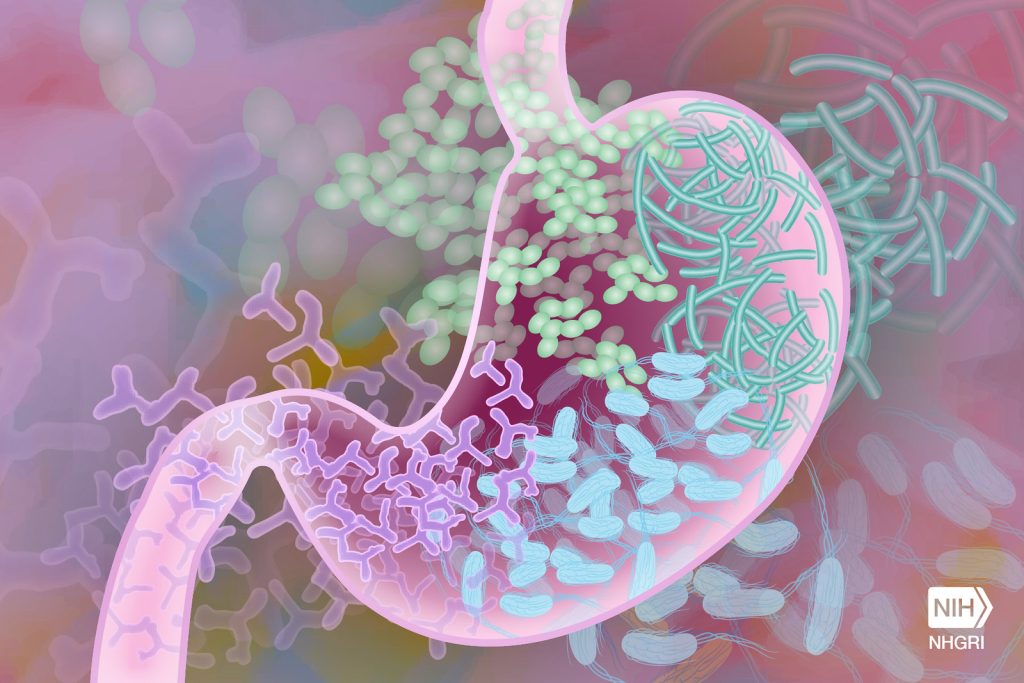
Gut Microbiome. Credit Darryl Leja National Human Genome Research Institute National Institutes Of Health
In a pilot clinical trial published in the Journal of the American Geriatrics Society that included older adults with depression receiving standard care, adding probiotic therapy produced modest but meaningful reductions in depressive and anxiety symptoms compared with adding a placebo. However, both groups demonstrated substantial overall improvements during follow-up.
For the trial, 58 participants in India aged ≥ 60 years with moderate depression were randomised 1:1 to receive daily probiotics or a placebo for 12 weeks, alongside standard antidepressant care. They were followed up for another 12 weeks.
Based on validated psychological scores, biomarker (serum brain-derived neurotropic factor level), and faecal microbiota profiling, investigators found that probiotics helped improve patients’ symptoms but did not confer clear additional gains in quality of life compared with placebo. The findings support probiotics as a safe, biologically plausible adjunct to standard care, but larger trials are needed.
“The results of our study are novel, and we are now planning a follow-up, larger-scale clinical trial due to the encouraging findings,” said co-corresponding author Dr. Saibal Das, MBBS, MD, DM, PhD, of the Indian Council of Medical Research – National Institute for Research in Bacterial Infections, Kolkata. “My vision is to develop affordable healthcare solutions and make them available to the larger population for meaningful public health impact,” added co–corresponding author Abhinaba Ghosh, MBBS, MSc, PhD, a physician-neuroscientist from Tata Medical Center, Kolkata.
When it comes to autism, few questions spark as much debate as how best to support autistic people with the greatest needs.
This prompted The Lancet medical journal to commission a group of international experts to propose a new category of “profound autism”.
This category describes autistic people who have little or no language (spoken, written, signed or via a communication device), who have an IQ of less than 50, and who require 24-hour supervision and support.
It would only apply to children aged eight and over, when their cognitive and communication abilities are considered more stable.
In our new study, we considered how the category could impact autism assessments. We found 24% of autistic children met, or were at risk of meeting, the criteria for profound autism.
Why the debate?
The category is intended to help governments and service providers plan and deliver supports, so autistic people with the highest needs aren’t overlooked. It also aims to re-balance their under-representation in mainstream autism research.
This new category may be helpful for advocating for a greater level of support, research and evidence for this group.
But some have raised concerns that autistic people who don’t fit into this category could be perceived as less in need and excluded from services and funding supports.
Others argue the category doesn’t sufficiently emphasise autistic people’s strengths and capabilities, and places too much emphasis on the challenges that are experienced.
What did we do?
We conducted the first Australian study to examine how the “profound autism” category might apply to children attending publicly funded diagnostic services for developmental conditions.
Drawing on the Australian Child Neurodevelopment Registry, we examined data from 513 autistic children assessed between 2019 and 2024. We asked:
how many children met the criteria for profound autism?
were there behavioural features that set this group apart?
Because we focused on children at the time of diagnosis, most (91%) were aged under eight years. We described these children as being “at risk of profound autism”.
What did we find?
Around 24% of autistic children in our study met, or were at risk of meeting, the criteria for profound autism. This is similar to the proportion of children internationally.
Almost half (49.6%) showed behaviours that were a safety risk, such as attempting to run away from carers, compared with one-third (31.2%) of other autistic children.
These challenges weren’t limited to children who met criteria for profound autism. Around one in five autistic children (22.5%) engaged in self-injury, and more than one-third (38.2%) showed aggression toward others.
So, while the category identified many children with very high needs, other children who didn’t meet these criteria also had significant needs.
Importantly, we found the definition of “profound autism” doesn’t always line up with the official diagnostic levels which determine the level of support and NDIS funding children receive.
In our study, 8% of children at risk of profound autism were classified as level 2, rather than level 3 (the highest level of support). Meanwhile, 17% of children classified as level 3 did not meet criteria for profound autism.
Our concern
We looked at children when they first received an autism diagnosis. Children were aged 18 months to 16 years, with more than 90% under the age of eight years.
This aligns with our earlier research, showing the average age of diagnosis in public settings is 6.6 years.
From a practical perspective, our biggest concern about the profound autism category is the age threshold of eight years.
Because most children are already assessed before age eight, introducing this category into assessment services would mean many families would need repeat assessments, placing additional strain on already stretched developmental services.
Second, modifications will be needed if this criteria is going to be used to inform funding decisions as it didn’t map perfectly onto level 3 support criteria.
On balance, however, our results suggest the profound autism category may provide a clear, measurable way to describe the needs of autistic people with the highest support requirements.
Every autistic child has individual strengths and needs. The term “profound autism” would need to be promoted with inclusive and supportive language, so as to not replace or diminish individual needs, but to help clinicians tailor supports and obtain additional resources when needed.
If you’re concerned your child requires substantial support, here are some practical steps you can take to ensure their needs are recognised and addressed:
Explain your concerns
Not all clinicians have experience working with children with high support needs. Be as clear as possible about behaviours that affect your child’s safety or daily life, including self-injury, aggression or attempts to run away. These details, while difficult to share, help give a clearer picture of your child’s support needs.
It can also be a challenge to find and access clinicians with appropriate expertise. Another potential benefit of having a defined category is that it can better help families navigate care.
Ask about support for the whole family
Our studies show that many caregivers want more support for themselves but don’t always ask. Talk with clinicians about supports for yourself as well, including respite, or family support groups.
Reach out
Coming together with other carers and families can reduce your own isolation and normalise many of the unique challenges you face. Connecting with like-minded people can provide a supportive, empathetic and empowering community.
Plan for safety
For children with high support needs, prioritise safety planning with your child’s care team. This can include strategies to reduce risks, as well as planning how best to support your child’s interactions with health, education and disability services over time.
For many people who suffer from depression, the condition is not just about feeling down, but also about a loss of motivation and difficulty finding pleasure in activities they used to enjoy. A study conducted in Sweden at Lund University and Region Skåne shows that a medicine used to treat Parkinson’s disease can be used as an add-on therapy to alleviate these symptoms in some patients with treatment-resistant depression.
Researchers at Lund University and the psychiatric services in Region Skåne have identified a potential new therapy for the condition associated with depression that involves a reduced ability to feel joy, pleasure or motivation – known as anhedonia. Those affected may lose interest in things that they previously found meaningful or rewarding.
The study is an example of what is known as drug repurposing, whereby an already approved medicine is used to treat a different condition. In this study, the researchers investigated pramipexole, which has long been used to treat Parkinson’s disease, as an add-on therapy for depression with marked anhedonia.
“Anhedonia is one of the most debilitating symptoms of depression, and something on which current antidepressant therapies often have only a limited effect. Our findings suggest that pramipexole could be an important new therapy option for this patient group,” says Daniel Lindqvist, a researcher at Lund University and senior consultant in psychiatry at Region Skåne.
All participants in the study had marked anhedonia. Patients were given either pramipexole or a placebo as an add-on to their ongoing medication for nine weeks.
“Those treated with pramipexole for anhedonia showed a more pronounced improvement compared with the placebo group. The effect persisted during a six-month follow-up period among those patients who chose to continue treatment,” says Daniel Lindqvist.
The researchers used advanced brain imaging techniques (7 Tesla fMRI) to investigate the possible biological mechanisms underlying the effect, and activity monitors to assess whether the therapy affected patients’ everyday movement and activity levels.
“We found that pramipexole was linked to a positive effect on the brain’s reward system and increased physical activity in everyday life. This supports the theory that the drug affects the dopamine system, which plays a key role in motivation and reward processing,” says Filip Ventorp, a postdoc at Lund University and resident physician at Region Skåne.
Most patients experienced no major issues with the treatment, and few patients dropped out during the randomized controlled trial. Common side effects included sleep problems, nausea and dizziness, but these could usually be managed by adjusting the dose. Even those who chose to continue with the follow-up phase of the study for a further six months generally responded well to the therapy.
“Efficacy and safety were maintained over time during the follow-up phase, which is particularly relevant in cases of long-term and treatment-resistant depression. Although most participants in our study tolerated the drug well, it is important to monitor any side effects, such as impaired impulse control and daytime fatigue,” says Marie Asp, a psychiatric researcher at Lund University and senior consultant in psychiatry at Region Skåne.
A circuit that runs from the prefrontal cortex near the front of the brain to a deeper brain structure called the insular cortex appears to mediate the antidepressant effects of a newer form of transcranial magnetic stimulation (TMS), according to a study led by Weill Cornell Medicine investigators. The discovery could lead to more effective TMS treatment of depression.
In the study, published May 7 in Cell, the researchers developed mice whose brains can be stimulated artificially in a prefrontal region to mimic the antidepressant effect of a widely used—but not well understood—TMS technique. The researchers showed that this antidepressant effect in the mice depends heavily on the indirect stimulation of a connected region, the insular cortex.
“We’re excited about this work because it advances our understanding of the antidepressant effects of TMS, and points to more effective ways of delivering this therapy,” said study senior author Dr. Conor Liston, the Robert Michels, M.D. Professor of Psychiatry in the Department of Psychiatry and a professor of neuroscience in the Feil Family Brain and Mind Research Institute at Weill Cornell Medicine. Dr. Shane B. Johnson, Dr. Devin Rocks and Dr. Laura Chalencon, postdoctoral associates in psychiatry at the time of the study, were co-first authors of the study.
Depression is one of the most commonly diagnosed illnesses in the modern world, and its prevalence has been increasing in recent decades. In the United States alone, tens of millions of people are treated for depression annually, according to the National Institute of Mental Health. Antidepressant drugs called selective serotonin reuptake inhibitors are the most common treatments but can take weeks to work and frequently have side effects.
TMS treatments, though they involve clinic visits, have the advantage of being more targeted, with few if any side effects, and are increasingly used for patients who do not respond to drug therapy. One new TMS protocol called accelerated intermittent theta-burst stimulation (aiTBS) has been found to reduce or abolish depression symptoms in many patients after only a few days of treatment. But exactly how TMS works and how it could be optimized have been notoriously difficult to study.
“There’s a lot of variation in how you can deliver TMS, which makes it very hard to test systematically in humans,” said Dr. Liston, who is also a psychiatrist at NewYork-Presbyterian/Weill Cornell Medical Center. “The variables include the duration of treatment in each session, the specific pulse rhythm, the interval between sessions and the specific brain area targeted, among others.”
The researchers developed a mouse model to explore and optimize aiTBS. The optogenetic mouse model allows the researchers to use light pulses to stimulate specific groups of neurons, with the same rhythms used in aiTBS. The team showed that stimulating the same prefrontal region targeted by aiTBS reverses stress-induced, depression-like behaviors in the mice.
Next, the scientists identified the specific prefrontal neurons that mediate this effect, and revealed changes that occur in these neurons, including denser growths of connections between brain cells in response to the stimulation. They then traced these neurons’ connections, finding that a connection to the insular cortex is necessary for the antidepressant effect.
The functions of the insular cortex, or ‘insula’, are complex and not completely understood; but they include processing bodily sensations – such as hunger and pain – and integrating them with emotion-related signals.
“The insula hasn’t been covered much in TMS research, in part because it is too deep in the brain to reach with ordinary TMS protocols, but it is one of the most consistently altered brain regions in studies of patients with depression,” Dr. Liston said.
Experiments in mice don’t always translate to humans. So, the researchers used functional magnetic resonance imaging to map brain connections and electroencephalography to measure neuronal responses in consented patients receiving TMS. They found that TMS stimulation of the prefrontal cortex does have a downstream effect on the insula in these patients.
The results overall suggest that aiTBS’s antidepressant effect might be improved by maximising its downstream stimulation of the insula – a prospect that Dr Liston and his colleagues now plan to investigate further using their mouse model and in future clinical trials.
The identification of the neurons that are important for aiTBS’s effects and the changes that occur in them could also lead to new drug therapies targeting those neurons, Dr Liston said.
“In the meantime, another exciting strategy with great potential is to pair drug treatment with TMS to accelerate the antidepressant response,” he said.
People who wore a cooling cap for 30 minutes experienced multiple changes that could affect their mental health, according to a pilot study by Penn State researchers
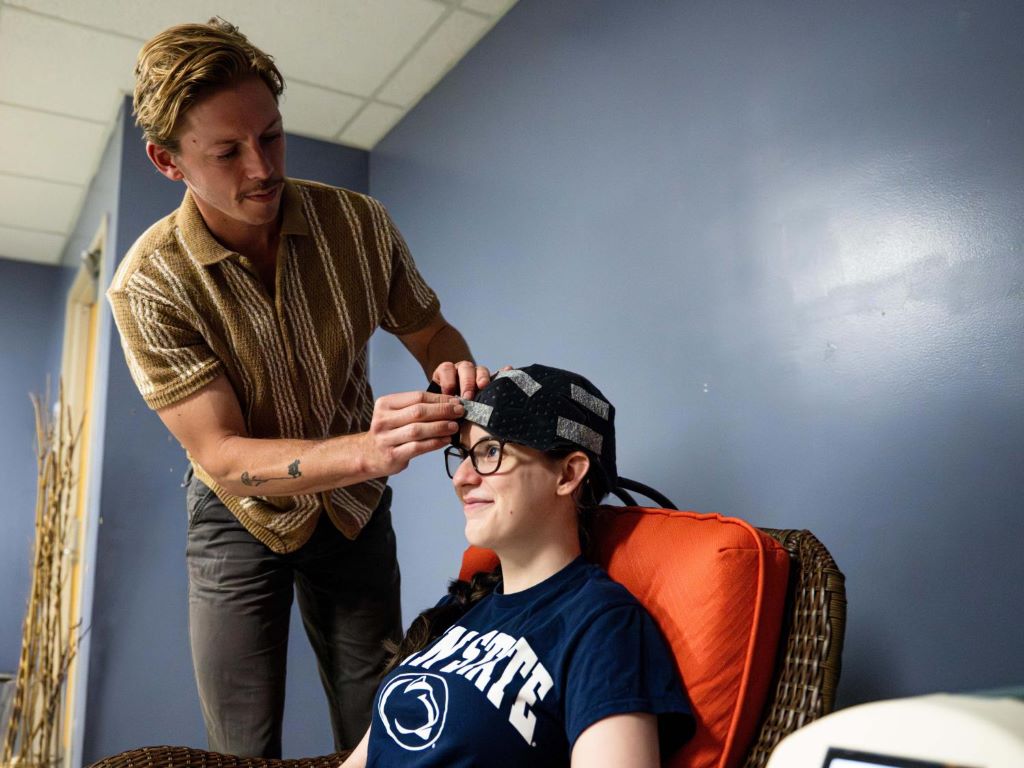
Co-authors Owen Griffith, standing, and Maddie McLaughlin demonstrate the head cooling cap used in the study. Credit: Jaydyn Isiminger / Penn State. Creative Commons
Wearing a cooling cap for 30 minutes may improve a person’s sense of well-being, according to a new study by Penn State researchers.
In a recent publication in Acta Psychologica, the researchers demonstrated that head cooling may reduce depressive symptoms and alter the types of brain waves people produce. While no medical recommendations can be derived from this small, exploratory study, the results indicate head cooling may provide mental health benefits for the general population.
The work was inspired by lead author and Penn State Professor of Kinesiology Semyon Slobounov’s prior research, which found that athletes with concussions heal faster and experience fewer symptoms when their head is regularly cooled.
“A person’s mood is tied to their cognition and general brain function,” said Owen Griffith, assistant teaching professor of kinesiology at Penn State and co-author of the study. “In this study, results suggested that people enjoy the sensation of head cooling. This, in turn, improved their mood, which altered their brain activity.”
The researchers recruited 24 college students between the ages of 18 and 26. At the beginning of the study, all participants completed questionnaires that measured their mental health and cognitive abilities and underwent an electroencephalogram (EEG) to measure brain activity.
Following the EEG, participants spent 30 minutes sitting in a dimly lit room listening to ocean sounds. Half of participants wore a fitted cooling cap, which uses liquid circulating close to the head to maintain a temperature of 33 degrees Fahrenheit. The other participants wore nothing on their heads. Immediately after the cooling or sitting session, participants repeated the questionnaires and EEG.
Participants repeated the same sitting or cooling session without testing every day for one week. The day after the last session, participants repeated the questionnaires and EEG again. This design allowed the researchers to observe both the short- and longer-term effects of head cooling.
“The brain produces different types of waves that are associated with different levels of excitement or brain activation,” said Laura Cooney, co-author of the study who graduated from Penn State’s Schreyer Honor College in 2025 and based her undergraduate thesis on the research. “Alpha waves are associated with calmness. More specifically, they are indicative of less brain activity overall, so this finding suggests that there was an immediate calming effect of head cooling.”
People in the head cooling group displayed an increase in alpha brain waves during the EEG immediately following the first cooling session. They experienced a 4% increase in alpha waves while participants whose heads were not cooled displayed a .5% decrease in alpha waves.
In contrast, there was no significant difference in the alpha wave levels of the sitting and cooling groups when measured on the day after the final cooling session, suggesting cooling does not have a longer-term impact on brain wave activity, the researchers said.
Over the course of the week, both groups of participants reported a decrease in depression symptoms, but individuals in the head cooling group reported a larger decrease than those in the sitting group.
“The reduction of depression symptoms among healthy people suggests that this might be a promising treatment,” Griffith said.
The researchers said they had hypothesised head cooling affected people through changes in neural electrical activity, but the EEGs did not show evidence of that. Now, the researchers suspect the effects are psychosomatic, meaning that mental and emotional factors, rather than physiological changes, are causing people’s reduced depression symptoms and increased alpha brain wave activity.
“Anecdotally, most people who come into the lab agree that head cooling is relaxing and enjoyable,” Griffith said. “This may not be surprising. A cold compress or a bag of ice have been home treatments for migraines for many years.”
Overall, the study suggests that widespread head cooling could be useful, the researchers said.
“Head cooling shows some potential as an acute calming therapy,” Cooney said. “Not as a replacement for any current therapy, but as another tool in the toolbox.”
Slobounov, senior author of the study, agreed.
“Our previous research demonstrated that head cooling is useful for athletes recovering from concussions,” Slobounov said. “This research suggests it may be more useful to a wide group of people. It is low risk, does not involve any drugs or chemicals, and people enjoy it.”
Other Penn State researchers who contributed to this work include Zach Napora, graduate student in kinesiology and first author of the publication, Maddie McLaughlin, graduate student in kinesiology, and Elle McNally, 2025 graduate in biobehavioral health and current physician assistant graduate student.
Pilot trial reports reduced eating disorder and depressive symptoms in difficult-to-treat psychiatric condition
Photo from Freepik.
A pilot study published today in Communications Medicine demonstrates the potential of a new approach to treating anorexia nervosa, a disorder for which effective treatments have been significantly limited. The research from UC San Diego School of Medicine reports that a ketogenic nutritional intervention – a high-fat, low-carbohydrate, moderate-protein diet – was feasible and safe for patients with weight-normalised and mildly underweight anorexia nervosa. The ketogenic intervention was well-tolerated by participants, with high adherence rates and no significant weight loss observed throughout the program.
Furthermore, significant improvements were observed in eating disorder symptoms, with nearly 3 in 4 of study completers in the recovered range at study end, no longer meeting criteria for an anorexia nervosa diagnosis, and all completers experiencing an improvement in depression scores.
Study lead Guido Frank, MD, Professor of Psychiatry at UC San Diego School of Medicine, who has been studying and treating anorexia patients for over 25 years, launched this study to broaden treatment options for this high-risk population. “We urgently need new approaches to anorexia nervosa. Our work with ketogenic therapy looks beyond standard therapies and potentially at the underlying physiology of the disorder,” states Dr. Frank. “Growing evidence links anorexia nervosa to neurometabolic dysfunction, and we are hopeful that direct metabolic intervention can regulate neural function and address the psychological symptoms patients experience.”
The outpatient, nationwide, single-arm clinical study delivered a supervised 14-week ketogenic intervention, with 18 of the 22 enrolled participants (82%) completing the study. No significant change in weight was observed throughout the program (as measured by BMI). By the end of the study, 72% of study completers reached the recovered range of eating disorder symptoms as measured by eating disorder scales (Eating Disorder Examination Questionnaire, EDE-Q, and Eating Disorder Inventory-3, EDI-3) and all showed improvements in depression scores (as measured by the Beck Depression Inventory, BDI), with 72% within normal range.
For co-author Barbara Scolnick, MD, an internal medicine physician in Waban, Massachusetts, this study is the culmination of a decade-long personal journey. “The scientific inquiry that led to this research began in search of answers for my niece, Caroline Beckwith,” Dr. Scolnick shared. “Ketogenic therapy, a standard in epilepsy care, was the major catalyst, when combined with other interventions, that allowed Caroline to achieve remission after a 15-year struggle with anorexia nervosa. I am encouraged by these preliminary findings, which indicate that this treatment may provide a path forward for others like Caroline.”
While the authors acknowledge the clinical sensitivities of dietary interventions in this patient population, this study builds on priorpreliminaryevidence to provide proof of concept. The findings indicate that, when delivered with specialized medical supervision and trained support, ketogenic therapy holds potential for those who have failed to respond to traditional treatments.
“This study highlights the promise of dietary interventions that target normalizing underlying neurometabolic function for even the most intractable psychiatric conditions like anorexia nervosa,” said Jan Ellison Baszucki, co-founder and president of Baszucki Group, who funded the study. “We hope this work drives awareness and support for researching and delivering ketogenic therapy for eating disorders, providing new hope for patients and their families.”
A current extension of this study, for patients with both anorexia nervosa and bulimia nervosa diagnoses, is underway and recruiting participants nationally. Those interested in learning more or joining the study can find more information at the study site.