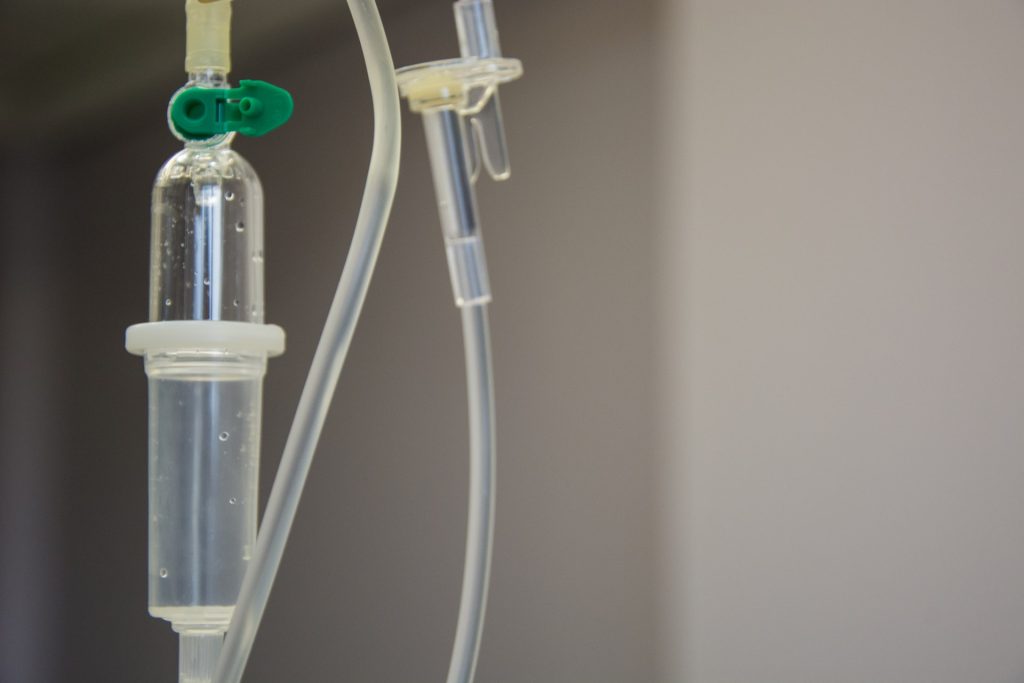
Staff, including nurses, at RK Khan Hospital in Chatsworth, Durban, picketed on Wednesday over poor working conditions at the facility. Photo: Tsoanelo Sefoloko
Nurses, administration staff and general workers brought parts of RK Khan Hospital in Chatsworth, Durban, to a standstill for about an hour on Wednesday. They protested outside the hospital to highlight what they say are poor working conditions.
Protesting nurses say they are forced to perform cleaning duties in addition to patient care because the hospital has not employed enough cleaners. Other workers complained of staff shortages in the administration and general units.
Workers say they met with the management in February. Union leaders had asked the facility to commit to resolving their complaints.
Nurse Zizakele Ndlovu said they were told by the union leaders that working conditions would improve. But nothing changed, she said.
“The conditions we work under at the hospital are not good. We end up having to work more hours, and we don’t get paid for overtime. Sometimes I even work as a clerk,” she said.
“The department treats us as if we don’t know our job, and we don’t deserve what we are asking for. We lost many workers to Covid; some retired and others resigned. Those vacancies have not been filled. Even at top management there are lots of vacancies and this leads to poor service.”
Chairperson at the hospital of the National Education, Health and Allied and Workers’ Union (NEHAWU) David Mpongose said they had engaged management and had been promised that the situation would improve.
“Our bosses are arrogant. They really don’t take us seriously. Each time they make empty promises, so we decided to protest for the provincial government to assist us,” said Mpongose.
Xolani Mnguni, a cleaner, said he earned R7800 per month under the hospital’s previous contractor, but now only earns R3000 under the current contractor. He also said he has to do jobs other than cleaning.
Hospital CEO Linda Sobekwa accepted the workers’ memorandum and signed it on behalf of the provincial health department. She promised to ensure that the department responded within ten days as requested.
Agiza Hlongwane, spokesperson for the KwaZulu-Natal Department of Health, said officials would consider the workers’ demands and respond to them.
Advancements in AI have resulted in typically human characteristics like creativity, communication, critical thinking, and learning being replicated by machines for complex tasks like driving vehicles and creating art. With further development, these human-like attributes may develop enough to one day make it possible for robots and AI to be entrusted with nursing, a very ‘human’ practice. But… would it be ethical to entrust the care of humans to machines?
In a step toward answering this question, Japanese researchers recently explored the ethics of such a situation in the journal Nursing Ethics.
The study was conducted by Associate Professor Tomohide Ibuki from Tokyo University of Science, in collaboration with medical ethics researcher Dr Eisuke Nakazawa from The University of Tokyo and nursing researcher Dr Ai Ibuki from Kyoritsu Women’s University.
“This study in applied ethics examines whether robotics, human engineering, and human intelligence technologies can and should replace humans in nursing tasks,” says Dr Ibuki.
Nurses show empathy and establish meaningful connections with their patients, a human touch which is essential in fostering a sense of understanding, trust, and emotional support. The researchers examined whether the current advancements in robotics and AI can implement these human qualities by replicating the ethical concepts attributed to human nurses, including advocacy, accountability, cooperation, and caring.
Advocacy in nursing involves speaking on behalf of patients to ensure that they receive the best possible medical care. This encompasses safeguarding patients from medical errors, providing treatment information, acknowledging the preferences of a patient, and acting as mediators between the hospital and the patient. In this regard, the researchers noted that while AI can inform patients about medical errors and present treatment options, they questioned its ability to truly understand and empathise with patients’ values and to effectively navigate human relationships as mediators.
The researchers also expressed concerns about holding robots accountable for their actions. They suggested the development of explainable AI, which would provide insights into the decision-making process of AI systems, improving accountability.
The study further highlights that nurses are required to collaborate effectively with their colleagues and other healthcare professionals to ensure the best possible care for patients. As humans rely on visual cues to build trust and establish relationships, unfamiliarity with robots might lead to suboptimal interactions. Recognising this issue, the researchers emphasised the importance of conducting further investigations to determine the appropriate appearance of robots for facilitating efficient cooperation with human medical staff.
Lastly, while robots and AI have the potential to understand a patient’s emotions and provide appropriate care, the patient must also be willing to accept robots as care providers.
Having considered the above four ethical concepts in nursing, the researchers acknowledge that while robots may not fully replace human nurses anytime soon, they do not dismiss the possibility. While robots and AI can potentially reduce the shortage of nurses and improve treatment outcomes for patients, their deployment requires careful weighing of the ethical implications and impact on nursing practice.
“While the present analysis does not preclude the possibility of implementing the ethical concepts of nursing in robots and AI in the future, it points out that there are several ethical questions. Further research could not only help solve them but also lead to new discoveries in ethics,” concludes Dr Ibuki.
A unique collaborative study on hospital clinician wellbeing by teams at 60 of the best US hospitals, was published in JAMA Health Forum. The study found that physicians and nurses, even at hospitals known to be good places to work, experienced adverse outcomes during the pandemic and want hospital management to make significant improvements in their work environments and in patient safety.
The solutions to high hospital clinician burnout and turnover, they say, are not resilience training for clinicians to better cope with adverse working conditions but organisational improvements that provide safe workloads and better work-life balance.
Researchers sought information in 2021 from 21 050 physicians and registered nurses practicing in 60 Magnet recognised hospitals in 22 states. Forty-seven percent of nurses and 32% of physicians experienced high burnout. Twenty-three percent of physicians and 40% of nurses said they would leave their jobs if possible. Less than 10% of physicians and nurses reported experiencing joy in their work.
Many clinicians are downright hostile to programmes – like resilience training – that are designed to adapt them to poor work conditions; clinicians want the working conditions improved.
Linda H Aiken, PhD, study lead author
Not having enough nurses to care for patients, having little control over workloads, lack of confidence in management to resolve problems in patient care, and concerns about patient safety were all associated with higher burnout, job dissatisfaction, and intent to leave among both nurses and physicians.
Lead author Linda H Aiken, PhD, at the University of Pennsylvania said, “Physicians and nurses largely agree about what hospital management could do to address their burnout, job dissatisfaction, and plans to leave their current jobs; they want improved staffing, modern working conditions in which they can spend more time in direct patient care, greater control over their workloads and work schedules, and a higher priority on patient safety.”
Eighty-seven percent of nurses and 45% of physicians said improving nurse staffing was very important to their own mental health and wellbeing. Other high priorities for clinicians were health breaks without interruption and reduced time spent on documentation. Aiken added, “Many clinicians are downright hostile to programmes – like resilience training – that are designed to adapt them to poor work conditions; clinicians want the working conditions improved.”
Clinicians are concerned about quality and safety of care. Half of physicians and nurses lack confidence that their patients can safely manage their care after discharge highlighting the need for improvement in discharge planning. Patient safety remains a concern with 26% of nurses and 12% of physicians giving their own hospitals an unfavorable patient safety grade. Thirty-nine percent of nurses and 33% of physicians feel mistakes are held against them contrary to recommendations of the National Academy of Medicine to search for and correct system deficiencies that cause most medical errors.
The study was carried out by Penn Nursing’s Center for Health Outcomes and Policy Research in collaboration with the US Clinician Wellbeing Study Consortium composed of 60 Magnet Hospitals. The study took place in 2021 during the COVID pandemic, a time when all US hospitals were severely challenged. Previous research shows that clinicians in hospitals with better work environments prior to the pandemic had better outcomes during the pandemic. The Consortium committed to this study to learn from their experiences during the pandemic how to sustain and further improve their favourable work environments to better withstand external threats and to rebound rapidly.
Researchers assisting microbiologists in Ukraine have found an extremely high level of bacterial resistance among the war-wounded patients treated in hospitals. The study, recently published in The Lancet Infectious Diseases, found resistance in many hospital-acquired infections stemming from damaged and overwhelmed healthcare infrastructure, with many samples resistant to the last-resort antibiotic colistin.
“I am quite thick-skinned and have witnessed numerous situations involving patients and bacteria. However, I must admit that I have never encountered bacteria as resistant as this before,” says Kristian Riesbeck, professor of Clinical Bacteriology at Lund University in Sweden.
There was never any doubt about helping out when Dr Oleksandr Nazarchuk, a microbiologist at a university in Vinnytsia, Ukraine, got in touch, says Kristian Riesbeck. Help was needed in Ukraine to assess the extent of antibiotic resistance in bacteria among severely injured patients in hospital.
In addition to all the human suffering caused by the war in Ukraine, another battle is being fought — an invisible war against resistant bacteria. This became evident when Kristian Riesbeck and his research colleagues analysed patient samples from seriously wounded patients, many of whom had burn injuries, in Ukraine. The patients had acquired infections while in hospital, primarily due to the overwhelmed wards and destroyed infrastructure.
Samples were collected from a total of 141 war victims, 133 adults who sustained injures during the war and eight infants diagnosed with pneumonia. These patients were admitted to three different hospitals in Ukraine, where they received emergency surgeries and intensive care to address their conditions.
“We observed that several the Gram-negative bacteria exhibited resistance to broad-spectrum antimicrobial agents, including newly developed enzyme-inhibiting antibiotics that are not yet available in the market. Moreover, nearly ten per cent of the samples contained bacteria that demonstrated resistance even to our ‘last-resort’ antibiotic, colistin. While we have encountered similar cases in India and China before, nothing compares to the extent of resistance observed in this study. As much as six per cent of all the samples contained bacteria resistant to every antibiotic we tested,” says Kristian Riesbeck.
He emphasizes that this clearly highlights the challenges posed by resistant bacteria in times of war. In particular, Kristian Riesbeck expresses concern regarding the resistance displayed by Klebsiella pneumoniae bacteria, as they have the potential to cause illness in individuals with a healthy and well-functioning immune system.
“This makes me very worried. It’s rare to encounter Klebsiella with such high levels of resistance, and it was not what we anticipated. While isolated cases have been documented in China, the magnitude of this situation surpasses anything we have seen before. While many countries are providing military aid and resources to Ukraine, it is equally crucial to assist them in addressing this ongoing situation. There is an evident risk of further spread of resistant bacteria, and this threatens the entire European region,” remarks Kristian Riesbeck.
A number of service providers have voluntarily ended their contracts with the Gauteng Department of Health to provide food to hospitals. In response, Gauteng Health is looking at a multi-vendor approach to tackle the problem which it blames on vendors being unable to fulfil their orders.
Meanwhile, Gauteng continues to battle with surgical and cancer treatment backlogs. R784 million has been allocated to this end, with a portion allocated to cancer treatment services, some of which will be outsourced to the private sector and some of which is going to new radiotherapy equipment.
This year has seen a number of Gauteng hospitals battling to secure their food supplies. Responding to SA parliamentary questions, Gauteng Health MEC Nomantu Nkomo-Ralehoko wrote that 26 out of 34 Gauteng public hospitals have been affected by food shortages.
“The shortages were mostly due to suppliers not being paid, contracts expiring, or companies not delivering. It was so bad for two hospitals, Bronkhorstspruit and Lenasia South, they had to borrow food from other hospitals!” said DA Shadow MEC for Health, Jack Bloom, who posed the questions.
Hospitals have being going through long stretches of not being able to provide full meals: at George Mukhari Hospital, chicken, fish and frozen vegetables were unavailable for four months, and there was no milk from February to May. The petty cash budgets are woefully insufficient to cover the gap: Kalafong hospital can only spend R2000 a day, not nearly enough to feed its 700 patients, reports SA People.
According to News24, Gauteeng Health spokesperson, Motalatale Modiba, said that the main problem was down to vendors struggling to fulfil their orders on time.
Currently, Gauteng health is running a tender to outsource oncology services for the Charlotte Maxeke and Steve Biko hospitals. The outsourcing programme should be able to ensure that patients who are currently awaiting treatment in the public sector will be able to access private sector treatment instead.
In their announcement, Gauteng Health stated: “We recognise the urgency of the situation and want to assure the public that we are committed to handling the outsourcing of radiation oncology sources diligently and are nearing implementation.”
The open tendering process will last 14 days, and is divided into categories for oncology specialists, treatment services and radiation planning services.
The department has already procured 4 Llinac machines, and has recently closed a tender for a Brachytherapy, and have advertised a tender for another Linac machine for Charlotte Maxeke. Ongoing investigations by Spotlight have also revealed that the oncology procurement process is lagging behind. The GDoH aims to have the first treatments under the outsourcing programme to start in August 2023.
In the leading Journal of the American Medical Association, two researchers outline how to use intravenous fluids to treat sepsis, a deadly condition that affects nearly a third of all ICU patients. Despite the fact that IV fluid therapy is a cornerstone of sepsis treatment, it’s not always a sure bet – in fact, as the authors outline in their paper, giving IV fluids can sometimes worsen sepsis.
Which fluids to give, how much to give and when have been fiercely debated for years.
“This is an intervention that is cheap and easy to use and it can be life-saving, but it can also be harmful for patients if too much fluid is given,” explains first author Fernando Zampieri, a newly recruited assistant professor at University of Alberta.
The new JAMA article sums up the latest science on the phases of sepsis and how much IV fluid to give at each stage of treatment.
“It’s aimed at the clinician who works on the wards, who works in community hospitals, who works in emergency departments, explaining the mechanisms to assess whether patients are responding or not and decide whether more fluid needs to be given,” says Sean Bagshaw, professor and chair of critical care medicine, who co-wrote the paper with Zampieri and Matthew Semler of Vanderbilt University.
“These are really fundamental issues that have been challenging for clinicians to reconcile and have long been controversial, so this concise review bundles all recent evidence together,” Bagshaw says.
A complex and life-threatening condition
One in four patients who develop sepsis die from it, and it’s responsible for 11 million deaths per year, Zampieri estimates. Sepsis is an extreme response by the body to an infection, leading to a drop in blood pressure and thus a lack of oxygen circulation. Death occurs when oxygen-deprived organs such as the brain, kidneys or liver fail.
Treatment almost always includes administering intravenous fluids, along with other interventions such as antibiotics and medications to boost blood pressure and oxygen delivery to tissues. The goal is to restore circulation without causing edema, or swelling, which can also be harmful to organs.
Sepsis can occur at any time in life from infancy to old age, says Bagshaw. Zampieri points out that sepsis is not really one disease, but a complex condition with multiple causes.
“When we talk about sepsis, you can be talking about things as different as a young woman with an infection after delivery all the way through to an elderly patient with a urinary tract infection. Those are two completely separate sources of infection, and the patient’s other conditions make treatment more complicated,” he says.
Zampieri says there are numerous clinical trials underway to refine sepsis treatment, but much is still unknown. Zampieri himself has been involved with trials in Brazil to determine whether slower fluids make a difference to clinical outcomes, to compare the efficacy of using saline versus a balanced solution (Plasma-Lyte 148), and to find out whether measuring lactic acid, which is produced when the body is starved of oxygen, is a good indicator of whether enough fluids have been given.
Digging for evidence to improve practice
Zampieri plans to continue his program of clinical trials and also wants to help physicians and health systems adopt best treatment practices as they are verified. Eventually he hopes to develop an accurate bedside test, such as using ultrasound, to better determine what level of fluids a patient requires.
“Clinical trials are the best way to provide evidence that will change practice,” he says.
Bagshaw expects sepsis treatment to improve rapidly over the next decade thanks to such work.
“It took us 30 or 40 years to get to this point, and I think there’s still lots of questions to be answered about how best to individualise the resuscitation strategies amongst patients with life-threatening infection and sepsis,” Bagshaw says. “My hope is that Fernando will help catalyse some of those advances here at the U of A.”
To communicate medical results to patients, who may find them hard to understand, is a challenging task – especially when it comes to making sense of statistical information. An interdisciplinary team of scientists has published a study inPLOS ONE investigating how communication between doctors and patients about actual risks can be made more effective.
“Even doctors sometimes have difficulties in determining the right predictive value. And if the data is difficult for the doctor to interpret, it’s even harder to communicate the information accurately to patients in a way they will understand,” says study author and mathematics educationalist Karin Binder.
The following case will serve as an example: A patient has just received a conspicuous sonographic finding of his thyroid. Does this mean he has thyroid cancer? Not necessarily, because there is a certain probability that the result of the examination will be positive even though the patient does not have thyroid cancer.
To explain to patients what the statistical picture looks like after such a positive test result, there are two approaches. One of them requires some lateral thinking, while the other is much easier to interpret from the patient’s perspective, as the researchers were able to demonstrate.
Bayesian vs diagnostic information
The commonly used Bayesian approach proceeds from the number of patients who actually have the disease. First of all, the doctor explains how frequently the disease occurs overall – for example: “out of 1000 patients, 50 have thyroid cancer.” Then the doctor lays out: a) for how many of these patients with thyroid cancer, the test result is positive (20 out of 50) and b) how many people who do not have thyroid cancer nonetheless have a positive test result (110 out of the remaining 950).
This is generally the information the doctor either knows or can easily research. Positive tests as a proportion of people with the disease is also known as sensitivity – a term that may be familiar from the COVID pandemic, when it was used, for example, as a quality criterion for rapid tests. Unfortunately, however, positive tests as a proportion of people with the disease is often confused with people with the disease as a proportion of positive tests! And these two percentages can greatly differ depending on the situation.
So what do the numbers quoted above mean in relation to a person with a positive test result? How many people who test positive actually have the disease? If for you the answer is not immediately apparent, you are not alone: Without further information, only 10% of participants were able to calculate how many people with positive results actually had the disease.
“Diagnostic” communication of information proceeds very differently: First of all, the doctor explains how many patients have positive test results, irrespective of whether they actually have the disease or not. In our example, this would be 130 people with a conspicuous thyroid ultrasound (out of 1000 people examined). Next, the doctor explains how many of these people with positive tests actually have the disease (20 out of 130) and how many of the people with negative test results have the disease (30 out of 870).
The relevant information is contained here directly and without the need for mental arithmetic: If my result is positive, then the probability is a 20 out of 130 that I actually have thyroid cancer. When communicated in this form, 72% of study participants were capable of arriving at this conclusion, compared to 10% with the Bayesian approach.
How to best communicate statistical information?
“With Bayesian communication, moreover, participants were considerably slower in reaching the correct result, if they got there at all,” says Karin Binder. “And in busy doctor’s offices and hospitals, this time is often not available.” The team of authors therefore calls on doctors to use diagnostic information communication more readily in future. This would go some way to avoiding confusion, misinterpretation, and wrong decisions.
It would be even better, however, to take the time to give patients a full picture of the situation, containing both diagnostic and Bayesian information. Only this can explain the surprising phenomenon whereby even a medical test with outstanding quality criteria can have very limited predictive power under certain circumstances (eg, routine screenings).
Showing people how their behaviour compares to their peers is a commonly used method to improve behaviour. But after the burnouts of the pandemic, it wasn’t clear whether this was still a good idea for highly stressed healthcare workers.
Recent research published in JAMA Network Open throws new light onto the relationship between peer comparison and job satisfaction among clinicians, challenging prior findings that such feedback increases job dissatisfaction and burnout.
Researchers found that behavioural interventions aimed at improving performance can be designed to protect clinician job satisfaction and improve quality of care. To avoid negative impact, the research team discovered it is important for clinicians to have control over the behaviour being evaluated or encouraged, such as ordering tests or whether to prescribe medication.
“Our research demonstrates that peer comparison aimed at improving performance can be designed in a manner that safeguards clinician job satisfaction,” said lead author Dr Jason Doctor at the University of Southern California. “Prior findings to the contrary don’t appear tied to peer comparison, but rather clinicians being measured for things they don’t have full control over.”
The Importance of Methodology in Peer Comparison
Performance feedback using peer comparison is a widely used approach in healthcare to change behaviour. Study authors emphasize the importance of methodology when conducting peer comparison intervention. They note the present study gave clinicians full agency over the outcome, kept performance private, did not restrict the number of top performers, and was successful in improving clinician behaviour without lowering job satisfaction.
Doctor and his team assessed data from their previously published research that assessed the impact of three interventions – Suggested Alternatives, Accountable Justification, and Peer Comparison – to reduce inappropriate antibiotic prescribing. In this study, they focused on on peer comparison, where clinicians received an email informing them of their ranking, from highest to lowest, for inappropriate prescriptions compared to their peers.
The findings contribute to the ongoing dialogue surrounding healthcare quality improvement and clinician well-being.
“By better understanding behavioural interventions and developing more effective strategies, healthcare organisations can foster a sense of ownership and agency, leading to improved job satisfaction and decreased burnout rates,” said Doctor.
The Hospital Association of South Africa (HASA) has added its objections to the proposed National Health Insurance (NHI) Bill to the growing volume of objections from professional medical organisations. In common with them, HASA strongly supports universal health coverage but stands against the NHI Bill in its current form.
Their statement reads: “We believe that approving the Bill without substantive consideration of the many valid and significant recommendations and contributions made by many participants during the Parliamentary hearing is deeply regrettable and a missed opportunity by the Committee.”
Chief among their objections were the potential for corruption and mismanagement in the centralisation of medical funds as well as the many legal objections to the Fund.
Despite serious, credible concerns being raised at every turn, the NHI Bill continues to progress, with Parliamentary Portfolio Committee for Health recently giving the Bill its approval on 26 May, moving it forward to debate within the National Assembly. To support healthcare professionals, Quicknews will be running a series of articles discussing the Bill and providing resources to help them take positive action to protect healthcare services for all of their patients. The Gauteng e-toll saga has already shown that ill-conceived and damaging legislation can be brought down if there is sufficient, coordinated public opposition.
With HASA’s statement, three of the largest medical associations in South Africa have now spoken out against the controversial bill. The South African Medical Association (SAMA) and South African Private Practitioners Forum (SAPPF) have both unequivocally stated their opposition to the Bill as it is currently formulated.
In addition to other risks, South Africa faces a potential exodus of healthcare professionals. Indeed, the UK’s National Health Service has for some time been actively poaching nurses and midwives from lower-income countries like South Africa.
HASA urges National Assembly and the National Council of Provinces in their deliberations on the Bill “to insist on a multi-payer model to mitigate against the concentration of risk, an iterative rollout based on milestones rather than dates and to pay heed to the nation’s concerns that the proposed National Health Insurance Fund is susceptible to theft and corruption by proposing and approving alternate and appropriate governance structures.”
Much of South Africa’s public health sector is plagued by long waiting times for surgery, a situation that was made much worse by the COVID-19 pandemic. Now, an inspiring project at Groote Schuur Hospital in Cape Town has reached the target of slashing its backlog by 1 500 elective surgeries – two months ahead of target.
At the end of March, a small team of healthcare workers completed the project called ‘Surgical Recovery’. The project ran from May 2022 and was originally planned to conclude 12 months later.
While this hasn’t cleared the entire backlog of people waiting for surgery at Groote Schuur, it has helped the hospital return to about the same waiting list level as it had before the COVID-19 pandemic, according to Professor Lydia Cairncross, the head of general surgery at Groote Schuur. (Spotlight previously reported on the human cost of surgical waiting lists and on what could be done about it.)
The surgeries took place mainly in the E4 Surgical Day Ward at Groote Schuur. Cairncross explains that ward E4 was built as a Day Ward – meaning it handles surgeries where patients don’t require an overnight stay pre- or post-surgery – with the aim of increasing daycare surgery capacity for the hospital. And for the last 12 months, it has been the host of the Surgical Recovery Project.
E4 has 16 patient beds, four recovery beds, and two theatres, which were completed just as the COVID-19 pandemic hit the country. During the third wave of the pandemic, it was used as a COVID High Care Unit.
According to Dr Shrikant Peters, a public health specialist and the medical manager of theatre and ICU services at Groote Schuur, the hospital’s CEO Dr Bhavna Patel “had the foresight to request provincial use of COVID funding to develop the space as COVID High Care, and eventually to be used long-term as an Operating Suite and High Care Ward in line with prior hospital plans”.
The Surgical Recovery Project
By the end of the third wave of the COVID-19 pandemic, according to Cairncross, there were discussions about how to catch up on the surgeries that had to be postponed because of COVID-19.
“The backlog in surgery comes on top of a pre-existing backlog. So, it’s not that the backlog was created by COVID, but it made it much, much, much worse,” she says, “In November 2021, we did an audit of how many patients were just physically waiting for surgery at the hospital. It was around 6 000 plus. We don’t actually have a baseline for pre-COVID, but we knew that we lost about 50% of our operating capacity,” Cairncross says.
“So, the idea was really to find a way to utilise this theatre space so that we could catch up with some of that backlog.”
From here, the Surgical Recovery Project for Groote Schuur was born with the ambitious target of performing 1 500 surgeries in 12 months.
Funds from the project came from three sources. Kristy Evans, head of the Groote Schuur Hospital Trust, tells Spotlight that fundraising for the project was kick-started by a R5 million donation from Gift of the Givers. The recently established Groote Schuur Hospital Trust focused on Surgical Recovery as their first project to fundraise for. An additional R1 million was raised by the Trust from over 500 corporate and private donors.
“People are always willing… [they] give what they can. We had donations from people who would transfer R10 into the account, sometimes people transfer R180 000,” Evans says.
She adds that the Project will continue into its second year, but the details regarding targets had not yet been finalised by the time of publication.
The Western Cape Provincial Department of Health also donated around R6.5 million to the project from their budget for surgical recovery post-COVID-19. According to Mark van der Heever, the provincial health spokesperson, this money was part of the R20 million that the department allocated to various surgical backlog recovery initiatives.
“[The] COVID-19 pandemic meant that elective surgical services had to be significantly de-escalated, as staff were deployed to COVID services, and this resulted in an increase in the backlog of operations. Hence, a specific practi[cal] plan to address this backlog in the short and long term has been developed,” says van der Heever. “Similar projects and initiatives across hospitals have already taken shape and also yielded success, such as at Karl Bremer Hospital, which also received a portion of the R20 million from the department. The hospital was able to perform an extra 328 procedures since August last year.”
Working around difficulties
At Groote Schuur, the project had to find a way to work around the difficulties of surgical catch-up. According to Cairncross, with any surgical catch-up, the challenges don’t just come from needing a physical space to operate in but also from having the appropriately trained staff. Not having enough trained staff in the public health sector, like theatre and surgery nurses, makes it hard to implement a surgical catch-up programme, even if there is money to do so.
To work around these difficulties, they came up with a centralised model for surgical recovery, where one theatre team of nurses could be employed on a contract rate for the 12 months. This team, led by Sister Melinda Davids, the nursing operations manager for the E4 theatre, would work Monday to Thursday in one of the E4 theatres and occasionally other theatres in the hospital for each of the 1 500 surgeries.
According to Cairncross, many surgeons, herself included, would come and operate on patients in addition to their normal surgeries and other duties. The funds, a total of about R 12.5 million, were used to pay the staff involved in the surgeries. The day-to-day operations were run by Davids and Peters.
According to Peters, the 1 500 operations occurred across all surgical specialities, ranging from cataract to cardiothoracic.
Success factors
Cairncross attributes the success of the project to the existing systems at Groote Schuur, supportive management, and the dedication of the surgical team and surgeons that gave their time to the project.
She says that because the hospital has a relatively functional system to start off with and a supportive management team, it allowed for “enough of a regulatory environment to keep things safe and above board but not to the extent where you can’t move”.
It was also about having the right person in charge of the team, she adds, gesturing to Davids.
Davids, who started her nursing career in 1989 and qualified as a theatre nurse in 2009, started working at Groote Schuur six years ago. She explains that the surgical team at E4 consisted of about 18 people. This includes herself, five scrub nurses, three anaesthetic nurses, three floor nurses, a registered nurse who assists in recovery, and a clerk. Peters adds that there are also two surgical medical officers and two anaesthetic registrars.
According to Davids, when the project started, several of the nurses had not worked in a theatre before so had to be trained and upskilled by her and some of the specialist nurses who make up the scrub nurse team. She also had to get creative about having the right equipment for each surgery, which sometimes meant she had to borrow equipment from other theatres.
“It’s been a challenge, but it’s a good challenge that’s kept me going,” she says. “We’re a good team.”
“Trust [in staff] has been fundamental to this,” says Peters, “I mean, the ability to trust junior staff to upskill themselves to become scrub nurses, to hand surgeons the right instrument when they asked for it. That’s been really heart-warming.”
‘Behind every number on the list is a patient’
When asked why it was so important to do this kind of catch-up, Cairncross says the surgeries that were postponed during the COVID-19 pandemic were ones that weren’t urgent or emergent, but those patients who were bumped still struggled physically because of the delays.
“Behind every number on the list is a patient with a story of either progressive blindness, invasive skull tumours, or tumours around the auditory canal that result in hearing loss, chronic pain from joint problems and urinary retention with recurrent infections and admissions or having a stoma bag [a colostomy bag] with them for months longer than needed,” Cairncross says. “Heart-breaking stories and often these were the patients who kept getting cancelled [on]. They would come in and if something urgent would come up, they would be cancelled or the COVID wave would come.”
She adds that at the time when the idea for Surgical Recovery came about, the morale amongst the surgical teams was at a real low. Patients would be coming to the outpatient clinics and asking, for the umpteenth time, “when am I going to have my operation?” to which the healthcare workers had to keep responding that they don’t know.
“It’s just a terrible thing and so people [staff] started to feel disempowered and disillusioned and I really think that the project helped them to at least see some progress. That there were some changes or some shift in what they were dealing with,” Cairncross says. “It hasn’t cleared our entire backlog, and a once-off project will not do that, but it has reset us pretty close to where we were pre-COVID-19.”
Peters adds that while the backlogs haven’t been fully cleared, “for every case that we’ve done in the project, it’s someone off of a waiting list”.
Health system at a ‘precipice’
While the COVID-19 pandemic caused many surgeries to be postponed and added tremendously to surgical waiting lists, it isn’t the only factor contributing to backlogs. According to Peters, the issue of a shrinking health budget for tertiary services is and will continue to add to the existing backlogs across the country.
“There’s this building backlog coming up against the shrinking budget. And that’s going to be with us for multiple years going into the future and if the clinicians aren’t protecting the budget for these patients that get missed, we’re going to focus on as we have been the emergency patients that come through the door,” he says. “But it’s always difficult for tertiary academic services because to keep up the skills of surgeons to maintain the quality of care, they do need to be managing waiting lists of booked patients. And so, I think across the country we’re going to be struggling with that across all tertiary services.”
Cairncross tells Spotlight that the project is just a temporary measure. In the long term, healthcare systems need to be fixed in order to address issues like surgical backlogs.
“The lesson, I suppose, is that these are temporising measures. We can do them, but fundamentally we need to fix the health system at a core, structural level. And we can’t work in isolation from the rest of the country because we are one health system and tertiary hospitals are only a part of that ecosystem,” she says. “The services at Groote Schuur Hospital, for example, cannot be sustained if the health systems from primary care to district health facilities, in urban and rural facilities, and across provinces are not supported and strengthened.”
The health system is at a precipice, according to Cairncross, and big academic hospitals need to be anchoring elective surgical services together with emergency services, as the problem with emergency services will only get bigger down the line if electives aren’t dealt with now.
“We know that postponed elective surgery just becomes emergency surgery over time, making cancelling elective surgery a false economy. We need to plan robust systems that ensure all types of surgical services are maintained,” she says.
“The strongest voice [in defence of the health system] is a conscious and motivated health workforce. So, where the nurses and doctors and managers are standing and defending patient services, they are supporting the health system,” she says. “I think this is an example of health workers standing up and saying, we can’t allow this deterioration in services. We’ve got to do more. We really want to tell the story, so that people can see it can be done.”