As part of a series of podcasts titled “Advancing Healthcare” that examine the critical issues that must be addressed to achieve universal healthcare, Russell Rensburg of the Rural Health Advocacy Project calls for a focus and prioritisation of rural health.
Across rural South Africa, the health profile of South Africans is changing. Thanks to the rollout of antiretroviral drugs, South Africa’s life expectancy has increased, and with that, the population is getting older. While this is good news, an ageing population does bring new challenges to the healthcare system.
Rensburg noted that as part of the success of the HIV response in the last 10 years, there has been an increase in life expectancy. But the challenge is that as disease profiles change, health care needs change too. “We need to respond to the differing health needs of young people and older populations,” he adds.
According to Rensburg, available data shows we must start taking differentiated approaches to delivering healthcare for different population segments. However, more data is required because no one knows the prevalence of certain diseases, like cancer. Also, lacking management data means little information on how facilities are run. Without the right data, he says, “We haven’t figured out a way of doing health promotion and health literacy.”
The Rural Health Advocacy Project is a division of Wits University’s health consortium, and it aims to promote better health care for rural communities. However, providing meaningful rural health care requires understanding that each province within South Africa has its own challenges.
In Kwazulu-Natal, for instance, a recent study involving basic screening found high levels of diseases like diabetes and tuberculosis in people who had never accessed the healthcare system.
The Eastern Cape, says Rensburg, has too many hospitals that are expensive to run. “Some of those hospitals they don’t need,” he said. “There are, like, 91 district hospitals in the Eastern Cape; many of them are like old mission hospitals that, in my view, are sometimes too expensive to run.”
Limpopo, says Rensburg, has a malnutrition problem. “They have severe acute malnutrition rates that are quite high, which is ironic because it’s kind of a breadbasket province,” he said.
Another overreaching problem that healthcare professionals have to deal with in the rural districts of South Africa is that patients often bypass the community clinics and go to the hospitals when they need medical attention.
These clinics are bypassed because of negative experiences where patients endure day-long queues and medicines that aren’t in stock. “They go to the hospital, which costs probably five or six times more for the state to deliver that care,” explained Rensburg.
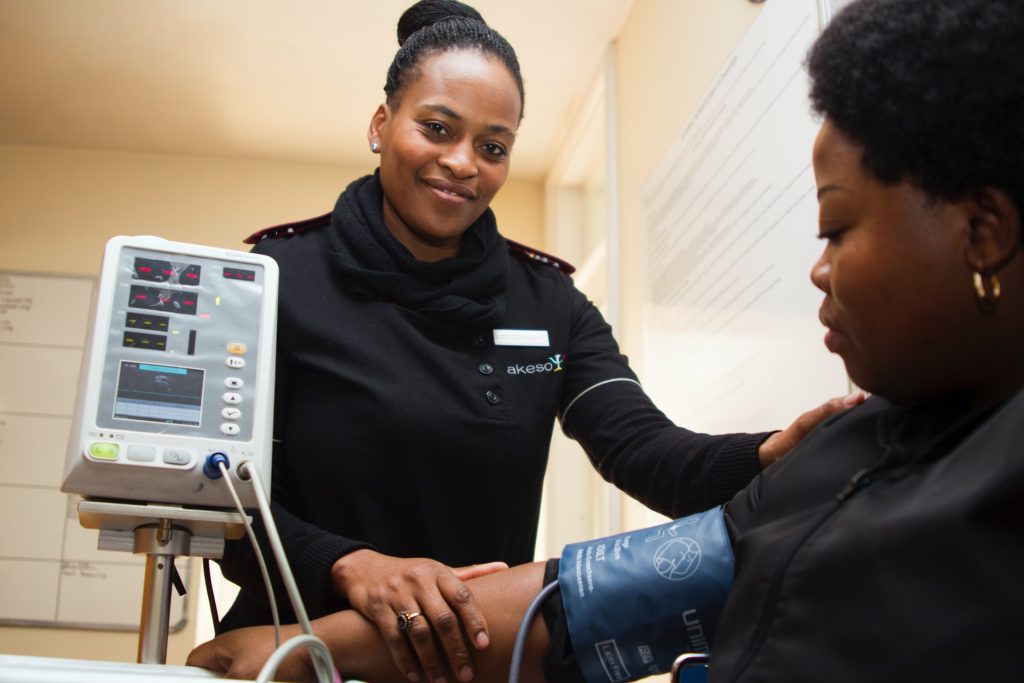
Rensburg believes more community health workers should be hired, and their training should be standardised to improve rural health care. “We need to professionalise them because it’s an opportunity to create employment in parts of the country with low economic activity,” he said.
According to Rensburg, other interventions that could improve rural health care could include cutting queuing times, improving antenatal care, and making maternity care easier to access. Pregnant mothers can wait up to 14 hours to access a bed.
Access to better management data would help in the better running of facilities. “I think the first baseline into improving healthcare is getting more people to understand their health status. And I think how we do that is being much more focused on gathering information. And then using that information for decision-making,” Rensburg said.
However, improving the well-being of South Africans living in the rural parts of the country goes beyond what the health sector can offer. “So maybe something like a Basic Income Grant could have a massive impact on people’s health, particularly in the rural areas where unemployment is 90%.” The basic income grant could help reduce malnutrition, Rensburg adds.
What could influence rural health soon is NHI. “I think the NHI is an opportunity to change how we deliver healthcare,” said Rensburg. “But when you look at the NHI proposals, it was about restructuring public-funded health care services. The whole thing talks about how we better manage hospitals by giving them their budgets.” Rensburg adds that restructuring publicly funded services, prioritising district health services, and improving the efficiency and efficacy of central, tertiary and regional hospitals by giving them greater autonomy should also be considered key to improving rural health.
This podcast, which is part of a series that aims at creating critical discussion around achieving universal health care, can be accessed at https://hasa.co.za/hasa-podcasts/
Nomantu Nkomo-Ralehoko is sworn in by Judge Lebogang Modiba as the new MEC for Health. (Photo: Gauteng Provincial Government)
By Ufrieda Ho
ANC support in Gauteng dipped below 40% in the recent provincial elections and an ANC-led minority government is now at the helm. Among those in Premier Panyaza Lesufi’s new Cabinet is Nomantu Nkomo-Ralehoko who’s been reappointed as MEC for Health and Wellness.
Nomantu Nkomo-Ralehoko was first appointed Gauteng’s MEC for Health and Wellness in October 2022. A long-time ANC member, she previously served as MEC for Finance and e-Government and has been a member of the provincial legislature since 1999.
She returns to the critical role at a time when the province’s health department, based on extensive reporting by Spotlight and other publications, remains mired in a chronic cycle of administrative and service delivery dysfunction.
At just under R65 billion for the current financial year, the department gets a massive slice of the Gauteng budget. While the National Department of Health leads on health policy, the day-to-day running of public healthcare services is managed by provincial departments of health.
The Gauteng health department has a high number of vacancies. On the administrative side this includes the critical position of a chief financial officer (CFO). The previous CFO, Lerato Madyo, was suspended in August 2022. Her case is still to be concluded. Research conducted last year by community healthcare monitoring group Ritshidze found that the majority of healthcare facility staff and public healthcare users that they surveyed felt that healthcare facilities were understaffed.
Madyo’s case is connected to ongoing investigations into corruption at Tembisa Hospital undertaken by the Special Investigating Unit. This was also the issue that whistle-blower Babita Deokaran was investigating before she was assassinated in August 2021. Deokaran was acting chief finance director before she was killed. Since her death it’s been confirmed that there was corrupt spending to the tune of R1bn at Tembisa Hospital.
When Nkomo-Ralehoko answered 10 questions from Spotlight shortly after her appointment in 2022, she said: “One of my immediate focus areas is to ensure that the department’s systems across delivery areas such as Finance, Human Resources, Monitoring and Evaluation, Risk Management, etc. are strengthened so that processes are not dependent on human vulnerability but there are clear checks and balances. An environment that has no consequence management breeds ill-discipline and a culture of ignoring processes and procedures as prescribed in our legislative framework.”
Gauteng also faces mounting surgery and oncology treatment backlogs. Its clunky supply chains and procurement systems have often left suppliers unpaid and facilities struggling without basic medical consumables as well as not being able to procure large pieces of equipment when it’s been needed. Some hospitals have had periods when patients have had to go without food.
There remains questions about governance capacity in the department. Notable examples from Nkomo-Ralehoko’s tenure so far include inaction over utilising a March 2023 Gauteng Treasury allocation of R784 million for outsourcing radiation oncology services. These ring-fenced funds were secured following sustained pressure and protests by activists and civil society. To date, this money has still not been spent.
The department is also still to implement a June 2022 memorandum of agreement with the University of Witwatersrand. The agreement sets a framework for the department and the university to mutually address many of the health sector challenges in the province, while ensuring the academic training of the next generation of doctors takes place.
Another key challenge for Nkomo-Ralehoko will be how to navigate a changed Gauteng Provincial Legislature in this seventh administration. There is no outright majority and there is no unity government deal that includes the largest opposition party, the Democratic Alliance (DA). This will represent distinct hurdles for passing budgets or garnering enough votes for approvals in the house.
Despite these challenges, the reappointment of 58-year-old Nkomo-Ralehoko is being welcomed by some. They say that she brings stability to a portfolio that has been plagued by shaky, short-lived tenures in the top role. They say she has a flexible leadership style, and that she is open to working with many different stakeholders. But her critics charge that she cannot deliver the overhaul that the department needs and that she has not been tough enough on corruption.
‘More of the same’
Jack Bloom is the DA shadow minister for health in Gauteng. He says: “I don’t think the present MEC deserves to be reappointed, but that’s for the ruling party to determine. What we will get going forward is more of the same. The Gauteng Department of Health needs wholesale change but it’s not going to happen under the present situation.”
Bloom says Nkomo-Ralehoko’s comeback is “cadre deployment and political protection” and he adds: “I’m afraid that the corruption is across the board and the looting is going to continue.”
He says the MEC slow-walked disciplinary action on many suspended senior staffers and has also failed to tighten up on the likes of pre-employment checks on would-be employees, resulting, he says, in weak candidates being appointed.
The EFF is the third largest party in the Gauteng legislature. Nkululeko Dunga was contacted to weigh in on Nkomo-Ralehoko’s reappointment but he declined to take our calls and didn’t respond to written questions.
‘Delays that cost lives’
Speaking briefly to news channel eNCA after she signed her oath of office on 3 July, Nkomo-Ralehoko mentioned oncology and radiation services as one of her priority areas. She referred specifically to the building of bunker-like facilities in order to house specialist cancer treatment equipment procured for Chris Hani Baragwanath Hospital and George Mukhari Hospital.
However, for Salome Meyer of the Cancer Alliance, the fact that equipment has been procured but is sitting in storage amounts to delays that cost lives. She says there are currently 3 000 patients in the province on waiting lists for cancer treatment.
“Our facilities are operational but they aren’t operating at full capacity because the equipment is not in use or we don’t have staff to operate the equipment,” Meyer says.
“What we’re seeing is resignation after resignation of radiation therapists because they aren’t on the correct pay grade. So even when we do get equipment there is not enough people to operate the equipment.
“The MEC has to start looking after her own people – the people who work in our clinics and hospitals,” she says.
‘Ensuring stability’
For the Democratic Nursing Organisation of South Africa (Denosa) in Gauteng though, Nkomo-Ralehoko has used her 20 months in the MEC role so far to start making the right turnarounds for the health department.
Bongani Mazibuko of the nursing association says: “We believe that this welcome appointment of the MEC will go a long way in ensuring that there’s stability in the department and it’s something that Denosa has long been calling for”.
Lack of stability has been a feature of Gauteng health over the last decade or so. When Nkomo-Ralehoko was appointed in 2022, she replaced Nomathemba Mokgethi, who had been in the job for less than two years. Prior to Mokgethi, Bandile Masuku was also in the position for less than two years. Gwen Ramokgopa filled in for a bit more than two years, and before her, Qedani Mahlangu was forced to resign after the Life Esidemeni tragedy.
Denosa in Gauteng also call for the finalisation of CEO appointments and for senior management posts to be filled. They also say fixing of infrastructure is critical “so that the department can be more functional”.
Mazibuko adds: “We need to ensure that appointment of nurses is prioritised as they are the backbone of the system. But we have faith that we can continue working together to ensure that the people of Gauteng get the health that they deserve.”
Right direction, but needs to act on corruption
Treatment Action Campaign Gauteng chairperson Monwabisi Mbasa also supports Nkomo-Ralehoko’s reappointment. He says compared to her predecessors, Nkomo-Ralehoko has so far been someone they feel they can work with.
“We have seen that in the past nearly two years the MEC has been trying to address some issues plaguing public healthcare at provincial, district and clinic level. She is hands-on and flexible, so we have confidence in her still,” Mbasa says.
But Mbasa says she must be held to account on not taking “drastic action against corruption”. He says 26 of Gauteng’s 37 public hospitals have in recent times run out of food but Nkomo-Ralehoko’s intervention included using suppliers and service providers who were not properly registered. He says it is a red flag and they will continue to hold the MEC to account.
Mbasa says to move forward now for health in the province will require alignment of the health department with the departments of infrastructure and development and of finance.
“Infrastructure of our health facilities is an emergency. We are also calling for the improvement of supply chain management and procurement of goods and services and we need to improve human resources.
“There are challenges and weakness in the Cabinet but it’s good that we are not working with completely new people in these portfolios. This is the time to accelerate and to ensure that we use the seventh administration to improve the delivery of public health,” Mbasa says.
After long and tense talks, negotiations with the DA to form part of the provincial executive deadlocked. This resulted in Premier Panyaza Lesufi naming a Cabinet with seven MEC positions for the ANC and one each to the PA, IFP and Rise Mzansi.
In some respects, Dr Aaron Motsoaledi was the right person for the job when he was appointed as South Africa’s Minister of Health in 2009. But in 2024, the healthcare context in the country looks very different. Spotlight editor Marcus Low asks what we might expect from this new chapter with Motsoaledi in the top health job.
When Dr Aaron Motsoaledi first became South Africa’s Minister of Health in 2009, the number one task in front of him was clear. He had to rapidly expand the country’s HIV testing and treatment programme.
Over the next decade, he did exactly that. When he left the health portfolio in 2019, there were around 5.1 million people on HIV treatment in the country – roughly six times the 850 000 there were in 2009. Driven largely by this expansion in the HIV treatment programme, life expectancy in the country increased from 58.4 years when he started to 64.9 when he left.
But while Motsoaledi largely succeeded on HIV and tuberculosis, there was a sense that he was not a details man and struggled to see through important health system reforms. He never got on top of fundamental challenges like healthcare worker shortages and poor governance in provincial health departments. That is why we were cautiously optimistic when Motsoaledi was replaced by Dr Zweli Mkhize in 2019. We thought it likely that Mkhize would be better at turning rhetoric into actual reform. As it turned out, any hopes of that happening were derailed first by the COVID-19 pandemic, and then more definitively by the Digital Vibes scandal.
The return
In a recent editorial considering possible health ministers after South Africa’s 2024 national elections, we argued that President Cyril Ramaphosa might feel that he can get more out of Motsoaledi back in the health portfolio than at home affairs, where we think it is fair to say he struggled. Even so, hearing Ramaphosa read out Motsoaledi’s name on Sunday night came as a surprise. Our money was on Dr Joe Phaahla staying in the job – as it turns out, he was demoted to again serve as Deputy Minister of Health.
What to make of all of it?
From one perspective, Motsoaledi’s return is understandable. He is a close and loyal ally of Ramaphosa and therefore someone the President would want to keep in his Cabinet. He is a medical doctor who knows the health portfolio. He is a staunch supporter of National Health Insurance (NHI) and his impassioned leadership style is probably considered an asset by the President.
If one considers the Health Minister’s number one task to be the implementation of NHI, and if one sees the implementation of NHI to be an essentially political process, then you can see a case for Motsoaledi’s return.
But even if one accepts this line of argument, it does come with some kinks that are hard to straighten out. For one, the NHI Act is now law and the political battle has thus, to some extent, already been won, and it is time to move from the broad strokes of political rhetoric, that Motsoaledi excels at, to the detail of implementation, which hasn’t been his strong point. And, to the extent that the political battle surrounding NHI has been reopened due to the ANC losing its parliamentary majority, the type of leadership required now will involve building consensus beyond just the ANC, and arguably more challenging for Motsoaledi, making strategic concessions such as allowing a greater role for medical schemes than envisaged in the NHI Act.
But all that only really matters if one accepts the premise that implementing NHI should be the top priority for the Minister of Health.
There is an argument that implementing NHI will take many years and there are much more urgent healthcare issues that need to be dealt with right away. The harsh reality is that provincial health budgets have been shrinking, healthcare worker shortages remain acute, governance in provincial health departments is often a disgrace, and health sector corruption remains a far from solved problem.
During his previous stint as health minister, Motsoaledi faced many of these problems and, while he often said the right things, the bluster wasn’t ever really backed up with a sustained programme of reform. To be sure, there were important successes like the establishment of the Office of Health Standards Compliance and attempts to revitalise health facilities, but when it comes to the fundamentals of having a well-managed healthcare system with enough healthcare workers, the picture was bleak when he left the health ministry in 2019 and it remains so today. In short, there is a view, only reinforced by his struggles at home affairs, that Motsoaledi is not the right person to have in charge if you want to implement the complex, systemic reforms required to sustainably address South Africa’s urgent healthcare problems.
That may be a bit harsh. Ministers are after all politicians and their roles are meant to be political. While it certainly helps to have ministers who are serious about, and committed to the details of implementation, they should be working in conjunction with government departments and directors-general (DGs) in particular. It certainly hasn’t helped our Health Ministers that our National Department of Health has often been overstretched and arguably lacking in strong leadership.
One underlying problem here is that over the last two decades, South Africa’s DGs and heads of provincial government departments for that matter, have too often been yes-men or people appointed as a political favour. While that may in some ways make a minister or MEC’s life easier, it does not make for good governance when a DG or a head of department is a walk-over. Ministers need to lead on policy, but have DGs and deputy DGs who are trusted and empowered to get on with implementation.
One criticism of Motsoaledi’s previous stint in the job is that even though he had a good DG in Precious Matsoso and a few decent deputy DGs, rather than shield them from the political crises of the day, he drew them into those crises. One expert we spoke to this week suggests that Motsoaledi loved the limelight and wouldn’t let others lead while another charged him with not being hands-on enough – maybe the key insight is that those things might all have been true to some extent.
Either way, given Motsoaledi’s strengths and weaknesses and the very complex health challenges South Africa faces, it is now more important than ever that as Minister he leads on political and policy matters, but gives the actual administration the space to lead on implementation. For that to work, he will need a DG who is not just another politician or cadre, but one who is an excellent manager and implementer, and maybe above all, who has the guts to say “no minister” when he or she needs to.
*Low is editor of Spotlight.
Note: Spotlight is editorially independent and is not affiliated with, nor does it endorse any political parties. Spotlight is a member of the South African Press Council.
Non-profit organisations whose funding by the Gauteng Department of Social Development has been withdrawn say they are being unfairly punished for “frivolous” and “flimsy” findings made by forensic auditors.
Among the organisations concerned are women’s shelters, drug rehabilitation centres and organisations that provide meals and social work services to homeless people. Many say they have no choice but to scale down their services and even close their doors.
Only seven in-patient drug rehabilitation centres, out of 13 that received funding last year, will be receiving funds for the first two quarters of this financial year, the department confirmed to GroundUp on Wednesday. Six rehabs are under investigation, the department said.
A manager at a children’s home told GroundUp earlier this week that they had to send a teenager struggling with substance use disorder back to their family because there were no state-funded in-patient drug rehabilitation centres available in the West Rand.
Forensic auditors were appointed by the department in 2023 to probe allegations of maladministration and fraud in the non-profit sector. The department’s budget for non-profit organisations is R1.9-billion for 2024/25, but Gauteng premier Panyaza Lesufi has promised it will be increased to R2.4-billion. Fourteen department officials have been suspended based on findings of forensic audits, the department has said.
The forensic audits were supported by outgoing MEC Mbali Hlophe. Hlophe has claimed several times that non-profit organisations in the province were “stealing from the poor” and that there has been extensive corruption in the sector.
A report provided by the department to the Gauteng Care Crisis Committee last week, on the orders of the Gauteng High Court, contains a list of 53 organisations that are under investigation, out of several hundred funded by the department.
Among the organisations on the list are Daracorp and Beauty Hub which received millions of rands in subsidies for training, while others have had their budgets cut.
But while organisations such as these have received large amounts of funding under questionable circumstances, the department has not provided evidence that this applies to all organisations on the list.
In May, almost two months into the new financial year, organisations flagged in the investigations started receiving letters informing them that they would not receive funding due to the findings made by the auditors. Some only received the letters in June.
When they requested clarity from the department, some received details in writing. But others were only given reasons for the suspension of their funding during a meeting with the department’s lawyers on Wednesday.
GroundUp spoke to representatives of five organisations who attended Wednesday’s meeting. They said the findings they were presented with on Wednesday were minor issues that should have been picked up by the department’s own monitoring and evaluation teams and would have been quickly resolved. They said they did not understand why a forensic audit was necessary.
The organisations have not received any funding from the department since the end of the financial year in March, and are battling to keep going.
“Flimsy and frivolous”
Derick Matthews, CEO of the Freedom Recovery Centre, which until March was funded for 52 beds for in-patient drug rehabilitation, told GroundUp that the allegations against the centre are “flimsy” and “frivolous”.
Matthews was told at Wednesday’s meeting that Freedom Recovery Centre had not submitted audited financial statements for 2022. GroundUp has seen evidence that he submitted the audited financial statements.
Matthews said the department had never before raised concerns about the organisation’s compliance with legislation. He said every quarter the department’s monitoring and evaluation officials would check the centre’s financial statements and that no concerns had ever been raised.
The auditors also found a “high turnover of security personnel” at Freedom Recovery Centre which was causing “instability in the organisation”. Matthews explained that this was because the security staff are employed from the centre’s skills development programme, through which a person who has been sober for a year works for three to six months at the centre.
“They are paid salaries from DSD funding. Our security is not working directly with the residents so they cannot impact the stability of the centre,” Matthews said.
The third finding against Freedom Recovery Centre was that staff members were being given “loans”. Matthews explained that sometimes when the department paid subsidies late, the centre would pay part of staff salaries from the tuck shop’s funds, which would later be deducted from their salaries.
Matthews says that they are in the process of discharging their last state-funded patients. “Both government-funded centres that we have been told to send people to during this crisis are full, they can’t help us. In the last week, I’ve received about 12 phone calls of people that needed urgent help and we can’t even help or intervene,” he said.
Representatives of other organisations GroundUp spoke to had similar concerns about the findings against them but did not want to be named for fear of victimisation.
They also raised concerns that their meeting on Wednesday was with only one department official and the department’s lawyers, while the organisations themselves did not have lawyers present.
They were told they have until Monday to provide evidence to dispute the allegations against them.
At the meeting on Saturday convened by Gauteng Premier Panyaza Lesufi, it was agreed that the organisations would receive an interim service-level agreement from the department by Monday, which would be finalised once the organisations were cleared. But not one organisation GroundUp spoke to has received an interim service-level agreement. Then on Wednesday they were told they will receive the agreements next week.
One organisation under investigation, Child Welfare Tshwane, was finally paid by the department last week after Gauteng High Court Judge Ingrid Opperman issued a directive that the organisation be paid to prevent harm to the beneficiaries.
GroundUp sent detailed questions to the Gauteng Department of Social Development, but we were told that the department will not be responding to media queries relating to the non-profit sector until further notice.
Is complementing in-person care with virtual care (hybrid care) a key part of the answer to South Africa’s NHI aspirations, asks Deon Bührs, Managing Director of Genie Health SA, who suggests that technology is the ‘unreasonable man’ in complementing decent universal healthcare and that self-empowerment is the only solution to sustainable wellness.
“The reasonable man adapts himself to the world: the unreasonable one persists in trying to adapt the world to himself. Therefore all progress depends on the unreasonable man.”
George Bernard Shaw
There is a school of thought that a young democracy can benefit from a well-considered blend of socialism and capitalism, particularly when it comes to healthcare and education. I would second that, to a degree. That South Africa requires a more equitable health system goes without saying though, as the apparent disparity and divisions between the haves and have nots is ever widening.
The status of our public healthcare system and the spiralling costs of the private offering need to find parity. A sad situation indeed, because at one stage, South Africa had one of the best public health sectors in the world, where groundbreaking heart transplants, for example, were done.
To the question of universal healthcare then. If it means that universal healthcare is a fundamental human right that everyone should aspire to, then it’s a yes, the NHI is essential. It should not be a matter of political affiliation, and let’s be clear, there is already healthcare for all in South Africa, through the public health system, free at the point of care for those who cannot afford care. But it is the quality of this care, and the effective management of these services that lie in stark contrast to that of the private healthcare system.
Signed in literally at the 11th hour before the country went to general elections, the National Health Insurance (NHI) bill is a polarising topic for many. The massive cost of providing a functioning NHI as per the bill, has been estimated conservatively at more than R200 billion a year, while some estimate closer to R1 trillion. With an already strained tax base, we must adopt new thinking as to how to deliver healthcare in a cost sensitive and effective way.
To my mind, one of the most effective ways of ensuring there is universal care that works, is recognising and supporting the role the patient plays in empowering their own health, recovery and wellness journey. They appear, however, to have been forgotten in the conversation that is the NHI bill to date.
For me, in its current guise, the NHI will unfortunately not bridge the quality divide. In fact, if we are not careful and if we do not find common ground, and hold government and the private sector to account, our entire healthcare system could well be in danger of failing – completely.
The unreasonable man test – laying the groundwork for new ways of healthcare delivery
Although expediently signed into law with little regard to comments or concerns raised from many sectors including health and business, the NHI does lay the groundwork for new ways of delivering healthcare and sets the scene for changing the mindset from the current sick-care system mentality to one of a patient-empowered HEALTHcare system.
Change must happen, but the extent of that change often depends on what Irish playwright and political activist, George Bernard Shaw, once stated as: “The reasonable man adapts himself to the world: the unreasonable one persists in trying to adapt the world to himself. Therefore all progress depends on the unreasonable man.”
At present, Prof Nicholas Crisp who has been tasked with helming the delivery of the NHI, could be seen as Shaw’s “unreasonable man” in his efforts to equalise and deliver universal healthcare. Ensuring that the lever of technology is utilised in an effective way is critical though, to ensure that we don’t try and replicate previous perceived successes, and not move forwards.
With a challenged healthcare system, both public and private, we are called to not give up hope, but to lean into the solution, and at the same time, avoid a defensive posture of that which only served the few. I believe that these circumstances force us to innovate, and to seriously consider new ways of providing healthcare for all. It should be seen as an exciting time of just where we can push the future of healthcare.
For instance, we already know that a traditional healthcare delivery system, with its associated costs and accessibility challenges for those living in remote parts of our country just won’t cut it. But unlocking technology as the new delivery channel of healthcare complimented by affordable and fast internet, could well be the solution to cracking the code of healthcare for all.
Through technology we can drive the patient-centric approach to health and open the door for patients to more easily access the multi-disciplinary team of healthcare professionals they need.
The best of both worlds – prevention, and when required, recovery
An example of doing things differently, is a new approach to musculoskeletal health that has been facilitated by digital transformation, and which is finding growing adoption in South Africa. With objective improvements in patient outcomes, satisfaction scores and recovery times, virtual care teams can support patients through their recovery programmes, ensuring improved compliance and ownership of their health journey. And empowering patients to embrace exercise and activity over surgery and pharmaceuticals where appropriate, has a dramatic impact on the overall healthcare spend.
Imagine patients having the choice to access a multi-disciplinary team of experts anywhere in the country – from the comfort and convenience of their own home or workplace, all at the tips of their fingers. No need to be transported to a clinic or hospital every time they need healthcare services. This is entirely possible, with platforms like Genie Health, that provide a hybrid approach in complimenting in-person care with virtual care.
NHI needs a strong front loader like these hybrid platforms that provide the full range of allied healthcare services, to reduce the burden of care and cost on an already strained system, by reducing unnecessary hospital admissions, surgeries, medication and travel costs and allowing for the existing framework to be brought up to date and even surpass expectations.
With ICASA reporting over 75% of the population having Internet access in South Africa and more than 90% smartphone penetration, pressure on Mobile Network Operators to provide zero rated data for healthcare applications (as they have done in education and other areas) mounts.
If measures like this can be implemented, they will have a tremendous impact on reducing the burden on the existing healthcare system through a self-health-empowered approach, with the backing of a full clinical team on the ready to assist the patient.
The ultimate question is how do we make healthcare more affordable and accessible to all South Africans, which is the core aim of the NHI?
The answer – we need to renew our focus on the key stakeholder, our patients – and empower them to drive their own health, by using technology as the backbone for sustainable wellness. It could well be, that with a renewed mindset and health-empowered citizens, the NHI is the true gamechanger for progress in HEALTHcare that we all need.
While cancer survivors are increasing in countries like the United States, South Africa faces a different reality, with 4000 people dying from blood cancer every year. Dr Sharlene Parasnath, Head of the Department of Clinical Haematology and Stem Cell Transplant Unit at Inkosi Albert Luthuli Central Hospital and DKMS Africa board member, believes that this discrepancy is largely due to the quality of care provided to patients who rely on the state healthcare system.
Counting the costs
She explains that South Africa’s state sector relies predominantly on conventional chemotherapy to treat patients as opposed to newer targeted immunotherapies. “These may be accessible to some patients in the private sector and standard care in developed countries but are out of reach for public healthcare due to their unaffordability. Countries that use more targeted therapies not only improve overall survival but also decrease the undesirable adverse effects of cancer treatments. These therapies may be given with chemotherapy or on their own and work by attacking specific genetic mutations in cancer cells. Examples include monoclonal antibodies (MABs) and Bispecific T cell engagers (BiTES), which mimic the immune system to destroy cancer cells. There are also tyrosine kinase inhibitors (TKIs) which block the signals that promote cancer cell growth.”
“The prohibitive costs of these treatments are why stem cell transplants are being encouraged in South Africa since they offer those with blood cancers a chance of a cure,” points out Dr Parasnath. “However, this approach comes with challenges. For instance, the state will not pay for a transplant from an unrelated donor, despite two thirds of patients in need of a transplant being unable to find a suitable donor from within their family.”
Fewer nurses, fewer transplants
“Human resource constraints, particularly the shortage of specialist nurses, is another factor hindering more stem cell transplants from being carried out,” she notes. “Currently, there is no formalised training for nurses in haematology in South Africa. So, what tends to happen is that the majority of blood cancer patients end up being cared for either by oncology-trained nurses or registered general nurses with limited practical education and training in the kind of care they require. Important aspects of nursing which can improve patient outcomes include dietary restrictions, visitor guidelines, decreasing bleeding risk, infection control and early detection of potential complications such as graft rejection, graft vs. host disease and veno-occlusive disease that can develop following a stem cell transplant.”
She stresses that human resource constraints in terms of mental health support is also detrimental to patients with blood cancers. “Unfortunately, this tends to be the case both in the public and private sectors, as one out of three people diagnosed with cancer ends up struggling with a mental health disorder such as anxiety or depression as well, yet less than 10% of patients are referred to seek help. The South African Society of Psychiatrists has even warned that if left untreated or undiagnosed, this could impact the patient’s ability to function on a daily basis, including undergoing treatment.”
Dr Parasnath emphasises another glaring gap in mental health support. “NGOs offer on-site social workers for hospitalised children with blood cancer, but adults, especially those who are not members of medical aid schemes, often have no options available to them. Not only do they grapple with the emotional toll of their diagnosis and treatment side effects, but this is further complicated by anxieties around their finances and the wellbeing of their children.”
The Cancer Association of South Africa’s (CANSA) Fact Sheet on Cancer and Mental Health highlights that there remains a huge unmet need for mental health in cancer care, calling for more effective clinical integration of relevant services, which must be informed by patient choice and clinical need, and accessible throughout the patient’s whole cancer journey. It also stresses the need for measurement of patient quality of life as a marker of treatment effectiveness.
“The Department of Health must recognise clinical haematology as a discipline in its own right with its own unique needs. For too long, it has had to feed off of the limited oncology budget. But if we are to up the blood cancer survival rate, funding must be provided for necessities such as more modern treatments, unrelated stem cell transplantation and formalised training of nurses,” says Dr Parasnath.
She also urges South Africans to increase the pool of available stem cell donors either by registering themselves or supporting organisations like DKMS Africa which connects patients with potential matches by providing access to a global registry of over 12 million donors. Financial donations directly address two critical needs: funding the registration of new donors and assisting patients facing financial challenges as a result of the transplant process.”
“With focused efforts, South Africa can join the global trend of increasing blood cancer survival rates, offering a brighter future for patients and their families,” concludes Dr Parasnath.
Despite the promise of Universal Health Coverage (UHC) for all, the recent signing of the NHI Bill has brought with it several misconceptions around medical schemes that undermine the very foundation of our healthcare system, writes Dr Katlego Mothudi, Managing Director at the Board of Healthcare Funders (BHF).
In a historic move aimed at transforming the South African healthcare landscape, President Cyril Ramaphosa signed the National Health Insurance (NHI) Bill into law. This landmark decision promises to move South Africa towards Universal Health Coverage (UHC) for all citizens, regardless of socio-economic status.
While the goal of UHC is commendable, the rhetoric leading up to the NHI Act’s announcement has created misconceptions about the role of medical schemes.
With many believing that they should cancel their memberships immediately to enjoy free health services for the foreseeable future. However, Dr Katlego Mothudi clarifies that the implementation of NHI will take several years, dispelling this misconception.
The NHI Act introduces a single-payer system, central to the idea is that healthcare is a ‘public good’, suggesting all healthcare funding should exclude medical schemes, and should be government-funded. Dr Mothudi counters that healthcare is more accurately described as a social good. A public good, like military services, is one that the government must provide and from which no one can be excluded, regardless of payment. While healthcare is essential, it is not feasible to provide it as a public good.
The Board of Healthcare Funders (BHF), concerned about the numerous misconceptions propagated by government representatives since 2009, commissioned Professor Alex van den Heever, Chair of Social Security Systems Administration and Management Studies at Wits Health Consortium, to investigate these claims. Despite their hyperbolic nature and lack of systematic research, these statements have significant weight due to their endorsement by influential individuals. Prof van den Heever’s report identified frequently repeated assertions that he concluded were unsubstantiated and untrue.
Key Findings from the Report:
1. Medical Schemes are Unsustainable – False
In 2009, claims suggested that many medical schemes were headed for collapse due to unsustainable financing models, with 18 schemes reportedly nearing insolvency. Prof van den Heever’s report refutes this, showing stability in medical schemes from 2005 to 2022. The number of beneficiaries increased by over one million from 2009 to 2022, with consolidated reserves of R114 billion in 2022, far exceeding the required 25% reserve ratio. Broker costs have not been a systemic concern, and total non-health costs per average beneficiary per month for all medical schemes decreased by 34.7% in real terms from 2005 to 2020.
2. Health Services are a Public Good – False
In 2011, Health Minister Aaron Motsoaledi claimed that private healthcare was a “brutal system” due to commercialisation. However, Prof. van den Heever clarified that healthcare is not a public good in the economic sense, as it does not meet the criteria of being jointly consumed without exclusion. Healthcare is a crucial service but providing it as a public good is not feasible.
3. Most Medical Scheme Beneficiaries are White – False
Last year, Prof Olive Shisana, an honorary professor at the University of Cape Town and special advisor to President Ramaphosa, stated that the private sector predominantly serves the privileged white population. However, Statistics South Africa’s 2021 research indicates that of the total population utilising private healthcare services, 50.2% are Black African, 32.3% are White, 9.8% are Coloured, and 7.6% are Indian/Asian.
Need for Balanced Perspectives
While the BHF supports healthcare reform, it raises concerns about the NHI Act’s constitutionality and calls for a factual review of claims about medical schemes. It is crucial to present both sides of the debate to understand the implications fully. Including government perspectives and addressing how the NHI will affect individual citizens would provide a more comprehensive view.
Medical schemes remain a valuable national asset that plays a crucial role in ensuring the long-term viability of South Africa’s healthcare ecosystem. BHF advocates for a balanced approach to healthcare reform that considers both public and private sectors’ strengths and weaknesses.
The Gauteng Department of Social Development has decided to defund more than half of its existing capacity for inpatient drug rehabilitation in the province.
The department funded 571 beds in 13 non-profit organisations in the 2023/24 financial year, but at least five organisations, with 246 of these beds, will not be funded in the 2024/25 financial year.
The five organisations to be defunded – Westview Clinic Empilweni Treatment Centre, Golden Harvest Treatment Centre, Freedom Recovery Centre and Jamela Rehabilitation Centre – have been providing inpatient treatment for several years, but they have not received subsidies since the end of the last financial year.
Organisations GroundUp spoke to said they received letters from the department in the past few weeks informing them that they would not receive funding due to ongoing investigations. But they had not been told why they are under investigation, they said.
Representatives of FSG Africa, a forensic auditing firm appointed by the department, briefly visited some of the centres earlier this year, but the centres received no feedback on the progress or outcome of these investigations.
The auditors spent less than two hours at most of the facilities, asking only a few questions before leaving, the organisations said.
The organisations said they are yet to receive a report on the findings of the investigations. Queries they sent to the department have gone unanswered.
In previous years, the funding process was managed at a regional level, but this financial year it was centralised, cutting out the regional officials who would usually be in direct contact with the organisations. This has caused catastrophic delays.
Several of the organisations have been operating without departmental funding since March, depleting their savings and taking on debt, and having to short-pay staff salaries.
The department’s spokesperson Themba Gadebe confirmed to GroundUp that the organisations are under investigation, but did not provide details on the allegations.
In October 2022, Premier Panyaza Lesufi said treatment for substance abuse disorder was a priority. Yet the department has decided to defund beds in treatment centres without a clear plan to replace the lost capacity.
Gadebe said the department’s state-owned facility in Cullinan, near Pretoria, which has 288 beds, is undergoing renovation to increase its capacity. But he did not provide further details or timelines for completion.
Sedibeng’s only inpatient centres face closure
The only two drug rehabilitation centres with an inpatient programme in the Sedibeng region of Gauteng, with 116 funded beds between them, will be defunded this financial year.
One of these, Freedom Recovery Centre, was funded last year for 52 of its 94 beds (the remainder are for private patients). CEO Derick Matthews says when they received the department’s letter on 23 May “our world came crashing down”. What shocked him most was that there had been no warning that funding would stop.
Freedom Recovery Centre received a visit from the forensic auditors in March, who spent just two hours at the centre. They asked to see vehicles that the centre had supposedly received from the department.
“I was shocked by this request because we have never received vehicles from the department. But the auditor said that, according to their list, we had received vehicles from the department,” said Matthews.
“We are being punished for something. But we don’t even know what our transgression is,” he said.
On Monday, Freedom Recovery Centre began the process of discharging patients who were nearing the end of their treatment plans, as they can no longer afford to care for or feed them.
“We’ve had to take out loans for the past few months because of the delays in finalising service-level agreements and paying subsidies,” said Matthews. The centre has racked up more than R2-million in debt.
“Our staff are entering the third month of working without pay. Eskom is going to cut our electricity some time this week, because we are in arrears, and then we won’t even have water, because we rely on electricity to pump our boreholes. There are no funds left to keep the centre going,” said Matthews.
He said the centre will have no choice but to close completely in the coming weeks.
The other inpatient programme in the Sedibeng region, Jamela Recovery Centre, funded for 64 beds in 2023/24, faces a similar fate. CEO George Sibanda said they were relying on food donations from community members to feed their patients.
“We have been fully funded by the department since 2018 and our services are offered at no cost,” Sibanda said.
“We always had a backlog of patients. Our waiting list is sitting at 60 people so we were relieved when the department informed us that we would be getting additional beds in March this year. But what we don’t understand is how we must now provide a service to those patients if the department is not funding us this year?” said Sibanda.
Jamela also received a visit from the forensic auditors in March.
Despite not receiving any subsidies this financial year, Sibanda said the centre has been operating at full capacity.
“The department continued to refer people to us and we couldn’t turn them away,” he said.
Social workers at the centre have had to use their own money to pay for petrol for the centre’s car, which they use for outreach programmes.
Department spokesperson Themba Gadebe said that the closure of both centres in Sedibeng was not a concern as “the department prefers the placement of individuals within inpatient facilities far from where they reside, to limit the risk of them checking out or being contacted by those within their substance use networks.”
By month end, South Africa will have a new Minister of Health. Ufrieda Ho asked some academics and activists what qualities that person should have to tackle the key health issues the country faces.
The precise health minister South Africa needs right now may not exist. But the portfolio still demands that the person appointed to this critical position be up to the job.
The appointment, when it happens, will come against a radically shifted political backdrop. Firstly, the elections results of the May 29 point to a coalition government for the first time in 30 years of democracy. The final configurations of a likely government of national unity is still anyone’s guess. And secondly, the National Health Insurance (NHI) bill is now an Act. President Cyril Ramaphosa signed off on the bill just a fortnight before the elections. It means by law, the work on the advancement of NHI must begin even as the contentions and contestations remain as thorny as ever.
Another reason why getting the right person matters is the money that comes with the portfolio. Annual government spending on health is in the region of R270 billion. Most of this spend is currently directed via provincial health departments, but flows under NHI will be nationalised and the NHI Act gives the minister extensive powers over NHI, and indirectly, the NHI fund.
At the same time, problems like entrenched health sector corruption and high levels of medico-legal claims against the state remain acute. Health budgets have been shrinking in real terms over the last decade. Financial shortfalls and shortages of healthcare workers in our health facilities are dire, while health needs enlarge.
Bridging ideological divides
Fatima Hassan, a human rights lawyer and founder of the Health Justice Initiative, says: “Policymaking in a coalition government is going to be so difficult – a Herculean task. And the place where you’re going to feel it most acutely is in health, because we have a dual health system and because NHI is sitting on the table.”
She says the role of minister will call for an astute politician. She says: “It must be someone who can work with different parties as well as constituencies in different sectors to try to bridge a number of these ideological divides.
“Health is a lightning rod for the differences between the different political parties; we saw this in how the parties campaigned for or against NHI,” she says.
Hassan says the worst case scenario will be someone in the position who is a “placeholder minister” who stalls on reforms, is a person more concerned with “calming the markets” and someone who will simply play the political long game waiting it out until the next elections.
“It must be someone who is able to work on creating a fairer system for access to proper healthcare services across the country, not just in specific provinces. They must invest in health infrastructure, invest in human resources for health, and invest in some of the more positive aspects of preparing for national health insurance,” she says. She adds that the person must prioritise fixing the “glaring issues in the NHI Act” to avert looming law suits.
In addition, Hassan says the minister must be someone who can stand up to the bullying of private sector power, including the likes of big pharma, and must be able to show leadership on domestic health issues while also being a strong Global South voice on international platforms to champion global health equity.
‘Health is more than a biomedical response’
Professor Scott Drimie is a researcher at the University of Stellenbosch and director of the Southern African Food Lab. Drimie works on food systems and food security and how these intersect with the social determinants of health.
For Drimie, South Africa’s health minister must be a person with an expansive leadership style; a person who is able to work across government departments and also be awake to the grassroots realities people face. Around 85% of people in South Africa rely on public healthcare.
“The minister must be able to grapple with the lived reality of most poor people and put in place a health system that supports the most vulnerable.
At the same time, that person should be someone who understands that health is more than a biomedical response – health is also issues like food security, sanitation, stable livelihoods and safety,” he says.
Another quality Drimie highlights is that the minister should be open to collaboration and experimentation. He says there has to be a “whole-of-government” approach and a “whole-of-society” approach. The Department of Health cannot achieve its key performance indicators on its own; it needs to collaborate with departments including social development, education and basic education.
“It must also be able to be bold with programmes and work with communities directly as well as with civil society, health advocates and health activists,” he says.
Reform of bureaucracies in the health department must also be something the minister tackles, Drimie says. He says it means appointing effective managers who are not micro-managed or politically influenced. Effective implementers of policies and programme, he says, can be a counterweight to politics.
“Politicians can come with very short-term, very narrow party politics,” says Drimie. But, he adds, enduring and relevant health programmes survive beyond political tenure and are more likely to achieve positive health outcomes.
Put people first and ‘show humility’
For activist Anele Yawa, who is secretary general of the Treatment Action Campaign, we need someone who puts people first. He says the minister must serve the interests of people and show humility for the office.
“The minister must not be someone who pushes his or her agenda. A minister is appointed; he or she did not submit a CV to us. So a minister must understand that there will be times when we as citizens and civil society will disagree with them. It’s because we will continue to speak truth to power, we will continue to hold them accountable; whatever the new coalitions will look like,” he says.
“Our ministers must not be arrogant and think it’s because we hate them. We will disagree and we will fight because it is an effort to make sure that things are done the right way and we can bring health services to the majority – it’s that person who is working class, black and is a woman,” says Yawa.
He says it means a strong minister must be one who maintains an open-door policy; who arrives at community meetings in person; take calls personally and engages.
Yawa says it’s also critical that the seventh administration is one that works cohesively. “We voted on the 29 May for a contractual agreement with government; not a fashion show. It means that we don’t just need a good health minister, we need a good administration that delivers on water and sanitation, on education and on social development, and so on.”
Motivate and inspire
Professor Lucy Gilson is head of health policy and systems division in the School of Public Health at the University of Cape Town. Her top qualities for a good minister also centre on people skills. She says the health minister in South Africa must be an inspiring leader.
“The person must be able to motivate health workers and managers to be the best public servants they can be.
“The person must also inspire the public to trust in the public health sector,” Gilson says.
The new health minister must have strategic management skills, she says. These will be necessary to navigate the complexity of power and interests in a coalition government and to figure out how the NHI will take shape.
In the end, she says the person in the post should have patience and persistence. She adds: “Bringing change to the health system is a collective and sustained effort over time. The minister must be able to strengthen capacity, assemble coalitions and networks of learning, experience and mutual accountability.”
On 13 April 2024,the South African Health Products Regulatory Authority (SAHPRA) initiated a precautionary recall of two batches of Benylin Paediatric Syrup (batch numbers 329303 and 329304), in response to reported high levels of diethylene glycol in an alert by the Nigerian National Agency for Food and Drug Administration and Control (NAFDAC). The recall was implemented as a precaution to protect lives while SAHPRA investigated the reported high levels of diethylene glycol.
As the national regulatory authority for health products in South Africa, SAHPRA implements health product recalls as a crucial measure to address safety concerns or quality issues in the interest of public health.
As part of the investigation of the reported high levels of diethylene glycol, SAHPRA tested samples of the two affected batches of Benylin Paediatric syrup through an independent laboratory and a method developed by the World Health Organisation for testing products for the presence of diethylene glycol. The tests did not find traces of diethylene glycol in the recalled batches. This indicates that units of batches 329303 and 329304 that were stored at the required temperature would not contain unacceptable levels of diethylene glycol.
SAHPRA also wishes to indicate that there is no record of any adverse drug reactions relating to diethylene glycol for the two recalled batches in South Africa or anywhere else where they were exported to on the continent.
SAHPRA is mandated to regulate and apply due diligence to health products to ensure that products in circulation in South Africa and those exported from SAHPRA-licensed manufacturers are safe for public consumption. SAHPRA applies this due diligence throughout the product life cycle, from registration through to post-market monitoring.
“SAHPRA will continue to closely monitor medical products that have the potential of containing unacceptable levels of diethylene glycol. And we will continue to address safety concerns or quality issues so that the health of the public is protected,” says SAHPRA CEO, Dr Boitumelo Semete-Makokotlela.