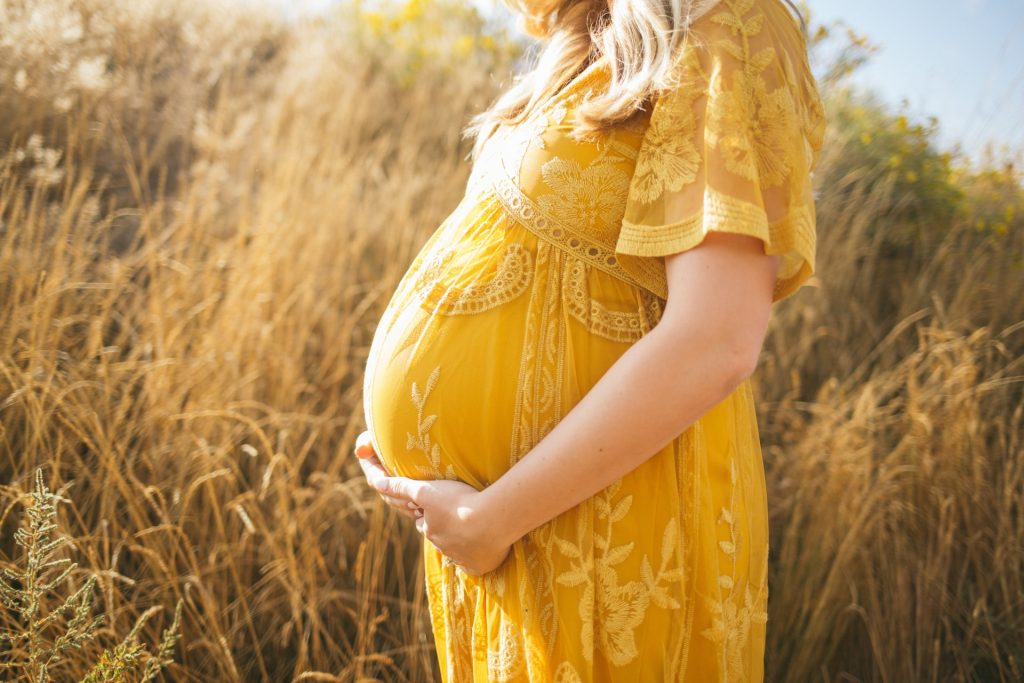
A study found no increases in preterm births or stillbirths during the first year of the COVID pandemic, which will help alleviate concerns around pregnancy and COVID. The large study of more than 2.4 million births in Ontario is published in CMAJ (Canadian Medical Association Journal).
Infection, inflammation, stress, medical or pregnancy-induced disorders, genetic predisposition, and environmental factors are risk factors for stillbirth and preterm birth, although in many instances the exact mechanism is not yet known.
During the COVID pandemic, reports emerged of declining rates of preterm births in countries such as the Netherlands, Ireland and the United States, while the United Kingdom, Italy, India while others reported increases in stillbirths and some variability in preterm birth rates. However, most studies were limited by their small size.
To identify a possible shift, the study researchers analysed Ontario births over an 18-year period and compared these trends in the prepandemic period (2002–2019) with the pandemic period (January to December 2020).
“We found no unusual changes in rates of preterm birth or stillbirth during the pandemic, which is reassuring,” said Dr Prakesh Shah, a paediatrician-in-chief at Sinai Health and professor at University of Toronto, Toronto, Ontario.
It is possible that measures related to the pandemic and compliance with them could affect preterm birth rates in different settings. Thus, the researchers examined birth outcomes in the public health units with higher SARS-CoV-2 positivity rates (Toronto, Peel Region, York Region and Ottawa), and also compared urban and rural births and those in neighbourhoods with different average income levels.
“In some areas and in certain people, the restrictions could be beneficial, and in other settings or individuals, restrictions could have the opposite effect,” said Dr Shah.
International studies are now underway to help understand the impact of COVID on pregnancy and childbirth around the globe.
The Japanese government, struggling to control its latest and largest COVID outbreak while maintaining the Olympic bubble, is turning to a new tactic — public shaming.
On Monday, Japan’s health ministry released the names of three people who broke COVID rules after returning from overseas. An official statement said that the three people, two returning from South Korea and one from Hawaii, had clearly acted to avoid contact with the authorities.
All three had negative virus tests on arrival at the airport but thereafter neglected to report their health condition and did not respond to location-monitoring apps or video calls from the health authorities.
In May, the Japanese government had said that about 100 people a day were flouting the border control rules, and warned that it would disclose the names of violators soon.
Japanese authorities are struggling to adapt their COVID response as caseloads surge to their highest levels of the pandemic and vaccinations continue to lag behind other wealthy nations. Public fatigue seems to be setting in from the on-and-off emergency measures the government has imposed in various cities.
And in the face of rising cases, the Japanese government failed to speed up its vaccination campaign. It has maintained that hosting the Olympics inside a tightly controlled bubble, with spectators and athletes isolated from the public, did risk exacerbating the outbreak.
While comparatively few infections have occurred inside the Games, totalling about 300 so far, some Japanese people say that seeing the Olympics held in Tokyo has encouraged them to relax against the virus. The first cases were reported on July 17, with two members of the South Africa soccer team testing positive despite having tested negative on their departure.
Yet the outbreak has continued to worsen. On Tuesday, officials said they had recorded more than 8300 daily cases across Japan, slightly down from the weekend’s record high of more than 10 000. A total of 3709 cases were reported in Tokyo, also slightly lower than previous days.
On Monday the government said that it would hospitalise only those with severe cases of COVID, to avoid increasing the strain on hospitals, suggesting that they are already starting to struggle with the influx of cases.
The South African Human Rights Commission (SAHRC) said that it had been inundated with complaints from people who claimed they had been pressured to get a COVID vaccination. These included tenants being threatened with eviction if they did not vaccinate.
Employees and tenants were not the only ones coming forward; companies had also approached the commission for guidance and clarification. The situation is something of a grey area for employers, according to the Department of Labour’s director-general Thobile Lamati.
“Can the employer then force the employees to take the vaccine? This is a very difficult question because we have different work places and different situations,” he said, adding that a worker could not be compelled to take a vaccine without the risks being explained to them.
On Friday morning, acting Health Minister Mmamaloko Kubayi-Ngubane reiterated that vaccination was purely voluntary and confirmed that employers were not allowed to force workers to get the jab.
Nevertheless, the government is encouraging all eligible South Africans to achieve herd immunity, and exit the cycle of waves and economically crippling lockdowns. However, inoculation has not been mandatory, with a target of around two-thirds of the population vaccinated. In a statement, President Cyril Ramaphosa said that only one in ten South Africans now believed that COVID vaccines were not safe.
The commission’s Buang Jones said they would also be examining the reasons given by some people refusing to receive vaccines.
“The reasons may range from medical, religious or other constitutional accounts. But complainants will be requested to take us through their reasoning and the team will be offering advice to those who have complained to the commission.”
Jones said that companies also voiced concerns about the negative impact that COVID had had on their finances.
“That they would like staff to be at work and ensure that the company functions optimally. Their concern is there will be increases in sick leave taken and it will affect production. They are also concerned about the rights of other employees to have chosen to take the vaccine.”
Three-quarters of COVID cases were among the vaccinated in an outbreak during large public gatherings at Cape Cod island in Massachusetts, USA, with the Delta variant predominating, researchers found. This helped reverse the official US recommendations on mask-wearing when fully vaccinated.
Of 469 cases linked to numerous summer events and large summer gatherings in a small town, 346 (74%) happened in fully vaccinated people, and almost 80% of those cases were symptomatic, reported Catherine Brown, DVM, of the Massachusetts Department of Public Health, and colleagues.
There were five hospitalisations, four among fully vaccinated people, and no deaths. Of 133 cases with sequence information available, 89% were from the Delta variant, the authors wrote in the Morbidity and Mortality Weekly Report.
Moreover, vaccination coverage in Massachusetts was reported to be 69% as of July 3, they noted.
The data on this outbreak, along with the Delta variant, reportedly motivated the Centers for Disease Contol’s change in indoor masking guidance earlier last week.
CDC Director Rochelle Walensky, MD, noted that “rapid receipt and review of unpublished data” contributed to the guideline change.
The authors found that RT-PCR cycle threshold (Ct) values in vaccinated and unvaccinated people were comparable. Pointing to these high viral loads among the vaccinated in this case, Dr Walensky said it suggested that vaccinated individuals infected with Delta could still transmit the virus.
“This finding is concerning and was a pivotal discovery leading to CDC’s updated mask recommendation,” she said, saying it was “updated to ensure the vaccinated public would not unknowingly transmit virus to others, including their unvaccinated or immunocompromised loved ones.”
The authors detailed increased reports of COVID cases in Barnstable County, beginning on July 10, including those who were fully vaccinated. Many COVID patients reported attending large indoor and outdoor gatherings.
They identified a cluster of cases, 346 of them fully vaccinated, in Massachusetts residents, who tested COVID positive 14 days or sooner after travel to or staying in Barnstable County.
Cases were also reported from residents of other states who traveled to this town during the period, and reports of secondary transmission.
The authors urged stricter prevention measures at such events, given, “the potential risk of infection during attendance at large public gatherings that include travelers from many areas with differing levels of transmission.”
Journal information: Brown CM, et al “Outbreak of SARS-CoV-2 Infections, Including COVID-19 Vaccine Breakthrough Infections, Associated with Large Public Gatherings – Barnstable County, Massachusetts, July 2021” MMWR 2021; Published July 30, 2021.
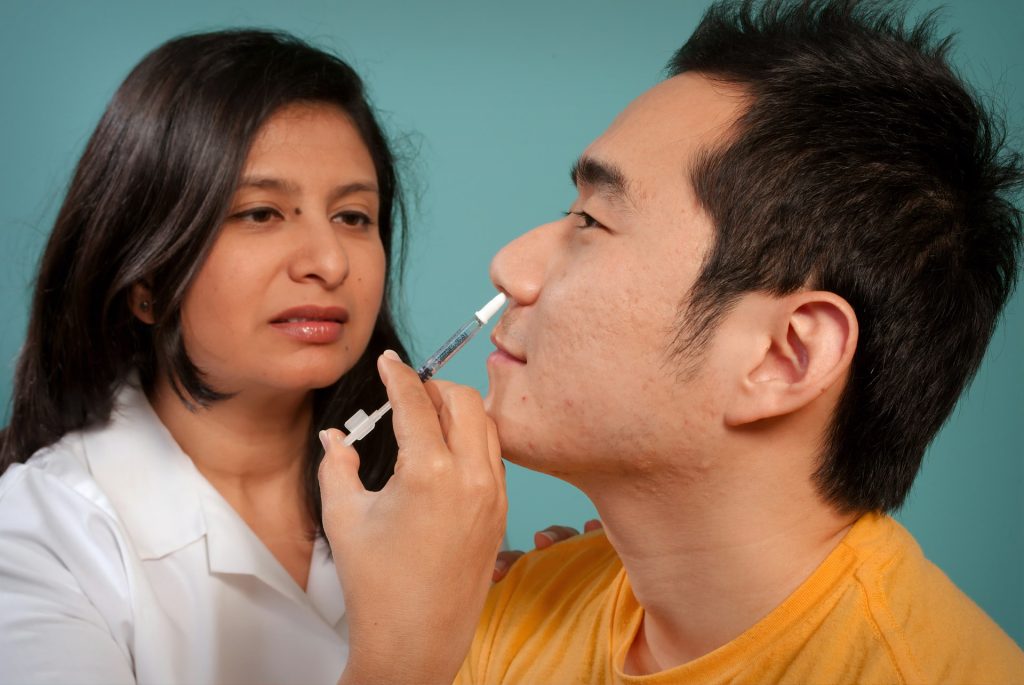
A multi-institutional team of researchers has found that administering the AstraZeneca COVID vaccine intranasally to infected hamsters and monkeys reduced viral loads in nasal swabs, suggesting reduced shedding.
The group describes the testing they conducted with COVID-infected animals and the possible implications of their work, in their paper published in the journal Science Translational Medicine.
Another COVID surge is occurring in a number of countries where vaccinations are readily available, likely due to the arrival of new variants and wide resistance to the vaccinations. Breakthrough infections have been reported in vaccinated individuals. These has resulted in renewed calls for mask-wearing, even in vaccinated individuals. This is because it is not yet clear if vaccinated people can infect other people, even if they have no symptoms. In this new effort, the researchers suggest that adding intranasal inoculation to vaccination efforts might help.
Currently, the vast majority of vaccines developed and in use are intramuscular, given via shots in the arm. Recently, a team at the University of Alabama noted that an intranasal administration of COVID vaccines would seem to make more sense, since COVID is a disease of the nose, throat and lungs. In this new study, the researchers have given an already existing COVID vaccine intranasally to test animals with COVID to see what would happen.
They found that intranasal administration of the AstraZeneca vaccine to infected hamsters and monkeys led to lowered viral loads on nasal swabs, indicating that intranasal administration reduces viral shedding and thereby transmissibility of the virus.
Unfortunately, prior research has also shown that vaccines given intranasally confer immunity for a shorter period of time than intramuscular vaccination. Thus, as the team in Alabama noted, the best approach might turn out to be a combination of a shot in the arm along with a puff of mist up the nose to confer both short-term and long-term protection.
The evolutionary traits of the Lambda variant, giving it both greater transmissibility and immune escape abilities make it possibly the most dangerous variant so far, according to a new study published on the bioRxiv preprint server.
Mutations present in the Spike (S) protein seen in many variants of concern (VOCs) and variants of interest (VOI) allow them to be resistant to the neutralising antibodies (NAbs) from COVID vaccination or infection.
The Lambda variant is predominantly spreading in South American countries. According to the Global Initiative on Sharing All Influenza Data (GISAID) database, the Lambda variant has been reported in 26 countries worldwide. Chile, despite its vaccination rate of 60% saw a surge in COVID cases due to the Lambda variant, due to its immune escape capability.
Lambda variant’s evolutionary traits
In this study, which is awaiting peer review as a preprint, the researchers reported that insertion of the N246-253RSYLTPGD mutation in the NTD of the Lambda S protein is associated with the increased virulence. This mutation is responsible for the rapid spread of the Lambda variant in the Southern American countries.
The authors of this study have indicated two of the critical virological features of the Lambda variant, namely, a) resistance to viral-induced immune responses due to the RSYLTPGD246- 253N, L452Q, and F490S mutations and b) enhancement in transmissibility due to the T76I and L452Q mutations.
This study found that the Lambda S is more resistant to the vaccine-induced antisera compared to the Lambda+N246-253RSYLTPGD S derivative. Another key finding is that RSYLTPGD246-253N mutation overlaps with a component of the NTD “supersite” indicating that it is the immunodominant site. Mutation of this site has therefore enabled the Lambda variant to escape immunity conferred by COVID vaccination.
The comparative study between the parental D614G S strain and the Lambda variant has shown significantly higher infectivity in the latter viral strain.
This study confirms other studies’ finding of increased infectivity of the Lambda, Delta and Epsilon variants is due to the L452Q/R mutation. However, higher infectivity does not guarantee a rapid spread, as seen with the Epsilon variant which failed to spread in the human population despite high infectivity.
This caused the to WHO drop it from the VOC/VOI classification on July 6, 2021. In order to understand if a variant would infect a large number of people, it is essential to determine if it has increased viral infectivity and evasion from the immune response. This study revealed that the Lambda variant possesses both these virological features.
Health experts are warning that even while the COVID vaccination programme is speeding up, with vaccinations passing the 7 million mark, a fourth wave of infections could still be possible before the Christmas holidays.
The government’s vaccine rollout has been long delayed, including a false start where one million doses of AstraZeneca vaccine were sold on due its inefficacy against the then-dominant Beta variant. Compounded with vaccine hesitancy, it is only now that the vaccination programme is starting to gain ground. Still, many of these in the most vulnerable group are still awaiting their vaccinations.
Back in January, experts were already warning vaccination delays would result in a deadly third wave – a warning that proved all too true.
“It’s a concern to us and we have to get the herd immunity up as fast as possible, and we also have to protect the most vulnerable people in the community. And that’s why we started with the roll out to older people, and not enough have come forward and that’s why we are now messaging the younger population, please bring the elderly amongst your family and your friends, your community, for vaccination,” said Dr Nicholas Crisp of the Department of Health.
Last month, at the Moseneke inquiry into whether elections could be held under lockdown, Wits University vaccinologist Prof Shabir Madhi and the head of the SA National Aids Council, Dr Fareed Abdullah, also expected a fourth wave to arrive later in the year – putting paid to any election plans. The two experts both predicted a fourth wave in later October.
“The peaks are almost six months apart. We don’t know when exactly the third wave will peak, probably over the next few weeks, and we’ll see that six months regularity and if that continues, then we can expect a fourth wave a bit sooner than earlier suggested,” said Prof Madhi.
Professor Francois Venter, director of Ezintsha at Wits health sciences meanwhile, said he expected a fourth outbreak of the coronavirus could hit South Africa around November. Future COVID waves in South Africa hinge on the vaccine rollout – and who is being vaccinated is important, not just how many.
Meanwhile, the Western Cape is experiencing vaccine shortages as cases spike there. The province’s premier David Winde said in a statement: “The fact that there is such enthusiasm to get vaccinated is great news, but we understand it is also very frustrating when it is not possible to be vaccinated as soon as possible.
“The fact that the demand is far outstripping our current supplies means that we are experiencing pressures at some of our sites. We please ask for your patience and understanding.”
Results from a study of cases at Israel’s largest medical centre have shown that breakthrough COVID infection appears to be rare in vaccinated healthcare workers, though they still pose a further infection hazard. Breakthrough infections were correlated with neutralising antibody titres in the early days of infection, and were mild or asymptomatic.
The findings were published in the New England Journal of Medicine. Testing for symptomatic COVID as well as those who had been exposed to an infected person, out of 1497 healthcare workers, the researchers found 39 testing positive in PCR tests. The researchers also measured neutralising antibody titres of uninfected controls. Breakthrough infections were defined as testing positive for SARS-CoV-2 11 days after the second immunisation dose.
Of the 39 cases, 27 occurred in workers tested solely because of exposure to an infected person, 26 (67% of all cases) had mild symptoms at some stage, and none needed hospitalisation. The remaining 13 workers (33%) were asymptomatic. The researchers found that 85% of the 33 infections tested for variants of concern were caused by the Alpha variant.
Symptoms reported included upper respiratory congestion (36% of all cases), myalgia (28%) and loss of smell or taste (28%); fever or rigors were reported in 21%. On follow-up questioning, 31% reported having residual symptoms 14 days after diagnosis. Six weeks after their diagnosis, 19% reported having ‘long COVID’ symptoms. Nine workers (23%) took a leave of absence from work beyond the 10 days of required quarantine.
They discovered that neutralising antibody titres were lower than uninfected controls during the “peri-infection period”.
“Most important, we found that low titres of neutralising antibody and S-specific IgG antibody may serve as markers of breakthrough infection,” they said.
Most of the cases however had N gene Ct values, suggesting they had been infectious at some point, which likely would have gone unnoticed save for exposure screening, which means the vaccine protected them against symptomatic disease, but not infection.
“However, no secondary infections were traced back to any of the breakthrough cases, which supports the inference that these workers were less contagious than unvaccinated persons,” the researchers noted.
The study was limited, the researchers acknowledged, due to a small number of cases, the possibility of asymptomatic cases being missed, and the lack of generalisability from a younger, healthy population to the general populace.
The researchers concluded that in their study, they “found that although the BNT162b2 vaccine is extremely effective, rare breakthrough infections carry an infectious potential and create a special challenge, since such infections are often asymptomatic and may pose a risk to vulnerable populations.”
Journal information: Bergwerk M., et al. Covid-19 breakthrough infections in vaccinated health care workers, New England Journal of Medicine, 2021; DOI: 10.1056/NEJMoa2109072.
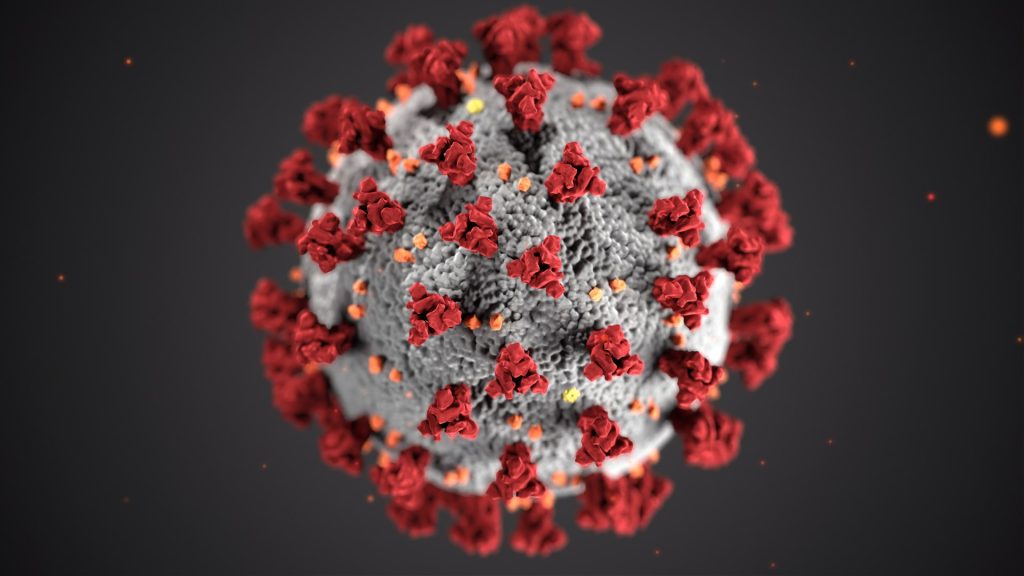
Infected cell covered with SARS-CoV-2 viruses (yellow). Source: NIAID
New research with monkeys reveals that primates do not need T cells for the recovery of from acute COVID infections.
T cell depletion was also found not to induce severe disease, and T cells do not explain the natural resistance of rhesus macaques to severe COVID. Furthermore, it was found that strongly T cell-depleted macaques still develop potent memory responses to a second infection.
The findings, published in mBio, an open-access journal of the American Society for Microbiology, have implications for the development of second-generation vaccines and therapeutics.
Lead study author Kim Hasenkrug, PhD, senior investigator in the Laboratory of Persistent Viral Diseases, National Institutes of Health, explained: “We started this study early in the pandemic, trying to figure out how to make a good model to study the disease in humans using animals. The monkeys turned out to be more resistant to the disease than we expected, so we wanted to try to figure out why that was and try to gain some insights into the disease in humans as well. We now know that the antibody response is the most critical response for protection by vaccination, not the T cell response.”
In the new study, the researchers used classic reagents known to deplete CD4+ and CD8+ T cells in rhesus macaques. CD8+ T cells attack infected cells and kill them, and CD4+ T cells are helper T cells that set off the immune response by recognising pathogens and secreting cytokines, which signal other immune cells to act, including CD8+ T cells and antibody-producing B cells.
One week after depleting the macaques of CD4+ T cells, CD8+ T cells, or both at the same time, the researchers infected the animals with SARS-CoV-2. “We depleted, we infected them and then we continued the depletions during the first week of infection to make sure the animals were well depleted. Then we studied their blood to see how they were responding in terms of their T cells and B cells,” said Hasenkrug. Nasal swabs and bronchoalveolar lavages were performed over six weeks to measure virus in the nose, mouth and lungs, along with rectal swabs to check for virus shedding in the gut. After six weeks, the monkeys were re-challenged with SARS-CoV-2 and virus and blood samples collected, which let the researchers evaluate immune memory responses. “If there is a memory response, you get a much quicker immune response and control of the virus. That is how vaccinations work. Once your body has seen a viral pathogen, the next time it sees it, you can get a much faster and stronger immune response,” said Dr Hasenkrug.
Unexpected response
Even with T cell depletion, the monkeys were still able to mount a good memory response against the virus. “We found we got really good memory responses regardless of whether we depleted T cells or not. Basically, we found very strong virus neutralising antibodies, and they are the most important antibodies in controlling the infection. That was unexpected by most immunologists, virologists and vaccinologists,” said Dr Hasenkrug.
“The other thing that happens during a memory response is that antibodies mature, becoming stronger and more potent at binding the viral pathogen. We saw indications of this through what’s called ‘class switching’,” said Dr Hasenkrug.
‘Class switching’ was also not expected in these monkeys with depleted T cells. “We don’t have a firm explanation as to why that happened, but we think it involves some sort of compensatory response, which you can see in our study. For example, when we depleted CD8+ T cells, we saw stronger CD4+ T cell or B cells responses in some animals. When the animals are missing something, they will try to make up for it by making more of something else.”
Dr Hasenkrug doesn’t know why the T cells turned out to be not very important, but this may be a good thing, since people who fail to mount sufficient T cell responses still have opportunities to recover.
“This implies that the innate immune response is critical for initial control of the virus, rather than the adaptive immune responses we studied,” said Hasenkrug.
Journal information: Hasenkrug, K.J., et al. (2021) Recovery from Acute SARS-CoV-2 Infection and Development of Anamnestic Immune Responses in T Cell-Depleted Rhesus Macaques. mBio. doi.org/10.1128/mBio.01503-21.
A study set to be published in the August issue of Social Science & Medicine found that Americans created over 175 000 COVID-related crowdfunding (CCF) campaigns in the first half of 2020, with many receiving no funding at all and campaigns in the most privileged areas receiving the most funding.
During the first year of the COVID crisis, many Americans turned to charitable crowdfunding for help with medical bills, funeral expenses, lost wages, small business support, food assistance, and other needs. CCF increased exponentially after March 2020 on platforms such as GoFundMe. Europe saw CCF focusing largely on support for medical facilities and workers, while the majority of US CCF aimed to support individuals, raising money for food, rent, funerals, and other expenses. In India, which only spends 1.2% of its GDP on healthcare, huge numbers of people are turning to crowdfunding in an attempt to cover costs caused by patchy medical insurance which often does not cover COVID-related illness, nor the significant outpatient costs.
According to GoFundMe CEO Tim Cadogan, the platform saw “unprecedented use,” in the first few months of the COVID pandemic, and crowdfunding “activity has persisted at an alarming rate” since then. Unlike most disasters, which generally have an acute phase of destruction followed by a recovery phase, the economic and health impacts of the pandemic are long-lasting, a trend reflected in the prolonged growth of CCF campaigns. Between March and August of 2020, GoFundMe reported that more than 150 000 CCF campaigns had been started.
Drawing on a large dataset of geo-tagged CCF campaigns started on GoFundMe between January 1 and July 31, 2020, researchers found a number of surprising results in their analysis. They found that the median campaign raised only $65 out of a $5000 goal, with a median of 2 donations. A striking 43.2% of CCFs received zero donations, with more than 90% not reaching their campaign goal. This is worse than reported in prior research; a 2017 study of medical campaigns found only 3.5% had no donations. Medical fundraising made up 18.3% of all CCF campaigns, and those indicating severe medical needs, with terms like “ICU”, received an average of 96 donations, and an average donation size of $197, while campaigns mentioning “rent” or “eviction” received an average of 23 donations, with an average size of $84. Campaigns seeking money for businesses or PPE fell between these extremes.
The researchers also noted that CCF campaigns are created most often in the highest-income areas, not those hardest hit by COVID. Previous research on charitable crowdfunding has shown that it exacerbates social inequities by providing financial relief primarily to privileged recipients. Previous economic and ecological crises have also been used by powerful individuals and institutions to serve their own interests, deepening inequities and health disparities during recovery.
“We find a significant disconnect between COVID- related needs, and the ability to adequately and equitably address them with crowdfunding. CCF campaigns face heightened competition, and steep inequalities between winners and losers,” the authors wrote. “Campaign success increasingly accrues among those with more social and economic capital.”
Journal information: Igra, M., Kenworthy, N., Luchsinger, C. and Jung, J., 2021. Crowdfunding as a response to COVID-19: Increasing inequities at a time of crisis. Social Science & Medicine, 282, p.114105.