Category: COVID

Second J&J Dose Needed for Delta Variant

Photo by Ivan Diaz on Unsplash

Johnson & Johnson’s COVID vaccine is much less effective against the Delta and Lambda variants than against the original wild-type virus, according to a new study posted on the BioRxiv preprint server on Tuesday.

Though a cause for concern, the results come from in vitro tests, and may not reflect the real world vaccine performance. However, the authors said this adds to evidence that the 13 million people inoculated with the J&J vaccine may need a second dose, preferably an mRNA vaccine, the authors said.
The findings, which are still to be peer reviewed, are however consistent with observations that a single dose of the AstraZeneca vaccine, which is similar to the J&J one, shows only about 33 percent efficacy against developing symptoms with the Delta variant.

“The message that we wanted to give was not that people shouldn’t get the J&J vaccine, but we hope that in the future, it will be boosted with either another dose of  J&J or a boost with Pfizer or Moderna,” said study leader Nathaniel Landau, a virologist at NYU’s Grossman School of Medicine.

Other experts said the results are what they would have expected, because all of the vaccines seem to work better when given in two doses. “I have always thought, and often said, that the  J&J vaccine is a two-dose vaccine,” said John Moore, a virologist at Weill Cornell Medicine in New York.

Dr Moore pointed to several studies in monkeys and people that have shown greater efficacy with two doses of the J&J vaccine, compared with one dose. The new study was particularly credible, he said, because it was published by a team not linked to any vaccine manufacturer.

But the data from the new study “do not speak to the full nature of immune protection,” said Seema Kumar, a spokeswoman for J&J. “Studies sponsored by the company indicate that the vaccine “generated strong, persistent activity against the rapidly spreading Delta variant,” she said.

The Delta variant is the most transmissible of the SARS-CoV-2 variants, and has become dominant in South Africa. 

Several studies have suggested that the mRNA vaccines made by Pfizer-BioNTech and Moderna will maintain their efficacy against the coronavirus, including all variants identified so far. One recent study showed, for example, that the vaccines trigger a persistent immune reaction in the body that may protect against the coronavirus for years. The J&J vaccine is newer, and has had fewer studies.

The J&J vaccine has had reports of rare blood clots and extremely rare neurological disorders, as well as problems with contamination at a US manufacturing plant. This is still not as bad as the disastrous news that the AstraZeneca vaccine was virtually ineffective against the Beta variant which was then the dominant strain in South Africa.

Small studies by J&J affiliated researchers suggested that the vaccine was only slightly less effective against the Delta variant than against the wild-type virus, and that antibodies stimulated by the vaccine grew in strength over eight months.

Dr Dan Barouch, a virologist at Beth Israel Deaconess Medical Center in Boston said it was important to consider the vaccine’s strength over time.

“Fundamentally I don’t see that there’s any discordance,” he said. “The question is that of kinetics, it’s not just magnitude, because immune responses are not static over time.” The new study also did not consider other components of immune defence, he added.

Dr Landau and his colleagues had compared blood samples taken from 17 people who had two doses of an mRNA vaccine and 10 who had one J&J vaccine dose.

The  J&J vaccine started out with a lower efficacy than the mRNA vaccines and showed a bigger drop in efficacy against the Delta and Lambda variants. “The lower baseline means that what’s left to counter Delta is very weak,” Dr Moore said. “That is a substantial concern.”

Very few vaccines are given as a single dose, because the second dose is needed to amp up antibody levels, noted Akiko Iwasaki, an immunologist at Yale University. People who were inoculated with the J&J vaccine “are relying on that primary response to maintain high levels of antibodies, which is difficult, especially against the variants,” she said.

Boosting immunity with a second dose should raise the antibody levels high enough to counter the variants, she said.

Source: New York Times

True COVID Toll in India Likely in the Millions

Photo by camilo jimenez on Unsplash

Excess deaths in India during the pandemic could be as much as 10 times the official COVID toll, likely making it modern India’s worst human tragedy, according to a new report.

report published by Arvind Subramanian, the Indian government’s former chief economic adviser, and two other researchers at the Center for Global Development and Harvard University, estimates that between 3.4 million and 4.7 million excess deaths have occurred in the country from January 2020 to June 2021.

The report said that the true toll was likely “an order of magnitude higher”, and the official count could have missed deaths with overwhelmed and disrupted healthcare systems, particularly during the devastating virus surge earlier this year. It also has recently come to light that the Indian government did not count any deaths due to a lack of oxygen.

The researchers from used three different data sources to estimate India’s excess all-cause mortality. They extrapolated death registrations from seven states, accounting for half of India’s population, but published data for annual mortality surveys are only available up to 2019. Second, the researchers applied international estimates of age-specific infection fatality rates to data from two countrywide antibody tests, also called sero surveys. Third, they looked at India’s thrice yearly consumer survey of 900 000 individuals, which also records deaths in households.

Taken together, the researchers arrived at an estimate of of 3.4 million to 4.7 million – about 10 times higher than India’s official COVID death toll of 414 000. This was also considerably higher than other estimates by epidemiologists, who estimated excess deaths were between five and seven times higher. Not all these deaths were caused by COVID and an estimation of the actual death toll by the disease would be difficult to give, said Subramanian. 

The data implied that four million people had died in the pandemic in India, according to Dr Subramanian.

“Two of our three estimates measure all-cause mortality and not COVID deaths. Our second measure is a bit closer to a number of [actual] COVID deaths, but it is only one of three estimates,” Dr Subramanian told the BBC.

The researchers also said that the first wave last year appeared to have been more lethal than what was popularly believed. Mortality only seemed to be moderate because it was “spread out in time and space”.

Dr Subramanian said one of the conclusions might be that “India has not been an outlier” and has had “mortality not dissimilar from countries of comparable size and infections”.

The researchers said the most “critical take-away, regardless of the sources and estimates”, was that actual deaths during the pandemic were “likely to be far greater than the official count”.

“The true deaths are likely to be in several millions, not hundreds of thousands, making this arguably India’s worst human tragedy since the partition and independence.” The 1947 Partition of the British-ruled Indian subcontinent into independent India and Pakistan resulted in up to 1 million people being killed in violence between Hindu and Muslim gangs.

Source: BBC News

Large Ivermectin Study Retracted Due to Data Problems Ethical Concerns

Photo by Markus Winkler on Unsplash

MedPage Today reports that a large ivermectin study has been retracted over concerns of plagiarism and serious problems with their raw data.

Michele Avissar-Whiting, PhD, editor-in-chief of the preprint server Research Square, wrote in a July 14 statement that the study was retracted “because we were presented with evidence of both plagiarism and anomalies in the dataset associated with the study, neither of which could reasonably be addressed by the author issuing a revised version of the paper.”

Dr Avissar-Whiting noted that the concerns were first raised by Jack Lawrence, a British medical student, according to The Guardian.

“Based on what Jack found, we have reason to believe the preprint’s conclusions are compromised, so the withdrawal was done to stop its propagation as sound science,” she said. “This is the strategy employed by a number of preprint servers, per best practice guidance.”

The 400-patient Egyptian trial, from Ahmed Elgazzar, MD, of Benha University, and colleagues, had been included in two recent meta-analyses (Bryant et al. and Hill et al.) which drew significant attention for their positive results — especially the much-anticipated Hill review. Two ivermectin proponent groups, the Front Line COVID-19 Critical Care Alliance (FLCCC) and the British Ivermectin Recommendation Development Group (BIRD), released a statement saying that removing the Algazzar data from the two studies did not change their overall positive result.

In an email to MedPage Today, lead author Andrew Hill, PhD, of the University of Liverpool in England, said  that his team will be “re-running our analysis with the Elgazzar trial removed.”

Dr Hill added that the analysis would also be updated with a recent 500-patient randomised controlled trial from Argentina, which found no effect for ivermectin in terms of preventing hospitalisation in patients with COVID. The study also fiend that patients receiving ivermectin required invasive ventilation sooner than those on placebo.

“In our published paper, we emphasised the preliminary nature of our results and the need to continue more definitive studies,” Hill wrote in his email.

The Elgazzar study’s main findings have already been cited by other publications: Hospitalised patients with COVID who were treated with ivermectin were 90% less likely to die than those who didn’t receive the drug. 

Lawrence had taken on an assignment for medical school which had prompted a deeper look at the paper, coming across plagiarism with entire paragraphs copied from other sources.

Additionally, the raw data, which can be purchased online, contradicted the study in several instances. Gideon Meyerowitz-Katz, an epidemiologist from the University of Wollongong in Australia, highlighted some of those discrepancies in a Medium post.

“For example, the study reports getting ethical approval and beginning on the 8th of June, 2020, but in the data file uploaded by the authors onto the website of the preprint fully 1/3 of the people who died from COVID were already dead when the researchers started to recruit their patients,” Meyerowitz-Katz wrote.

“Moreover, about 25% of the entire group of patients who were recruited for this supposedly prospective randomised trial appear to have been hospitalised before the study even started, which is either a mind-boggling breach of ethics or a very bad sign of potential fraud,” he continued.
Other phase III randomised clinical trials continue to investigate ivermectin for COVID such as the PRINCIPLE trial which seeks 1500 participants for its ivermectin arm.

Source: MedPage Today

A Report of Two Sequential Cases of Facial Palsy after COVID Vaccines

The case of a patient who experienced two facial palsies, both immediately after receiving the Pfizer-BioNTech vaccine, strongly suggests that they are linked to the vaccine, wrote in the journal BMJ Case Reports.

The case report of two separate unilateral facial nerve palsies, where muscles on one side of the face become weak or paralysed, occurring shortly after each dose of a COVID vaccine, is the first in medical literature.

“The occurrence of the episodes immediately after each vaccine dose strongly suggests that the Bell’s palsy was attributed to the Pfizer-BioNTech vaccine, although a causal relationship cannot be established,” the authors said.

Single episodes of unilateral facial nerve palsies were reported in the initial clinical trials of Pfizer-BioNTech, Moderna and Oxford/Astra Zeneca and there have been subsequent case reports.

In phase 3 trials, four cases of facial palsy of unknown cause (Bell’s palsy) were reported in volunteers who received the Pfizer-BioNTech mRNA vaccine and none in the placebo group, and three cases were reported in volunteers who received the Moderna mRNA vaccine compared with one in the placebo group. Three cases of facial nerve palsy were also reported in volunteers who received the Oxford/AstraZeneca vaccine, and there were three cases in the placebo group.

This case report describes a 61-year-old Caucasian male with no previous history of facial nerve palsy who experienced an episode of Bell’s palsy on the right side of his face five hours after receiving his first dose of the Pfizer-BioNTech vaccine, and a more severe episode of Bell’s palsy on the left side of his face two days after receiving the second dose. The patient had a high BMI, hypertension, hypercholesterolaemia and type 2 diabetes.

After the first episode, the patient went to the emergency department, with incomplete eye closure and no forehead movement and was diagnosed with Bell’s palsy. Blood tests and a CT head scan revealed no pathologies and he was discharged with a course of steroids, and the right-sided facial nerve palsy completely resolved.

Two days after his second shot, he developed a more severe left-sided facial nerve palsy. The symptoms included dribbling, difficulty swallowing and again, incomplete left eye closure. He went to the emergency department, where he was again prescribed a course of steroids. He was also referred to an emergency Ear Nose and Throat clinic, which continued the steroids and referred him to ophthalmology.

The authors reported that the patient is almost back to normal. “The patient has been advised to discuss future mRNA vaccines with the GP on a case-by-case basis, taking into account risk versus benefit of having each vaccine,” they said.

Bell’s palsy is believed to be related to facial nerve inflammation and oedema from viral infection. In 2004 the inactivated intranasal influenza vaccine was shown to significantly increase the risk of Bell’s palsy and was discontinued. Increased incidence of Bell’s palsy has also been seen following administration of other influenza and meningococcal vaccines. The annual incidence is 15 to 20 per 100 000 and the lifetime risk is 1 in 60, with an 8% to 12% recurrence rate.

While most cases of Bell’s palsy recover on their own over time, the symptoms can cause significant temporary disability, affecting facial expression and eating and drinking. Risk factors for the condition include diabetes, obesity, hypertension, pregnancy, pre-eclampsia and upper respiratory disease.

Source: EurekAlert!

Child Mask Study Which Reported High CO2 Levels Retracted

Photo by Kelly Sikkema on Unsplash

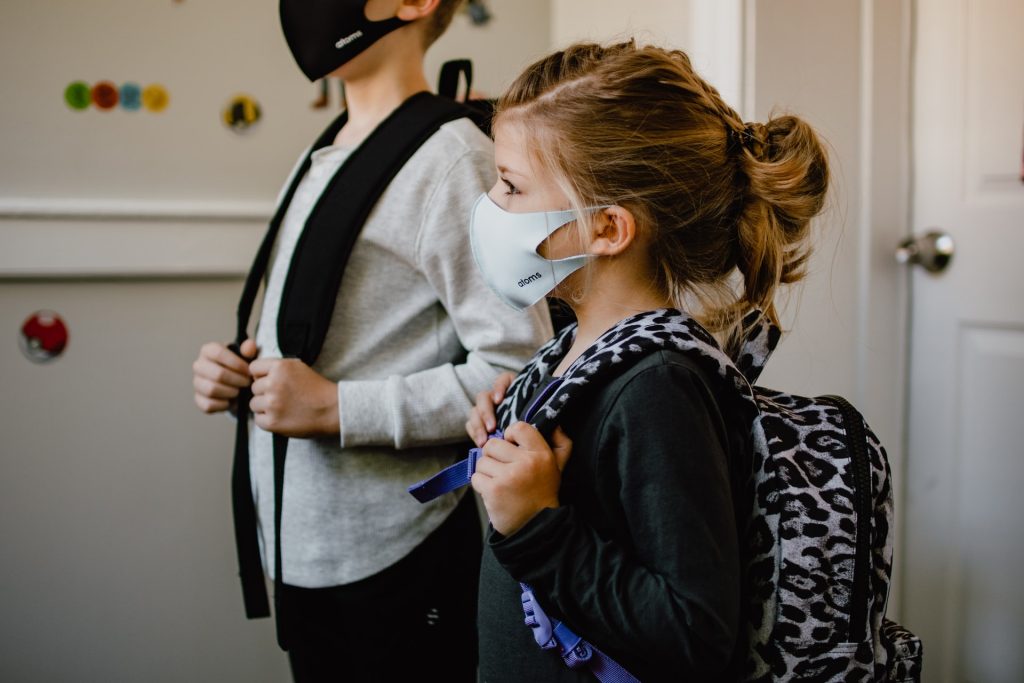
A study which generated controversy by suggesting that masks may harm children through exposure to high carbon dioxide levels was retracted on Friday.

The research letter released in JAMA Pediatrics on June 30 had reported finding in a lab environment unacceptably high levels of CO2 by German standards in air inside masks worn by children.

The journal editors cited “numerous scientific issues” in the retraction notice, which also included questions over the applicability of the CO2 measurement device and the validity of the study’s conclusions.

“In their invited responses to these and other concerns, the authors did not provide sufficiently convincing evidence to resolve these issues, as determined by editorial evaluation and additional scientific review,” the notice read. “Given fundamental concerns about the study methodology, uncertainty regarding the validity of the findings and conclusions, and the potential public health implications, the editors have retracted this Research Letter.”

The study drew prompt criticism following its publication. Joseph Allen, MPH, DSc, who studies the impact of carbon dioxide on human health at Harvard School of Public Health in Boston, described the study as “terribly flawed”, predicting its retraction on Twitter. He pointed out that the study made no account of the flood of air taken in when children inhale, his key complaint.

The US Centers for Disease Control do not list any known risk wearing facing masks poses to children, and in fact, recently recommended that unvaccinated children wear masks when school reopen later this year. A previous study with adult volunteers had shown short-term but acceptable rises in CO2 when wearing masks,

While many areas of the US have dropped mask mandates, Los Angeles is reinstating its indoor mask mandate regardless of vaccination status as COVID cases and hospitalisations rise, presumably due to the spread of the Delta variant.

Source: MedPage Today

First Olympic COVID Cases Among SA Soccer Team

Photo by Bryan Turner on Unsplash

Three members of the South African soccer team staying in the Olympic Village have tested positive for COVID just days before the Olympic opening ceremonies. They are also the first Olympic athletes who tested positive in the tightly-monitored athletes’ enclave along a Tokyo waterfront.

The South African team said in a July 17 statement that defender Thabiso Monyane, midfielder Kamohelo Mahlatsi, and Mario Masha, a video analyst on the coaching staff, had tested positive on the weekend. All South African players had tested negative when they departed for Tokyo on July 13. The entire South African football team is now under quarantine, raising doubts whether they’ll be cleared for their July 22 match against Japan.

Since the announcement, South African rugby Sevens coach Neil Powell as well as an unnamed member of the female US gymnastics team have also tested positive. Outside the athlete’s complex, positive results have been reported for South Korean IOC official Ryu Seung, an unnamed member of the Nigerian delegation, and an unnamed athlete.

Despite the country’s best efforts to contain the virus, COVID remains a big concern in Tokyo at the world’s largest sporting event, expected to draw about 11 000 athletes from 200 nations. The Tokyo Olympic Committee has introduced measures such as banning spectators at games, daily COVID screening for athletes, and limiting stays at the Olympic Village to seven days.

With Japan still under a state of emergency and the COVID delta variant spreading rapidly, many continue to appeal to the International Olympic Committee to cancel the games. But some experts said that at this point a cancellation would cost Japan $16.4 billion. It would also run the risk of being sued by the IOC for breach of contract.

Addressing the outbreaks in an effort to rally local support for the events, IOC president Thomas Bach said, “We are well aware of the skepticism a number of people have here in Japan,” he said. “My appeal to the Japanese people is to welcome the athletes for their competitions.”

Source: Quartz

Could Nutritional Supplements Play a Role in Fighting COVID?

Photo by Diana Polekhina on Unsplash

Researchers suggest that nutritional supplements such as Vitamin C do play a role in reinforcing the immune system against SARS-CoV-2.

An article in Advances in Experimental Medicine and Biology lays out the scientific rationale and possible benefits — as well as possible drawbacks — of several dietary supplements currently in clinical trials related to COVID-19 treatment. The article was written by Johns Hopkins Medicine gastroenterologist Gerard Mullin, MD, and colleagues.

Dr Mullin, associate professor of medicine at the Johns Hopkins University School of Medicine, and his colleagues shine a light on melatonin, vitamin C, vitamin D, zinc and several plant-based compounds, such as green tea and curcumin. For instance, the authors explained that vitamin C (ascorbic acid), “contributes to immune defense by supporting cell functions of both the innate and adaptive immune systems.”

The authors discuss in the journal article the mechanism of action of each of the supplements works, how each could benefit a patient with COVID.

Zinc is well tolerated, and well known for its antioxidant, anti-inflammatory, immunomodulatory, and antiviral activities, the latter possibly mediated by its ability to inhibit RNA virus replication, thereby protecting cells from viral infection, oxidative damage, and dysfunction. It has been shown “to inhibit coronavirus RNA replication.” They also noted that, when administered at symptom onset, zinc “can reduce the duration of symptoms from illness attributed to more innocuous coronavirus infections, such as the common cold.”

Finally, Dr Mullin and colleagues gave short summaries of the clinical trials underway to test each supplement’s effectiveness in fighting COVID.

Regarding Vitamin D, which has received a lot of attention with regard to COVID outcomes, Dr Mullin said that, “to date, there are abundant data associating low vitamin D status to higher vulnerability to COVID-19 and poor clinical outcomes.”

The authors however struck a note of caution in that “any benefit of dietary supplements against COVID-19 depends on results of randomised controlled trials” and peer-reviewed literature.

Source: John Hopkins Medicine

ImmunityBio COVID Booster Gets Go-ahead for South African Trials

Photo by Mufid Majnun on Unsplash

Immunotherapy company ImmunityBio has been authorised by the South Africa Health Products Regulatory Authority (SAHPRA) to proceed with the South Africa Sisonke T-Cell Universal Boost trial. 

The Phase 1/2/3 study, starting in the second third quarter of 2021, is designed to evaluate hAd5 Spike + Nucleocapsid (S+N) as a boost for South African healthcare workers previously vaccinated with an S (Spike)-only vaccine.

“With the virus continuing to spread, moving forward with this boost trial is crucial,” said Leonard Sender, MD, Chief Operating Officer of ImmunityBio. “We are encouraged by the preliminary safety findings in our ongoing Phase 1 studies in both the U.S. and South Africa. In addition, our U.S. data show that just a single prime subcutaneous vaccination with our COVID-19 vaccine candidate induces a 10-fold increase in T cell response—equivalent to T cell responses from patients previously infected with SARS-CoV-2. We have also shown that the T-cell responses are maintained against variants, which is critical to providing protection against this ever-changing virus.”

In the trial, the effect of combining vaccination by subcutaneous (SC) and sublingual (SL) routes will be assessed. This combination has the potential to deliver protection from the virus with a single injection followed by droplets placed under the tongue. Methods that do not require injection such as SL, intranasal, and oral capsule offer potential advantages depending on the participant’s needs or situation. Sublingual administration offers the most rapid absorption, while nasal spray or oral capsule delivery have the potential to provide mucosal immunity, which could reduce both the chance of infection and potential spread of the virus via the respiratory tract. The three non-injection formulations do not need a trained healthcare worker to administer them and are easier to transport and store. The SL and nasal routes of administration are also currently being tested in a separate Phase 1 trial in South Africa.

“The number of new cases in South Africa is frightening, particularly when you consider recent data suggesting currently available COVID-19 vaccines may not provide the immune memory needed to fend off infection from future variants. This highlights an urgent need for a boost dose that confers long-term protection by activating both antibodies and T cells, ” said Patrick Soon-Shiong, MD, Founder and Executive Chairman of ImmunityBio.

“Several peer-reviewed studies demonstrate that patients who have recovered from SARS-CoV in the 2003 outbreak possess long lasting memory T cells reactive to the nucleocapsid protein of SARS-CoV 17 years after infection. While antibodies block infection when present, T cells are vital for long-term immune memory. We are excited to begin this controlled, randomized trial of boosting a previously administered DNA-based viral vector vaccine with our own Ad5 dual-antigen S plus N vaccine to see if it can augment protection in participants who have received the S-based vaccine alone,” added Dr Soon-Shiong.

Source: BusinessWire

No Smoking Uptick in COVID Pandemic – Unlike Other Disasters

Photo by Elsa Olofsson on Unsplash


Unlike other population-level stressful events such as natural disasters, COVID has not resulted in a net increase in smoking, according to a new study from the International Tobacco Control (ITC) Project, at the University of Waterloo.

However, the researchers also found that although nearly half of smokers reported that COVID caused them to consider quitting, the vast majority of smokers did not change their smoking habits during the early phase of the COVID pandemic.

Stress is known to be a significant risk factor for smoking, especially in females. The study surveyed 6870 smokers and vapers in  Australia, Canada, England, and the United States between April and June 2020. The team investigated the association between COVID and thoughts about quitting smoking, changes in smoking, and factors related to positive changes such as attempting to quit or reducing smoking.

Only 1.1 per cent of smokers in the four countries attempted to quit and 14.2 percent reduced smoking, but this was offset by the 14.6 percent who increased smoking, with 70.2 percent reported no change.

“It is important to note that population-level stressful events, such as 9/11 and natural disasters, have often led to increased smoking,” said Geoffrey Fong, professor of psychology at Waterloo and principal investigator of the ITC Project. “So, our findings that there was no net increase in smoking in response to COVID may actually represent a positive result for public health.”

The study found that those who considered quitting smoking due to COVID were mostly females, ethnic minorities, those under financial stress, current vapers, less dependent smokers, those with greater concern about personal susceptibility of infection, and those who believed COVID is more severe for smokers.

According to study co-author Fong, this latter finding may explain why a significant uptick in smoking was seen in the COVID pandemic, compared to past tragedies.

“Unlike other population stressors such as earthquakes, which are unrelated to smoking, COVID severity is indeed linked to smoking,” Fong said. “Public health officials have mentioned the link as yet another reason for smokers to quit, and over 80 percent of smokers across the four countries believed that smoking made COVID more severe. And this led to the lack of an increase in smoking, unlike what we have seen after other tragedies.”

Source: EurekAlert!

Journal information: Gravely, S., et al. (2021) Smokers’ cognitive and behavioural reactions during the early phase of the COVID-19 pandemic: Findings from the 2020 ITC Four Country Smoking and Vaping Survey. PLOS ONE. doi.org/10.1371/journal.pone.0252427.

Heparin Benefit Seen in Moderately Ill COVID Patients

Photo by Marcelo Leal on Unsplash

New trial results show that early administration of the blood thinner heparin to moderately ill hospitalised COVID patients with could halt the thrombo-inflammation process, reducing the risk of severe disease and death.

COVID is characterised by inflammation and abnormal clotting in the blood vessels, especially the lungs, and is believed to contribute to progression to severe disease and death. 

The study is available as a preprint on MedRxiv and was led by investigators at St. Michael’s Hospital, a site of Unity Health Toronto, and the University of Vermont’s Larner College of Medicine.

Heparin, an anticoagulant, is indicated for both the prevention and treatment of thrombotic events such as deep vein thrombosis (DVT) and pulmonary embolism as well as atrial fibrillation. Heparin is also used to prevent excess coagulation during procedures such as cardiac surgery, extracorporeal circulation or dialysis. Heparin also has a wide range of off-label uses in hospitals. “This study was designed to detect a difference in the primary outcome that included ICU transfer, mechanical ventilation or death,” said study co-principal investigator  Mary Cushman, MD, MSc, professor of medicine at the UVM Larner College of Medicine.
The open-label randomised international multi-centre clinical RAPID Trial (also known as the RAPID COVID COAG – RAPID Trial) examined the benefits of administering a therapeutic full dose of heparin versus a prophylactic low dose to hospitalised patients with moderate COVID.

The primary outcome was a composite of ICU admission, mechanical ventilation, or death up to 28 days. Safety outcomes included major bleeding. Primary outcome occurred in 16.2% of patients with therapeutic full dose heparin, and 21.9% with low dose heparin (odds ratio [OR], 0.69). Four patients (1.8%) with therapeutic heparin died vs 7.6% with prophylactic heparin (OR, 0.22).

“While we found that therapeutic heparin didn’t statistically significantly lower incidence of the primary composite of death, mechanical ventilation or ICU admission compared with low dose heparin, the odds of all-cause death were significantly reduced by 78 percent with therapeutic heparin,” said first author and co-principal investigator Michelle Sholzberg, MDCM, MSc, Head of Division of Hematology-Oncology, medical director of the Coagulation Laboratory at St. Michael’s Hospital of Unity Health Toronto, and assistant professor at the University of Toronto.

Co-principal investigator Peter Jüni, MD, director of the Applied Health Research Centre (AHRC) at St. Michael’s, and professor of medicine at the University of Toronto, said that the researchers also presented a meta-analysis of randomised evidence (including data from a large multiplatform trial of ATTACC, ACTIV-4a and REMAP-CAP), which clearly indicated that therapeutic heparin is beneficial in moderately ill hospitalised COVID patients. He added that an additional meta-analysis presented in the preprint showed that therapeutic heparin is beneficial in moderately ill hospitalised patients but not in severely ill ICU patients.

Unusually, the RAPID Trial was funded through grassroots efforts from various institutions, grants and even a GoFundMe campaign.

“We called this trial ‘The Little Engine that Could,’ because of the sheer will of investigators around the world to conduct it,” said Cushman.

Sholzberg said, “We believe that the findings of our trial and the multiplatform trial taken together should result in a change in clinical practice for moderately ill ward patients with COVID.”

Source: University of Vermont

Journal information: Michelle Sholzberg et al, Heparin for Moderately Ill Patients with Covid-19, MedRxiv (2021). DOI: 10.1101/2021.07.08.21259351