MedPage Today investigates whether, according to some reports, there is in fact a difference in Delta symptoms compared to earlier variants.
Though hard data are lacking, ZOE study leader Tim Spector, MB, MSc, MD, of King’s College London, said his app’s data suggests the disease is “acting different now. It’s more like a bad cold in this younger population.”
Headache, followed by sore throat, runny nose, and fever were now the most common reported symptoms.
“All those are not the old classic symptoms,” Dr Spector said, adding that cough dropped to fifth place, and “we don’t even see loss of smell coming into the top 10 anymore. This variant seems to be working slightly differently.”
Dr Spector’s data however is only preliminary and comes from self-reports, and has not even been peer reviewed or published. However, other experts also have noticed a change in reported COVID symptoms.
One of those who has heard reports but is cautious about their interpretation is David Kimberlin, MD, a paediatric infectious diseases expert at the University of Alabama at Birmingham.
“I don’t think with what we know right now that we can conclude [Delta] is much different in terms of symptoms,” Dr Kimberlin told MedPage Today. “There have been some reports that it causes more cold-like illness, but so did the original COVID. I think we’ll know more over the next couple of months as we have the opportunity to realise the data.”
Purvi Parikh, MD, of NYU Langone in New York City and a spokesperson for the American College of Allergy, Asthma & Immunology, has also heard of COVID being mistaken for allergies, but allergies do not come with high fever, nausea, vomiting, or diarrhoea.
Other symptoms unlikely in allergy include myalgia and chills, said Alan Goldsobel, MD, of Allergy & Asthma Associates of Northern California, who is also a professor at Stanford University. Allergy indicators include the time of year (for those with seasonal allergy), as well as itching, he added.
Distinguishing COVID from common cold symptoms could be harder, Drs Parikh and Goldsobel noted.
“If you aren’t sure, I do recommend COVID testing,” Dr Parikh said.
In an article published in the South African Medical Journal, Shabir Madhi, Professor of Vaccinology at Wits, argues that COVID variants have made the initial goal of attaining herd immunity no longer feasible, even for well-resourced countries. However, vaccine protection against severe COVID seems a more realistic path to normalcy.
In low and middle income countries (LMICs), the official COVID case estimates are likely grossly underestimated, Prof Madhi writes, due to a lack of testing coverage. Even in South Africa, the true number of COVID cases is likely in the region of 10 times the 2.39 million recorded through testing. The true number of COVID-related deaths in India is also estimated as 3.4–3.9 million, again 10 times the official count, and in South Africa it is likely three times the official figure of 70 388 in July 2021.
While New Zealand researchers have suggested that COVID eradication is feasible, it is likely a very long term goal if at all attainable. The herd immunity goal can be considered with the equation (p1 = 1 – 1/R0), where p1 is the proportion of immune individuals who will also no longer transmit the virus, and R0 is the reproduction rate, ie the number of susceptible individuals a single infected person can further infect. However, this ignores key aspects of the virus.
The problem is that the proportion of people that would need to be immunised to achieve herd immunity was initially calculated at 67%, based on an assumed R0 of 3, derived from the Wuhan strain’s R0 of 2.5 to 4. However, the Delta variant has an R0 of 6, meaning that to reach herd immunity, 84% of the population would need to be vaccinated. In South Africa, this would be 100% of the population aged over 12.
The emergence of SARS-CoV-2 variants, especially the Beta variant with the E484K mutation, showed that existing vaccine protection, including the Pfizer variant, can be degraded to an extent.
Studies have strongly suggested that neutralising and antibody titers are associated with mild to moderate COVID protection, while protection from severe COVID may be mediated by T-cell immunity.
Real world data showed that in Israel, with a world best immunisation of 61.6% using the Pfizer vaccine which produces the greatest antibody response, herd immunity appeared to be successful until an outbreak of the more transmissible Delta variant combined with waning vaccine effectiveness.
However, in the UK, excess death data showed that, even with a resurgence of cases caused by the Delta variant, there was a significant decoupling of deaths from cases. This points to the effectiveness of vaccines in preventing severe illness, as opposed to reaching herd immunity.
Vaccine rollouts have therefore not interrupted COVID transmission. Prof Madhi concludes that, based on an estimated R0 of 6 for the Delta variant, “it is unlikely that any country could have a sustainable strategy for durable high level of protection against infection by the delta variant. Mutations of the SARS-CoV-2 genome are likely to continue resulting in enhanced transmissibility, infectiousness and resistance to neutralising activity.”
He observes that the “UK approach seemingly concedes that the goal of herd immunity, even in a highly resourced setting, is unattainable.”
He adds that aspiring to reach herd immunity by wealthy countries comes at the cost of exacerbating vaccine inequality, which he says “is immoral.” Antibody dynamics modelling suggests that a booster would be required every 2–3 years to protect against severe COVID, and every 6–9 months to protect against moderate disease. This is a challenging goal, and likely unattainable for most LMICs, especially given the slow rate of vaccination in those settings.
A new analysis shows that the global eradication of COVID is tough but theoretically more feasible than for polio and less so than it was for smallpox.
The article in BMJ Global Healthranked the feasibility of eradicating the three diseases based on technical, socio-political and economic factors.
Smallpox, which was declared eradicated in 1980, had the highest average score for eradication feasibility. It had an average score of 2.7 on a three-point scale across 17 variables. COVID had an average score of 1.6 which was close to polio’s average score of 1.5.
Professor Nick Wilson from the University of Otago said that their analysis shows COVID’s eradication is feasible.
Vaccination programmes, public health measures and the global interest in combating the disease together contribute to making eradication possible.
“Elimination of COVID-19 at the country level has been achieved and sustained for long periods in various parts of the Asia Pacific region, which suggests that global eradication is possible.”
Vaccination programmes eradicated smallpox and two of the three serotypes of poliovirus, while other diseases are close to eradication. China recently became the 40th country to be certified malaria-free.
In ranking the feasibility of eradication for the three diseases, the researchers incorporated factors including the availability of safe and effective vaccines, the possibility of lifelong immunity, the impact of public health measures, effective infection control messaging by governments, political and public concern about the infection and public acceptance of infection control measures.
While there has been a focus on the need to reach herd immunity to overcome COVID, population immunity may not be essential to combat the disease, as smallpox was eradicated through ring-vaccination programmes which target the contacts of those infected.
The challenges of eradicating COVID relative to smallpox and polio include poor vaccine acceptance in some countries and the emergence of variants of the pandemic virus that may be more transmissible or able to evade the protection from vaccines.
But Professor Wilson said eventually the virus will be reach the limit of more infectious mutations, and so new vaccines will likely be formulated to deal with evolving strains of the disease.
Other obstacles includedthe cost of global vaccination and upgrading health systems, and achieving international cooperation in the face of aggressive anti-science movements and vaccine nationalism.
Professor Wilson says while the virus may infect animal populations, they will note likely hamper eradication.
“Wild animal infections with SARS-CoV-2 appear to be fairly rare to date and when companion animals become infected, they don’t appear to reinfect humans.”
A co-author of the article, Professor Michael Baker from the University’s Department of Public Health, says global concern about the pandemic could be tapped.
“The massive scale of the health, social and economic impacts of COVID-19 in most of the world has generated unprecedented global interest in disease control and massive investment in vaccination programmes.
“Unlike smallpox and polio, control of COVID-19 also benefits from the added impact of public health measures, such as border controls, social distancing, contact tracing and mask wearing, which can be very effective if well deployed.”
Professor Baker says upgrading health systems to target COVID-19 could also help to control other diseases, and could even aid in eradicating measles.
“When all factors are taken into account, it could be that the benefits of eradicating COVID-19 outweigh the costs, even if eradication takes many years and has a significant risk of failure.”
This work is preliminary, the researchers cautioned.
“The World Health Organization or a coalition of national agencies working collaboratively needs to formally review the feasibility and desirability of attempting COVID-19 eradication on a global basis,” Professor Baker says.
The researchers noted it is important to distinguish between eradication of infection, ie the permanent reduction to zero of the worldwide incidence of infection caused by a specific agent as a result of deliberate efforts; and elimination, ie the reduction to zero of the incidence of infection caused by a specific agent in a defined geographical area as a result of deliberate efforts.
COVID elimination has been reached and sustained for long periods in a number of jurisdictions in the Asia-Pacific region (notably China, Hong Kong, Taiwan, Australia and New Zealand), demonstrating that global eradication is technically possible.
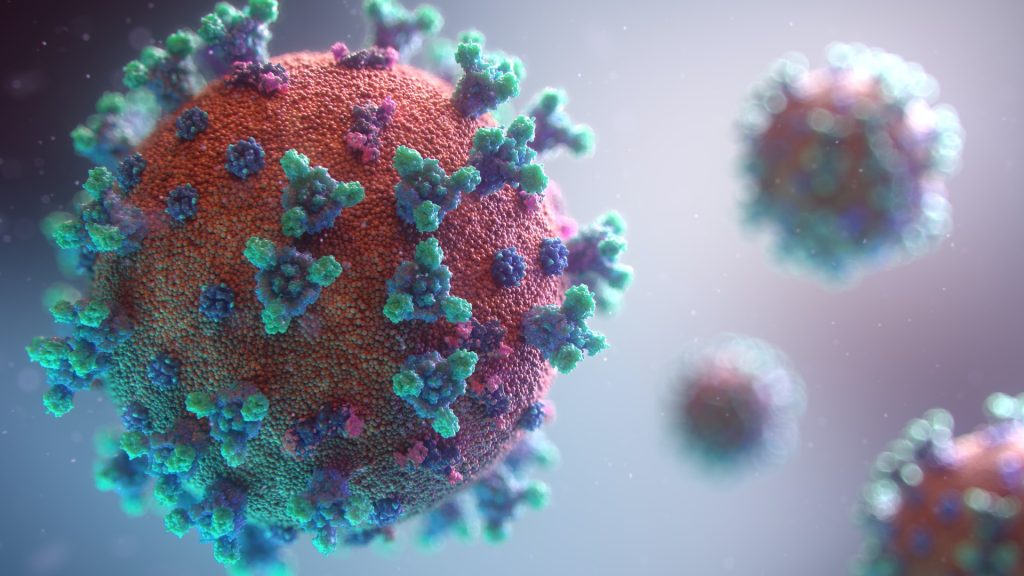
Infected cell covered with SARS-CoV-2 viruses. Source: NIAID
In a small study, people with previous COVID infection were observed to have higher antibody levels after a single dose of Pfizer vaccine compared with uninfected people after two doses.
Furthermore, there was no increase in IgG levels after the second dose among those previously infected, possibly indicating that one dose of vaccine may be sufficient for this population, reported James Moy, MD, of Rush University Medical Center in Chicago, and colleagues in aJAMA Network Openresearch letter.
“This study highlights the potential for recommending a single dose for previously infected individuals and may be useful for discussions surrounding vaccination strategy,” the authors wrote.
Whether to offer only a single dose of vaccine to those previously infected with COVID is a hot topic, with some experts conceding that previously infected individuals likely only need one dose, but would be challenging to implement.
Indeed, Dr Moy’s group urged performing “baseline serological testing” for previously infected individuals, but CDC and the agency’s Advisory Committee on Immunization Practices (ACIP) argued that this would be next to impossible to do for the entire country.
At a meeting in March, ACIP Chair José Romero, MD, voiced concern that the one-dose strategy would only work if individuals had sufficiently high antibody titers. If people had no or low antibodies, they may not have “enough memory B-cells to boost to levels that will be protective,” he said.
The researchers recruited adult participants at the team’s academic medical center, sorting them according toinfection status. Prior infection was established by a positive RT-PCR test and/or a positive SARS-CoV-2 antibody result. Overall, 30 participants had no evidence of infection, while 29 did.
The authors measured SARS-CoV-2 spike IgG levels at baseline and then after the first and second doses of the Pfizer vaccine among all participants.
There were no significant IgG differences between the first and second dose in previously infected individuals. Interestingly, four participants reported a previous positive COVID test via RT-PCR, but had no evidence of antibodies.
“Vaccine responses in these four participants resembled infection-naive individuals,” Moy’s group noted, adding that because this group did not develop S-protein antibodies, baseline testing should be required before forgoing a second dose.
The researchers said study limitations included the small sample size and lack of diversity of participants, as well as lack of neutralisation studies and T-cell response studies.
A study available on the medRxiv preprint server has estimated the increases of the SARS-CoV-2 Iota (B.1.526) variant for transmissibility, immune escape ability, and infection fatality rate in New York.
The study findings revealed that the Iota variant has considerably higher transmissibility and immune escape potential than previously circulating variants and that it can increase the infection fatality rate by 62%-82% among older adults.
Iota variant emerges in New York The lota variant, was first identified in New York City in November 2020 and then spread across the US and to 27 countries.
According to one lab study, the Iota variant modestly resists neutralisation by therapeutic monoclonal antibodies and vaccine/infection-induced antibodies. Fortunately however, evidence indicates that the variant does not increase the risk of breakthrough infections in vaccinated or previously infected individuals.
Study design For the study, the scientists analysed multiple epidemiological and population datasets collected in New York City and, with mathematical modeling, estimated the transmission rate, immune evasion ability, and infection fatality risk of the Iota variant.
The prevalence of SARS-CoV-2 was estimated at 16.6% at the end of the first wave, and 41.7% at the end of the second wave. Infections in all age groups were seen with the second wave, compared to mostly older age groups in the first.
Transmissibility and breakthrough A rapid increase in Iota-infected cases was observed during the second pandemic wave. Before the variant was first discovered in a neighbourhood in early November 2020, a rise in cases was seen in that same neighborhood, which remained higher than other neighbourhoods until Iota became prevalent and raised the baseline.
The researchers estimated that Iota is 15–25% more transmissible than previously circulating variants, with breakthrough infections in 0–10% of the population. These increases made the Iota variant become dominant in New York City from November 2020 to March 2021. Afterward, with the surge of more infectious variant B.1.1.7 (Alpha), Iota prevalence fell.
Despite a reduction in mortality rate following mass vaccination, infection fatality rate was seen to increase in New York City during the second pandemic wave. The researchers estimated that the Iota variant increases the infection fatality rates by 46% for 45–64 year olds, 82% (65–74), and 62% (75+). Compared to previously circulating variants, the Iota variant, overall, caused a 60% increase in infection fatality rate, comparable to that estimated for the Alpha variant.
An 11-month-old girl in Houston, Texas, had to be airlifted to a hospital in a different city because no paediatric hospitals in Houston would accept her as a transfer patient.
“She needed to be intubated immediately because she was having seizures,” said Patricia Darnauer, the administrator for LBJ Hospital. “We looked at all five major paediatric hospital groups and none [had beds] available.”
The little girl will be receiving treatment at Baylor Scott & White McLane Children’s Medical Center some 220 kilometres away.
The situation is sad but not surprising for Dr Christina Propst, who is one of the most outspoken pediatricians in Houston. Ever since the pandemic began in the US, Dr Propst has encouraged masking, social distancing, and being cautious to anyone who would listen.
“The emergency rooms at the major children’s hospitals here in Houston, the largest medical center in the world, are extremely crowded,” said Dr Propst. “They are filling, if not full, as are the hospitals and intensive care units.”
Delta variant infecting more children Dr Propst and other clinicians ascribed the scarcity of paediatric beds, to the delta variant of COVID noticeably affecting more children, as well as being more transmissible. Texas Children’s Hospital has 30 children and adolescents hospitalised with COVID, compared to their January peak of 40.
However, the problem is worsened by widespread cases of Respiratory Syncytial Virus (RSV) in children. This is all taking place during the summer break for US schools, where doctors are used to injuries from playing outdoors.
Darnauer spoke of high numbers of patients at her hospital. “We are back beyond our pre-pandemic volumes at LBJ.”
Dr Propst advises mask wearing for those children not old enough for the vaccine, and she would also like to see Texas once again allow public schools to mandate masks. Unlike many other countries, COVID health regulations are largely up to individual states.
“If children are not masking in schools, it will be a major problem,” said Dr Propst.
She added that, even in normal times, the start of the school year generally causes a lot of germs to spread.
“It is typical that two weeks after school we see a great surge of strep and other sources of infection. We are bracing ourselves, not a question of when, it will be bad,” she said.
Western Cape premier Alan Winde said that the province is at the peak of its third wave of COVID infections.
“We are beginning to see the flattening of the curve at our peak as new case infections start to plateau again,” he said in a briefing on Thursday. “This happened after an initial plateau two weeks ago, and then a subsequent increase the week thereafter.
“This is largely explained by a disruption in testing caused by the taxi violence in the Cape Metro during that time.”
Winde supplied the following information:
The ‘R’ number is currently 1.1 and the test positivity rate is 41.5%. New hospital admissions are at 339 per day, with a slight downturn. Deaths have increased, with about 108 deaths per day and will be the last indicator to fall.
Winde said that provincial authorities are simultaneously monitoring the number of trauma admissions to hospitals to ensure that there is sufficient capacity in the province’s hospitals and that it can proactively identify any risks so that they can be addressed. Senior CSIR researcher Ridhwaan Suliman, PhD, who was been analysing COVID data tweeted an update on Friday night, indicating that there was still no sign of the peak passing just yet:
Giving moderately ill hospitalised COVID patients a full-dose of heparin reduced the risk for organ support, and shortened hospital stays, a large clinical trial has found.
However, the use of this treatment strategy for critically ill COVID patients did not result in the same outcomes.
“These results make for a compelling example of how important it is to stratify patients with different disease severity in clinical trials. What might help one subgroup of patients might be of no benefit, or even harmful, in another,” said NHLBI Director Gary H. Gibbons, M.D.
Researchers have observed that in some people who died from COVID, blood clots had formed throughout their bodies, even in their smallest blood vessels. Antithrombotics, which include blood thinners or anticoagulants, help prevent clot formation in certain diseases. It was not known which antithrombotic drug, what dose, and at what point during the course of COVID, antithrombotics might be effective. To answer these urgent questions, three international partners came together and harmonised their trial protocols to study the effects of using a full, or therapeutic dose, of heparin versus a low, or prophylactic dose, of heparin in moderately and critically ill patients hospitalised with COVID.
Moderately ill patients were defined as being hospitalised for COVID without needing organ support, and critically ill patients as hospitalised for COVID and needing intensive care level of support, including respiratory and/or cardiovascular organ support.
In April 2020, hospitalised COVID patients received either a low or full dose of heparin for up to 14 days after enrollment. By December 2020, interim results suggested that in critically ill patients, full-dose anticoagulation did not reduce the need for organ support and may even be harmful. However, one month later, results suggested full heparin doses likely benefited moderately ill patients. “The formal conclusions from these studies suggest that initiating therapeutic anticoagulation is beneficial for moderately ill patients and once patients develop severe COVID-19, it may be too late for anticoagulation with heparin to alter the consequences of this disease,” said Judith Hochman, M.D., senior associate dean for Clinical Sciences at New York University, a corresponding author. “The medication evaluated in these trials is familiar to doctors around the world and is widely accessible, making the findings highly applicable to moderately ill COVID-19 patients.”
Fnal trial data analysis included 1098 critically ill and 2219 moderately ill patients. Among moderately ill patients, researchers found that the likelihood of full-dose heparin to reduce the need for organ support compared to those who received low-dose heparin was 99%. Major bleeding was rare. For critically ill patients, full-dose heparin also decreased the number of major thrombotic events, but it did not reduce the need for organ support or shorten hospital stay.
“More work needs to be done to continue to improve outcomes in patients with COVID-19,” said Matthew D. Neal, M.D., the Roberta G. Simmons Associate Professor of Surgery at the University of Pittsburgh, co-senior author. “Given what we know about the type of blood clots in patients with COVID-19, testing anti-platelet agents is a particularly exciting approach.”
The head of the World Health Organization (WHO) on Wednesday called for a moratorium on COVID vaccine boosters until “at least the end of September” to enable the world’s most vulnerable people to be inoculated.
“I understand the concern of all Governments to protect their people from the Delta variant, but we cannot accept countries that have already used most of the global supply of vaccines using even more of it, while the world’s most vulnerable people remain unprotected”, said Tedros Adhanom Gebreyesus, WHO head.
Speaking during his weekly press conference, Tedros recalled that in May he had asked for international support to promote global vaccinations with the goal of enabling a minimum of 10 percent of each country’s population to be vaccinated by the end of September.
With the time already half gone, he lamented the lack of progress towards that goal, and even less towards the target of 30 percent vaccinated by year end.
Widening inequality So far, more than four billion COVID vaccine doses had been administered around the globe, 80 percent of them in high- and middle-income countries – even though less than half of the world’s population live there, the WHO chief said.
As of May, high-income countries had administered about 50 doses for every 100 people, a figure that has since almost doubled, while supply shortages in low-income countries meant only 1.5 doses for every 100.
“Still, some rich countries are considering booster doses even though there are hundreds of millions of people waiting to have access to a first dose”, stressed Tedros, urging that most of those vaccines instead go to low-income countries.
The WHO has insisted global vaccination requires cooperation by all, “especially the handful of countries and companies that control the global supply of vaccines”.
Tedros said that the G20 nations have a vital role to play as its members are the largest producers, consumers, and donors of COVID vaccines.
“It’s no understatement to say that the course of the pandemic depends on the leadership of the G20 countries”, he said, adding, that one month from now, the G20 health ministers will meet, ahead of the October summit and calling on them to “make concrete commitments to support WHO’s global vaccination targets. We call on vaccine producers to prioritise COVAX“.
Tedros also called on leaders and influential personalities, as well as every individual and community to support the moratorium on booster doses.
Booster’s immune benefit questionable Meanwhile, Dr Jarbas Barbosa, deputy director of the Pan American Health Organization (PAHO) emphasized that so far there is no evidence that a booster dose adds immune benefits to people who already have the full vaccination course.
Two new mutations in the toll-like receptor (TLR)7 gene have been discovered in healthy young men who experienced very severe COVID. This adds to the body of evidence suggesting that such mutations undermine a sufficient immune response against SARS-CoV-2, according to the study published in Frontiers in Immunology.
SARS-CoV-2 infection can lead to serious inflammation and even death, with risk factors including older age, male gender and chronic diseases such as diabetes and obesity. However these risk factors do not explain why (very) severe COVID also occurs in young, healthy men without a medical history.
Last year researchers reported that mutations in the TLR7 gene were a possible rare genetic risk factor. Two unrelated pairs of brothers became seriously ill with COVID and one of them died, according to the study. Both pairs of brothers had a mutation in the TLR7 gene, which encodes the receptor that plays a role in the recognition of the coronavirus and activates the antiviral immune response through interferon induction. TLR7 therefore seems to be important for immune defence against SARS-CoV-2.
Several subsequent studies had similar findings. An Italian study of men over 60 years of age with severe COVID found that more than 2 percent of severely affected men carried a genetic mutation in TLR7, giving rise to an impaired functioning TLR7 receptor, something not seen in the control group. The researchers again observed impaired activation of interferon signaling, showing that an optimal immune response could not be mounted. “A recently published study in the American Journal of Human Genetics, which looked for rare genetic risk factors through an association study in more than half a million people, also revealed TLR7 as the most important factor for severe COVID,” said geneticist Alexander Hoischen from Radboudumc Nijmegen, the Netherlands.
In the present study, the researchers, teaming up with Spanish scientists, screened 14 cases of severe COVID in young, healthy men under 50, of whom 10 were from Spain and four from the Netherlands. Hoischen said that “hitherto unknown mutations of the TLR7 gene were found in both a Spanish and a Dutch patient. In the Dutch patient again we saw the defective activation of the signaling and impaired production of interferon.”
The Dutch case was special because two of the patient’s cousins had the same mutation. Though not qualifying for vaccination at that time due to their young age, they were given priority based on the research. Study author Van der Made said that “as far as we know, these family members had not yet been exposed to the coronavirus. We therefore decided to vaccinate them preventively, in order to greatly reduce the risk of serious illness from COVID. In our small-scale study, we provide an impetus for screening a selected group of young men, precisely because a diagnosis of TLR7 deficiency due to mutations in this gene can have consequences for treatment, such as the mentioned preventive vaccination.” Hoischen further noted that: “Mutations in the TLR7 gene are now also listed as immune deficiency in OMIM – the international website where such information is registered.”