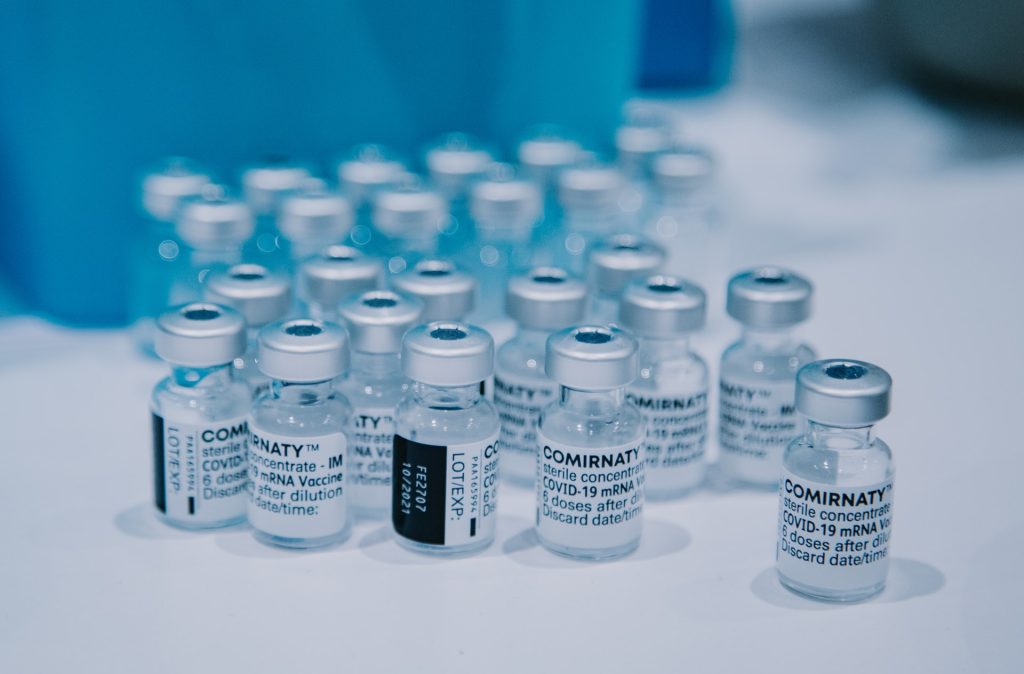
A Cochrane review of all the evidence available from randomised controlled trials of COVID vaccines up to November 2021 has concluded that most protect against infection and severe or critical illness caused by the virus. In addition, the Johnson and Johnson vaccine and the Cuban Soberana 2 vaccine “probably” reduced all-cause mortality.
The independent, international expert reviewers also found that there was little or no difference between the number of people experiencing serious side effects after vaccination compared to those who were unvaccinated.
The researchers, led by Isabelle Boutron, Professor of Epidemiology at Université Paris Cité and Director of Cochrane France, analysed published data from 41 randomised controlled trials of 12 different COVID vaccines, involving 433 838 people in various countries around the world. They assessed the certainty of the evidence and the risk of bias in the different studies.
The trials compared COVID vaccines with placebo, no vaccine, or each other, and were published before 5 November 2021. Most trials were no longer than two months in length.
The review found that the following vaccines reduced or probably reduced the risk of COVID infection compared to placebo: Pfizer/BioNTech, Moderna, CureVac COVID-19, Oxford-AstraZeneca, J&J, Sputnik V (Gam-COVID-Vac), Sinopharm (WIBP CorV and BBIBP-CorV), Bharat (Covaxin), Novavax and Soberana 2 (Finlay-FR-2). The following reduced or probably reduced the risk of severe or critical disease: Pfizer/BioNTech, Moderna, Janssen, Sputnik V, Bharat and Novavax. In addition, the J&J and Soberana 2 vaccines probably decreased the all-cause mortality risk. There were very few deaths recorded in all the trials and so evidence on mortality for the other vaccines is uncertain.
For most of the vaccines, vaccinated individuals reported more localised or temporary side effects compared no-treatment or placebo groups. These included tiredness, headache, muscle pains, chills, fever and nausea. With respect to the very rare side effects associated with some vaccines such as thrombosis, the team found that the reporting of these events was inconsistent, and the number of events reported in the trials was very low.
Given the evidence of efficacy of these vaccines, the researchers question whether further placebo-controlled trials are ethical. They suggest that further research compares new vaccines with those already in use.
Studies have described a variety of long-term effects of COVID, with symptoms including fatigue and malaise, breathing difficulties, and cognitive problems. A recent analysis in the Journal of Internal Medicine has identified several characteristics that may be risk factors for a long COVID diagnosis.
Researchers examined 204 805 individuals who tested positive for Sars-CoV-2 in Stockholm, Sweden from March 2020 through July 2021. They found that the proportion receiving a post COVID condition diagnosis was 1% among individuals not hospitalised for their COVID infection, 6% among hospitalised, and 32% among individuals treated in intensive care units (ICUs). The most common new-onset symptoms among individuals with a post COVID condition diagnosis were fatigue (29%) among non-hospitalised individuals, and breathing difficulties among both hospitalised (25%) and ICU-treated patients (41%).
Female sex, previous mental health disorders, and asthma were associated with post-COVID condition among non-hospitalised and hospitalised individuals.
Among individuals with post-COVID condition, use of outpatient care was substantially increased up to one year after the acute infection.
“Our understanding of health effects beyond the acute SARS-CoV-2 infection is continuously improving. In this study, we observed a marked difference in the occurrence of post COVID condition diagnosis across different severities of the acute infection,” said corresponding author Pontus Hedberg, MD and postdoctoral researcher at Karolinska Institutet. “Furthermore, the elevated outpatient primary and specialist care use indicates poor recovery for individuals suffering from post-COVID condition, highlighting the urgent need to better understand this condition and its potential resolution over time.”
After nearly three years of its harsh and extremely unpopular zero-COVID policy, the Chinese government announced on Wednesday the suspension of key parts of the contentious restrictions.
One of the ways some Chinese people expressed relief at the news was to go to the social media account of Dr Li Wenliang, the whistleblowing doctor who warned of the emerging coronavirus Wuhan and who was himself one of the virus’s early victims.
According to BBC News, they left messages “as if stopping by the graveside of a family elder” in which they shared their feelings.
“On the train, I suddenly remembered you and burst into tears. Dr Li, it’s over now, it’s dawn. Thank you,” read one message.
Another wrote: “I’ve come to see you and let you know – the dust has settled. We’re reopening.”
Chinese authorities punished the 33-year-old ophthalmologist for spreading “false statements”. He later died from COVID as he battled to save patients, prompting an outpouring of public grief and anger.
Xi Jinping’s campaign of zero-COVID aimed to completely eradicate the virus in China. The leadership hailed it as a success while other countries battled with surges of infections and deaths. Crucially, however, the policy made no use of Western-developed vaccines, mainly relying on the Chinese-developed and produced Sinovac.
Thus, with the lifting of the strictest parts of zero-COVID, people turned Dr Li’s page into a place to express their frustrations, hopes and grief. They also remembered his heroism in the face of authority.
“Those who blow the whistle are always worth remembering,” wrote one user. “I look forward to a more transparent society.”
China’s zero-COVID policy did appear to keep the country safe from the pandemic. There were 5200 deaths officially recorded in the pandemic while the US has recorded over one million.
The zero-COVID policy did not come without other costs. Sudden lockdowns saw people unable to get food. People testing positive for COVID were prevented from being with their families and were forced into centralised quarantine facilities. Gatherings and travel were subject to restriction.
Recently, workers broke out of a Foxconn factory which was supposed to be locked down for a quarantine. The event made international headlines as the authorities engaged in a manhunt for the escapees.
Some questioned whether the restrictions had been worth it.
“I took the subway this morning and for the first time did not have to look at the health code,” one user from Sichuan wrote.
“Some people say the epidemic has only started now after three years of hard work. So was it a waste of time? What of all those who paid a huge price, and even their lives for it?”
Others worried for China’s elderly population, many of whom are still unvaccinated.
“Dr Li, the real test of the three-year epidemic has begun. The epidemic is not as serious as yours, but I am exhausted,” one person wrote.
COVID patients hospitalised for acute respiratory distress syndrome (ARDS) are less likely to need endotracheal intubation with prone positioning, but evidence is inconclusive for other outcomes such as mortality, suggests an in-depth analysis of the latest evidence published by The BMJ.
Since the 1970s, prone positioning has been standard care for patients with severe ARDS as it encourages a larger part of the lung to expand, enabling bigger breaths.
Usually, it is done for critically ill patients who are sedated and intubated. But in February 2020, reports emerged of possible benefits from prone positioning of awake COVID and it was widely adopted.
Since then, several studies have examined its effectiveness in awake COVID patients , but results have been conflicting.
To try and resolve this uncertainty, researchers trawled databases for randomised trials comparing awake prone positioning to usual care for adult COVID patients with hypoxaemic respiratory failure.
They found 17 suitable trials, 12 with no bias risk, involving 2931 non-intubated patients who were able to breathe unassisted and who spent an average of 2.8 hours per day lying prone.
The primary outcome was endotracheal intubation, and secondary outcomes included mortality, ventilator-free days, intensive care unit (ICU) and hospital length of stay, change in oxygenation and respiratory rate, and adverse events.
High certainty evidence from a pooled analysis of 14 trials showed that awake prone positioning reduced the risk of endotracheal intubation compared with usual care (24.2% with awake prone positioning vs 29.8% with usual care). On average, awake prone positioning resulted in 55 fewer intubations per 1000 patients.
However, high certainty evidence from a pooled analysis of 13 trials evaluating mortality did not show a significant difference in mortality between the two groups (15.6% with awake prone positioning vs 17.2% with usual care), but the study may have lacked statistical power to detect a difference.
Awake prone positioning did not significantly affect other secondary outcomes either, including, ventilator-free days, ICU or hospital length of stay, based on low and moderate certainty evidence.
Limitations included lack of individual patient data, differences between the targeted and achieved duration of awake prone positioning, and variation in the definition and reporting of certain outcomes across studies.
But further sensitivity analysis supported these results, suggesting a high probability of benefit for the endotracheal intubation outcome and a low probability of benefit for mortality.
As such, the researchers conclude: “Awake prone positioning compared with usual care reduces the risk of endotracheal intubation in adults with hypoxemic respiratory failure due to covid-19 but probably has little to no effect on mortality or other outcomes.”
In a linked editorial, researchers point out that the benefits of prone positioning in COVID patients may be confined to those with more severe hypoxaemia and longer duration of prone positioning, so say it may be wise to focus efforts on these particular groups.
Several unanswered questions remain, including the ideal daily duration of treatment, the level of hypoxaemia that should prompt prone positioning, and how best to improve patient comfort and encourage adherence, they write.
These questions may never be answered definitively in COVID patients as, fortunately, far fewer are experiencing hypoxaemic respiratory failure or critical illness, they explain.
“The pandemic should, however, renew interest and encourage further evaluation of awake prone positioning – an intervention that may benefit a wide range of patients with hypoxaemia,” they conclude.
A widely reported study published in Science that presented evidence for a distributed, ‘stepwise’ origin for Omicron across the African continent has drawn criticism from a number of prominent scientists.
Dr Tulio Oliveira, the director of CERI (Centre for Epidemic Response & innovation) and KRISP (KZN Research Innovation & Sequencing Platform) was one of these scientists expressing their doubts over Twitter.
Dr Oliveira tweeted that, like many other scientists, he was sceptical of the Science paper’s narrative of a stepwise emergence of Omicron in Africa.
“First, the ‘fishing’ of intermediates in Africa should also have been performed in Europe and the USA, which were the regions of the world that introduced the majority of Omicron lineages to Africa -“
He also questioned the accuracy of their results due to possible contamination, and also the strength of their analyses, noting that phylogenetic analyses are weak.
For his fourth point, he says that “the Benin sequences could be recombinants of Delta and Omicron, real recombination, or recombination through contamination of the sequencing process.” He was unable to check for the prevalence of mutations.
He also makes a very simple observation regarding the timing of waves: if Omicron arose first in West Africa, why then did South Africa experience the Omicron wave before them?
The paper was also not presented as a preprint to allow for the research community to give feedback and improved the manuscript, a criticism echoed by biologist and physicist Richard Neher.
“Lastly, the results presented do not reject any of the three hypotheses of Omicron evolution (i.e. unsampled location, immune suppressed individual, animal reservoir).”
Nevertheless, he says that “I have many colleagues and collaborators in this paper and would like to recognize that the allele qPCR system to identify BA.1 is a great tool. Also that their mutation analyses are also good.”
Seemingly out of nowhere, the Omicron variant was first detected in South Africa and rapidly spread around the world. Now, a study published in the journal Science shows that Omicron’s predecessors existed on the African continent long before cases were first identified, suggesting that Omicron emerged gradually over several months in different countries across Africa.
Since the beginning of the pandemic, the coronavirus has been constantly changing. The biggest leap seen in the evolution of SARS-CoV-2 to date was observed by researchers a year ago, when a variant was discovered that differed from the genome of the original virus by more than 50 mutations. First detected in a patient in South Africa in mid-November 2021, the variant later named Omicron BA.1 spread to 87 countries around the world within just a few weeks. By the end of December, it had replaced the previously dominant Delta variant worldwide.
Since then, speculations about the origin of this highly transmissible variant have centred around two main theories: Either the coronavirus jumped from a human to an animal where it evolved before infecting a human again as Omicron, or the virus survived in a person with a compromised immune system for a longer period of time and that’s where the mutations occurred. A new analysis of COVID samples collected in Africa before the first detection of Omicron now casts doubt on both these hypotheses.
The analysis was carried out by an international research team led by Prof Jan Felix Drexler, a scientist at the Institute of Virology at Charité and the German Center for Infection Research (DZIF). Other key partners in the European-African network included Stellenbosch University in South Africa and the Laboratory of Viral Hemorrhagic Fever (LFHB) in Benin. The scientists started by developing a special PCR test to specifically detect the Omicron variant BA.1. They then tested more than 13 000 respiratory samples from COVID9 patients that had been taken in 22 African countries between mid-2021 and early 2022. In doing so, the research team found viruses with Omicron-specific mutations in 25 people from six different countries who contracted COVID in August and September 2021 – two months before the variant was first detected in South Africa.
To learn more about Omicron’s origins, the researchers also sequenced the viral genome of some 670 samples. Such sequencing makes it possible to detect new mutations and identify novel viral lineages. The team discovered several viruses that showed varying degrees of similarity to Omicron, but they were not identical.
“Our data show that Omicron had different ancestors that interacted with each other and circulated in Africa, sometimes concurrently, for months,” explains Prof Drexler. “This suggests that the BA.1 Omicron variant evolved gradually, during which time the virus increasingly adapted to existing human immunity.” In addition, the PCR data led the researchers to conclude that although Omicron did not originate solely in South Africa, it first dominated infection rates there before spreading from south to north across the African continent within only a few weeks.
“This means Omicron’s sudden rise cannot be attributed to a jump from the animal kingdom or the emergence in a single immunocompromised person, although these two scenarios may have also played a role in the evolution of the virus,” says Prof Drexler.
“The fact that Omicron caught us by surprise is instead due to the diagnostic blind spot that exists in large parts of Africa, where presumably only a small fraction of SARS-CoV-2 infections are even recorded. Omicron’s gradual evolution was therefore simply overlooked. So it is important that we now significantly strengthen diagnostic surveillance systems on the African continent and in comparable regions of the Global South, while also facilitating global data sharing. Only good data can prevent policymakers from implementing potentially effective containment measures, such as travel restrictions, at the wrong time, which can end up causing more economic and social harm than good.”
A major UK-wide trial has found that the the oral anticoagulant apixaban does not help patients recovering from moderate and severe COVID compared to standard care – despite this approach being offered to patients.
To date, more than a thousand NHS patients hospitalised with COVID have taken part in HEAL-COVID, a platform trial that is aiming to find treatments to reduce the number who die or are readmitted following their time in hospital.
The trial’s preliminary results have shown that prescribing the oral anticoagulant Apixaban does not affect subsequent mortality or rehospitalisation of COVID over the following year (apixaban 29.1%, versus standard care 30.8%).
As well as being ineffective, anticoagulant therapy has known serious side effects, and these were experienced by participants in the trial with a small number of the 402 participants receiving apixaban discontinuing due to bleeding events.
There was also no benefit from Apixaban in terms of the number of days alive and out of hospital at day 60 after randomisation (apixaban 59 days, versus standard care 59 days).
Following these results, the trial will continue to test atorvastatin, which acts on other mechanisms of disease that are thought to be important in COVID.
Chief Investigator for the trial Professor Charlotte Summers is an intensive care specialist at Addenbrooke’s Hospital and the University of Cambridge. She said: “These first findings from HEAL-COVID show us that a blood thinning drug, commonly thought to be a useful intervention in the post-hospital phase is actually ineffective at stopping people dying or being readmitted to hospital. This finding is important because it will prevent unnecessary harm occurring to people for no benefit. It also means we must continue our search for therapies that improve longer term recovery for this devastating disease.”
HEAL-COVID enrols patients when they are discharged from hospital, following their first admission for COVID. They are randomised to a treatment and their progress tracked.
A new study published in PLOS ONE estimates that over a million lives were lost in Russia to the COVID pandemic. In the study, the researchers also introduce an improved methodology for future pandemics, which counts a victim’s remaining number of expected years of life lost.
Calculating COVID pandemic mortality is crucial for future epidemiological and policy decisions. Getting a reliable estimate is however complicated by incomplete or inadequate registration data, difficulties in determining the primary cause of death, or challenges in tracking down indirect effects.
This is especially the case in Russia, where mortality estimates from COVID showed a high degree of uncertainty, with varying estimates reported by different studies within and outside of Russia. The country has also received international attention due to the especially high reported mortality compared to other parts of the world. To improve estimates on the human cost of the pandemic in Russia, an international team of researchers led by IIASA conducted the most detailed analysis on pandemic mortality in the country to date.
“While national figures show that excess mortality in Russia is perhaps among the highest in the world, there is a wide degree of regional variation that deserves further analysis,” says Stuart Gietel-Basten, a researcher at The Hong Kong University of Science and Technology and a coauthor of the study. “Such variation is key to devising better public health strategies to mitigate both the ongoing impact of COVID, and to rebuild and reshape health systems after the pandemic is over.”
The researchers used the concept of ‘excess mortality’ that looks at the difference between the actual number of deaths and what would have been expected if there was no pandemic. Unlike other measures, excess mortality includes deaths that may have stemmed from lockdowns, restriction on movement, postponed operations, and so on, giving a much more comprehensive and reliable estimate.
The team used the latest data released from the Russian Federal State Statistics Service and calculated excess mortality for Russia and its regions for 2020 and 2021, and for 2020 also assessing mortality by age, sex, and rural-urban residence. In 2020 and 2021, the researchers estimated over one million Russian lives lost to COVID.
“A number of researchers within Russia and outside had more or less similar estimates,” says Sergei Scherbov, lead author of the study and a researcher in the IIASA Population and Just Societies Program. “However, due to the advanced population projection methodology and software that we have developed at IIASA, we were able to make population projections for all regions, subdividing urban and rural populations, as well as gender and age groups. This allowed us to produce a very detailed estimate of excess mortality from COVID in Russia and its regions.”
One of the study’s main findings was that different regions within the country differed greatly in mortality. In 2021, excess deaths expressed as a percentage of expected deaths at the regional level ranged from 27% to 52%, with urban regions generally faring worse. The researchers suggested that apart from population density, socio-cultural, economic and, perhaps, geographic differentials could have contributed to the differences.
“Regions of the Northern Caucasus reporting high excess mortality are known for their tradition of elderly living in larger households of extended families together with their children and descendants,” explains Dalkhat Ediev, study coauthor and researcher in the IIASA Population and Just Societies Program. Such a tradition might have contributed to higher social exposure and, hence, higher losses.”
The study also introduced a new measure called the Mean Remaining Life Expectancy of the Deceased, showing how many years on average those whose death was among the excess deaths lost. They found that for Russia as a whole, an average person who died due to the pandemic in 2020 would have otherwise lived on average for a further 14 years.
“This finding disproves the widely held view that excess mortality during the pandemic period was concentrated among those with few years of life remaining — especially for females,” notes Scherbov.
The new and improved estimates will not only help policymakers in case of future decisions on mitigation strategies, but also take a major methodological step forward, helping us get a clearer view of pandemics in the future.
The Supreme Court of Appeal (SCA) has set aside a controversial supervisory order, granted in April 2021, compelling the South African Health Products Regulatory Authority (SAHPRA) to report back to court every three months on access to ivermectin for use in the treatment of COVID patients.
The court has ruled that there was no evidence to justify the order made by Pretoria High Court Judge Cassim Sardiwalla, that affected parties had not asked for the order, and that they had not been heard before he made it.
The judge had also failed to provide his reasons for making it, the court said.
The issue has its genesis in four applications, one by the African Christian Democratic Party in 2021 against SAHPRA seeking access to ivermectin for the treatment of COVID.
At that time, SAHPRA, which was wary of its use saying there was no reliable research to prove its efficacy, had already put in place its “controlled compassionate use” programme in response to reports of illicit ivermectin-containing products entering the South African market. The programme was stopped in May this year.
In terms of that programme, permission was granted to five importers of unregistered oral solid dosage forms of ivermectin. Health facilities were permitted to hold bulk stock but individual applications were still required. SAPHRA said it would monitor its use.
The ACDP and others approached the court for orders directing SAHPRA to remove restrictions and do “all things necessary to regulate and ensure the manufacture” of ivermectin until such time as clinical evidence demonstrated that it was not effective in the treatment of COVID.
The matter was settled along the same lines as SAHPRA’s programme.
But Judge Sardiwalla, in making the settlement agreement an order of court, also granted a “supervisory order”, putting SAHPRA under his judicial authority in respect of ivermectin.
SAHPRA and the Minister of Health applied for and were granted leave to appeal the order to the SCA.
In heads of argument before the SCA, SAHPRA said its appeal concerned the propriety of the order directing an organ of state to report back to court and be subject to judicial supervision where the dispute had been settled and there was no evidence at all that SAHPRA and the minister would not comply with the settlement agreement.
“It was simply imposed without justification. The order constitutes a grave violation of the Constitution … it violates the rule of law, the right to a fair hearing and the principle of separation of powers,” it argued.
The judge, SAHPRA said, had improperly made findings on matters not in dispute and his written reasons for the supervisory order “do not constitute reasons at all”.
In the SCA ruling, Judge Clive Plaskett said Judge Sardiwalla had suggested to the parties that he “regarded himself as seized of all matters involving ivermectin” and had proposed the supervisory order.
Both SAHPRA and the minister indicated they would oppose this and filed further papers.
While the judge had indicated that he would hear the parties on 6 April 2021, his registrar had informed SAHPRA’s attorney that morning that he had made a decision, he would not hear arguments, and he would send his order to the parties shortly.
No reasons accompanied the order.
SAHPRA and the minister asked for reasons but when these were furnished, they made no mention of the supervisory order or why he granted it.
Judge Plaskett said the first difficulty with the order was that Judge Sardiwalla had not given SAHPRA and the minister a hearing despite knowing that they did not agree to it.
“He agreed to a hearing but inexplicably changed his mind. In these circumstances, an oral hearing was, without doubt, essential.
“Courts decide matters, particularly opposed matters, in open court and the exceptions to this rule are limited.”
Judge Plaskett said the fact that the order had not been applied for by any party required that it be set aside.
He said, further, there was a complete absence of evidence to justify it.
“Important as supervisory orders may be in appropriate cases, the granting of this type of relief must be carefully considered – and justified on the facts – particularly because of its separation of powers implications.
“In this case, not only was there no evidence as to the necessity of a supervisory order but the fact that SAHPRA and the minister had settled the matter and agreed to an order suggests that there was probably no necessity for one.
“Had he allowed the parties to argue the matter, he would have been informed of the separation of powers problem …
“Finally, it strikes me as telling that the reasons he furnished made no mention of the supervisory order – and this despite being pertinently asked to furnish reasons on this very issue,” Judge Plaskett said, upholding the appeal, and setting aside the order.
The ACDP originally opposed SAHPRA’s appeal but shortly before the SCA hearing, it withdrew its opposition on the basis that no cost order would be made against it. The SCA therefore did not order costs.
The ivermectin programme was stopped in May this year.
During the COVID pandemic, significantly more children and young people had already developed diabetic ketoacidosis when diagnosed with type 1 diabetes (T1D) than in previous years. These findings were reported in The Lancet Diabetes & Endocrinology,
If children and young people have already developed metabolic imbalances (diabetic ketoacidosis) at the time of diagnosis of T1D, this can result in complications such as extended stays in hospital, poorer long-term control of blood sugar levels, brain enema, or even a higher mortality rate.
During the COVID pandemic, diabetes centres around the world saw an increased prevalence of diabetic ketoacidosis in diagnosed cases of T1D. DZD researchers, together with international colleagues, investigated whether the number of diabetic ketoacidosis cases associated with the diagnosis of paediatric T1D increased more than expected. To achieve this, they analysed the number of diabetic ketoacidosis cases before and during the pandemic.
The team evaluated data from 13 national diabetes registers, with 104 290 children and young people aged between 6 months and 18 years old who were diagnosed with T1D between 1 January 2006 and 31 December 2021. The observed prevalence of diabetic ketoacidosis during 2020 and 2021 was compared with predictions based on the years before the pandemic (2006–2019).
Increase greater than expected
Between 2006 and 2019, 23 775 of 87 228 children had diabetic ketoacidosis when diagnosed with T1D (27.3%). The mean annual increase in the prevalence of diabetic ketoacidosis for the entire cohort between 2006 and 2019 was 1.6%. During the pandemic, the numbers were significantly above the predicted prevalence. In 2020, the adjusted observed prevalence of diabetic ketoacidosis was 39.4% (predicted prevalence 32.5%) and 38.9% in 2021 (predicted prevalence 33.0%).
“The increasing prevalence of diabetic ketoacidosis associated with the diagnosis of type 1 diabetes in children is a global problem. There was already an increase in prevalence before the COVID-19 pandemic. During the pandemic, this increase was even greater,” notes DZD scientist Prof. Reinhard W. Holl from Ulm University.
The authors suggest that providing a comprehensive explanation of the classic symptoms of T1D in childhood to the general public, those active in the childcare or daycare settings, and primary care physicians could help raise awareness of the symptoms of T1D. Furthermore, public health measures could be used, eg, implementing a general islet-cell autoantibodies screening program for children to reduce the number of dangerous metabolic imbalances.