The exercise stress test, which involves treadmill exercise test with electrocardiogram (ECG), is one of the most familiar tests in medicine. While exercise testing typically is focused on diagnosing coronary artery disease, a recent study from Mayo Clinic finds that exercise test abnormalities, such as low functional aerobic capacity, predicted non-cardiovascular causes of death such as cancer in addition to cardiovascular-related deaths. These new findings are published in Mayo Clinic Proceedings.
The exercise stress test is noninvasive, easily available and provides important diagnostic information. In addition to the ECG itself, the test produces data on functional aerobic capacity, heart rate recovery and chronotropic index, the standardised measure of heart rate during exercise that reflects age, resting heart rate and fitness.
“In our exercise testing cohort, non-cardiovascular deaths were more frequently observed than cardiovascular deaths,” says Thomas Allison, PhD, MPH, director of Mayo Clinic’s Integrated Stress Testing Center and the study’s senior author. “Though this was a cardiac stress test, we found that cancer was the leading cause of death, at 38%, whereas only 19% of deaths were cardiovascular. Exercise test results including low exercise capacity, low peak heart rate, and a slow recovery of the heart rate after exercise test were associated with increased mortality.”
The study looked at 13 382 patients who had no baseline cardiovascular issues or other serious diseases and who had completed exercise tests at Mayo Clinic between 1993 and 2010, then were followed closely for a median period of 12.7 years.
The findings suggest that clinicians should focus not only on ECG results but on data in the exercise test results such as low functional aerobic capacity, low chronotropic index and abnormal heart rate recovery. Patients should be encouraged to increase their physical activity if these results are atypical, even if the ECG results show no significant cardiovascular-related risk, Dr Allison says.
A study published in The Lancet Healthy Longevity shows that brain metabolism, detected with advanced imaging techniques, declines more sharply in middle-aged people with a sustained high cardiovascular risk over 5 years
Cardiovascular disease and dementia frequently occur together in elderly people. Nevertheless, few longitudinal studies have examined how atherosclerosis and its associated risk factors affect brain health from middle age. Now, a new study by scientists at the Centro Nacional de Investigaciones Cardiovasculares (CNIC) in Madrid provides new data on this relationship; the results confirm the importance of controlling traditional cardiovascular risk factors, such as hypertension, cholesterol, diabetes, smoking, and a sedentary lifestyle, not only to preserve cardiovascular health, but also to prevent Alzheimer’s disease and other dementias.
The CNIC study shows that atherosclerosis (accumulation of fatty deposits in the arteries) and its associated risk factors, in addition to being the main cause of cardiovascular disease, are also implicated in the cerebral alterations typically found in Alzheimer’s disease, the most frequent cause of dementia.
According to study author Dr Valentín Fuster, CNIC General Director, the new findings are important because they open up the possibility of treating a modifiable disorder, ie cardiovascular disease, to prevent the development a presently untreatable disease – dementia. “The sooner we act to control cardiovascular risk factors, the better it is for our brain health,” said Dr. Fuster.
“Everybody knows that a healthy lifestyle and controlling cardiovascular risk factors are important for preventing a heart attack,” continued Dr Fuster. “Nevertheless, the additional information linking the same risk factors to a decline in brain health could further increase awareness of the need to acquire healthy habits from the earliest life stages.”
In 2021, CNIC scientists discovered that the presence of cardiovascular risk factors and subclinical (presymptomatic) atherosclerosis in the carotid arteries (the arteries that supply the brain) was associated with lower glucose metabolism in the brains of apparently healthy 50-year-old participants in the PESA-CNIC-Santander study. Glucose metabolism in the brain is considered an indicator of brain health.
The PESA-CNIC-Santander study directed by Dr Fuster is a prospective study that includes more than 4000 asymptomatic middle-aged participants who have been exhaustively assessed for the presence and progression of subclinical atherosclerosis since 2010.
Dr Fuster’s team, led by Drs Marta Cortés Canteli and Juan Domingo Gispert, have continued to monitor the cerebral health of these participants over 5 years. Their research shows that individuals who maintained a high cardiovascular risk throughout this period had a more pronounced reduction in cerebral glucose metabolism, detected using imaging techniques such as positron emission tomography (PET).
“In participants with a sustained high cardiovascular risk, the decline in cerebral metabolism was three times greater than in participants who maintained a low cardiovascular risk,” commented Catarina Tristão-Pereira, first author on the study and INPhINIT fellow.
Glucose is the main energy source for neurons and other brain cells. “If there is a sustained decline in cerebral glucose consumption over several years, this may limit the brain ability to withstand neurodegenerative or cerebrovascular diseases in the future,” explained Dr Gispert, an expert in neuroimaging at the CNIC and Barcelonaβeta Research Center.
Through a collaboration with Drs Henrik Zetterberg and Kaj Blennow, world experts in the identification of new blood biomarkers at the University of Gothenburg in Sweden, the CNIC team discovered that the individuals showing this metabolic decline already show signs of neuronal injury. “This is a particularly important finding because neuronal death is irreversible”, said Dr. Cortés Canteli, a neuroscientist at the CNIC and a Miguel Servet fellow at the Fundación Jiménez Díaz Health Research Institute.
The CNIC team also discovered that the progression of subclinical atherosclerosis in the carotid arteries over five years is linked to a metabolic decline in brain regions vulnerable to Alzheimer’s disease, in addition to the effect of cardiovascular risk factors. “These results provide yet another demonstration that the detection of subclinical atherosclerosis with imaging techniques provides highly relevant information,” said Dr Fuster, who is the principal investigator on the PESA study. “The interaction between the brain and the heart is a fascinating topic, and with this study we have seen that this relationship begins much earlier than was thought.”
The scientists conclude that, “carotid screening has great potential to identify individuals at risk of cerebral alterations and cognitive decline in the future.” In the published article they write, “this work could have important implications for clinical practice since it supports the implementation of primary cardiovascular prevention strategies early in life as a valuable approach for a healthy cerebral longevity.”
“Although we still don’t know what impact this decline in cerebral metabolism has on cognitive function, the detection of neuronal injury in these individuals shows that the earlier we start to control cardiovascular risk factors, the better it will be for our brain,” concluded Dr Cortés Canteli.
South African non-profit company, the SA Heart Association’s renowned annual congress will be taking place this year at the Sandton Convention Centre in Johannesburg from 27 – 29 October and will feature unique, hands-on training sessions by some of the world’s leading cardiologists.
The congress, a key event on this year’s health calendar and eponymously dubbed the ‘Cardiac Collaboration’, will boast joint symposia in highly specialised fields such as cardiac anaesthesiology, endocrinology, critical and emergency care, sports medicine, and radiology, to name a few. The aim is to develop future collaboration with other academic societies and create a footprint for cardiologists to work in tandem with them and other special interest groups.
Speaking ahead of the annual congress, unlike any of the 22 preceding events, Cardiologist, Congress Convenor and Wits University lecturer, Dr Farouk Mamdoo, says several internationally renowned cardiologists and opinion leaders, local and global, will hold ‘Training Villages’ offering valuable, hands-on training to delegates. These will be held at times separate to the overarching congress presentations and spread across the three congress days, allowing delegates the chance to interact with international masters, some of whom will be using state-of-the art devices and equipment in these personalised training sessions.
The congress has sparked global interest and attendance is considered essential among cardiologists and related disciplines wanting to update their knowledge and take advantage of the unique collaborative gathering that will have far reaching future clinical and research implications.
The organizers have also taken the stellar expert input one step further. The trend-setting cardiologists will conduct roadshows at major hospitals around the country, both before and after the congress, giving local colleagues an unprecedented opportunity to work on patients with them, whether it be through consultations or surgical procedures. The roadshows will also provide continuity for delegates who attend the Training Villages at the Sandton congress.
Says Mamdoo: “Normally special devices, simulators and equipment are statically displayed on exhibition stands in the conference hall. However, at this year’s congress, delegates will be able to see them being used in real time – some of which this country hasn’t even seen before.”
Mamdoo says additional pre-congress workshops will consist of didactic and practical lectures about hands-on procedures, with ‘tips, tricks and advice,’ and case studies presented. Echocardiography, electrophysiology, paediatric cardiology, and cardiology for non-cardiologists will be among the fields embraced.
“The Training Villages will each have their own agenda with specific key learning topics and a timetable. Delegates can access these via the conference program on our website – and find out where the experts will be during the roadshow,” says Mamdoo.
Some of the top global names in cardiology, many of them local, that will be attending, presenting, and leading workshops at the congress, include: Professor Mark Petri,Cardiologist at the Institute of Cardiovascular and Medical Sciences at the University of Glasgow; Professor Javed Butler, Patrick H. Lehan Chair in Cardiovascular Research and Chairman of the Department of Medicine at the University of Mississippi; Professor Renato Lopes, Department of Medicine within the Division of Cardiology at Duke University Medical Centre, North Carolina; Dr Seth Worley, Electrophysiology and Interventional Implants, Medstar Heart Vascular Institute in Washinton DC; Dr George McDaniel,Paediatric and Adult Congenital Electrophysiologist, UVA Children’s, Virginia; and Professor Jeroen Bax, Leiden University, Netherlands; Non-invasive imaging.
Among the most cutting-edge developments to be presented will be breakthroughs in heart failure therapy, new ways of treating complex coronary disease plus advances in the latest techniques, technology, and diagnostic tools – and the evidence to support their use.
Local experts presenting at the congress – many of whom are globally recognized – include: Professor Karen Sliwa, clinician-scientist and Director of the Hatter Institute for Cardiovascular Research in Africa at the University of Cape Town (Managing cardio vascular risk factors during pregnancy); Dr Brian Allwood, Consultant Pulmonologist at Stellenbosch University and Tygerberg Hospital, where he has been responsible for expanding the pulmonary hypertension service and starting the first dedicated post-tuberculosis clinic in the country (Idiopathic pulmonary hypertension); Mpiko Ntsekhe, Cardiology Head of Department at Groote Schuur Hospital (HIV and cardiovascular disease – an update); and Fathima Paruk, Academic and Clinical Head of the Department of Critical Care at the University of Pretoria and Steve Biko Academic Hospital (Navigating social media as a clinician). Case-based plenaries will be a feature of the conference while cardiac Fellows will present their work in separate sessions with prestigious awards for the best abstract and oral presentations, plus a Henley Business School award sponsored by medical scheme, Discovery Health.
Cardiologists from the public sector, particularly registrars, are likely to find the conference particularly rewarding as few will have had the opportunity to work with much of the newer equipment that will be present – or interact with globally recognized expert’s face to face.
Says Mamdoo: “We look forward to hosting this exciting, world-class event with a jam-packed agenda and interacting with each other, celebrating our achievements and collaborating in an inclusive and diverse space with welcome encouragement from our learned peers – and fresh talent from across our beautiful country.”
To view the full congress agenda, access further information and book your place, visit: www.saheartcongress.org
Red blood cells exposed to oxygen deficiency protect against myocardial infarction, according to a new study published in the Journal of Clinical Investigation. This study, conducted at Karolinska Institutet in collaboration with Karolinska University Hospital, also shows that that protection can be enhanced by a diet containing nitrate-rich vegetables, such as arugula and other green leafy vegetables.
“This effect was also shown in a clinical study in patients with high blood pressure who were randomly assigned to eat nitrate-rich vegetables or a diet low in nitrates,” says John Pernow, Professor of Cardiology at the Department of Medicine, Karolinska Institutet in Solna and senior physician at Karolinska University Hospital, and the study’s corresponding author together with Jon Lundberg, professor at the Department of Physiology and Pharmacology, Karolinska Institutet.
Part of the study was conducted through experiments with red blood cells from mice that were added to a myocardial infarction model with hearts from mice. Before the experiment, the red blood cells were exposed to low oxygen pressure, while nitrate was added to the drinking water.
In a clinical study, red blood cells were collected from patients with high blood pressure who were randomly assigned a nitrate-rich diet with green leafy vegetables or a diet with nitrate-poor vegetables. These red blood cells were given to the corresponding myocardial infarction model with hearts from rats.
“The results show both that the red blood cells convey protection against injury in the heart in the event of low oxygen levels, and how that protection can be enhanced through a simple dietary advice. This may be of great importance for patients at risk of myocardial infarction,” says the study’s first author Jiangning Yang, a researcher at the Department of Medicine, Solna, Karolinska Institutet.
The next step in the research is to develop additional drugs that can activate the protective signalling mechanism in red blood cells to provide protection to the body’s tissues and cells in the event of oxygen deficiency.
“In addition, we need to map how the blood cells transmit their protective signal to the heart muscle cells,” says John Pernow.
UK researchers have developed a new way of identifying patients at risk of atrial fibrillation (AF). While not life threatening, the condition increases people’s risk of having a transient ischaemic attack (TIA) or stroke by up to five times. A new study, published in the European Journal of Preventive Cardiology, reveals four specific factors that can predict which patients will have atrial fibrillation.
The researchers investigated clinical and echocardiographic parameters for AF and found that the combination of advanced age, increased DBP, increasing lateral PA (time interval from the beginning of the P wave on the surface electrocardiogram to the beginning of the A′ wave on pulsed wave tissue Doppler of the lateral mitral annulus), and impaired LA reservoir strain is associated with AF. Other studies have linked most of these factors have been linked with an increased risk of AF in stroke survivors.
The team went on to create an easy tool for doctors to use in practice to identify those at high risk, which they hope will help diagnose and treat more patients, reducing their risk of future strokes.
Lead researcher Prof Vassilios Vassiliou, from UEA’s Norwich Medical School and Honorary Consultant Cardiologist at the Norfolk and Norwich University Hospital, said: “Identifying who is at high risk and more likely to develop atrial fibrillation is very important.
“This is because it requires specific treatment with anticoagulants, commonly known as blood thinners, to reduce the risk of future strokes.
“Patients who have had a stroke usually undergo multiple investigations to determine the cause of the stroke, as this can influence the treatment they receive long-term.
“These investigations include prolonged monitoring of the heart rhythm with a small implantable device called a loop recorder, and an ultrasound of the heart, called an echocardiogram.”
The research team collected data from 323 patients across the East of England, treated at Cambridge University Hospitals NHS Foundation Trust, who had had a stroke with no cause identified- known as Embolic Stroke of Undetermined Source.
They analysed medical records as well as data from prolonged heart rhythm monitoring. They also studied their echocardiograms.
Prof Vassiliou said: “We determined how many of these patients were found to have atrial fibrillation up to three years following their stroke, and went on to perform a thorough assessment to identify if there are specific parameters that are connected with atrial fibrillation identification.
“We identified four parameters that were linked with the development of atrial fibrillation, which were consistently present in patients that had this arrhythmia. We then developed a model that can be used to predict who will show atrial fibrillation in the next three years, and is therefore at increased risk of another stroke in the future.”
“This is a very easy tool that any doctor can use in clinical practice,” he added.
“And it can potentially help doctors provide more targeted and effective treatment to these patients, ultimately aiming to highlight the people at higher risk of this arrhythmia that can benefit from prolonged heart rhythm monitoring and earlier anticoagulation to prevent a future stroke.”
Patients who have had an intracerebral haemorrhage who take cholesterol-lowering drugs called statins may have a lower risk of having another stroke, especially ischaemic stroke, compared to people who also had an intracerebral haemorrhage but were not taking statins, according to a new study published in Neurology, the medical journal of the American Academy of Neurology.
“Previous research has had mixed results on the risk of stroke in people who are taking statins and have already had a bleeding stroke, so we evaluated this further,” said study author David Gaist, MD, PhD, of the University of Southern Denmark in Odense and a member of the American Academy of Neurology. “We looked at whether use of statins after a bleeding stroke is associated with the risk of any additional stroke, including both those caused by bleeding and by blood clots. We found that those who used statins had a lower risk of stroke, notably ischaemic stroke, while there was no change in the risk of bleeding stroke.”
For the study, researchers looked at health records in Denmark and identified 15 151 people who had a first bleeding stroke.
People were followed from 30 days after their first bleeding stroke until the first occurrence of another stroke, death, or the end of follow-up, which on average lasted 3.3 years. Researchers used prescription data to determine information on statin use.
Researchers then compared 1959 people who had another stroke to 7400 people who did not have another stroke who were similar in age, sex and other factors. Of those who had another stroke, 757 people, or 39%, took statins compared to 3044 people, or 41%, of those who did not have a second stroke.
After adjusting for factors like hypertension, diabetes and alcohol use, statin use was associated with a 12% lower risk of another stroke.
Then they compared 1073 people who had an ischaemic stroke to 4,035 people who did not have another stroke. Of those who had an ischaemic stroke, 427 people, or 40%, took statins compared to 1687 people, or 42%, of those who did not have another stroke.
After adjusting for similar factors, statin use was associated with a 21% lower risk of an ischaemic stroke after the initial bleeding stroke.
They also compared 984 people who had another bleeding stroke to 3755 people who did not have another stroke. Of those who had a recurrent bleeding stroke, 385 people, or 39%, took statins compared to 1532 people, or 41%, of those who did not have another stroke.
After adjustments, researchers did not find a link between statin use and recurrent bleeding stroke.
“The results of our study are good news for people taking statins who have had a bleeding stroke,” Gaist added. “While we did find a lower risk of having another stroke, it is important to note that when looking at the data more closely, that lower risk was for ischaemic stroke. Still, we found no increased risk for bleeding stroke. More studies are needed to confirm our findings.”
A limitation of the study was that it only included the Danish population, which is primarily people of European ancestry, and may not be generalisable to people from other populations.
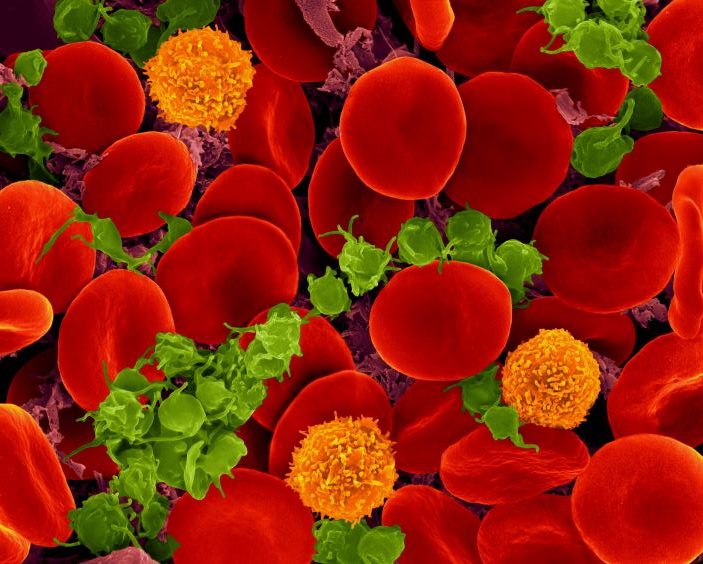
Scanning electron micrograph of red blood cells, T cells (orange) and platelets (green). Source: Wikimedia CC0
Aside from transfusions, there currently is no way to boost people’s platelet counts, which can drop for reasons such as chemotherapy, leaving them at risk for uncontrolled bleeding. But new research published in Nature Cardiovascular Research suggests that there could be a simple alternative: a dietary change in type of fat intake could raise platelet counts in people with low levels.
A study led by Kellie Machlus, PhD, and Maria Barrachina, PhD at Boston Children’s Hospital found that they could raise platelet counts in mice by feeding them polyunsaturated fatty acids (PUFAs) like those found in the Mediterranean diet. In contrast, mice fed a diet high in saturated fatty acids had decreased platelet counts.
“We were honestly surprised at how profound the effects were,” says Machlus, whose lab focuses on studying platelets and their precursor cells, megakaryocytes, and ways to get the body to increase platelet production.
But equally interesting is the apparent reason for the dietary effect.
“What brought me to the idea of diet is that megakaryocytes make these long extensions from their membrane when they form platelets,” Machlus says. “We thought the membrane must have an unusual composition to make it so fluid.”
A fluid megakaryocyte membrane
No one had studied megakaryocyte membranes before, perhaps because megakaryocytes are in the bone marrow and hard to access. Machlus, Barrachina, and their colleagues decided to comprehensively assess the membranes’ fat content with lipidomics.
“We found that PUFAs are enriched in megakaryocytes, especially right before they begin making platelets,” says Machlus. “We think they provide the fluidity necessary for the membrane to move and reshape.”
In culture, the megakaryocytes with higher amounts of PUFAs in their membrane made more platelets. When the cells were instead supplied with saturated fats as their lipid source, platelet production declined. The same thing happened when the team added compounds to inhibit uptake of PUFAs from the blood.
The researchers also identified one of the receptors on megakaryocytes that’s responsible for taking up PUFAs from blood: CD36. When they deleted the gene for CD36 in their mouse model, the animals had low platelet counts.
Serendipitously, the researchers were able to connect the dots to humans. Through a colleague in the U.K., they identified a family in which several members had a mutation in the CD36 gene. Those affected had low platelet counts and, in the mother’s case, bleeding episodes.
An olive oil intervention?
Intrigued by their findings, Barrachina hopes to extend the study by collaborating with a team in her native Spain. The team is studying dietary interventions for cardiovascular disease, including the Mediterranean diet.
“We want to look at platelets from these patients,” she says. She thinks that platelets with more saturated fatty acids in their membranes might be in a more activated state that could lead them to aggregate and form blood clots.
While Machlus thinks it may be worth encouraging patients with thrombocytopenia to consume more olive oil to increase PUFA levels, she recognises that a drug treatment may be more practical.
“Our next steps are to find out the enzymes that create PUFAs,” she says. “Maybe we can target them to make more platelets.”
A study in more than 15 000 people has found that even moderate physical fitness is linked with a lower likelihood of developing atrial fibrillation and stroke. Progressively higher levels of fitness also reduced the risk of cardiovascular events. The research is presented at ESC Congress 2023.
Atrial fibrillation is the most common heart rhythm disorder, and patients with the condition have a five-fold higher risk of stroke than their peers. This study examined whether fitness was related to the likelihood of developing atrial fibrillation.
The study included 15 450 individuals without atrial fibrillation who were referred for a treadmill test between 2003 and 2012. The average age was 55 years and 59% were men. Fitness was assessed using the Bruce protocol, where participants are asked to walk faster and at a steeper grade in successive three-minute stages. Fitness was calculated according to the rate of energy expenditure the participants achieved, which was expressed in metabolic equivalents (METs).
Participants were followed for new-onset atrial fibrillation, stroke, myocardial infarction and death. The researchers analysed the associations between fitness and atrial fibrillation, stroke and major adverse cardiovascular events (MACE; a composite of stroke, myocardial infarction and death) after adjusting for factors that could influence the relationships including age, sex, cholesterol level, kidney function, prior stroke, hypertension and medications.
During a median of 137 months, 515 participants (3.3%) developed atrial fibrillation. Each one MET increase on the treadmill test was associated with an 8% lower risk of atrial fibrillation, 12% lower risk of stroke and 14% lower risk of MACE.
Participants were divided into three fitness levels according to METs achieved during the treadmill test: low (less than 8.57 METs), medium (8.57 to 10.72) and high (more than 10.72). The probability of remaining free from atrial fibrillation over a five-year period was 97.1%, 98.4% and 98.4% in the low, medium and high fitness groups, respectively.
Study author Dr Shih-Hsien Sung of the National Yang Ming Chiao Tung University, Taipei, Taiwan said: “This was a large study with an objective measurement of fitness and more than 11 years of follow up. The findings indicate that keeping fit may help prevent atrial fibrillation and stroke.”
Atrial fibrillation may lead to blood clots, stroke, heart failure or other cardiovascular complications. It primarily affects older adults.
“In my general cardiology practice, I see many postmenopausal women with picture perfect physical health who struggle with poor sleep and negative psychological emotional feelings or experience, which we now know may put them at risk for developing atrial fibrillation,” said lead study author Susan X. Zhao, M.D., a cardiologist at Santa Clara Valley Medical Center in California. “I strongly believe that in addition to age, genetic and other heart-health related risk factors, psychosocial factors are the missing piece to the puzzle of the genesis of atrial fibrillation.“
Researchers reviewed data from more than 83 000 questionnaires by women ages 50-79 from the Women’s Health Initiative, a major US study. Participants were asked a series of questions in key categories: stressful life events, their sense of optimism, social support and insomnia. Questions about stressful life events addressed topics such as loss of a loved one; illness; divorce; financial pressure; and domestic, verbal, physical or sexual abuse. Questions about sleeping habits focused on if participants had trouble falling asleep, wake up several times during the night and overall sleep quality, for example. Questions about participants’ outlook on life and social supports addressed having friends to talk with during and about difficult or stressful situations; a sense of optimism such as believing good things are on the horizon; and having help with daily chores.
During approximately a decade of follow-up, the study found:
About 25% or 23 954 women developed atrial fibrillation.
A two-cluster system (the stress cluster and the strain cluster).
For each additional point on the insomnia scale, there is a 4% higher likelihood of developing atrial fibrillation. Similarly, for each additional point on the stressful life event scale, there is a 2% higher likelihood of having atrial fibrillation.
“The heart and brain connection has been long established in many conditions,” Zhao said. “Atrial fibrillation is a disease of the electrical conduction system and is prone to hormonal changes stemming from stress and poor sleep. These common pathways likely underpin the association between stress and insomnia with atrial fibrillation.”
Researchers noted that stressful life events, poor sleep and feelings, such as depression, anxiety or feeling overwhelmed by one’s circumstances, are often interrelated. It’s difficult to know whether these factors accumulate gradually over the years to increase the risk of atrial fibrillation as women age.
Chronic stress has not been consistently associated with atrial fibrillation, and the researchers note that a limitation of their study is that it relied on patient questionnaires from the start of the study. Stressful life events, however, though significant and traumatic, may not be long lasting, Zhao notes. Further research is needed to confirm these associations and evaluate whether customised stress-relieving interventions may modify atrial fibrillation risk.
Thanks to a study recently published in The Lancet Digital Health, clinicians are one step closer to helping people catch a sudden cardiac arrest before it happens. The study, found that 50% of individuals who experienced a sudden cardiac arrest also experienced a telling symptom 24 hours before their loss of heart function.
The investigators from the Smidt Heart Institute at Mount Sinai also learned that this warning symptom was different for women than it was for men. For women, the most prominent symptom of an impending sudden cardiac arrest was shortness of breath, whereas men experienced chest pain. Smaller subgroups of both genders experienced abnormal sweating and seizure-like activity.
Out-of-hospital sudden cardiac arrest is fatal 90% of the time, so there is an urgent need to better predict and prevent the condition.
“Harnessing warning symptoms to perform effective triage for those who need to make a 911 call could lead to early intervention and prevention of imminent death,” said sudden cardiac arrest expert Sumeet Chugh, MD, senior author of the study. “Our findings could lead to a new paradigm for prevention of sudden cardiac death.”
For this study, investigators used two established and ongoing community-based studies, each developed by Chugh: the ongoing Prediction of Sudden Death in Multi-Ethnic Communities (PRESTO) Study in Ventura County, California, and the Oregon Sudden Unexpected Death Study (SUDS), based in Portland, Oregon.
Both studies provide Cedars-Sinai investigators with unique, community-based data to establish how to best predict sudden cardiac arrest.
“It takes a village to do this work,” said Chugh. “We initiated the SUDS study 22 years ago and the PRESTO study eight years ago. These cohorts have provided invaluable lessons along the way. Importantly, none of this work would have been possible without the partnership and support of first responders, medical examiners and the hospital systems that deliver care within these communities.”
In both the Ventura and Oregon studies, Smidt Heart Institute investigators evaluated the prevalence of individual symptoms and sets of symptoms prior to sudden cardiac arrest, then compared these findings to control groups that also sought emergency medical care.
The Ventura-based study showed that 50% of the 823 people who had a sudden cardiac arrest witnessed by a bystander or emergency medicine professional, such as an emergency medicine service (EMS) responder, experienced at least one telltale symptom before their deadly event. The Oregon-based study showed similar results.
“This is the first community-based study to evaluate the association of warning symptoms – or sets of symptoms – with imminent sudden cardiac arrest using a comparison group with EMS-documented symptoms recorded as part of routine emergency care,” said Eduardo Marbán, MD, PhD, executive director of the Smidt Heart Institute.
Such a study, Marbán says, paves the way for additional prospective studies that will combine all symptoms with other features to enhance prediction of imminent sudden cardiac arrest.
“Next we will supplement these key sex-specific warning symptoms with additional features – such as clinical profiles and biometric measures– for improved prediction of sudden cardiac arrest,” said Chugh.